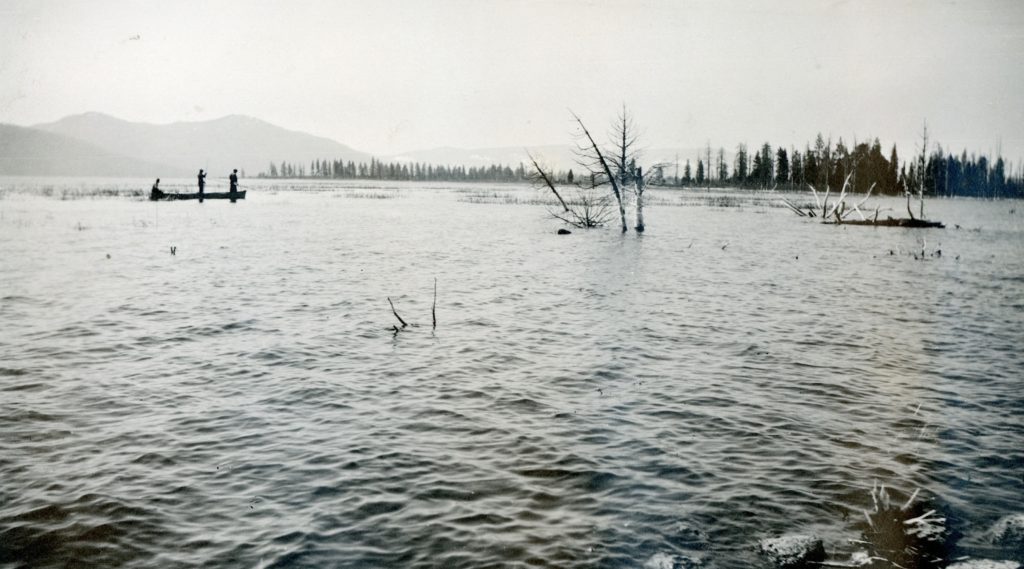
A view of Eagle Lake, looking towards Spaldings, 1921. Courtesy of Lola L. Tanner
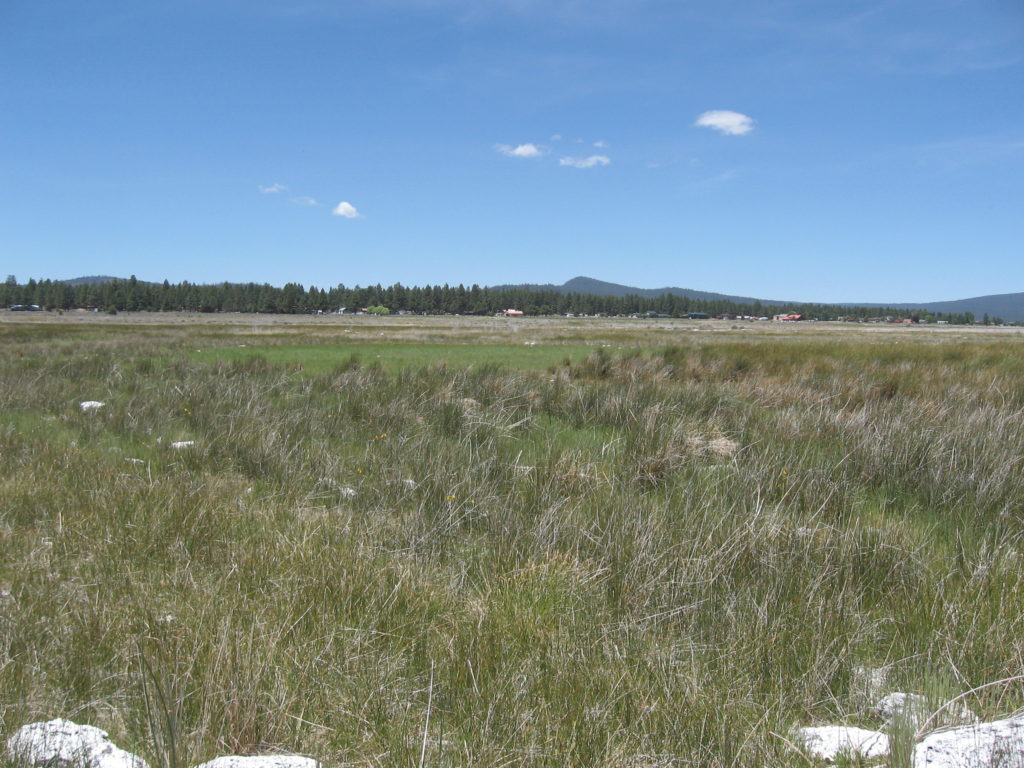
This is a simple minded post. It should be noted that there are a number of Eagle Lake affeciendos on this site, so they may get more enjoyment from today’s post, than others. When Spalding Tract was subdivided in 1914, the lake was approaching its highest water level. “The Strand” the town’s lakefront boulevard, was truly lakefront. Fast forward to 2020, the lake is far, far away as seen from the below photograph taken along the shoreline looking towards Spalding Tract.
A view of Spalding Tract from the Eag;le Lake shoreline,June 21, 2020.
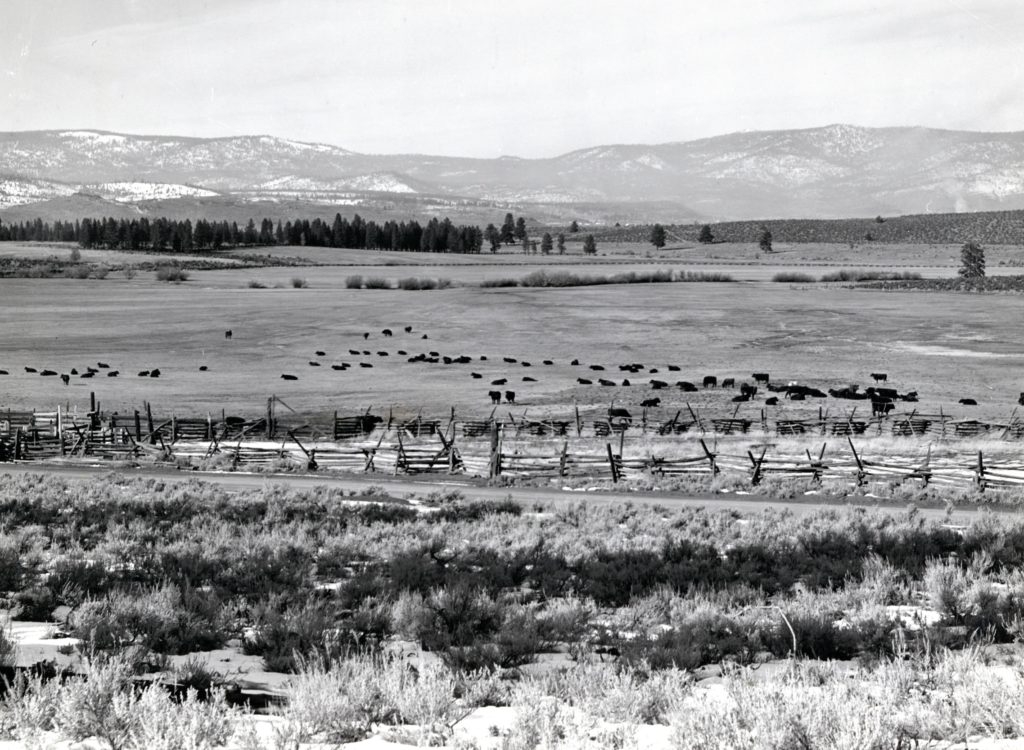
David Titherington purchased Lassen’s original ranch. In 1862, John Hulsman became a partner. Ever since the Hulsman family owns and operates this ranch. This scene of the ranch was taken in the mid-1950s.
While many have heard or read about tales of someone buying property sight unseen, the practice has been going on longer than I thought. The first such recorded occurrence in the region took place in 1860, involving the estate of Peter Lassen. In 1857, Peter Lassen purchased R.J. Scott’s claim on the west side of Honey Lake, some twenty-five miles from Susanville. After Lassen’s death in 1859, this property became part of his estate. In 1860, two miners from Rich Bar, Plumas County purchased the property, thinking they were buying Lassen’s original ranch south of Susanville where he was buried. When they finally came to inspect their purchase, they discovered the purchase was for Lassen’s other holding on the west side of Honey Lake. Though somewhat disappointed, they embarked on developing their new acquisition, which became the founding of Milford.
Upper Biscar Reservoir, as seen from the Modoc Line Trail.
In 1996, the Union Pacific Railroad received permission to abandon an 85 mile segment of railroad from Wendel to Likely. Since then it has been converted into another “rails to trails.” It should be duly it was the NCO Railroad that initialy constructed the line and in the 1920s it was acquired by the Southern Pacific Railroad.
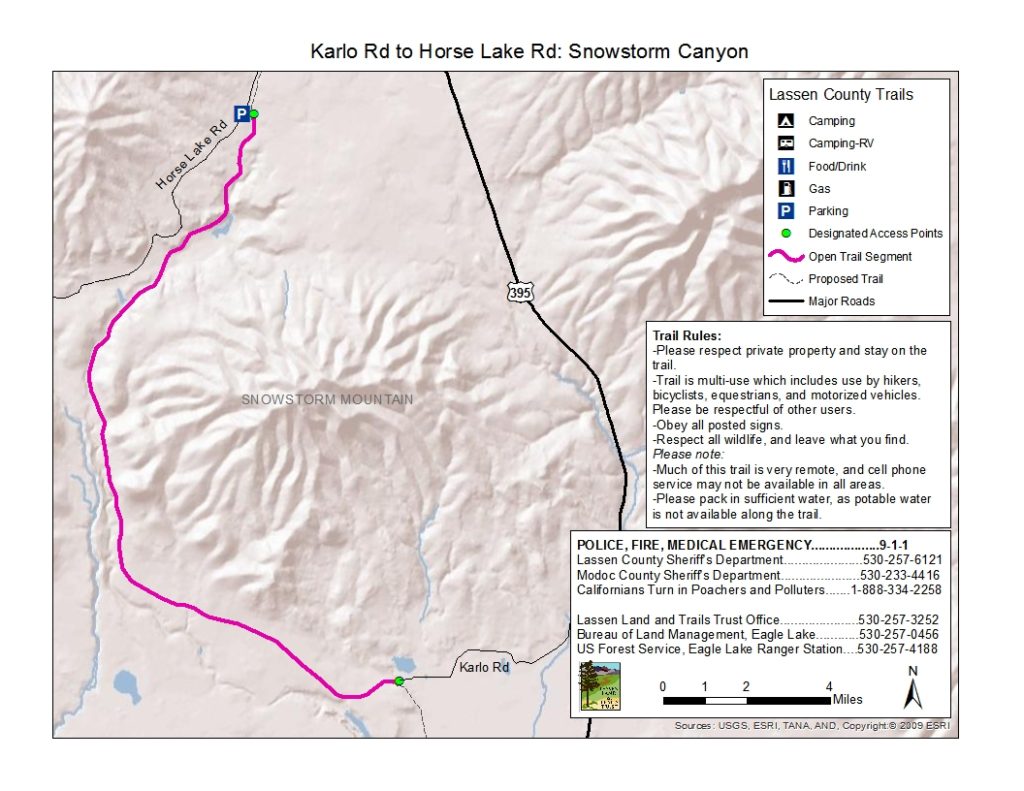
Map showing the route from Karlo to Horse Lake Road.
Personally, I prefer the segment from Karlo, Secret Valley to Horse Lake Road. While, I do not have a preference which way to approach, I think its best to travel it each way, since doing so one sees different perspectives of the area.
Foundation remains of the Horse Lake Siding, is one of many sites to see. January 27, 2019. Courtesy of Anna Stewart
Well, it is that time of year again, when a few years back I made my debut at Susanville’s now defunct Riverside Hospital. As is customary, this one day I take the day off from regular duties. Then again, I might take the opportunity to get a head start in the photograph selection of the 2022 calendar.
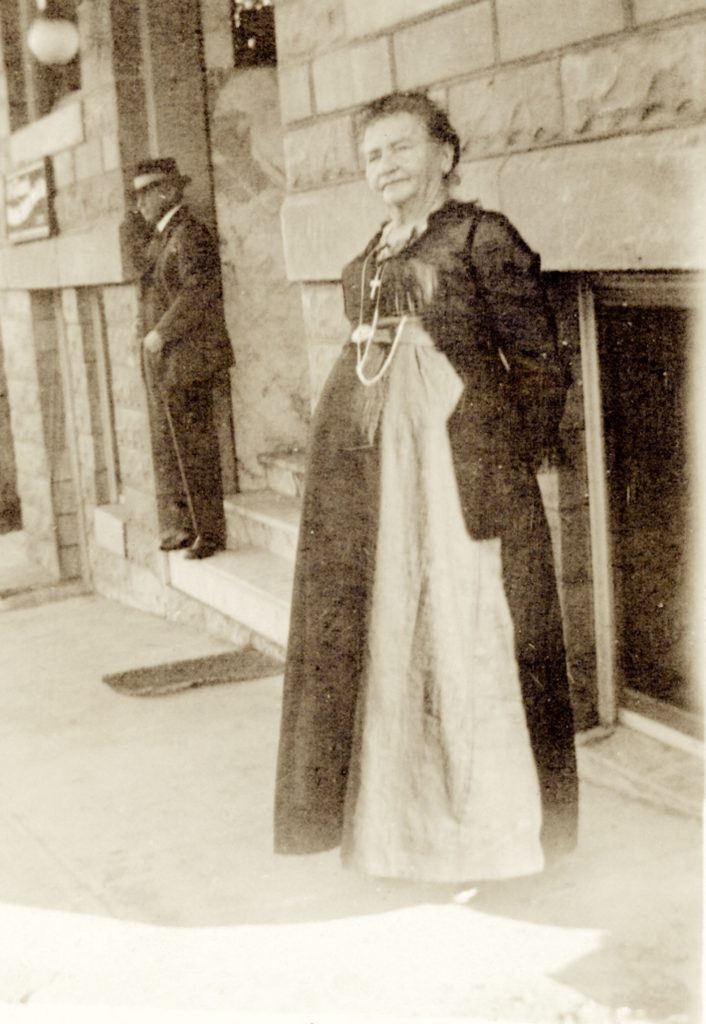
Franceska Murrer Neuhaus, 1916—Leona Jackson Byars
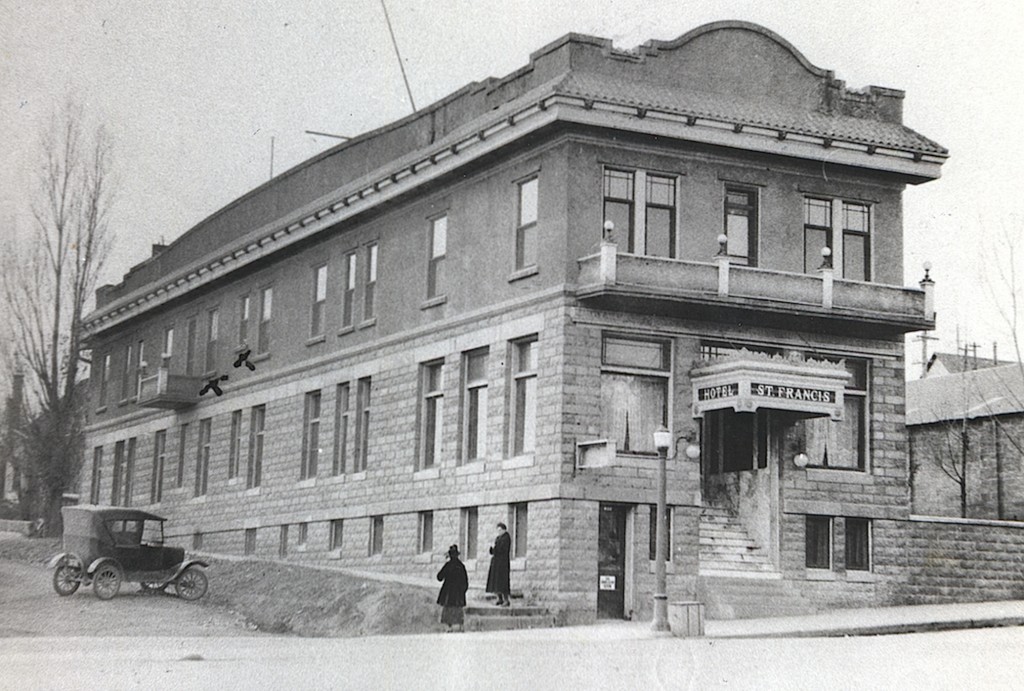
In October 1916, Franceska Neuhaus placed a small 2×2 inch display advertisement in the Lassen Advocate that for sale was the Commercial Hotel on the corner of Main and Union Streets, Susanville. She also offered 80 acres of timberland two miles from Susanville. Innocent enough? The hotel that she offered was named the St. Francis Hotel., after all there was the Commercial Hotel a block away on South Weatherlow Street. As to the timber property she did not own any.
St. Francis Hotel, 1922. Courtesy of Art Almeda
This alarmed Leona Jackson, a granddaughter of Franceska. She went to court to file guardianship papers for her grandmother. Of course, a notice is required to be sent to all relatives. It turned into one of those proverbial “all hell broke loose.” Other relatives filed their own petitions seeking to be Franceska’a guardian. Most of 1917 was tied up in litigation over Franceska’a guardianship, until finally the court appointed, Franceska’s son, W.H. “Bill” Neuhaus her guardian. The following year, 1918, Franceska passed away, a victim of the Spanish Influenza.
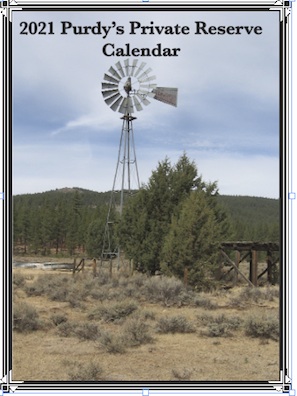
When I announced the availability of the 2021 Calendars earlier this month, I included a note that it was probably going to my last one after all these years. After all the calendars go back decades when I supplied the historic photographs for the Lassen High School Graphic Arts calendar who produced the calendar.
Anyhow, in 2019, I cancelled my paid subscription to Calendars that Work, that was my source for the template. At that that I downloaded the 2020 and 2021 templates. Well, lo and behold, I happened to download a 2022 template. With that in mind, there will be a 2022 calendar, and so now the work begins on photograph selection.
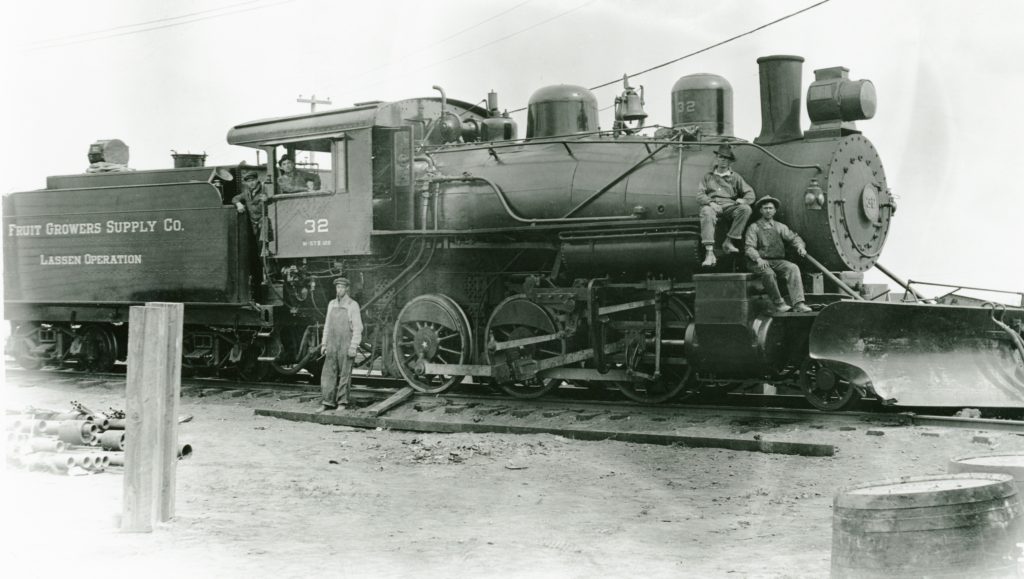
In 1919/20 when Fruit Growers Supply Company established its Susanville operation, they of course needed locomotives for its railroad logging operations west of Eagle Lake. They purchased this Baldwin locomotive from the Ocean Shore Railroad that operated a line along the Pacific Coast from San Francisco to Santa Cruz.* Fruit Growers ownership of the No. 32 was brief and they sold it in 1924 to the Red River Lumber Company. In 1944, Fruit Growers reacquired it when they purchased Red River’s Westwood operation. In 1953 the locomotive was scrapped.
*The Ocean Shore Railroad, was not completed with a gap in the middle.
Spread the word, and encourage a friend to subscribe
Not sure what to give that special someone, but want to keep the budget balanced too? Why not a gift subscription to tipurdy.org. At five dollars a month it is a bargain. You can decided whether for a month, quarter or even splurge for a year.
The recipient not only receives a daily email notification of the latest topic, but is entitled to hard to find papers on the Eagle Lake Ice Caves, too. On top of that they can partake in members only tours varying from a summer solstice observance at an ancient solar observatory to the Inspiration Point Tour. Even if that person on your list is not local, they still receive materials associated with the tours.
In addition, don’t forget the 2021 calendar, and books, too!
Information on subscriptions is found right here. Have a question drop me a line at tim.purdy@icloud.com
In 1920, the Christie Brothers—John and James—dissolved their partnership in a general mercantile store in Janesville. John, better known as Burt, had already launched a new career when he purchased the Eagle Lake Resort. For his brother, Jim, he was not quite sure what path to take. In 1921, he opened Christie Furniture at 903 Weatherlow Street, Susanville and continued until his death in 1936.
Eventually, the store moved to 608 Main Street. For several decades it was owned and operated by S.R. “Carl” and Ferne Carlomagno. Christie Furniture store, along with the Murray Insurance were destroyed by a fire on March 20, 1982. The Christie store was never rebuilt, and remains a vacant lot.
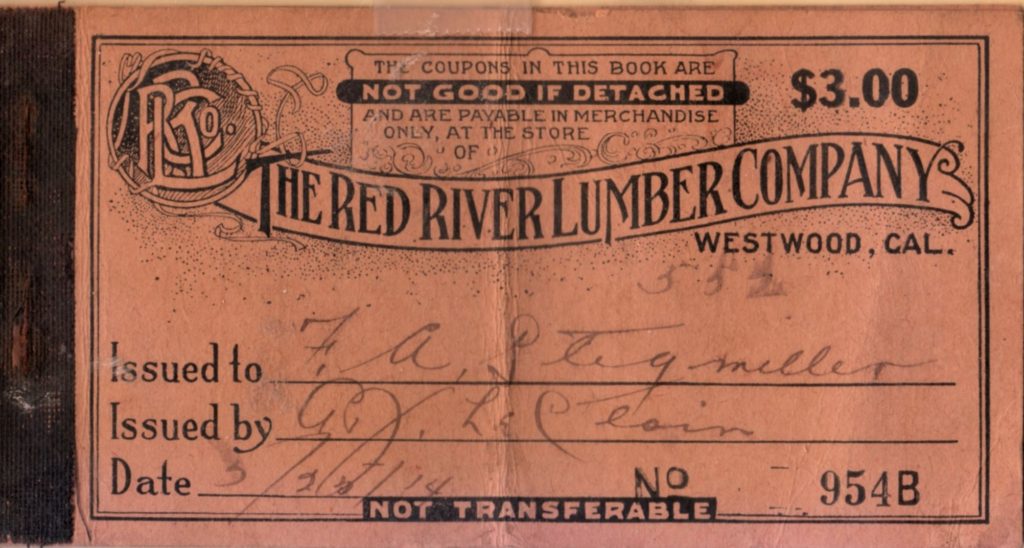
Red River Lumber Company like so many other company towns issued scrip—a form of company currency utilized when an employee received an advance on wages. When an employee received scrip, the amount was deducted from his wages. It was basically worthless as it could only be redeemed in company stores. The usage of scrip declined when employees were issued badges. With an employee badge number, the employee or a member of his family could charge anything they wanted from the company store using that number. Those charges were then deducted from the employee’s paycheck.
In November 1923, John Thomas of the Oakland Tribune wrote a complete description of Red River’s operations at Westwood. As to the company scrip he noted, “The company runs a general merchandise and department store, covering a whole block. Here you can buy anything from a paper of pins to a threshing machine.
“All the employees of the big mill trade here, also dad, grandma, auntie and the kids related to the employees. This is the only store in town. The strange part of it is you don’t need money in this store. You use scrip or paper money—not Uncle Sam’s brand of currency, the kind the banks hand out. You procure books of scrip tickets from the office. These scrip books contain five, ten, twenty-five and fifty cent checks, or tickets, and are good in the big store, also the movie show, newsstands and clubroom. I never tried putting scrip in the plate of the church, as I did not attend.
“These scrip books are transferable to members of the immediate family, that is to pa, ma and the kiddies. Grandma buys her darning cotton, uncle buys his chewing and smoking, sis buys her new slippers and the kiddies their candy and chewing gum all with scrip.”
Spread the word, and encourage a friend to subscribe