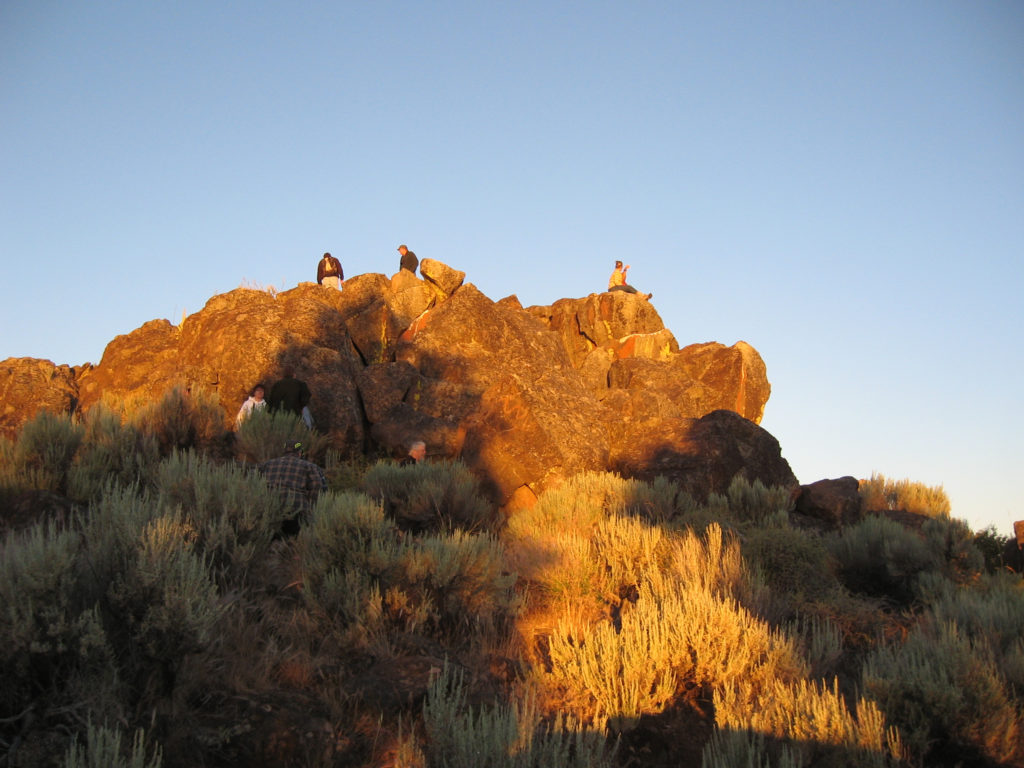
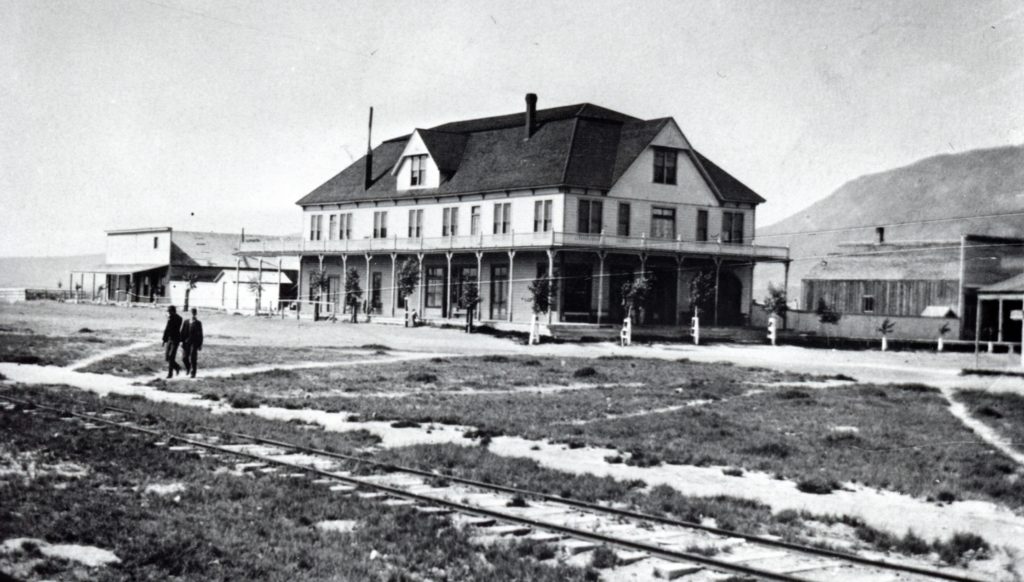
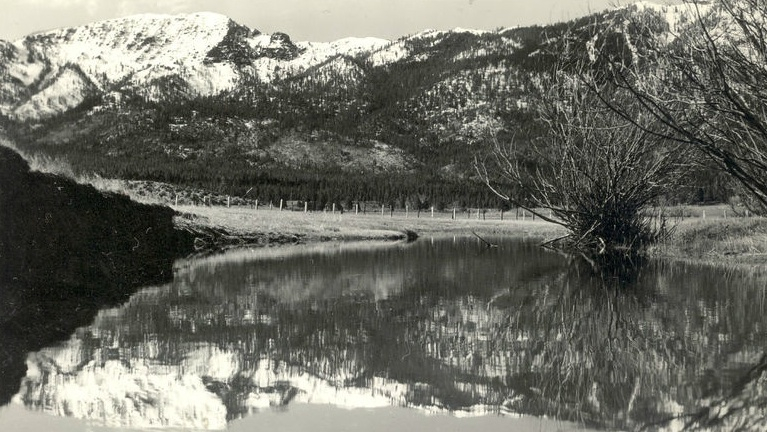
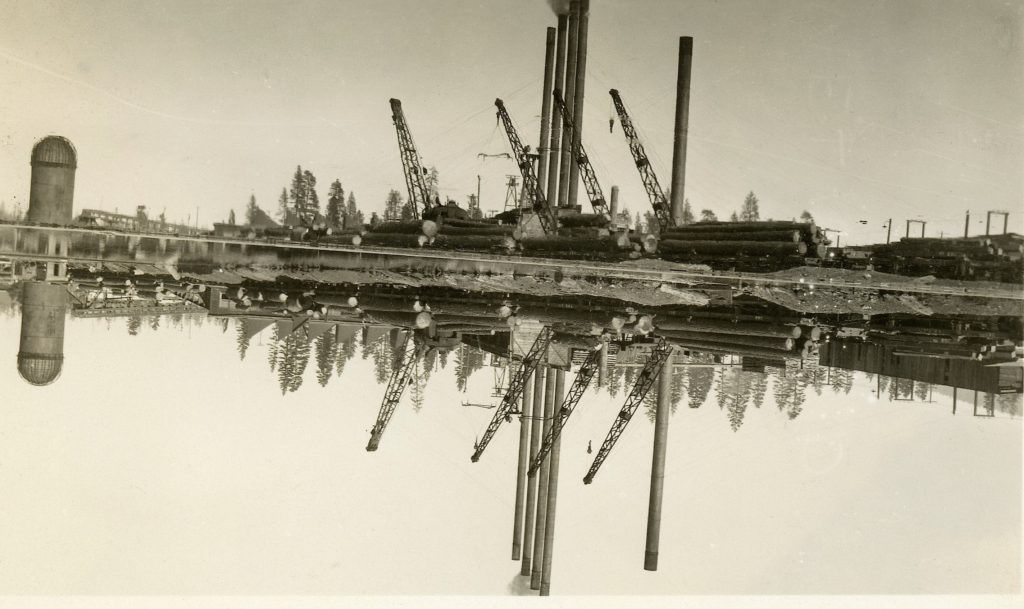
For the last two years interest to witness the Belfast petroglyphs at the summer solstice has waned. For those not familiar, there is sunrise chamber that serves as ancient observatory. This event only occurs on the morning of the summer solstice when the sun enters a chamber highlighting a variety of glyphs, among other things.
This would probably classify as a ghost newspaper, since no known copies exist. The Honey Lake Homestead newspaper made its debut in March 1910. The four page, six column paper’s mission statement was “will be devoted to the uplift of the country north of Reno.” Who was behind the paper is not known, it was only revealed that it was published by Honey Lake Homestead Publishing Company located at Amedee.
The paper in May caused a tiff among the other Lassen County newspapers as it would not abide the standard advertising rate for a political card, the space equivalent of a typical business card. By summer the paper had suspended operations.
Names of places changed quickly when the gold seekers rushed into Honey Lake Valley. This stream was a prime example. It was first called Commanche Creek, then Irishman’s Creek, and, in 1860, became known as Lakes Creek. Sometime in the early 1860s, it finally became Baxter Creek named for John Baxter (1812-1880), a native of Dundee, Scotland, who came to California in 1849 and to Honey Lake Valley in 1857. Baxter located along the lower end of the creek, about a mile east of Buntingville. On May 27, 1867, Baxter sold his place to Bartlett and Hayden and moved to Janesville.
In 1911, Baxter Creek came to the forefront when the Baxter Creek Irrigation Company was formed. The company intended to construct a dam, just a short distance east of where Highway 395 crosses the stream. For distribution there would two canals one along Sunnyside for fifteen miles heading towards Standish, and other on the south side, also fifteen miles heading towards Milford. In essence it was a paper company, and never materialized.
On February 8, 1917, the Baxter Creek Irrigation District was created, a public district, not private entity. While similar in scope of the irrigation company, the district proposed comprised of 9700 acres. When they went to secure a bond measure, the State Engineer’s Office intervened, citing the district’s main water supply was insufficient.
The neighboring Tule Irrigation District was encountering a similar problem to secure bonds for Leon Bly’s Eagle Lake irrigation system. A solution was found where the two districts agreed to pro-rate the costs and secure the bonds for Bly’s irrigation system.
Bly’s project ultimately failed, and in 1952 the Baxter Creek Irrigation District was dissolved.
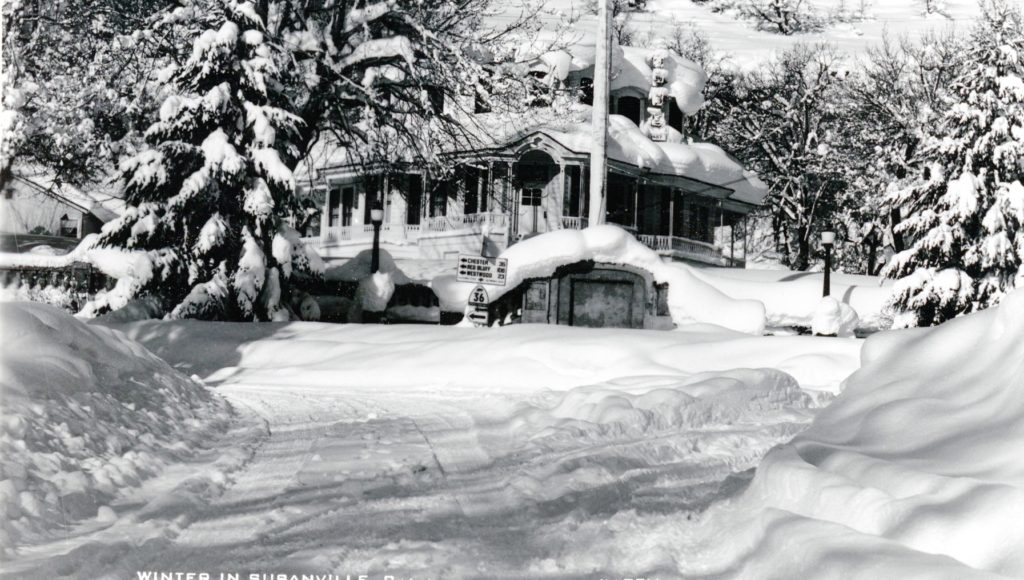
One of the most driest was the winters was that of 1923-24. It also occurred during a twenty year drought from 1917-1937. Susanville received less than five inches of precipitation during 1923-24. It was so dry that winter that in the middle of March, a one-inch snow fall at Susanville caused great excitement. There was even a greater commotion in Westwood when eighteen inches of snow fell. It disappeared in a matter of hours. That was the extent of precipitation for the winter. Continue reading The Dry Winter of 1923-24→
A view looking at the former Ridenour property with the Sella dairy in the foreground, which was located at the lower end of Gold Run, 1950s. Courtesy of Wendell V. Loughead
Of course, this was one of those scenarios where a week later after I posted about the dairy history, I came across an example of the material that can be found. It just takes a lot of sleuthing.
In a February 1926 Lassen Farm Bureau news report had this: “R.S. Raven of the cow testing association reports that the FGSCo had one cow this month that produced over 60 pounds of butterfat, another produced 50 pounds, five over 40 pounds and eight over 30 pounds for the month. Mr. O”Kelley states that these cows have been fed on silage and grain.”
In March 1926 Lassen Farm Bureau new report had this: “The Red River Lumber Company had 58 cows that produced over 30 pounds of butterfat this month. Fifteen of these produced over 40 pounds of fat, 5 produced over 50 and one cow 78 pounds. E.G. Scammon states the company is milking 175 cows at present.
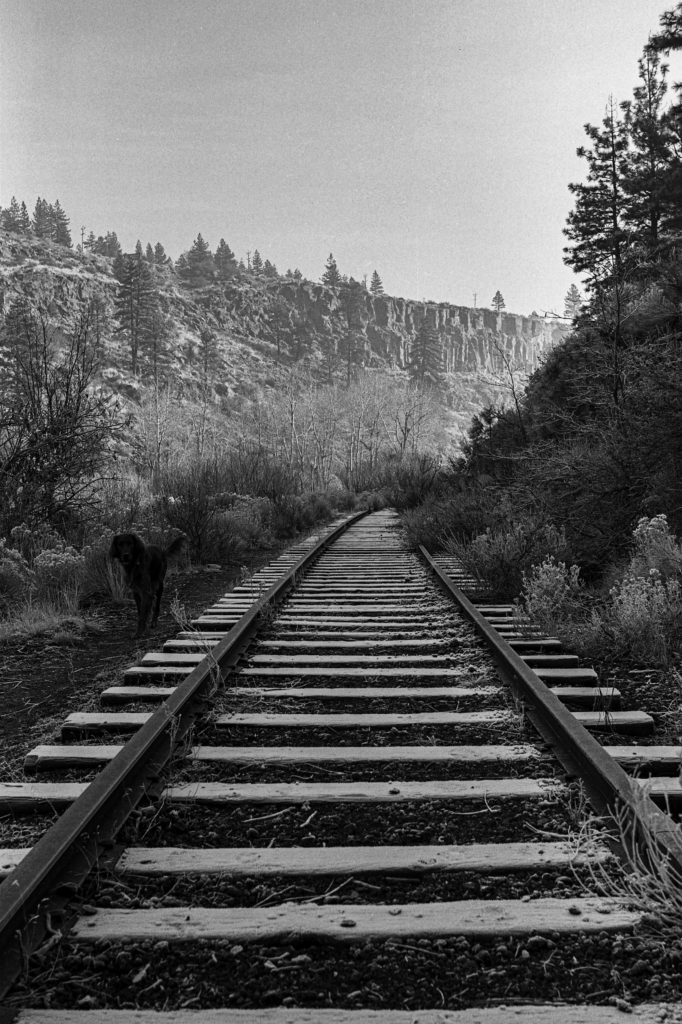
Looking east in the Susan River Canyon with Pigeon Cliffs in the background—David Bricker
In December 1955 major flooding in the Susan River Canyon did considerable damage to the Southern Pacific’s rail line. With the pending closure of Fruit Growers Westwood mill in 1956, railroad officials decided not to make any repairs, since there were be little if any traffic. The line was closed from Mason Station to Susanville, but not abandoned. Theoretically, if someone wanted to ship something by rail from Susanville to Westwood, or vice-versa Southern Pacific was obligated and could only charge the railroad freight rate between the two places. On the other hand it would be costly for the railroad to pay a third party to make the delivery.
In 1976, the Southern Pacific filed for the abandonment of this segment of the line. The foundation was laid for the rails to trails conversion to become what is informally known as the “Bizz.”
In 1910, A.J. Matthews arrived in Susanville as part of a small group of men to form a local telephone company. They would be successful. In 1915, Mathews married native daughter Lena Cahlan. Mathews was a firm believer in civic engagement. He was involved in so many different activities on the local and state level.
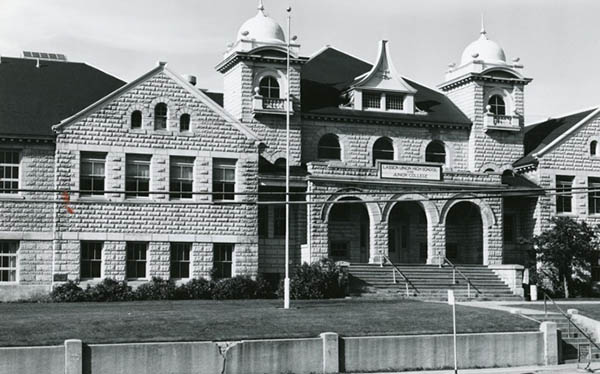
Mathews also served on the Lassen Union High School/Lassen Junior College Board—the two were intertwined until the college separated in 1965.
In January 1935, Mathews addressed theSusanville Rotary Club concerning the schools reorganization plans, specifically that of the college. Mathews stated, “We should capitalize on the fact we have the only junior college in northern California north of Chico.
Later in 1935, the college board of trustees, met with Mr. J.C. Beswick from the State Department of Education, in charge of Trade and Industrial Education. It was met with enthusiasm by all parties, including the lumber mills and related fields. On September 19, 1935, a Technical Institute course in forestry at Lassen College was offered, with Gale M. Whitchurch in charge. Initially, enrollments fluctuated between 12 and 23. It was a major turning point in the college’s history that attracted students from around the state to attend Lassen.
The Elks Hall Association was a unique entity created to transfer the ownership of the Antlers Investment Company, which owned the building used by the Elks for a lodge, to the Benevolent Protective Order of Elks, Susanville Lodge 1487.
It came about from a meeting held on March 2, 1929 between the Antlers Investment Company and the Susanville Elks Lodge. It should be noted that many of participants were members of both entities. The result of the meeting was the formation of the Elks Hall Association which sole purpose would take the necessary steps to acquire outstanding stock of the Antlers Investment Company. Besides the outstanding stock the Antlers had $2,300 in encumbrances attached to the building—that was the easy part. At issue was certain stockholders of Antlers declined to become members of the Elks organization. In 1931 everything was resolved and title transferred to the Elks. Mission accomplished both the Antlers and Elks Hall entities were dissolved.
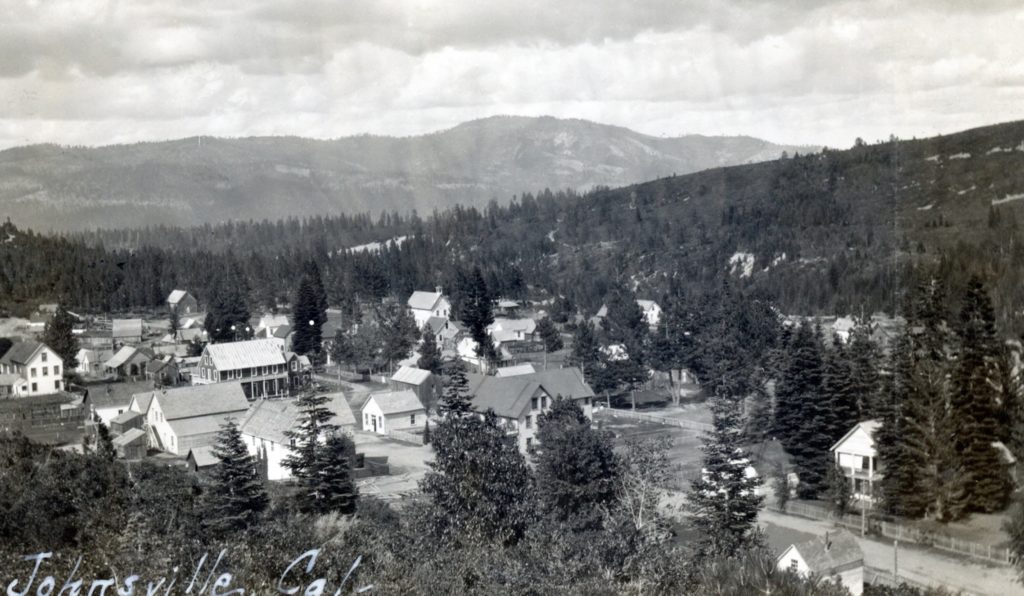
Johnsville, Plumas County, 1911—-Sifford Collection
In keeping with yesterday’s topic of exploring, one may want to include the former mining community of Johnsville, Plumas County, near Graeagle. It is adjacent to the Plumas Eureka State Park that was established in 1959.
Johnsville came to the forefront in 1851 with the discovery of the Eureka quartz vein. After the early 1900s mining activity fluctuated like so many other mining communities. The last of mining came to an end during World War II.
It is well worth the trip and for the adventurous minded you could make trip via Milford grade to Beckwourth.
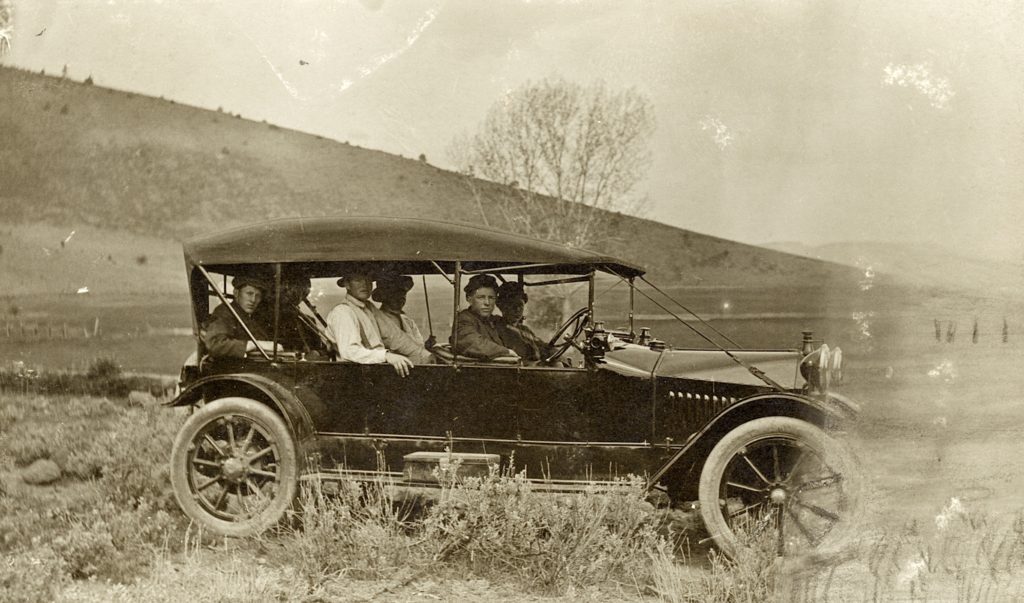
Joe Odette and friends returning from a fishing expedition on Eagle Lake’s north shore. These guys had numerous adventures in 1914.—Delores Gasperoni
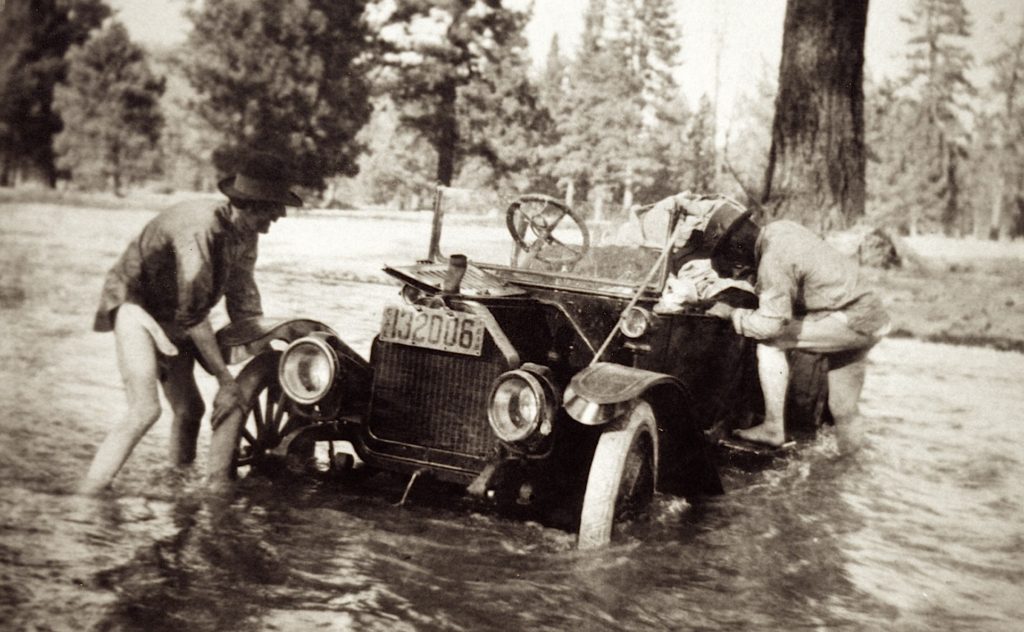
It is that time of year when I sound the annual alarm to go exploring wherever you reside. It began several years ago when I republished a 1929 editorial that appeared in the Lassen Mail. It summed up that there are so many fascinating natural attractions surrounding the countryside that are easy day trips, yet so few take advantage. The paper cited a wide array of opportunities whether exploring the ice caves of Eagle Lake, or packing a picnic to spend a leisurely day along a mountain stream.
After last years destructive fires in the region, it is even more apparent to get out and about. Sometimes historical landmarks can disappear too, such as burning of the Constantia townsite.
Frank Wood & Cass Hunsinger on their camping expedition!—Verna M. Wood
Hopefully, this provides everyone with a bit of motivation. Enjoy.