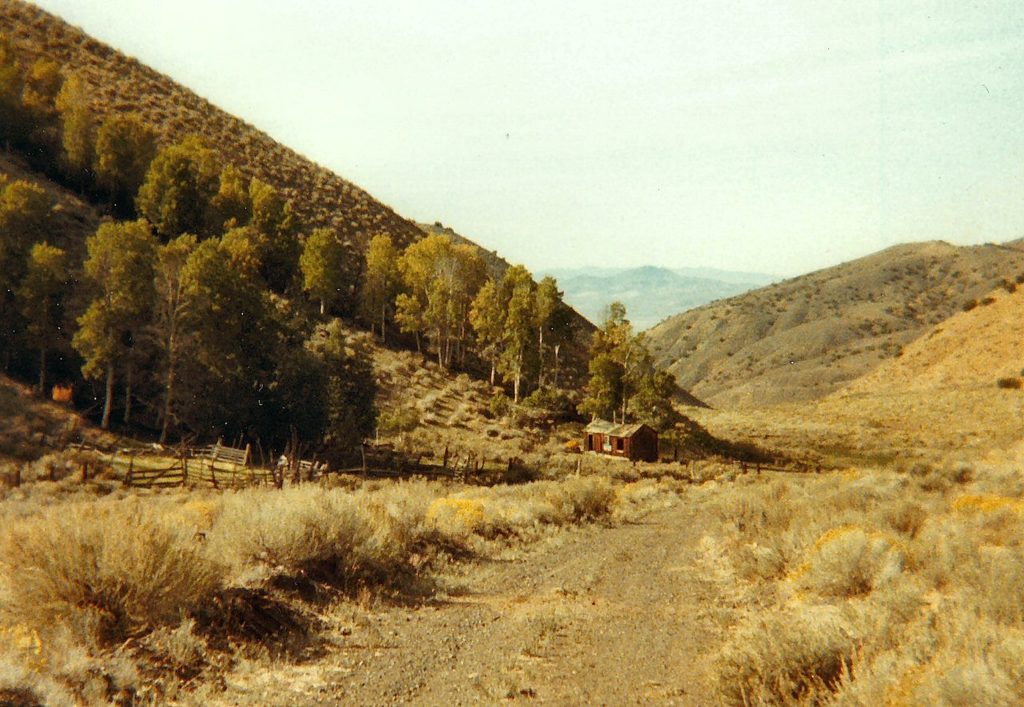
While the Black Rock Desert is known for its historical mining activities there was also considerable mining activity much closer to the Honey Lake Valley in the nearby Smoke Creek Desert. In 1882, the Cottonwood Mining District was established on the Fox Mountains on the east side of the Smoke Creek Desert. Due to its remoteness and lack of any substantial high grade ore, little mining was development. Continue reading Wild Horse Mine→
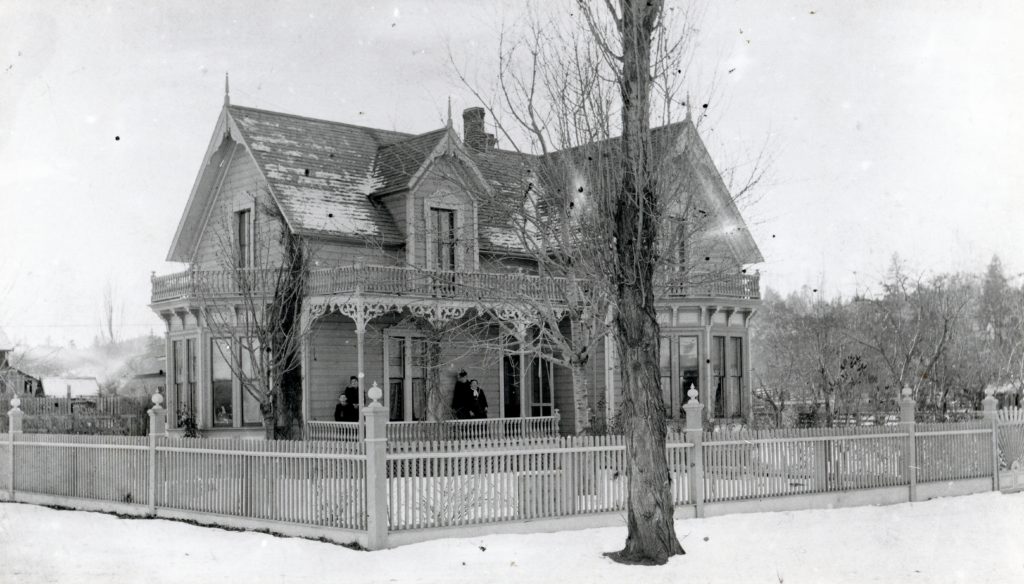
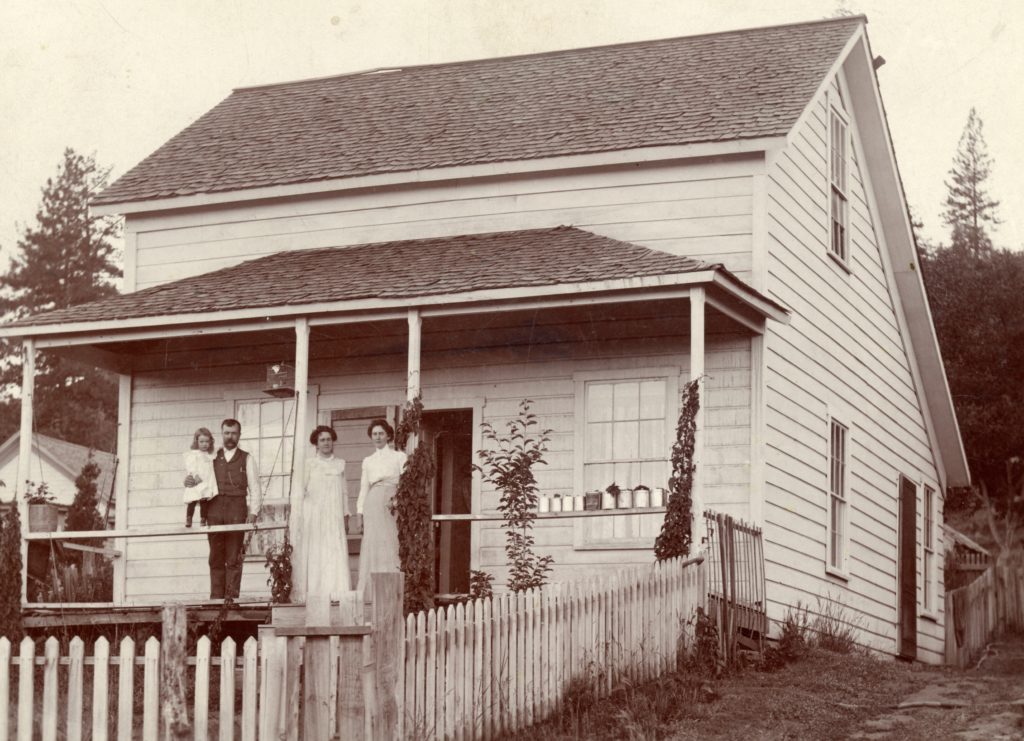
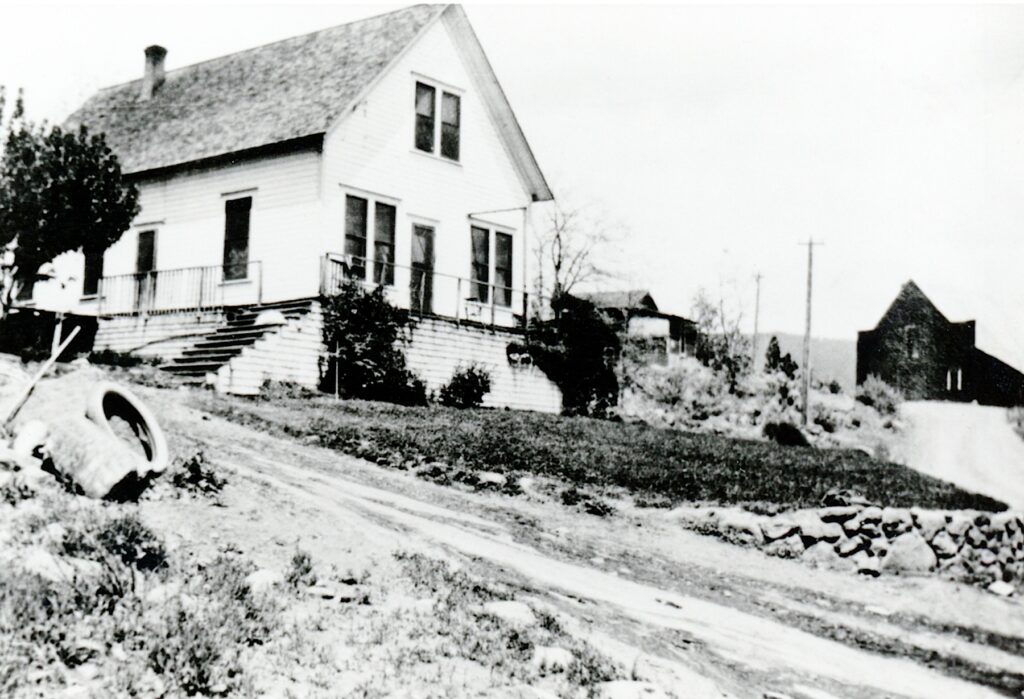
The William Greehn residence on Cottage Street, 1886.
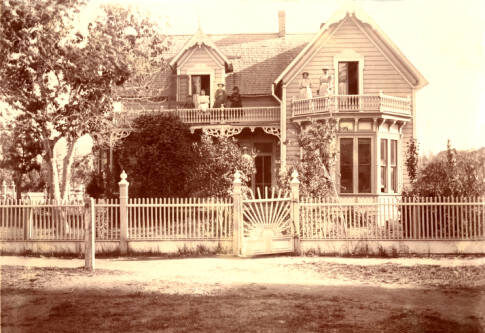
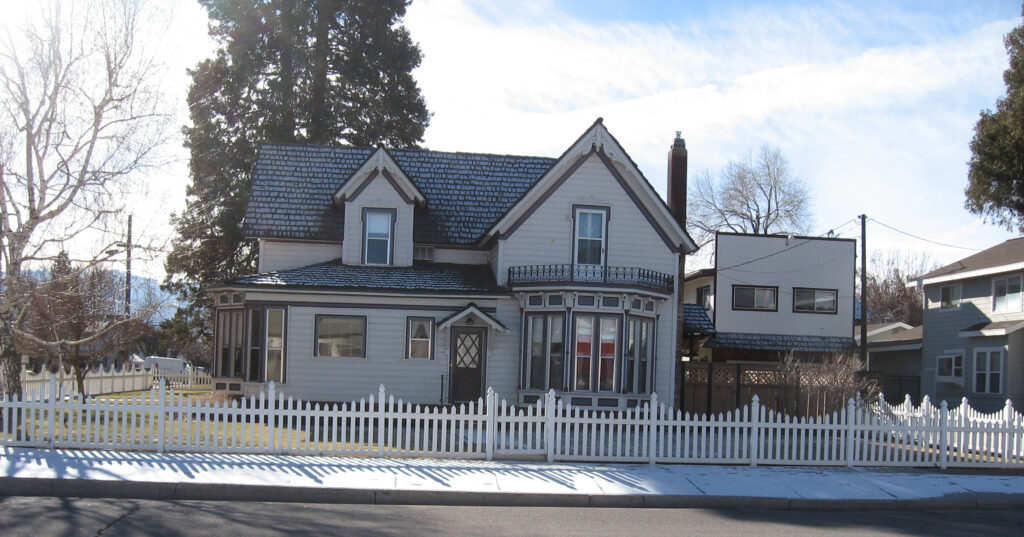
This home located at734 Cottage Street, is one of the town’s vintage homes. Built in 1877, by Henry Tunison, a carpenter by trade. His brother by the way was Abraham L. Tunison an early settler of Willow Creek Valley and Tunison Mountain is named for him. . After Henry’s death in 1882, his home was purchased by William Greehn, a Susanville merchant. The Greehn family resided there until William’s death in 1906. His estate rented the house for a number of years.
734 Cottage Street, Susanville
Some of the renters were the Thomas Barham family and the George Bailey family.
December 25, 2016
Today, it is the home of Fred and Joan Zeuhkle, who have resided there for over fifty years.
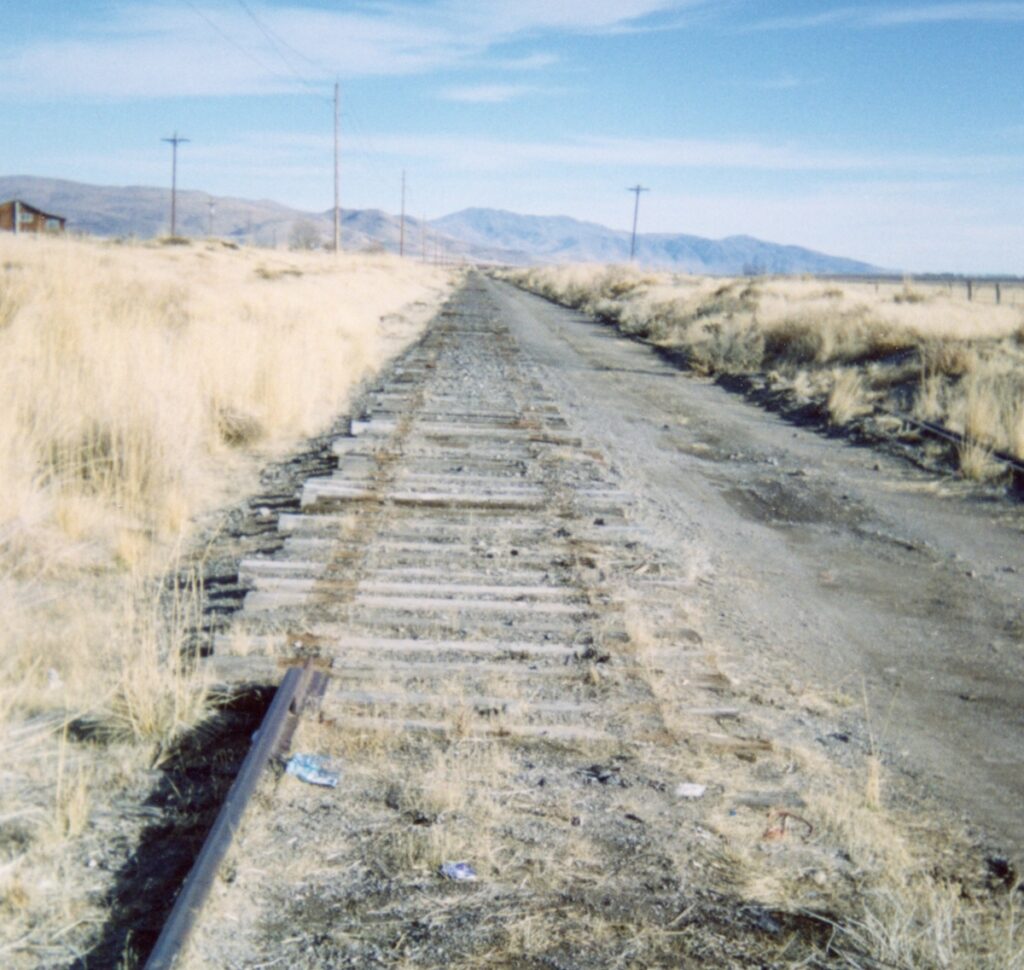
This fall marks twenty years since the last segment rails of the original Fernley & Lassen Railroad, between Susanville and Wendel, were removed. The historic event went largely unnoticed. Yet, it was the railroad that had one of the most significant impacts on Lassen County. It was this particular line that created the communities of Litchfield and Westwood. Of course, it brought about the development of the timber industry. Two years prior to this event, the last lumber mill, Sierra Pacific Industries at Susanville shut down for good.
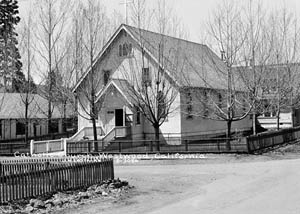
When Westwood was established, its Catholic community was a part of the Sacred Heart Parish—it had only been created in 1912 and covered the territory of Lassen and Modoc counties. The first pastor was Father P.J. O’Reilly. There seems to be some confusion as to when the first Mass was celebrated in Westwood. On December 12, 1913, it was reported in the Lassen Weekly Mail: “Father P.J. O’Reilly made the trip to Westwood to attend to spiritual wants of the Catholic Church in the new lumber town.” However, under the heading of Remarks in the Parish Death Register, Father O’Reilly wrote, “Mass was celebrated in Westwood for the first time by Rev. P.J. O’Reilly on 19 April 1914 in the school house situated near the present fire department. Mass is now said in the school situated on the hill facing Delwood Street.” Father also wrote, “The first Catholic funeral that was held in Westwood was on July 24, 1914. The internment was made in the new cemetery, portion of which viz the North East section is devoted to the use of the Catholics who die in and around Westwood for Catholics only. This cemetery is 3 1/2 miles from Westwood.” That internment was for Jose Alvarez, a 22 year-old millworker who died from typhoid fever. Continue reading Our Lady of the Snows→
Said Valley Reservoir, 1921. Courtesy of Lola L. Tanner
Today, members of the Walton family will gather at Walton Meadow to celebrate its centennial of ranching heritage. The meadow is located west of Grasshopper Valley and southwest of Said Valley. The family extended an invitation to yours truly to attend, but alas I am unable to do so.
Here is some background history.on the meadow. On March 29, 1933, George Dorian Walton (1895-1960) was issued a land patent to the meadow that bears his name. Walton was originally a dairy farmer at Red Bluff. He was accidentally struck by an automobile and when he recovered from the injuries sustained, he assisted his parents and brother in their sheep business. His brother, Alfred Stephen Walton (1899-1984) had become acquainted with this region for summer grazing in the mid-1920s when he was employed as a herder for Tony Avilla.
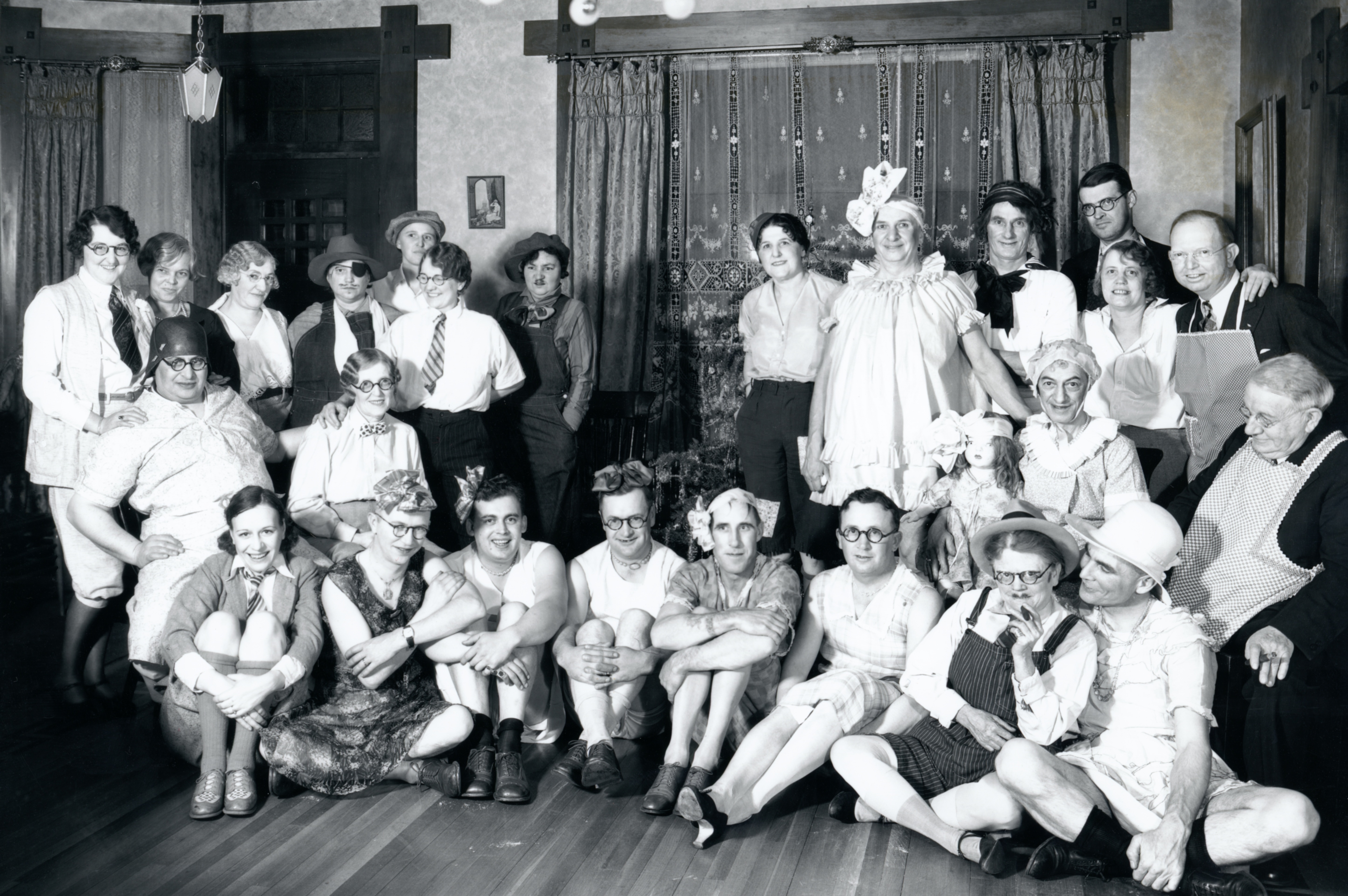
This 1931 gathering was held at the home of Blanche & Ike Knoch, frequent hosts of such events. Be sure to click on the photograph for a larger image. Courtesy of Hank Martinez
Back in the 1920s and 1930s certain segments of Susanville’s Society entertained in a variety of formats. While there were numerous card groups to pass the time, others craved something a bit more exciting. These, of course, were costume parties and the themes as varied as the host/hostess.
It is interesting to note that these “freak parties,” as they were called, were quite popular during prohibition and less so afterwards. Whether alcohol refreshments were served, is anyone’s guess, but Susanville residents enjoyed their alcoholic libations during prohibition.
In any event, maybe there is some creative type who might like to host a freak party in the near future. If you do, be sure to send me an invite. It certainly appears to be enjoyable way to spend an evening versus other entertainment venues available.
B.R. Zimmerman residence, 45 South Pine Street, circa 1890. Courtesy of B.R. Zimmerman Collection
One of Susanville’s original streets, when the town was surveyed in 1863 it was the most western street. So named for the pine trees that are on the western edge of town. An odd thing about Pine Street, it initially went from Main south to the Susanville Cemetery. What is known as North Pine Street did not come into existence for a number years, and even then it only extended to North Street. For years it was known as Prattville Road, and this was route out of town, and the next town then in existence was Prattville, which the original town no longer exists as it demolished to make way for Lake Almanor in 1914.
160 North Pine Street, Susanville, 1921–Lola Tanner
In 1925, the advent of residence mail delivery the house numbering system began In 1952, it was revamped with North and South distinction the dividing line, of course, was Main Street.
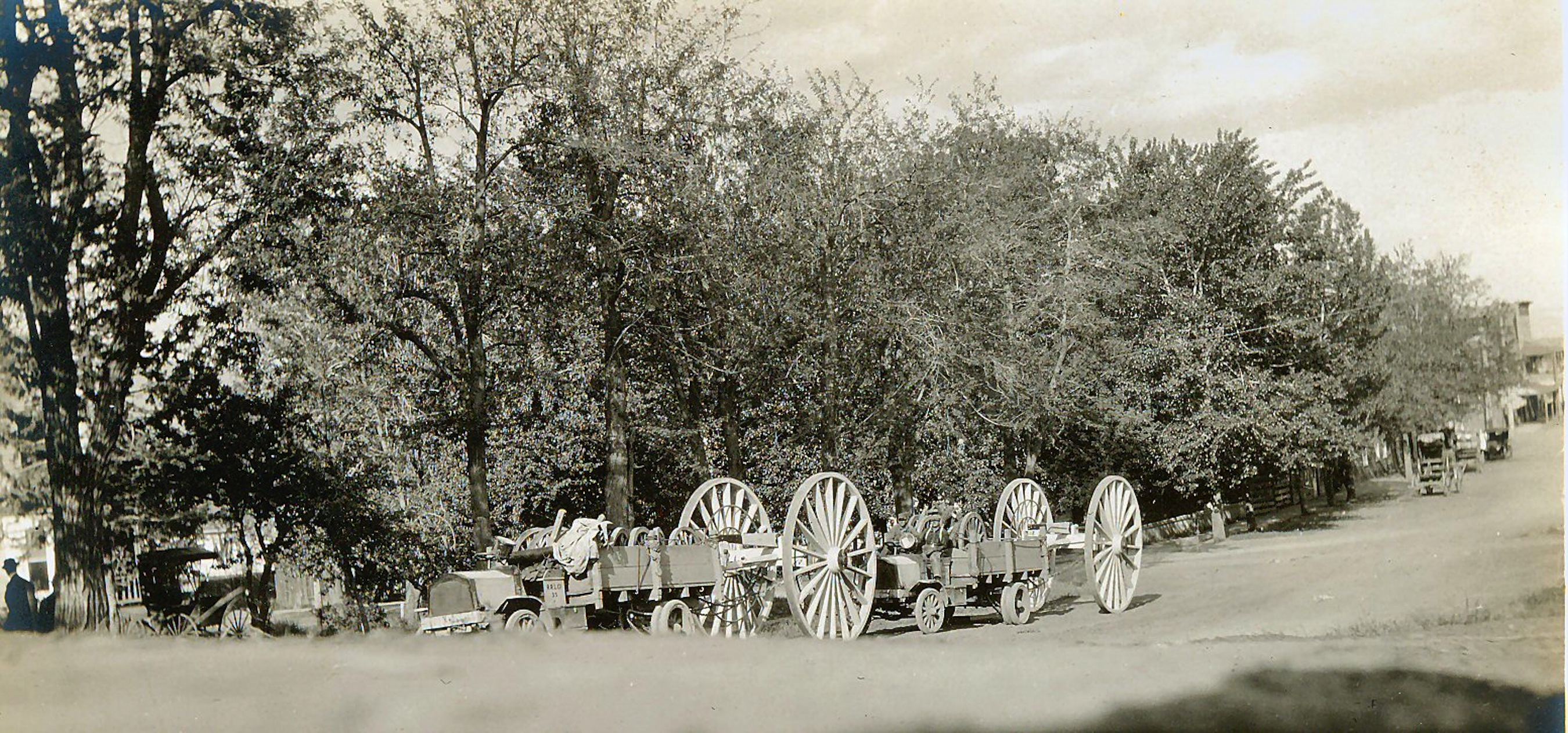
One of the nice features using this forum, instead of traditional print, some photographs will not print well. The above is a perfect example, yet it is an interesting photograph. This is at 501 Main Street, now Uptown Cinemas. This caravan of equipment is headed to Westwood while the first sawmill was under construction. Courtesy of Marcella Mathews Searles.
When the Red River Lumber Company finally decided, or actually more to the point Fletcher Walker demanded the Mountain Meadows location or otherwise he was going to quit, there were numerous hurdles to overcome.
During the initial construction phase of 1912-13, everything would have to be freighted in, while the railroad was under construction, and it would not be completed to Westwood until February 1914.
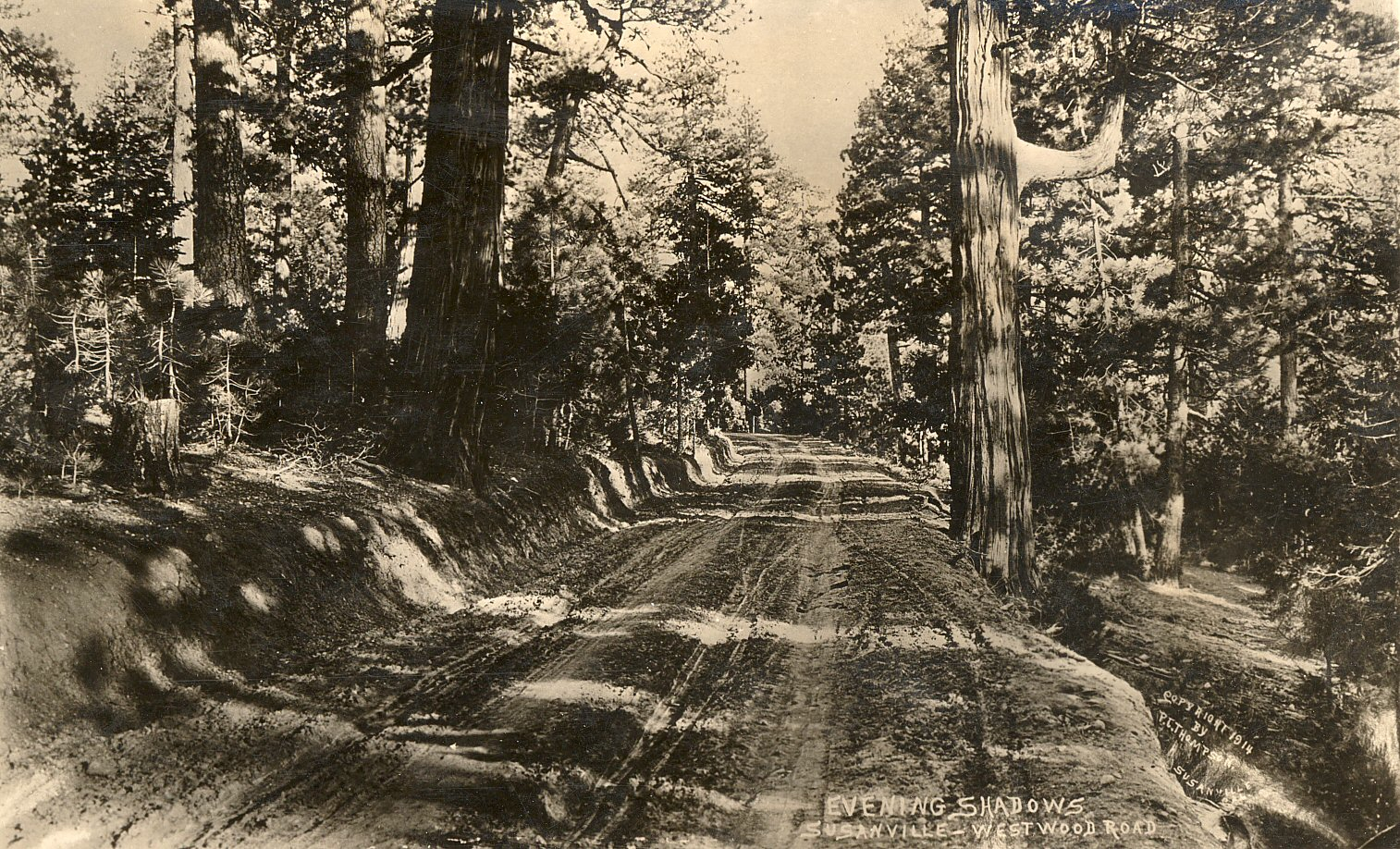
The road over Fredonyer as it appeared in 1914.
The bulk of the machinery was shipped by rail on the Western Pacific to Doyle. Smaller shipments also went by the Western Pacific to Keddie. In either instance, that is still a long haul for all the machinery to build one of the largest electric sawmills. In addition, all the auxiliary items needed to build a company town. This is before paved highways no less, and the truck traffic certainly made its imprint on the roads, though not in a favorable way.
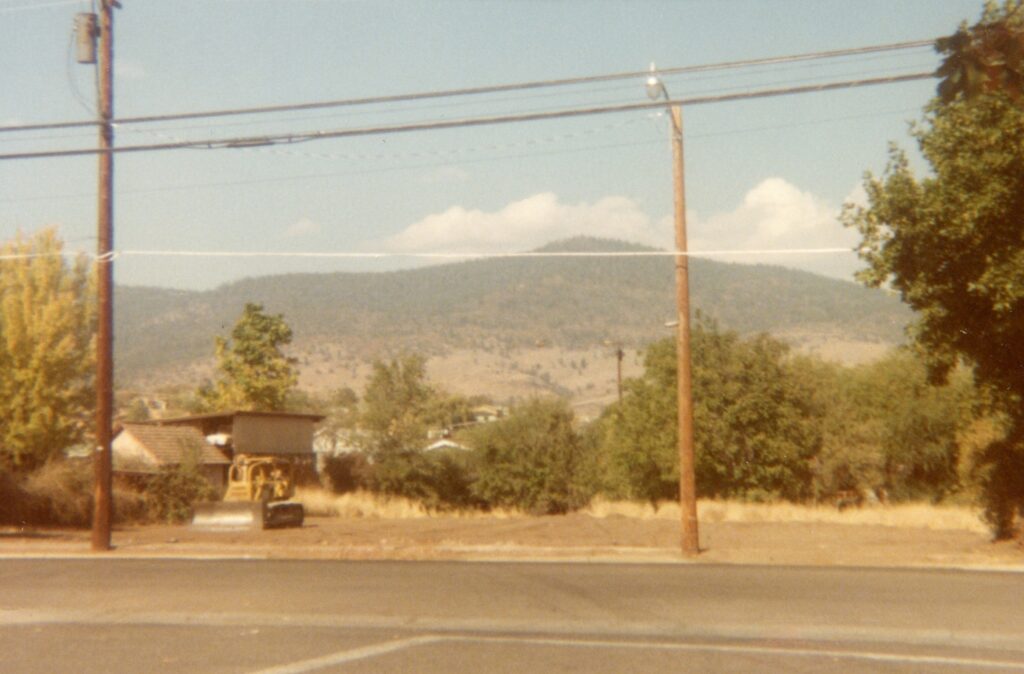
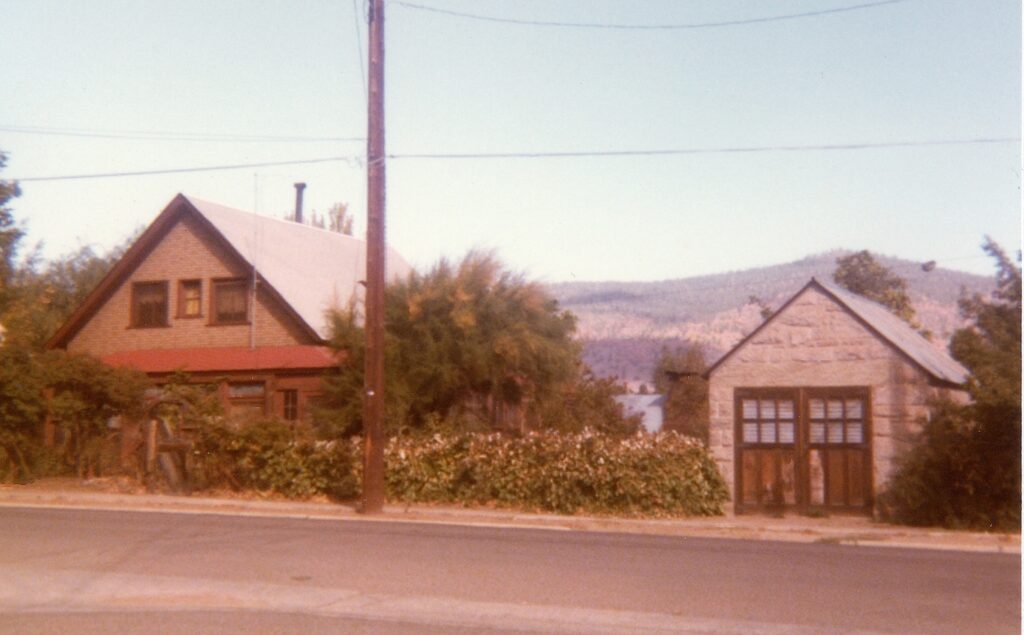
First time visitors to my new North Union Street living quarters, ask if any thing existed on the nearby vacant lot at N. Union and North Streets. There was. It was the residence of Thomas N. Long and built in the mid 1870s. In 1918, the Long Estate sold it to Bundy & Winifred French. French, it should be noted was the Lassen County Courthouse Janitor for decades, which was a appointed position by the Lassen County Board of Supervisors.
October 9, 1977
In 1976, Winnie French sold the property. The residence and native stone garage was torn down in October 1977 and plans were for an apartment complex on the site that that never materialized.
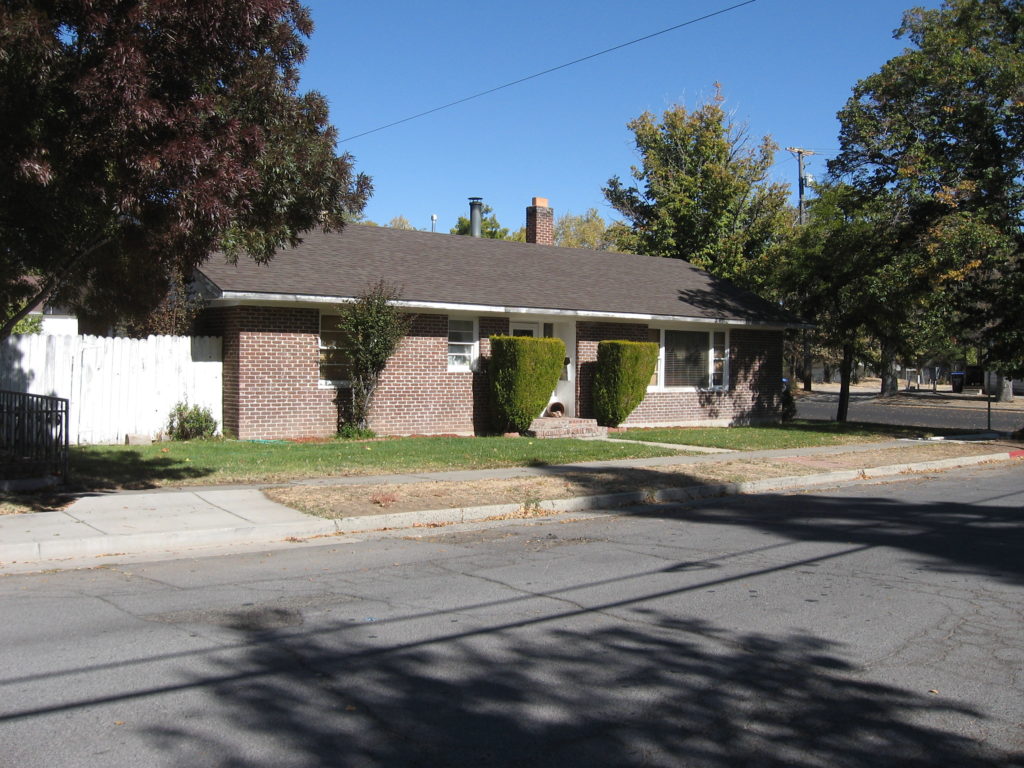
This brick house on the corner of Mill and South Gay Street has a story. Before it was built, the lot was occupied by a Victorian house. That blue Victorian house moved to adjoining lot to its west. This house was built repurposed brick. In 1948, the two-story Washington School, that was built in 1900, was condemned by the State. The bricks used to construct this house came from that school. Since that school was located on Cottage Street, only a block away, transporting the brick was not an issue.
The Susanville Grammar nee Washington School, nee Washington, as it appeared in 1948