Tag Archives: Eagle Lake

September 11, 1899

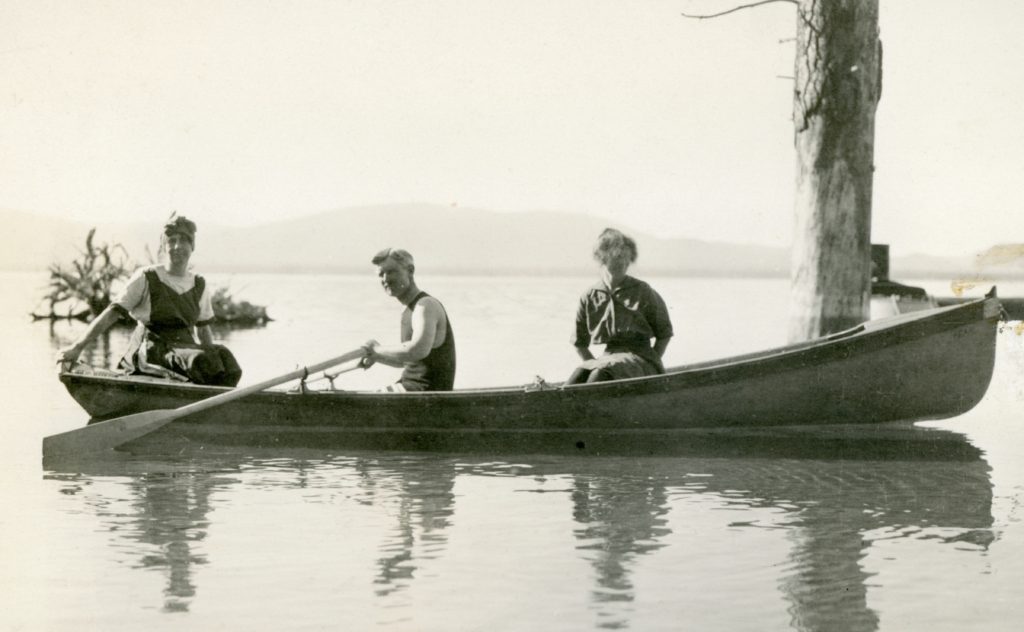
Having a bit fun at Eagle Lake’s north shore, 1923. Lola is to the left. The other two women were school teachers at Eagle Lake and Willow Creek.

September 11, 1899 is special day for me. It was on the date my grandmother Lola Lily Murrer was born in Willow Creek Valley, the eldest child of Edward and Mary (Knoch). Murrer. She had special affinity for photography. I am grateful for the photographs she took of Eagle Lake during its high water levels of the mid 1910s and of the Bly Tunnel construction. The Murrer Ranch was great hub activity during the tunnel construction. The tunnel outlet abutted the Murrer ranch. According to family lore, my grandfather, John Tanner, briefly worked as a teamster hauling supplies to the tunnel works and is how the two met. He had a ranch in the Standish district where they raised their family.

Lola, January 1925

The family sold the ranch in 2025. While going through ranch house prior to the sale, her great-great grandson located three boxes of her photographs. Most of thee are from the 1930s onward and I have not had an opportunity to inspect them. Whether there are early day Eagle Lake photographs I do not know. Whatever the case may be, if there are any interesting photographs, I will let the readers know.

Tim

The Pine Creek Millpond

Pine Creek
Pine Creek, circa 1914. It sholuld be noted that John Spalding’s original homestead was on the north side of Pine Creek. Courtesy of Wyn Wachhorst

In 1919, Fruit Growers Supply Company purchased the Collins Tract west of Eagle Lake the contained an estimated a billion board feet of timber. Lassen National Forest officials suggested a mill site on Pine Creek near Eagle. Lake. Fruit Growers examined two sites, in the region what is known as Spalding Tract. They were informed that Eagle Lake had dropped from 3 to 4  feet during 1917-18. There was also the uncertainty where Leon Bly had obtained water rights to the lake for irrigation in the Honey Lake Valley. It was suggested that Fruit Growers place a dam at the Pine Creek estuary for a millpond and in the worst case  scenario drill wells for a water supply. After a short debate Fruit Growers decided to locate the sawmill at Susanville.

Tim

The Eagle Lake Ditch

Eagle Lake Ditch, near Amedee, February 2018.

In 1891, the Eagle Lake Land & Irrigation Company became the latest entity to tap Eagle Lake to irrigate the sagebrush lands near Amedee. They had two propositions to do this. The long term was to finish Merrill’s tunnel. The second one involved a pumping plant to deliver the water. Like the predecessors they would utilize the channel of Willow Creek. At Belfast where Willow Creek enters the Honey Lake Valley the company constructed a twenty-one mile ditch to Amedee. In October 1892, with everything in place, water flowed from Eagle Lake to Amedee.  Water would briefly flow the following year. However, the company plagued with financial problems filed for bankruptcy. The pumping plant was dismantled in 1903.

Donate or Subscribe

Eagle Lake – Gallatin Beach

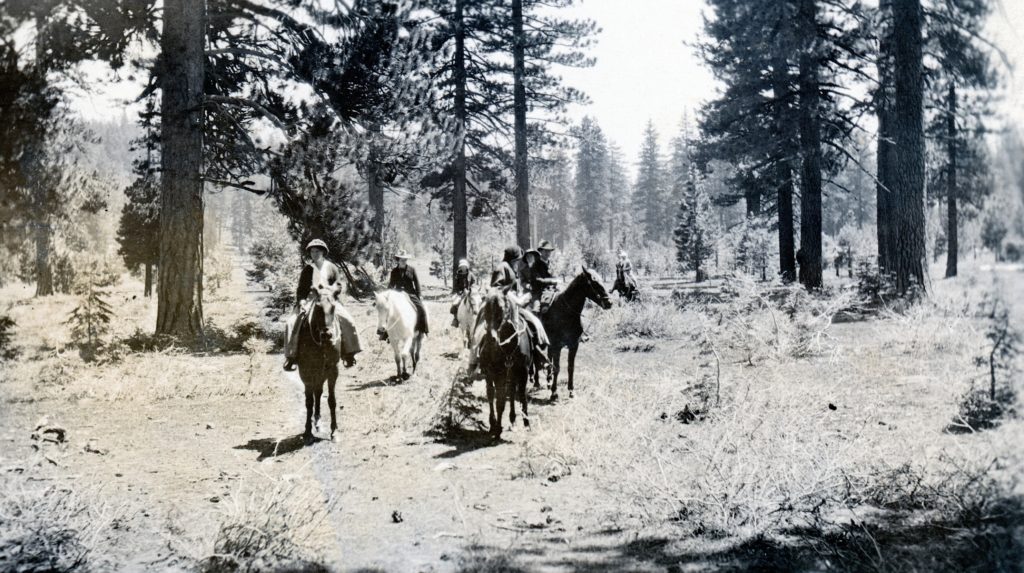
Eagle Lake trail to Gallatin Beach, 1914. Courtesy of Dolores Gasperoni

Since the 4th of July weekend will be soon upon us, a wee bit of history of Gallatin Beach that has been one of the lake’s popular spots. Visitors were fortunate in the aspect that Malvena Gallatin not only allowed public access, but there were no fees or any other restrictions. Another property owner, especially if it was a timber company, would not have been so gracious. After all, others would have been concerned about fire danger. Fortunately, no problems were encountered.

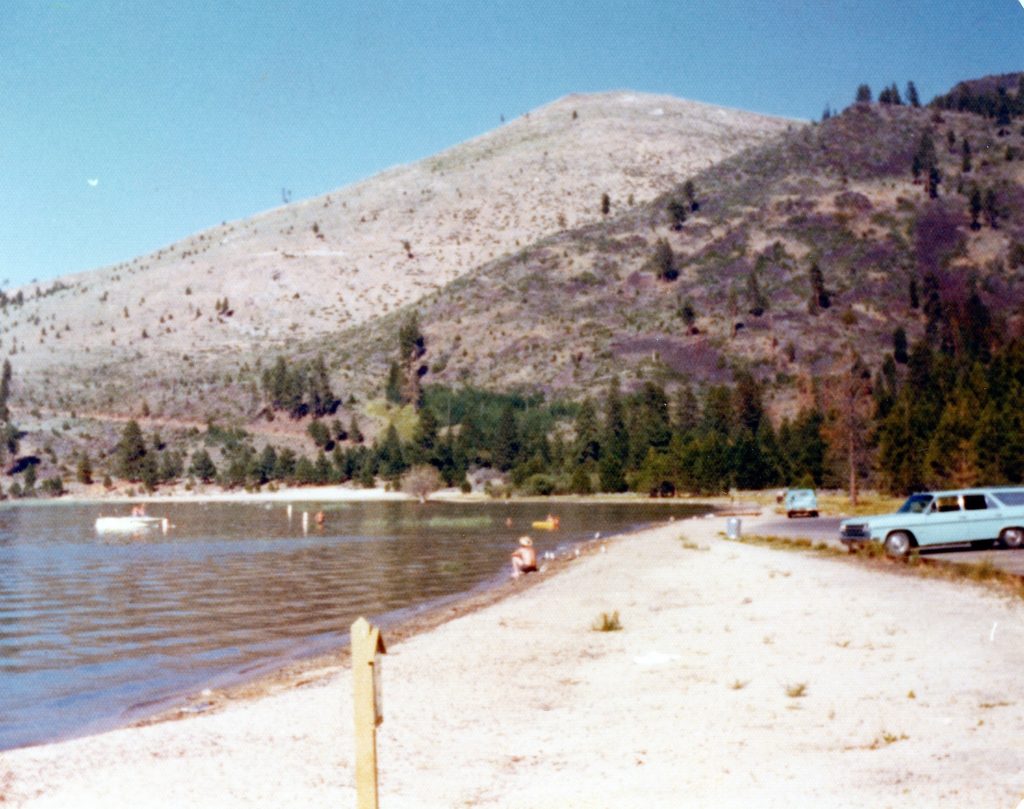
Gallatin Beach and Peak, July 22, 1974.

It should be noted that Malvena Gallatin owned over forty miles of Eagle Lake’s 100-mile shoreline. In 1944, Malvena’s only grandchild passed away and Eagle Lake lost its special appeal as her family’s summer retreat. In 1946, she sold all of her Eagle Lake property to the Lassen Lumber & Box Company for $100,000, though she retained a small parcel that contained the summer home. The future of public access looked bleak. Lassen Lumber was only interested in the timber. Later in 1946, the Lassen National Forest reached a deal with Lassen Lumber to exchange timberlands elsewhere in exchange for the Gallatin property. The two agreed, and that is how Gallatin Beach became a public beach on public property.

Never miss a story, click here to support and subscribe.

The Gallatin Boat Dock

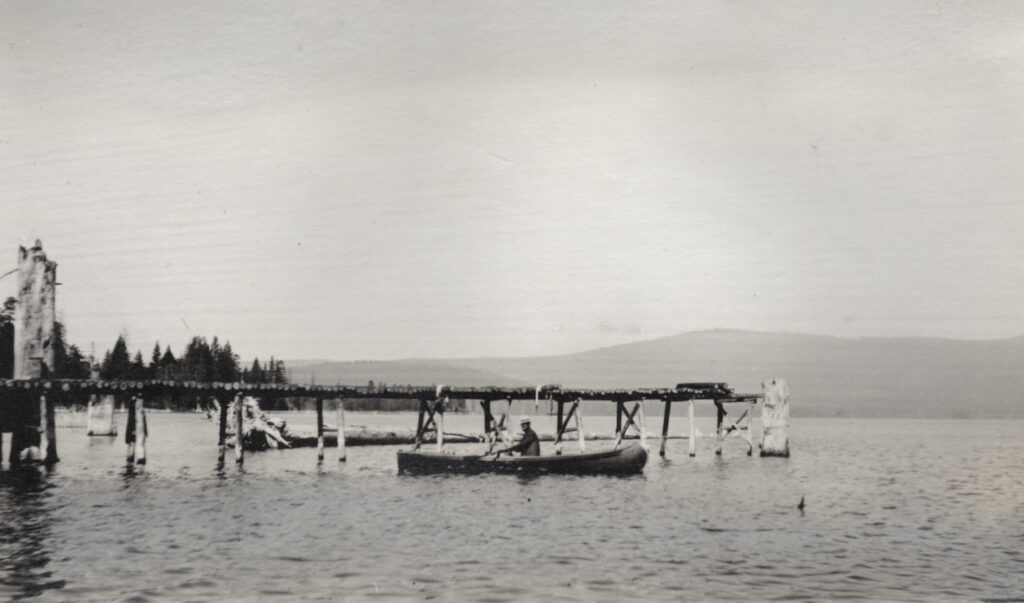
Gallatin Boat Dock, circa 1922-Wyn Wachhorst

For those who have 2026 Calendar, the Gallatin Boat Dock at Eagle Lake is the featured photograph. The above was not included in the calendar. While I was aware of Gallatin Boathouse, I did not the know of the existence of the dock until I examined the Gallatin photograph collection. I consulted my letters and notes from Ardith Bronson Doyle. Ardith was granddaughter of Bert Christie, who caretaker of the Gallatin House and she spent her childhood summers there. Ardith, with her husband Forest Doyle, did provide mye with a sketch of the interior of Gallatin House, but there was no reference to a dock.

Tim

An Eagle Lake Catch

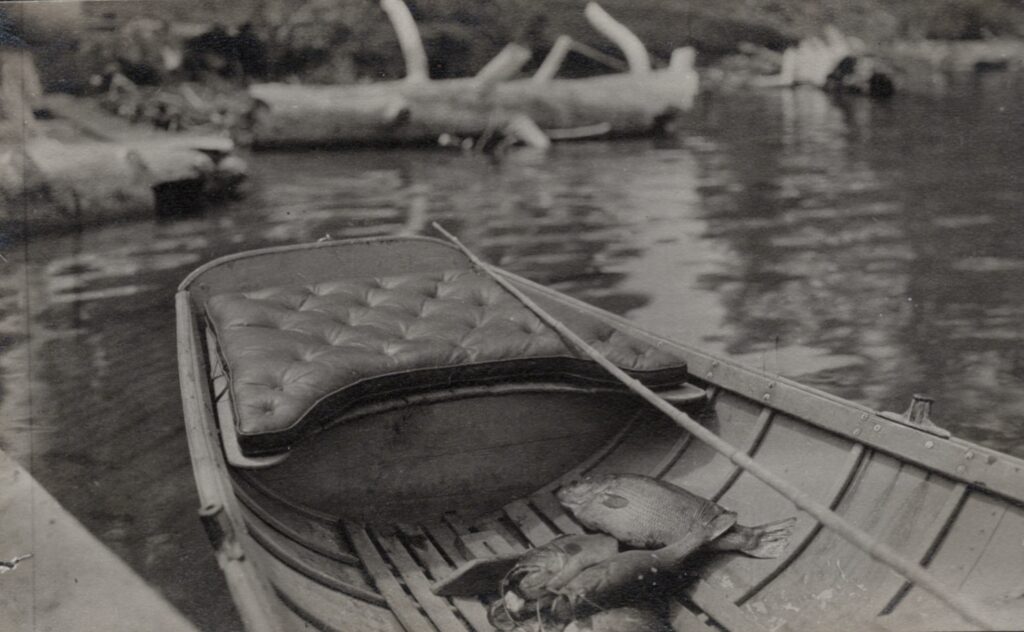
A catch of Eagle Lake bass in one of many Gallatin’s boats-Wyn Wachhorst

I do not have a fishing report for the Eagle Lake opening of Memorial Day weekend.  However, as promised I do have two Gallatin photographs to share which feature bass that had a short history in the waters of that lake

Between 1879 to 1956 there were officially twelve different exotic (non-native) species of fish planted in Eagle Lake. Yet, that figure could be higher since local anglers were known to have experimented with their own plantings.

Of all the varieties of species planted in the lake, only one truly flourished—the largemouth (black) bass. In 1901 the Lassen County Fish and Game Protective Association planted 147 bass in the lake that it had received from the California Fish & Game Commission. The following year additional bass were planted in the lake. To allow the bass to prosper the State Game Commission prohibited fishing of the bass for a period of four years.

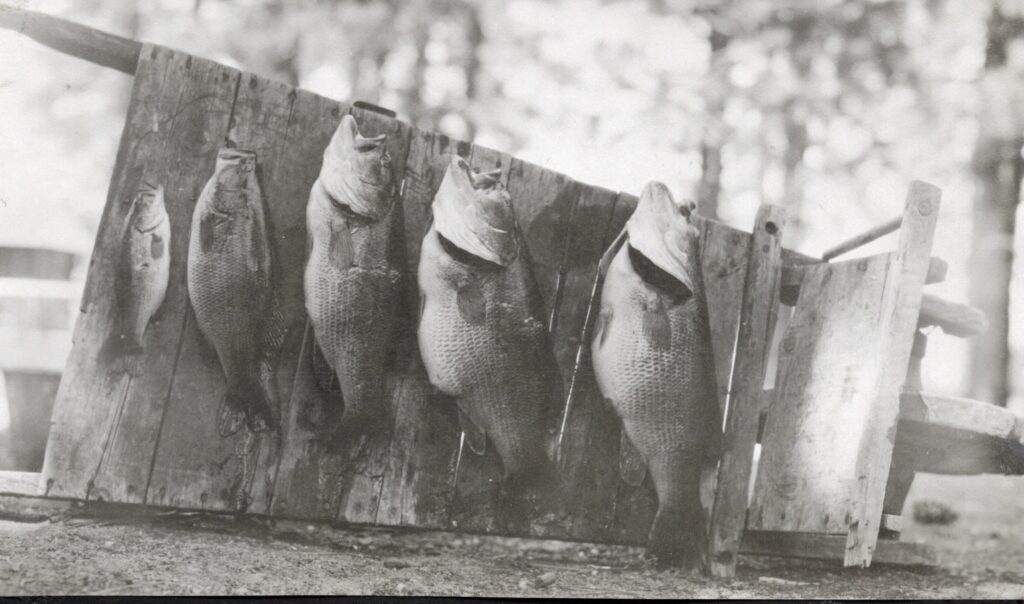
A second display of the bass catch-Wyn Wachhorst

The bass thrived in Eagle Lake and for the next twenty years provided anglers with excellent fishing producing bass weighing in excess of ten pounds. On occasions the Fish & Game Commission found the bass in such abundance that they were transplanted to other waters in Northeastern California.

By the mid 1920s the lake level receded considerably in part of the Bly Tunnel and a drought. The marshy shoreline regions of the lake had disappeared and that is where the bass thrived. In addition, the lake’s water quality had changed increasing its alkali content, thus wiping out the bass population.

Subscribe


Eagle Lake Architecture

Eagle Lake’s own Hobbit House, 1921.

It is always fascinating what one may come across in the most unexpected places. A lava cave near BlyTunnel was converted into a dwelling of sorts by construction workers at the tunnel, and then abandoned after activity ceased there. Jim Martin, a travel writer for the Sacramento Bee did a feature article on Eagle Lake in 1968 and made mention of this unique residence  and wrote: “But before you get there, you will notice a metal tank on your left. If you park there, you will find a trail nearby. By following this trail you will come upon a lava cave which has been converted into living quarters. It looks like a place for gnomes or some characters from Tolkien’s Lord of the Rings. It once was used by construction workers and goodness knows who else. It is deserted now.”

Subscribe

P.S. – Still in search of a  home.


A Gallatin Photograph

A 1919 Gallatin family boating outing on Eagle Lake. Courtesy of Wyn Wachhorst

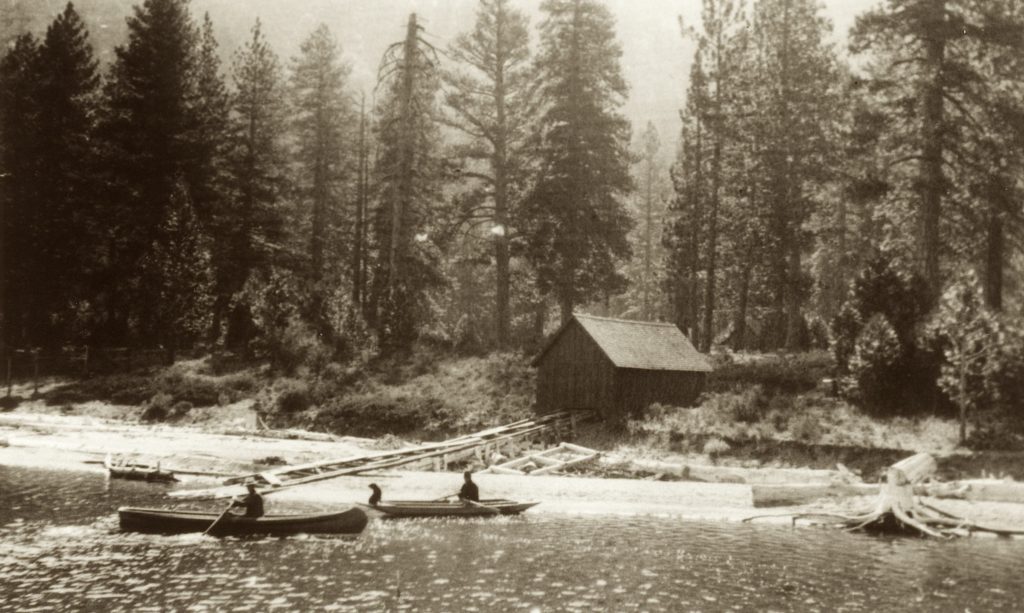
Slowly, but surely I am getting around to the Gallatin photographs. The family sure did like their boats. It was interesting that boat dock and the boat house were not side by side. More about that later.

Gallatin Boat House—Wyn Wachhorst

Tim

An Interesting Eagle Lake Geology Report

Gallatin Beach and Peak, July 22, 1974.

The geology of Eagle Lake is unique. It is a mixture of Sierra Nevada spillover (Gallatin Peak) and the Cascades that flanked Gallatin on both sides. One can see transition from the tailing pile remnants of Bly Tunnel. The inlet consisted of  decomposed granite (Sierra) while the outlet tailings is red volcanic cinder (Cascade).

In  2017 U.S.G.S. released   Age of the Youngest Volcanism at Eagle Lake, Northeastern California. It is only a 34 page document which I can hopefully one can access it this way. If not please email and I will send you the pdf file.

Clynne etal USGS OFR 2017-1027 Eagle Lake

Tim

The Gallatin Photograph Collection

South shore, Eagle Lake, 1917-Gallatin/Wachhorst Collection

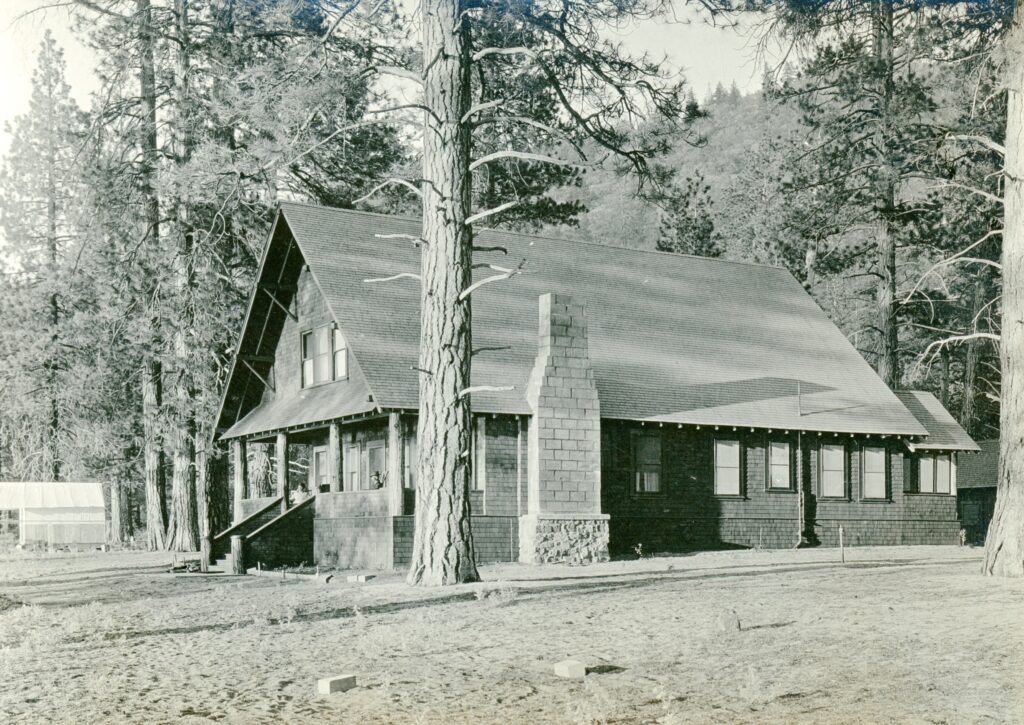
In 1913, Malvena Gallatin built the first summer home at Eagle Lake. For the next ten years her family, especially her granddaughter Norma Virginia, spent the summers there. The bulk of these photos  were taken between 1917 and 1920, when Eagle Lake reached its historic high levels. I recently scanned few and I can post various scenes if there is an interest. It should be noted that there are some 200 photographs.

Tim