Tag Archives: Fruit Growers Supply Company

A Historic Moment

Fruit Growers Susanville Box Factory as it appeared the day it opened on April 9, 1921—Ed Standard

On April 16 1921, there was dedication ceremony for Fruit Growers Supply Company mill. While the sawmill was placed into operation everything at least from the public perspective was full steam ahead. However, a facility that initially hired 1500 men to operate it would require a lot of work for every component to function.  Case in point, and the reason for the mill existence was the box factory not placed interoperation until earlyJune., but was not fully at capacity until September.  On brighter note, on June 1, 1921 shipped its first railroad car of lumber.  The accounting department must have been pleased that with several million dollars expedpenditures to acquire the timber and built the mll, revenue was finally generated.

Tim

A Surprise Visitor

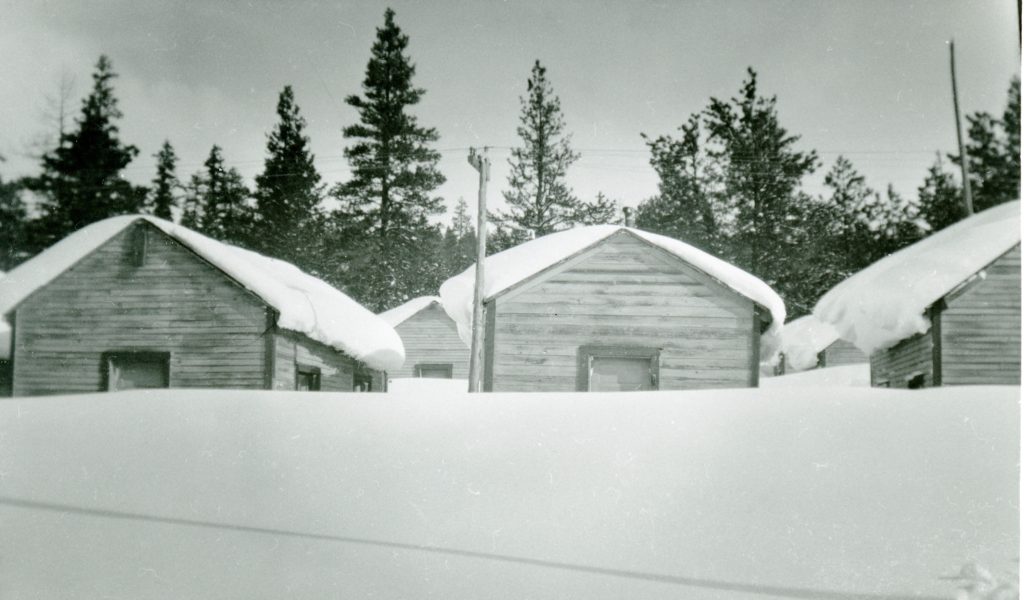
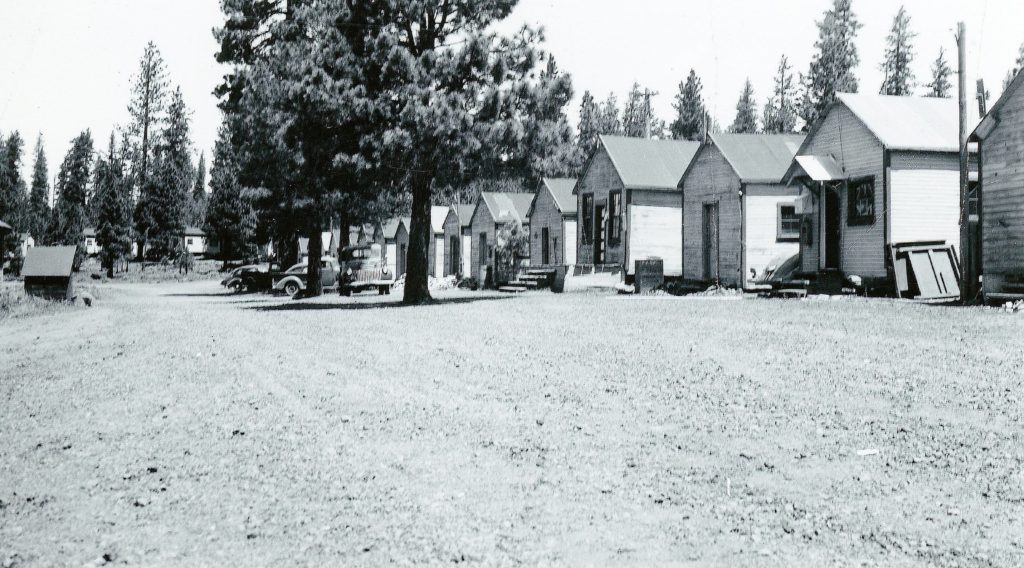
Camp A
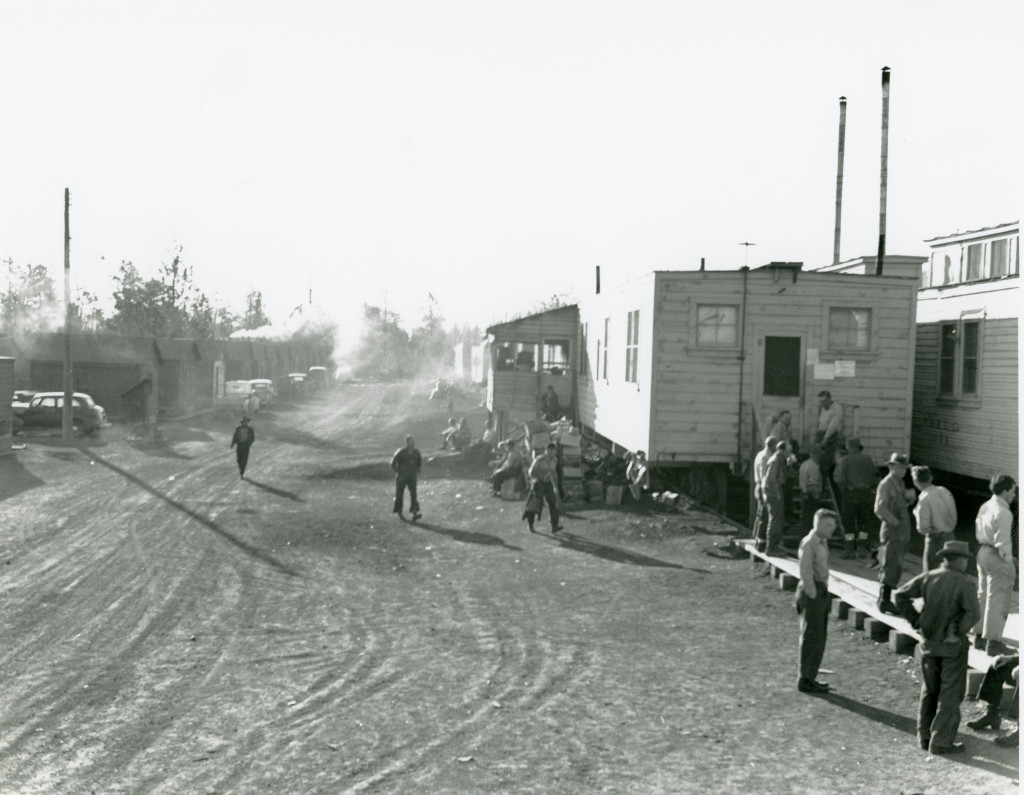
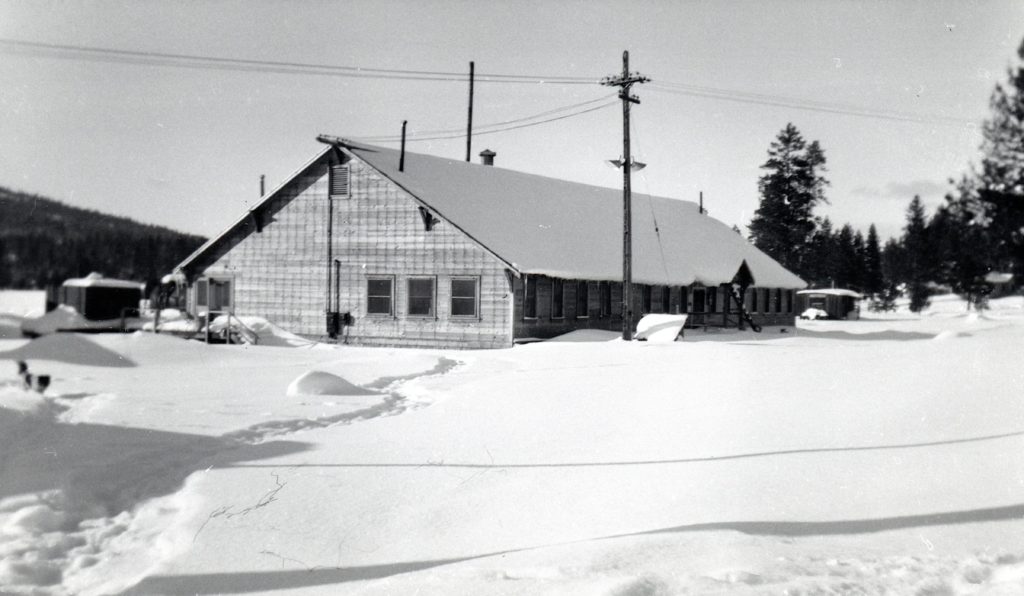
Camp A, Fruit Growers Supply Company, located just north of McCoy Flat Reservoir, 1921

When I transcribed this newspaper article in the early 1980s. there was one item just went over my head. More on that at the end of the post.

Lassen Advocate – June3, 1921 – Large cougar prowling in neighborhood of Camp A. A large cougar has been seen several times recently in the neighborhood of Camp A of the Frut Growers Supply Company. The animal has been trying to get at the pigs at the camp and killed several deer. Ray Ashton went out Tuesday with a view of taking shot of the cougar but the heavy rain spoiled his chances and he returned without seeing the big cat.”

Meat Locker/Cold Storage, Cap Harvey, 1947

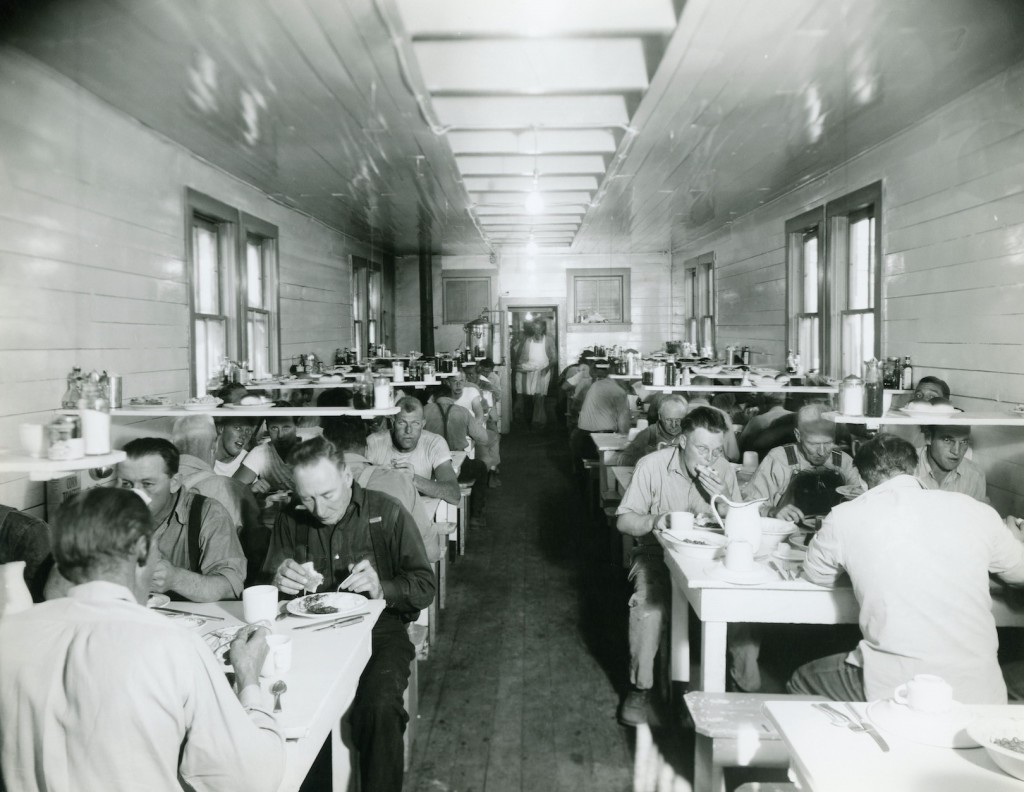
Logging camp food was legendary. Subpar food could break logging camp operations. Yet, Fruit Growers were raising pigs at a logging camp to feed their workers was news to me. After all there were refrigerated rail cars to transport perishable food items.

Tim

All Those Maps . . .

Fruit Growers Cut-over map

Maps like their counterpart photographs add another dimension to the story. It does not matter whether drawn by cartographer or a simple hand drawn its all relative to illustrate a point. Then there is an instance where a map shows the unexpected. The government soil survey of the Honey Lake Valley (1915) depicts a NCO railroad station known as Italy south of Amedee.

The above illustration is the 1920 Cut-over timber map of the Fruit Growers Supply Company near McCoy Flat Reservoir.  These maps were done on an annual basis. The Lassen National Forest Service had a similar map, since the timberlands of the forest service and Fruit Growers were co-mingled, that Fruit Growers was awarded a huge timber sale known as the Pine Creek Unit that the duration was thirty years.

Tim

The Decision, What To Keep & Discard

Westwood, 1945

The 1950s were challenging times for the Fruit Growers Supply Company., especially with its sawmills. They were faced with dwindling timber supply and equally important the conversion from wooden box to cardboard. There was no need for three mills, each required costly upgrades.

The Fruit Growers’ Board of Directors had an Operating Committee. One their tasks was an annual inspection of the mills and the company’s timber resources. In the fall of 1954, when the Committee arrived at Westwood the hot topic as to wether to keep Susanville or Westwood open. It was the consensus one would have to close.

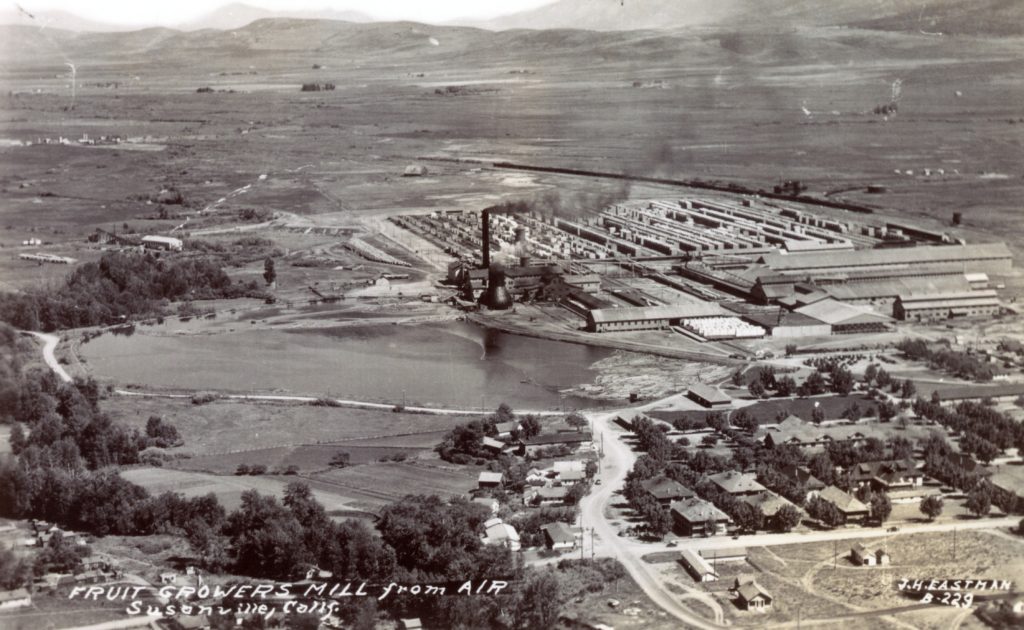
Fruit Growers’ Susanville mill.

Westwood had an upper edge with recently installed Craveneer plant. The Committee withheld their decision until they returned Los Angeles, but it was  apparent that Susanville would close.

After serious consideration it was decided to close Westwood  and to build a Craveneer plant in Burney. It was noted Susanville still had sufficient timber resources, so it was spared. In 1955, Sunkist, the parent company of Fruit Growers announced complete conversion to  cardboard and the wooden box as a shipping container was relegated to the past. It is interesting to note, that Fruit Growers considered converting the Susanville mill into paper/pulp plant to manufacture cardboard boxes.

Subscribe!


Fruit Growers’ Hilke Piler

The Hilke Piler, 1925.

Note: The hilke piler is the featured photograph for May 2026 Calendar. For those that might be interested, my 2027 calendar work file survived the move and it is my desk file drawer waiting for my attention.

In 1925, Fruit Growers Supply Company at its Lassen (Susanville) operation were always looking at innovative ways for efficiency and reduce labor costs at the same time. That year, they installed a Hilke Lumber Piler, the contraption had been invented in 1915 by Seattleite Henry Hilke. The piler was a very efficient means of stacking lumber outdoors. Not only did it reduce the aisle width for stacking of conventional lumber, but the machine allowed to make higher stacks. While a four man crew was involved, the piler could handle up to 10,000 board feet per hour. As one local observer noted: “To those who had never seen the new stacker in action, it is a most interesting and educational sight.”

Fruit Growers Supply Company lumberyard, 1935.

Subscribe

Eagle Lake Lumber Company Fire

June 13, 1965 – Hank Martinez

After Fruit Growers Supply Company closed their Susanville mill,it initially appeared that it would be sold to a liquidation firm. Fruit Growers had been in negotiations with Crook & Emmerson to sale them the mill, but negotiations stalled. Finally on June 12, 1963 they reached an agreement and the mill and adjoining residential section was sold to Crook & Emmerson for $875,000.

June 13, 1965 —Hank Martinez

Crook & Emmerson’s new enterprise was known as the Eagle Lake Lumber Company. All went well until the early morning hours of June 13, 1965 when a fire broke out in the planing mill. The sprinkler system there was inoperable as the structure was being renovated. By the time the fire department arrived, it was too late, as a large portion of the plant was engulfed in flames. After three hours, the fire destroyed the planing mill, the dry kilns, the abandoned box factory and an estimated five to six million board feet of finished lumber. The estimated loss was between $5 to $6 million.

The aftermath—FGSCo.

It should be noted that Eagle Lake Lumber Company evolved into Sierra Pacific Industries.

Support

P.S. – Still in search of a  home.


Lassen County’s Crater Lake

Crater Lake, August 18, 2016

Crater Lake is located seven miles east of the Bogard Rest Area on Highway 44. In 1907, Lassen National Forest Supervisor, Louis A. Barrett, included this lake in his inventory of proposed National Monuments, the other two being Lassen Peak and Cinder Cone.  The lake remained inaccessible for years, except for hardy hikers who climbed the mountain. In 1952, the Fruit Growers Supply Company constructed a logging road to the 35-acre lake that is situated in a volcanic crater, on lands owned by the Lassen National Forest. The Forest Service originally proposed to offer summer home sites, but established a campground instead.

Spread the word, encourage a friend to subscribe.

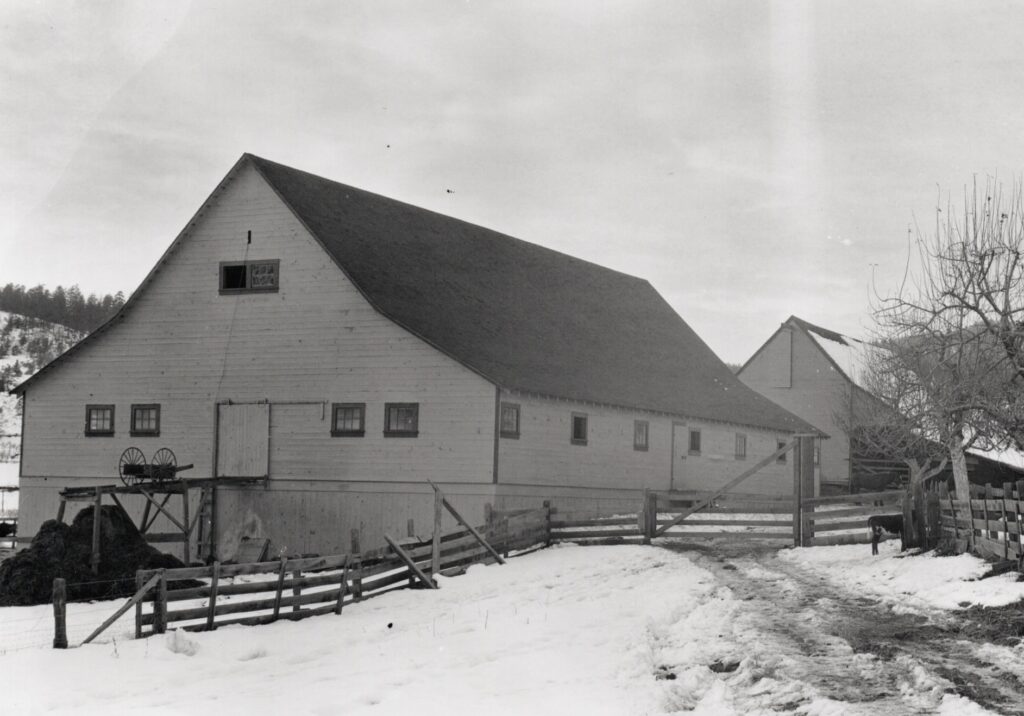
The Old Fruit Growers Barn

FGS barn
The old Fruit Growers barn, June 2, 2015- Photograph by Annie Henriques

Well, can you believe it, it has been ten years to the date that the old barn at the east entrance to Susanville was destroyed by fire. It was built in 1920/21 for the Fruit Growers Supply Company, who were in the midst of constructing their new sawmill/box factory nearby. Continue reading The Old Fruit Growers Barn

A Complicated Relationship

Fire trail V-drag plow, 1929. Courtesy of Fruit Growers Supply Company

Fruit Growers Supply Company’s Lassen Operation, on the surface seemed ideal–abundant timber supply supply, two billion board feet worth. In 1922, Fruit Growers purchased one-half of that billion board feet from the Lassen National Forest, a story in itself. It should be that timber was intermingled on Fruit Growers and Lassen National Forest property, primarily to the west of Eagle Lake. Early on the two had divergent opinions on fire prevention methods. The forest service  preferred the slash.burning method wherein tree limbs etc would be piled and burned. Fruit Growers said that method was costly, i.e. $13 per-acre. Fruit Growers adopted fire lnes, that other progressive timber companies had adopted. Fruit Growers created fire lanes that were 100 feet wide and completely void of vegetation, each encircling 100-acre sections of timber. They were formed by a specialV-drag hooked to a 60-Caterpillar tractor which could clear up to six miles of fire lines a day. The lanes not only served as firebreaks, but provided quick access in an emergency.

During the fire season, two crews of eight to ten men worked as fire prevention team. It was their job to build fire lines, oversee brush and slash piling, remove dead snags and maintain the company’s private telephone lines. Telephone “boxes” were attached throughout the forest, allowing for daily monitoring between the logging camps and the mill. The telephone system was also used to report fire or an accident when medical aid was needed.

By the end of 1932, the 178 miles of fire lanes constructed over 26,000 acres had proved very effective. Even though three of the. seven years it took to build them were critical fire years, only 53 acres burned. From 1925 to1940, prevention cost $40,373.54, fire fighting only $7,546.65. During World War II the construction of fire lanes was abandoned.

Support