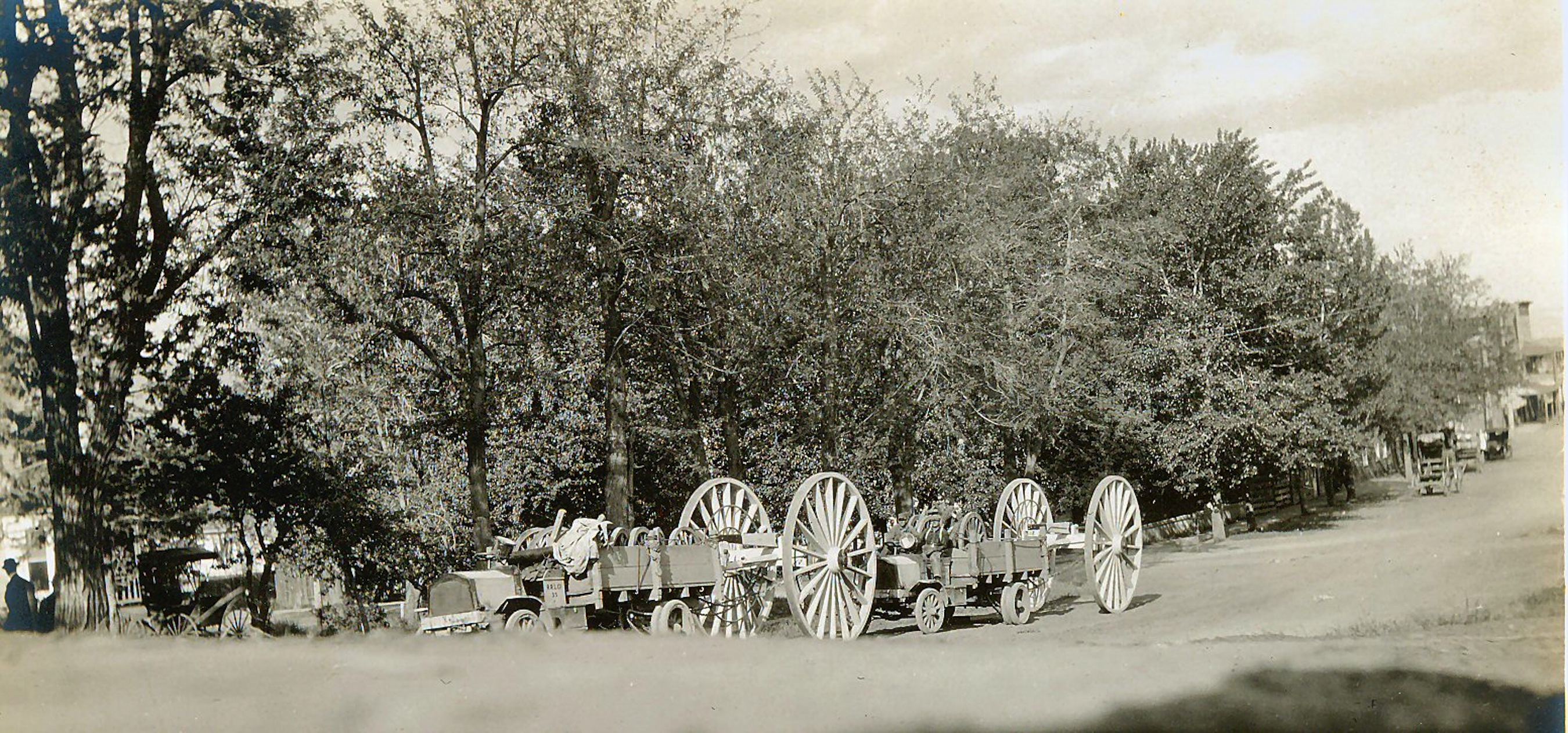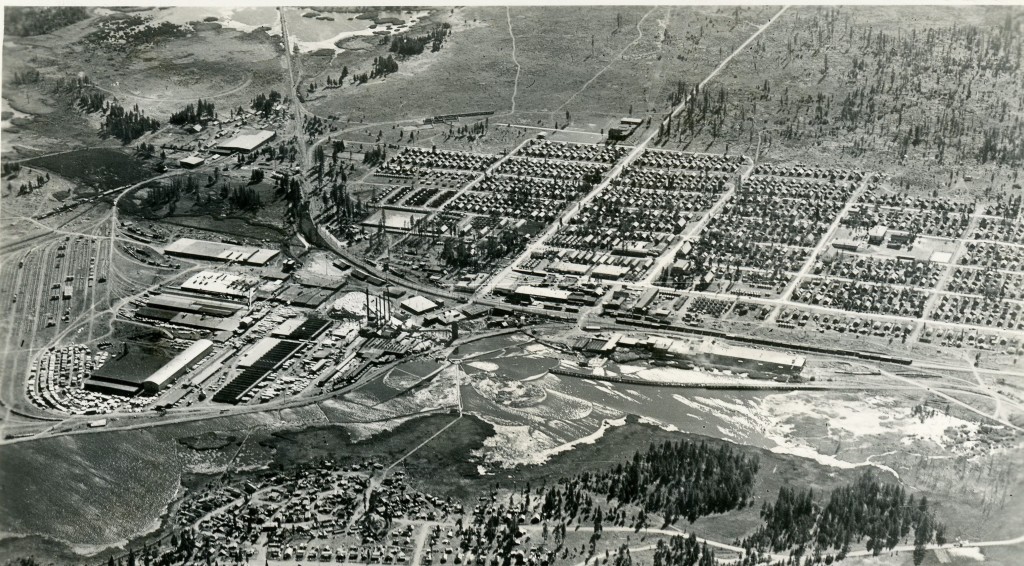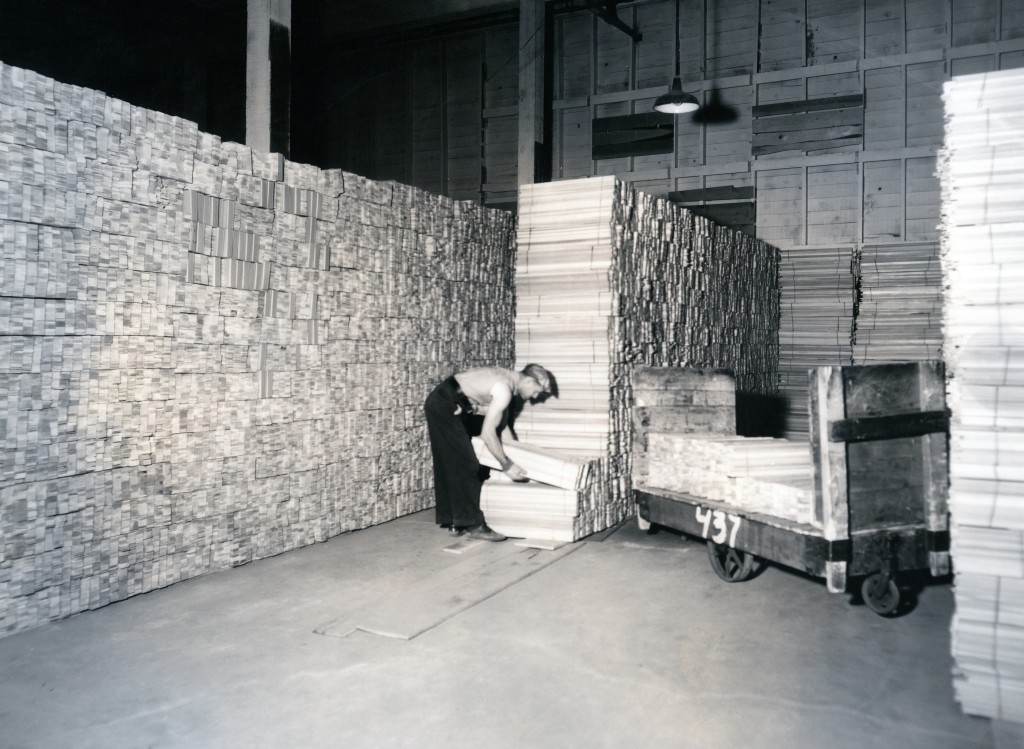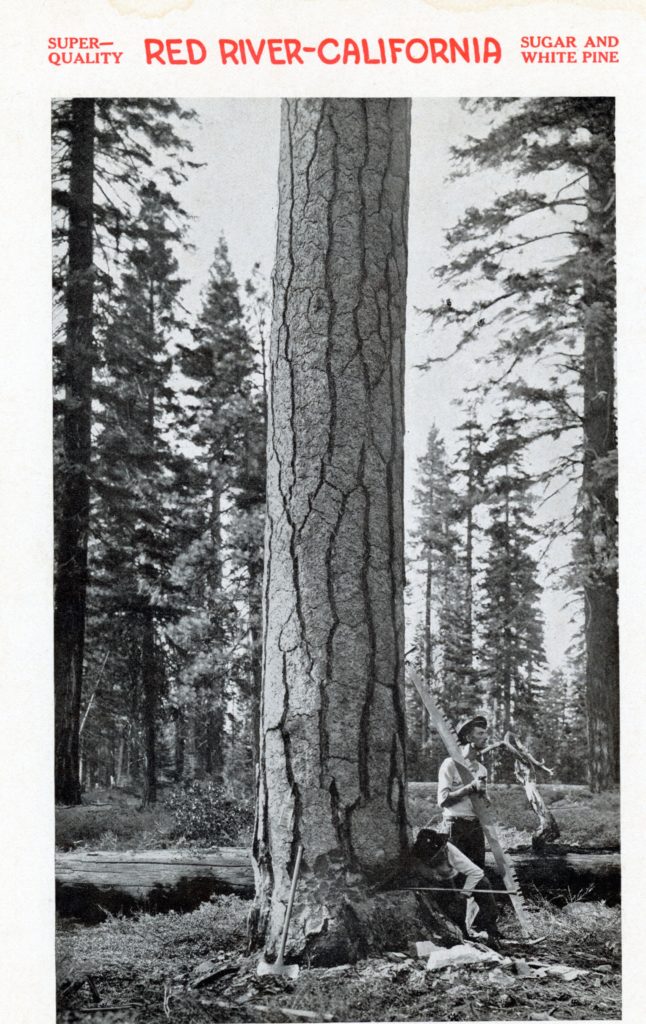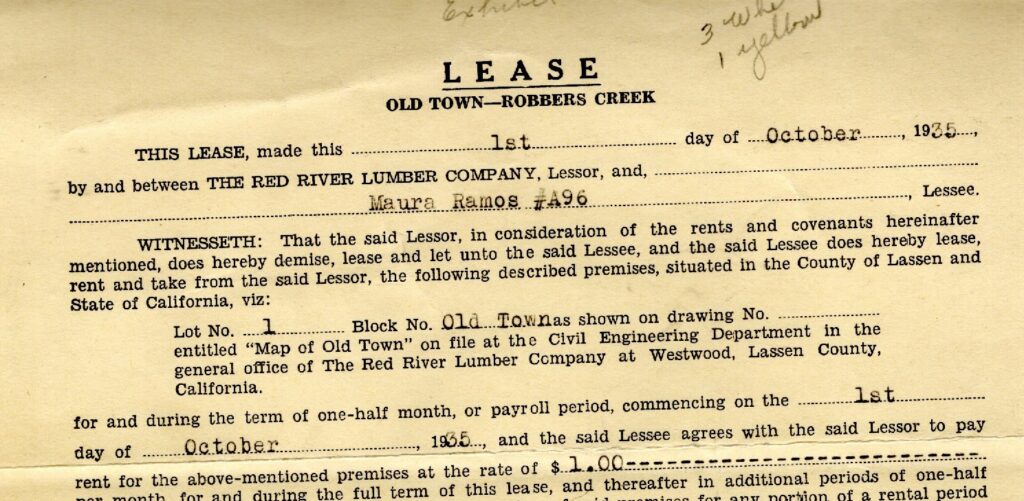
When the decision was finally made by the Red River Lumber Company to locate a mill at Mountain Meadows, there was still the obstacle of a railroad. Actually, the selection process was a volatile one, which one can read in Red River: The Early Years. On January 29, 1912, Red River entered into a contract with the Southern Pacific Railroad to construct a 125 mile railroad from Fernley, Nevada to Mountain Meadows, to the town that would be named Westwood. As an incentive, Red River guaranteed the Southern Pacific that all their freight would be handled by this line for a period of five years. In addition, it was understood that once Red River was ready to expand north, the Southern Pacific would extend its line to Klamath Falls, Oregon. However, that is another story, though Red River gave serious consideration to build a second mill near Lookout. Continue reading Westwood’s First Train→
Red River operated numerous logging camps from 1913 through 1944 when it sold to Fruit Growers. The camps were assigned numbers, though in no particular order. The majority of the camps were short lived and only had a span of one to maybe three years. One of the more interesting camps was Camp 33, but referred to as Town Camp, as it was located less than a mile west of Westwood. What made it unique was that Red River’s company town of Westwood would experience from time to time a housing shortage for its employees.. On occasion, this camp was used to house mill workers instead of loggers.
El Solano, Westwood, circa 1916 – Courtesy of D.B. Martin
One of the peculiar oddities back in Westwood’s early history there were no accommodations for the traveling public. The Red River Lumber Company who controlled the town wanted it that way. This would hinder any “undesirables” to try infiltrate the town, i.e., such as union organizers. However, Red River needed to provide some sort of accommodations for people visiting on official business with the company. Red River constructed the El Solano at 501 Birch Street to meet those needs.
The El Solano, circa 1916. Courtesy of Leona Jackson.
In the 1930s, during Red River’s financial crisis, the company converted its American Legion Hall into a hotel known as the Blue Ox Inn, and thus the El Solano diminished in status. It would later be converted into apartments. In the fall of 1965 the Assembly of God Church renovated the building, and the second story removed. Today, it is a private residence.
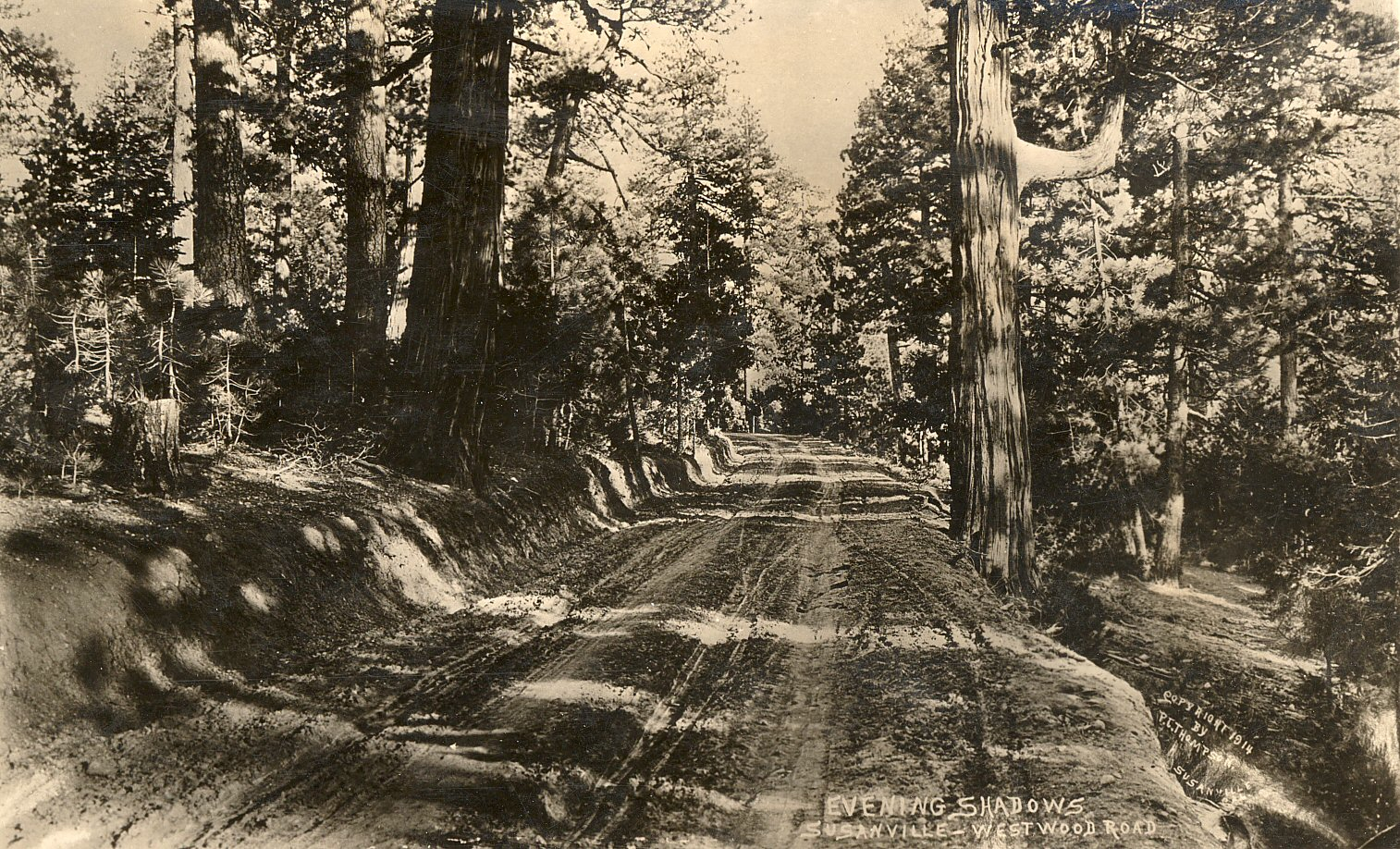
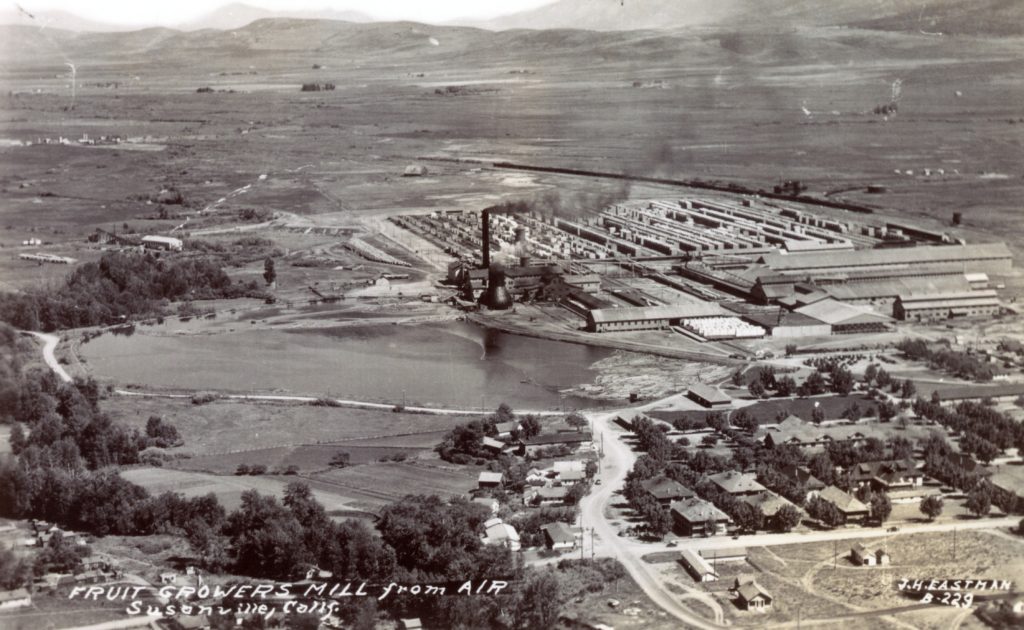
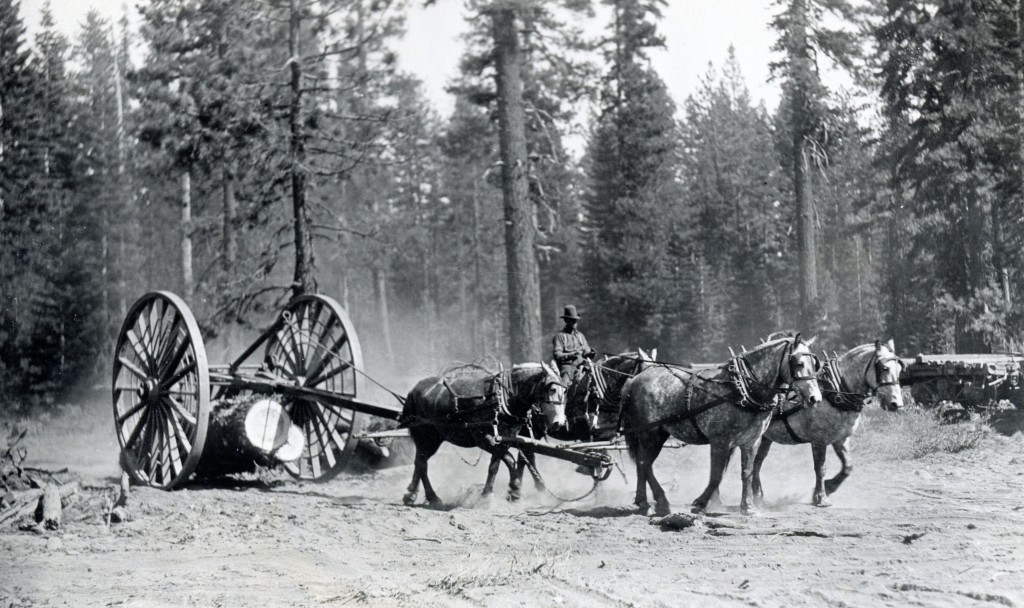
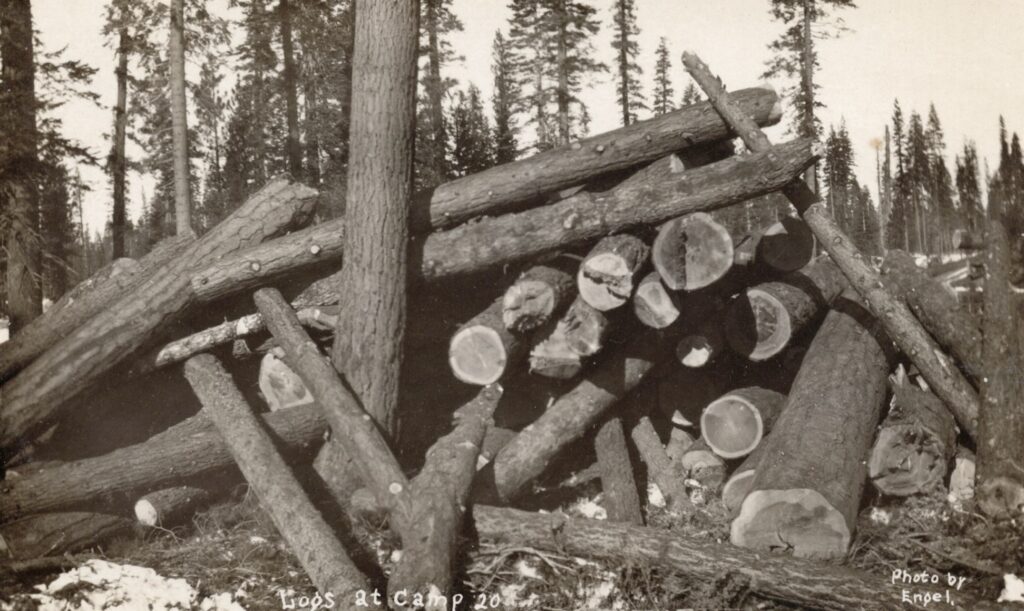
A subscriber, some months ago sent me some old logging postcards printed by Susanville’s Eastman Studios. Many assumed they were attributed to Red River Lumber Company’s logging/sawmill operations at Westwood. These photographs depict the operations of the Shasta Land & Timber Company east of Redding. In 1897, it became known as the Terry Mill. In 1917, the Terry Mill at Bella Vista suffered major fire damage and was a financial blow to that company. In 1920, the Red River Lumber Company acquired Terry. Red River only operated the mill for a couple of years. In 1925, the logging railroad at Round Mountain was pulled up and the rails were sent to Westwood.
Company town’s such as Red River Lumber Company’s Westwood, in a rural setting had its challenges. To prevent labor turnovers, recreational outlets needed to be provided. However, this one amenity was not a cure all. In the 1920s, with affordable automobiles and improved highways laborers had an upper-hand in mobility. One of Red River’s earliest endeavors in its newly constructed town of Westwood, was aptly the named the Westwood Club. This institution included a restaurant, lunch counter, soda fountain, cigar and newsstand, a barbershop, reading room and a billiard room. While many enjoyed the Club, it did prevent Red River’s high turnover rate with employees, or with management. If there was a bright aspect, that due to high volume of high traffic in and out of Westwood assisted in the construction of Highway 36 between Red Bluff and Susanville. It would also be catalyst to establish Highway 32 to Chico. The Westwood Club was destroyed by fire on March 31, 1944, the cause was never determined.
The grave of Charles Gardner, Westwood Cemetery, 2013.
In August 2013, I conducted a Westwood Cemetery Tour. Since Westwood began as a company town of the Red River Lumber everyone worked together in a common goal.
With that in mind, in every operation, everyone plays an important role, as one cannot exist without the other. But before you can build a mill, first you need timber. That is where Charles Gardner, along with brother Irvine, better known as “Ippy.” The Gardner brothers, along with E.G. Scammon were part of the early California timber cruisers working under T.B. and Clinton Walker to not only examine timberlands, but also had the tedious jobs of going to a variety of county courthouses to examine land titles, so see who owned what parcel, values, taxes, etc. In a relatively short time frame of just over a decade Red River owned nearly 800,000 acres timberland in California making it the third largest landowner in California, only behind the railroads, who received their land for free from the government. Even after the Red River assembled its timberland, there was still plenty of work for the timber cruisers to do. Chief among them, was to plot out every year which sections of land that would be logged.
As it was in the past, timber is still part of Red River’s heritage, as certain heirs of T.B. Walker have retained their share of the timberland. It is now operating under Red River Forests, which is managed by Beaty & Associates.
As the old saying goes the first generation makes it, the second uses it and the third loses it. Only 13 percent of family owned businesses make it past the third generation.
In the late 1890s and early 1900s, Red River Lumber Company’s founder, T.B. Walker relied heavily on professional timber cruisers during his westward expansion. It should be noted that this new endeavor once established would be operated by his sons. It might have looked fine in concept, but the personality clashes between the brothers painted a different story.
After Westwood was established in 1912, Fletcher Walker would manage the mill operations and town. Willis Walker would handle the forests and logging operations. By 1913, Clinton Walker was disgusted by his brothers’ antics resigned from the company. The other two brothers, Archie and Gilbert remained in Minnesota.
Whenever a Red River forester moved on his position was not replaced. This would take a toll on Red River’s timber resources. During Red River’s financial crisis of the 1930s, Clinton Walker returned to the company. He lamented about the conditions. On August 10, 1935, Clinton Walker wrote to his brother Archie,:
”It is regrettable that the house of Walker has no forest man. Kenneth [Walker] covers the nearest, but he seems to be absorbed in the performance of log contracts; our annual fire and insect losses are staggering. A systematic annual light burning at the right season of the year would reduce an ultimately eliminate these sources of loss and the cost would be insignificant as compared to the loss and yearly fire hazard conditions in the forests. Burning by means of power burners on or dragged behind tractors could be done very cheaply and the prospective danger of injuring hollow hulled trees could be eliminated by following the burning with a few shovelers. For the entire period of the Walker family timber operation we have centered our attention exclusively to lumber operation. We are doing nothing but slash down that wonderful forest and letting the fire and beetles burn and eat us down year by year without raising a hand to afford protection from these annual staggering losses.”
A winter logging crew, 1916. Courtesy of Hank Martinez
When T.B. Walker, founder of the Red River Lumber Company, made his westward expansion from Minnesota, it was the set the foundation for his five sons to operate it. Things happened and it did not quite had the desired results he had imagined. Family partnerships are fraught with their own set of obstacles, the Walker sons was a perfect example.
The earliest dispute was selection of the site of Westwood. T.B. attempted to be referee, but to no avail. There was a fallout when son Clinton objected, that he would he leave the company. Fletcher, another son, if site had chosen to be Westwood, Fletcher won out, he would became the resident manager of the Westwood.
It was Fletcher’s goal to operate Red River year round, much to the chagrin of his father. On February 25, 1915, T.B. wrote to Fletcher criticizing him for running the mill during winter storms, and that he should just shut it down. T.B. commented: “I have never expected that we could run all year in the mountains of California. I had in mind when I was securing the millsite where you built, that this would likely be about a nine or ten month’s milling job.”
A steam donkey being pulled through Westwood, 1916.
Fletcher questioned his father’s judgment on the ease of operating a winter mill in Minnesota, and remarked, “I never discovered that it was an easy operation to get through four months of cold and snow.”
The following year T.B. again requested Fletcher to shut down the logging operations in the winter as it was just plain too costly. Fletcher agreed the winter operations operated at a loss. However, his justification was that outfits such as McCloud River Lumber Company that called it “quits” in the sawmill operation on November first, placed Red River at an advantage by having a ready supply of lumber. In summation, Fletcher wrote, “In place of our figuring from this end on closing down, we have been figuring carefully the pros and cons of taking advantage of the bulging market to produce a bunch of timber of lumber this summer and make a real killing.”
Fletcher suspended winter logging during World War I. In 1920, Red River resumed winter logging briefly, only terminate it finally in 1924.
During the late 1940s, the Red River Lumber Company was in the process of dissolution. They came to the conclusion the shoreline property they owned at Lake Almanor would be better for resort development and subdivisions that the expensive task for reforestation. To make the decision was a lot easier than to implement.
It was finally decided that they should sale to a developer than to undertake it themselves. Harriett Walker Henderson and Theodore S. Walker were designated by the family to sell the shoreline property at Lake Almanor, consisting of some 2,500 acres. They succeeded in quick order. On June 9, 1950, the property was sold to Lake Almanor Development Company for $160,000. The company was comprised of Seattle investors Warren Orr, Paul Block and Edward Clifford. In 1953, witnessed the initial development on the peninsula as the Lake Almanor Country Club.
Since today is the Paul Bunyan Festival in Westwood, here is the origin of the town’s mascot.
During Red River Lumber Company’s expansion to California, they had number of hurdles to overcome. Since they would be using a different species of pine, than what they had previously used in Minnesota, they had to monumental task to educate their customers. Part of the duty fell to Archie Walker in Minneapolis, and he contacted his cousin, W.B. “Bill” Laughead, who was doing some free-lance advertising work to assist him. At this time, Paul Bunyan was a little known folklore, associated with loggers. The two came up with the idea of Paul Bunyan, and prior to this no one had rendered a drawing of the mythical logger. Continue reading Introducing Paul Bunyan→