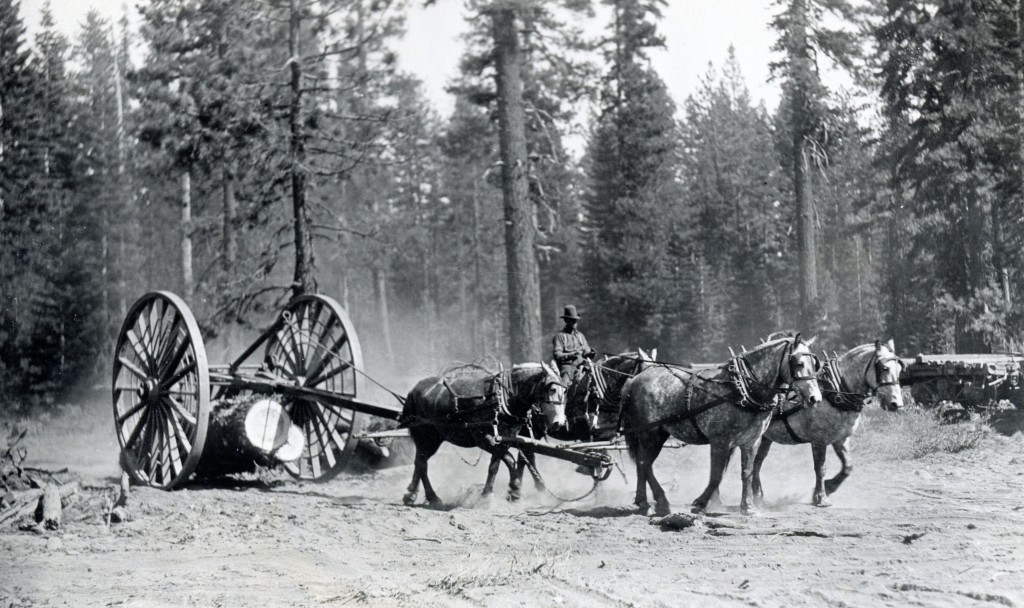
When Fruit Growers inspected the Collins timber tract west Eagle Lake, they were not only impressed by the timber, but the terrain. It was estimated that 80% of the tract could be horse logged with big wheels versus steam donkeys. Caterpillar tractors were in its infancy stage of development, but would accelerate during World War I. Horse logging had its drawback as it labor intensive. This was due to the fact that they required “swamper.s” Swampers were men hired clear brush and other debris to clear a path to reduce injuries to horses legs. While steam donkeys were used in terrain not suitable for horses had their drawbacks. Sparks from the steam donkeys were a fire hazard. By the late 1920s, both Fruit Growers and Red River converted entirely motorized tractors logging. It would take several decades to convert from railroad to truck logging.
Tim