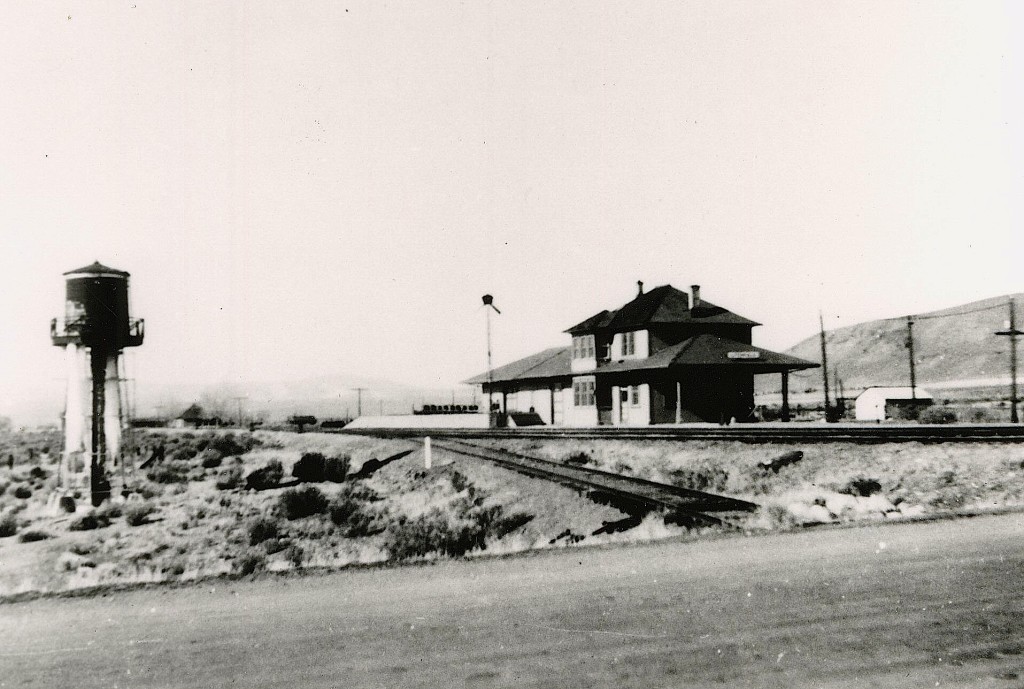
Litchfield Depot of the Fernley & Lassen Railroad, 1947. Courtesy of Camilla Moody
One never knows, until you ask. Thus, that is the case today. The Southern Pacific Depot at Litchfield is something I know hardly anything about. It was built 1913/14 and was the railroad’s Common Standard Plan #22. It is the same plan used for the depot at Fernley, Nevada.
Considering that it was a substantial structure for that region, the above photograph is one of only two I have that I have come across. For all the activity that took place there, information is nearly non-existant. I do not even have a clue as to when it was shut down and/or also dismantled. If anyone can enlighten me, that would truly be appreciated.
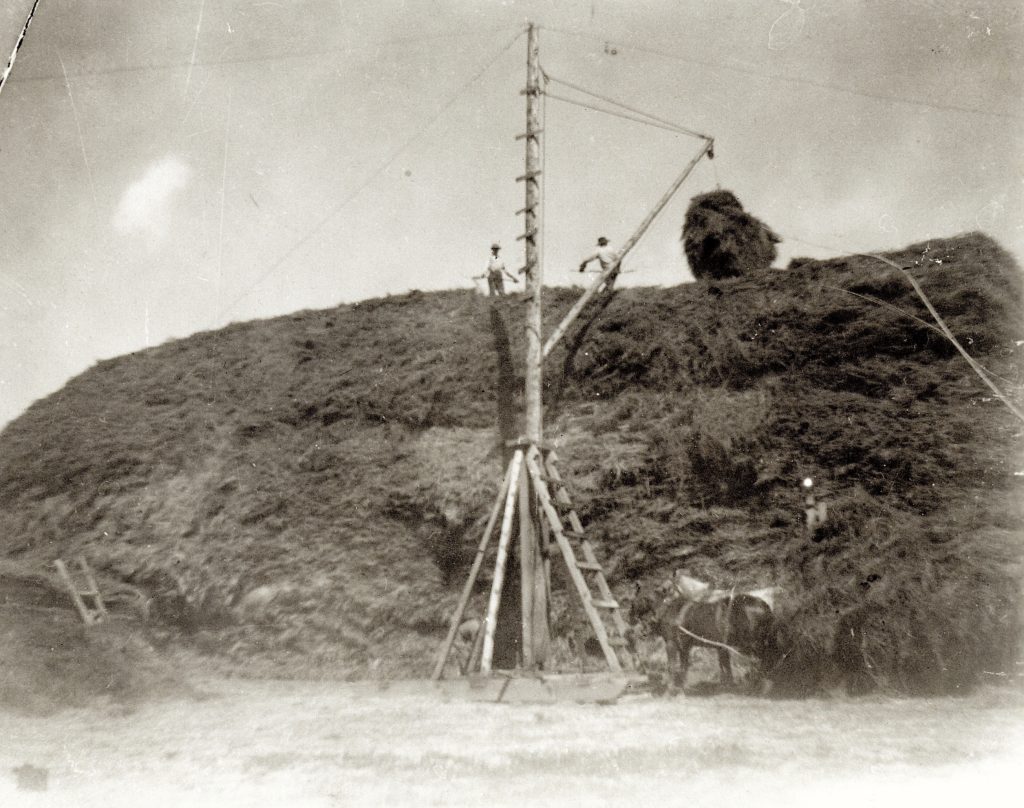
The Tule District, Honey Lake Valley was best known for many years it hay production. Titherington Ranch, 1906—Betty Gorbet
In June 1931 fifty-one farmers attended a meeting at Standish to discuss wages to be paid to workers during haying season. There was no uniform wage rate. Some paid $2.00 a day, others $3.00 day. After considerable discussion it was agreed to pay $2.50 a day plus board. Another issue widely talked about, but there no consensus was reached was the amount of hours. However, just agreeing on a uniform wage was a major milestone.
Note: This is a perennial post, because in a rare instant, it is a viewpoint that has merit. In Susanville’s early years as an incorporated city, it was remarkable what the council did. One of their actions, I still support today, and that is the prohibition of fireworks. The first time they banned fireworks was in 1906, following the aftermath of the San Francisco earthquake and fire. It was also a nod to the insurance companies who suffered tremendous loss from that event. It was their belief, as well as many other communities, that this preventive measure would reduce the risk of fires.
In 1912, the City once again banned fireworks. The Lassen Advocate applauded the city and wrote: 21 June 1912 – “No Fireworks on the Fourth. We desire to congratulate our Board of Town Trustees on their action in placing the ban on all kinds of fireworks on July 2, 3, and 4. This action has been taken by large and progressive cities for years past, and we are greatly pleased to note that the smaller places are falling into line. Fireworks do no good and may do a world of harm. Fires may be started that will blot out blocks of cities or towns; little boys and girls all over the United States have lost fingers, hands eyes and in many instances, their lives from the dangerous pinwheel and firecrackers. Let them yell all they will, let them spend their money for ice cream, candy—anything on earth but the fireworks.”
In 1916, the Monticola Club appeared before the Susanville City Council asking for a ban of fireworks for the 4th of July. Their answer was no. The council assured that the utmost care would be done, but they were not going to deprive children of the festivities. In 1926, for some unknown reason the City banned fireworks for fire, health and safety reasons. In a near future post we will explore how a forest fire in late June 1926 threatened the town.
Spread the word, and encourage a friend to subscribe
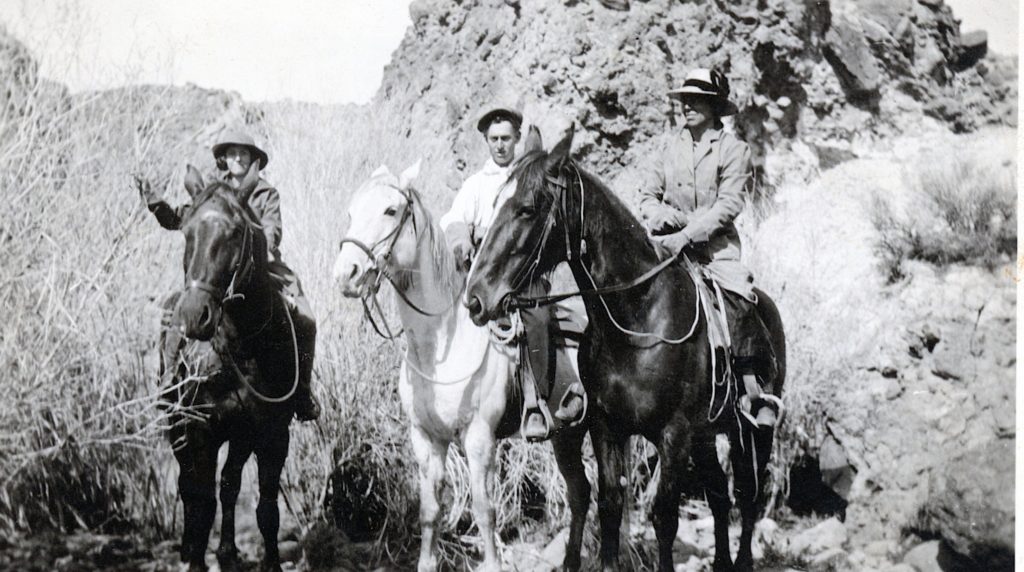
Maude Newman ,Alson Newman and Mamie Caudle—Photo by Marvin Caudle
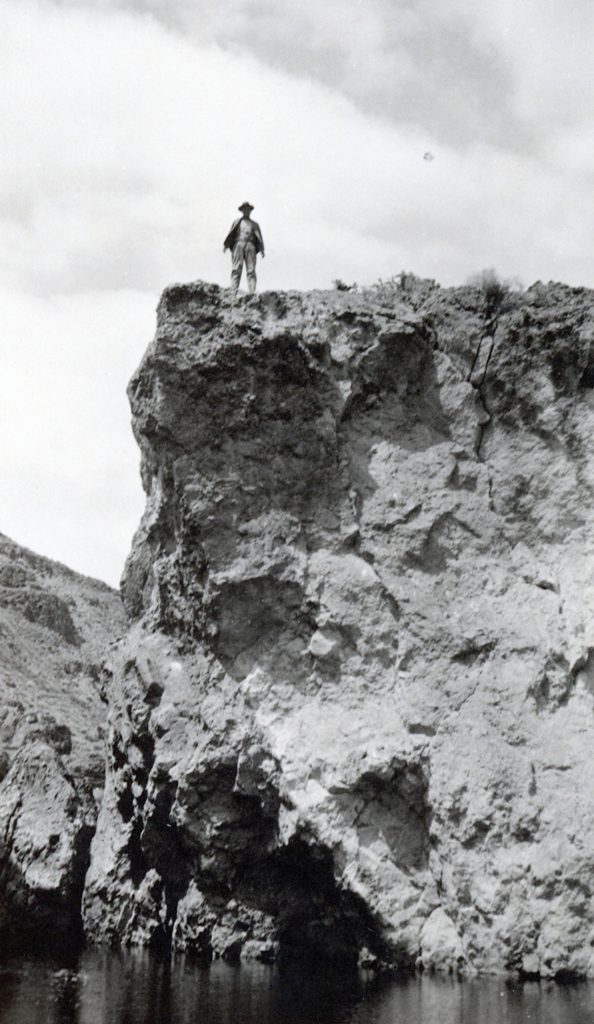
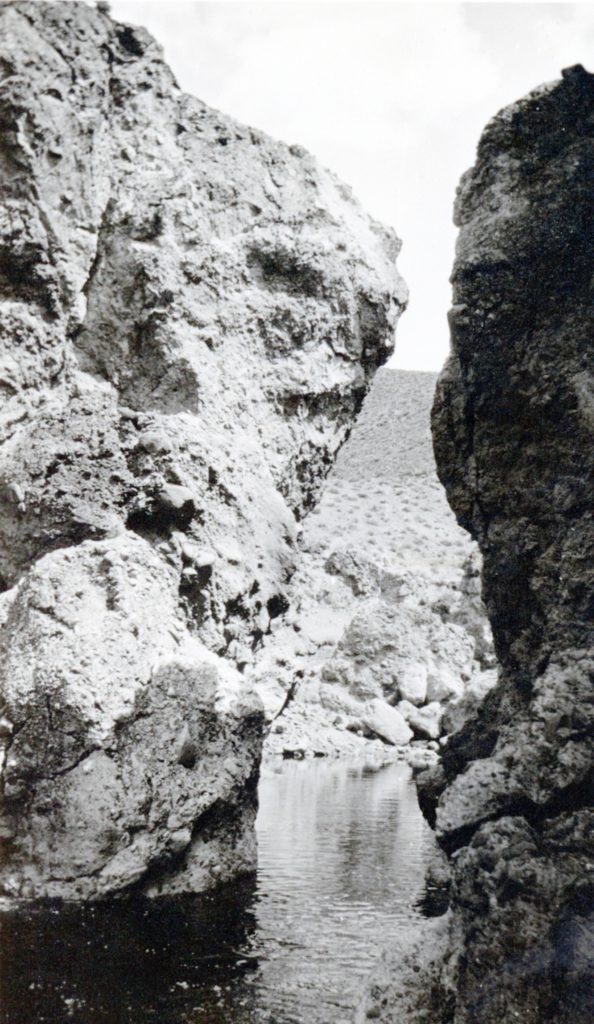
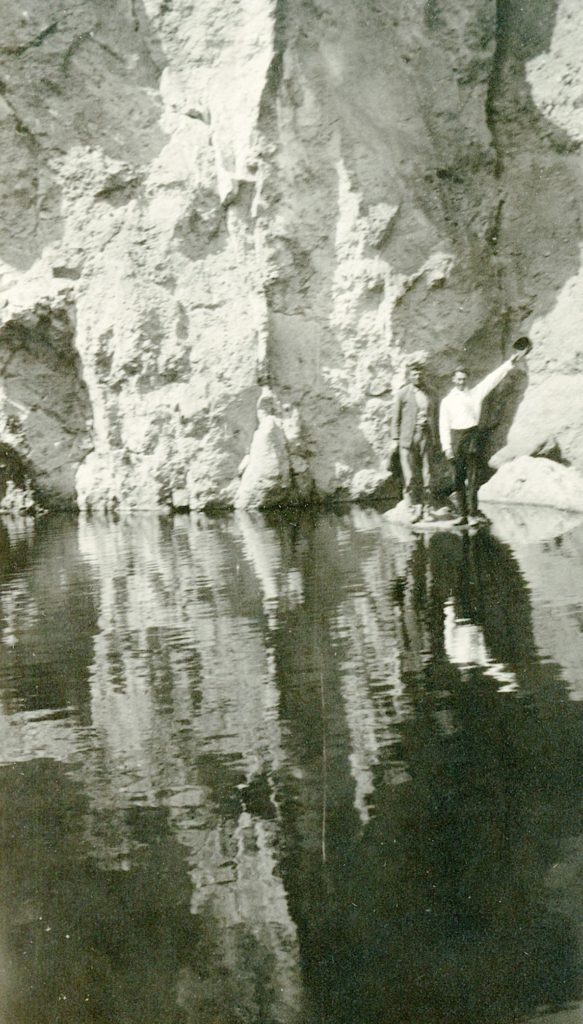
Last month when I took a poll as to whether to include Skedaddle Creek photograph in the 2022 calendar, everyone who replied were for it.
Since it was a go, I stated that I had several other photographs taken there during the 1922 outing, that I would share. The group consisted of Stacy residents, Alson & Maude Newman and Mamie & Marvin Caudle.
Marvin Caudle—C.R. Caudle Collection
This just illustrates that there are so many nooks and crannies throughout the region to investigate.
Skedaddle Creek Canyon, 1922–C.R. Caudle Collection
Skedaddle Canyon/Creek, 1922–C.R. Caudle
And this was photograph, that started the discussion. On the left is Marvin Caudle and next to him Alson Newman.
Main Street, Susanville, 1885. Courtesy of Betty Barry Deal
On the night of June 19, 1889 a substantial earthquake was felt in the region, followed by twenty-eight aftershocks. Of course, most everyone assumed the culprit was Lassen Peak. However, upon further investigation the epicenter was Eagle Lake.
Thomas Ford, editor of Bieber’s Mountain Tribune traveled to Susanville during the earthquake. Ford wrote: “Arriving at Susanville at six o’clock in the evening, we found things pretty shaky; experienced four shocks that night and was told that it had not been a very good night for earthquakes either. The people did not appear much disturbed by them; were going right along with their business as if nothing had happened, and were philosophically disposed to take their chances on what might happen. Many were the accounts or what had happened since the shaky season began—such as Eagle Lake sinking two feet, the waters of Willow Creek being higher than ever before, water in the reservoir muddy, ashes found in wells, beer shooting up fifteen feet out of the tank of Frank Runge’s brewery, etc. Different theories as to the causes of earthquakes were advanced, and when asked our opinion we replied that we were not acquainted with earthquakes, and did not desire a more intimate acquaintance or further introduction.”
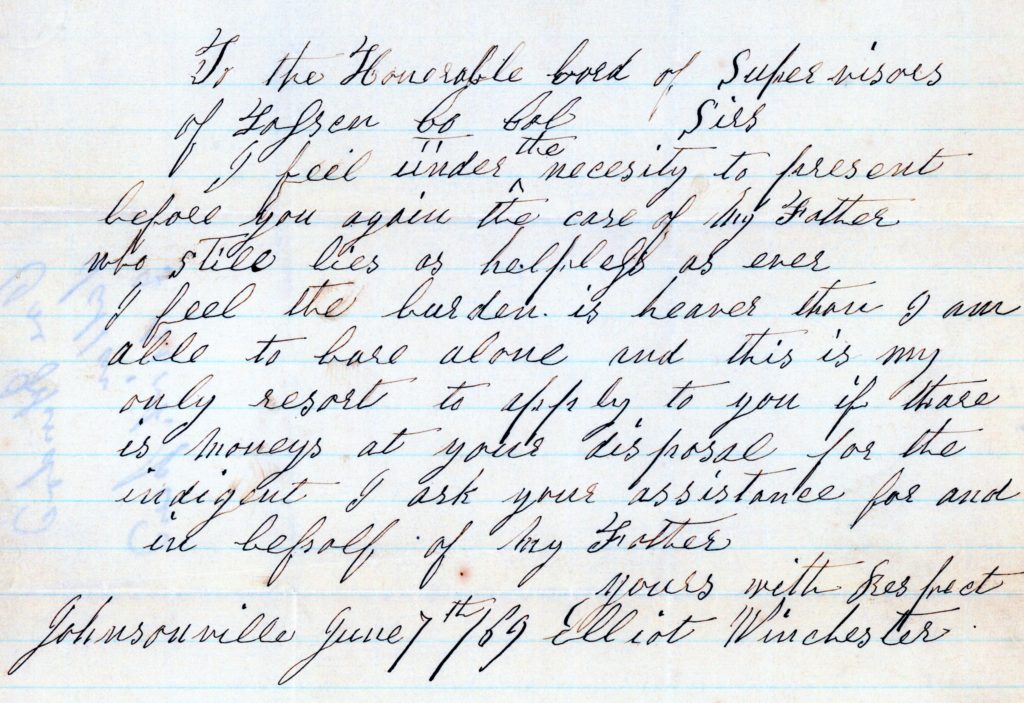
In 1869, Elliott Winchester petitioned Lassen County for aid for his indigent father, Anson. He was awarded $10 a month.
Yesterday’s feature about the Winchester barn brought to my mind, Anson Winchester, whose descendants still reside in the region. Anson Winchester was born on December 3, 1790 at Worchester, Massachusetts. He was an elderly man when he came to the Honey Lake Valley, when his son Elliott located there in 1864.
Anson died on September 19, 1877 at Johnstonville and is buried in the Susanville Cemetery. He is one of about dozen individuals interred there who were born in the 1700s. It is remarkable to think that four centuries are represented in that cemetery!
Researching barns is a challenge, some times one finds documentation in newspapers and some times not. The old Fruit Growers barn near the east entrance of Susanville was a perfect example. It should be noted that the barn was destroyed by fire on June 16, 2015. At that time, I attributed it to be constructed by the Fruit Growers Supply Company who at one time owned the property, along with a large box factory and sawmill adjacent to the barn. When Fruit Growers started logging operations in 1921, they utilized horses, hence the necessity of the large barn.
New information has since surfaced, and the barn pre-dates Fruit Growers. According to Mary Eloise Sifford who was born in Susanville on November 20, 1892 and grew in the vicinity of the barn wrote in her memoir:
“The Big Barn. When I was about ten years old, our neighbor Lorenzo Winchester, started building a huge hay barn way across the field about one and one-half miles towards Richmond Road. He had a couple of men hired, and they hauled out big beams, etc for the barn. The Winchester’s daughter Maude [who married Frank Wood] was several years older that I was. They had a gentle roan named Kate. I know Maude and I rode her up to where the men were working and took lunch to them. It took several months to finish the barn. It served as a hay barn for a good man years. It loomed up and could be seen for miles. It was later sold to the Fruit Growers Supply Company. They used it for hay and grain and as a horse barn for their logging horses.”
Lassen Peak eruption, June 14, 1914. Courtesy of Dolores Gasperoni
On May 30, 1914 Lassen Peak’s long awaited volcanic eruption made its debut. For some it was not unexpected from the many frequent ‘rumblings” around the region. On Sunday June 14, 1914 the peak had its most dramatic eruption to date. An ashen plume of smoke was sent some 2,500 feet skyward.
Of course, there were lots of theories as to what was the cause of the eruptions. One of the most interesting came from the residents of Chester and Big Meadows—the latter being transformed into Lake Almanor. Some were under the impression that the filling of Lake Almanor that spring triggered the eruptions.
Whatever the case may be, activity did not slow down with 110 eruptions recorded by the end of the year. One thing that observers and scientists alike found perplexing was the lack of lava or incendiary evidence. That would change in 1915.
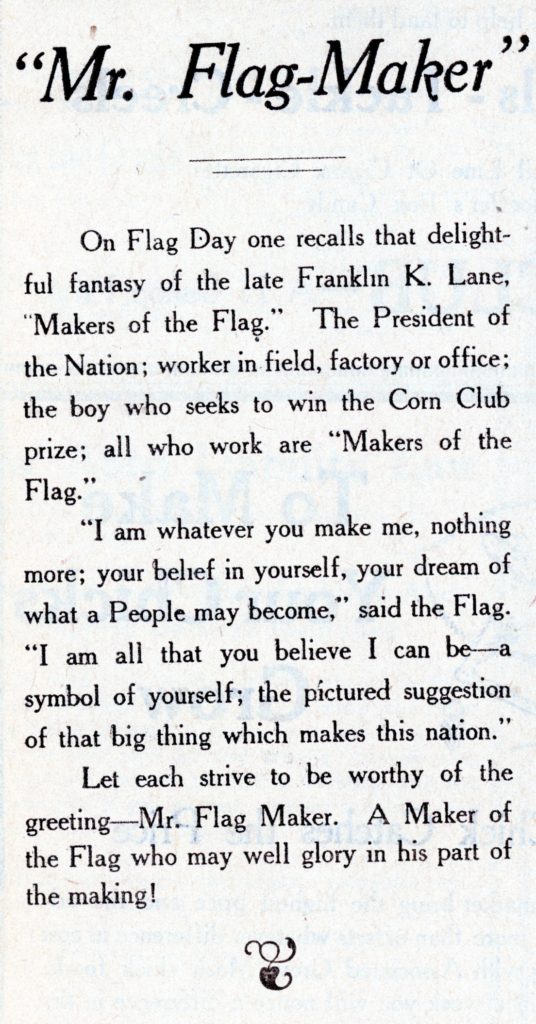
Bank of Lassen County’s patriotic advertisement, Lassen Mail, June 7, 1929
Today is Flag Day. It was on this date in 1777 when the Second Continental Congress passed a resolution and adopted the Stars and Stripes flag. However, it was not until 1916 when President Woodrow Wilson issued a proclamation making June 14 Flag Day. Still later, in 1949 Congress declared June 14 as National Flag Day.
Finally, for a bit of trivia, June 14 is the birthday of the U.S. Army when it was created in 1775.
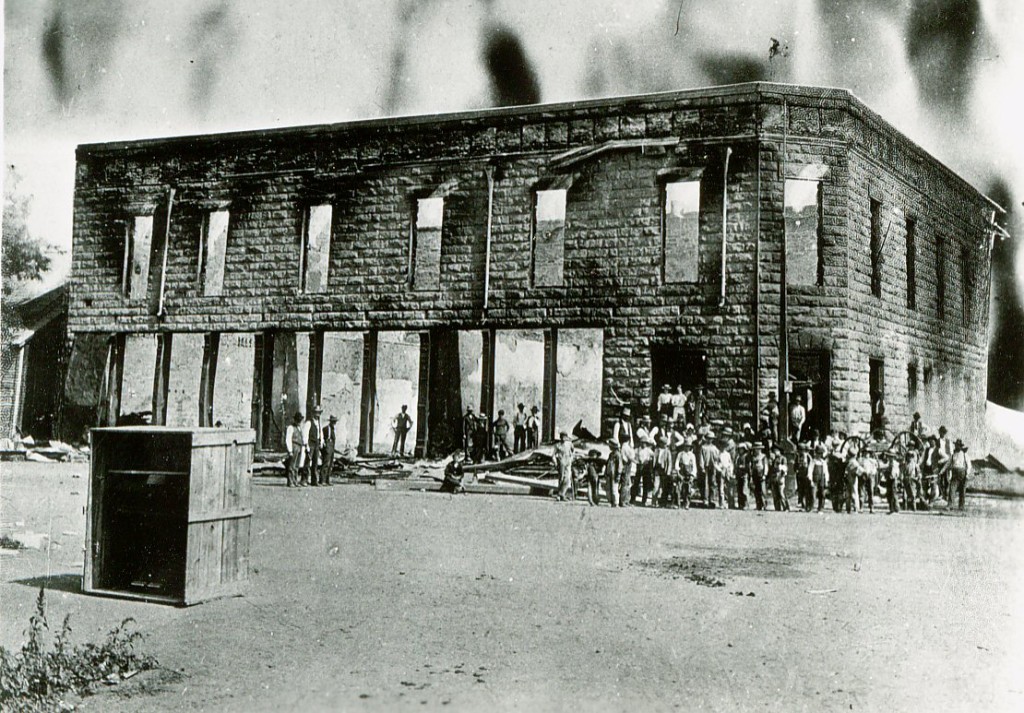
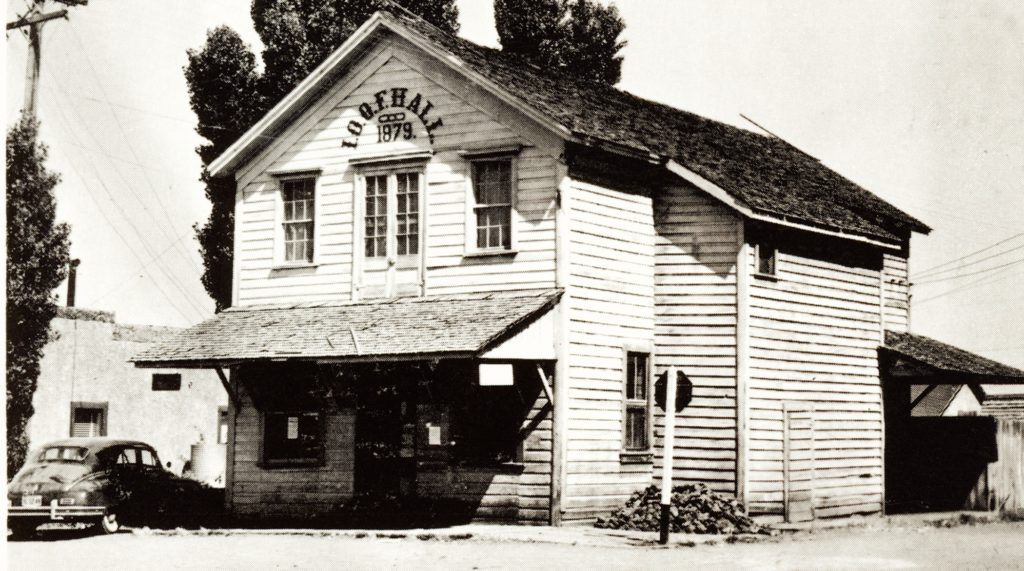
This was a turning point for the town. It had been a mere wide spot in the road, being overshadowed by nearby Adin to the east. Beginning in the fall of 1878 and by the summer of 1879 fifteen new homes were constructed in Bieber. But, it was the summer of 1879, when one of its most imposing landmarks was constructed an Odd Fellows Hall. The two-story structure was completed in August, and in the middle of that month, the downstairs was occupied by the Brownell Brothers general store. The town continued grow and in 1881, taking a metropolitan flair, could even boast of having a weekly newspaper the Mountain Tribune.