Category Archives: History

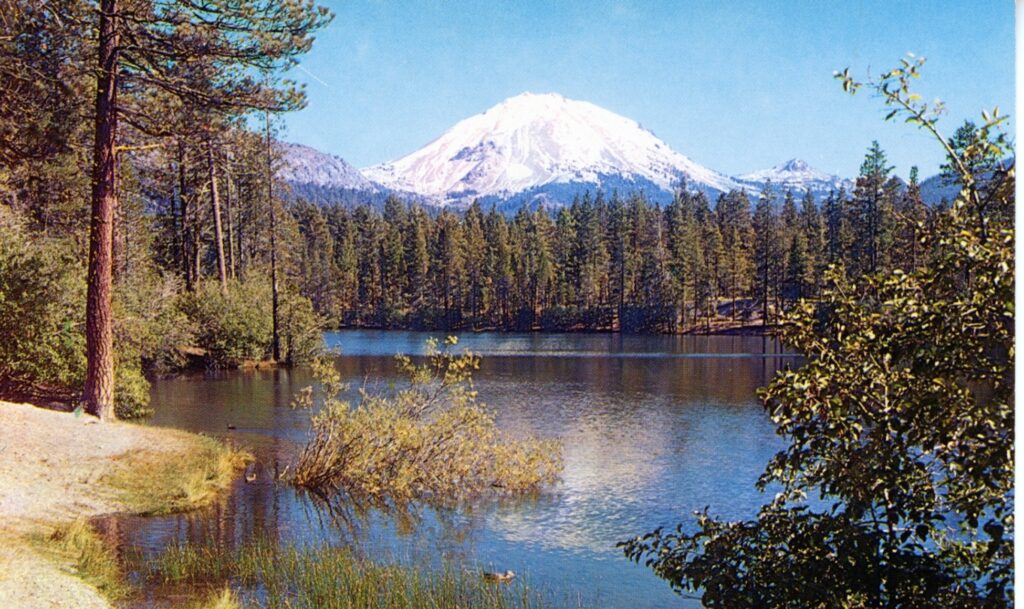
Reflection Lake—Lassen Park

Reflection Lake–David Martin

Reflection. Lake is. located in the northwest corner of Lassen Volcanic National Park, and a short distance east of Manzanita Lake. The lake was originally known as Stockton Lake. It was so named after John Stockton, a Shasta County physician,  surveyor and civil engineer. In 1875 Stockton, along with William Coffey had plans to develop it into a fish farm, but that proposal never went anywhere.

In 1926, B.F. Loomis purchased a 40-acre parcel near Reflection Lake.  Loomis an avid park supporter offered the property. to the park, in hopes the park would make the headquarters there. In 1927, the park announced Mineral would be the site for the headquarters. The decision did not deter his support of the park. Loomis went ahead and built a museum there. On February 4, 1929, Loomis donated the property to the park. That summer the park in consideration of the donation, granted Loomis a life estate to five acres that allowed to him continue to maintain the museum and gave him the privilege of building a residence and photographic studio. Loomis died 1935.
Support

It Was Hot In 1931

Susanville, circa 1936

It has been toasty warm around these parts in July. It should be noted the summer of 1931 was of Susanville’s hottest and driest on record. A heat wave lasted nearly two months, with little respite. In July and August, only eight times did the high temperature dip below 90. In July there were nine consecutive days when the high was over 100. On July 19 and 20 was it ever hot, both days registered 106. It was also dry. On June 16th .03 inches of precipitation fell. Not another raindrop fell on the town for the next four months, until October 17th when .30 inches was recorded.

In cae you were wondering the first week of July 1876, incidentally witnessed Susanville’s hottest ever recorded temperature–108 degrees–and it was reached on three different days.

Tim

Susanville’s Fruit Growers Townsite

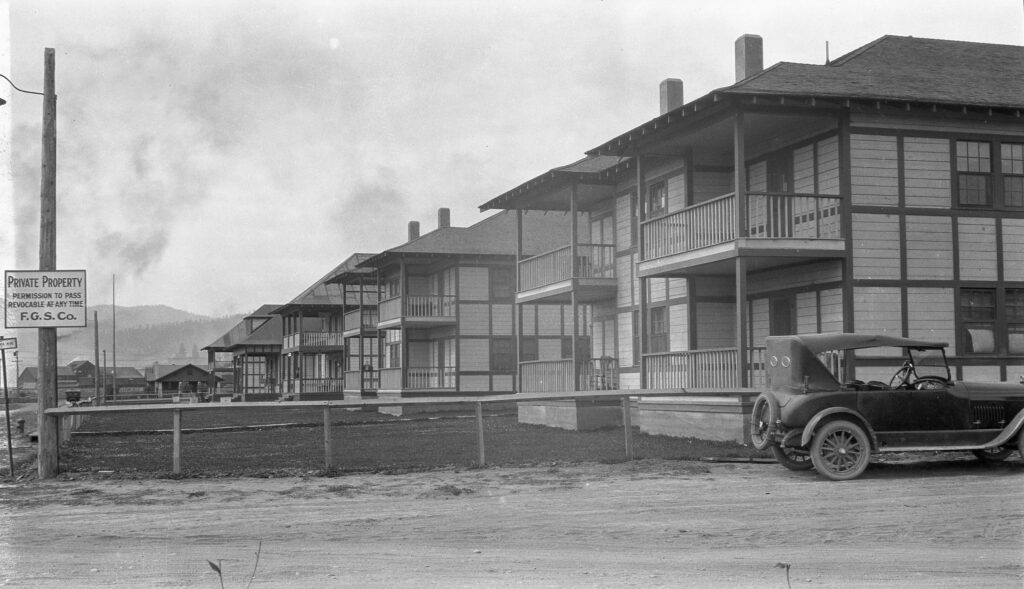
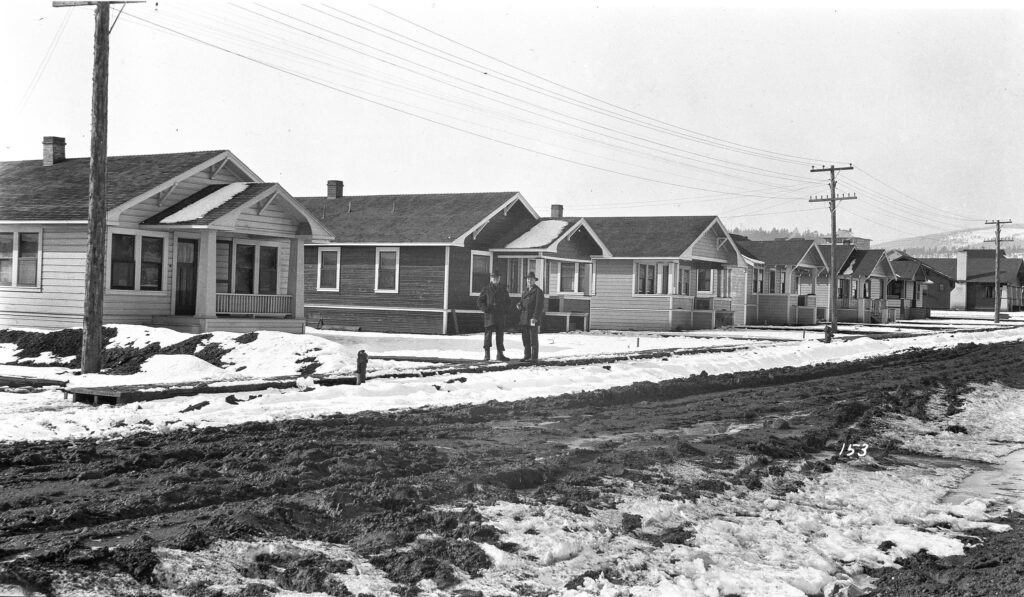
A family residential section of Fruit Growers, 1921—Ed Standard

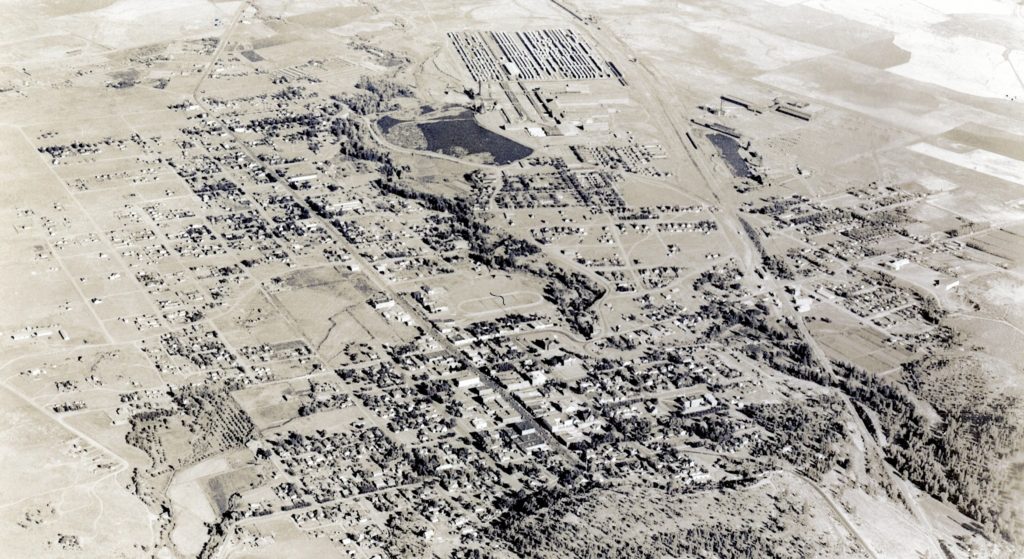
In 1919, when Fruit Growers Supply Company planned to build a mill at Susanville, they saw many benefits. Instead of the situation they had at Hilt, a company town they inherited.  They felt confident that Susanville entrepreneurs would fill void, especially when it came it to housing. Nothing went according to plan. First of all, Fruit Growers hired 1500 men, the majority with families, which that figure was larger than the population of Susanville.

Fruit Growers dormitories, 1921–Ed Standard

Fruit Growers had to go plan B and build affordable housing for its employees. A residential district, Fruit Growers Townsite was laid out to the west of the plant. Half the townsite contained 80 cottages, the other half dormitories and apartments. It cost Fruit Growers $245,000 to build the housing project. While Fruit Growers is gone today, many of these buildings remain. Another item are the street names, a legacy of the state’s citrus landscape—Sunkist, Monrovia, Upland, Orange, Limoneira to name a few.

Subscribe


Logging Camp Remnants

Camp B. Courtesy of Fruit Growers Supply Company

This is first part of a three part series examining logging camp remnants. Today, we will focus on Fruit Growers Camp B and C. These camps operated during the early to mid-1920s in the Martin Springs vicinity, north and east of McCoy Flat Reservoir. Both were substantial camps comprising some 250 men. Camp C boasted a boxing arena that seated 500 people!

Camp C, no date. Courtesyof Lenala Martin Collection

Today, there is plenty of remnants at Camp B. Among those are the concrete foundations of the commissary and cookhouse. Though it’s been some time since I last visited. the railroad service pits were somewhat in tact. There is scattered debris in the area, and I even found an old pocket watch.  Camp C is just the opposite. Without any remnants or any other tell tale signs it is difficult to locate. Why the difference? Camp B is located on land owned by Fruit Growers. Camp C was on land owned by the forest service, the latter required the site to be cleaned up after no longer in use.

Next up the examination of the Harvey line that had four camps–Bunyan, Puls Harvey and Stanford.

To Support, Please Donate or Subscribe

Lassen County Fair Logging Competitions of the Past

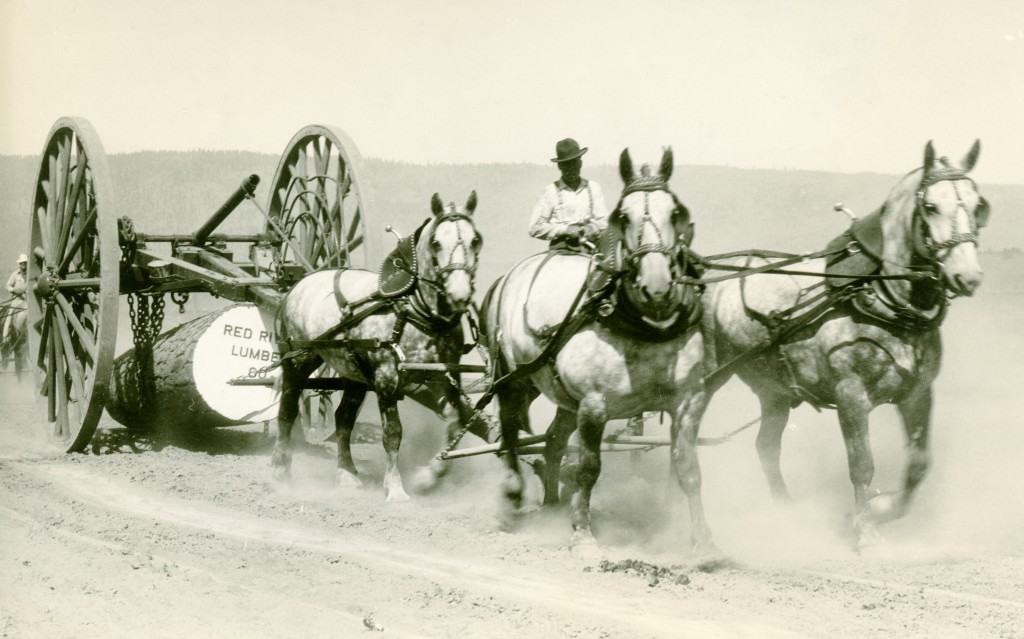
Red River Lumber Company’s entry

When the Lassen County Fair was revived, in 1922, it would go through  and still does evolves. Take for instance, logging competitions for decades it was a main stay attraction, but not any more.

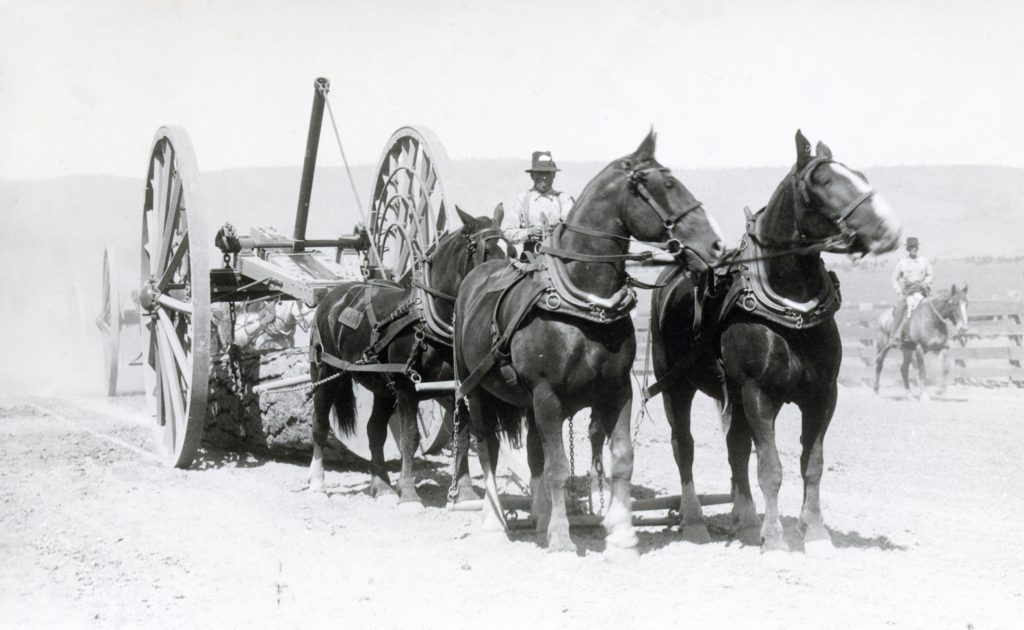
In 1923, the first logging exhibition at the Lassen County Fair was held. After all there were three large sawmill operations—Fruit Growers Supply Company, Lassen Lumber & Box Company and Red River Lumber Company. It was certainly a noteworthy event. For many attendees it was the first time they were able to witness the current logging methods of the “big wheels.”  A competition was held between the big three companies. The Fruit Growers Supply Company won top honors in this category. It should be noted by 1927, the lumber companies began phasing out the “big wheels” for the motorized Caterpillar traction engines.

Lassen Lumber & Box Company’s entry.

Tim

A New Masonic Lodge

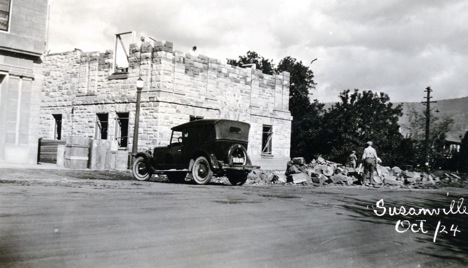
The Masonic Temple under construction, October, 1924.

Like the proverbial phoenix rising above the ashes, Lassen Lodge F.&AM lost their lodge in a fire in 1921. On July 19,1924 the Masons awarded a contract for a new lodge with T.J. Reese of Fallon, Nevada. The cost $35,500 for the two-story native stone building. The Roman Doric design was the work of local architect, Ralph D. Taylor.  On August 21, a cornerstone ceremony was held. The contract stipulated a completion date no later than January 1, 1925. It should be noted that this was the last major native stone building constructed in Susanville

Tim.

Lassen County’s Old Timers Fair Event

Lassen County Fair, 1922. Courtesy of Lola L. Tanner

Since this is Lassen County Fair Week, one of the oldest events was to honor the area’s Old Timers. At the 1924 fair the Nataqua Parlor of the Native Daughters of the Golden West initiated this special feature. Of course, this event has evolved over the years.

On the evening of Sunday, September 14, the last day of the fair,  Native Daughters sponsored a banquet for the hearty pioneers at the Antlers (nee Elks) Club. To be considered an “old timer” the requirement was one you had to resided in the area prior to 1866. Thirty-seven old timers attended. It should be noted that in years past Native Daughters sponsored an old timers dinner on California’s Admission Day, September 9.

Tim

Another Pricey Auction Item

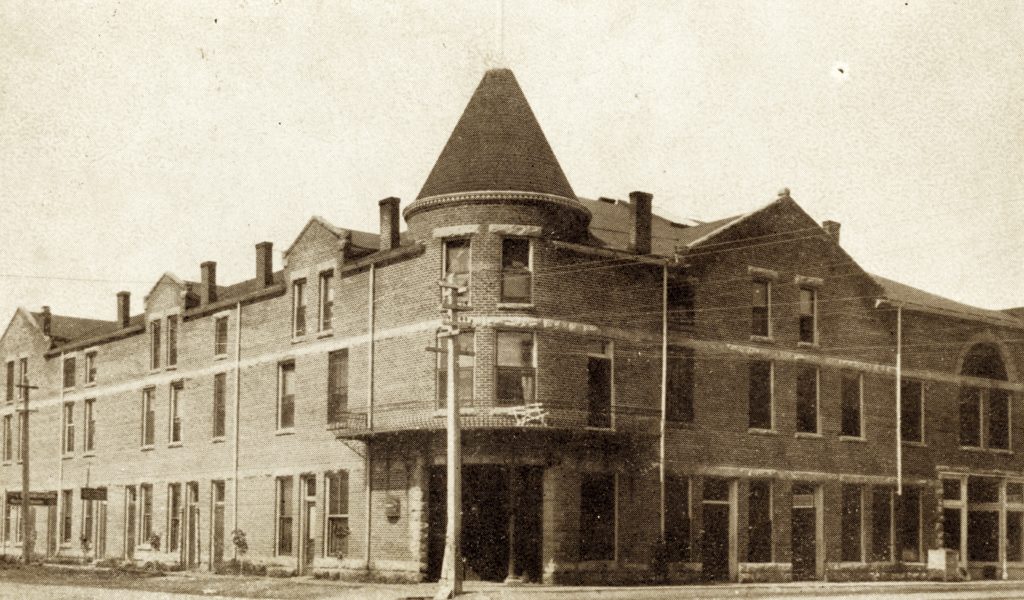
The Emerson Hotel located at Main & Lassen Streets, the current site of the Hotel Mt. Lassen. Completed in 1901, destroyed by fire in1915.

If you thought $540 for the Lassen County Farm Bureau cookbook was tad expensive, well I was recently alerted about another much more pricey one. The latest involves Emerson family memorabilia, specifically that of May Spencer Emerson (1867-1955). The package includes a woman’s dress, necklace, purse and two historic invitations. One of those invites is for the 1901 dedication of the Emerson Hotel. Asking price $900.

Other people are involved in hopes to purchase said items for the Lassen Museum. This is one of those instances I go into a retreat mode, it has all the features of a sticky wicket drama–something I avoid.

Tim

Red River’s Great Purge

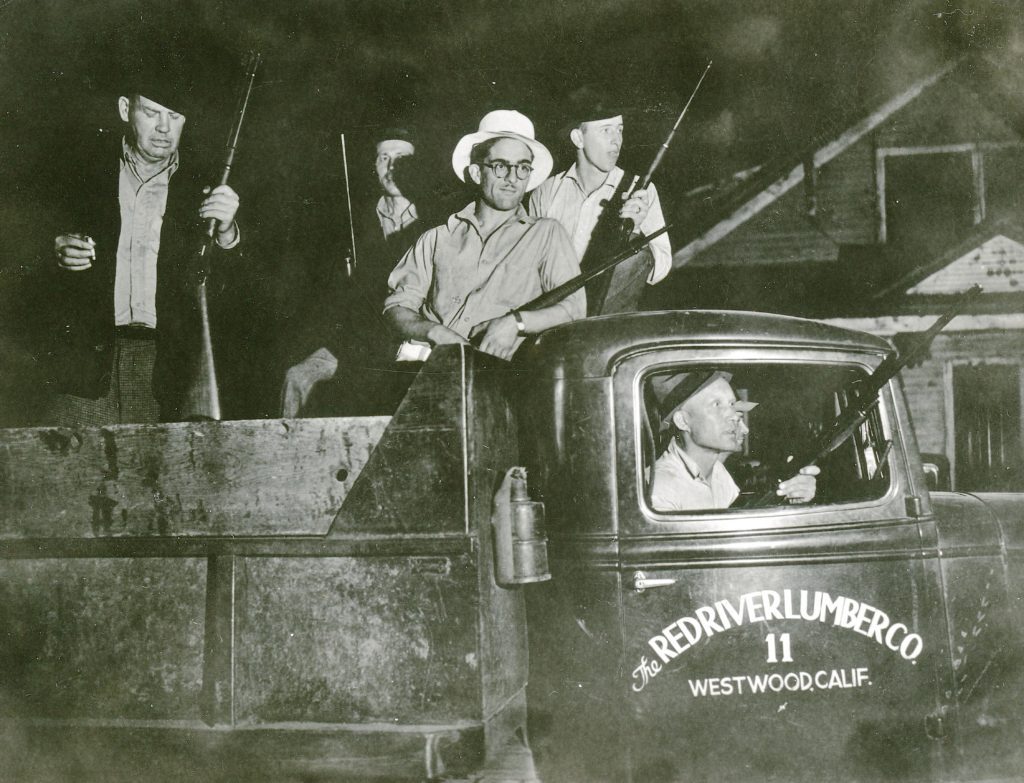
Purge Nite. Courtesy of Frank W. Davis

Red River Lumber Company’s labor problems in Westwood during the 1930s is a perfect case study on how to do everything wrong. There was, of course the great purge of in which nearly 400 men, women and children were forced out of their homes in Westwood on July 13, 1938 over a labor dispute. By the end of that historic day the California Highway Patrol, with the National Guard on standby placed a blockade on the community, sealing it from the outside world until things could stabilize.

I do not think we will encounter anything like this. Yes, it was a scary time during the strike of 1938 at Westwood.

According to historian Gerald Rose about the historical significance of the Red River purge he wrote, “Not until the 1941 deportation of Japanese-Americans was there a larger forced migration of United States citizens.” 

Tim

An Early Ice Cave Description

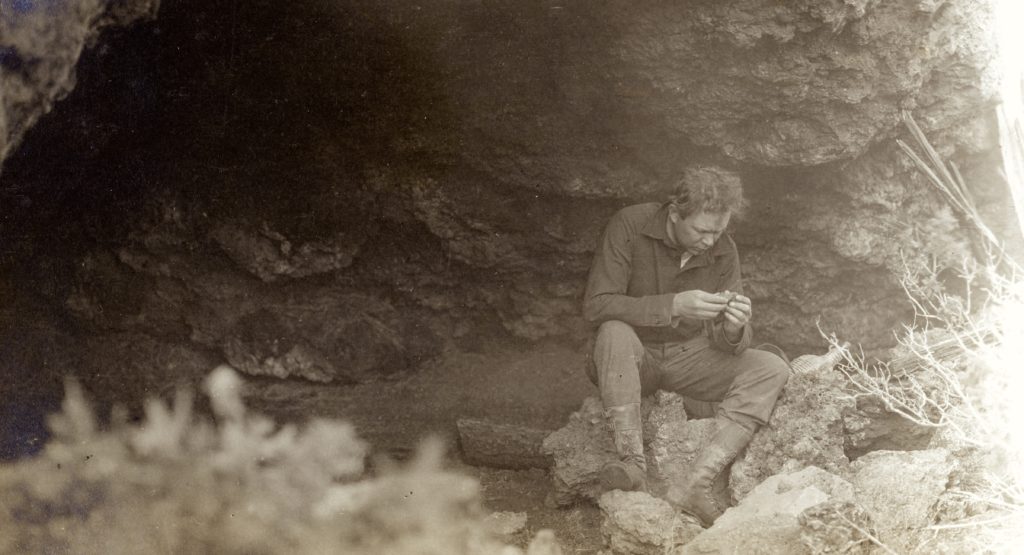
An Eagle Lake ice cave, circa 1916. Courtesy of Wyn Wachhorst

With this current hot spell, I decided on a cool topic. In 1915, the Lucky Land of Lassen was a pamphlet that  produced and distributed at the Panama Pacific International Exposition that was held in San Francisco. Of course it extolled all the wonderful virtues that Lassen County had to offer.. Of notable hightlight, it contained one of the earliest accounts concerning the lava beds and ice caves of Eagle Lake. This what the brochure contained:

“To the west of Spalding lies what is known as the ‘Lava Bed country’ about seven miles long and three or four miles wide. This is the wildest region in this section, and excepting the vegetation, it is almost as when the lava first cooled. It is full of caverns, wells and cracks, one of the latter being five miles long and three to twenty feet wide. In one place it has been sounded to a depth of 160 feet and no bottom found. In this crack there is an ice cave where plenty of ice may be obtained any year until August and some years throughout the entire summer.”

Subscribe