Category Archives: History

Said Valley Reservoir

Said Valley Dam
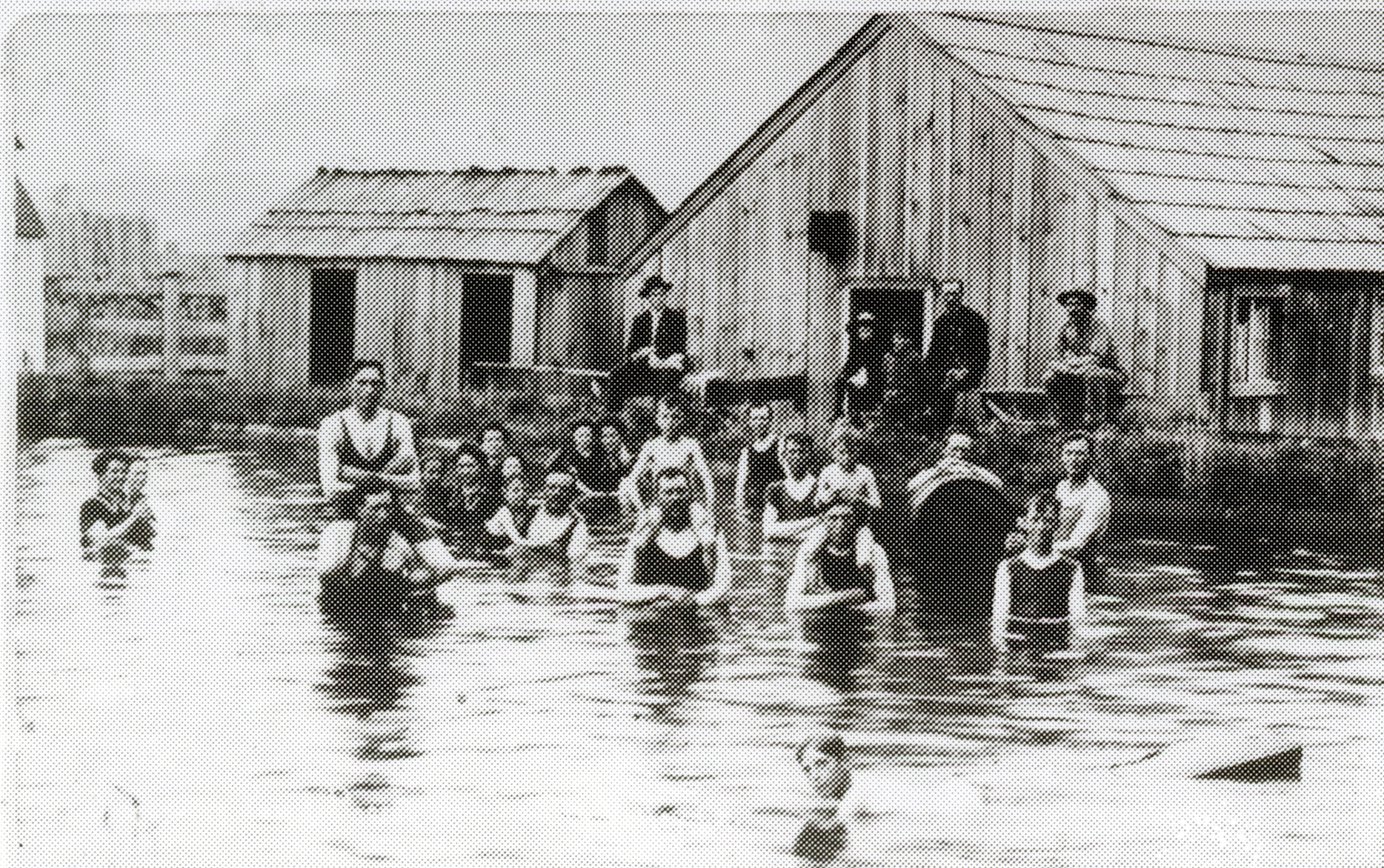
Collapse of the Said Valley Dam, May 8, 1938. Courtesy of Betty Barry Deal

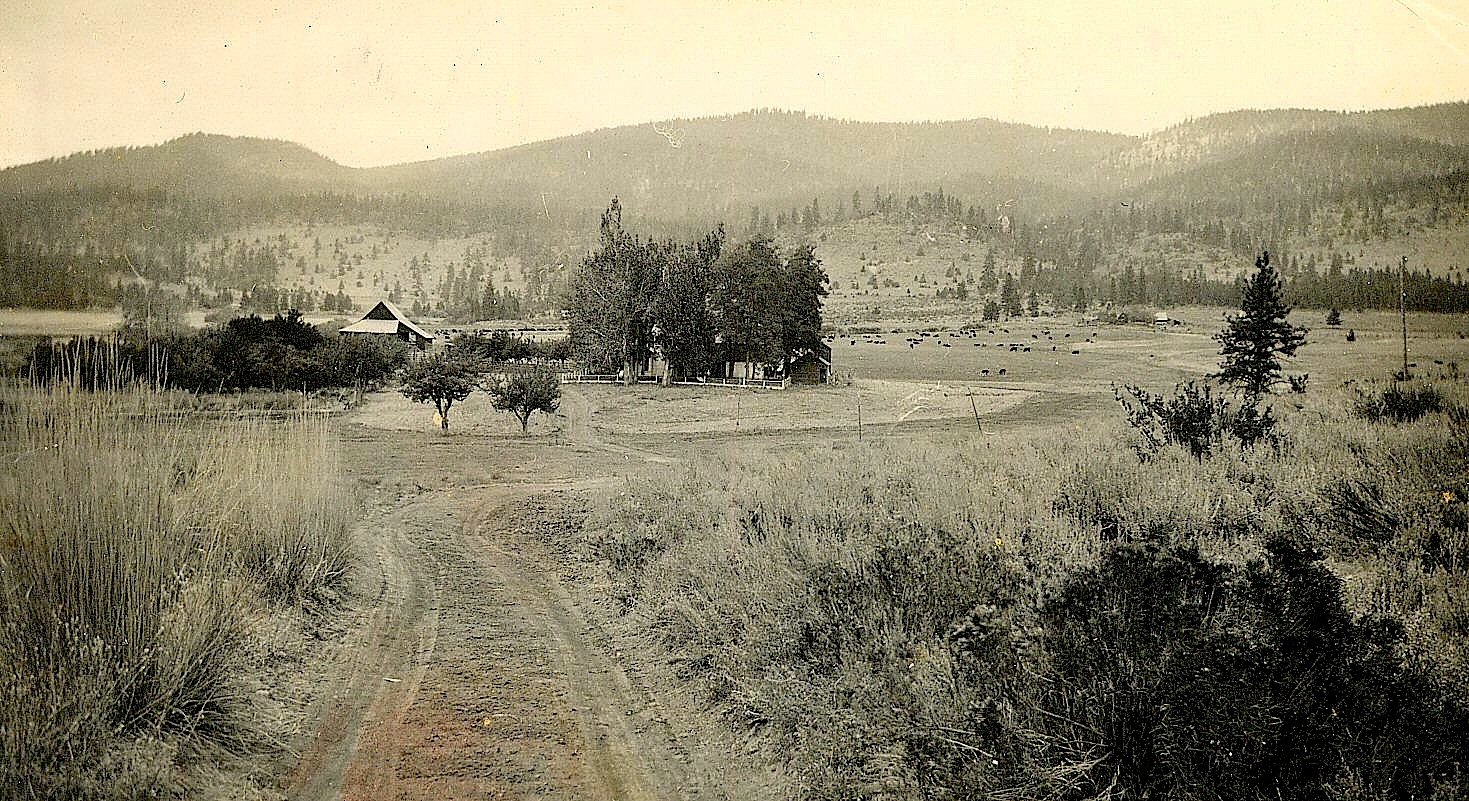
In September 1885, James W. Shanklin constructed the first reservoir for irrigation and stock purposes at his ranch in Grasshopper Valley. That dam was 25 feet high and 300 feet across. Over the years it had numerous owners. In 1934, it was purchased by George Heath, who became the owner of this reservoir as well as one on nearby Slate Creek. As early as 1929, the State Department of Water Resources stated neither dam was in compliance and requested that spillways be constructed for each reservoir. The winter of 1937-38 was one of the wettest on record for the 20th century and, in Susanville, 33.68 inches of precipitation was measured. On May 8, 1938, the dam at Said Valley breached and caused considerable flood damage. On August 24, 1939, Heath sued Percy L. Castro for $50,000 in damages that were caused by dam failures. It was Heath’s contention that, since Castro leased the reservoirs and his Grasshopper Ranch, it was his duty to install the spillways that the Department of Resources requested. However, during the Department of Water Resources investigation, it was noted that even if the proper spillway had been installed at Said Valley, it would still have failed because of defects in the dam’s original foundation. The court ruled in favor of Castro and stated it was Heath’s responsibility and ordered Heath to pay Castro’s court costs. The dam was rebuilt, albeit on a smaller scale.

Future Posts

Huffords
Hufford’s Sheep Camp, Eagle Lake, 1921.

Here is a preview of upcoming items for the first half of May. In addition, take a moment to review the Subscribe feature on the upper left corner.

Weather 1924 5/1/15
Atlas Fredonyer 5/2/15
Edsel Dealership 5/3/15
Lassen College 5/4/15
Local Militia 5/5/15
Moon Valley 5/6/15
Toll Roads 5/7/15
Susanville School Names 5/8/15
Asa Fairfield 5/9/15
Hotel Saville 5/10/15
Technology 5/11/15
Neversweats 5/12/15
Lassen Lawnmowers 5/13/15
Lincoln School 5/14/15
Stacy 5/15/15

Robert Stinson

Robert Stinson
Robert Stinson’s grave at the Westwood Cemetery.

In August 2013, I led a Westwood Cemetery tour as part of that community’s centennial celebration. The graves that were highlighted, provided a different aspect to Westwood and the Red River Lumber Company.

Robert Stinson was born in Quincy in 1882, and followed in his father’s footsteps as a commercial photographer. It was a tough trade to operate a business in a rural region. So like many others it became necessary to be itinerate traveling from community to community for business. In 1913, Red River hired Stinson as their company photographer, who at the time was located in Red Bluff. Stinson’s main job was to make a complete photographic inventory of all the buildings being constructed in the town, as well as the sawmill plant. A portion of this collection exists in the T.B. Walker papers housed with the Minnesota Historical Society. Stinson just happened to be at the right place at the right time, when Lassen Peak set off a series of volcanic eruptions beginning in 1914. Unfortunately, for Stinson and other photographers such as P.J. Thompson, are overshadowed by that B.F. Loomis, but that is another story, for another time. Stinson stay at Westwood was brief and left Red River in 1915 to be replaced Otto Kratzer. On a final note, Red River always had an in-house photographer, though they also hired others for commercial work.

Karlo

Karlo
Karlo, 1920

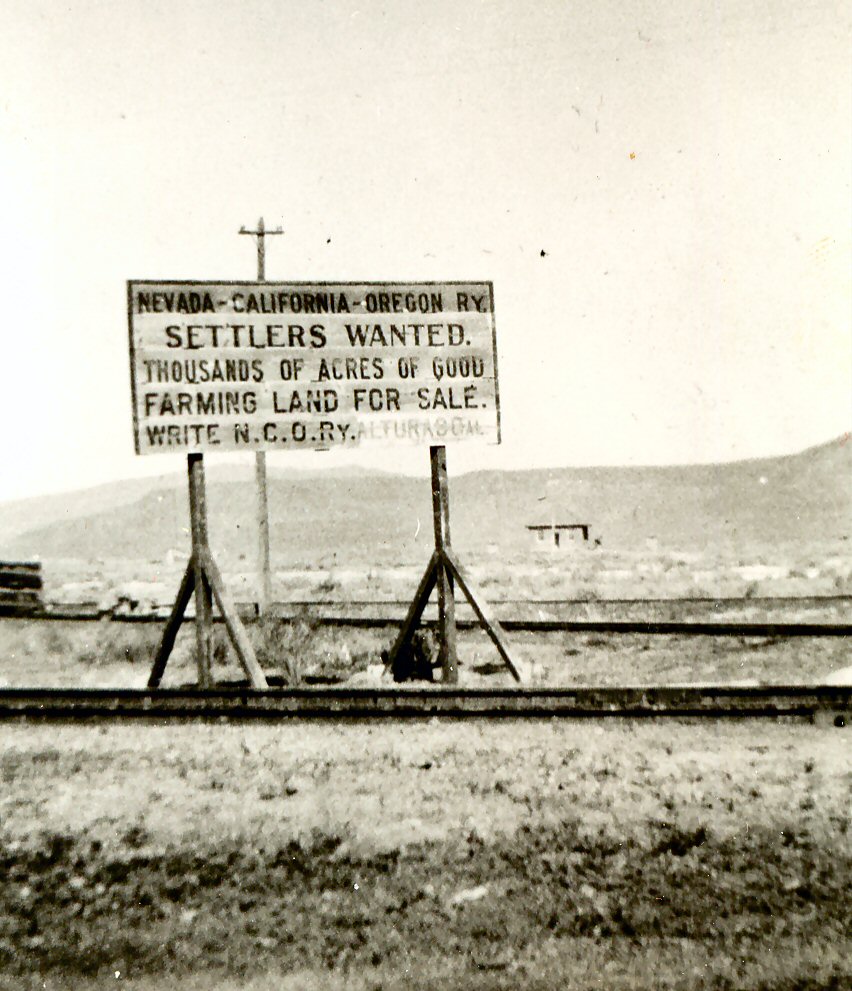
The Nevada-California-Oregon Railroad (NCO) did a great deal for the development of eastern Lassen County. As a result, a number of communities sprang up, some a mere outpost and others a bit more substantial. However, like the railroad, many in time would fade into oblivion.

In 1899, the (NCO) established a station in Secret Valley. Those residents thought it would become a major shipping point on the NCO, like its recent predecessor, Amedee, but that did not occur. This did not prevent James Sellick from constructing a two-story hotel at the Karlo Station that summer. The station was named for the DeCarlow Brothers—Alonzo Metardus (1868-1949), Charles William, and Walter Henry (1859-1949). Charles W. DeCarlow was the first member of the trio to arrive in Secret Valley when, in 1889, he and H.F. Buhrmeister purchased 200 acres from D.C. Hyer for $2,400. When the station was established in August 1899, there was confusion as to how to spell it. The locals spelled it Carlo, but the railroad clearly indicated it was K-A-R-L-O. The Lassen Advocate noted: “The management of that road seems to have a liking for short names and odd spellings following in the wake of the Postal Department in this respect.”  It is interesting to note the next station the railroad  established was named Termo.

Buggytown Ditch

Buggytown Ditch
Survey crew to enlarge the Buggytown ditch near Johnstonville, 1889. Courtesy of Betty Barry Deal

Originally known as Batcheldor & Adams ditch which portions were constructed in 1858. It later became known as Buggytown ditch, for the area just west of Leavitt Lake in the 1870s. It was so named as one of the first settlers possessed a buggy when such luxuries were rare on the frontier. The ditch/canal is what feeds into Leavitt Lake.


Amedee Hot Springs

Amedee Bath House
Amedee Bath House courtesy of John M. Gibson

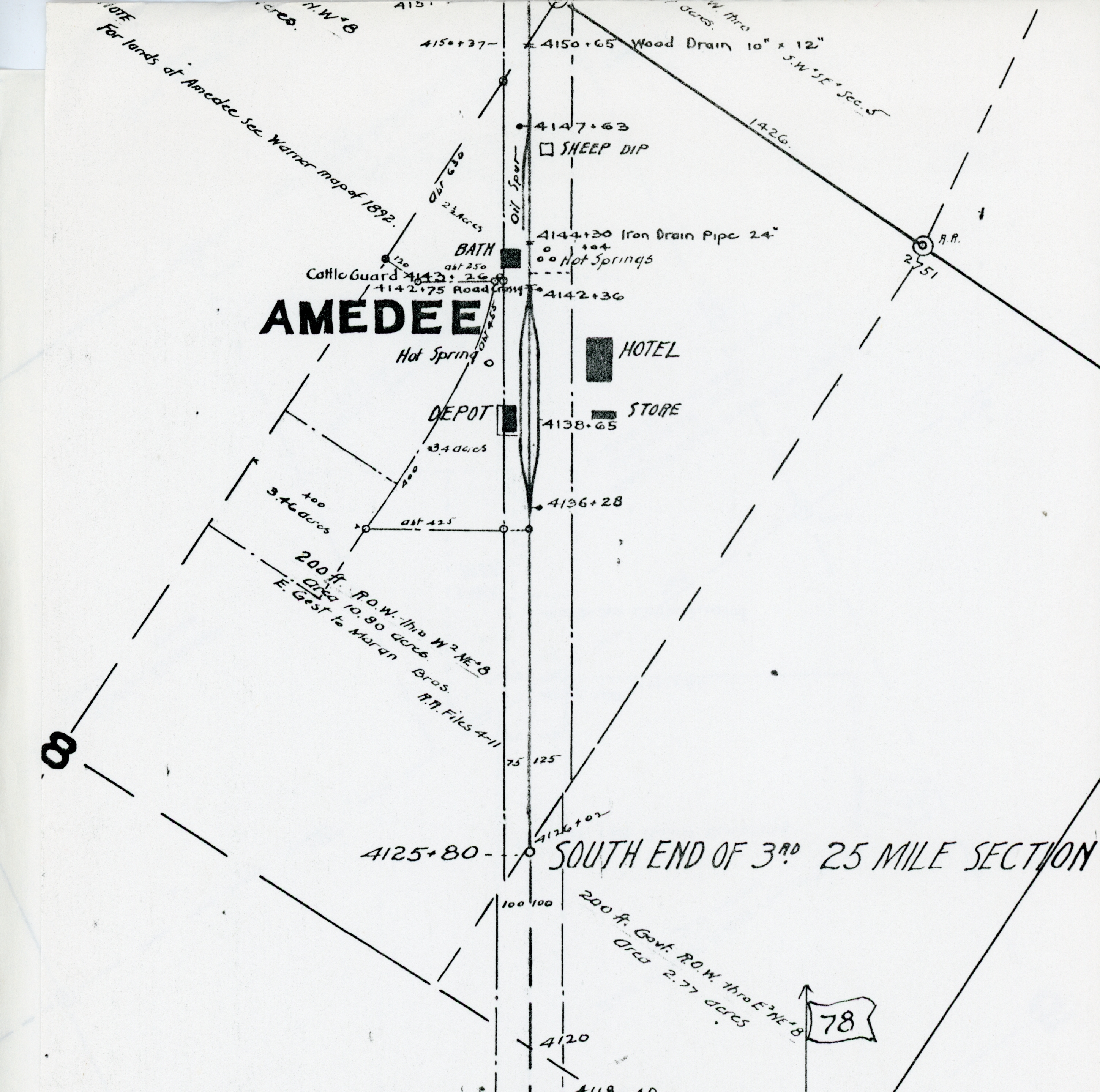
The springs were originally referred to as Lower Hot Springs. In the 1880s they were also known as Brubeck Springs, for the owner of the property, L.W. Brubeck. The name was changed to Amedee with the establishment of the town. A unique feature of the springs was a geyser. In 1854, Lt. E.G. Beckwith, during his exploration of a transcontinental railroad route visited the hot springs and noted that the geyser consisted of a column of water twenty inches in diameter. The geyser was quite an attraction when the town was established. Amos Lane, bartender and inventor, devised a clock to measure spurts of the geyser that rose and fell at intervals of 38 seconds. At times the geyser would shoot as high as eight feet. The geyser ceased to exist in May 1893, as the ground around the springs cracked and allowed the steam to escape.

 The hot springs became a focal point in the town of Amedee. The springs were heralded for their curative properties and the first public bathhouse opened in 1892. In 1900, Arthur Holland appeared on the scene to transform Amedee into a health resort. Holland dubbed his enterprise the “Karlsbad of America,” a bold attempt to associate it with the famed Czech resort. Holland’s venture never materialized in the grandeur he desired and he abandoned the project within a years’ time. The bathhouses, like the town, slowly deteriorated into oblivion.

Amedee Bath
Amedee Bath House courtesy of Tom Armstrong

         In 1984, Matti Ripatti and California Hydro Systems recognized the geothermal potential of the springs. They applied to the Lassen County Planning Department for a permit to construct a geothermal plant there. The permit was granted and in 1988 the power plant was constructed.


Pigeon Cliffs

Pigeon Cliffs, 1899
Susan River Canyon, looking towards Pigeon Cliffs, 1899

Can anyone enlighten me how Pigeon Cliffs, located in the Susan River Canyon, just west of Susanville received its name? A good portion of my childhood during the 1960s was spent exploring the Susan River Canyon. In all my years, I never seen any pigeons there. Some of the rock debris below the cliffs came from when Highway 36 was being constructed into Susanville in 1921, and the contractor pushed the rocks over the cliffs to make the current roadway.

Pigeon Cliffs
Pigeon Cliffs, 1972

Madeline

Madeline Depot
NCO Depot, Madeline 1910

Did you know that there two Madelines? The first town of Madeline was located in Grasshopper Valley and established in 1874 by Merrick Cheney and George Ford. It went out of existence in the 1880s, and later became known as Yorks.

The current town of Madeline came into existence in 1902 when the Nevada-California-Oregon Railroad extended its line through the region. On October 9, 1902, the Lassen County Board of Supervisors accepted the Madeline townsite. For the next fifteen years, prosperous times were to be found at Madeline. The advent of World War I and the subsequent depression of the 1930s had a dramatic impact, not only to the town of Madeline, but to the Plains as well, as seventy percent of its population left the area.

The Wooden Box

Box Shook
Box Shook at Westwood

What a difference a hundred years make. One of the biggest components in the lumber manufacturing business was box shook. These wooden slats were shipped from the lumber mill, where they would be assembled at a packinghouse in the fruit and vegetable industry. This was prior to cardboard and the majority of produce was shipped in wooden boxes. To understand its impact, take a look at the Depression of the 1930s. Nearly half of all lumber manufactured then went into making box shook.

Cardboard was experimented with during World War I, but it did not prove satisfactory to the growers. Major improvements were made to the cardboard box during World War II, and slowly the grocers accepted the new container. Sunkist was one of the last holdouts in the conversion, and in 1955 discontinued the wooden box for the cardboard box. Continue reading The Wooden Box

Dairy Industry

DM Creamery
Diamond Mountain Creamery, Johnstonville, 1897

The dairy industry played an important role in the region’s history. After all, before grocery stores and transportation, one needed to be self sufficient. In the late 1800s, butter was a major product. For example, A.L. Tunison who resided in Willow Creek Valley wrote in his diary: October 21, 1880 – Started for Oroville with 3200# of butter. Virginia City, Nevada during its boom times was another big market. It was not until the late 1890s,, that saw the development of creameries. Then by the early 1920s, with a huge population increase in Lassen County caused the establishment of the large lumber mills, saw the establishment of numerous dairies to produce milk. In future posts I will be exploring the history of those dairies. Of course, if you happen to have knowledge of any of these, I would like to hear from you, as very little has been documented on this topic.