Category Archives: History

Susanville Quarry

Knoch Building
Construction of the $20,000 Masonic Hal in 1893.

In 1860, saw the discovery of rhyolite tuff at the base of Susanville’s Inspiration Point. It is an ideal building material, because it is light weight, and can easily be sculptured. In 1862, H.F. Thompson began the development of a quarry, and hence how Quarry Street is named. Some of its first uses was for headstones, the largest being for the grave of Captain William Weatherlow who died in 1864. In 1863, Miller & Kingsley had the first stone building constructed from the quarry. The last major use of the quarry was in late 1930s to construct the Spalding home on Quarry Street.

Support this site and Subscribe today!


Garfield Oates

Masonic Hall
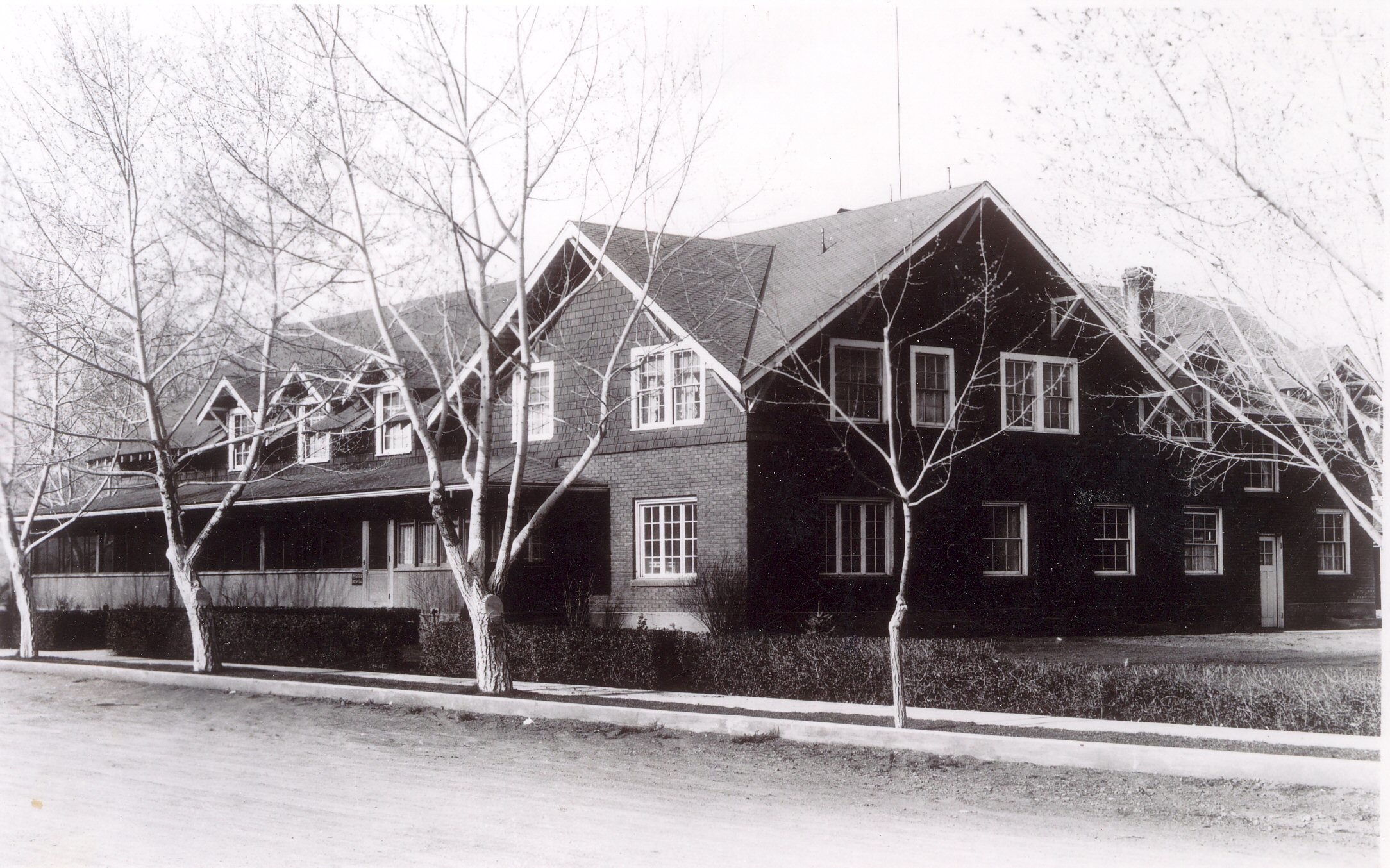
Westwood Masonic Hall

Garfield Oates began his career as a mechanical engineer with Diamond Iron Works in Minneapolis. In the fall of 1912 he was sent to Westwood to supervise the construction of Red River’s sawmill, as it was designed by Diamond Iron Works, who supplied most of the machinery. After the completion of the mill, Red River offered him a position of resident engineer which he accepted. Oates designed many of the landmark buildings of Westwood including the Auditorium, Masonic Hall and Theater. He was very active in community and served many years as the president of the Westwood Auto which was a defacto Chamber of Commerce for Red River. After all, Red River did not need a chamber, since it was company town, so there was no need to attract businesses to locate there. Yet the Auto Club promoted Red River products. He died in 1934 after a four day bout with a gall bladder attack.

Support this site and Subscribe today!

Emerson Hotel

Emerson Hotel
Emerson Hotel under construction, 1901. Courtesy of Mary Dale Folsom

After the devastating fire of June 6, 1900, a new Susanville would arise from the ashes. In addition, the town witnessed a substantial use of brick for the preferred building material.

On July 31, 1900 groundbreaking ceremonies were held for the largest most expensive building to be constructed in town to date. It was Charlie Emerson’s three-story hotel, encompassing a quarter of a block on the southwest corner of Main and Lassen Streets. The $300,000 brick building contained 27,576 square feet. Besides providing the assortment of business spaces, it also included 76 guest rooms. A grand opening was held on June 3, 1901, and The Emerson became the town’s premiere social hub.

Support this site and Subscribe today!


1600 Main Street

Pardee
Pardee campaign headquarters, October 1978

Part news and part history. On April 28, the first hurdle was made for the construction of a 17,400 square foot Rite Aid store. The store, along with the parking lot will encompass the entire 1600 block of Main Street. Of course, this site was the former home of Potter’s Maternity Home on the corner of Main and Park. In 1966, United California Bank took over this location and constructed their bank, which held an open house of February 27, 1967. It has housed a number of financial institutions since then. Of course, on the corner of Main and Ash was Baxter’s Flying “A” Service Station.  After it closed, for a brief time in 1978 it housed Jim Pardee’s campaign headquarters for Lassen County Superior Court Judge, and then was subsequently torn down and has been a vacant ever since.

According to records filed with the city the bronze plaque commemorating Potter’s will be preserved and replaced on the site. The fire department has sought authorization to conduct fire training on the bank and remaining vacant residences scheduled for demolition. It is Rite Aid’s goal to be in their new location by the of 2015.

Support this site and Subscribe today!

Gallatin Beach, 1920s

Gallatin Beach, 1922
Gallatin Beach, 1922. Courtesy of Lydia Odette

Gallatin Beach has certainly evolved over the years. During the 1910s, the beach did not exist, due to the high water levels of Eagle Lake. By 1917, Eagle Lake reached its peak high water mark, and on the south shore, considerable timber was flooded, killing trees some hundreds of years old.

In the 1920s, the water level of lake began to recede, in part by Bly’s Tunnel and equally important the region was in the midst of a 20-year drought. Dead trees were now a part of the beach’s landscape. Local water enthusiasts made the most of the situation, and incorporated them into photo ops

Support this site and Subscribe today!

Amy Laughead

Laughead117

One never knows for sure where your final resting place may be. In one instant, there was a dis-internment of a grave of a person who died in 1924 from the Susanville Cemetery and reburied nearly 70 years later to a cemetery in Oroville.

Then there is the case of Amy Laughead.  She was a first cousin to Red River’s founder, Thomas Barlow Walker. Her claim to fame, is that of her son, William B. Laughead, who developed the famous Paul Bunyan caricature that later became the trademark for Red River. Amy is a perfect example of you just never know where your final resting place might be. She died in February 1939 at Westwood and was buried in Sacramento. Seven months later, her son had her remains disinterred and brought to the Westwood Cemetery. When he died in 1958 he was buried in the plot in Sacramento where his mother was originally interred.

Support this site and Subscribe today!

Memorial Day Weekend

Diamond Crest Cemetery
Diamond Crest Cemetery. If you have not seen the Avenue of Flags, its worth the trip.

I still hold a grudge with Congress when they changed Memorial Day to make it a three day weekend. Prior to that, the true spirit of Memorial Day could be witnessed.  Today, I see fewer and fewer people paying a visit to the cemeteries. Instead of doing it on one day, those that still observe it, do it whenever its convenient. However, there are still some of us that follow tradition.

As I do a lot of cemetery work throughout the year, I do spend even more time during Memorial Day Weekend. Many instances is usually assisting people in search of a grave. One of my favorite cemetery stories occurred at Janesville. A couple had arrived, and I could see they needed help. The woman was perplexed and remarked “Why don’t they bury people in alphabetical order? It would make it so much easier.” After further discussion, I inquired as to the grave they were looking for. I informed them they were in the wrong cemetery, and needed to go Lassen Cemetery, which I gave them directions to, as well as to how to find the grave they were looking for.

Support this site and Subscribe today!

Perplexing Street Names

Roop Street
Roop Street in the background from Rooster Hill. Seated, Frank League and Tom Long, circa 1895.

While a few months ago I mentioned the peculiar situation noting that North Street runs in a east/west direction. As duly noted, it made sense back in the day, as it was the most northerly street in the new town.

Another peculiarity is that of Roop and Weatherlow Streets. This was pointed out to me  many years ago when Eleanor Vandeburgh and I worked at the museum. After all, her reasoning was, one would think Weatherlow Street should have been designated as Roop, since it went to his original home. Weatherlow lived at the end of Roop Street, though it did not extend that far, since his original home is known today as Susanville Ranch Park. On the same token, Weatherlow Street goes by Roop’s original home.

Support this site and Subscribe today!

Scotts

Scotts
Scotts, courtesy of the Nevada Historical Society

Scott’s was a little known Western Pacific station in Long Valley. It was so named for Charles and Franceska Scott who located there in 1901, from Fish Springs. With the railroad station, they decided to open a general store and even established the Scotts Post Office. The post office only operated from 1912 to 1916. In 1918, they sold their 3,160-acre ranch to Antonio Saralegui.

Support this site and Subscribe today!

Stacy

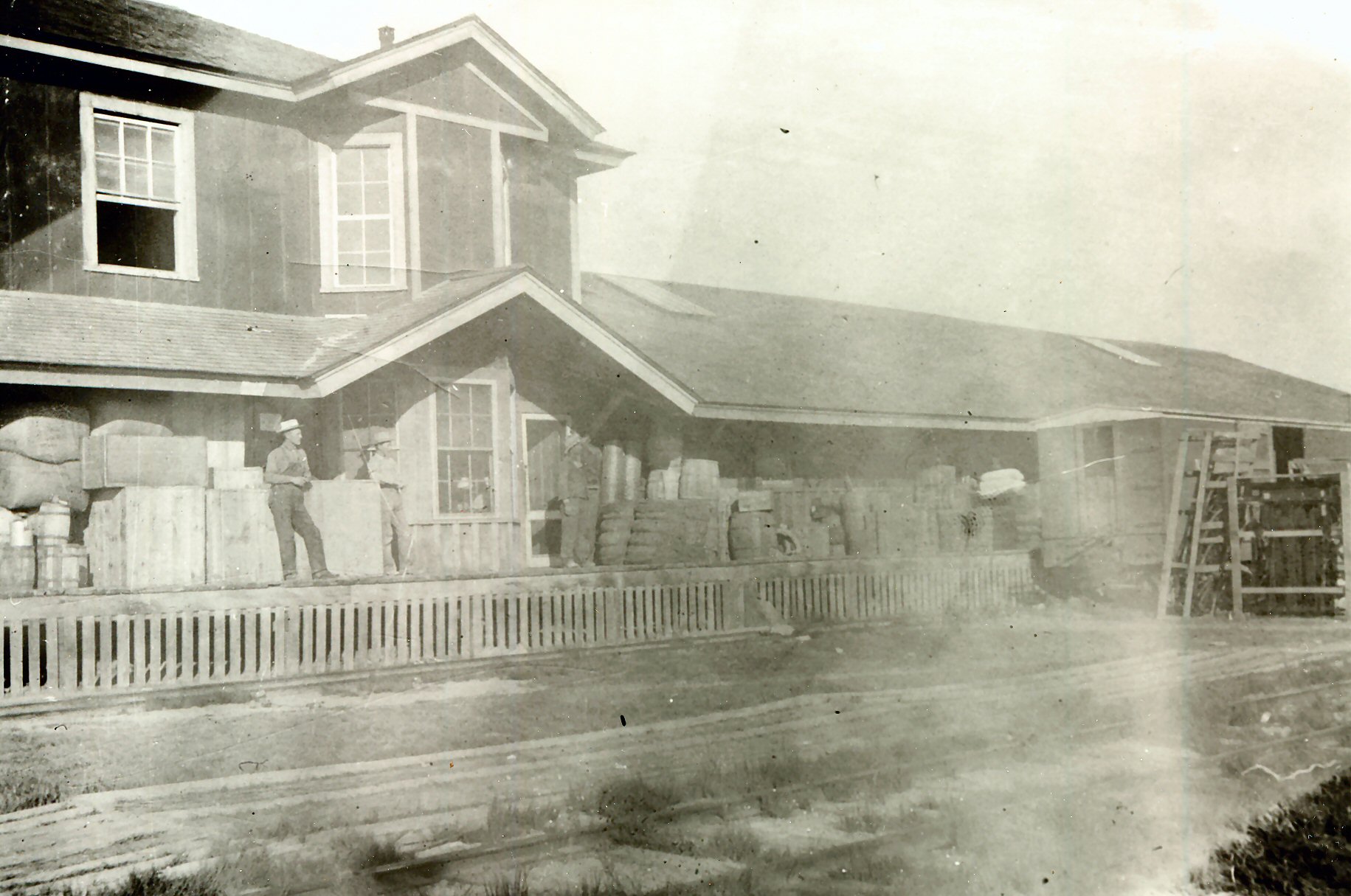
Stacy Depot
Stacy Depot. The town was named for Stacy Yoakum Spoon, wife of Grover Franklin Spoon, one of the town’s developers and its first postmaster.

Once it became known that the Fernley & Lassen Railroad would be constructed through the Honey Lake Valley, it made the region a virtual paradise for real estate promoters. Three towns were plotted out—Leavitt, Litchfield and Stacy, the latter being in the eastern part of Honey Lake Valley between Amedee and the Nevada Stateline.

On April 19, 1913, the Lassen County Board of Supervisors approved the Stacy townsite. The town’s founders, the Spoon Brothers—Frank and Andrew—and Doctor B.B. Bolton envisioned great possibilities, such as the development of a major shipping facility for the region’s start up sugar beet industry. Prior to the railroad development, numerous homesteaders had arrived in part of the dry farming experience, and that of the Standish Water Company’s reclamation plan to use water from Honey Lake to transform the area into a major sugar beet region.

Support this site and Subscribe today!