Category Archives: History

Sagebrush War

Roop's Fort
Roop’s Fort, 1940s

Today marks the 151st anniversary of the creation of Lassen County. It was the culmination of the Sagebrush War that finally started the process. In the simplest terms the conflict also known as the Boundary War was the result of John C. Fremont’s selection in 1850 of the 120th Meridian for California’s eastern boundary. The problem was no one knew where that was, and assumed it followed the crest of the Sierra Nevada Mountains. In the late 1850s, with the settlement of the Honey Lake Valley, officials of both California and Nevada saw the uncollected tax dollars waiting to be had. Tensions escalated wherein an armed conflict on February 15, 1863 from the two states took place at Roop’s Fort, also known as Fort Defiance. In the end a truce was called when both sides agreed to conduct a boundary line survey to locate the 120th Meridian, in which it was determined the majority of the Honey Lake Valley was located in California. Thus, began the process to create a new California county. A detailed account of the Sagebrush War can be found in the Lassen County Almanac.

Railroads

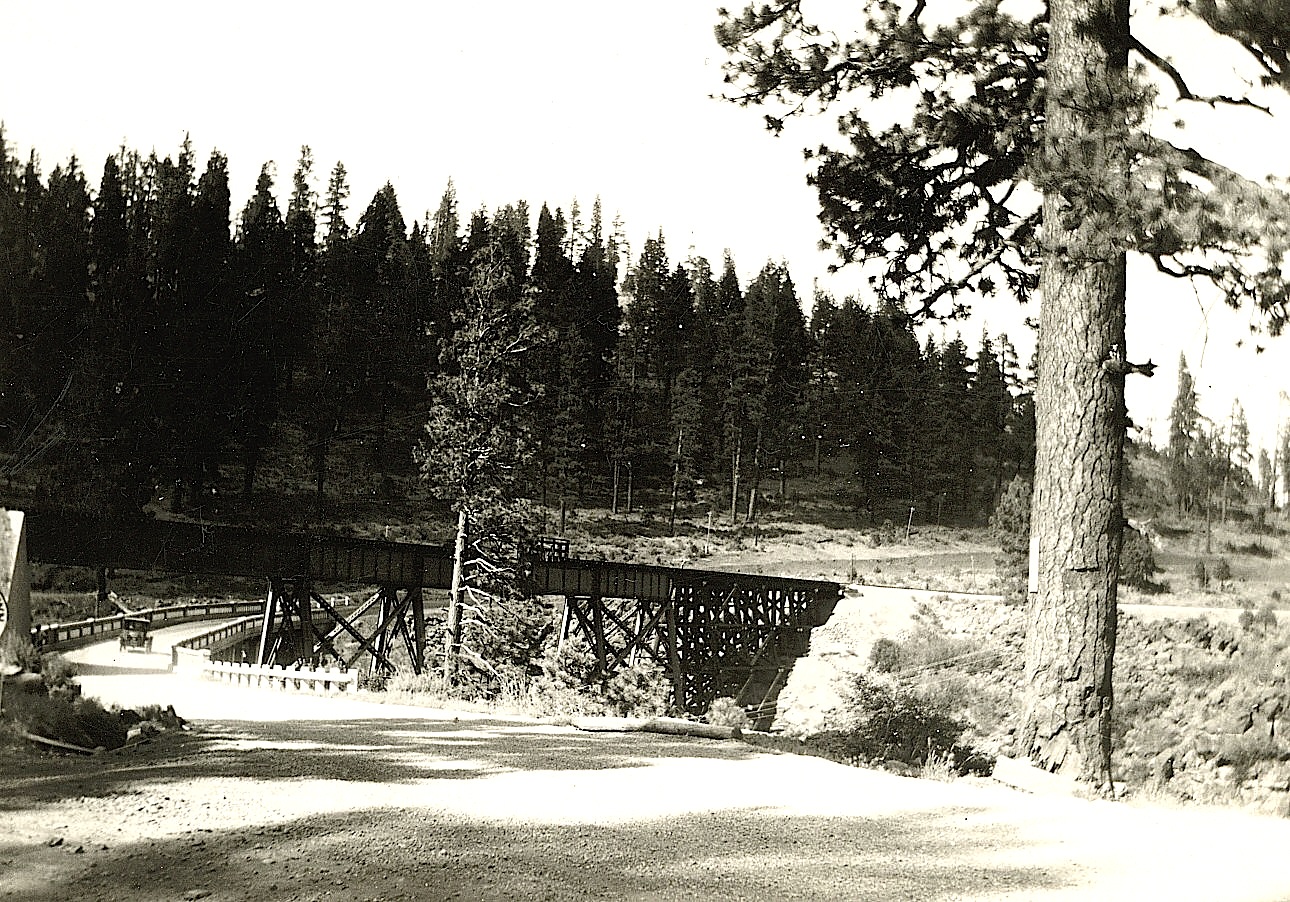
Davis Cut, Fernley & Lassen
Davis Cut near Susanville of the Fernley & Lassen Railroad, 1912

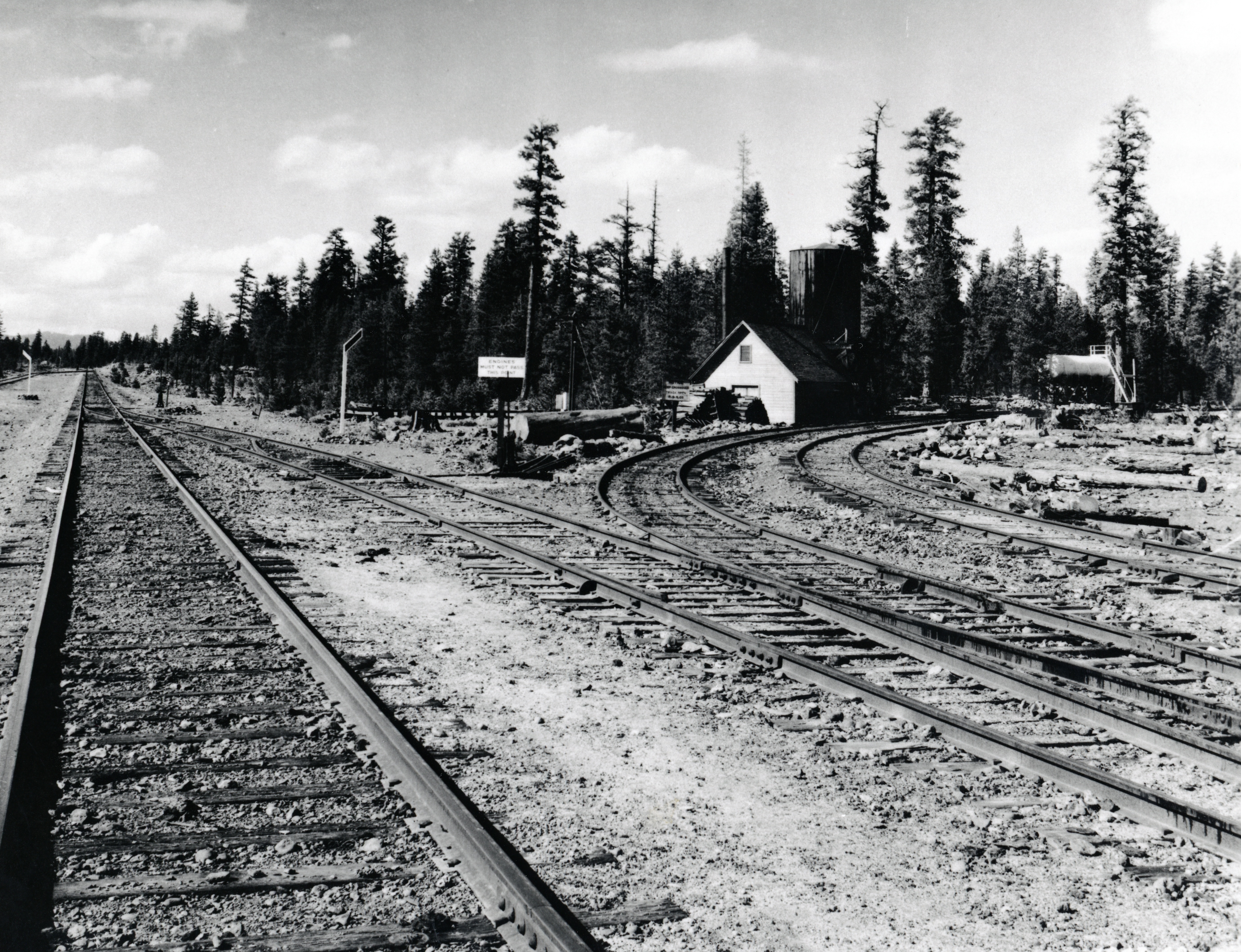
Well, now that I have included future topics on logging, mining and ranching, I need to add another—railroads. It is hard to imagine in this day and age just how important railroads were for development. In certain ways you could compare it to the internet of the 1800s and for a large part of the 1900s. Railroads were one of the most efficient ways to move goods and people. Without rail transportation, growth was stymied. This was particularly true in Lassen when politics versus common sense bypassed Lassen with the transcontinental railroad. After all which would be cheaper to build and maintain a railroad over Fredonyer Pass/Deer Creek as originally surveyed versus Donner?

Four railroads would build through Lassen—Nevada-California-Oregon, Fernley & Lassen (Southern Pacific), Western Pacific and Great Northern. In addition, Fruit Growers, Lassen Lumber and Red River operated their own logging railroads, so a lot of old iron horsepower was put to work. Stay tuned for more on this topic.


Hat Creek Power

Hat Creek No. 1
Hat Creek Powerhouse No. 1, 1921. Courtesy of Lola L. Tanner

The Red River Lumber Company operated many enterprises and it still as an influence concerning electricity to many residents of the region. From time to time when the Susanville area has a power outage, many times there will be a reference to the Hat Creek line. So you may ponder how did Hat Creek come to be? Continue reading Hat Creek Power

Willow Creek School

Willow Creek School 1886
Willow Creek School 1886–Alice Fritter Pendergrass

In the spring of 1871, the residents of Willow Creek Valley constructed and operated a private school at the west end of the valley near the Murrer Ranch. Miss Fanny Lovell was employed to teach the first classes. In June 1871, residents petitioned the Lassen County Board of Supervisors for the formation of a school district and that was granted. It was not until 1877, when John Dobler donated the land that the school was built on, with a stipulation that the property would revert back to him or his heirs when it was no longer used for a school. Continue reading Willow Creek School

Potter’s Maternity Plaque

Potter's Maternity Home
Pottter’s Maternity Home

As many may be aware, Rite Aid plans a 17,400 square foot building on the 1600 block of Susanville. All the buildings on that block are scheduled to a be demolished. I do not have any problem with this, in fact I am favor of the project. My only concern is the bronze plaque at the bank be saved and incorporated in the new enterprise. Anyone who is concerned needs to contact Craig Sanders at the City of Susanville to express your concern. The details of the project can be found here.


Roop’s Sawmill

Roop's Mill
Roop’s mill taken in the early 1860s

In the spring of 1857, Ephraim Roop, Isaac Roop, and William McNaull constructed the first sawmill in Lassen County, along the Susan River at a place that would later become known as Hobo Camp. In November 1860, Perry Craig fell out of a boat at the millpond and drowned. Craig was buried on top of the hillside near the river, and from that episode the Susanville Cemetery was created. On August 18, 1862, Roop & Company sold the mill to Luther Spencer for $200. Spencer operated the mill until it was destroyed by fire in the spring of 1868.

Mining

Hayden Hill 1894
Hayden Hill, 1894

Besides exploring logging and ranching, from time to time, Lassen has an interesting mining history. Unlike our neighbors to the west, where mining had a major influence on their development, that was not necessarily case in Lassen. However, it was a mining excitement of 1856 along Diamond Mountain that brought the first wave of settlers to the Honey Lake Valley. Many of those gold seekers soon gave up mining and developed other interests in the region. However, the Diamond Mountain Mining District remained active until 1942, when President Roosevelt’s Executive Order curtailed gold mining. The other hot spot for mining was Hayden Hill, 55 miles north of Susanville. It gained in prominence in 1870 and would go through many boom and bust cycles.


Carlton Goodrich

Goodrich Barn
The old Goodrich barn as it appeared in the 1920s

In 1861, Carlton Goodrich settled at Mountain Meadows and would become one of the largest property owners there, as his ranch totaled over 7,000 acres. He located his ranch house just west where the highway crosses Goodrich Creek, approximately across from where the old chimney stands. It became known as Mountain House and was a popular stop for weary travelers. In April 1875, Sylvester Daniels paid Goodrich a visit while touring the region and wrote, “I love these mountain folks. No aristocracy among them.” When Goodrich died in 1886, due to estate issues and the subsequent sale to John Crouch, the popular establishment closed. When the Red River Lumber Company established its Westwood operation, they transformed the old Goodrich ranch into a dairy.