Westwood Bond Measure

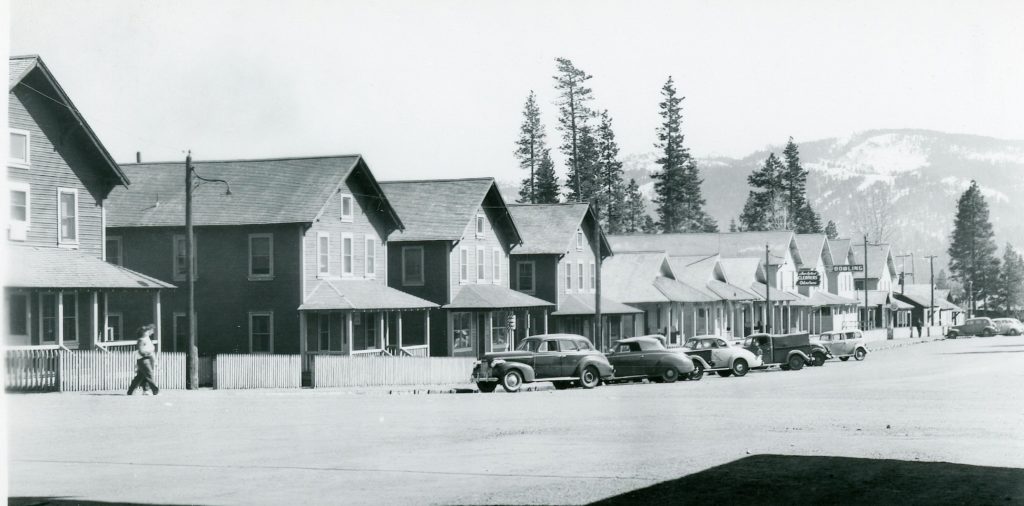
Birch Street, Westwood. Courtesy of Hank Martinez

Many may not realize that Red River Lumber Company sold bonds with two Minnesota banks to finance the construction of Westwood.  After all, the initial cost to construct Westwood was $3,528,300. While sorting through the T.B. Walker papers, there was some interesting correspondence on this topic. Even with T.B. Walker’s wealth—one of wealthiest people in the United States—the banks were leery. There concern was real, especially in family operations such as Red River. Edward Decker of Northwestern National Bank informed T.B., that his concern was with his heirs, that in many causes quarrels and misunderstandings occur and eventually leading to the failure of the enterprise. However, Decker had witnessed T.B.’s five sons working together in harmony and felt confident with approval of $2 million in bonds. However, Decker was no fool, and secured a mortgage to Red River’s timberlands in Shasta and Tehama Counties. Decker’s initial thoughts came true, when shortly after T.B. Walker’s death in 1927, that Red River defaulted on a bond balloon payment, and thus the numerous financial difficulties to be encountered down the road.
Subscribe

Lassen Peak Lookout

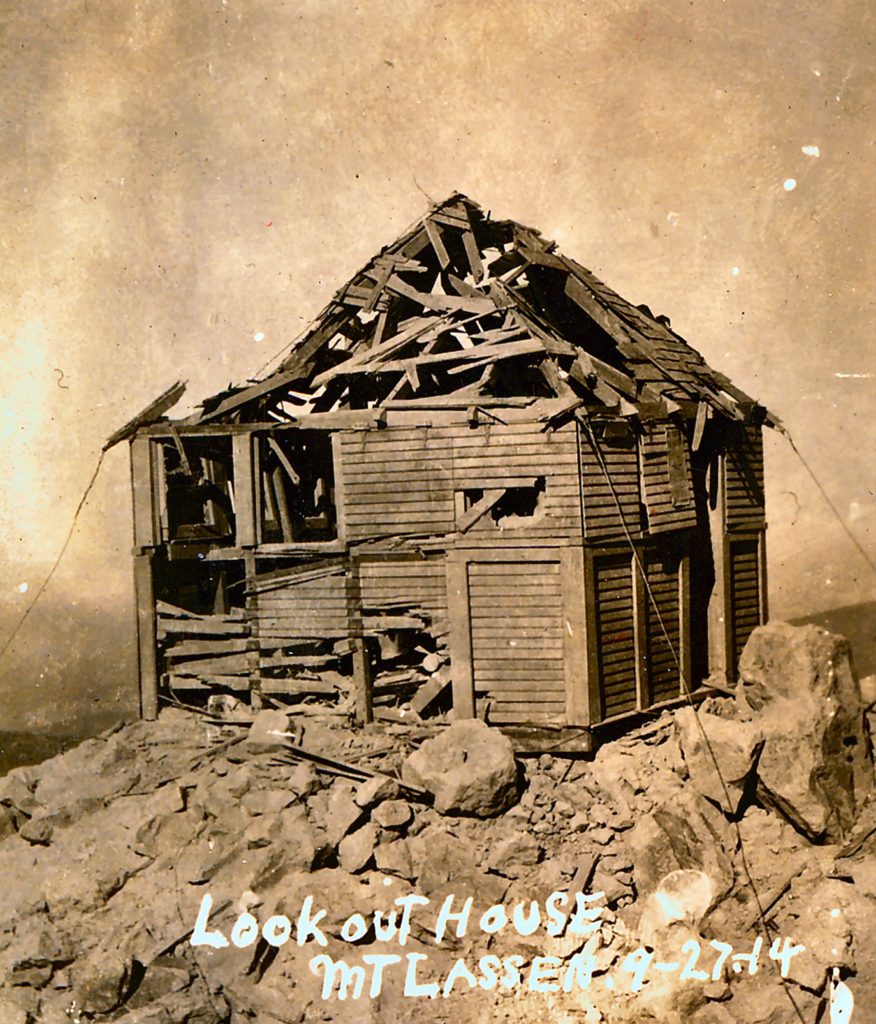
The remains from the first eruptions of September 1914

It is somewhat amazing to the think that fire lookouts more or less ran the course of just little over a century.  While there are still manned fire lookouts, they are few and far between.

In 1911, the Lassen National Forest Service implemented its fire lookout program.  Lassen Peak, at an elevation of 10,457 feet was the highest point in the forest, and so it was only natural that a lookout be placed there. In 1912, the first attempt was made, it was a crude arrangement that did not function. The following a year, with a new design, a portable structure could be hauled by pack animals.  In June 1913, mules were used to pack the lookout building for Lassen, at least to its base. At that point, man was designated the beast of burden. It took four men, two days and sixteen trips to lug all the pieces and the sparse furnishings to the top of Lassen. W.H. Packard, of Woodland would be the only person to man the lookout for two seasons. In the fall of 1914, the lookout was destroyed by numerous volcanic eruptions.

Subscribe

The Laotian Refugee Crisis

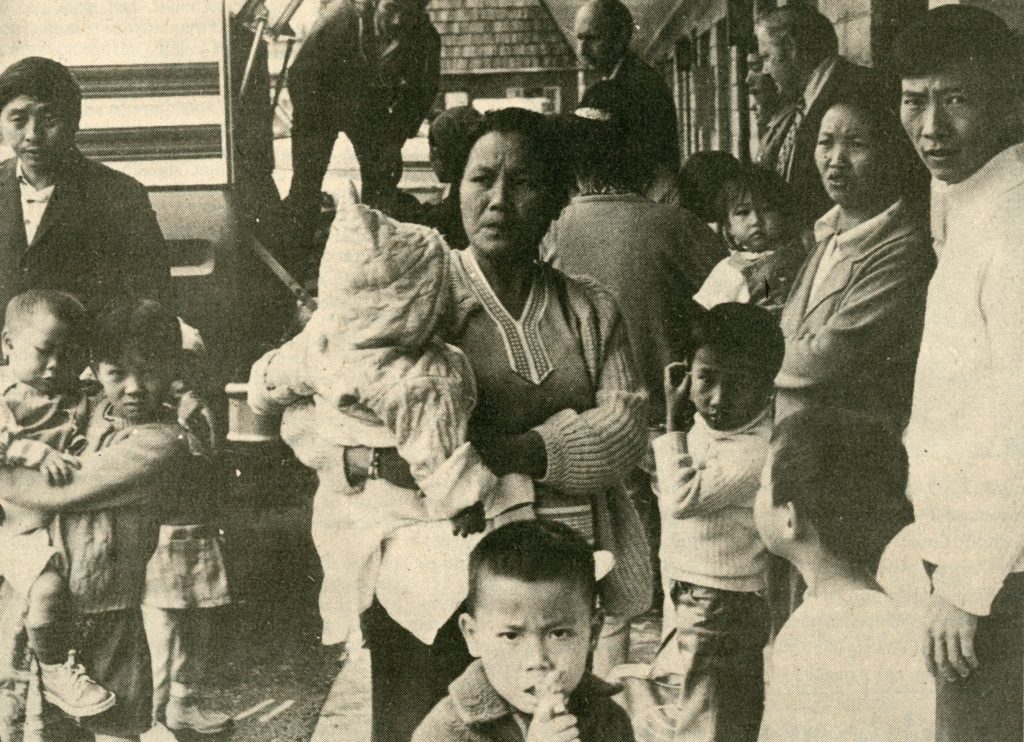
The Laotians waiting for a bus to transport them to San Diego on September 15, 1976.

On the Madeline Plains, one just never knows what to expect, especially if it included well-known rancher, John Casey. Seasoned residents are familiar with his many antics, and this particular episode garnered national attention.

The tale began to unravel  when Bill and Florence Anderegg, caretakers of the Dodge Ranch in the eastern section of the Madeline Plains brought 13 Laotians to Lassen Memorial Hospital for medical care. Lassen County Welfare Director Marty Herzog was notified. Herzog in turn contacted the Northern California Emergency Team out of Redding and on September 2, 1976 they visited Dodge Ranch to find 27 Laotian refugees there, who were in dire straits. Fortunately, Vang Song, was the only Laotian that could speak English. The Laotians were bused into Susanville, where they were given additional medical care, clothing, food and shelter. By mid-September the Laotians were transported to a refugee camp near San  Diego, so they could find jobs and sponsors. When John Casey was questioned about the Laotians, he pled ignorance, even though according to Vang Song, Casey was their sponsor from Thailand.

Donate

Hayden Hill’s Water Problems

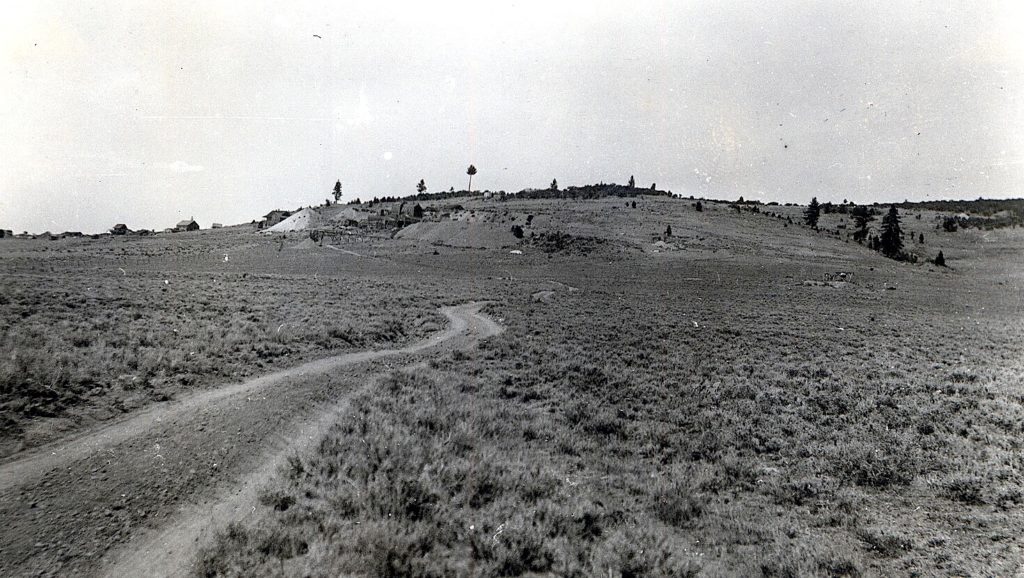
Hayden Hill, 1920.

One of the problems that stymied development was water, or specifically the lack thereof. Efforts were made to bring water from Willow Creek, but that was fraught with problems—litigation over water rights. Then there was another dilemma, of finding water in all the wrong places. In the tunnels miners experienced a tremendous amount of water seepage, compounding an already difficult task. The author can attest first hand having had explored the Golden Eagle mine with water dripping everywhere.

Donate

Westwood’s Millpond First Victim

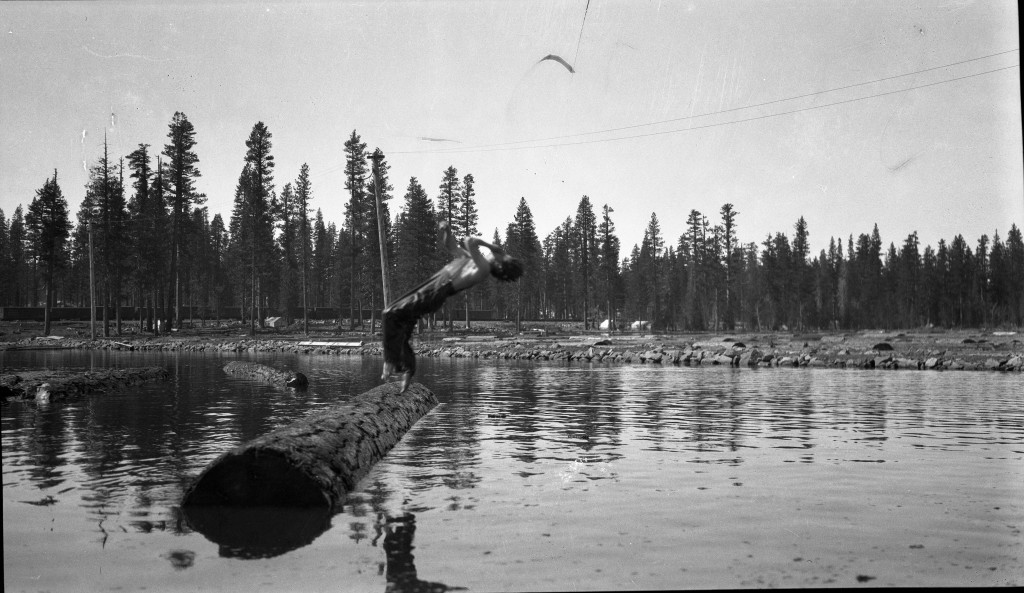
Back flip
Westwood millpond, 1915, courtesy of Otto Katzner collection

Red River was not only the nation’s largest electrical sawmill, it also built one of the largest millponds, in which several people met an untimely end in it. During the afternoon of July 29, 1914,  19-year-old, Willard Pierce was fishing where Robbers Creek entered the millpond. Others the vicinity were swimming and later left.  Later in the day, John Jeffreys discovered Pierce’s body face down in about three inches of water. Jeffreys and Charles Phelan pulled him out of the water, and attempted to resuscitate to no avail. During the Coroner’s Inquest it was revealed that last year Pierce was swimming in the millpond with friends. After swimming, Pierce had a fainting spell and collapsed for no apparent reason. It was presumed that he must have had a spell causing him to fall into the water resulting in an accidental drowning.

Subscribe


Lassen County Times

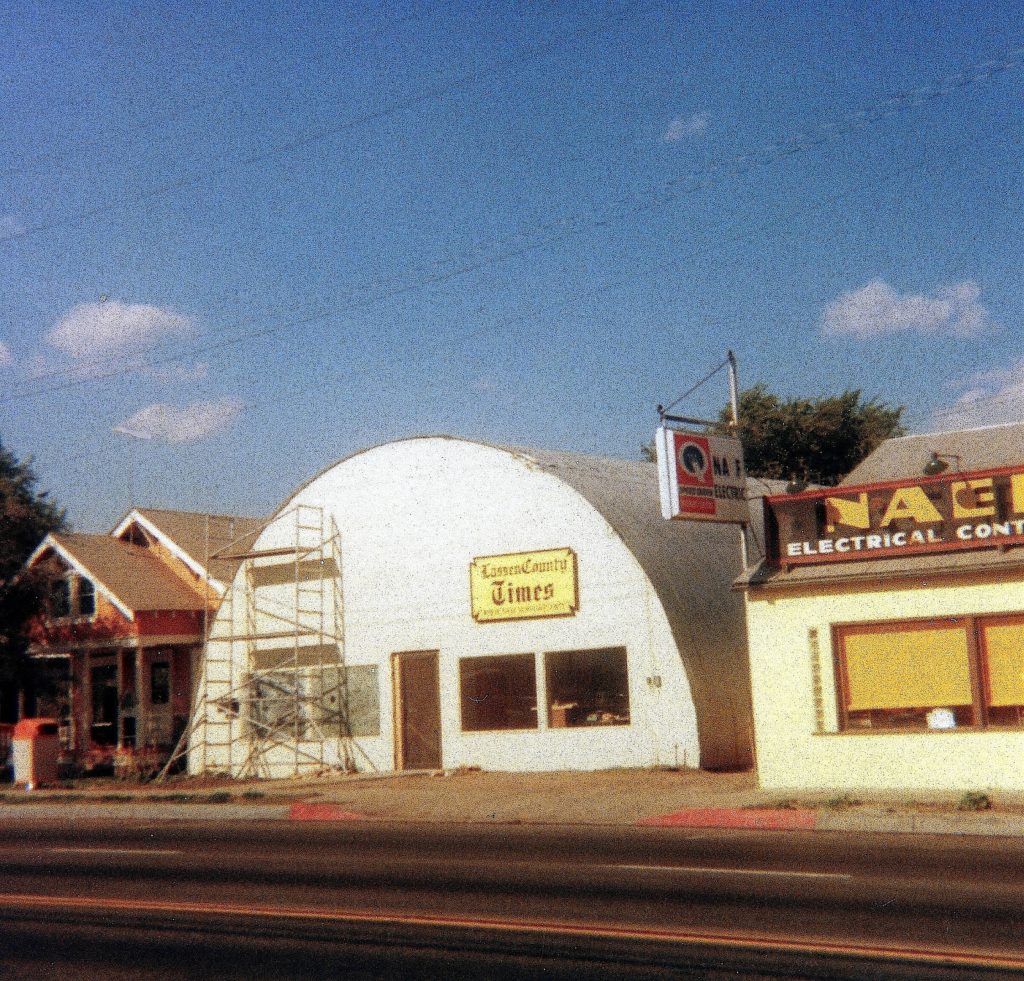
Lassen County Times, October 19, 1978

On this date, forty years ago, the Lassen County Times made its debut. At the helm was Martin Hickel, editor, Margie Teeter, city editor and yours truly penned a column entitled “Historic Moments.’

Some of the headline news was the rate hike hearings for CPN, then the local electric company. Congressman Harold “Bizz” Johnson was about to pay the community a visit. Then, there was the ongoing saga over the logging of the Westwood Cemetery.

Subscribe

Name that peak – the answer

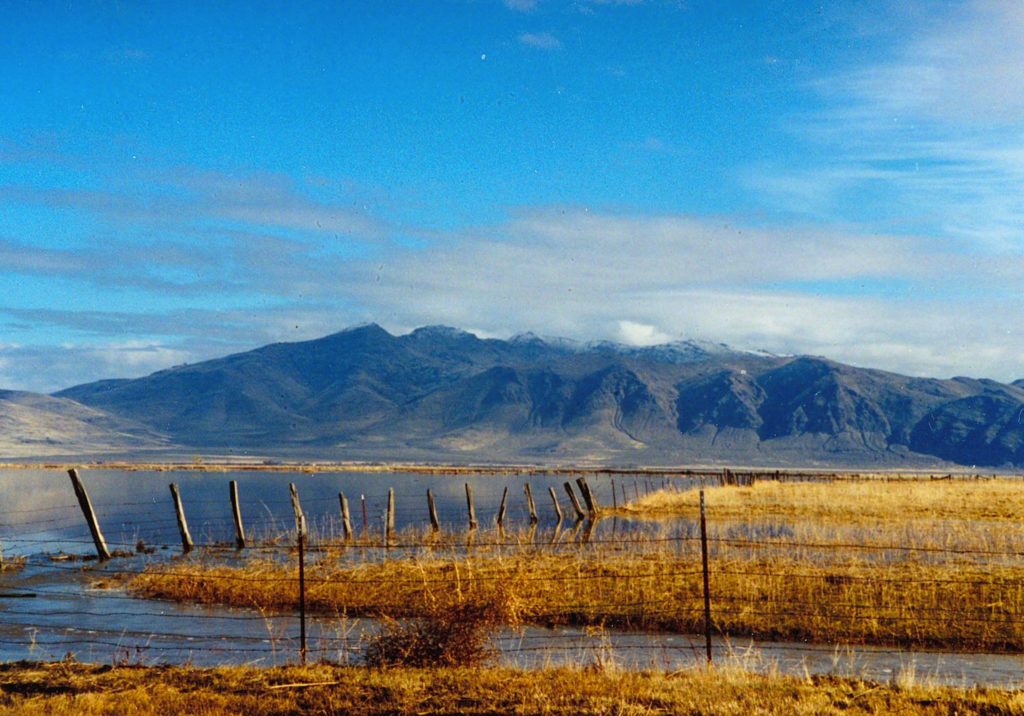
Honey Lake, with Skedaddle Mountain in the background, 1997.

Hot Springs Peak at an elevation of 7,680’ is the highest point on the Skedaddle Mountains. So named for the Amedee and Wendel Hot Springs located at the base of the mountain. Skedaddle was a Civil War term used primarily by Southerners to “flee.”  The mountain was named by the Kidder & Ives state boundary survey of 1863, when they had a skirmish with the Smoke Creek band of Paiutes, in which ultimately the latter fled.

Subscribe

Al Fresco Court Session

Lassen County Courthouse, 1922.

Long before the American Disabilities Act was passed, one county official, specifically Lassen County Superior Court Judge Harry D. Burroughs went the extra mile so to speak to accommodate a court litigant.

In October 1929, a World War I veteran involved in a divorce proceeding was physically unable to climb the stairs to the courtroom, and no one was able to carry him. Thus, Burroughs held court on the front lawn of the courthouse. The veteran had suffered from a gas attack by the Germans, and for the last ten years he was still unable to lift his hand to his head. At the time of the court proceeding he was residing at Wendel, hoping vapor baths from the hot springs would aid in his recovery.

Subscribe

Ask Tim

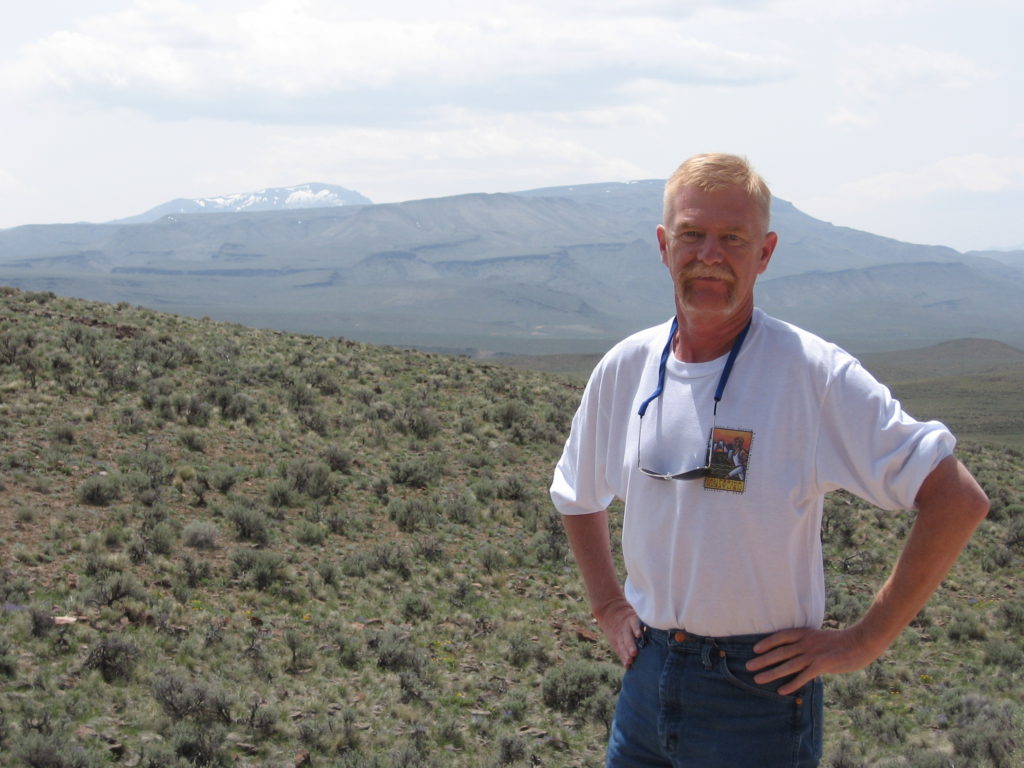
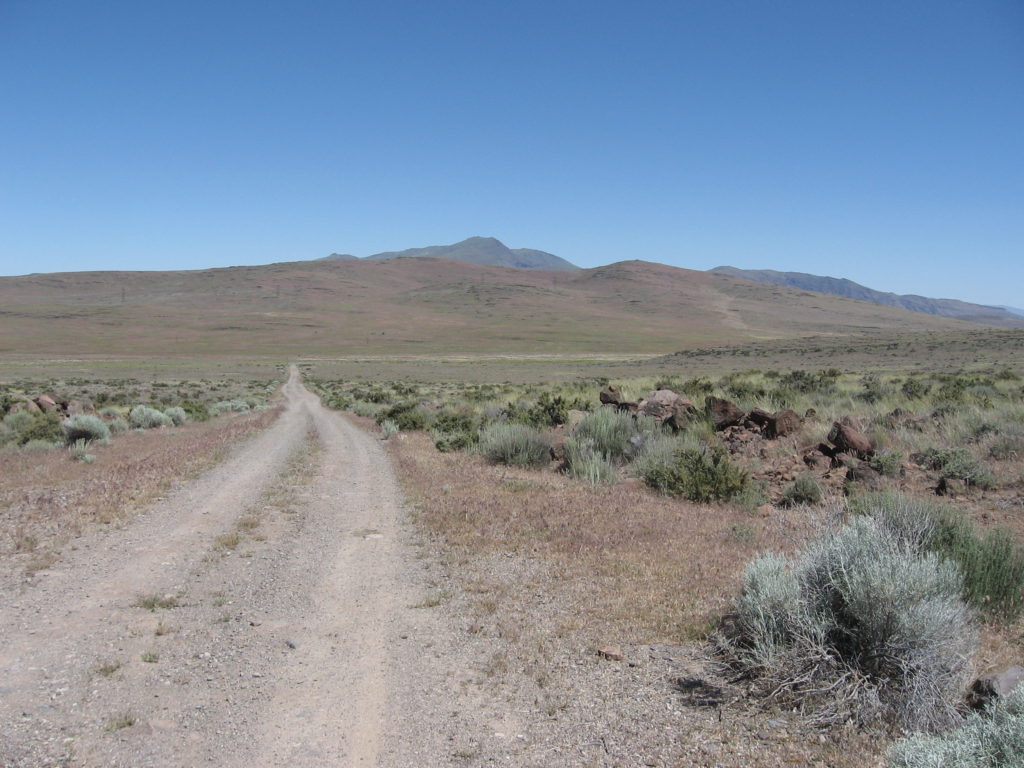
Some where out in Northwestern Nevada

On a quarterly basis, I ask you the reader, if there is something you would like to learn more about or maybe its something you heard, but question its validity. So here is an opportunity to participate. I will do my best to answer any questions. It should be noted, it may take awhile for the answer to appear as a post. The primary reason, many of the daily posts are done nearly a month in advance. So by the time you read this I am already working on posts for the middle of November, or at least I should be. Whatever the case may be, I look forward to hearing from you. Of course, it should be noted that paid subscribers requests receive priority. In addition, you can always send a request at any time.

Exploring Lassen County's Past