The final segment of the bear dance, 1900. Sponsored by Anna Stewart
This photograph is quite interesting on many fronts. First, this was the very end of the Honey Lake Maidu Bear Dance at Lone Pine, on the south side of Bass Hill, along Baxter Creek. The photograph was taken circa 1900, by Susanville resident, George McDow. There is not much historical documentation of this particular bear dance, versus those conducted by its Maidu neighbors. At the end of the ceremony, the Maidu go to the creek to wash their faces. The 1909 inscription on the back of this photograph, provides a little insight: “Last part of the Bear dance. The women put water on their heads to keep them good for the coming year.”
If you have happen to be an astute reader, you notice I provide credit to the source of the photograph. In this particular instance, instead of courtesy of, its replaced sponsored by. Anna Stewart, also known as Susanville Supermarket’s Green Grocerette, annual subscription occurred at the same time this rare photograph appeared on Ebay, which those funds purchased it. Thank you, Anna for your support. The bottom line, is those who subscribe and/or donate help contribute to not only preserve our rich history, but to make it available through this forum for everyone to enjoy. Thank you all for your support.
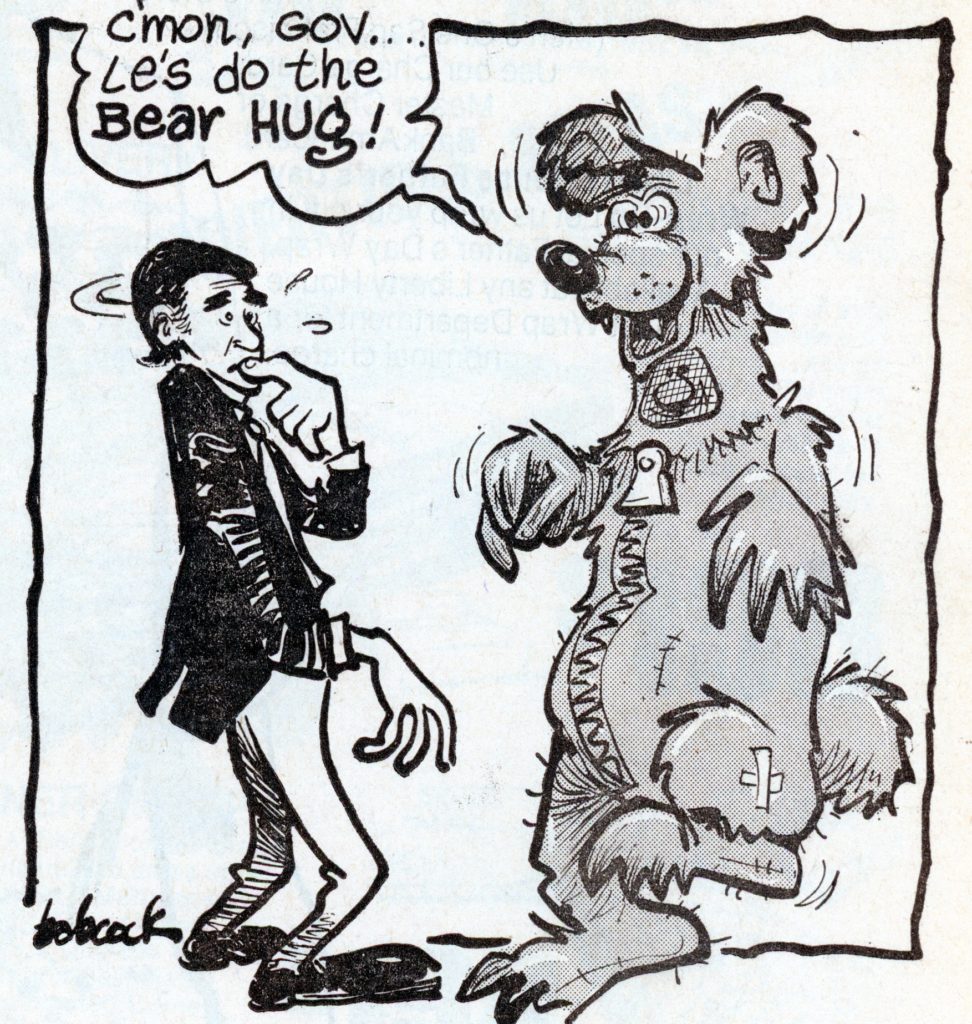
On Sunday, June 8, 1975, California Governor Edmund G. Brown, Jr. made a surprise visit at the bear dance held on Gladys Mankins’ property near Janesville. It did come as a surprise to the some 500 people at the event. The ever so inquisitive Brown asked questions about the ancient ritual in which the Indians transfer their troubles and evil spirits to the bear figure impersonator, as some relay it as a form of thanksgiving. There is very little documentation about the event of years gone by, but a piece of 1909 documentation recently surfaced, which I will share tomorrow. As to Governor Brown he stayed at the dance for nearly three hours, then left with California National Guard to make a quick inspection at the nearby California Correctional Center, then returning to Sacramento.
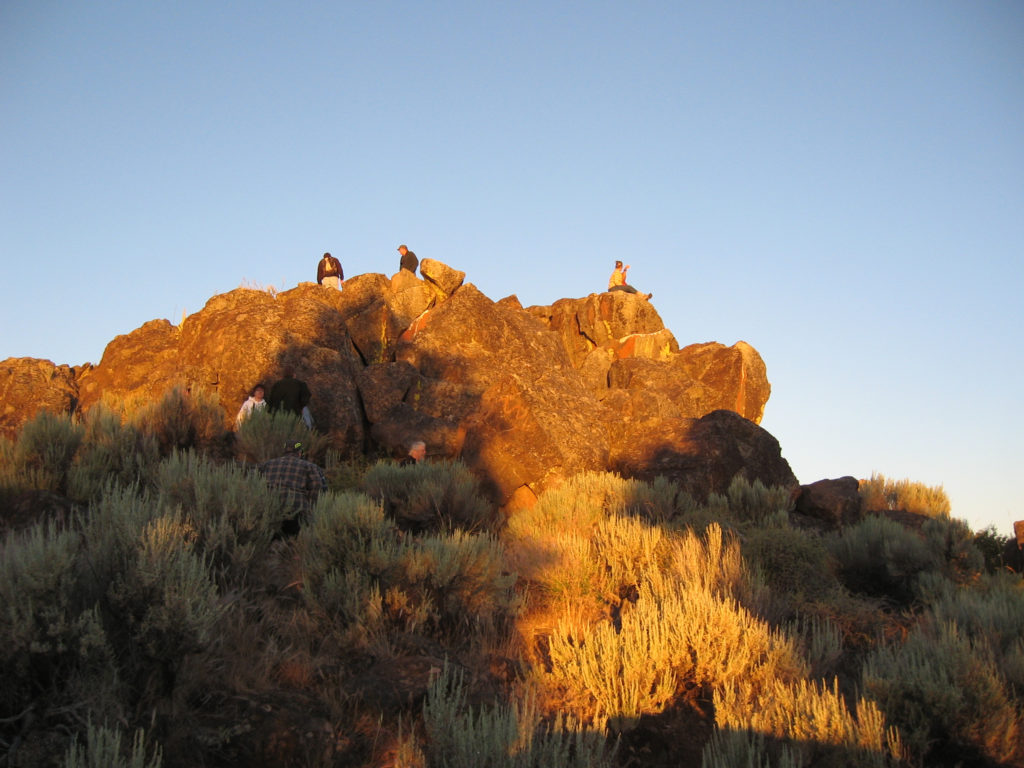
It is that time of year for the annual early morning pilgrimage to Belfast, on Friday, June 21.. Were you aware that the Belfast petroglyph site also serves as ancient observatory? This event only occurs on the morning of the summer solstice when the sun enters a chamber highlighting a variety of glyphs, among other things. It is quite the sight to see.
Belfast, 2016
This is an early morning excursion and I mean early as we gather at 5 a.m. to make the trek. In preparation attendees receive in advance John Rudolph’s paper, that provides information of what you will be viewing.
I have been asked how long it takes. Most attendees spend about 45 minutes at the site and are usually back in Susanville by 7 a.m.
Note: There is a $5.00 fee for non-subscribers.
A view from the ancient solar observatory, June 2015.
On a final note, details will be sent out a day or two prior to the solstice. After all, if it is going to be overcast on that day, there is no sense in going.
Important: If you plan to attend you need to contact me in advance so I can provide you with the needed literature.
As a public service announcement on Saturday, June 8, kicks off the Farmer’s Market in Uptown Susanville on South Gay Street. It is a wonderful oportunity to do some alternative shopping and a side benefit of some socializing, too.
I have been tinkering around with doing some guided Susanville Strolls during the Farmer’s Market. Quite honestly, I am a bit behind on plotting out some of the walks. It is not due to lack of interest, but other matters seem to creep in and disrupt my good intentions. If anyone is interested, just let me know.
Gay Street, looking north, 1864. Courtesy of Gilbert Morrill
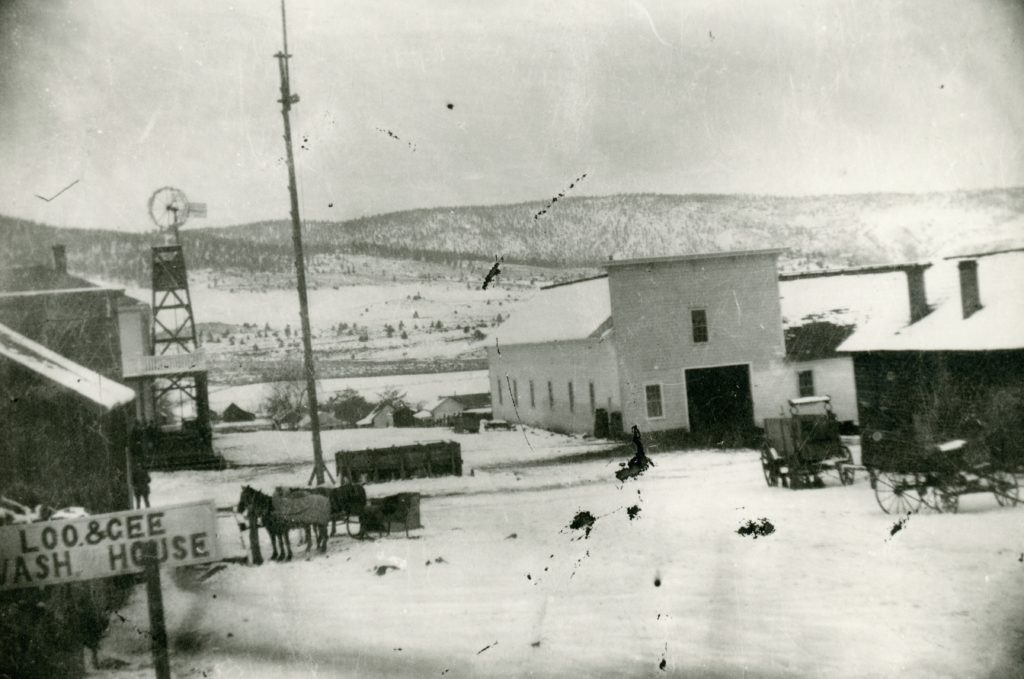
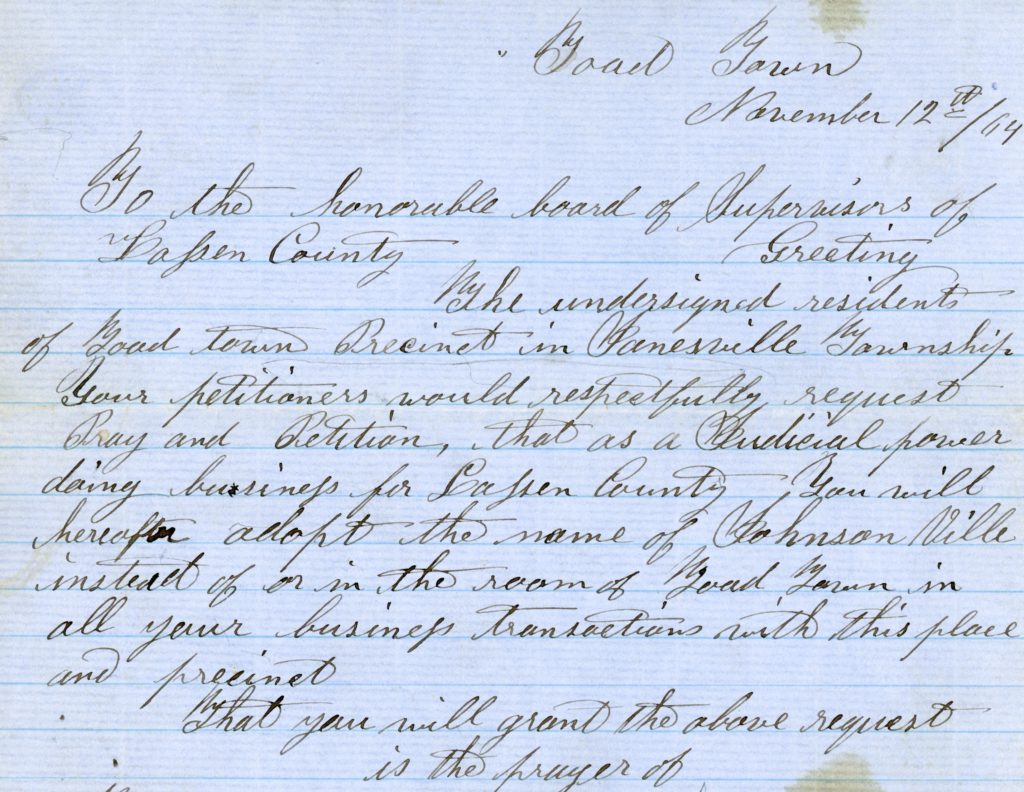
In its earliest days, Johnstonville suffered an identity crisis. In the mid to late 1850s, a whenever a warm spring/ summer rain storm hit that area and its aftermath caused a swarm of frogs/toads to appear and someone gave that district the name of Toadtown. In 1864, when Lassen County Board of Supervisors were busy with the formation of the county, they named the voting precinct there Toad Town. At the same time, the board named the school district there Susan River. There were some people who did not like the monicker of Toad Town. A dated petition of November 12,1864 signed by 41 individuals asked the Board of Supervisors to change the name to Johnsonville, the “t” omitted. Another peculiar thing about this petition besides the spelling, was the majority of the people who signed it, lived in Susanville. On December. 7, 1864, meeting of the Board of Supervisors they approved the petition as submitted, changing the Toad Town Voting Precinct to Johnsonville. As to the Susan River School, they did not change the name to Johnstonville until 1878.
1927 holiday greeting card from the Lassen County Sheriff’s Office. Left to Right, Sheriff Jim Leavitt, Deputy Tom Massey and Deputy A.C. “Cass” Hunsinger.
Today, residents in far northern California will go the polls in a special election to elect a new State Senator. Having worked elections for many moons, so I want to give a special thanks to all the poll workers that make it possible.
With that in mind, here is a bit of local election history. The race for Lassen County Supervisor, District No. 2 was a cliffhanger. On Thursday after the November 1936 election, incumbent Seymour Case had 1,055 votes and challenger, former Lassen County Sheriff Jim Leavitt had 1,026 votes. There were still ninety absentee ballots to be counted. When the final count was tallied Leavitt won by two votes—1094 to Case 1092.
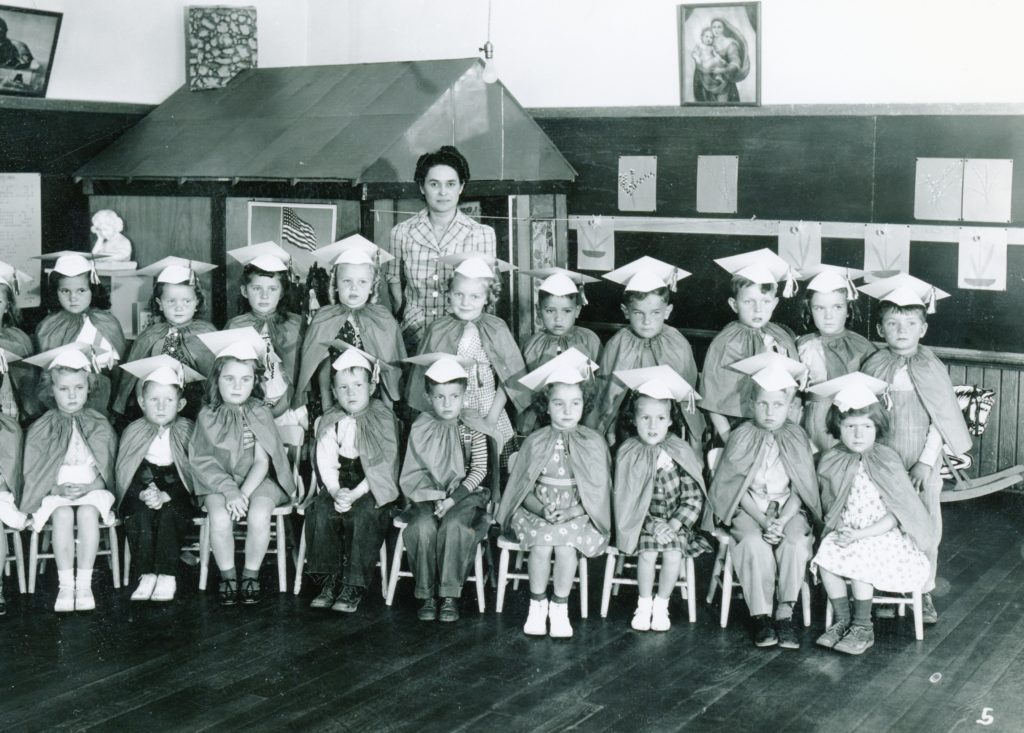
Remember When? In the 1940s, these youngsters had a graduation ceremony at Susanville’s Baptist Church.—Louise West Collection.
It is that time of year. The first graduation at Lassen High School was in 1906, a three year program. In 1907, a four year class schedule was fully implemented. At Lassen College, the first graduation conducted there was in 1927.
The above photograph is from the Louise West collection. Unfortunately, it has no date. Miss West taught kindergarten and first grade at Susanville’s Washington School from the early 1940s to the early the 1960s.
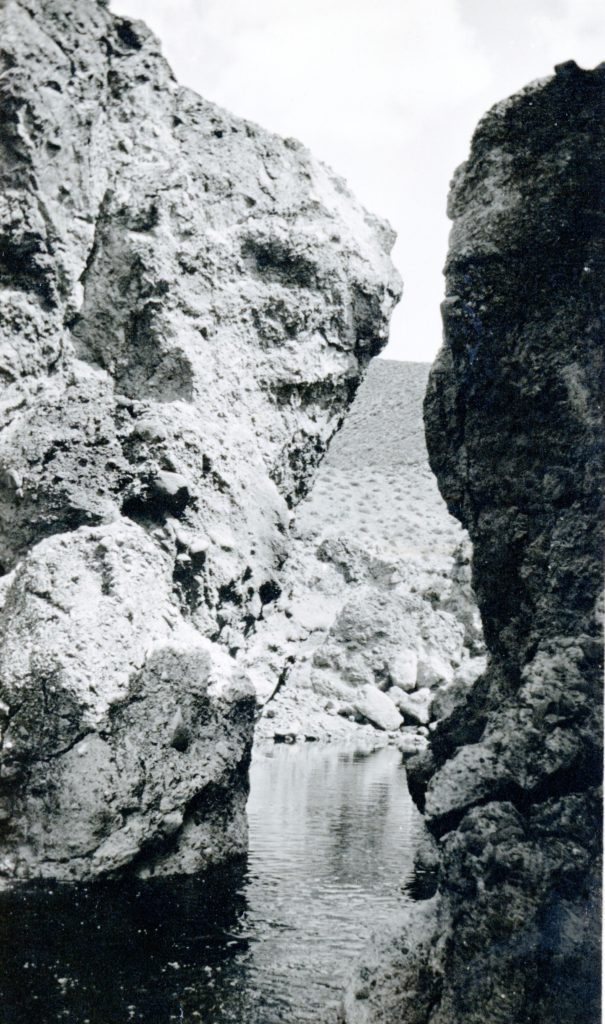
In keeping with the theme of Go Exploring, Skedaddle Creek and Mountain is worth not just one, but many visits. Actually, for the record we did a BLM tour many years ago crossing the mountain from Honey Lake Valley to Bull Flat. Of course, one of more interesting historical sites is the remnants of the Skedaddle Dam.
Skedaddle Dam, 1992. Courtesy of Ginger Martinez
This is an interesting stream which has a small drainage area of 32.1 square miles. In times of very wet years, it can be a raging to torrent.
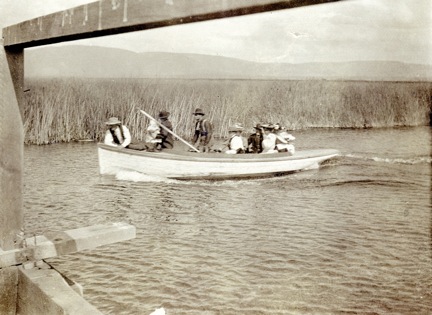
There are many different ways to see the country. These Eagle Lake boaters were checking things out back in 1906. Courtesy of Lola L. Tanner
There are a handful posts that I repeat each year, and for good reason. With summer weather upon us, it is an ideal time to check out the many wonders that surround the residents of the Lassen Region. I hope this editorial from the Lassen Advocate of June 21, 1929 will inspire you to explore the wonderful country around us.
Know Your Country
If you were wondering what to do with your weekends this summer, have you ever given any thought to the fact that you don’t know your own county and the wonderful lake and mountain country immediately contiguous.
Within a few hours of Susanville there are numerous beautiful lakes as well as some beautiful streams and excellent camping spots.
How many have been to Drakesbad and to the top of Mount Lassen? How many have been to the ice caves near Eagle Lake and Wilson Lake?
There are many trips that can be taken from Susanville in the morning returning the same evening and traversing in the meantime a lot of new country that you have never seen before. Beauty spots near a mountain stream with clear sparkling water are numerous where one may have their picnic lunch.
Try and see your own neck of the woods this summer. You will find many a pleasant day in store for you.
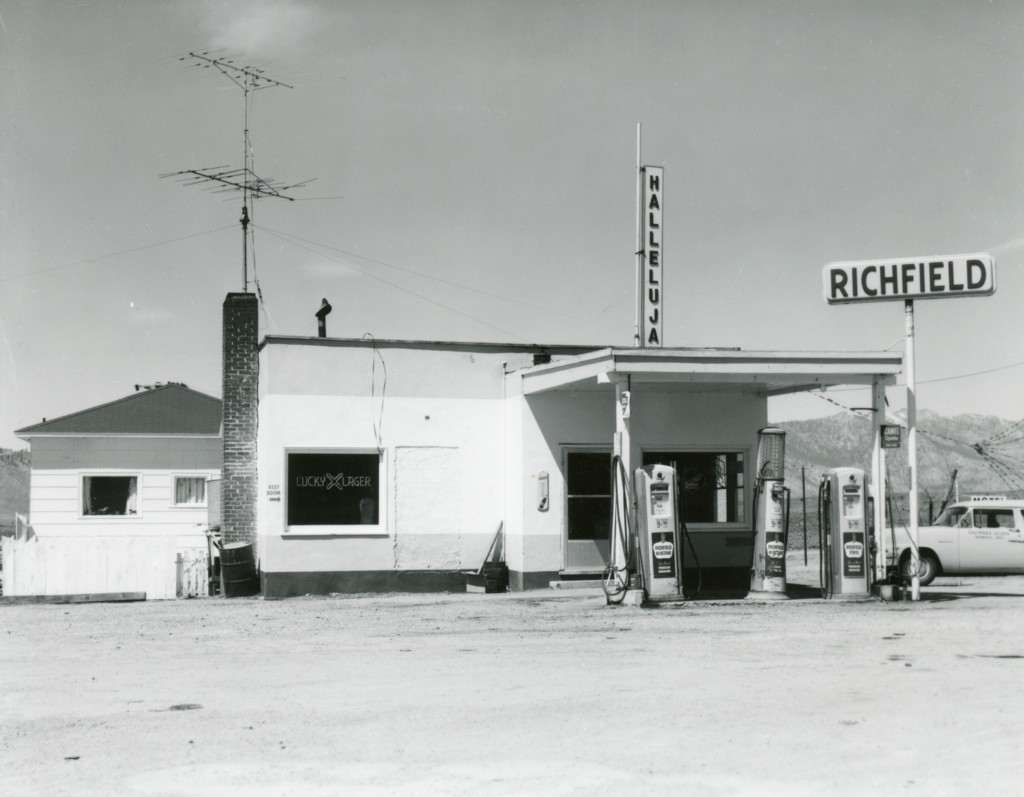
Walt Wiley was a feature writer for the Sacramento Bee and focused interesting stories about Northern California. Some readers may recall I highlighted an article of his last November, Westwood, A Tough Old Town. The following appeared in the Bee on October 13, 1973, when Hallelujah Junction was to no longer be.
“Hallelujah Junction was never much of a town; it never even got its own post office. But it was right there on every road map and aircraft navigation chart. Now Hallelujah Junction is going to be obliterated to make way for a freeway.
“For forty years it was a popular stop some 30 miles north of Reno, Nev at the intersection of Highways 395 and 70. Until last month, Hallelujah Junction was a haphazardly-arranged community of a few houses, a bar, motel, restaurant, service station and even a couple of aircraft hangars and an abandoned stretch of Highway 70 that made up. ‘Hallelujah International Airport.’
“Now the State of California is selling the buildings after having bought the land to build a highway interchange next year when 395 is widened into a four-lane freeway between Hallelujah and the Nevada State Line, some eight miles to the south.
“I’ve still got 12 acres of the land left across the highway. When they’re through I guess I’ll try to build something there,” said Charles Armstrong, Hallelujah Junction’s owner for the last two years.
“They bought the land because they wanted the access to it, and if I build anything new, I’ll have to until they’re through with the new highway so I can find out how much success I have on the land I have left,” said Armstrong. He is living in nearby Graeagle, Plumas County, waiting for the dust to settle from the construction.
“Harold Stoy, who sold the town to Armstrong, now lives some 15 miles north of Hallelujah at Doyle. Stoy’s father, Orville, founded the community in 1932, homesteading 80 acres, 68 of which now have been consumed by the highway builders. “It started out as a tiny gas station, and sort of grew from that as more and more people started traveling through, said Stoy, 58. “The only reason I sold the place is that it just got too busy for me. There was so much business it was wearing me out.”
“The name, he said, attracted all sorts of visitors. Pilots would land on the bumpy airstrip out of curiosity, and after a group from Mexico flew in one day a few years back, he deccided to call the strip ‘Hallelujah International.
“Ministers would occasionally stop to complain that a place with such a scriptual name was a disappointment because it had a bar but no church. Tourists would stop to mail postcards, only to find that there was no post office. “I never did get around to getting a post office there; I was always too busy running the business,” Stoy said.
“He said the place was named Hallelujah 80 years before his father homesteaded there. A group of emigrants shouted the word on the spot after hearing mountain man James P. Beckwourth describe the mountain pass just to the west—5,212-foot—Beckwourth Pass—as the lowest and easiest over the Sierra.”