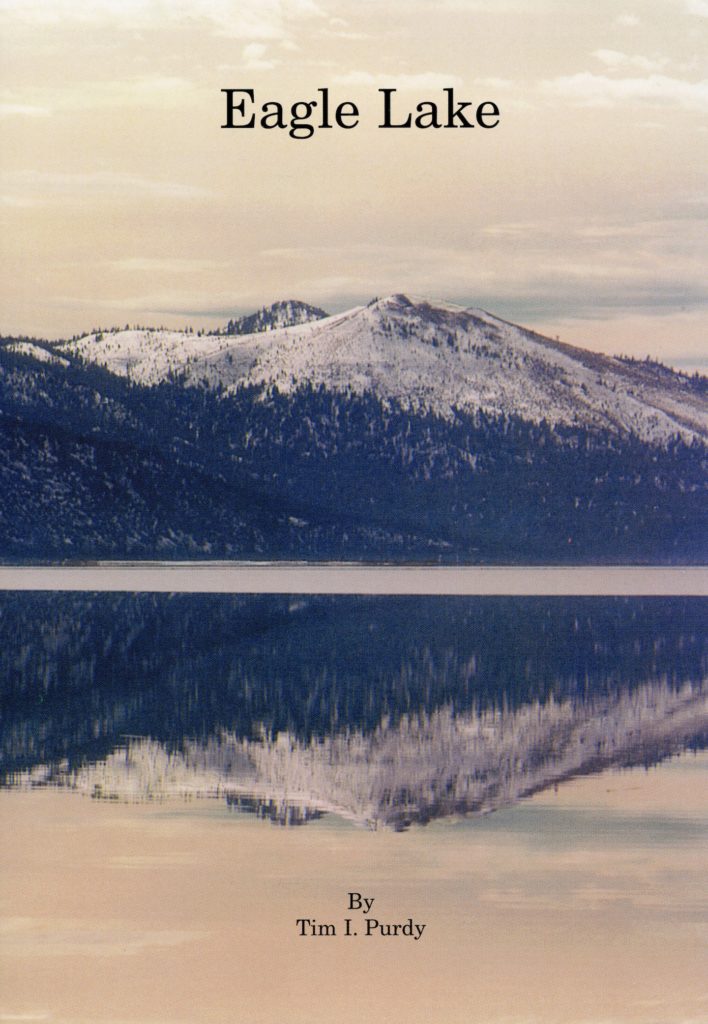
It is now official, Julie Kent of Folsom, California purchased the last copy of my hardcover Eagle Lake book recently. I may have one or two where the dust jacket is faded. If interested contact me.
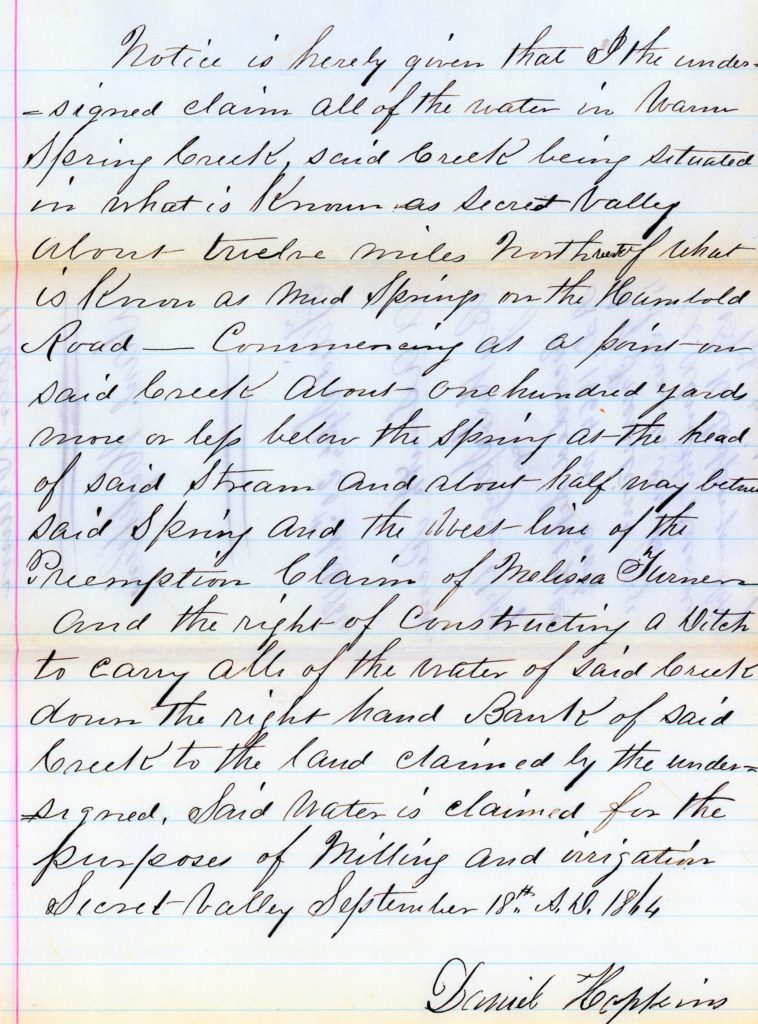
Asa Fairfield and W.N. Davis, Jr., are well known for their writings on the early history of Lassen County. For some odd reason when it came to that of Secret Valley, they missed some records. Accordingly, both men have Jacob McKissick as the first locator of Secret Valley in 1868. In 1870, a member of the McKissick clan built the first cabin in Secret Valley.
Actually, to set the record straight, it was a woman, Melissa Turner who filed the first land claim to Secret Valley on September 15, 1864. Three days later, Daniel Hopkins filed for water rights to Warm Springs Creek, adjoining Turner’s claim. What is also interesting to note, is they both specifically note the area being designated as Secret Valley. What became of the duo, or how long they remained is not known.
On a final note, Warm Springs is now known as Tipton Springs that has a temperature of 70 degrees.
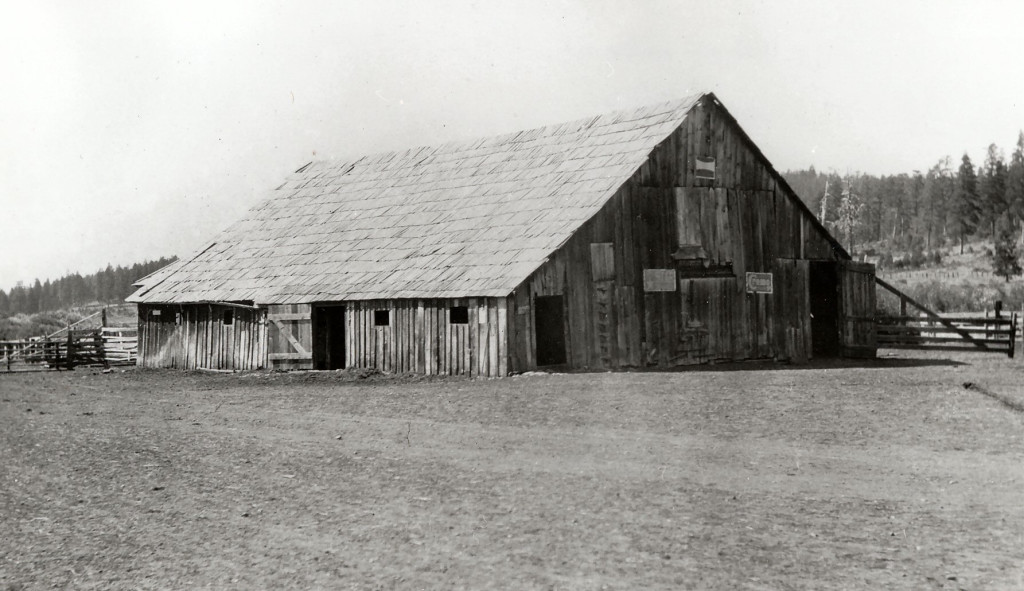
In 1861, Carlton Goodrich settled at Mountain Meadows and would become one of the largest property owners there, as his ranch totaled over 7,000 acres. He located his ranch house just west where the highway crosses Goodrich Creek, approximately across from where the old chimney stands. It became known as Mountain House and was a popular stop for weary travelers. In April 1875, Sylvester Daniels paid Goodrich a visit while touring the region and wrote, “I love these mountain folks. No aristocracy among them.” When Goodrich died in 1886, due to estate issues and the subsequent sale to John Crouch, the popular establishment closed. When the Red River Lumber Company established its Westwood operation, in 1912, they transformed the old Goodrich ranch into a dairy.

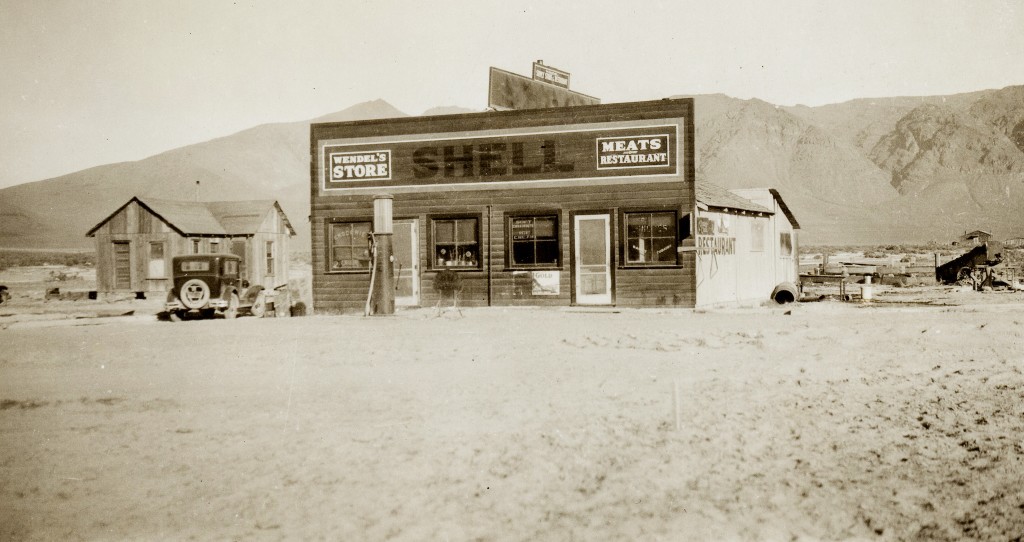
This was not your best criminal mind at work. At one o’clock in the morning of February 22, 1931, fifteen-year-old Paul Bryan entered Bill Lewis’ restaurant in Wendel. (It no doubt operated twenty-four hours day to accommodate the railroad workers.) He asked the night clerk for some onions. The clerk went into the store room to fetch the onions. When the clerk returned Bryan and the store’s slot machine were missing. In a short time Bryan returned for the onions. The clerk obliged with the onions and when Bryan left, the authorities immediately notified.
At daybreak, Sheriff Jim Leavitt spotted the young man in the railyards trying to board a freight train. He was arrested on the spot. About a mile from the restaurant the slot machine and bag onions were found. The slot machine had been chopped opened with an axe, the money all gone.
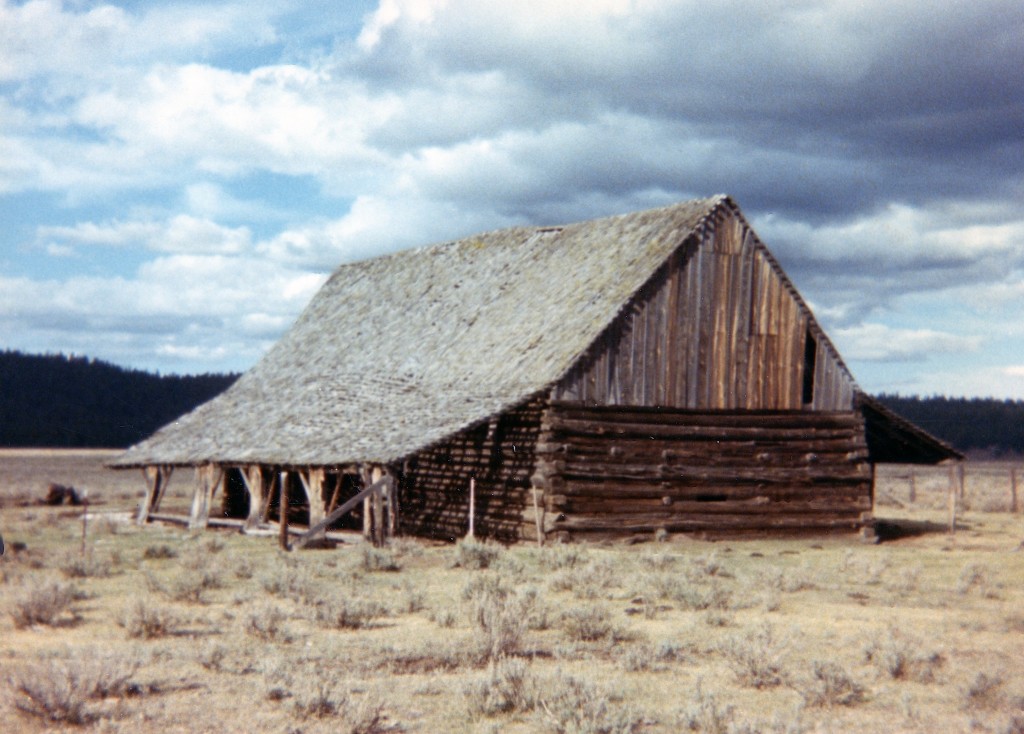
Champs Flat, located due west of Spalding Tract was a lonely outpost for some during the summer months a century ago when summer livestock grazing was a major activity there. The winter of 1937-38 was an epoch one, and to navigate most any where in the spring of 1938 provided numerous challenges.
On May 12, 1938, Lassen National Forest Ranger, P.D. Hook and Forester, Philip Lord attempted to make the trip to Champs Flat. The roads west of Spalding Tract were either impassable due to water or washouts and never made it to Champs. They did note Eagle Lake’s level. “The lake level appeared to be higher than at any time during the past ten years. A well and windmill placed on the east side of the lake by Ranger Hook, and which by last fall was approximately one and one-quarter miles from the water’s edge, is now threatened by high water.”
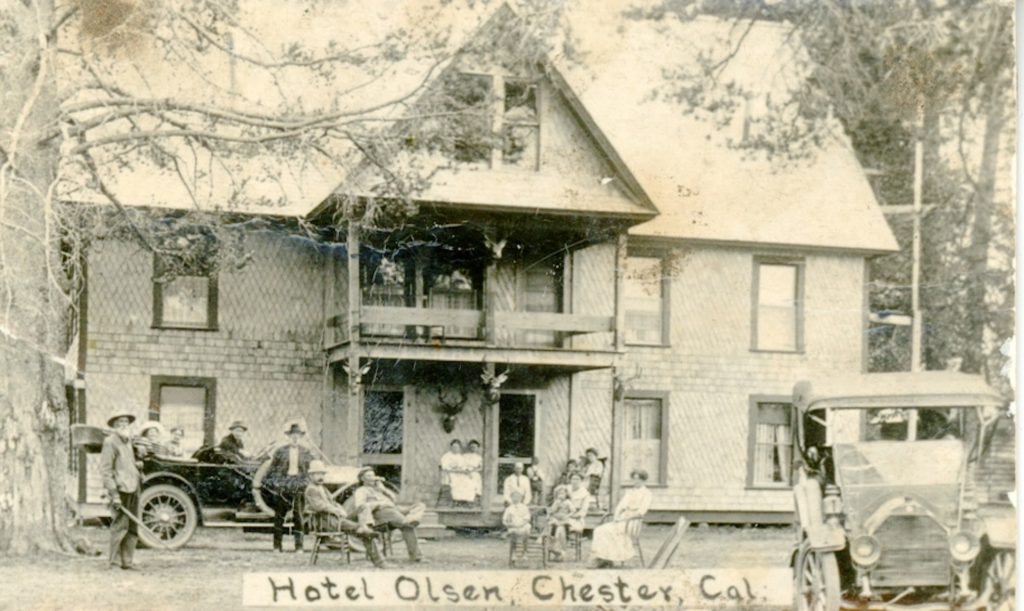
Peter Olsen was one of the early settlers of Big Meadows, known today as Lake Almanor. Like so many of the residents there of the late 1800s, he operated a dairy among other pursuits. By 1885, his ranch located in the proximity of modern day Chester consisted of 1,300 acres, one of the largest in Big Meadows.
In the early 1900s, the Great Western Power Company began acquisition of the ranches in Big Meadows, with their intention to create a reservoir, a part of their hydroelectric power system. The Olsen family sold nearly a 1,000 acres of the ranch, retaining a small acreage surrounding the ranch house. In the fall of 1911, Olsens, along with their neighbor, Edith Martin subdivided their respective properties to create the town of Chester. Olsen’s Southern Addition consisted of twelve blocks containing 115 lots. In 1914, the Olsen’s built a major addition to their ranch house and now became the proprietors of the Hotel Olsen, a first for that community. Nels and Eula Olsen operated it for many years and on April 4, 1948 they sold the hotel and the remaining Olsen Ranch to Earl McKenzie and the hotel was subsequently closed.
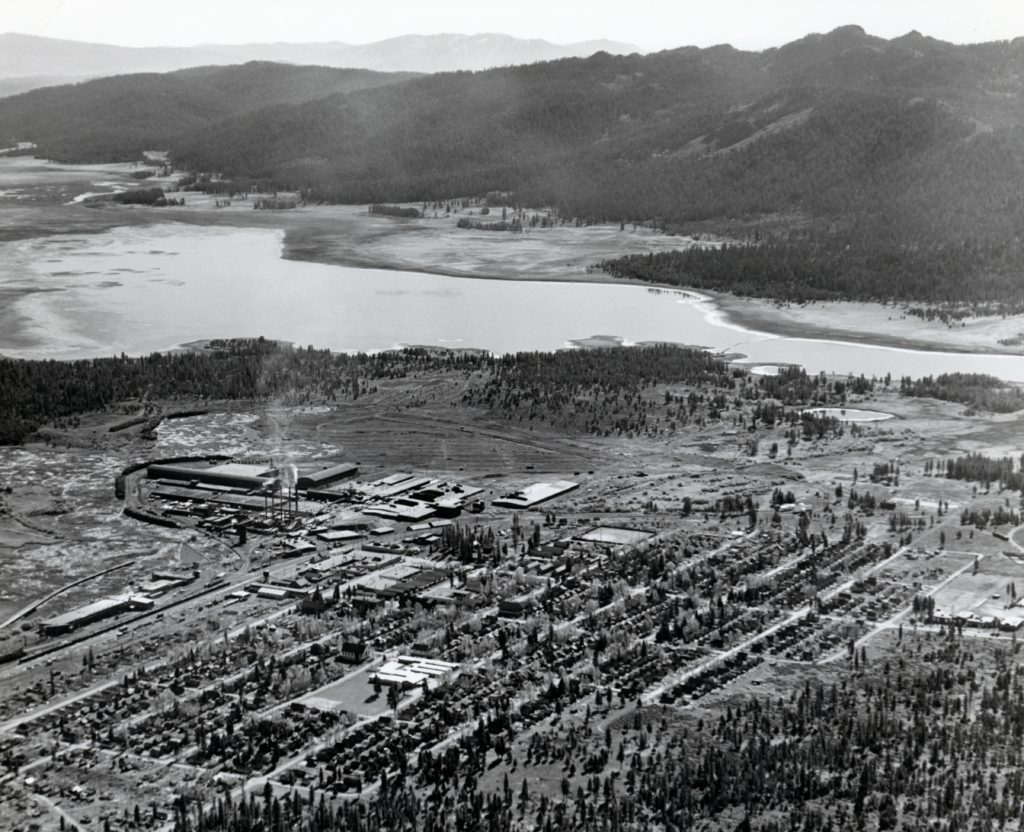
In the late summer, and some times in the fall the Board of Directors of the Fruit Growers Supply Company would make an annual tour of their mill operations and timber holdings in Northern California, which they still do, minus the mills. It should be duly noted that Fruit Growers is the co-operative purchasing agent for the citrus growers marketing co-op known as Sunkist. The reason for these holdings, was to provide wooden boxes for the shipment of citrus, prior to the advent of the cardboard box.
In mid-August 1955, the Board made their annual tour, and no one thought much about it. This was about to change with a sudden announcement. On August 25, 1955, H.A. Lynn, President of Fruit Growers made the following announcement: “A diminishing supply of company timber and the reduce requirement for box shook, the company will permanently close the Westwood Operation.”
It came as a shock, but then it was not. After all, it was a widely held belief, just how long could the lumber industry survive. In another announcement that year, Sunkist would no longer use wooden boxes for shipping, and made the conversion to cardboard.
The logging and mill operations at Westwood would continue as normal for the remainder of the 1955 season. In 1956, the process would begin to phase out and close the Westwood mill.
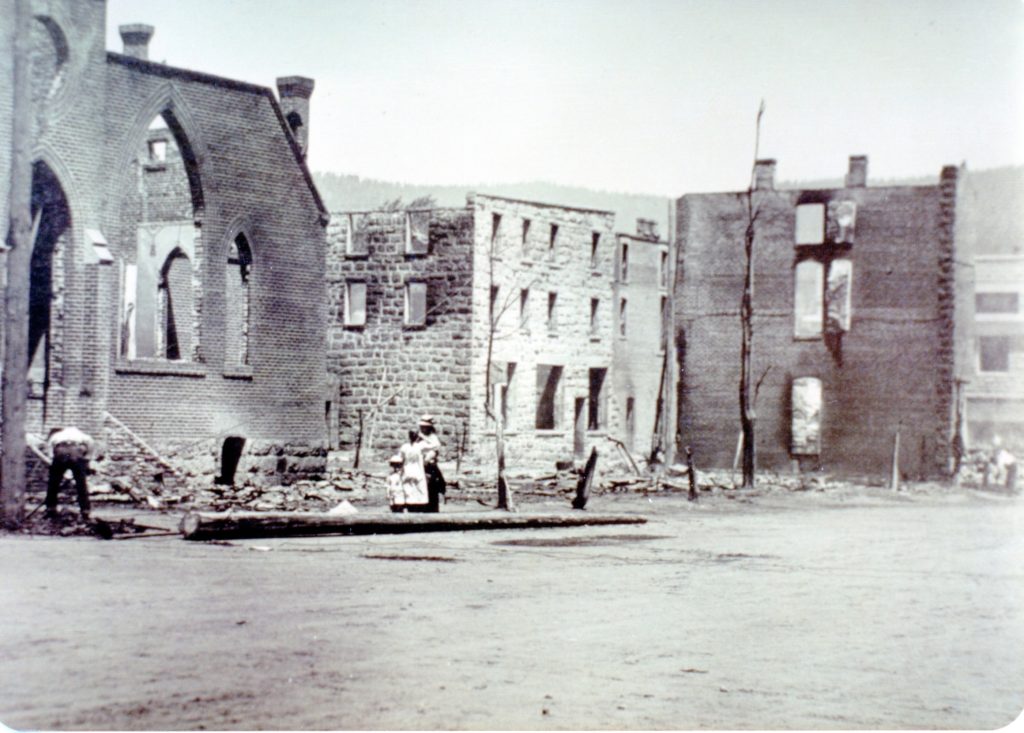
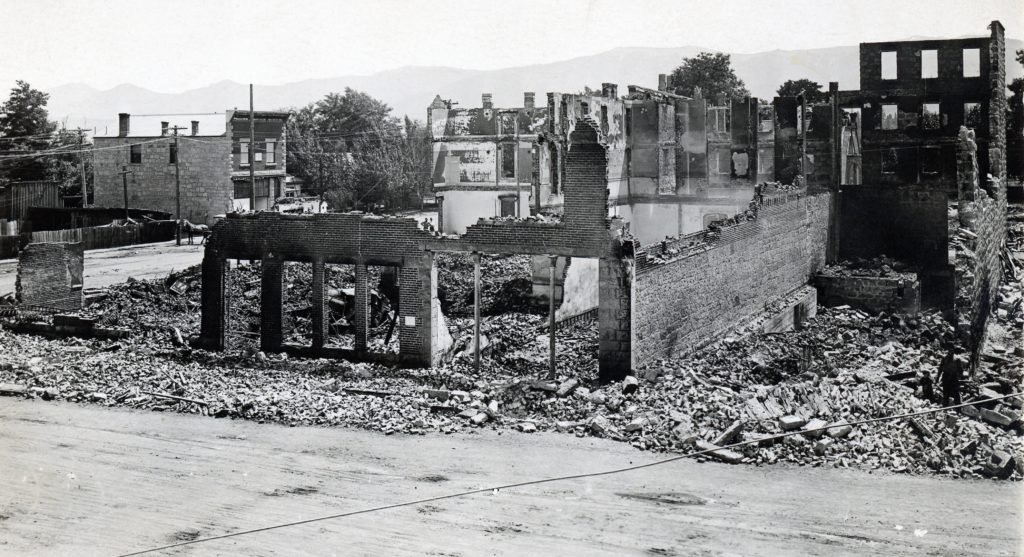
In a twenty-five period from 1894 to 1919, Susanville witnessed some of its most devastating fires. It first began on August 14, 1894 when the Bremner sawmill and Anthony’s electric light plant on the Susan River caught fire and was destroyed. It was followed by the Knoch Building fire of August 9, 1898. The Blue Goose Saloon also burned down on August 9, 1912, which sported the town’s first electric neon sign. The Arnold Mill fire of August 6, 1914, was followed by the destructive of fire of August 5, 1915 that consumed the Emerson Hotel, Hyer House Hotel and the Methodist Church. The photograph of that fire shows the intensity of the heat leaving just the brick wall shells of the Emerson and Methodist Church. Located between the two was the two-story wooden Hyer House Hotel which was completely wiped out. The last of these fires was when the majority of the north side of the 700 block of Main Street that destroyed the Hotel Lassen among other things on August 14, 1919.

In the fall of 1903, Western Pacific Railroad surveyors invaded the Honey Lake Valley and the region west of Susanville. This led to speculations regarding a new route to bypass Beckwourth Pass. If that was the case, the railroad would not have to build the 6,002 foot-long Chilcoot Tunnel under Beckwourth Pass, but even an additional longer tunnel at Spring Garden towards Quincy. It was decided on the Beckwourth Pass route, though the Susanville route would later gain traction.
On May 28, 1912, a fire broke out on the west end of the Chilcoot Tunnel. The heat was so intense WP crews were unable to suppress it. Newspapers, both local and regional, were quick to attack the WP over the costly Chilcoot and Spring Garden tunnels. It would take nearly a year before the Chilcoot tunnel could be repaired. To keep the trains moving, an expensive shoo-fly (temporary track) was constructed over Beckwourth Pass.
The Susanville route, now referred to as “cut-off” was debated. On September 13, 1912, Susanville’s Lassen Advocate wrote: “The Chilcoot Tunnel is still too hot that men cannot work in it. That tunnel will yet make it so hot for the pocketbooks of the Western Pacific.” It took nearly a year and a half before the tunnel reopened.

In late April, 1899 L.S. Greenlaw, special correspodent to the Reno Gazette traveled north to Lassen and Modoc to search out the conditions. There was, after all, a lot of interest being generated with the NCO Railroad’s extending its line north from Amedee to the Madeline Plains.
The following is an excerpt of one of his observations. “Valley of Eagle Lake. One would scarcely expect to see fine farms and fine farm houses in such a place. On the eastern shore are large grain fields and grassy meadows. We pass nearly halfway around this beautiful body of water and when we were driving along its northern shore the road is so near the lake that when the wind blows as it did that day white spray is blown into the buggy. Some of the finest trout are caught from this lake.”