“Haight in ‘38”

Bank of America, Main & Gay Streets, Susanville

California, has moved its entire primary election to March (there are some out-of-state subscribers who may not be aware of this fact) so with a week to go, and being bombarded with political ads, check out this campaign propaganda from 1938. Does it sound familiar?

In 1938, Raymond Haight made his second attempt to run for governor of California. He ran as a Progressive, being a centrist between the Republicans and Democrats. On the evening of August 3, 1938, about 250 people assembled outside the Susanville Bank of America to listen to Haight. Haight informed the prospective voters he “would run graft out of the state house in Sacramento, lower taxes, provide security for bona fide citizens of the state, provide security for the aged and above all balance the budget, not by addition of taxes, but cutting the cost of government.”
Support

Westwood, 1941

Westwood, October 13, 1941 —Courtesy of Hank Martinez

This was an exciting era for the residents of Westwood. While the United States had not entered into the global conflicts, the nations economy was in high production to meet the nation’s allies. Lumber was a high priority commodity, and Red River Lumber Company’s operation at Westwood was put into high gear.

The installation of the Hammerhead Crane at Westwood, was one of many improvements to entice buyers.

Red River not only went into a full production mode, the first time since World War I, it went on a major modernization campaign. Not only where there substantial upgrades in all the mill equipment, but its logging department saw major changes as well—among other things its own fleet of logging trucks.

While the casual observer or Westwood resident thought all these improvements was just a sign of prosperity from the recovery of the nation’s Great Depression of the 1930s. Behind the scenes, Red River was busy putting its Westwood operation on the market, to sell, nothing different what a current homeowner does prior to listing their house on the market.

Never miss a story, click here to subscribe.

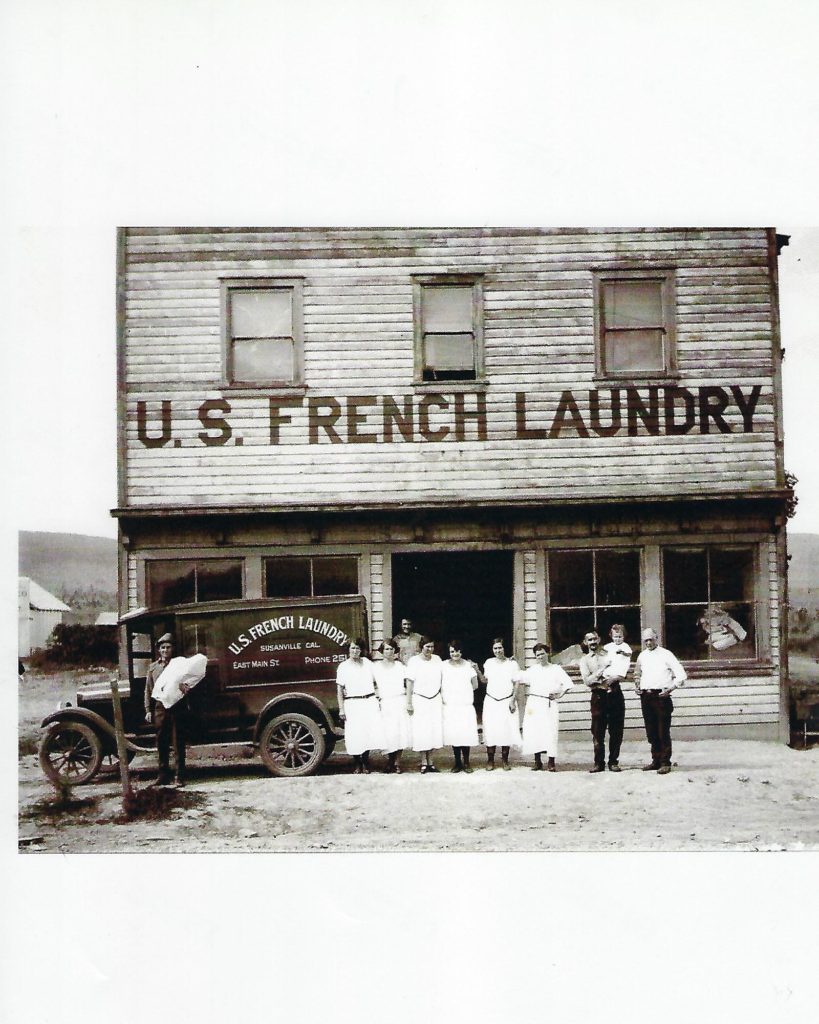
U.S. French Laundry

U.S. French Laundry—Courtesy of Harry Boulade

This is a work in progress, since it is something that I am still researching. The U.S. French Laundry was located on the northwest corner of Main and Mesa Streets or 2319 Main Street. It was established some time in the mid-1920s and was still in operation in 1935. It is interesting to note that Susanville was able to support three laundry/dry cleaning establishments. For a brief time it was owned by Jean Boulade, who prior to his move to Susanville was a resident of the Madeline Plains and at one time was the postmaster at Termo.

Never miss a story, click here to subscribe.

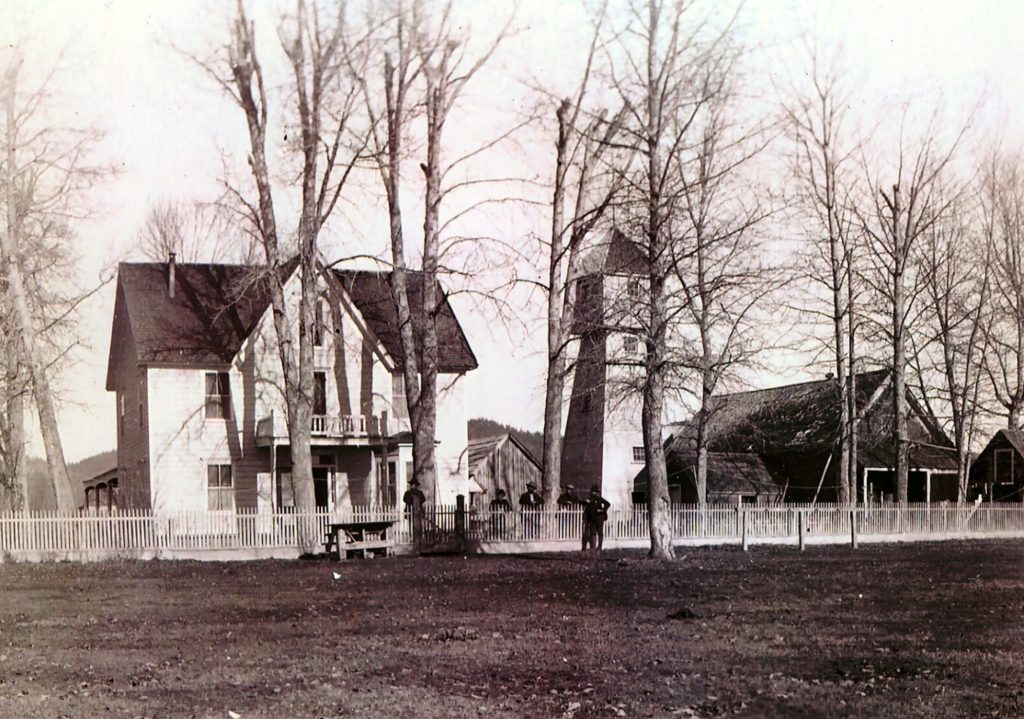
Chester’s Stover Hotel

The Stover Hotel

In 1860 Reuben Stover located at Big Meadows, known today as Lake Almanor. He established a dairy operation near the present site of the town of Chester. Stover died in 1897 and his son, Charley, would eventually take over the family business.

Charley Stover looked at every situation through a variety of angles. The dairy business fluctuated with good and bad times. With Great Western Power busy buying properties at Big Meadows for its Lake Almanor project, it reduced places for summer visitors to stay. Charley saw an opportunity to diversify. The ranch house became an impromptu hotel. During busy times, family members slept in the nearby bunkhouse. Stover next ventured into cattle ranching, and it turned out to be a profitable move. By the mid-1920s with developments at Chester with more accommodations available, the Stover Hotel reverted back to a ranch house.

Never miss a story, click here to subscribe.

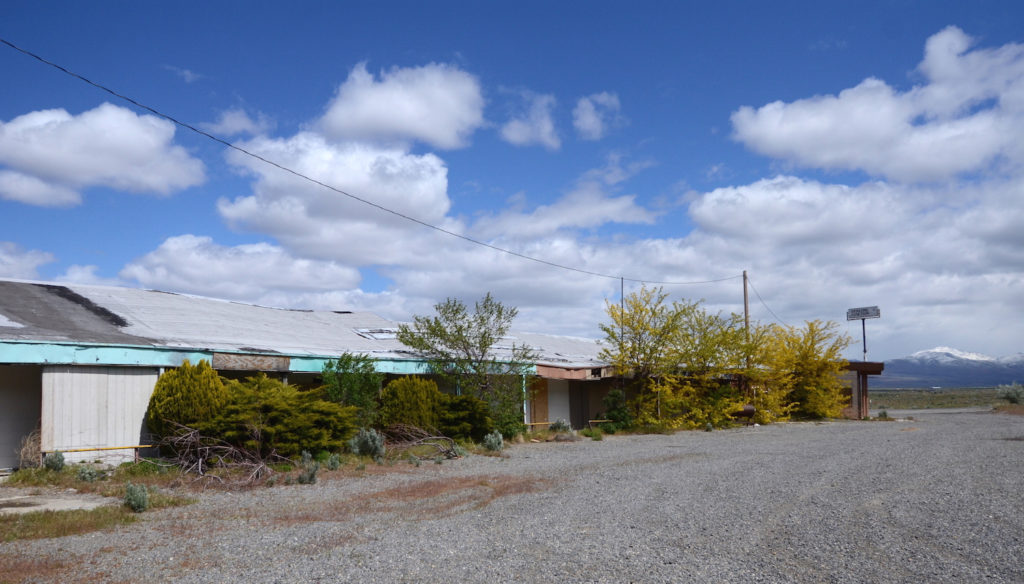
Herlong Junction Update

Herlong Junction, April 2016. Courtesy of Oliver Grosz

Recently, Mark Kesterson shared his memories about Herlong Junction and I know some would be interested in his comment. May be some one in the future and can provide further knowledge and/or a vintage photograph of the same.

“Gone is Paul Silva’s Rel Grand, and restaurant, “Nick” Nickeson’s gas station, and Len Varley’s grocery store.  There was also a small detached 4-plex apartment in back.  There were many other businesses there over the years, but those were the one I remember as a kid in the 50’s and early 60’s.  Paul’s wife Philomina ran the bar after Paul passed away, then Phil Lock ran the bar for a while.  The restaurant came and went several times over the years, and the store part of the building was used by different retail adventures.”

Subscribe

A Westwood Hospital Request

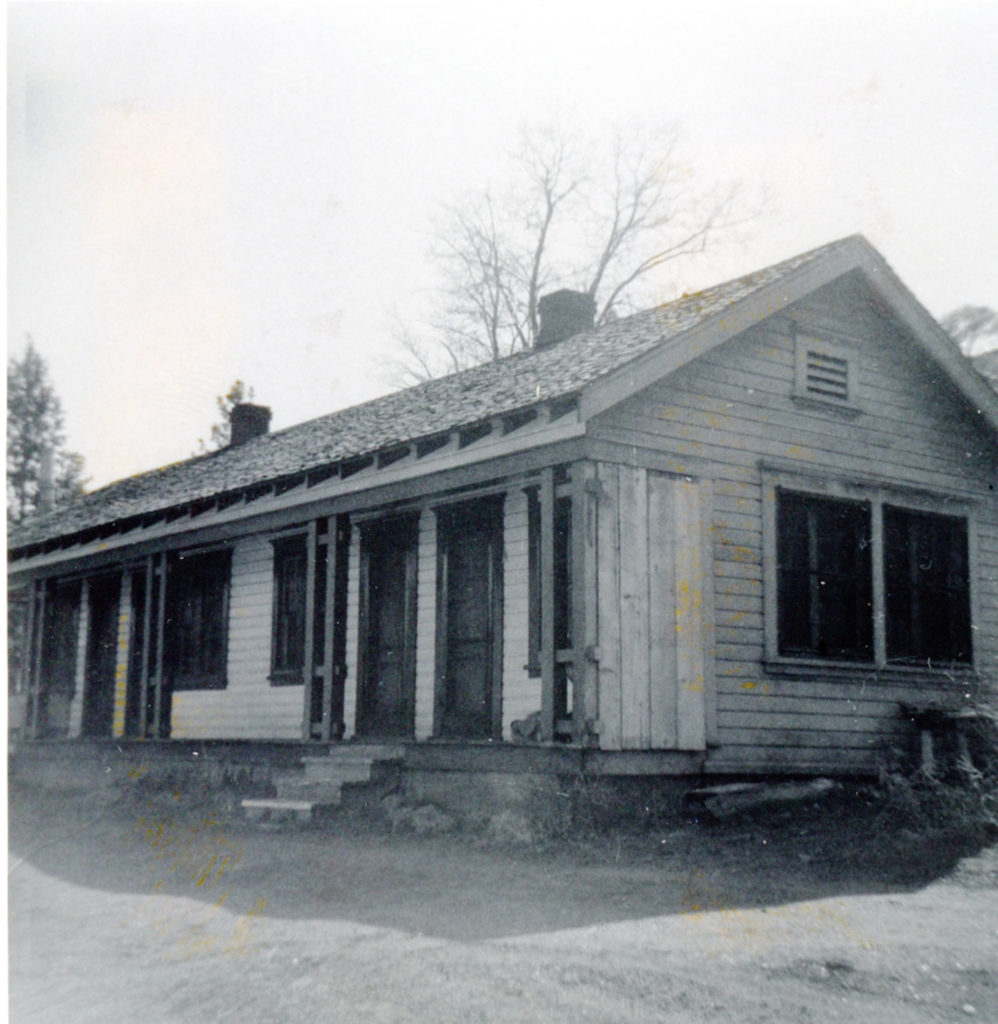
Isolation Ward, Lassen County Hospital, 1947

The Westwood Hospital had a small building adjacent to it, that was used to quarantine patients who had highly infectious virus. This was a common practice many years ago to have a small separate facility to quarantine patients. Some of these buildings were a bit sketchy and less than desirable accommodation. This you can easily see with the above illustration of the isolation ward of the Lassen County Hospital in 1947. When the first hospital was built in Lassen County, it was far removed from Susanville proper, so it was not necessary for a separate facility.

Back to the matter at hand. Does any one have, or knows some one who has a photograph of the quarantine building of the Westwood Hospital.

Subscribe

White Pine Verdict

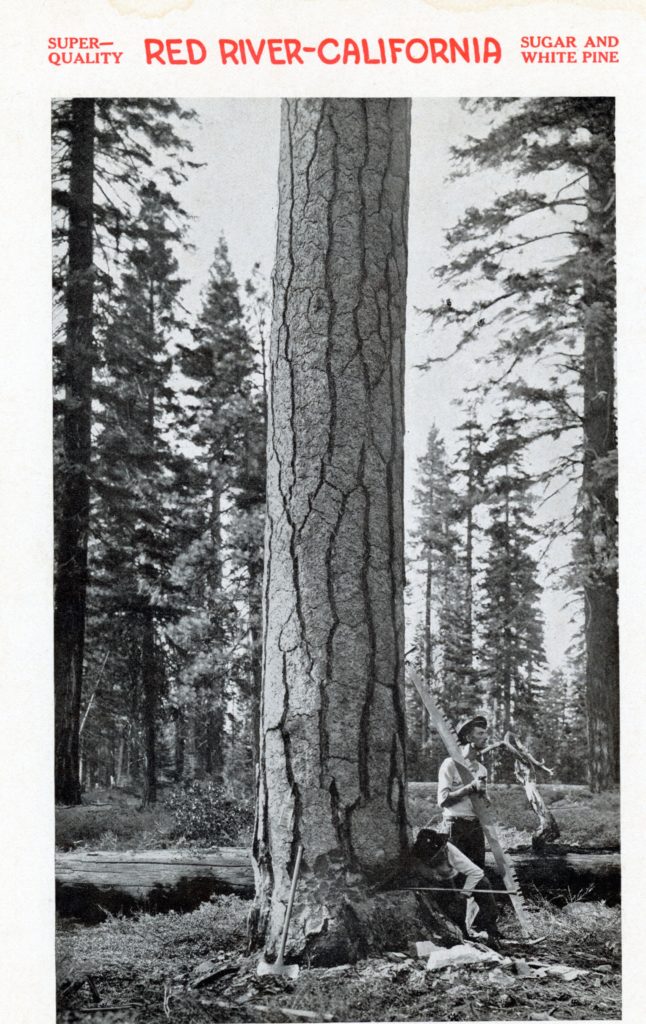
Red River timber fallers preparing to do their job 1915.

It was only until recently that I learned when the federal trade commission cleared up something that confused me for years. In 1931, the commission ruled that thirty-nine West Coast lumber producers would be banned from using “white pine” in their advertising, when in fact it was a “yellow pine” i.e. ponderosa pine. The commission stated there were no true white pine the west. It was stated these producers used white pine in advertising that resulted in a “substantial monetary sales advantage.” Two local companies were cited, Lassen Lumber & Box and Red River Lumber.

When I first began my research, I was confused with the term white pine, yet the two aforementioned companies sold their product under that label. In fact, they aggressively marketed their lumber as such in the Midwest and Eastern markets, since for them that was their preferred lumber.

Subscribe

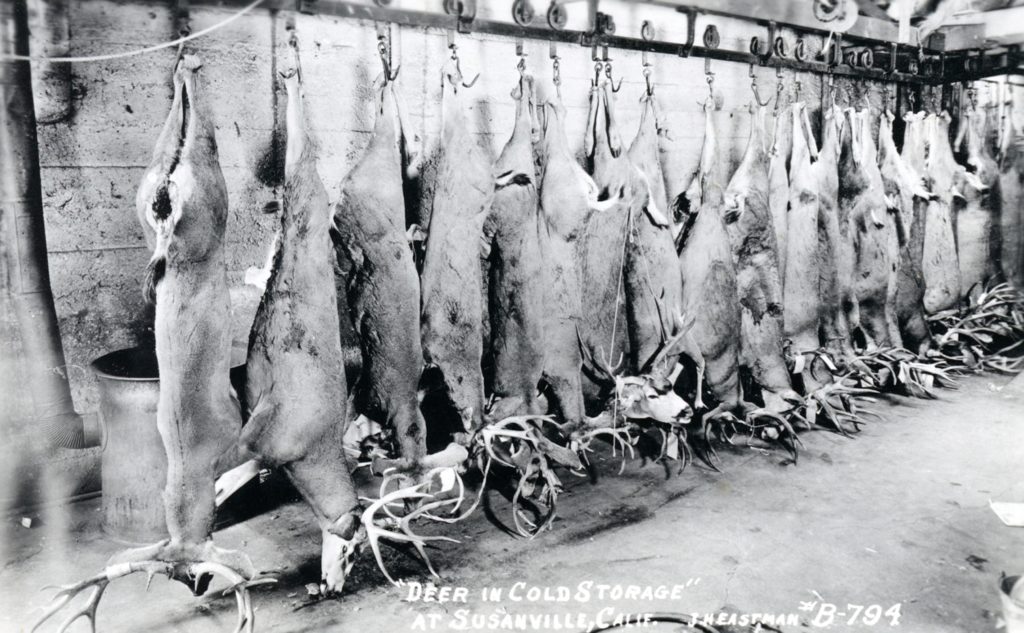
Sierra Shangri-La—The Great Deer Hassle

A popular Lassen County postcard of the 1950s.

Another excerpt from Harold Gilliam’s Sierra Shangri-la about Lassen County.

“The State Fish and Game Commission last year [1951] set off a major explosion by declaring a 9-day open season on does in the Doyle herd of some 20,000 mule deer which migrates down from the mountains and winters in the Doyle-Milford area below Honey Lake. The purpose was to hold down the surplus deer population which the commission said was outgrowing its own food supply and diminishing the natural pasture for cattle and sheep.

“A vociferous protest immediately arose from Northern California hunters’ organizations. They denied that there was any ‘surplus’ of deer and condemned the whole principle of shooting does which violates the instinctive code of many California hunter who regards it something akin to shooting women and children.

“Farm groups supported the Fish and Game Commission. Hearings were held in Susanville and protests were made to Governor Earl Warren.

“‘I shot my first doe last season,’ said one regretful hunter. ‘When I heard that poor doe let out a bleat of pain I knew I could never do it again.’ The man at the bar in the Pioneer felt the same way. ‘It’s all a few big cattle ranchers down there,’ he fumed, ‘that put the pressure on to get this doe shoot put through. They’re the ones behind it. They’d as soon get rid of all of the deer. I never violate a law, but if they’re gonna start shooting does, if I get hungry I’d soon shoot a calf or two.”

“The doe-shoot controversy may die out this year if the severe weather conditions kill off enough deer to make the doe shoot unnecessary in the opinion of the Fish and Game Commission.”

Subscribe

A 1929 Wild Horse Round Up

Dixie Valley Ranch

The following is an interesting tid-bit that I happened to come across. This is the earliest known round up of wild horses by a government entity that I have come across. In November 1929 the forest service conducted a roundup in the Dixie Valley area of northwest of Lassen County. The following is the statement they issued:

“Wild horses and scrubs have become a nuisance on the national forests. With the shortage of feed, due to the unusually dry season, there is a serious shortage of forage and these animals are taking a large amount that right fully belongs to the stock entitled to grazing privileges in the forest.

“The forest service, in cooperation with the C.W. Clarke ranch in Dixie Valley, recently staged a roundup in which about 140 of these scrub animals were corralled and sold to the buyers of chicken feed.

“While these horses are termed as “wild horses,” in reality they are scrubs that have escaped from herds ranging the forest and from Indian owners. They are of no value, except as chicken feed, and the cost of catching them often amounts to far more than can be realized for them for that purpose.

“When the horses are rounded up those bearing brands are marked and again turned loose. Indians and others are notified and if they can establish ownership are allowed to take their property upon a fee of catching them.”

Subscribe

Elusive Photographs

The July 4, 1906 parade with the city/fire hall in the background—Lola L. Tanner

Photographs of certain places and/or events just want to remain hidden. Take for instance Susanville’s combination City/Fire Hall. It was built in 1905 and destroyed by fire in 1921. A photograph of it does appear in the 1965 Lassen Advocate Centennial publication. One would think a public building, adorned with a sixty-foot tall bell tower, would appear in a variety of photographs.

Another example. My good friend, the late Hank Martinez, spent a life-time in search of a photograph of the El Centro, in Old Town, Westwood. It was a combination store and community hall. I had hoped to find one in the Red River Lumber Company’s archives but to no avail.

In May, 1923 one of the largest public events ever held at that time, occurred in Litchfield. It was a grand celebration to celebrate the completion of the Bly Tunnel at Eagle Lake, that would irrigate lands in the Honey Lake Valley. Over 5,000 people were in attendance and yet, to this day, I have never come across a single photograph. 

Interesting, however, some times rare photographs do surface on Ebay. Some times I make a purchase, and some times not, depending on price range, etc.

Never miss a story, click here to subscribe.

Exploring Lassen County's Past