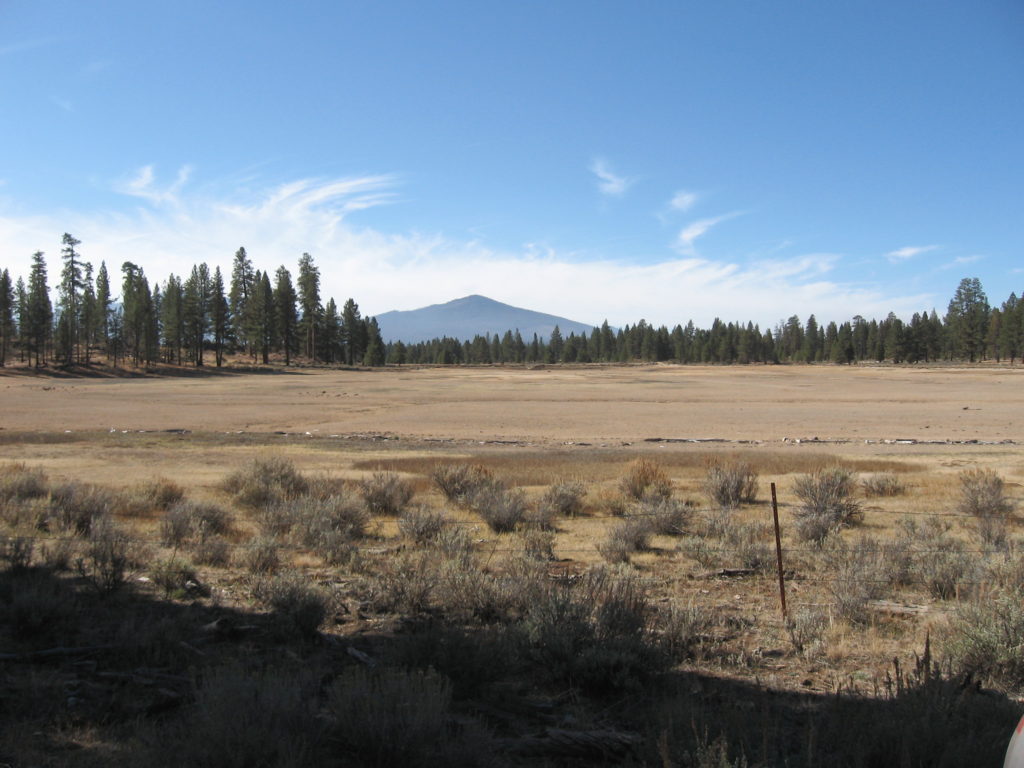
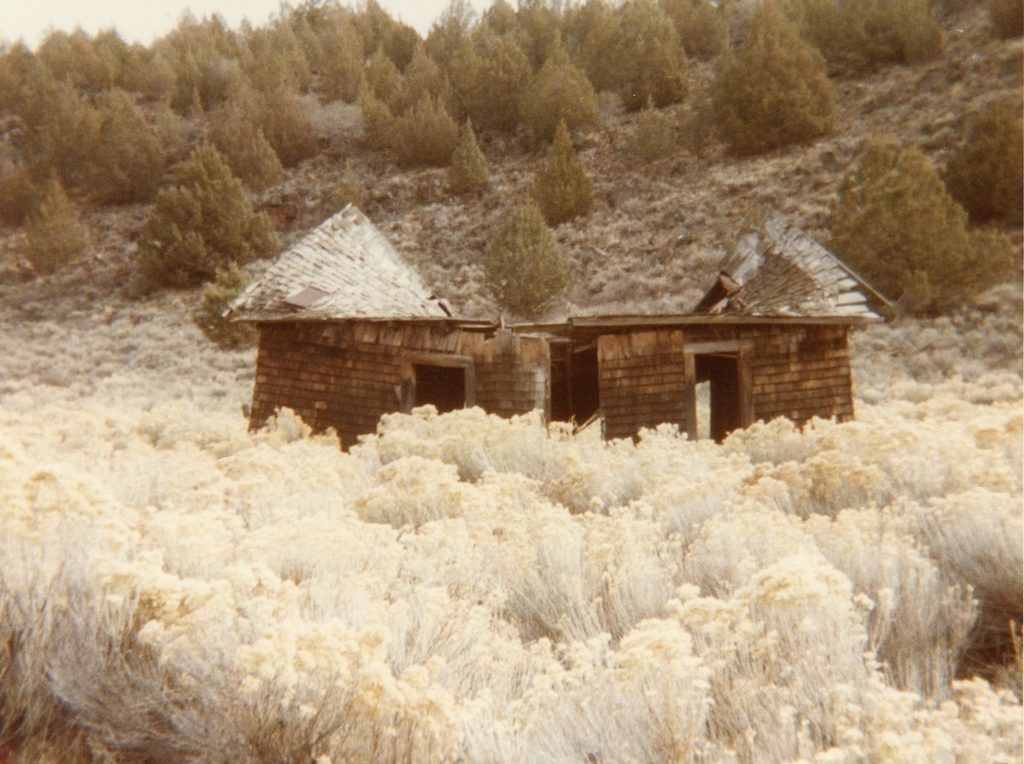
Swains Hole is a small shallow water basin in far western Lassen County. It is located approximately three miles northwest of Poison Lake, near Highway 44. In 1881, Tehama County rancher, Theodore S. Swain, began using this territory for summer grazing. He continued to do so until his death in 1906.
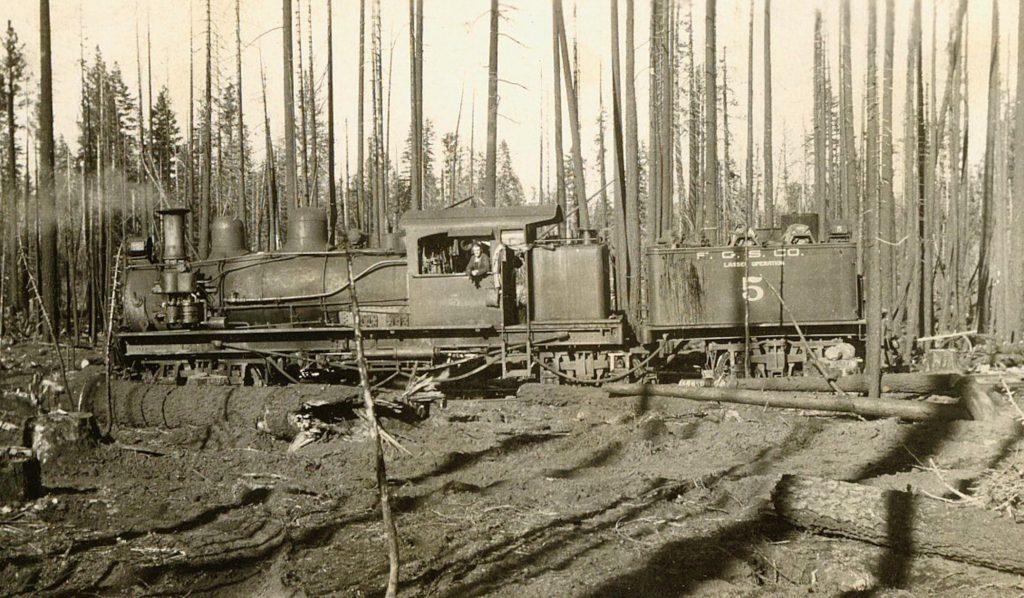
The.aftermath of the fire at Camp D, 1924 —-FGS Co.
After a good cool rain storm over Northern California, W.G. Durbin, Supervisor of the Lassen National Forest declared that on the Lassen the fire season was over on October 11, 1929. At that time the fire protection force, save for two men with lookout duties, were laid off.
Durbin provided some interesting statistics comparing the 1928 and 1929 fire seasons. In 1928 there were 109 fires and 49 in 1929. In 1928 fires consumed 31,634 acres; in 1929 only 3,492 acres. Another noticeable fact was suppression costs $34,674 to $4,168.
Lightning and careless smokers attributed to the bulk of the fire origins for those two years.
Fast forward to 2021 the suppression costs of the Dixie Fire is mind boggling being pegged at nearly $600 million.
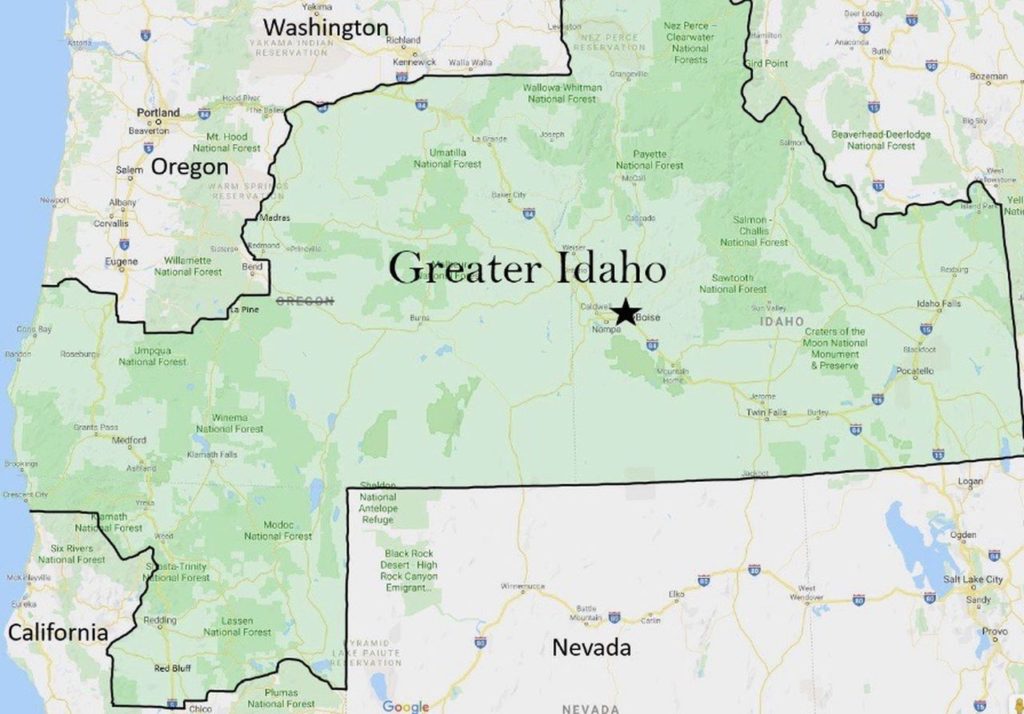
This movement is different than many secession movements. Instead of forming a new state, like the proposed Jefferson movement, this would change the state boundaries. In this particular instant expanding the boundaries of Idaho. The group called Move Oregon’s Border initially focused on southeastern Oregon counties of Klamath, Lake, Harney and Malheur. Upon greater consideration it was decided to make Greater Idaho’s to extend to the Pacific Ocean to include Jackson and Curry Counties. Finally, why stop there? In their latest proposal includes the California counties of Siskiyou, Modoc, Shasta, Trinity, Tehama and parts of Lassen and Plumas.
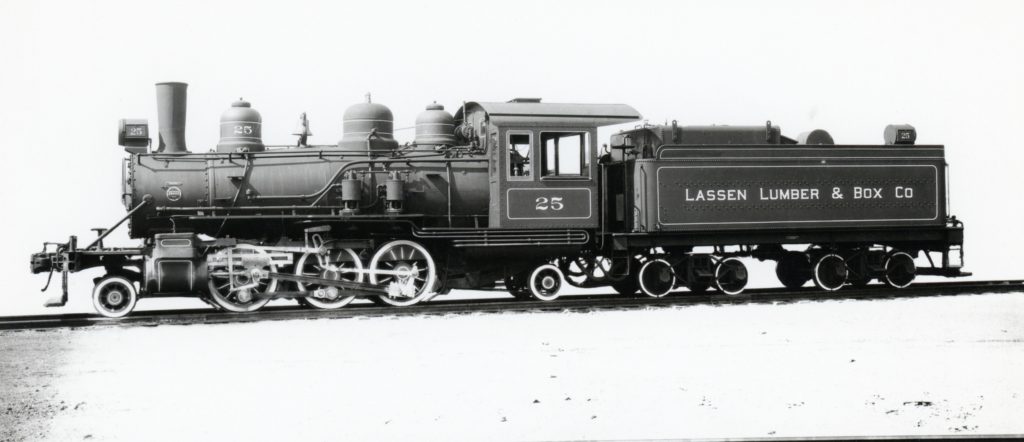
Something a bit different, but over the course of time we will explore the various locomotives in the railroad logging operations of the region. Lassen Lumber & Box was a relatively small operation when compared to it neighbors Fruit Growers and Red River. In addition, its railroad logging operation only lasted a decade starting in the 1919 season.
In 1923, Lassen Lumber purchased a brand new Baldwin locomotive they numbered the 25. It seemed only fitting to have this go with their new logging camp Lasco on the north side of Peg Leg Mountain. But the good times did not last long and by 1929 the company would abandon logging due to a dwindling timber supply compounded by glut of lumber on the market. They sold the No. 25 to the Red River.Lumber Company. In 1938, Red River in turn sold the No. 25 to Modesto & Empire Traction Company. What became of it after that, I do not know.
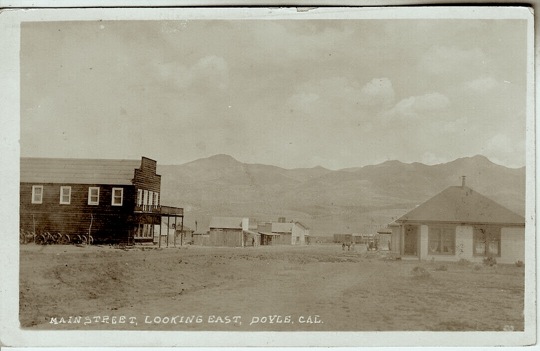
In early 1916, the Rev. C.W. Pogue held revival meetings in Doyle. So successful was his venture that in March he announced that a church would be built shortly. W.H. Earl who was the founder and promoter of the town, donated a town lot. On March 13, 1916 groundbreaking ceremony was held and the church opened for regular services in June.
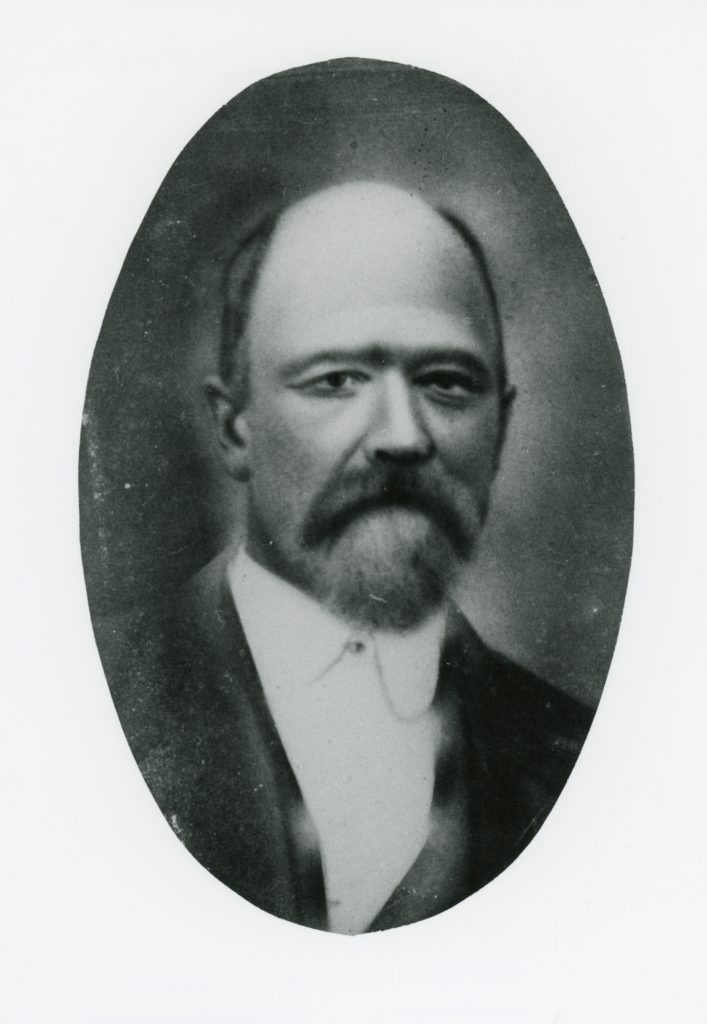
John W. Doyle (1832-1892). Courtesy of the Nevada Historical Society
It should be noted when Doyle came into existence in 1909, it was named for Long Valley pioneer, John W. Doyle, who settled just south of the town that would bear his name in 1859.
Spread the word, and encourage a friend to subscribe
In 1912, when Red River Lumber Company began construction of its company town of Westwood, Lassen County officials did not know what quite to expect. Lassen County had experience with planned communities, such as Standish, but none of these proposals ever came to full frutition that the promoters envisioned. Westwood was entirely a different proposition. County officials were relieved that all of this development would not only cost the county any money, but its tax base mushroomed beyond their wildest dreams. The county was spared every expense, even the deputy sheriff, Red River paid that salary.
The good times would not last forever. By the early 1930s Red River was in a serious financial crisis. The days of a company town would soon only exist as a memory. Red River’s company owned businesses would be no more, those enterprises leased to outsiders. In the fall of 1934, Red River and Lassen County began working on the transition wherein the county would be responsible in maintaining the streets of Westwood. On November 10, 1934 Red River deeded over the streets of Westwood to the County of Lassen, however for reasons unknown the county did not accept the deed until September 1935.
Spread the word, and encourage a friend to subscribe
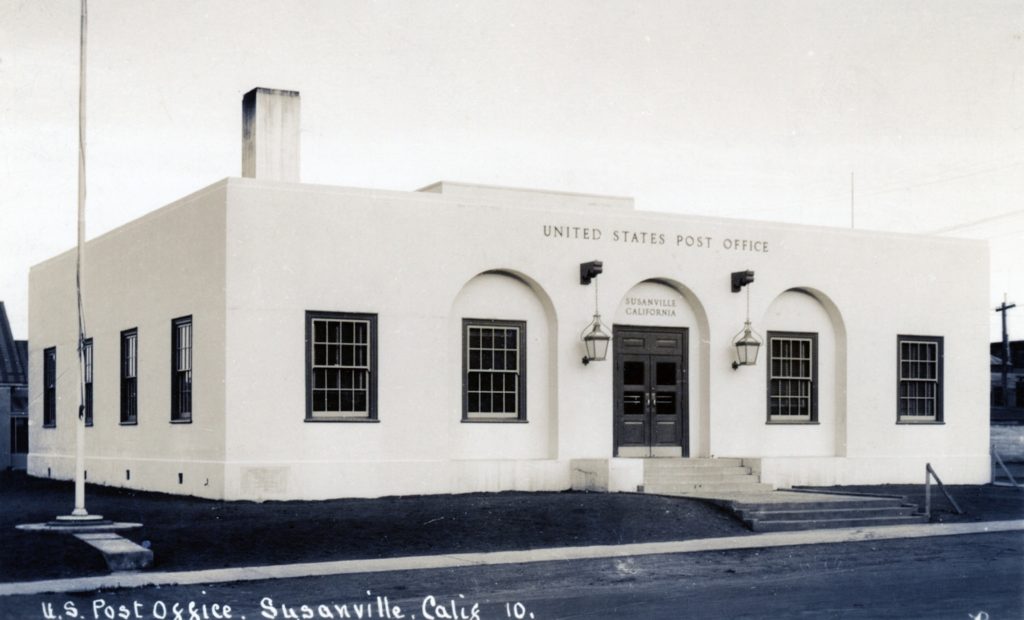
One facility Susanville sorely lacked was a post office building. The Susanville Post Office was established in 1858, and was always housed in some commercial building, with the Knoch building housing it for decades. During the depression of the 1930s, the residents hoped the federal government would fund a post office building. They did. On March 1, 1937 the government purchased the residence of Stanley Wade on the corner of North Lassen and Nevada Streets for $6,750. Construction began that summer and the post office officially opened on June 1, 1938.
Spread the word, and encourage a friend to subscribe.
The Grizzly Growler was the long standing student newspaper.
Another relic of the past is the student newspaper. Anyhow, on with our story. In the mid-1930s the Lassen Union High School student body experienced some interesting happenings. The first was a student newspaper dubbed the Hi-Times. This was followed by a school emblem—-the Grizzly bear.
In the fall of 1935, Miss Morgan, the school’s journalist instructor announced a campaign to change the school newspaper name. One issue was there were a number of Northern California student newspapers that had a similar name to Lassen’s. In an effort to promote the school’s new emblem, the word Grizzly was required in the new name contest. On October 4, 1935 the renamed student newspaper Grizzly Growler made its debut. It was Eleanor Hansen, Class of 1939, that was the prize winning entry.
Fast forward by several decades, when I attended Lassen High the school newspaper was just the Grizzly, somewhere along the line the Growler was dropped. From what little research I have done, it appears sometime in the 1990s the student paper ceased to exist.
Spread the word, and encourage a friend to subscribe
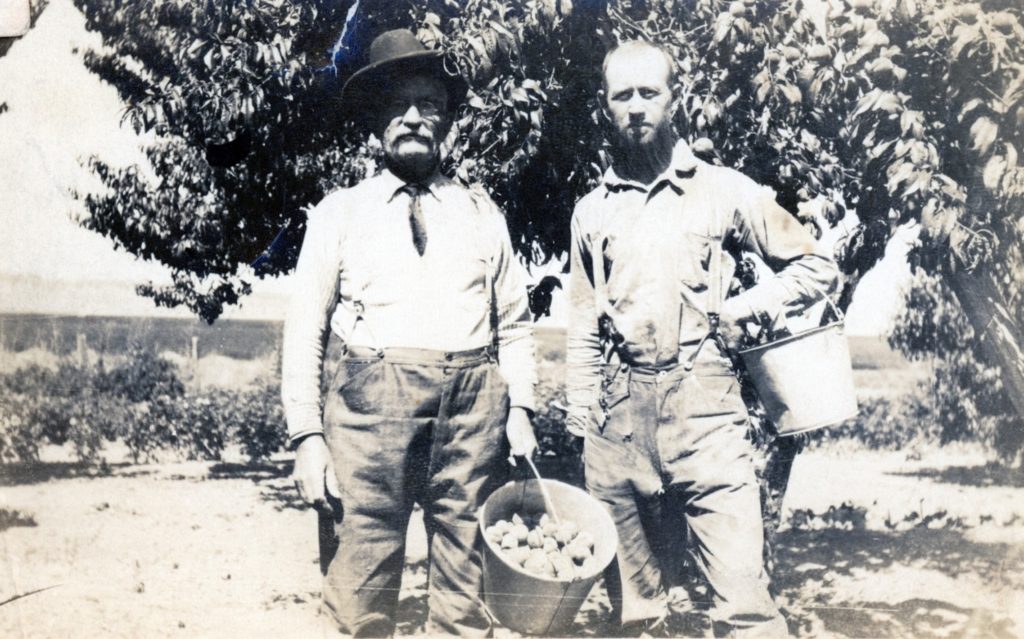
J.W. Fritter (left) and John Hamilton (right) at Fritter’s peach orchard, Eagle Lake—-Rev. C.R. Fritter
One never knows what I stumble across in my research. While reviewing the Lassen County Board of Supervisor’s minutes in regards to a topic on Westwood, I came across a rather unusual bill submitted to the county. Shortly after the death of her father, J.W. Fritter, Mrs. S. Pinola of 130 18th Street, Pacific Grove submitted a bill to the county to help defray her father’s funeral expenses. It should be noted that Fritter resided at Eagle Lake from 1884 to 1932, at which time he moved to Pacific Grove. Fritter did serve a term as a Lassen County Board of Supervisor from 1902-1906. The Board of Supervisors at their September 3, 1935 obliged and instructed the County Auditor to issue a warrant to Mrs. Pinola for $40. I have never come across a particular incident like this. What makes it even more bizarre was the Fritter and his daughter were not even Lassen County residents!
Remains of the Fritter ranch house at Eagle Lake, 1984
Spread the word, and encourage a friend to subscribe
View of Richmond Road January 1916 from Winchester Hill. Susanville received four feet of snow in January, followed by below zero temperatures. After that it was the beginning of a twenty-year drought, with Honey Lake going dry in 1919, and not filling up until the spring of 1938.
On October 2, 1916 Susanville received its first snowfall for the season, just enough to blanket the town. On the other hand it was reported there were seven inches of snow on Fredonyer Summit. After the storm passed through the temperature plummeted to 22 degrees. As one observer noted, while not cold enough to begin ice harvesting season, no one had to tend to their vegetable garden.
Is a early snowstorm a harbinger for a long cold, snowy winter? Not exactly. Many years, it turns out, when there is an early snowfall, usually is just the opposite and tends to be drier than normal winter. In this case, the winter of 1916-17 marked the beginning of a twenty-year drought.
Spread the word, and encourage a friend to subscribe