Susanville’s Apathetic Voters

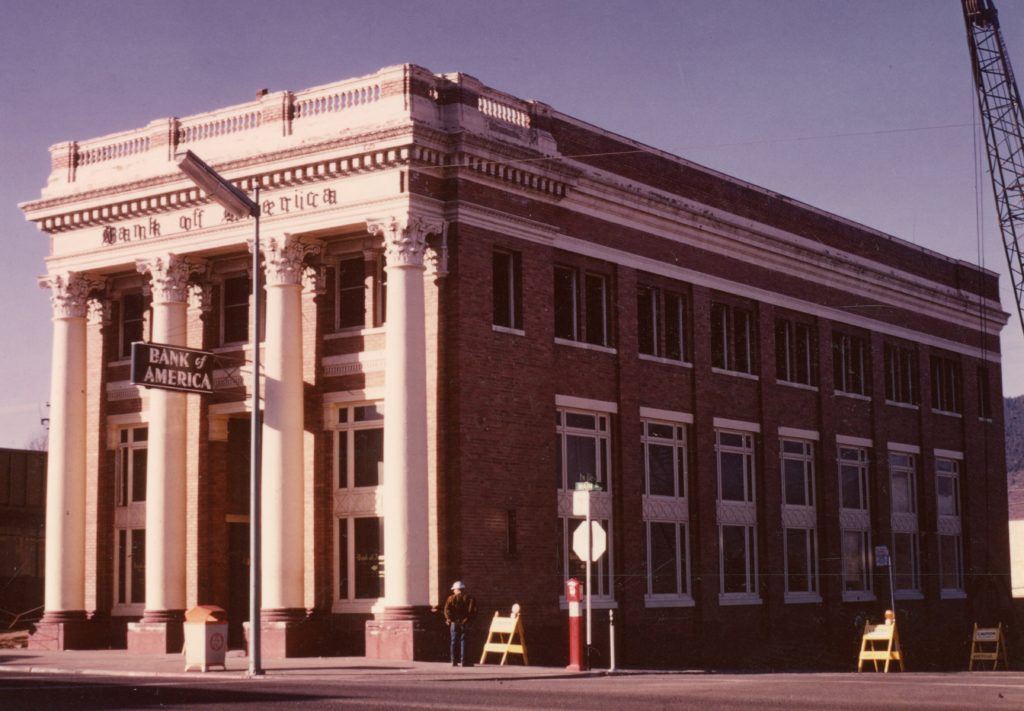
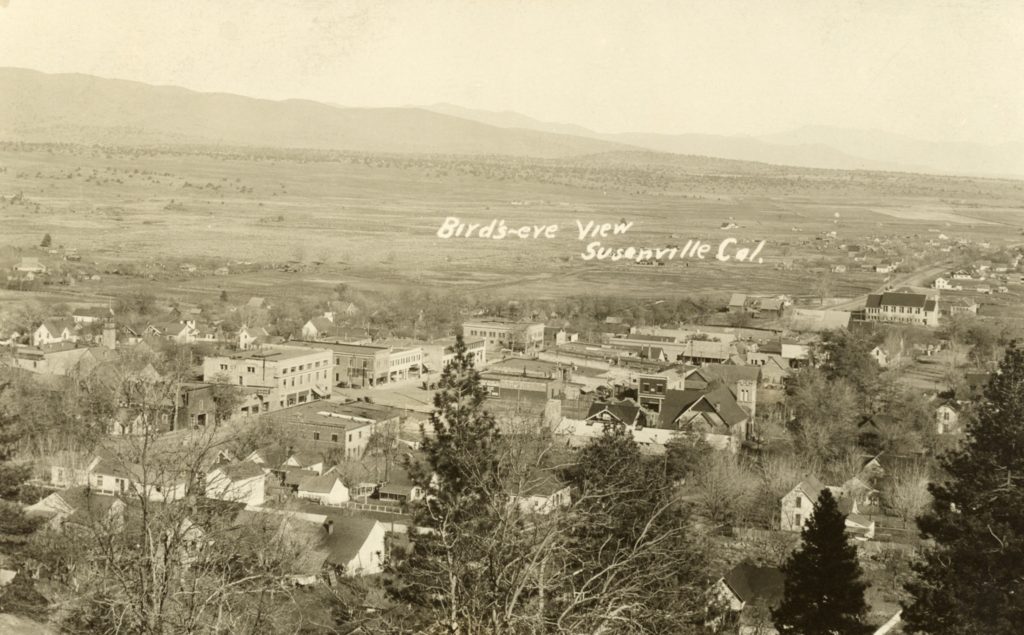
Main Street, Susanville, October 1924—Boyd Benham/Connie Boomer

With Election Day just around the corner, its only fitting to have a local history story. There was a time, and not that long ago, the City of Susanville elections were a stand alone proposition, not consolidated with Lassen County Elections.

The 1924 the City had 604 eligible voters for the upcoming City Council, with three seats up for election. Only 80 went to the polls. A rather dismal figure to say the least. It got worse. In 1930, only eighteen voters cast their vote in that City Council Election. Those poll workers had a very long and enduring day. If there was a bright side to that election, it only took one minute and three seconds to canvass the election!

Spread the word, encourage a friend to subscribe.

Your Tuesday Surprise Bonus

My personalized “Burning Man” sculpture in my leg.

There is no doubt that 2020 has presented many challenges. For me, it was on October 27, 2019 that was a preview of the year ahead. It was on that date that I experienced my “fall from grace” and broke my leg. Before there was the “shelter in place,” scenario, I had three months practice at it, before I finally I was able to navigate on my own. Onward ho, for better things to come!

Tim

A Janesville Landmark

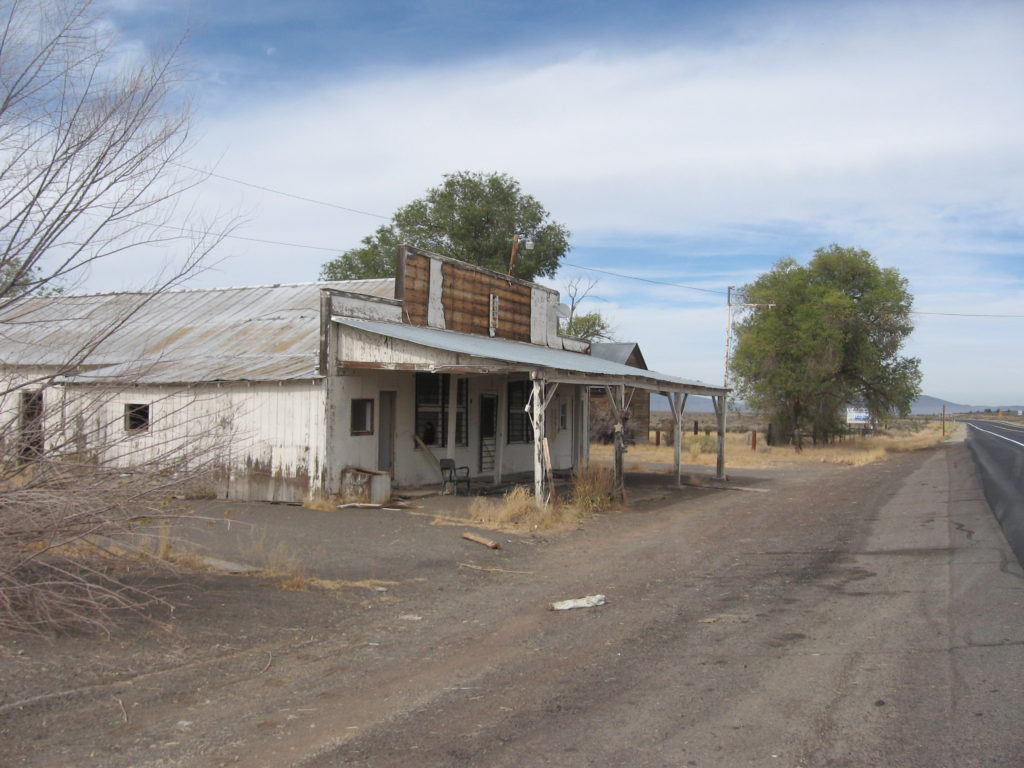
Main Street, Janesville, January 25, 2020

This post was a long time in the making. Research during a pandemic, along with the courthouse renovation project, just added challenging layers.

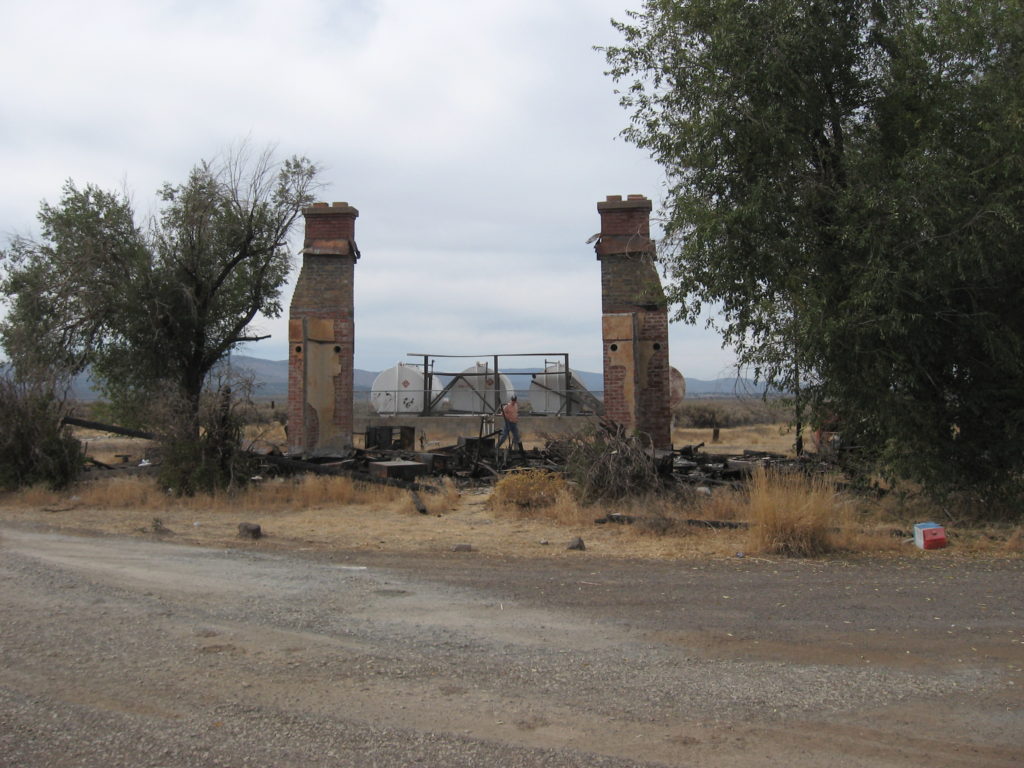
While this is not complete as I would like, but it is a start. Who knows, some one might see this, who has first hand knowledge. During the 1950s kitchsy roadside motels were quite the rage. The particular one is Janesville is still somewhat of a mystery. According to the Assessor’s Office, there was never a permit issued, nor were they ever completed. All I remember was in the 1970s Clyde Knox owned the structures.

If anyone has additional information, that would shed more light on this, I would like to hear from you.

Spread the word, and encourage a friend to subscribe

Sagebrush Extract

A sagebrush specimen, Tanner Ranch, Honey Lake Valley, July 14, 2020.

Since we reside on the western edge of what is some times referred to as the Sagebrush Ocean, the mighty sagebrush is a dominant feature of the Intermountain West. Of course when that region was being settled in the late 1800s there were always individuals who experimented with the plant to see what it could be use.

Of course, in the 1870s, Susanville pharmacist, Dr. R.F. Moody developed his successful patent medicine, Sagebrush Liniment It did not contain a single ounce of any kind of sagebrush extract, it was in essence fortified alcohol.

In 1916, what appeared to be a promising break through use for sagebrush was announced. Inn theory it was thought that sagebrush produced an oil that could be used in ore reduction. It fizzled and soon to be forgotten.

Spread the word, and encourage a friend to subscribe

.

The Slow Demise of Bennett & Latyon

The Bennet & Layton transfer advertisement

Now, this something different, since I am approaching this topic in reverse. For starters, Bennett & Layton (actually when established it was Bennett & Cardinal) was a regional powerhouse of a creamery located at 75 South Gay Street, Susanville. The two-story concrete building is still there. This was a full fledged creamery that even produced its own line of ice cream.

However, the nation’s great depression of the 1930s took a toll on Bennett & Layton, like so many other enterprises. To protect their vital interest in September 1935 several Honey Lake Valley ranchers negotiated a lease with Bennett & Layton to use its cooling and sterilization section of the plant to properly prepare milk for local consumption. This group of dairymen consisted of: J.H. McClelland, Mardis Barry, L.E. DeForest, Masten Ramsey, Lester Clark, Fred Hall, J.H. Elledge and McKay & Lowe.

Spread the word, and encourage a friend to subscribe

Free Grocery Delivery

Susanville’s The Big Store as it appeared in 1916. In front of the store, is their exclusive delivery car. Photograph courtesy of the Worley family

With the advent of online shopping with free delivery, and with the conditions caused by Covid-19 and surge of online grocery shopping, in pre-internet times, such services were available in Susanville. In 1915, Fehr & Worley’s Big Store, located at 722 Main Street (the current home of Margie’s Book Nook) implemented free grocery delivery. Telephone the store, and place your order, simple as that. Over the years, other stores, followed suit. The last to do so was Hill’s Market at 629 Main Street, in the early 1970s.

Spread the word, and encourage a friend to subscribe

A Burney-Little Valley Railroad?

Burney, circa 1940

During the 1930s, Red River Lumber Company’s, Westwood Operation was going through tumultuous times. The one bright spot, and its biggest asset was the Burney Tract of eastern Shasta. It consisted of 83,000 acres with an estimated 2 billion board feet of timber. That’s a lot of wood.

The problem with Burney it was not accessible by rail. In 1936, a proposition was floated internally by Red River management to correct the situation. There were, of course, two obstacles the distance and the natural barrier of Hat Creek Rim. To bypass Hat Creek it was suggested to branch off the Western Pacific Railroad at Little Valley (in northwest Lassen County south of Bieber). Problem solved, or some thought. Then a family feud ensued that logs would be shipped all the way to Westwood to be milled. There were two train of thoughts, one to keep Westwood going and the other Westwood had run its course and time to shutter. Neither side prevailed. Sheer economics won, when it would cost to pay Western Pacific toll fee to haul the logs from Little Valley to Westwood was thirty cents per car mile—way too expensive. The project would be resurrected again, with a different, and closer departure point, which will be examined in a future post.

Spread the word, and encourage a friend to subscribe

Fire (Suppression) Trains

Westwood's Fire Train courtesy of Doug Luff
Westwood’s Fire Train courtesy of Doug Luff

It is interesting to note that the Union Pacific Railroad has a fire train, which was deployed during the recent (2020) North Complex fire, or more specifically that of the Claremont Fire near Quincy, Many may not realize, the Red River Lumber Company had their own fire train.

The winter of 1923-24,  was one of the driest on record in California. That summer another record would be broken–forest fires. It was June, 1924, when the Red River Lumber Company having been in operation for over a decade experienced its first major forest fire. The fire broke out at Chester Flats between Camps 34 and 38 and burned a narrow strip of land, eight miles in length. Red River’s loss was minimal as the fire burned recently logged over land and the only significant damage was 500 cords of wood burned along 1,000 feet of railroad track. Red River considered its biggest loss was to the men fighting the fire which cost the company a $1,000 a day in wages, and it took a week to contain the fire.

Continue reading Fire (Suppression) Trains

A Red River Fish Story

The dam at Walker Lake—-David Zoller

In October 1931, the Red River Lumber Company disclosed a whopper of a fish story. First a little background. In the summer of 1922, Red River built the Indian Ole dam on Hamilton Branch just a short distance south of Westwood. The main purpose was to provide water power for a hydro-electric plant located along Hamilton Branch where it enters Lake Almanor. The newly formed reservoir created by the dam was officially named Mountain Meadows Reservoir, but the locals referred to it as Walker Lake. Whatever the case may be, fish flourished there, especially catfish.

Walker Lake aka Mountain Meadows Reservoir—David Zoller

In mid-October 1931, Red River needed to drain the reservoir to make some necessary changes and repairs to the dam. Of course, lots of catfish were sent cascading down Hamilton Branch, or so everyone thought. It turned out the catfish decided to take a short cut and went down to the penstock that feeds the power plant. All of a sudden the turbines at the plant came to an abrupt stop. Upon investigation, it turned out the turbines were clogged with catfish, and a lot. When things were all said and done there was a pile of catfish that measured twelve feet square and five feet deep. A new control gate was installed so that in the future, all fish would be detoured to the natural channel of Hamilton Branch.

Spread the word, and encourage a friend to subscribe

Exploring Lassen County's Past