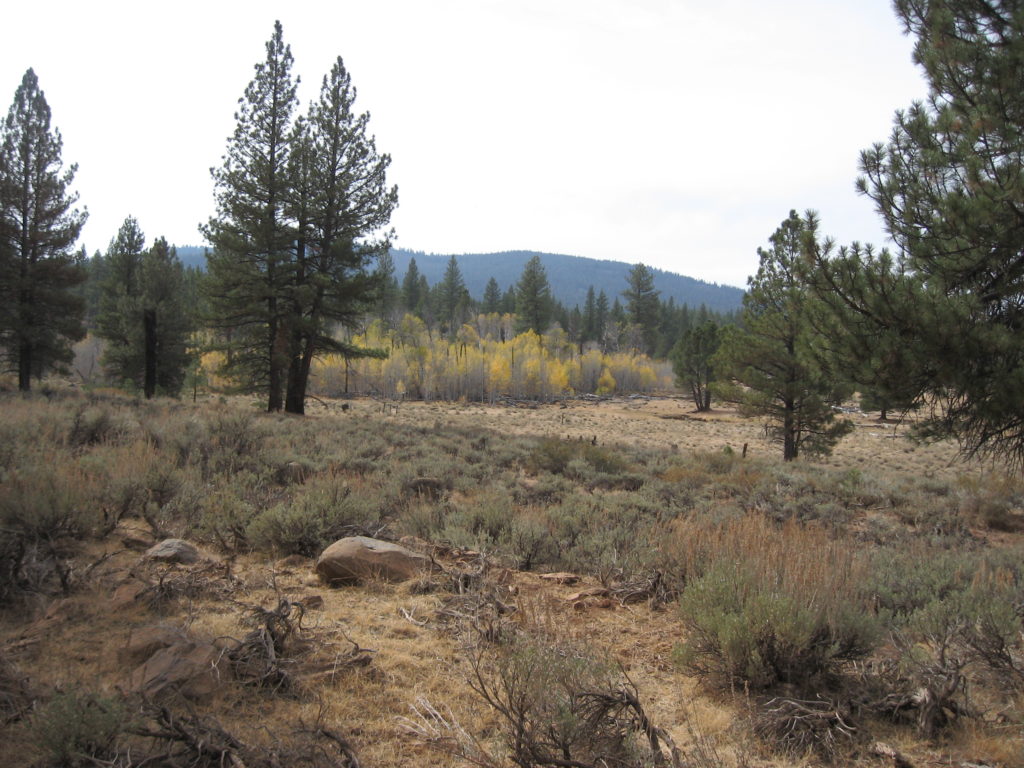
Manzanita Lake Mudflows

Manzanita Lake

During the first half of 1916, Lassen Peak’s eruptions had greatly subsided since the major eruption of 1915. Then things changed suddenly. In August 1916, when Lassen became a national park, the peak began to perform again, as if the mountain’s reputation was at stake.

By fall, ashy mud began flowing in a steady stream from the crater of Lassen Peak and pouring into Manzanita Lake. This continued for several weeks. Lassen National Forest Ranger Fred Seaborn was so alarmed, that he stated if the flow continued at the rate experienced so far that Manzanita Lake would be obliterated within eighteen months. By November the mud flows stopped, as if someone turned off the spigot.

Spread the word, and encourage a friend to subscribe

Burning of the Mortgage

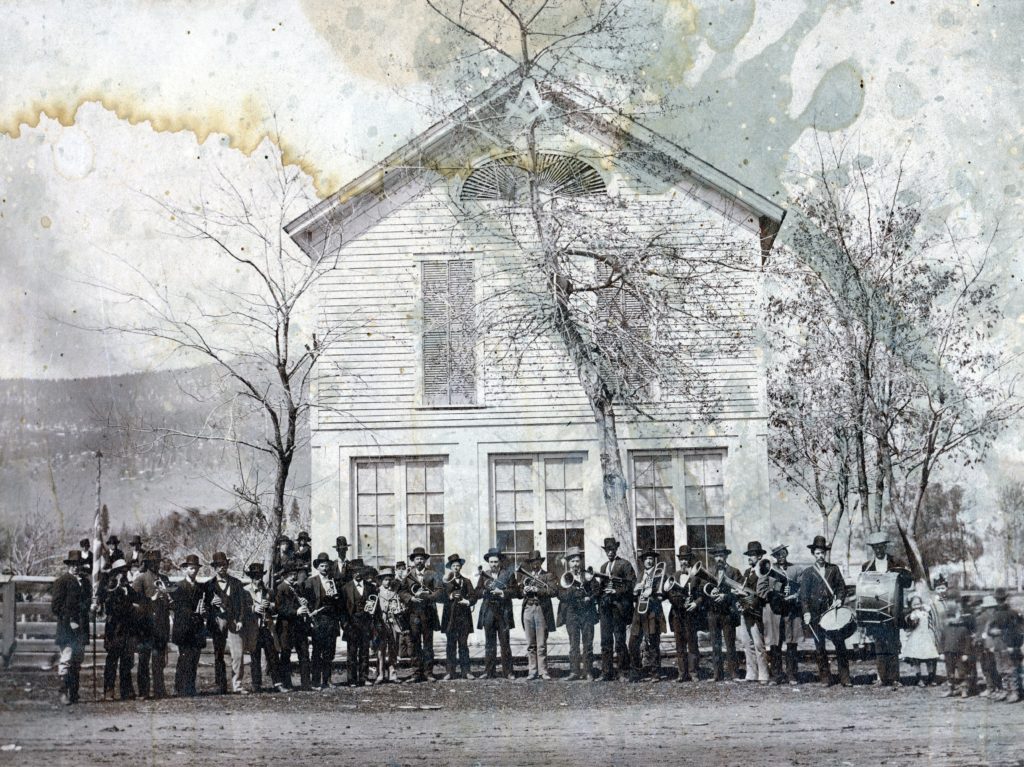
Janesville Masonic Hall,circa 1912.

There was a time, not long ago, when it was customary to through a celebration to burn a mortgage. After all, it was an important milestone to own the property outright.

On October 16, 1935 the Janesville Masons celebrated two events the first being it was the lodge’s sixty-first anniversary. The other they had just paid off the mortgage.

It was a festive occasion with Masons from Susanville and Westwood partaking. Superior Court Judge H.D. Burroughs of Susanville provided a history of the lodge. The Westwood Masons furnished the music. Len Dozier who served two roles one as master of ceremonies and the other to keep watchful eye on Steve Bass to make sure the only thing he burned was the mortgage.

In 1992 the Janesville Lodge consolidated with Lassen Lodge. A few years the Janesville Lodge building was sold.

Spread the word, and encourage a friend to subscribe

Ask Tim

Wild Horse Canyon, Smoke Creek Desert, September 27, 1984

On a quarterly basis, I ask you the reader, if there is something you would like to learn more about or maybe its something you heard, but question its validity. So here is an opportunity to participate. I will do my best to answer any questions. It should be noted, it may take awhile for the answer to appear as a post. The primary reason, many of the daily posts are done nearly a month in advance. So by the time you read this I am already working on posts for the middle of November, or at least I should be. Whatever the case may be, I look forward to hearing from you. Of course, it should be noted that paid subscribers requests receive priority. In addition, you can always send a request at any time.

Tim

1924’s Duck Season Runs Afowl

Eagle Lake, early 1920s—Wyn Wachhorst

The 1919 Federal Migratory Bird Treaty Act, allowed the California Department of Fish & Game to create a large number of game refuges. It should be noted, California led the nation in wildlife conservation. Many may not realize that in 1869, Lake Merritt in Oakland was declared a game refuge, a first in the nation.

By the early 1920s there was a proliferation of state game refuges. Locally, one of the best known was Blacks Mountain. Another was Skedaddle which extended from that mountain range north to Shinn Peaks. There was a quirk in these refuges because they included private property. One of the lesser known was the Brockman Flat Lava Beds region on the west side of Eagle Lake. In the fall of 1924, Fish and Game Warden, C.O. Fisher announced duck hunting along the west shore of Eagle Lake from Christie’s Eagle Lake Resort to Spaulding Tract was prohibited, it in essence being a part of the Eagle Lake Game Refuge.

Subscribe

1929 Lassen National Forest Fire Report

The.aftermath of the fire at Camp D, 1924 —-FGS Co.

After a good cool rain storm over Northern California, W.G. Durbin, Supervisor of the Lassen National Forest declared that on the Lassen the fire season was over on October 11, 1929. At that time the fire protection force, save for two men with lookout duties, were laid off.

Durbin provided some interesting statistics comparing the 1928 and 1929 fire seasons. In 1928 there were 109 fires and 49 in 1929. In 1928 fires consumed 31,634 acres; in 1929 only 3,492 acres. Another noticeable fact was suppression costs $34,674 to $4,168.

Lightning and careless smokers attributed to the bulk of the fire origins for those two years.

Fast forward to 2021 the suppression costs of the Dixie Fire is mind boggling being pegged at nearly $600 million.

Support


Susanville, Idaho?

This movement is different than many secession movements. Instead of forming a new state, like the proposed Jefferson movement, this would change the state boundaries. In this particular instant expanding the boundaries of Idaho. The group called Move Oregon’s Border initially focused on southeastern Oregon counties of Klamath, Lake, Harney and Malheur. Upon greater consideration it was decided to make Greater Idaho’s to extend to the Pacific Ocean to include Jackson and Curry Counties. Finally, why stop there? In their latest proposal includes the California counties of Siskiyou, Modoc, Shasta, Trinity, Tehama and parts of Lassen and Plumas.

Support

Lassen Lumber & Box No. 25

Lassen Lumber & Box Company No. 25—-Tom Armstrong

Something a bit different, but over the course of time we will explore the various locomotives in the railroad logging operations of the region. Lassen Lumber & Box was a relatively small operation when compared to it neighbors Fruit Growers and Red River. In addition, its railroad logging operation only lasted a decade starting in the 1919 season.

In 1923, Lassen Lumber purchased a brand new Baldwin locomotive they numbered the 25. It seemed only fitting to have this go with their new logging camp Lasco on the north side of Peg Leg Mountain. But the good times did not last long and by 1929 the company would abandon logging due to a dwindling timber supply compounded by glut of lumber on the market. They sold the No. 25 to the Red River.Lumber Company. In 1938, Red River in turn sold the No. 25 to  Modesto & Empire Traction Company. What became of it after that, I do not know.

Support

Doyle’s First Church

Doyle, 1915

In early 1916, the Rev. C.W. Pogue held revival meetings in Doyle. So successful was his venture that in March he announced that a church would be built shortly. W.H. Earl who was the founder and promoter of the town, donated a town lot. On March 13, 1916 groundbreaking ceremony was held and the church opened for regular services in June.

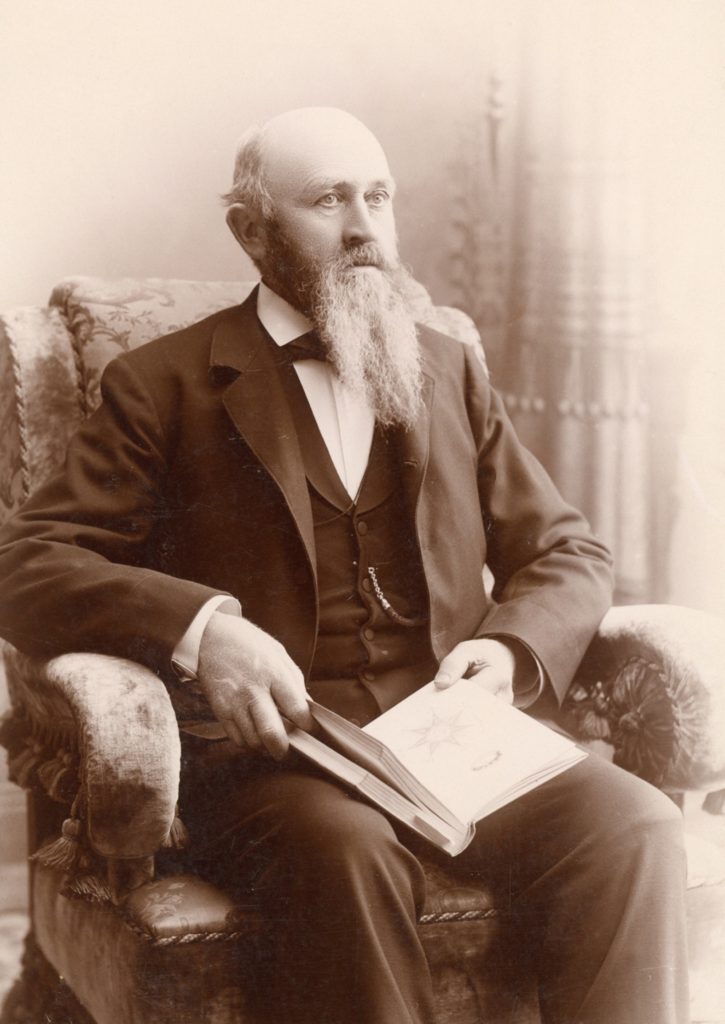
John W. Doyle (1832-1892). Courtesy of the Nevada Historical Society

It should be noted when Doyle came into existence in 1909, it was named for Long Valley pioneer, John W. Doyle, who settled just south of the town that would bear his name in 1859.

Spread the word, and encourage a friend to subscribe

A Company Town in Transition

Birch Street, Westwood. Courtesy of Hank Martinez

In 1912, when Red River Lumber Company began construction of its company town of Westwood, Lassen County officials did not know what quite to expect. Lassen County had experience with planned communities, such as Standish, but none of these proposals ever came to full frutition that the promoters envisioned. Westwood was entirely a different proposition. County officials were relieved that all of this development would not only cost the county any money, but its tax base mushroomed beyond their wildest dreams. The county was spared every expense, even the deputy sheriff, Red River paid that salary.

The good times would not last forever. By the early 1930s Red River was in a serious financial crisis. The days of a company town would soon only exist as a memory. Red River’s company owned businesses would be no more, those enterprises leased to outsiders. In the fall of 1934, Red River and Lassen County began working on the transition wherein the county would be responsible in maintaining the streets of Westwood. On November 10, 1934 Red River deeded over the streets of Westwood to the County of Lassen, however for reasons unknown the county did not accept the deed until September 1935.

Spread the word, and encourage a friend to subscribe

Exploring Lassen County's Past