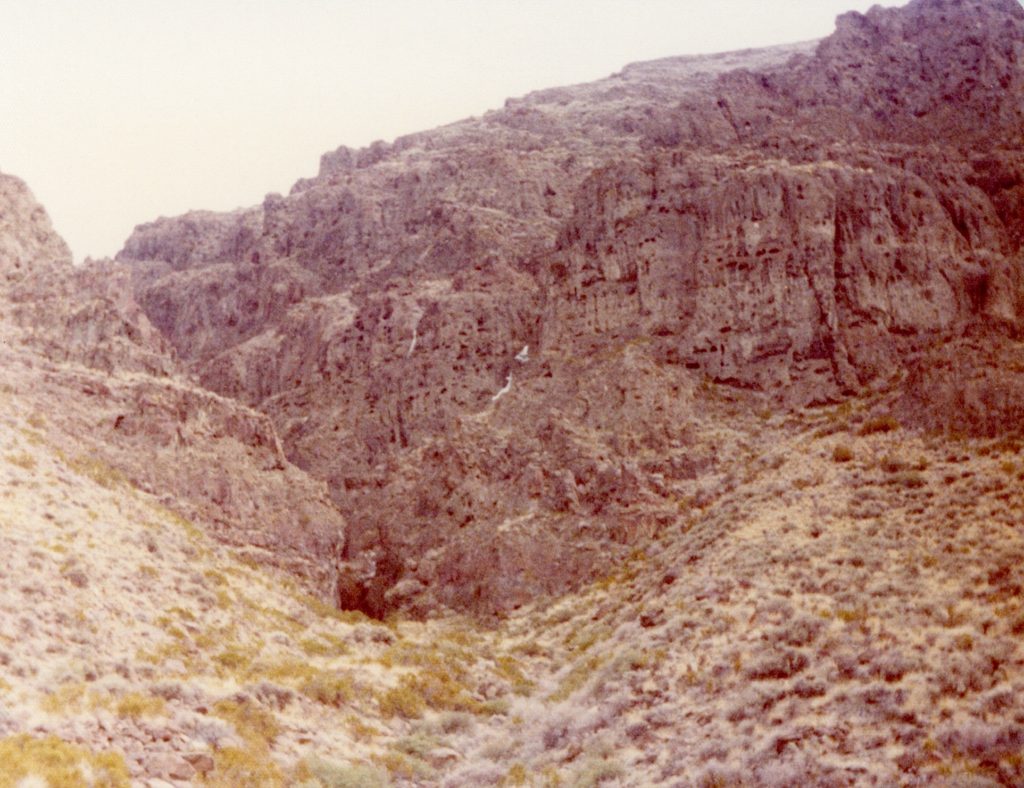
This is a somewhat non-historical post. Blame it on Covid Cabin Fever. Amedee Canyon, located in the Amedee Mountains, is about halfway between Amedee and Wendel, near the archeological site known as Tommy Tucker Cave.
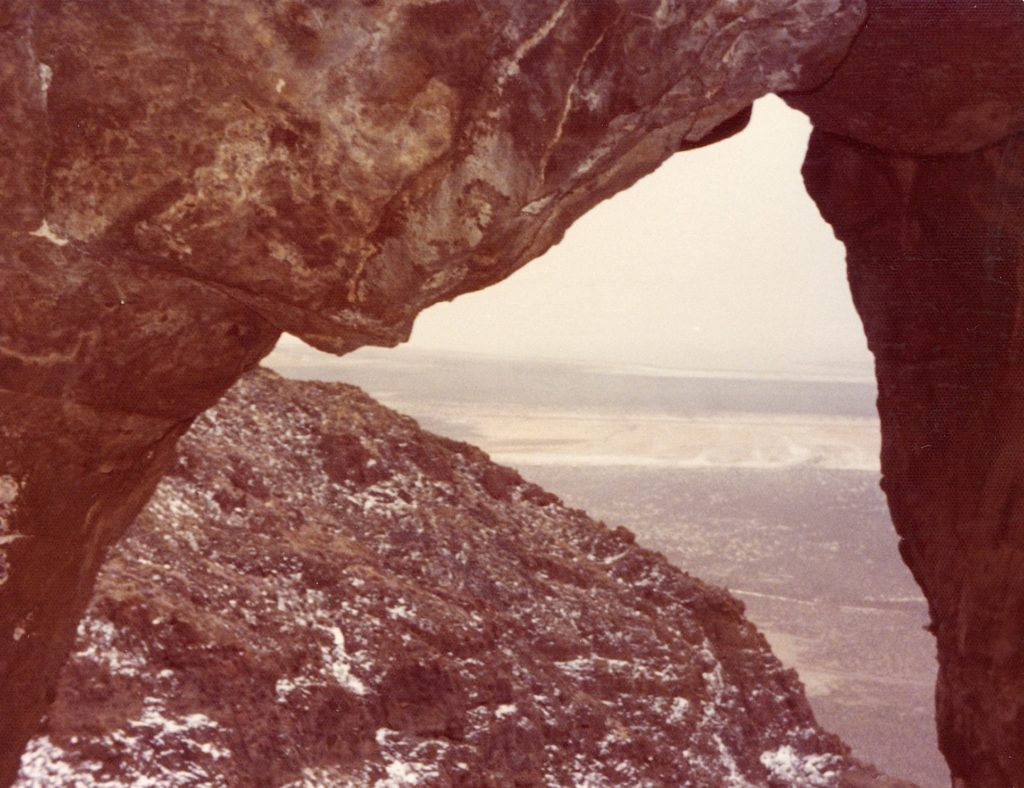
A view from one of the many caves to be found in Amedee Canyon
It was a late winter, many moons ago, that I hiked it. It should be noted, it is quite the hike to the entrance of the canyon. Before long inside the canyon, it is no longer a hike, more like a rock climbing expedition. Near the top of the canyon are interesting caves—one of which had ice.
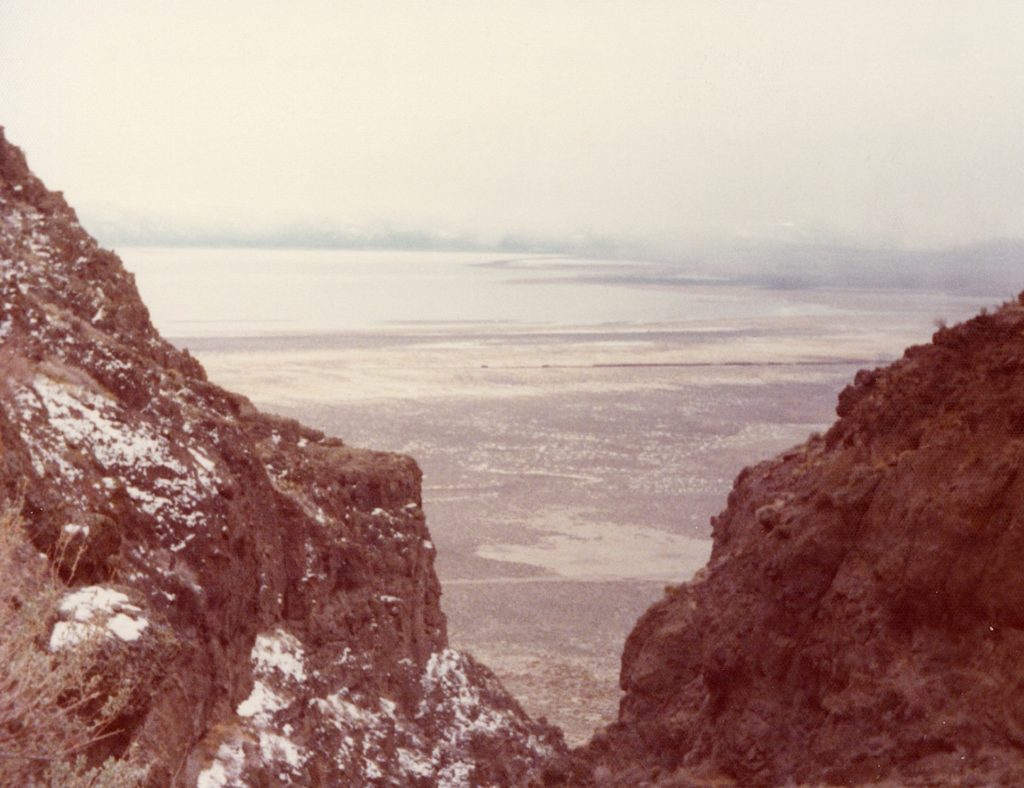
A view of Honey Lake from high above in the Amedee Canyon.
The other reward for your efforts is the view from up high overlooking Honey Lake.
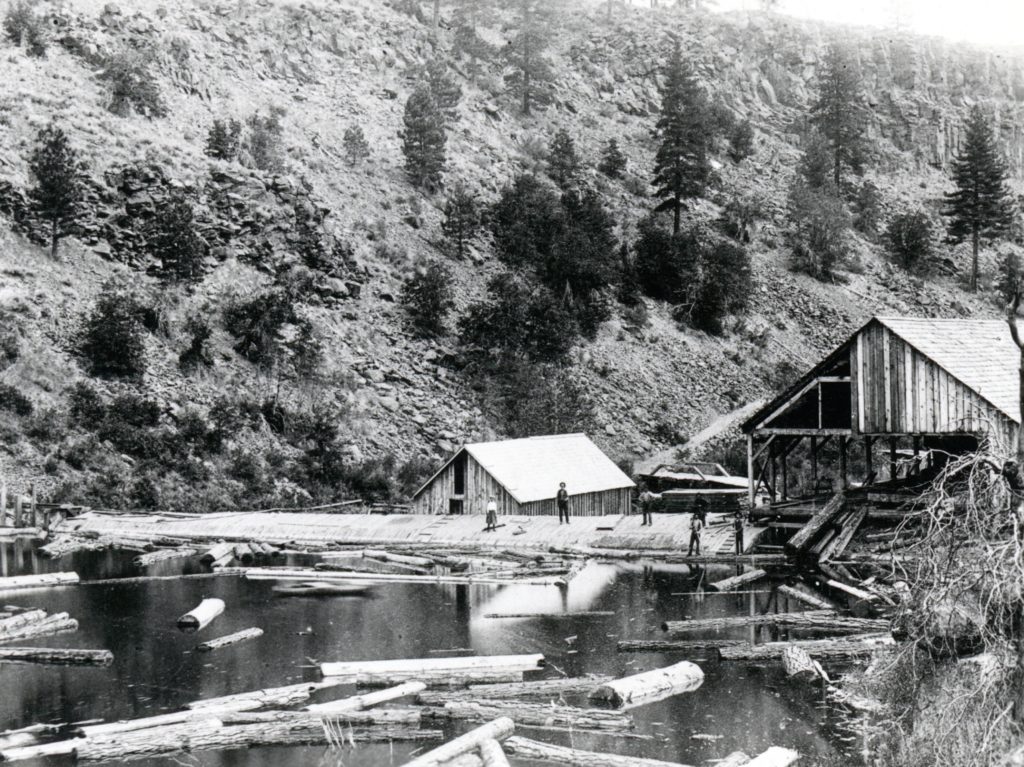
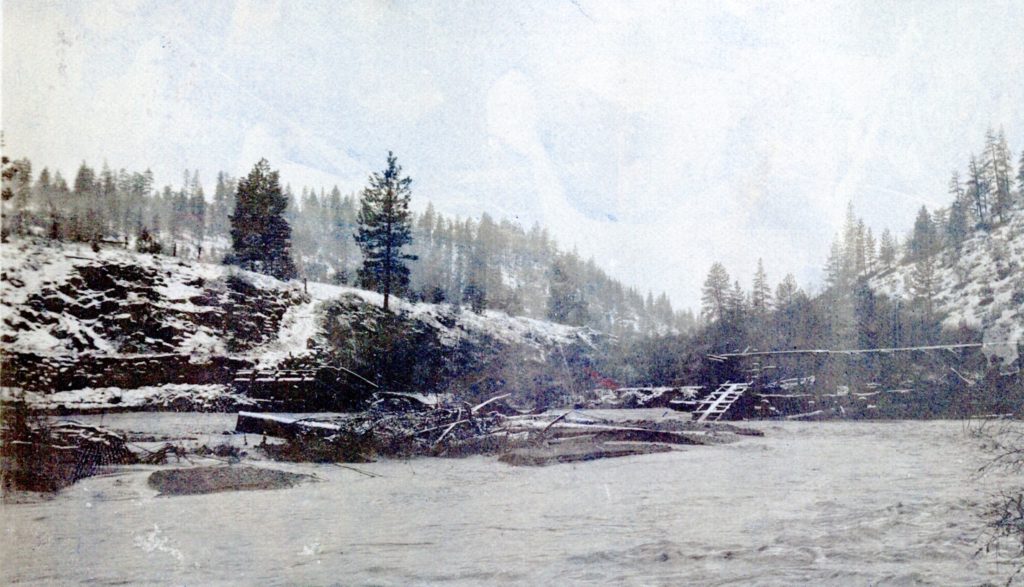
Some time during the night of March 27, 1906 an unknown individual(s) attempted to blow up the old Bremner Dam on Susan River with dynamite. The dam was built in 1886 in conjunction with the Bremner sawmill, about a mile west of Susanville. The damage was slight and it was reported that whoever did the deed was not familiar with explosives. The dam had fallen disrepair over the years, since the destruction the sawmill there in 1894. Some were of the opinion, that the dam was a hazard, especially to those downstream and it should be removed.
Bremner Dam Remnants, Susan River, 1977
That never happened and the dam quickly deteriorated and by 1914, most of it had washed away. However, during the drought of 1977, water level in the Susan River dropped to such an extent to expose the remnants of the dam’s foundation.
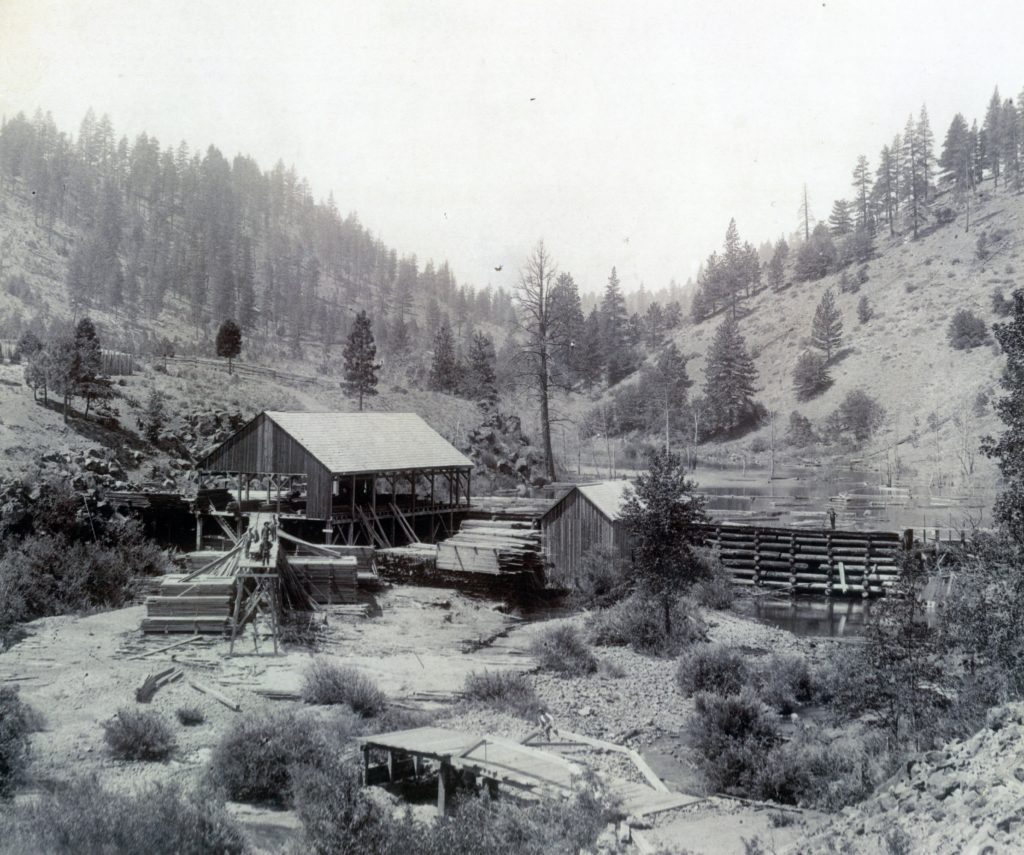
One of the most impressive sawmills constructed on the Susan River was the Bremner Mill. In 1886, Lawrence, Leavitt & Company was formed to construct and operate it. The site selected on the Susan River was approximately a mile west of Susanville. The firm built an imposing dam 250 feet long and 25 feet high. The dam created a reservoir that backed up water for a mile. That was beneficial for the company, since it would float logs down the river to the mill.
In December 1887, Charles Bremner, a lumberman from Maine, purchased the mill. His two sons, James and William, arrived from Maine to assist. On December 8, 1888 Bremner sold a half interest. in the mill to Alex McCrimmon. The partnership short-lived. McCrimmon was not pleased with Bremner’s management of the company funds, and sold his interest to Leavitt & Woodsum for $1,800. Bremner was plagued with financial problems. In 1892. with Bremner unable to pay his debts, William Greehn foreclosed on the property and became the new owner. Greehn, however, retained Bremner to operate the mill.
Bremner sawmill, Susan River Canyon, 1891. Courtesy of Betty Barry Deal
In 1891, to take advantage of the water power from the dam, James Anthony installed a power plant, to generate the first electric power for Susanville. The generator had a capacity of 30 horsepower, enough to provide power for40 arc lamps.
On Tuesday night, August 14, 1894, fire broke out at the mill. It went unnoticed by the several people who were at the mill. Once it was discovered the building was in flames and it was too late to suppress it. The mill machinery and Anthony’s electric plant were a total loss. The origin of the fire was never determined. The mill was not rebuilt, and Anthony built a new electric plant half a mile down from the dam.
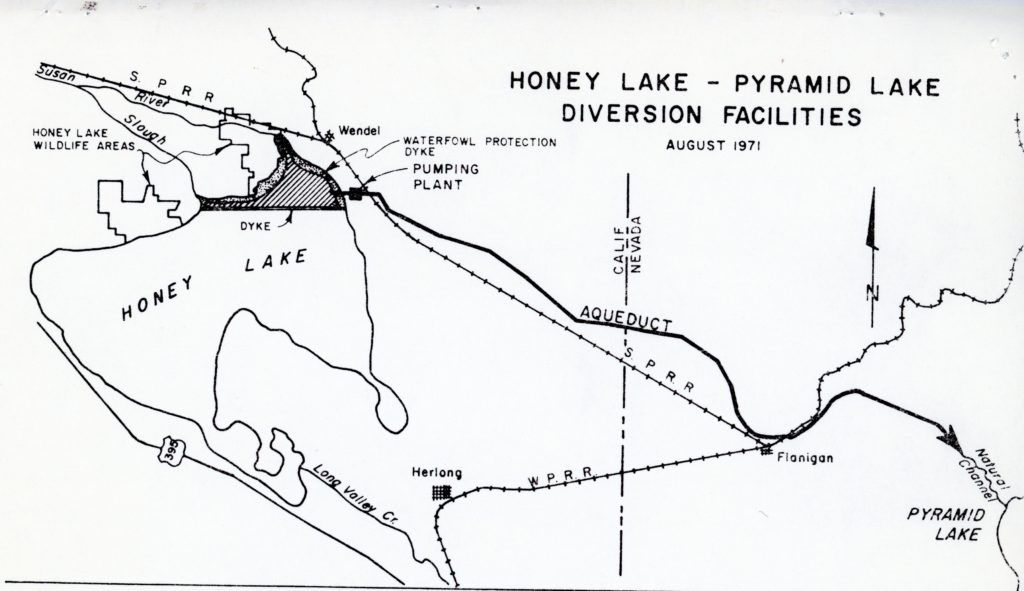
In 1969, the Pyramid Lake Task Force was established to seek solutions concerning the shrinkage of Nevada’s famous desert lake. In 1971, the Task Force submitted a proposal to Lassen County officials for their consideration. They obliged. The plan called for the exportation of 50,000 acre-feet of Honey Lake water to Pyramid Lake. The two lakes, both remnants of Lake Lahontan, are relatively close, though Honey Lake is 190 feet higher in elevation. It was their intention to dry up Honey Lake, except in the northeast corner. There a 4,700-acre freshwater reservoir would be created for a wildlife sanctuary. Adjoining it would be a holding reservoir with a capacity of 27,000 acres. A pumping plant would be built near Amedee, where the water would flow through a twenty-four mile long aqueduct to Pyramid Lake. The Task Force considered this plan the most feasible of all considered. Construction cost was estimated at $12 million, with an annual operating cost of $200,000. This did not include any litigation fees with affected properties for rights-of-way or damage payments to lakeshore owners. The adverse effects of Honey Lake being permanently dry drew heavy criticism from the local residents. The lake is enjoyed for its aesthetic beauty when full. When the lake is dry, it is a scene of numerous dust storms. Opponents were also concerned with the loss of humidity and its effects on agricultural crops. At a November 8, 1971 public hearing the Lassen County Board of Supervisors passed a resolution opposing the project. After all these years later, the problems with Pyramid Lake’s water level still has not been solved.
A portion of Marith Reheis 1999 U.S.G.S. Map of Lake Lahontan
Maybe you are aware of the Lahontan Regional Water Quality Board that has a lot of influence on water issues in Lassen County. If you are more Nevada oriented, you might be familiar with Lake Lahontan, a reservoir near Fallon, Nevada. Continue reading Lake Lahontan Explained→
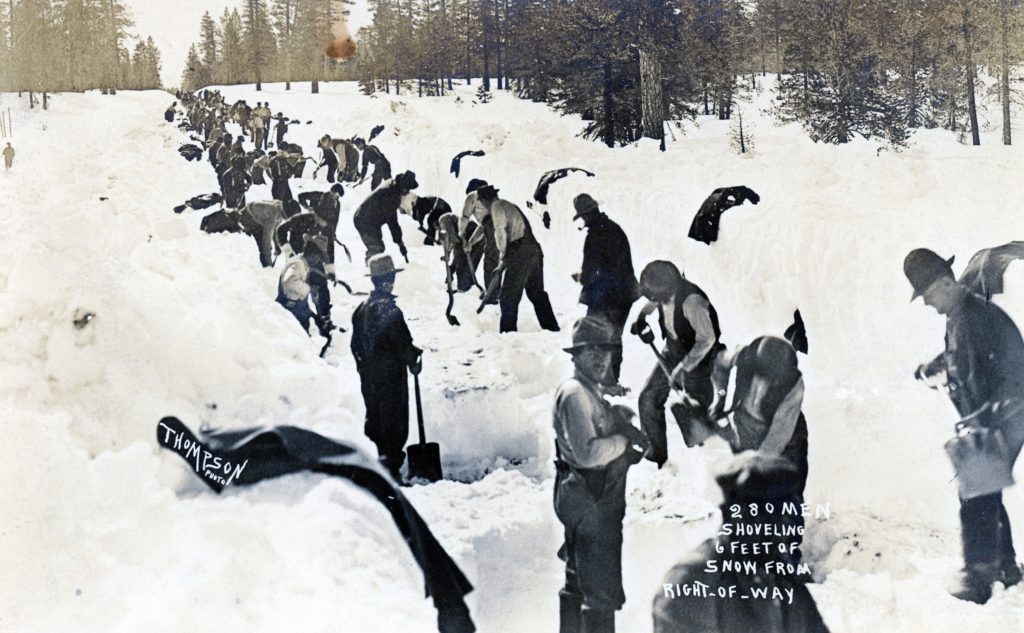
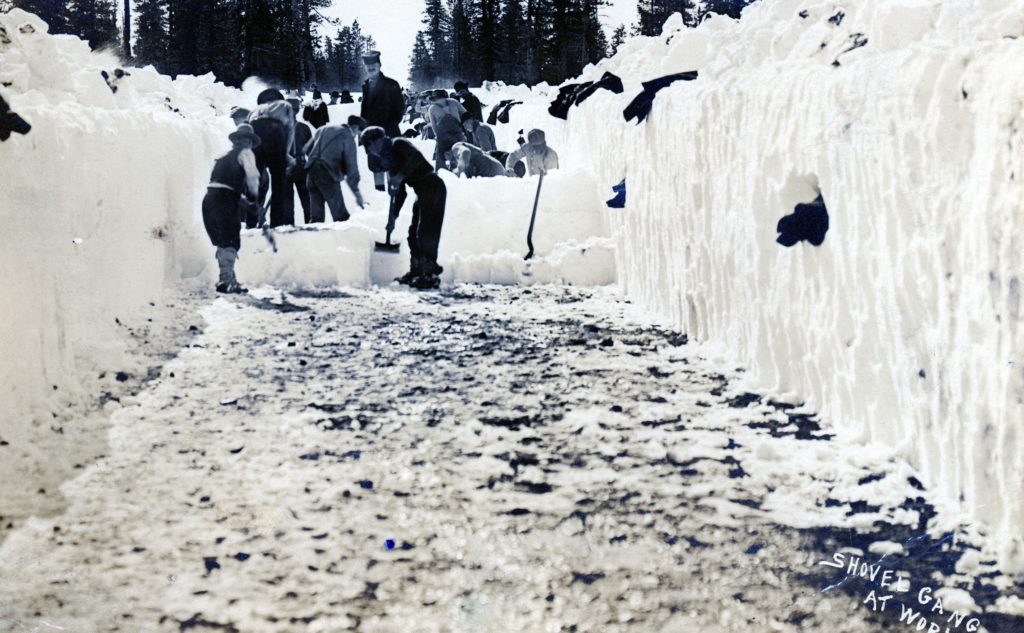
Snow Shovelers clearing the right-of-way in six feet of snow, January, 1914—B.R. Zimmerman Collection
On January 29, 1912, the Red River Lumber Company and the Southern Pacific Railroad entered into an agreement for the construction of the Fernley & Lassen Railroad. Time was essential, with completion date of two years. Red River already had a contractual obligation with Great Western Power Company to remove the timber from Big Meadows, which would be flooded to create Lake Almanor in 1914..
The line would extend from Fernley, Nevada to a point west of Susanville to be named Westwood Junction. At that point a nine-mile spur would be built south to the soon to be company town of Westwood.
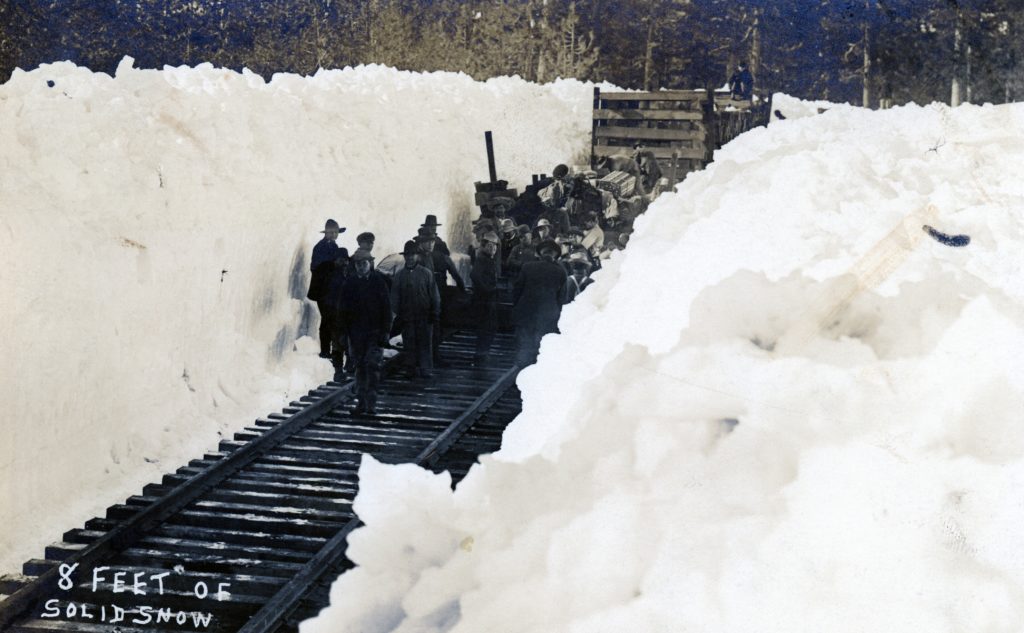
A daunting snow removal task on the Fernley & Lassen Railroad, west of Susanville.—-B.R. Zimmerman Collection
By the fall of 1913, the tracks had reached Susanville. The most formidable task was the Susan River Canyon, wherein the Southern Pacific put 1,000 men to work to meet the January 1914 deadline. However, Mother Nature had a mind of her own, and lashed a series of record breaking storms. Even with eight feet of snow in Susanville during January 1914, was not a deterrent for the construction. Though due to the unusual circumstances Red River and Southern Pacific agreed upon a two-month extension to the deadline.
Construction of the Fernley & Lassen Railroad, west of Susanville, January 1914. Courtesy of B.R. Zimmerman Collection
On February 21, 1914 the rails reached their destination to Westwood. It would not be until fall when all work was completed such as ballast and sidings.
This is brought to you by Greg Johnson, who made the expedition to Shinn Ranch on January 9, 2021. He was not only kind enough to share the photographs he took, but was gracious to give me permission to share. Thank you, Greg!
Shinn Ranch is located in a remote part of eastern Lassen County—you either know it or never heard of it. Believe me, it is not place where one would make a casual Sunday drive to visit. Shinn Ranch is not far from the Nevada border and upper Smoke Creek. It was so named for fifty-year-old Oliver Shinn who located there with his family in 1870. This is a very remote location and how Shinn found it, and why he settled there remains a mystery. As Johnson, during his visit, pondered while he accessed the ranch on a ATV, the Shinn family had no such luxury. To obtain provisions required a trek to Susanville via horseback and/or wagon.
Shinn Ranch, January 9, 2021—Greg Johnson
In 1884, Oliver Shinn died there and later that year, his widow, Louise sold the ranch to the Winters family, who had extensive ranch properties in western Nevada. In 1889, George Winters planted a grove of Cottonwood trees that has had been a stand out feature of Shinn Ranch.
Portion of the Cottonwood grove at Shinn Ranch, January 9, 2021—Greg Johnson.
Westwood’s aviation history is an obscure topic. A crude landing field was established in the late 1910s on Mountain Meadows, about a mile south of the Goodrich Ranch. Initially, its use was nominal, due to its poor condition. In one instance, Joe Hunter received a call from a pilot in Red Bluff about the current condition who replied that it is a mud bog and unfit for landing.
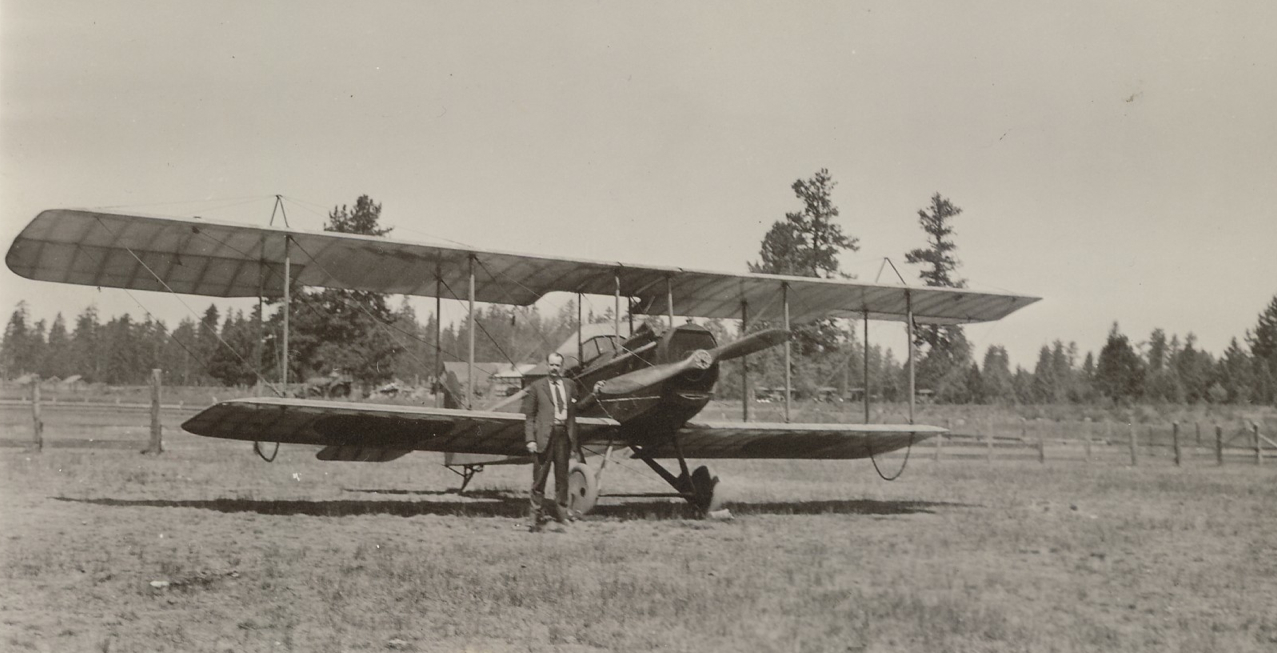
In the 1920s, Red River’s Resident Manager, Fletcher Walker’s two sons—Fletcher Jr., better known as “Cub” and Kenneth—developed a strong interest in airplanes and became pilots. This interest in flying gained momentum in the area, so that in June 1928 the Westwood Auto Club spent $100 to clear the landing field of brush and fill in holes to make two 2,200 foot runways, thus the formal Westwood Airport was created—a first in Lassen County.
This caught the attention of Ted Campbell of San Francisco manager of Beacon Airway to examine the aviation field. He made an inspection to examine the possibility of establishing regular air service to Reno and other points on the Transcontinental Airway route. Yet, the prospect that Westwood residents would have nearby access to regular air service never materialized.
Yet, the Walker boys, as they were commonly referred to, were an adventurous lot. In 1928, They accompanied Dr. Thomas A Arbuthnot of the Pittsburg Medical College on a 10,000 mile African expedition from Cairo to Tanganyika, which they filmed their experiences. It was made into a film, The Wild Heart of Africa which made its debut in May 1929 in New York City. After that expedition they returned to their other passion, flying. In December 1928 they purchased a Travelair Bi-Plane, equipped with a 225 horsepower Wright Whirlwind motor. Cub spent a lot of time and energy in helping many Northern California communities in establishing airports.
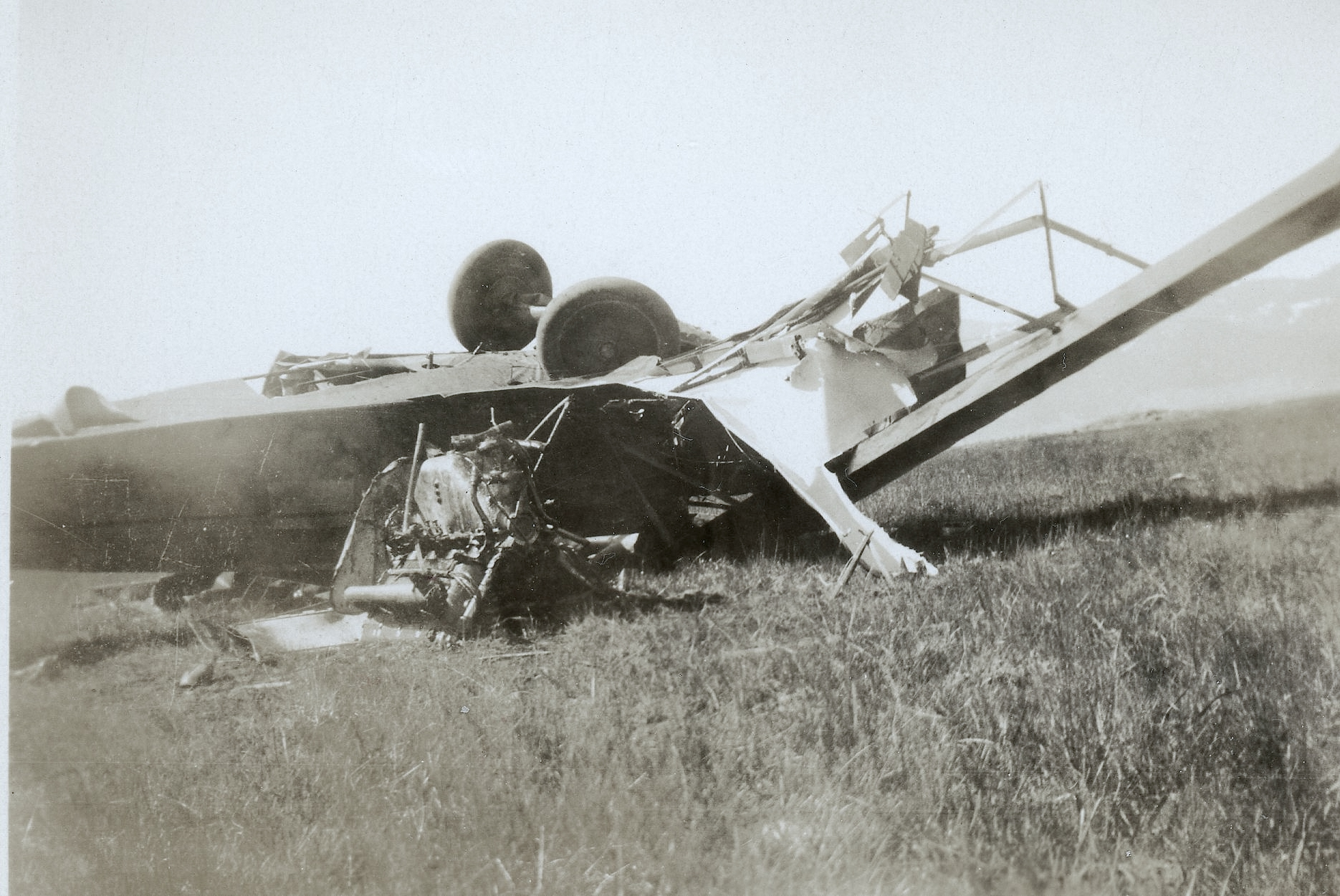
The wrecked Walker plane.
On August 23, 1929, the worst aviation disaster occurred at the Westwood Airport’s brief history. Cub and Kenneth routinely flew over Red River lands to photograph them. In this particular instance they were returning from such an expedition. At approximately 6:00 p.m. they were approaching the landing field when suddenly the plane malfunction and plunged crashing on impact. Frank Stevenson and Mike Pappas witnessed the crash from afar as they were placing duck blinds on the far shore of Walker Lake. The two men rushed to Westwood to inform the family and gather a party to go out to crash site. Cub was instantly killed from a broken neck and the rescue party on their arrival found Kenneth regaining conscious and attempting to get out of the cockpit and later fully recovered.
The airport continued to see use in the early 1930s, but by the end of that decade, it had become a footnote in Westwood’s history.
The abandoned Milford Flour Mill as it appeared in 1901. Courtesy of the A.J. Mathews family
It has been over a century since a flour mill was built in Lassen County. In the preliminary planning phase, we might see local flour on the market again. The proposed flour mill is in one area of the county where there never has been a flour—the Madeline Plains. Once, I receive additional material, I will provide an update, but I find this exciting news.
The region’s first flour mill was located at Milford. It was built in 1861 for J.C. Wemple and Judson Dakin. In 1864, another flour mill was built at Johnstonville. As the population grew, the need for flour increased and in 1882, H.H. Dakin built a flour mill at Janesville. The Johnstonville and Milford flour mills went out of operation in the early 1900s, and by 1915, the Janesville mill struggled and closed by 1920.
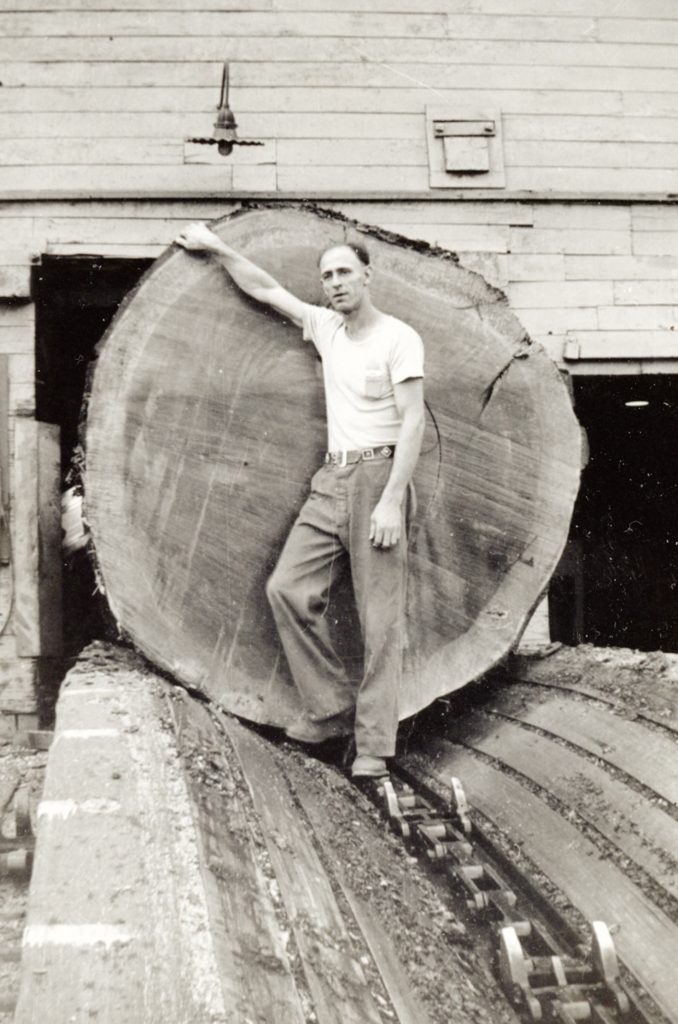
This six foot diameter ponderosa pine log entering the Fruit Growers’ Susanville mill, 1943—FGS Co.
Whenever an exceptional logging and/or mill scene Fruit Growers made sure the event was captured on film. In turn, in many instances it would appear in the company’s annual report. In a sense it was part promotional and educational tool at the same time. Fruit Growers’ audience was the citrus growers who owned the co-operative and invested in the mills and timberland to provide them an adequate supply of wooden boxes at a reasonable to price to ship their fruit. The majority of the owners had little knowledge of the sawmill industry that they were heavily invested in.
Lunch time at Dow Butte, August 21, 1953. Courtesy of Hank Martinez
What Fruit Growers did was not unique. Many lumber companies did the same to provide illustration to their investors where their money was being spent.
 Bremner Dam, 1906—George McDow Jr.