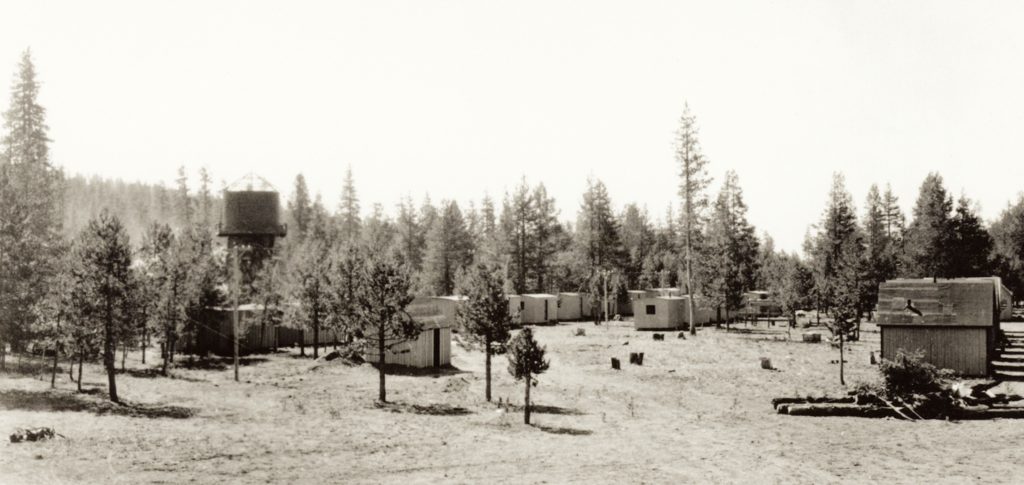
These cliffs are located just west of Susanville and Highway 36 passes right over it, so the casual road traveller would not even be aware of it. There was a time one could pull off the highway and look over, but the highway department put up a barrier to discourage visitors. For those walking the Bizz Johnson Trail and look up at the cliffs, one will notice a tremendous amount of rock debris below the cliffs nearly all the way to river. That was not Mother Nature’s doing. In the summer of 1916 a state prison camp was established on the site occupied today by the California Division of Forestry. A tremendous amount of rock blasting had to be done between there and the city limits, which would be the new entrance into Susanville. All that blasted rock debris was pushed over the cliffs.
Susan River Canyon, looking towards Pigeon Cliffs, 1899
Spread the word, and encourage a friend to subscribe
During 1930-31 when the Western Pacific Railroad was engaged in the construction of the Northern California Extension, aka the Hi-line from Keddie to Bieber, most everything went smoothly. In early August, 1931 Western Pacific officials gleefully reported that rails had reached Bogard and that they were placed at a rate of 8,000 feet per day! Things suddenly changed on August 20, 1931 60 laborers walked off the job, including the head gang of steel layers. The railroad officials summoned Lassen County Sheriff Leavitt to Camp Lasco to make sure the men did not start any violent confrontations. At dispute was the foreman had been fired on the spot. He was replaced by what the workers deemed a “foreigner” and they would not have an illegal alien as their boss. That evening the men left Camp Lasco and spent the night in Susanville. They returned back to the camp next morning to collect their pay and went their separate ways. It was a temporary setback for the Western Pacific, yet it being the depression there was a large pool of unemployed to recruit from.
Spread the word, and encourage a friend to subscribe
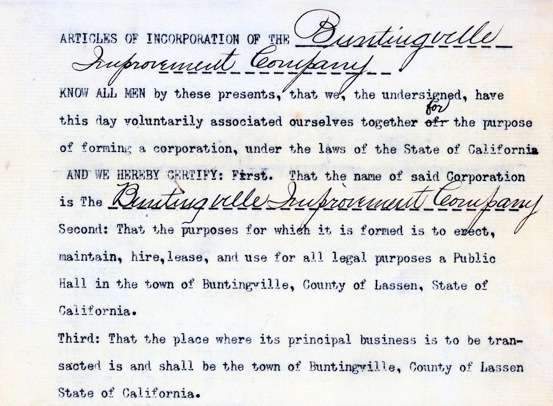
While Buntingville, just south of Janesville, appears today to be a mere wide spot in the road, it was not always that way. Like so many communities the residents desired to have a public hall. On January 1, 1911 five residents—Chester Toombs, Edwin Jellison, Theo. Gross, W.E. Agee and Birt Hostetter—led the movement by incorporating as Buntingville Improvement Company. Their goal was to raise $2,000 by selling stock with a par value of $5.00 each. The men quickly learned like those in neighboring communities, there just was not enough support to make a go it and the venture faded as quickly as when it was first proposed.
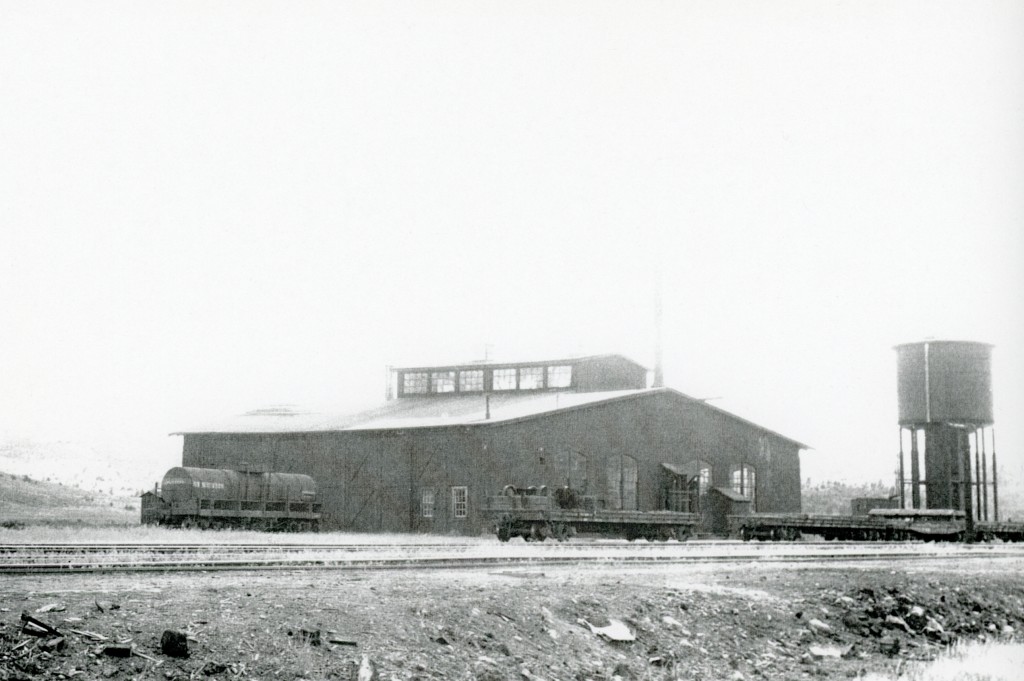
The Southern Pacific Roundhouse, Susanville, 1947. G. Dunscomb Collection
When I first wrote about this in 2015, I knew nothing about it. Since then I have gained more knowledge. The roundhouse was built in1914, and what was rather unusual it was a mile east of the Susanville Depot. Normally, it would have been much closer to the depot. However, things were complicated since all the surrounding property, though undeveloped was part of the Lassen Townsite subdivision. It must have looked extremely out of place when constructed as there was nothing in that area, since it was before Lassen Lumber and Fruit Growers.
From 1925 to 1929, Fred Abbey was foreman of the roundhouse with a crew of four It was equipped with four stalls to service and to conduct minor repairs to locomotives. Any major work was taken to Sparks, Nevada. The whole operation was short-lived as it closed down in 1930, and the railroad did not dismantle it until the 1950s. In a sense it was a fluke, as it was built on the pretense that the railroad line would be built to Klamath Falls, Oregon, but the furthest it was built to was Westwood Junction.
Spread the word, and encourage a friend to subscribe
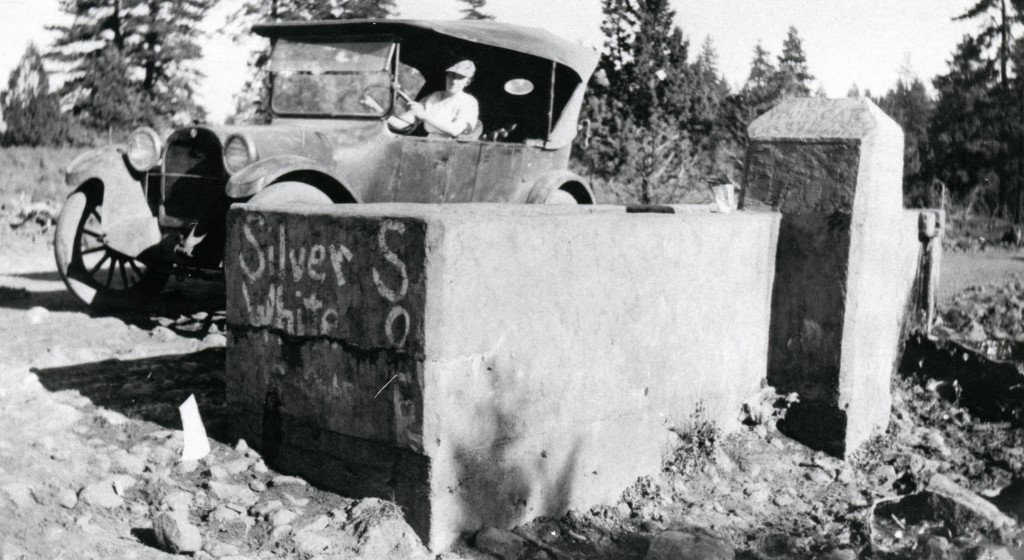
Jacks Valley, is a non-descript place on Highway 139, ten miles north of Susanville. Its best known feature was a cement water trough, which weary travelers a century ago truly appreciated.
It had its humble origins in 1865, when John C. Wright located on the abandoned homestead of Thomas Pearson, who had perished in a snowstorm there on New Years Day 1865. Wright was known locally was Coyote Jack, and hence the name of Jacks Valley. In 1869, he left for parts unknown. By 1880, this had become a crossroads for travelers as five different roads converged in the valley. Frank Fluery took advantage of the opportunity provided by this unique junction and established a saloon. In 1884, as one of Fluery’s patrons noted: “. . . for ten cents he will give you enough to make you happy to cause you to forget all your trials, troubles and tribulations for a time.” In 1889, Fluery sold to A. J. Conklin who operated the saloon for a number of years. In 1907, Conklin ventured into the lumber business and built a sawmill that had a daily capacity of 15,000 board feet. In 1920, Conklin sold the sawmill to William Johnson. Johnson operated the mill for three years and then sold to the Red River Lumber Company who immediately closed it. In August 1926, a forest fire ravaged the region that encompassed some 20,000 acres.
Jacks Valley, not to scale.
The following year, the Red River Lumber Company established logging Camp 70 to salvage the burnt timber. This was one of that Company’s earliest truck logging camps. While those enterprises have long since faded into oblivion, a cement water trough remains and is still a recognized feature to travelers. In 1913, Thomas Hill and the County of Lassen constructed the water trough. For early motorists, it was a wonderful blessing, a source of water for overheated automobiles making the trip up Antelope Grade. For the next 80 years it was popular stop to drink the water and take a break, though it appears the water line has been disconnected.
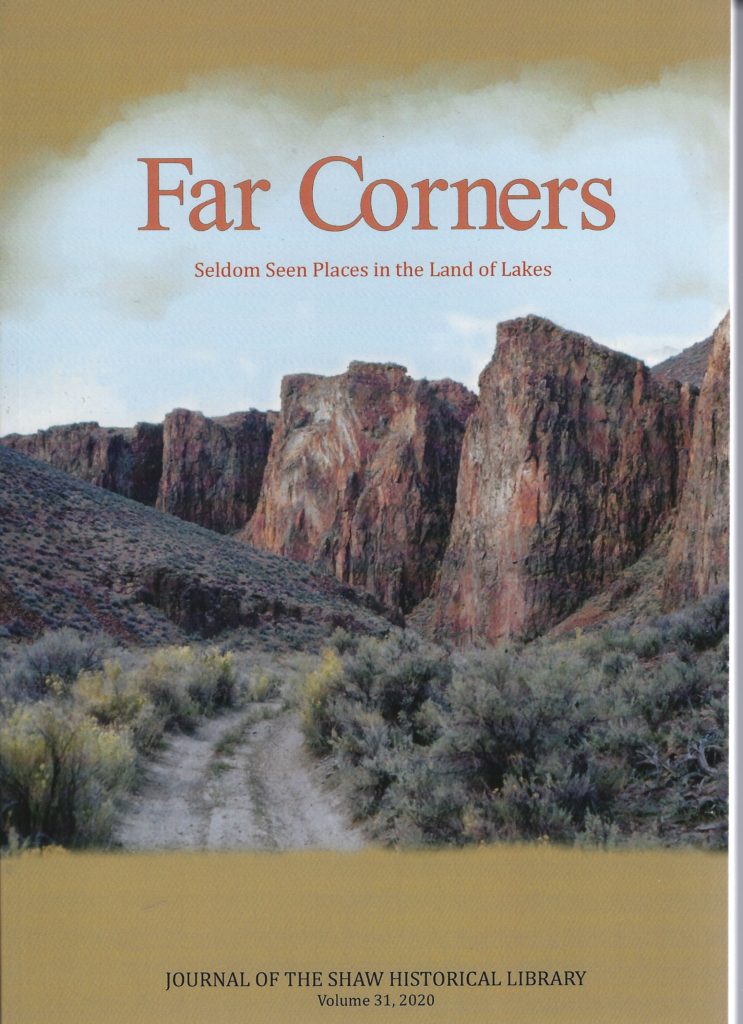
Seldom seen places, from forgotten settlements in northern Klamath and Lake counties to “Ghosts” of Crater Lake National Park and the Tri-Corners area where the states of Oregon, California and Nevada come together are featured in the newly released 2020 Journal of the Shaw Historical Library.
“Far Corners: Seldom Seen Places in the Land of the Lakes,” features stories by a variety of authors about settlements and communities that were or, in some cases, exist with small populations.
“We tried to include important historical sites, such as railroad stops, stagecoach stops, boat landings, military camps and ranches that played a noteworthy role in the development of the area,” Lawrence Powers writes in the introduction, which also includes a listing of 195 communities in the 11 counties in four states that are part of the Shaw’s “Land of the Lakes.”
Far Northern California is represented in stories about Picard, Clear Lake, Tionesta and Long Bell Camp and the Madeline Plains communities of Madeline, Termo and Ravendale by a variety of authors, including Powers, Ryan Bartholomew, Sylvia Copeland and Ron Hathaway.
The far Northern Klamath County communities of Mowich, Crescent Lake and Shevlin are featured in a trio of articles by John Driscoll while Stephen Mark, the historian for Crater Lake National Park, tells about “ghosts” at the park and writes about historic places in Malheur County.
Marie Lee, a Lakeview author of several historical non-fiction books who also is the Lake County Museum director, provides information about such little-known North Lake County settlements as Cliff, Arrow, Buffalo, Connley, Fleetwood, Viewpoint, Loma Vista and more. A separate story features Valley Falls.
A comprehensive history of commercial uranium mines that were located near Lakeview is provided by Michelle Durant, an archeologist for the Fremont-Winema National Forest.
Adding a unique perspective about Wagontire is Larry Wagner. His mother, Vera Addington Wagner, was born and lived at the community located between Lakeview and Burns.
Providing insight about Camp Warner, an Army post that originated at what is now the Hart Mountain National Antelope Refuge, is Dan Goheen while author John Griffin provides little-known details about the gunfight at the Shirk Ranch. Steve Kandra writes about the Civilian Conservation Corp’s Camp Klamath.
Stories by Lee Juillerat tell about Pla-ik-ni, the ancestral home of the late Edison Chiloquin, along with Hardin City and Lowell Jones’ memories of the Long-Bell logging camp and community of Tennant.
A goal of the Journal is to provide information on places people may or may not have heard about or visited. As Powers writes, “many small unincorporated communities thrive. A few have become famous as gateways to tourist attractions and events … some have persisted as stable communities without the benefit of an economic magnet, and other flourished for a brief time and disappeared.”
Copies of “Far Corners” are available at the Klamath County Museum and Basin Book Trader in Klamath Falls, Modoc County Museum in Alturas, Country Hearth in Cedarville, Howard’s Drugs in Lakeview, Margie’s Book Nook in Susanville or by contacting the Shaw Historical Library by email at shawlib@oit.edu or by calling 541-85-1686.
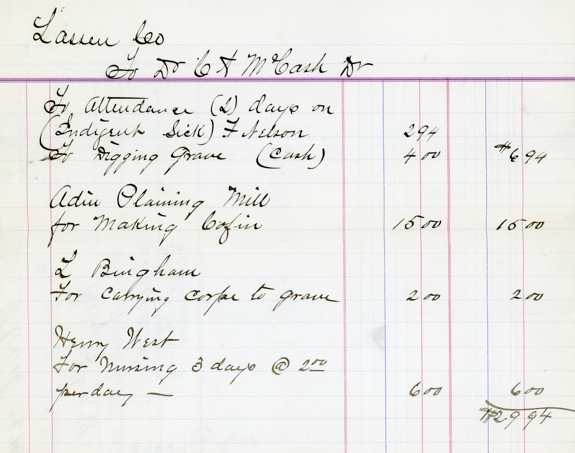
We may never know much about Frederick “Franz” Nelson, a Swede, and he was far from an isolated case. He appeared on the scene in Big Valley in 1879. Like a lot of others, he struggled on a day to day basis just to get by, working as a day laborer for anyone who would hire him for a task.
When Nelson suffered from general Dropsy, he became Lassen County’s resonsibility as an indigent to take care of him. Unable to care for himself was taken Adin and housed in the Modoc Hotel, as was customary then, there being no other option available. S.C. Moers, the proprietor billed Lassen County for board and nursing at a dollar a day for sixteen days, until Nelson’s passing on January 30, 1880. Dr. C.A. McCash, also of Adin submitted bills for Nelson’s care, but also the cost to bury him in the Adin Cemetery.
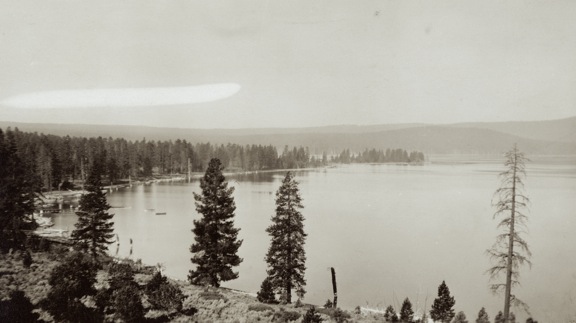
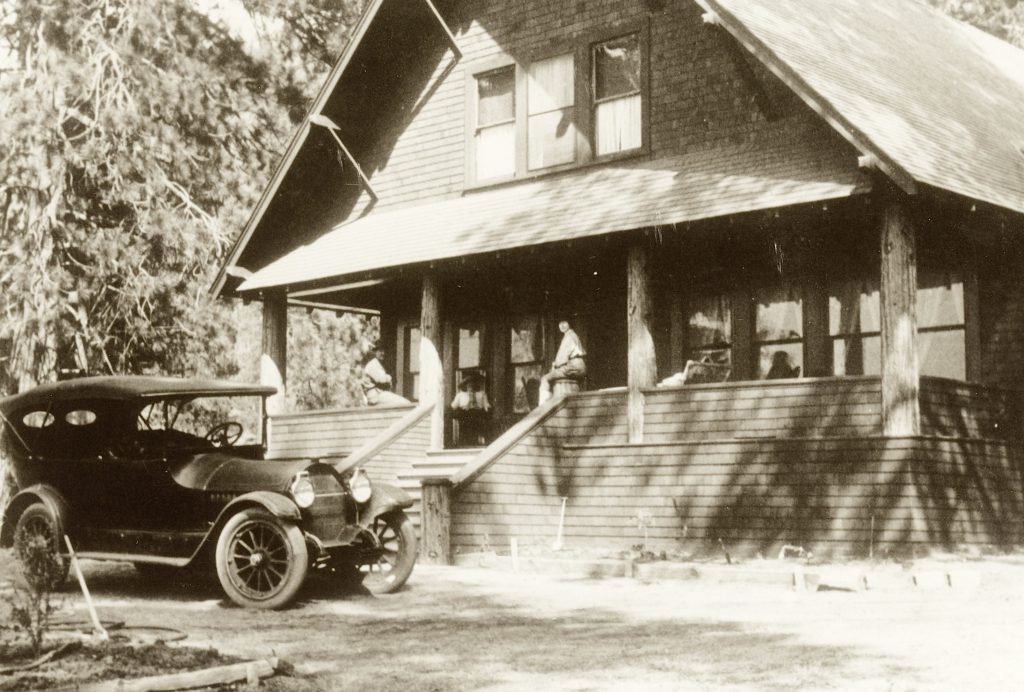
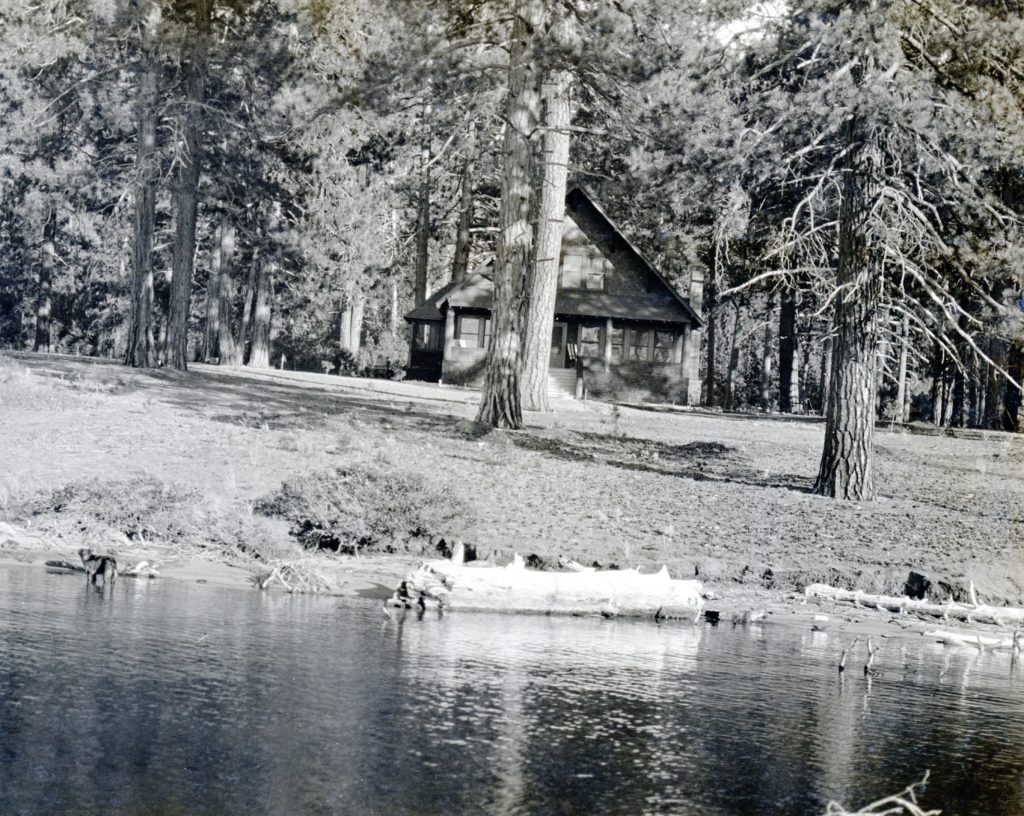
South shore of Eagle Lake, circa 1920—Wyn Wachhorst
By the late 1920s Malvena Gallatin rarely visited the lake and John and Alberta Christie, who operated the Eagle Lake Resort became caretakers of her summer home.
In 1944, Malvena’s only grandchild Norma Virginia Harvey Wacchorst passed away. Gallatin House, in essence was built for Norma and when she was growing up in the late 1910s would spend the summers at the lake with her grandmother. It was Christmas 1944 that Melvena returned to spend a lonely holiday at Gallatin House.
Then something unexpectedly happened. On February 1, 1946 Malvena sold all of her Eagle Lake property, except a 1.96 acre parcel that the Gallatin House was situated on to the Lassen Lumber & Box Company for an estimated $100,000. This alarmed Lassen National Forest officials. After all, who knew what the lumber company’s intention were. Would they log it, or even worse develop it in such a fashion the public would never have access to the lake. The forest service contacted Lassen Lumber & Box about a land exchange for the property. By summer an agreement had been reached and on August 27, 1946 a deed executed transferring the Gallatin property of the forest service. Lassen Lumber & Box were allowed to harvest nearly 14,000, 000 board feet, and the company, in addition received over $500,000 of timber in the deal.
Spread the word, and encourage a friend to subscribe
In August 1913 construction began on Malvena Gallatin’s summer home at the southeast corner of Eagle Lake. Who knew how such a humble event would have such a wide ranging impact for a large swath of Lassen County. It was also in that same year that Red Bluff resident Leon Bly was involved in a campaign for a highway to connect Red Bluff to Susanville. Malvena, of course, supported the project as it would make it easier for her to travel to Eagle Lake. The following year, Malvena invited Bly to her summer home. It should be noted Bly was a civil engineer.
Since the 1870s the water level of Eagle Lake steadily increased. Beginning at the same time, there were schemes to tap the lake for irrigation in the Honey Lake Valley. Malvena wanted Bly’s opinion if the project was feasible. Malvena’s concern was the lake level was now encroaching on her timber land, killing the trees. Bly would not only do an exhaustive study of the project, but would develop and implement an entire irrigation system. n 1923, Bly’s tunnel and irrigation system was completed and within five years it was a failure forcing many farmers who invested in it to bankruptcy and the Bank of America took over the Lassen Industrial Bank that was on verge of collapse from effects on the loans to those same farmers. Of course, the lake level dropped substantially that nearly ruined the lake. Thus, the legacy of the Gallatin House, Eagle Lake’s first summer home.
Gallatin House. Courtesy of Wyn Wachhorst
Spread the word, and encourage a friend to subscribe
Tomorrow how Gallatin Beach became public property.