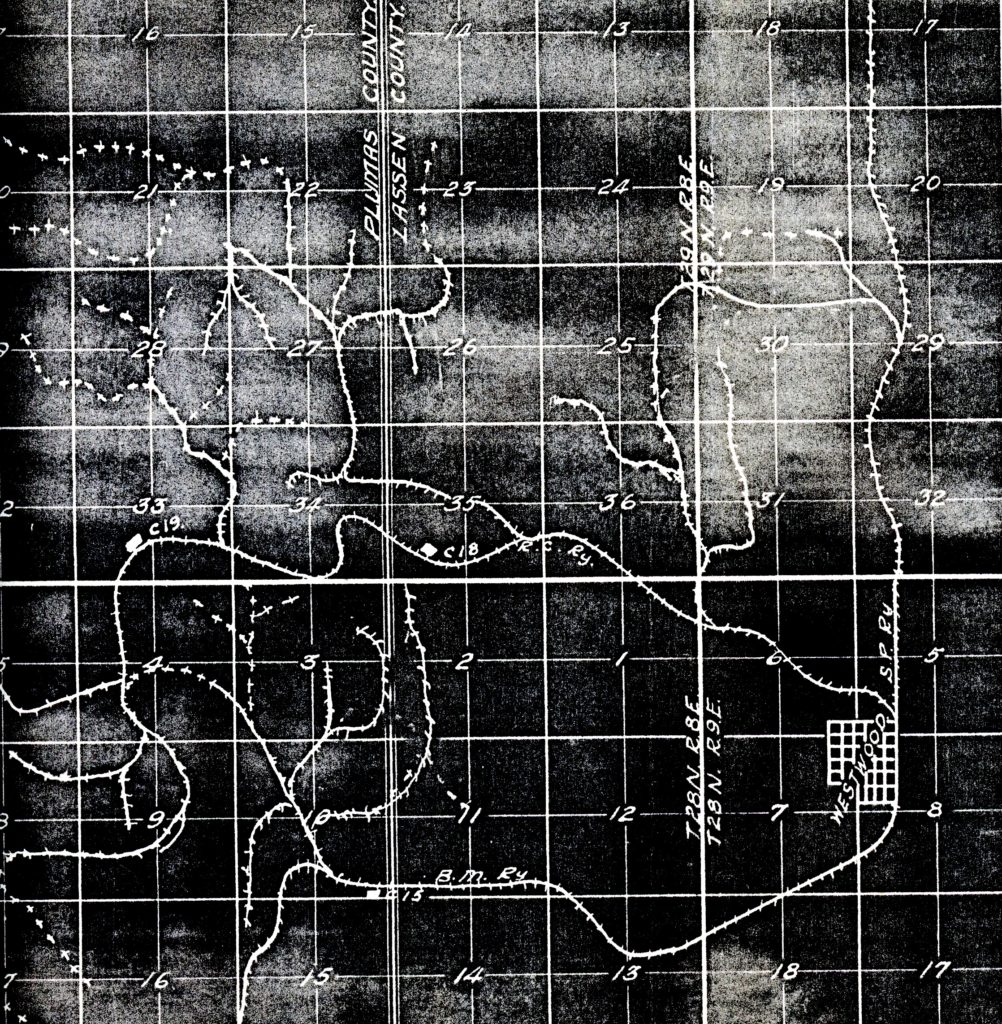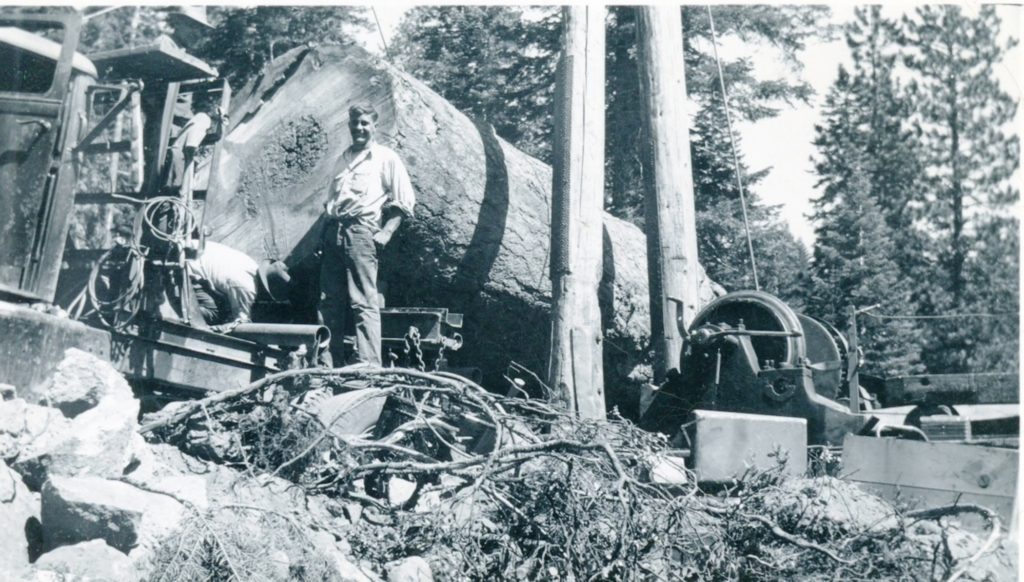
The town of Termo certainly has seen better days. The town came to life when the NCO Railroad extended its line north from Amedee to the Madeline Plains. In June 1900 the railroad named its new terminus Termo, meaning the end and it certainly looks like that now.
The landmark Termo Store.
One of the fatal blows to Termo came in January 1989 when postal officials from Reno inspected the premises of the Termo Post Office, which they felt was a hazard to the postmaster and the patrons. On February 2, 1989 the Termo Post Office ceased to exist.
On February 5, 2015 this web site made its debut. A lot of history has been explored in the last six years and a lot more to go. It does not appear I am going anywhere soon that I am aware, or more specific the website. On the other hand, my housing situation is such, that I could be homeless in the near future. Whatever happens, I renewed and paid a three-year contract with the web server.
Remnants of Roosevelt Pool, February 21, 2015
The reason for the photographs of Susanville’s Roosevelt Pool, that was the inaugural topic from six years ago. At that time the building was being demolished.
Anyhow I just want to take this opportunity to thank those who support the site, but also for the encouraging words as well.
Golden Eagle Mine, Hayden Hill, 1894. Courtesy of Del & Diane Poole
Just as you can not believe everything on the internet, its true with various published accounts in all forms—past and present. The following article about Lassen County mines appeared in the San Francisco Chronicle, May 24, 1892. Two items struck me, one which is obvious the mines of Hayden Hill were located on a spur of the Sierra Nevada Mountain, which is not the case. The other which was unusual was the mining activity at Eagle Lake which usually is never mentioned.
”Lassen County, bordering on one of the best mining counties of California, being separated from Plumas county by a spur of the Sierra Nevada, has so far developed little mineral wealth, a few claims having been prospected on Diamond Mountain, near Susanville, the county seat, have yielded some gold. Veins of silver and gold ores have also been found on the southeast side of Eagle Lake, but mining as a regular business has only been prosecuted in the extreme north of the county, sixty miles north of Susanville and nine miles south of Modoc county line in what is known as the Hayden Hill Mining District. This hill, named after one of the first locators who is buried there, is one of the highest points of a spur running out of the Eastern slope of the Sierra Nevada; its altitude is given at 7500 feet. The mines were discovered nearly twenty years ago, since which time they have been more or less continuously worked yielding to the world’s gold supply. a little over $1,000,000.”
It is now safe to state this Lassen County community population has been reduced to zero. It literally lives up to the name it was bestowed upon in 1900.
In 1928, Bank of America bailed out the Lassen Industrial Bank. The latter was near financial collapse due to the outstanding loans with the Honey Lake farmers who were heavily invested in Leon Bly’s failed Eagle Lake enterprise. However, it was not until the end of 1931, that Bank of America got around to replace the Lassen Industrial Bank signage with their own.
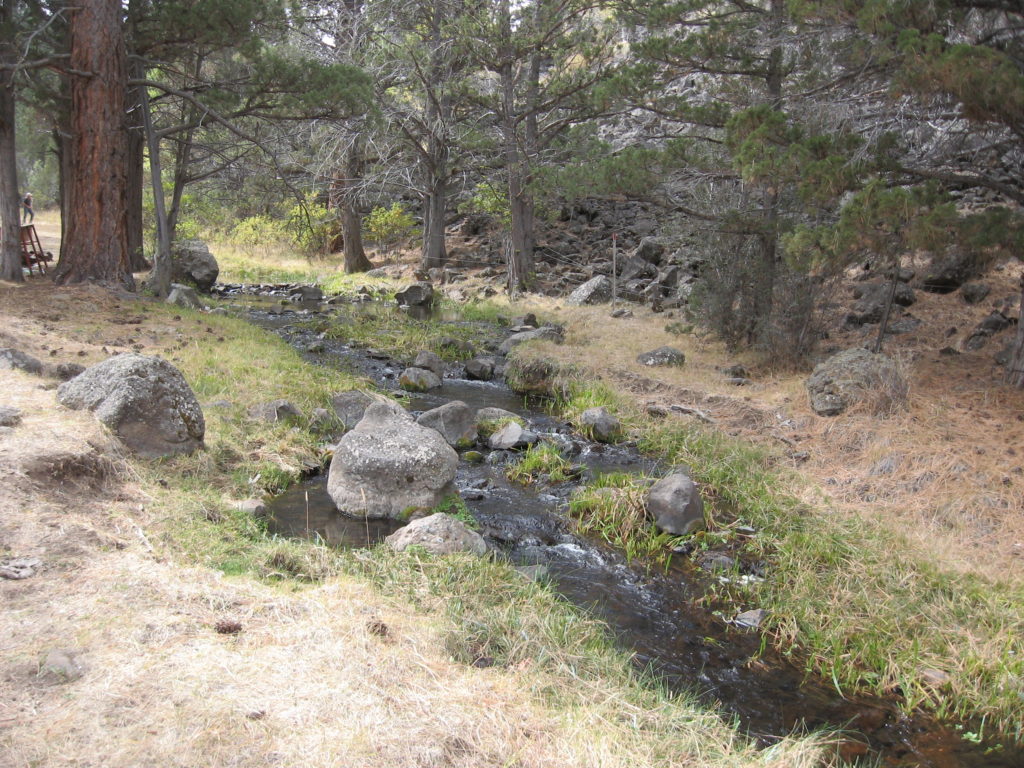
Logan Springs is located in the Pine Creek drainage west of Eagle Lake and north of Pine Creek Valley, not far from the site of former Fruit Growers Supply Company logging Camp 10. During the late 1800s and early 1900s this region was used for summer range for the sheep outfits, mainly from Tehama County.
The springs and nearby mountain were named for Griffin Logan (1842-1885), an African American, who was the foreman for J.S. Cone, a large Tehama County livestock operator. The springs are noted for its substantial aspen grove. However, on my visit last fall, we had just missed the prime fall foilage.
One of the panels on the LMUD building, part of a forthcoming mural tour. The building depicted was the home of the Telephone Company . December 26, 2016
Note: This was originally scheduled for last August, then moved to September, and now bumped to January. That just the kind of year 2020 was. Anyhow, before you know it, winter will be in the rear view mirror. I thought this would be a good opportunity to solicit as what might work best for everyone, other kinds of tours, etc.
It is my goal, if everything goes accordingly to provide some guided walking tours. While in past posts I have the gave information of the historic “mobile homes” of Susanville, it is not the same as in person, where there is interaction. In addition, I will be able to point out other features of interest. Another one would be a mural tour, which would also highlight information about the buildings they were painted on.
709 Mill Street, October 12, 2017
The brick building above, while it was not mobile, there is an interesting story where the bricks came from.
If any one has preferences such as a weekday evening or a Saturday morning, please let me know.
William S. Hamilton, a Honey Lake Valley resident from 1864 to 1880, when he became a permanent resident of the Susanville Cemetery—Philip S. Hall
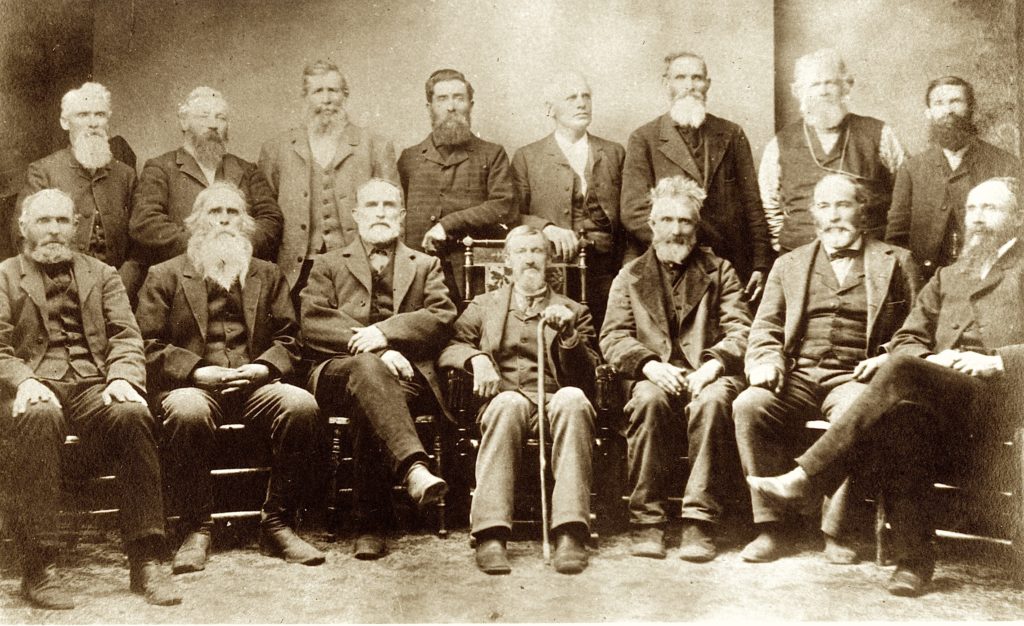
In early August 1924 the Susanville Elks Lodge sponsored a whiskereno contest. This was part of its Western Night festivities in-conjunction with the Lassen County. It was a nod to the pioneer era to days long before. It should be duly noted that prior to 1900, the. majority of the male population in the region had beards.
As one “cheeky” observer noted of the affair and wrote: “If the Lassen County Settlement Board could only persuade some of the whiskerenos that are parading the streets to allow their whiskers to grow and could send them east there would be little difficulty in convincing the easterner that the Lassen County climate was all that was claimed for it. Any climate that will grow a crop of spinach such as some of the local Elk members have grown in the short period of the weeks will surely grow anything and the farmer would be convinced.”
Spread the word, and encourage a friend to subscribe
At the January 12, 2021 Lassen County Board of Supervisors meeting, they implemented the next phase of the courthouse renovation project. The Board awarded a contract with Broward Builders of Woodland, California for the seismic upgrades, along with the installation of a elevator at a cost of $3,056.374. It is projected to have this completed by the end of July.
Now, some might find this 3D tour of the interior of the courthouse of interest. By use of a mouse, or maybe your finger depending on what type of devise one uses, one can navigate all four floors of the building. The only room, which one will note, that was not gutted was the Superior Courtroom. https://my.matterport.com/show/?m=fCatb7VYydD
Doyle, with the Western Pacific Depot, 1915—Sue Whitten
On January 28, 1908 the Doyle Post Office was established. It should be duly noted the region was served for many years with a post office named Long Valley. In addition, the place was also known for a number of years as Willow Ranch, a popular stage-stop there, located next to the the Long Valley Cemetery. In 1909, the place would begin a transformation when the Western Pacific Railway was built through there. However, it was not until 1911, that the Doyle townsite came to be.