Tag Archives: Railroads

Madeline Plains

McKissick Ranch 2004
The old McKissick Ranch, Madeline Plains. 2004

This large mountain valley encompasses some 200,000 acres at an elevation of 5,200’. According to Gudde’s California Place Names, Gudde attributed the name to an emigrant girl, named Madeline, who was murdered by the Indians in the 1850s. Gudde’s source was that of H.T. Risdon who established a sawmill on Bayley Creek in 1912. What is rather peculiar is that the thoroughly researched historical works of Davis and Fairfield have no references to this murder. What is also interesting is that the name does not appear until 1854. In that year, Lt. E.G. Beckwith traversed the plains while exploring for a transcontinental railroad route. Beckwith entered the Madeline Plains via Smoke Creek Canyon and the east side of Observation Mountain. He named this the Madeline Pass. In all probability, Beckwith named the place for his daughter, Madeline Julia Beckwith, born January 25, 1853 at New London, Connecticut.

For further information on this historic account see the latest issue of the Northern California Traveler.
Become a supporter for just $5 a month to ensure quality history continues. Click here.

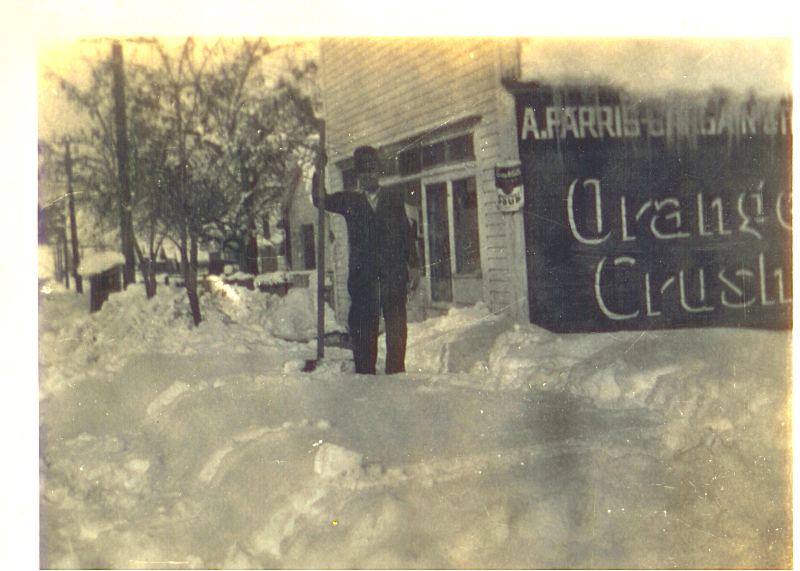
Abraham Farris, Richmond Road Merchant

Abraham Farris in front of his store, 1937. Courtesy of Calvin Farris

While many may have fond memories of Borghi’s store on Richmond Road, there was another store near there and before Borghi’s. The store I am referring to was operated by Lassen County’s best-known Syrian, Abraham Farris.

In September 1912, Farris, who was operating a store in Clio, Plumas County, paid Susanville a visit to relocate. He liked what he saw and made arrangements to move. The Lassen Advocate duly noted, “Mr. Farris impresses us as a man of enterprise and business ability, and as one who will do his share in the up building of Susanville.”

Farris, set up shop on the southeast corner of Main and Roop Streets. All went well in the beginning until the owner of the property, O.M. Doyle evicted him. Doyle made arrangements to have a two-story brick building on the lot, that seasoned Susanville residents will know as the Del Mar.

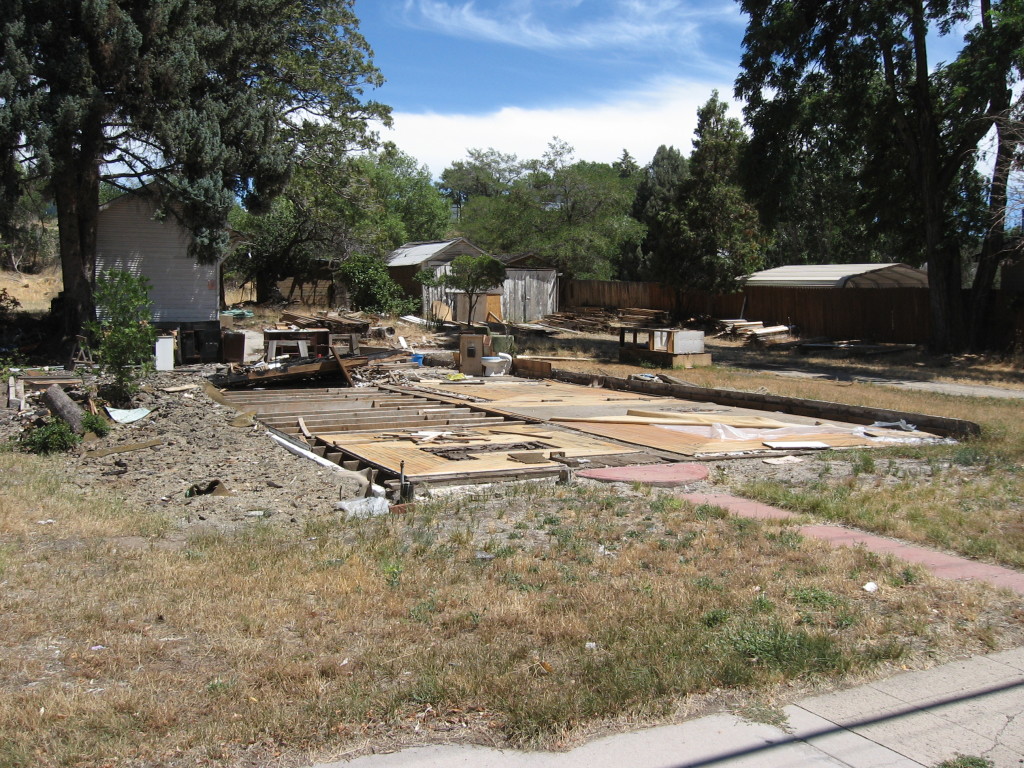
The business district was booming with the advent of the railroad, and Farris could not find a suitable location. He opted to purchase property in the Lassen Townsite on Richmond Road. Yet, this was problematic. Lassen Townsite was owned by several influential Susanville businessmen. They limited commercial development near the depot and it would be kept to a minimum, mainly for businesses affiliated with rail services. To get around this predicament, Farris hired contractor Louis Dimon to build him a house large enough for his family, but with enough space to carry a large stock of merchandise. The store operated until his death in April 1940. In 1942, the store front was remodeled. The building it should be noted burned down in 2013.

Remnants of the Farris building, June 20, 2015

Never miss a story, click here.

Susanville Roundhouse

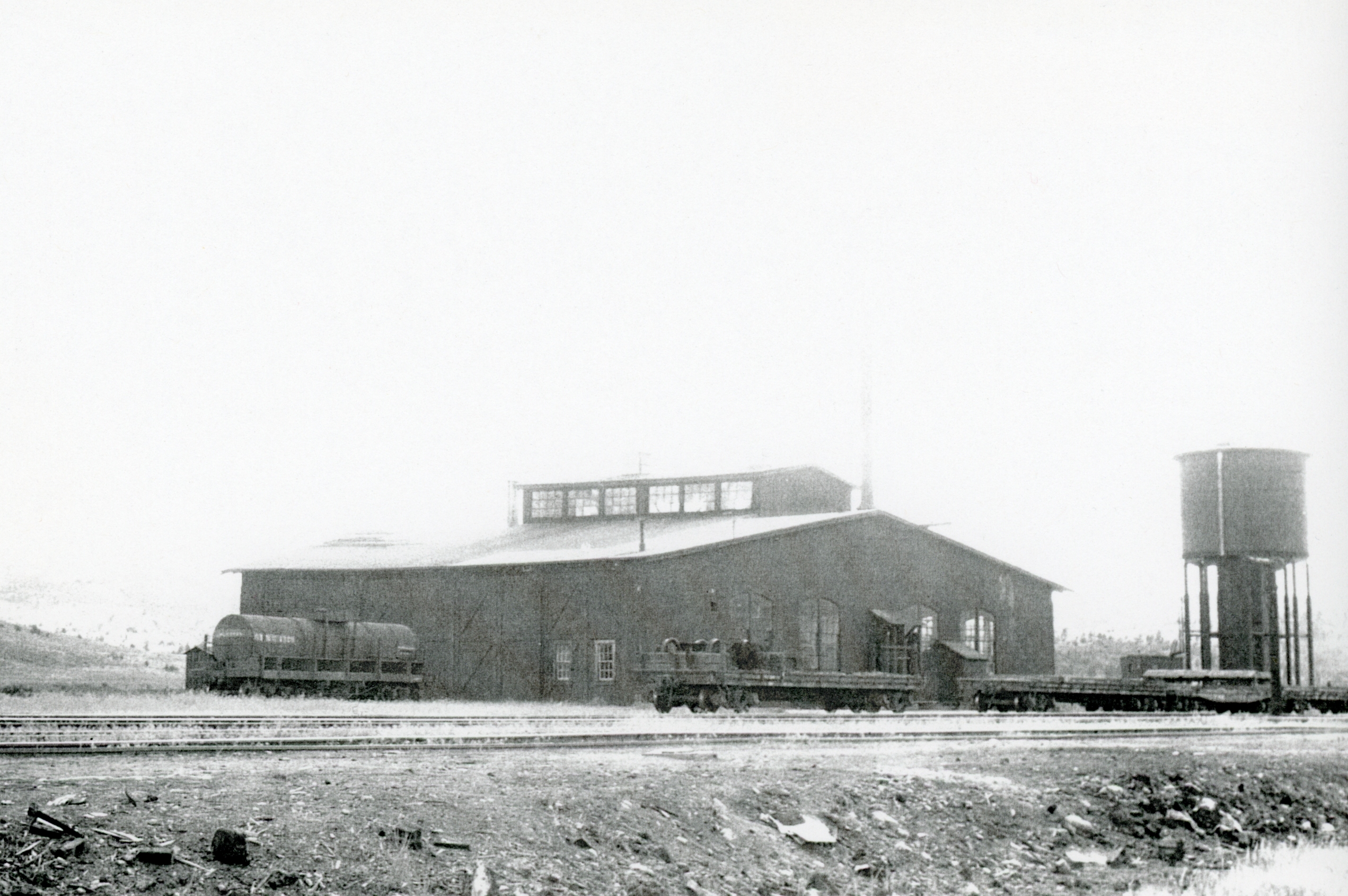
The Southern Pacific Roundhouse, Susanville, 1947. G. Dunscomb Collection

Yes, I must confess my ignorance on this topic. This railroad’s roundhouse is unique in the sense it was isolated.  It was not something a person would drive by, and it went relatively unnoticed unless you worked for the railroad or was involved with the nearby lumber mills.

Equally, puzzling is the rarity of photographs of trains along the Fernley & Lassen line. What makes that peculiar when one takes into consideration the large amount of tonnage shipped. During its existence, I would safely estimate some three billion board feet of manufactured lumber was shipped across these rails, that with the exception of the rails left at the Susanville Depot are all gone.

If anyone has information that they would like to share about the roundhouse, it would be greatly appeciated.

It is never too late, subscribe today and enjoy tomorrow with daily notifications. You can also surprise someone with a gift subscription.

Dave Brubeck

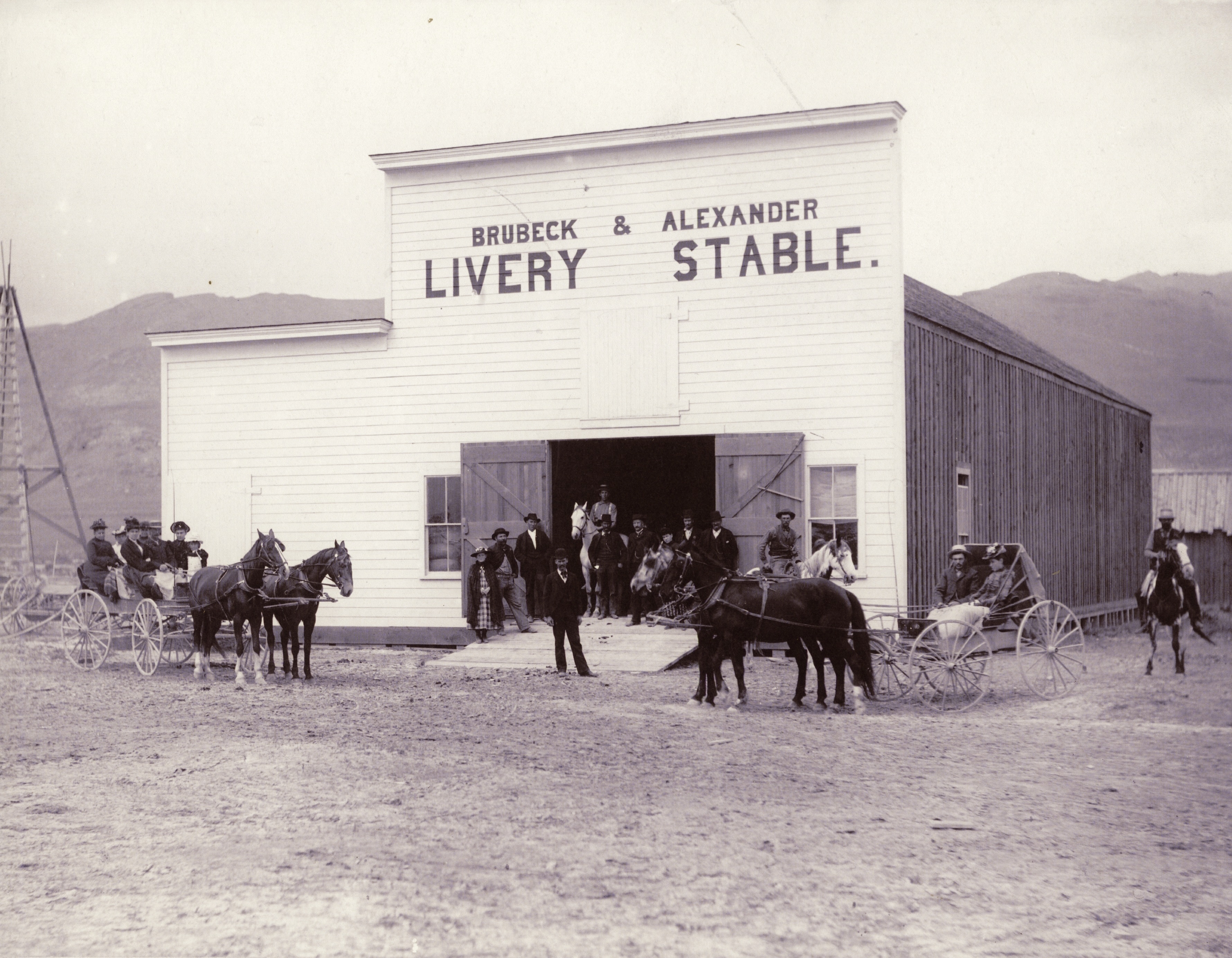
This Amedee business partnership lasted less than a month. Courtesy of Tom Armstrong

Today marks the third anniversary of the passing of the famed jazz pianist/composer, Dave Brubeck, one day shy of his 92nd birthday.

Dave’s family has played an integral role in the region’s history. His grandfather, Lewis Warren Brubeck, settled on the east side of Honey Lake at a place known then as Lower Hot Springs in 1881. To build his home and outbuildings he rafted the lumber across Honey Lake from Milford. Dave’s father, Peter Howard was born there. In 1890, the NCO Railroad arrived at Brubeck’s Ranch and it was transformed into the bustling community of Amedee.

Dave’s aunt, Mabel Brubeck was the first person buried in the Amedee Cemetery. After the family sold their holdings and moved to Concord, one member would return, William. Will Brubeck had a small homestead across the highway from the wild horse corrals. Of course he had numerous cousins in the region, since Litchfield was named for his aunt and uncle.  One of the more interesting cousins was the intrepid explorer, Leonard Clark.

Subscribe today to receive daily notifications and more about Lassen County history.

Desert Homesteaders

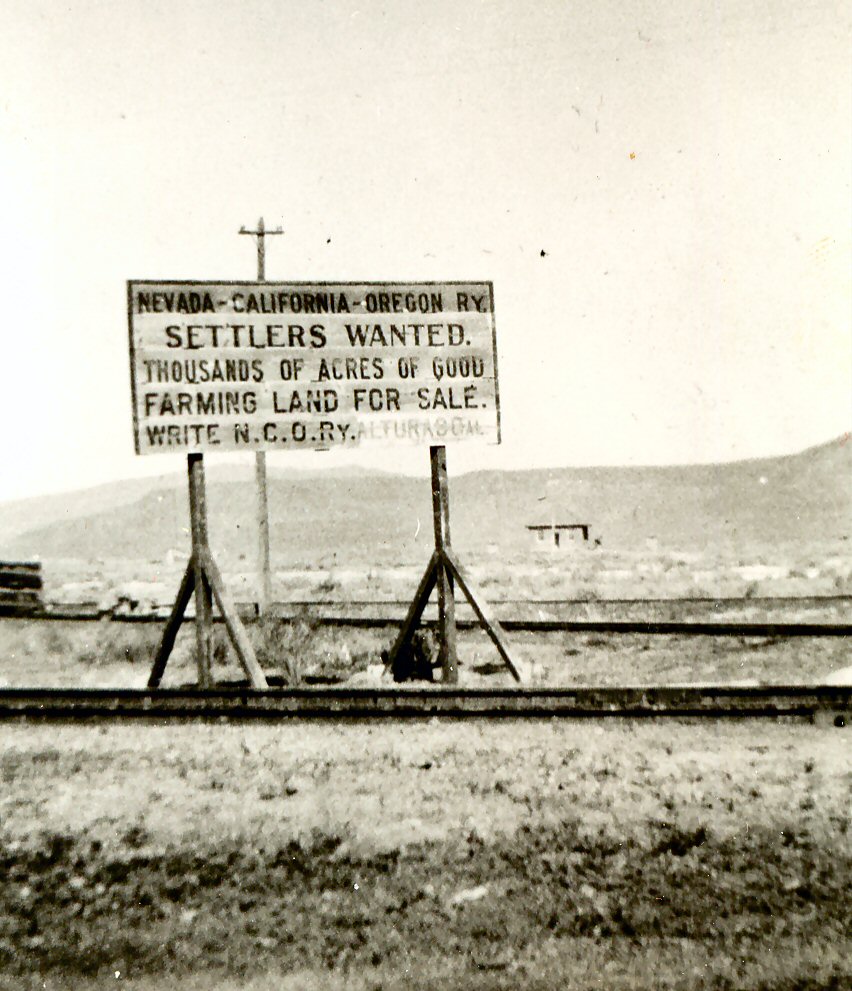
This weathered sign of the NCO was updated to show that its headquarters had moved from Reno to Alturas. Photograph taken by Lassen County Librarian Lenala Martin at Wendel, 1920.

Amedee served as a hub for a number of reclamation projects that all held the belief that they were going to transform the eastern portion of the Honey Lake Valley into a garden oasis. These companies were persistent with their proposals. Initially, the optimism ran so high that the water from Eagle Lake would not be needed from the other reservoirs being constructed that its water could keep Honey Lake full for the Amedee Yacht Club.  However after several decades reality set in and the region would remain a vast sagebrush plain.

In the early 1900s there were several other factors that seem to make the desert bloom.  It was like a harmonic convergence where so many things came together at the same. Well-drilling had greatly improved, an extreme wet cycle in annual precipitation, the sugar beet industry, a second railroad and the Standish Water Company irrigation plant and canals. Stay tuned for further developments.

It is never too late, subscribe today and enjoy tomorrow with daily notifications. You can also surprise someone with a gift subscription.

Amedee

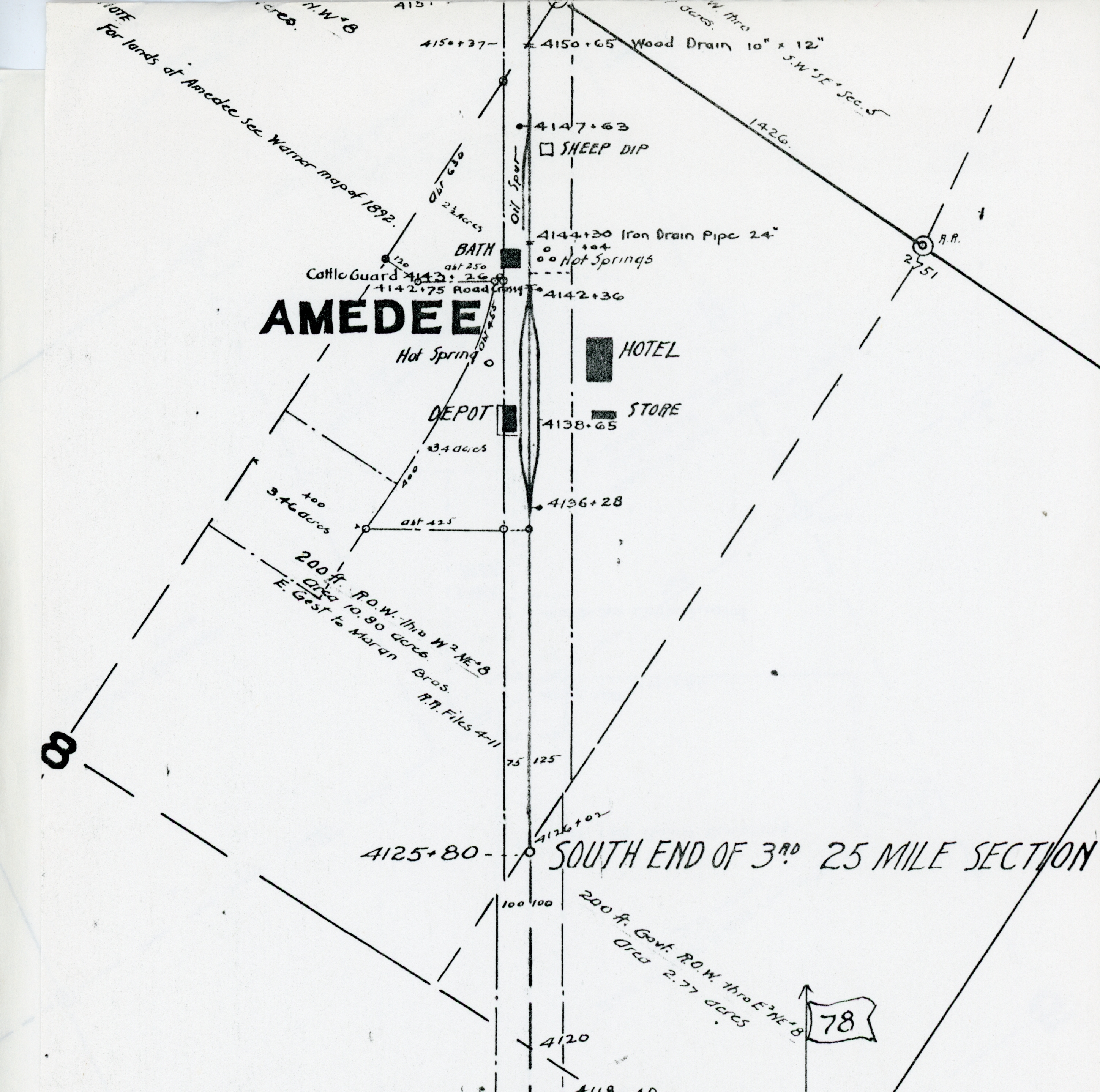
Board of Equalization Assessment Map of Amedee

Amedee and Hayden Hill are two interesting Lassen County communities that no longer exist. Each one went through boom and bust cycles, for Amedee it was the railroads for Hayden Hill it was mining.

Amedee’s lifespan was brief. By 1892 its population was equal to that of Susanville. By the 1920s its population had dwindled to one or two, that being the caretakers of the McKissick Cattle Company who owned the majority of the town. The Nevada-California-Oregon Railroad that created the town, in certain aspect also killed the town. In between, however, with an agricultural boom and the Fernley & Lassen Railroad did briefly rejuvenate the community.  In the near future, we will explore the many facets of Amedee.

It is never too late, subscribe today and enjoy tomorrow with daily notifications. You can also surprise someone with a gift subscription.


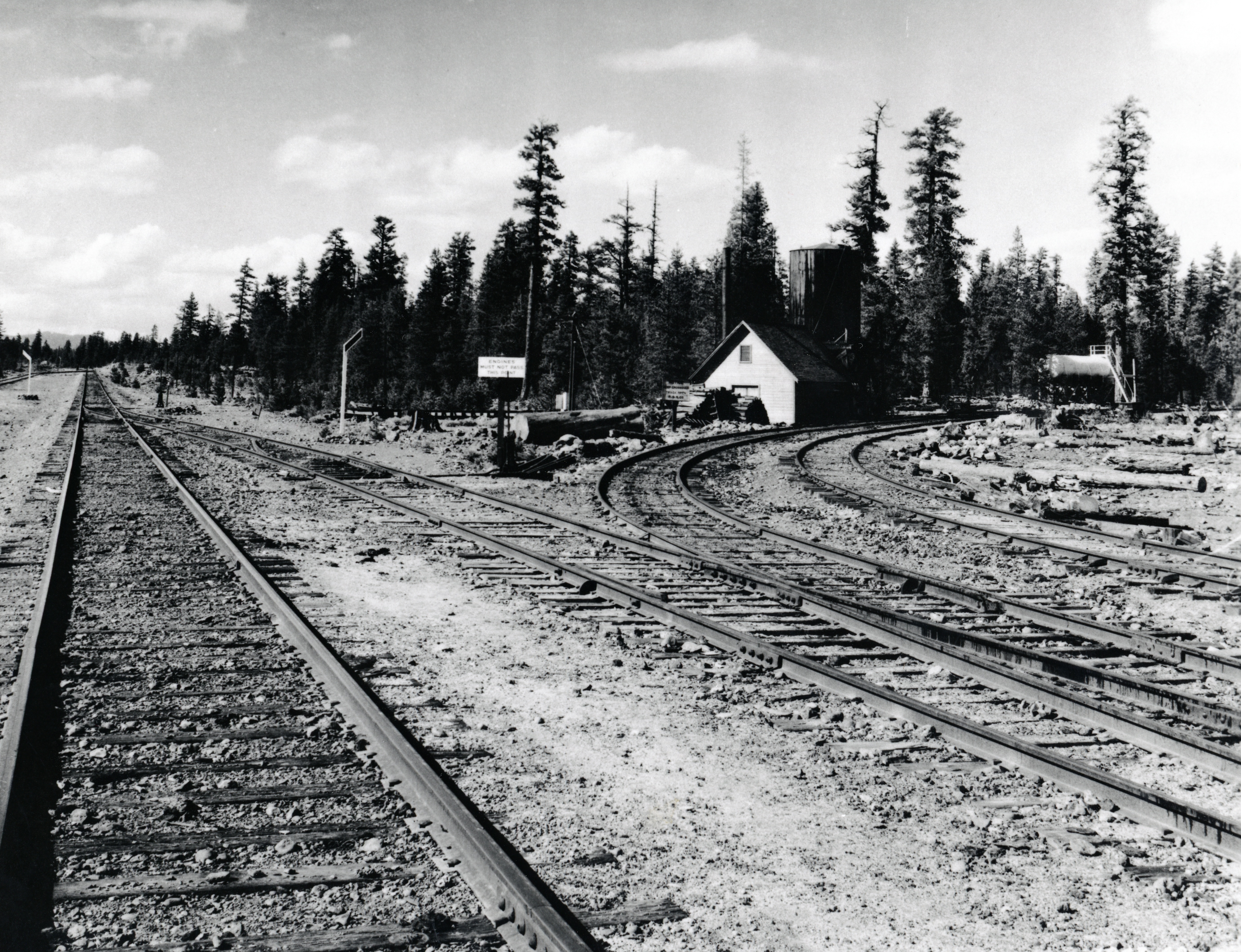
Westwood Junction

Westwood Junction
Westwood Junction

As its name implies it was a real junction. The railroad constructed a spur to the south to Westwood. The Southern Pacific’s real goal was to extend the line north to Klamath Falls, Oregon. It was after all, the Red River Lumber Company’s intent to build several mills, the next one scheduled for near Lookout. By 1917, the Southern Pacific was anxious to extend the line north, but Red River was not ready. The mammoth mill at Westwood was more than it could handle. In the meantime, the Southern Pacific was nervous that its competitor the Western Pacific might extend a branch to Westwood and siphon off traffic, since Southern Pacific’s five-year all inclusive freight deal with Red River was about to expire.

Then came along World War I and that changed everyone’s plan. When the war ended, the nation went into a severe recession, so expansion was off the table for many.  Red River kept adding more divisions to its lumber manufacturing plant. In the meantime, the Southern Pacific focused on the troubled Nevada-California-Oregon Railroad, as an alternative route north of Oregon, which it eventually did.

The site, it should be noted,  also served as a junction for the railroad logging operations of the Fruit Growers Supply Company and the Lassen Lumber & Box Company.

It is never too late, subscribe today and enjoy tomorrow with daily notifications. You can also surprise someone with a gift subscription

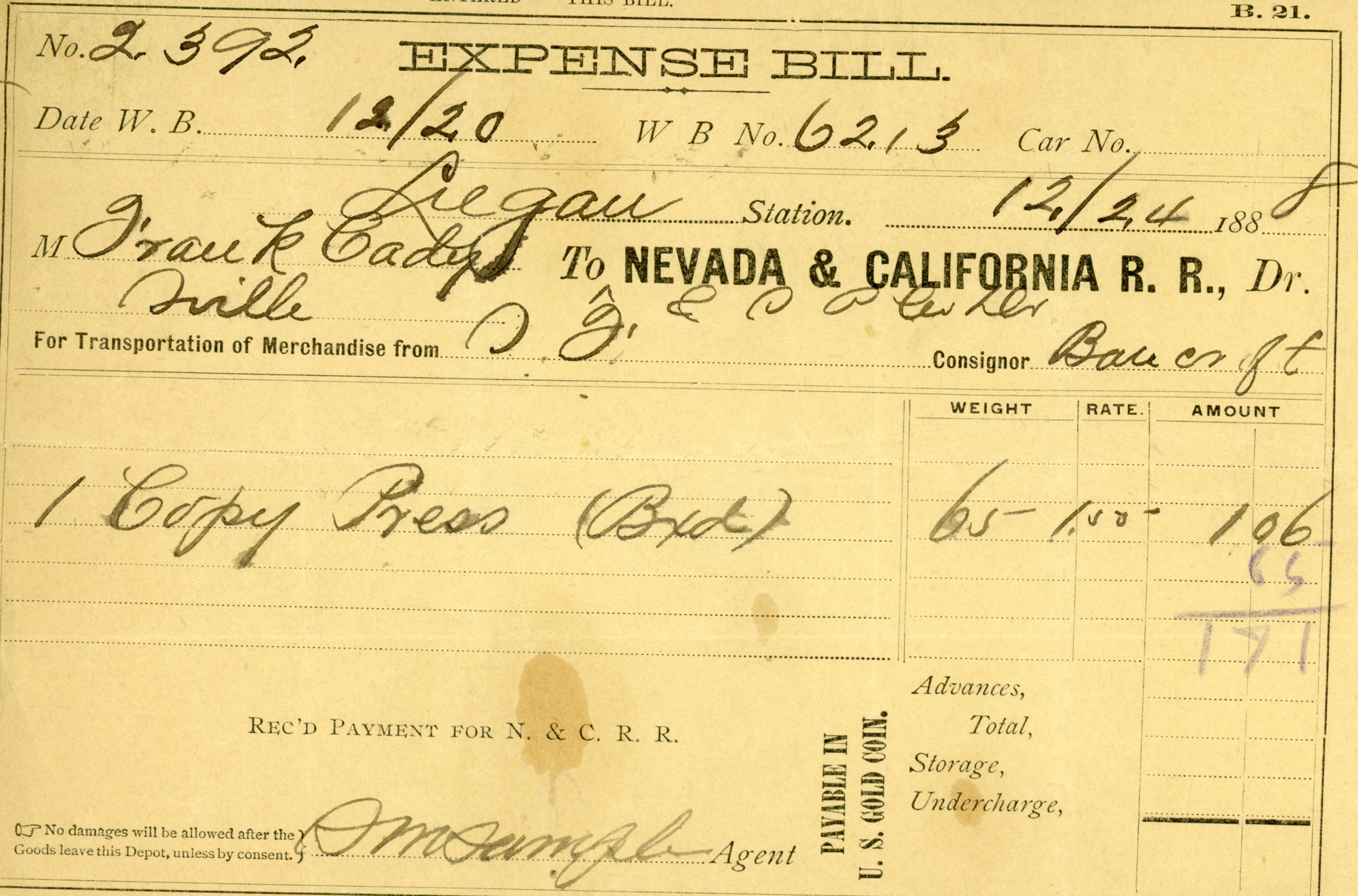
Liegan – NCO Railroad

Liegan bill368

Liegan was one of those typical Nevada-California-Oregon (NCO) stations. It was known for something, but then again for nothing. On September 10, 1888 it became the new terminus for the railroad a bit north and east of Herlong today. It was a desolate outpost to say the least, surrounded by miles and miles of sagebrush, but not a single living soul in the immediate region. Of course, the decision to bypass the west side of Honey Lake for the east drew lots of criticism, a topic for another time. Its location was too remote for the railroad to generate any quantity of freight traffic at that point. One of its biggest claim to fame occurred on January 1, 1890 when numerous sight seers from Reno ventured there to view the eclipse of the sun. By that summer, the railroad extended its line farther north to Amedee, which quickly overshadowed Liegan. In the fall of 1890, Elmer Koken who traveled to Amedee on the NCO remarked that the Liegan station consisted of a box car. On April 9, 1891, the Liegan Post Office closed after an existence of eight months.

There was a glimmer of hope and Liegan was revived briefly during 1909-10 by the railroad. The Standish Water Company had just built a pumping plant on Honey Lake, with the intention to reclaim the sagebrush plain into a major sugar beet production region. That failed, and Liegan’s hopes went with it.

It is never too late, subscribe today and enjoy tomorrow with daily notifications. You can also surprise someone with a gift subscription.


Russian Thistle

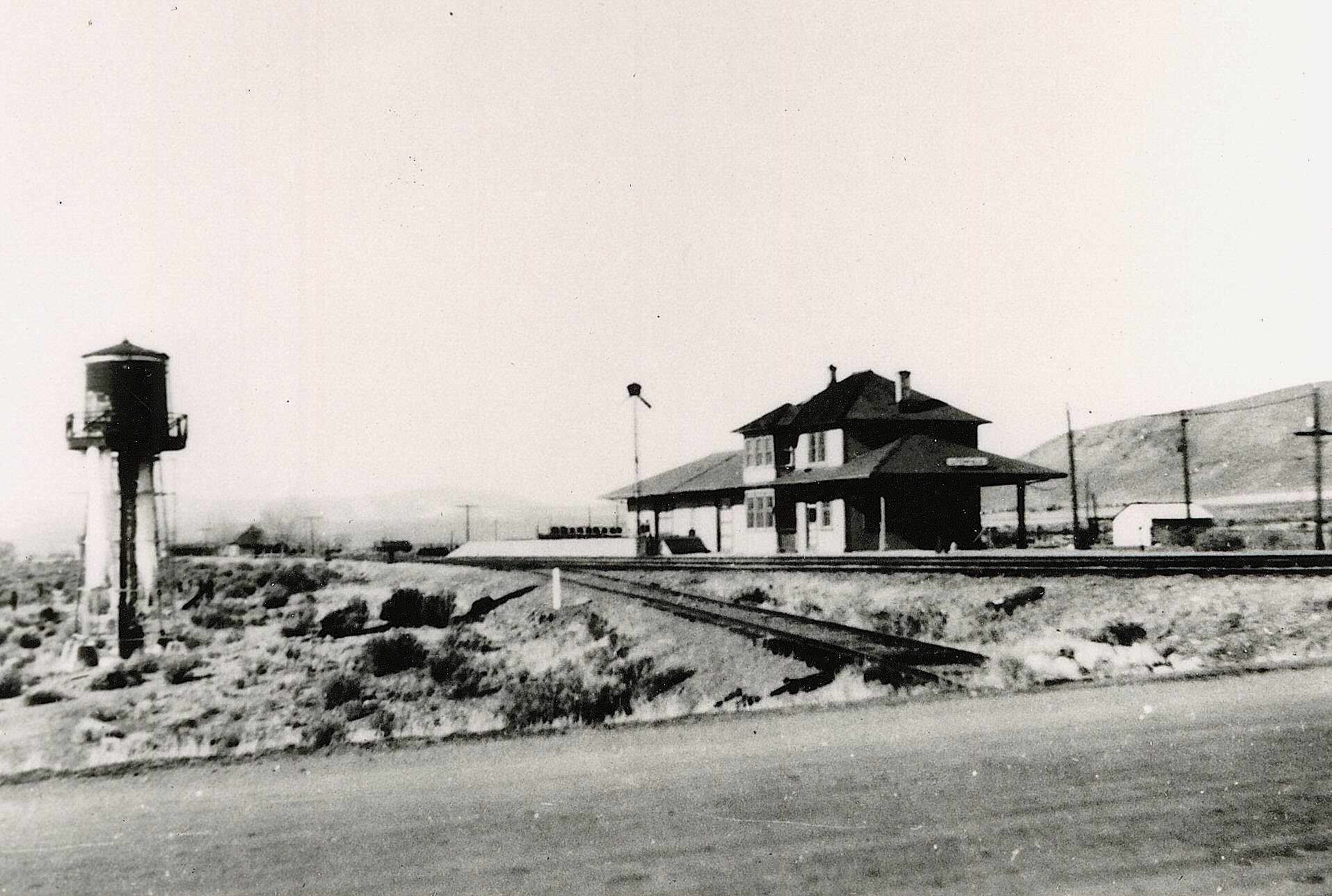
Litchfield Depot of the Fernley & Lassen Railroad, 1947. Courtesy of Camilla Moody

The Russian Thistle, (Salsola tragus), is best known too many as the iconic “tumbling tumbleweed.” Ironically, it became a symbol of the American West, yet it is a non-native plant. As its common name indicates it origins are from eastern Russia. Some sources indicate it was accidentally introduced in 1873 by Russian emigrates to South Dakota. The seeds from the plant are initially disbursed by wind. It is believed that many a railroad stockcar were imbedded with seeds, that allowed for them to be scattered throughout the west.

The plant did not make its appearance in Lassen County until 1914. While the Fernley & Lassen Railroad bought prosperity to the region, it also introduced this noxious invasive weed. The first plants were spotted along the railroad right-of-way. For the next two years, major efforts were undertaken to eradicate it, but it was a lost cause.

It is never too late, subscribe today and enjoy tomorrow with daily notifications. You can also surprise someone with a gift subscription.

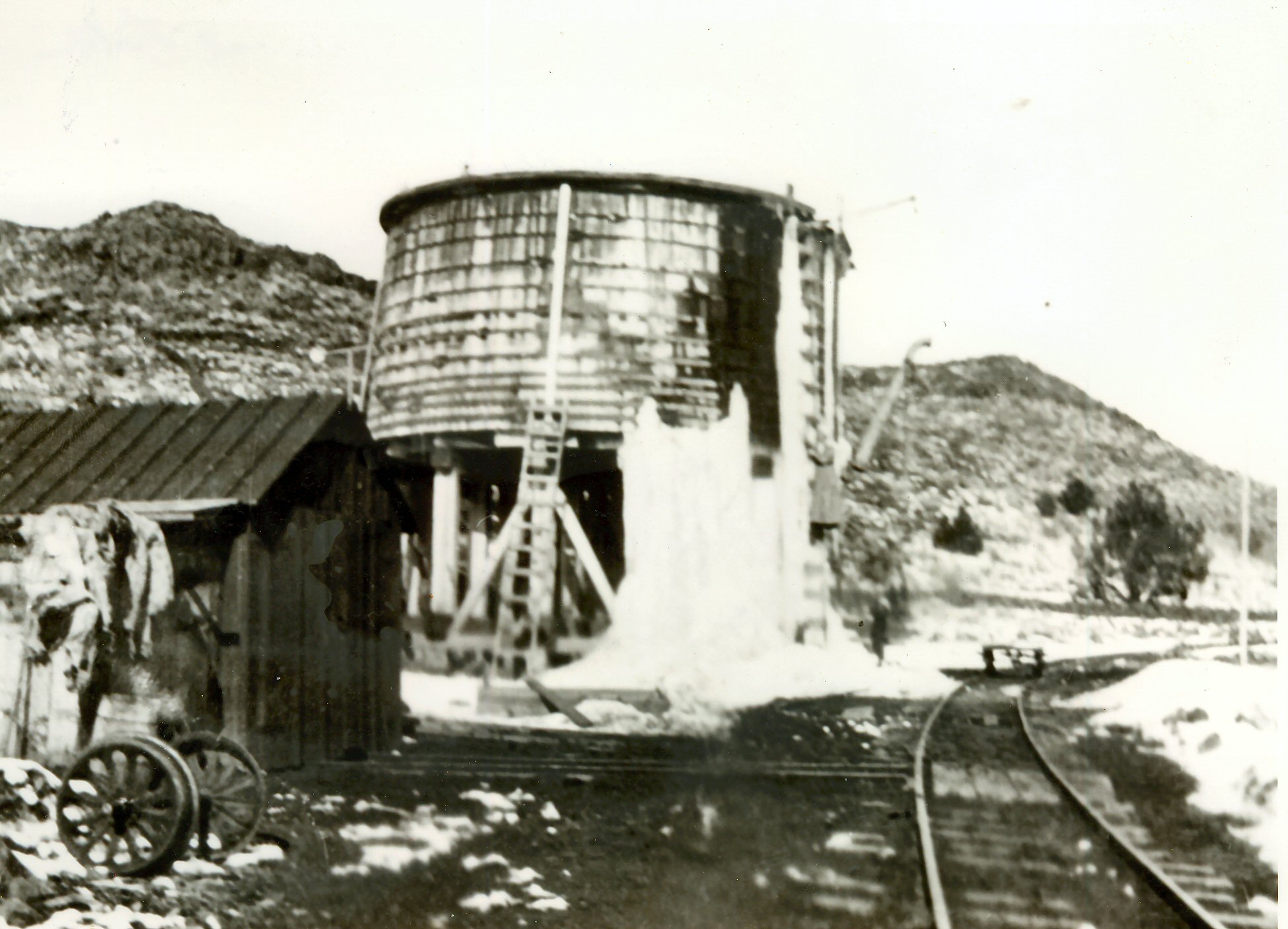
Horse Lake Station

Horse Lake Station, 1915. Courtesy of Nevada Historical Society

It was originally a Nevada-California-Oregon Railroad station and later a Southern Pacific Railroad siding that operated from 1930-1961. In a way it is a bit of misnomer, since it is located five miles east of Horse Lake and near Snowstorm Ranch.

In 1913, the Shumway Post Office at Horse Lake was discontinued. In 1916, Horse Lake residents attempted to re-establish the post office and have a mail drop off at the NCO Railroad’s Horse Lake siding. The postal authorities denied the request. They stated they did not need a mail drop as that there were only four permanent families residing in the area. In addition, it was cited, the NCO was an unreliable operation, with irregular train service, and since there was no attendant at the Horse Lake Station, there was no way that the mail could be protected.

It is never too late, subscribe today and enjoy tomorrow with daily notifications. You can also surprise someone with a gift subscription.