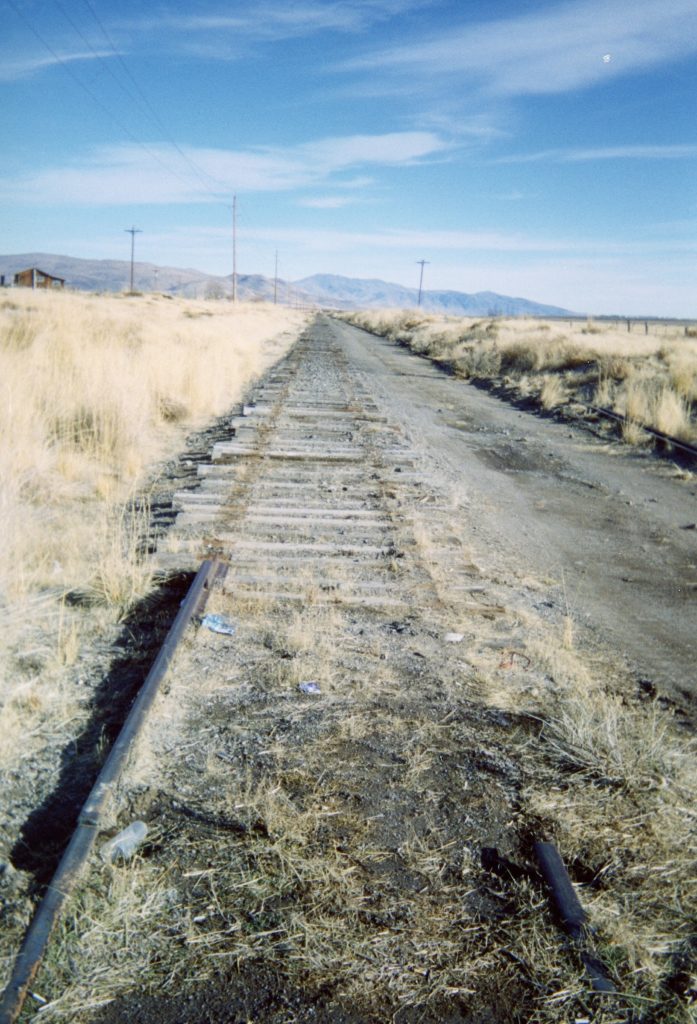
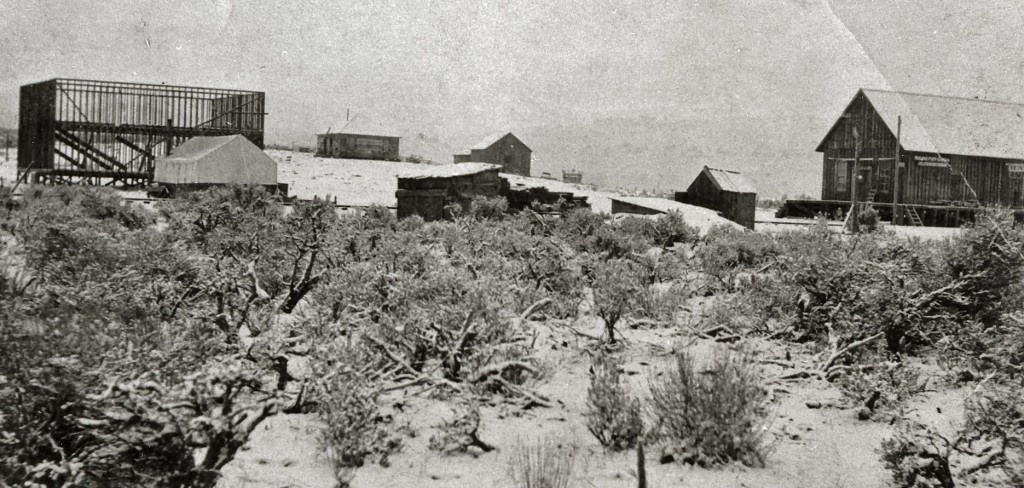
Looking east near the Leavitt Station, November 19, 2006
This month marks ten years since the last segment rails of the Fernley & Lassen Railroad, between Susanville and Wendel, were removed. The historic event went largely unnoticed. Yet, it was the railroad that had one of the most significant impacts on Lassen County. It was this particular line that created the communities of Litchfield and Westwood. Of course, it brought about the development of the timber industry. Two years prior to this event, the last lumber mill, Sierra Pacific Industries at Susanville shut down for good.
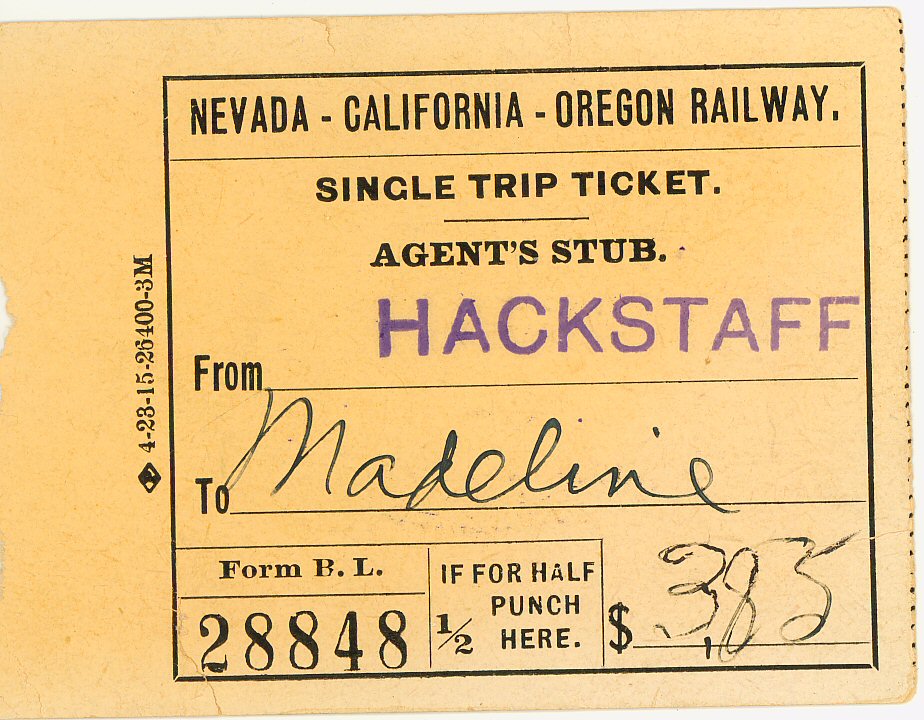
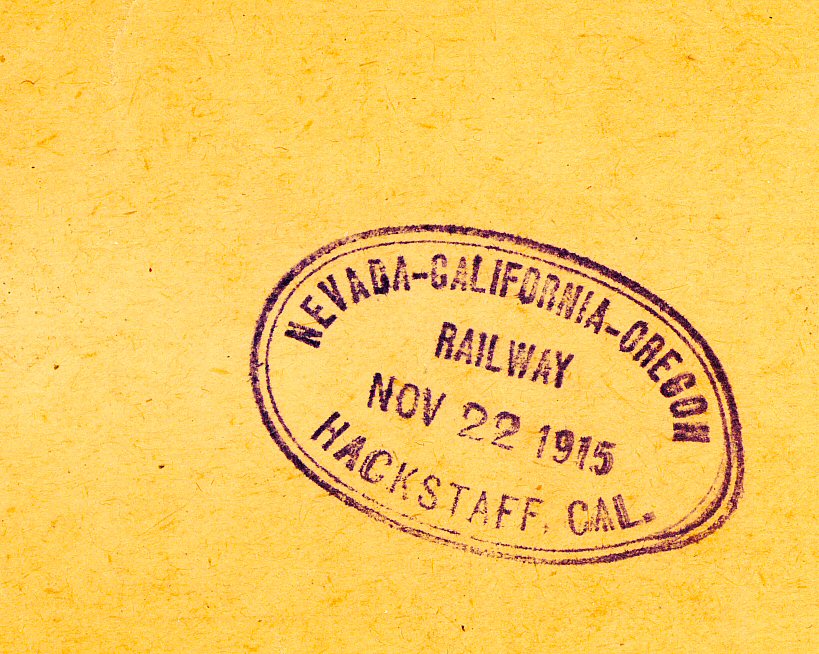
Known today as Herlong, and was the one-time junction of Nevada-California-Oregon (NCO) and Western Pacific (WP) railroads. In 1915, Stanley G. Rayl arrived on the scene. When Rayl petitioned to establish a post office, he proposed the name Rayl—the NCO opposed it. Charles Moran, President of the NCO, wanted the post office named Hackstaff—in honor of his mother-in-law, Clara Hackstaff Adams. After five months, the Postmaster General decided upon the name of Rayl, instead of Hackstaff. This delighted Robert M. Cook, editor and publisher of the Lassen Weekly Mail, Cook wrote: “ The NCO wanted a monument to an uncle of the wife of Moran, the New York capitalist behind the NCO. Hackstaff was never in Lassen County and no one here knows anything about him.” When Rayl left in 1921, he assigned the postmaster duties to Cyrus Helman. Those two men had a disagreement and fought that battle in court. In the end, the Rayl post office closed. On March 18, 1922, the Hackstaff Post Office was established with Helman as postmaster. It did not last long and the post office closed on December 30, 1922. In 1927, Hackstaff’s meager population was wiped out when the WP moved its section crew to Doyle. The location continued to be known as Hackstaff until the Sierra Army Ordinance Depot was established in 1942.
Wendel has had many names over the years. In the 1860s, it was referred to as Upper Hot Springs to distinguish from the Lower Hot Springs. In 1890, when the Nevada-California-Oregon Railroad (NCO) extended its line to Amedee, the Lower Hot Springs took on the name of town established next to it. Upper Hot Springs simply became known as Hot Springs. In 1899, the NCO extended its line further north and at Hot Springs established a new station named Boyd. When T.F. Dunaway became General Manager of the NCO in 1900, he renamed the Boyd station to Smithon. Two months later, in January 1901, he again renamed it to Hot Springs. It would be another fourteen years before the place became known as Wendel.
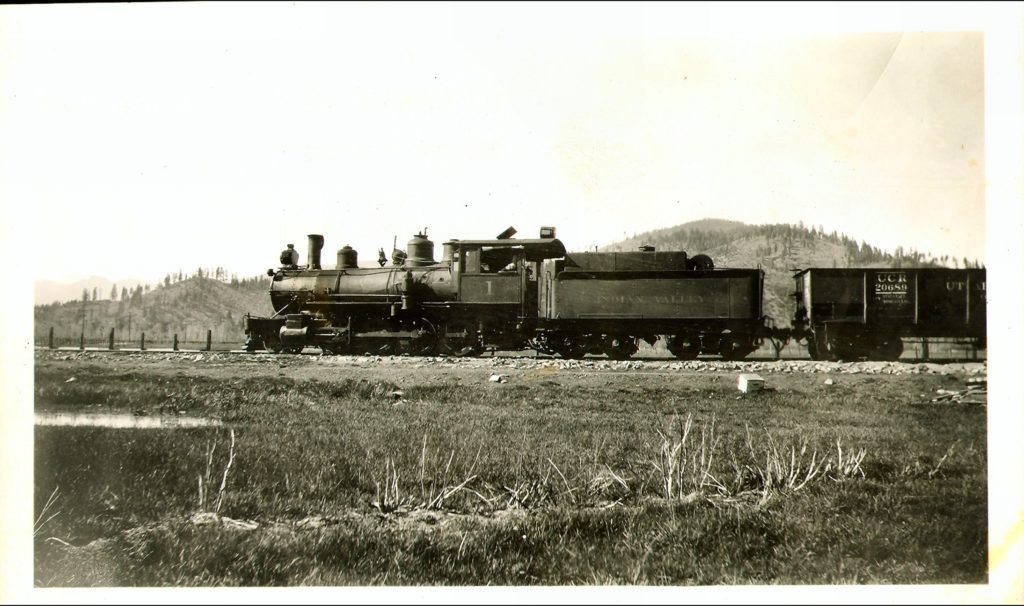
Indian Valley Railroad. Courtesy of the Plumas County Museum
One of the biggest issues T.B. Walker had against the Red River Lumber Company’s location at Westwood, was it lacked a railroad link directly to California. For a time there was a glimmer hope with the Indian Valley Railroad.
On June 30, 1916, the Indian Valley Railroad (IVR) was incorporated to build a line from Paxton on the Western Pacific Railroad to the Engel Copper Mine near Taylorsville–a distance of 21 miles. Sixteen months later the rail line was completed. It should be noted, that it was originally proposed as a narrow gauge line, but Willis Walker of the Red River Lumber Company objected. After all, Walker was keen enough to see the possibilities for a link to Westwood, and with that would force the Southern Pacific Railroad to be more competitive in their rates.
Early on the IVR had its sights on Westwood. In 1918 a survey to extend the line to Westwood was conducted, There was speculation that the IVR would extend its line to Westwood, and in 1918 the IVR did survey a line to that place. With Red River’s main branch railroad logging extending along the east shore of Lake Almanor to Canyon Dam, there was not much territory separating the two lines. In 1927 a request was sent to the Interstate Commerce Commission to put in this proposed line to be known as the Northern California Railroad. It was rejected. However, in the works was the Western Pacific and Great Northern Railroads to connect their respective lines with a new railroad from Keddie, Plumas County to Klamath Falls, Oregon. This was approved in 1930, and Red River Lumber Company would finally have a second railroad connection it had always sought.
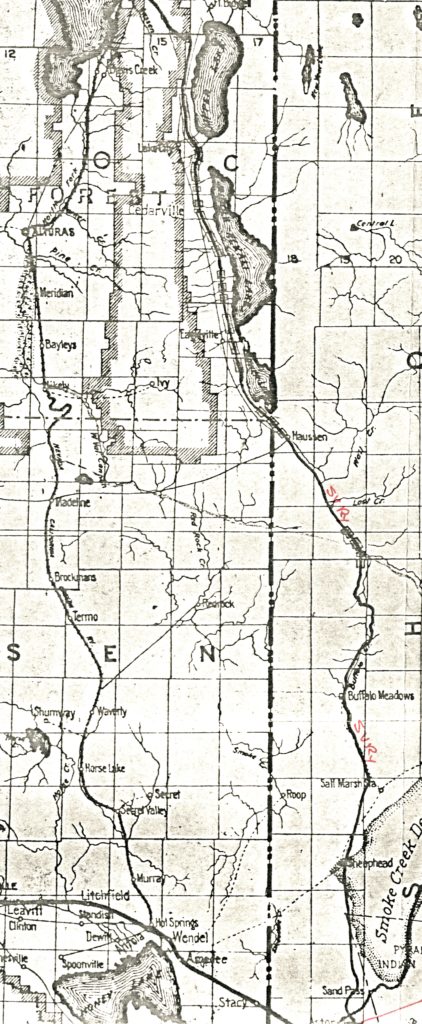
In the fall of 1915, Robert Strahorn brought new life to the project. Strahorn had a reputation for developing these type of projects. One of the biggest changes was the line would start at Flanigan, Nevada, on the eastern edge of the Honey Lake Valley and its terminus at Cedarville, California. By the spring of 1916, it appeared real progress had been made with right-of-ways secured from the Department of Interior and many of the landowners. In addition, it was announced that Lakeview, Oregon would be the new terminus. For those familiar with the country the railroad now had the daunting task to to cross the Warner Mountains at Fandango Pass. First a grandiose three-mile tunnel was proposed, but was reduced to a 4,820-foot tunnel, which still alleviated 700 difference from the top of the summit. Continue reading Surprise Valley Railroad – Part II→
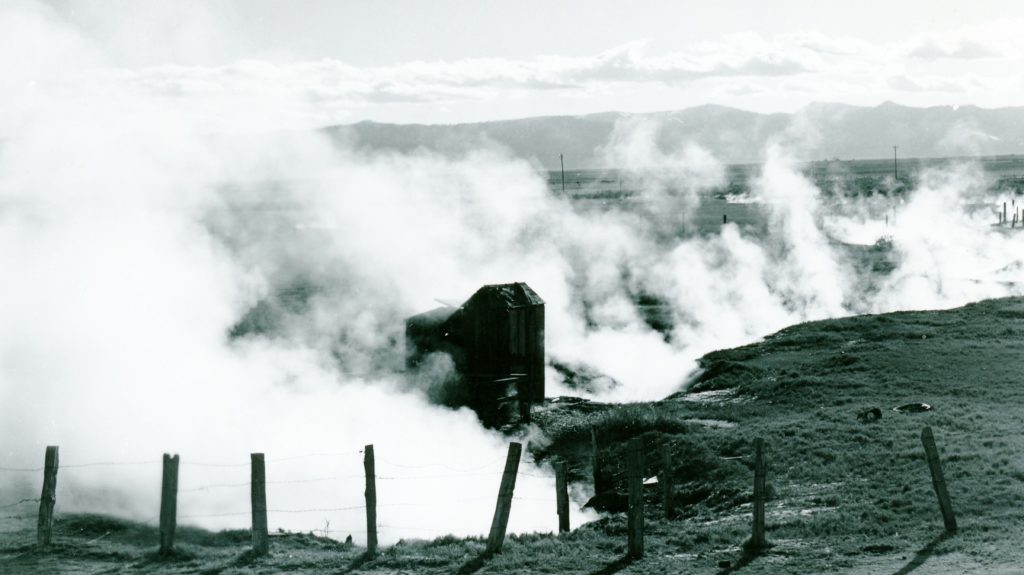
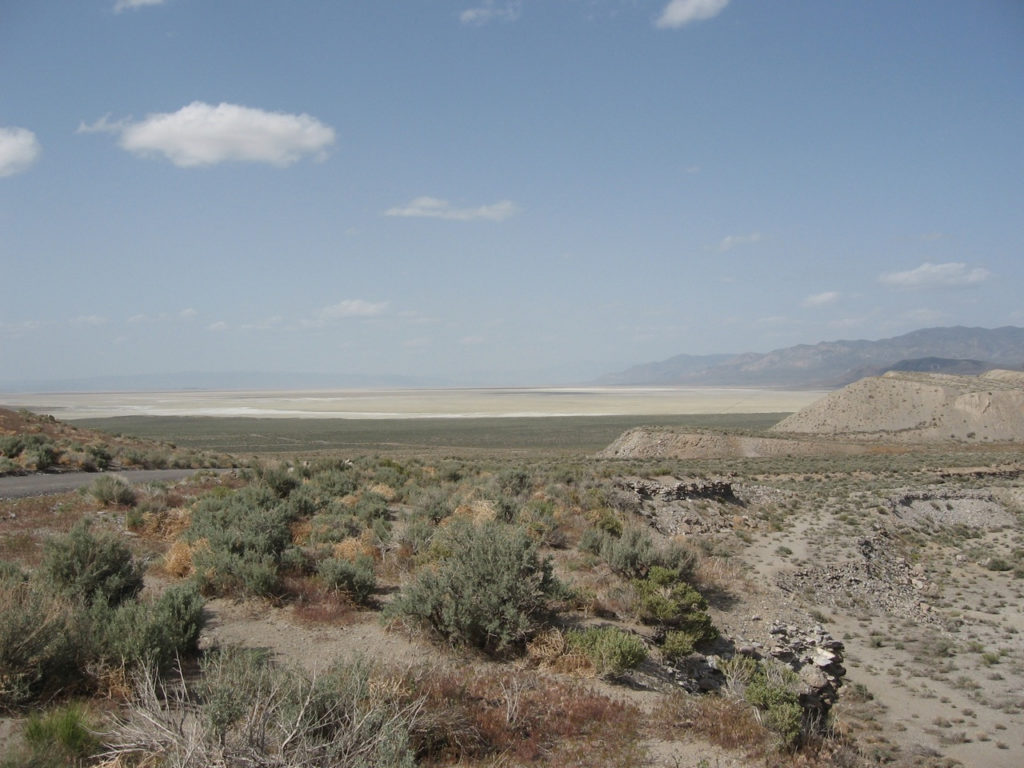
Sand Pass, Washoe County, Nevada, looking north at the Smoke Creek Desert, 2008.
In 1903, the Western Pacific Railway was incorporated with its main goal to build a 810 mile line from the San Francisco Bay Area to Salt Lake City. They were successful in one aspect. On November 1, 1909, the last spike was driven on Western Pacific’s line at Spanish Creek Bridge near Quincy, California. When the railroad was incorporated, it proposed to build twelve branch lines. These “feeder” lines were extremely important to generate rail traffic, which would provide necessary revenue for the fledging railroad. One of these proposed lines called for a Surprise Valley Railroad. Continue reading Surprise Valley Railroad – Part I→
Western Pacific’s Mohallo Siding, south of Lake Almanor, July 18, 1931. Courtesy of Plumas County Museum
Lassen County was rather fortunate that it was not hit as hard as other places throughout the nation during the great depression of the 1930s. Yes, times were tough, but then again there were no Hoovervilles either. While the majority of the lumber mills on the West Coast closed, Lassen’s three mills-Fruit Growers Supply Company, Lassen Lumber & Box Company and the Red River Lumber Company remained open, though operations were curtailed. Those company executives understood the value of their employees. Sooner or later the economy would rebound, and they did the best they could under the circumstances to retain their skilled employees, rather than having to start all over again to re-train new ones at a critical time.
In Big Valley it was boom times. They were at the center of one of the last major railroad construction projects in the country. This was the Northern California Extension wherein the the Western Pacific extended its line north from Keddie to Bieber, to meet with the Great Northern who built their line south from Klamath Falls, Oregon. This opened a whole new rail corridor completed in 1931. In the future, I will do a piece on the Golden Spike Ceremony at Bieber.
This is one of the few times during the year in which I ask for you to consider supporting this site either by donation or subscription. I am very grateful for those who do, but the reality is they makes up less than .005% of the readership. I am flattered that readership continues to grow, now with an average of 10,000 a month. So taking a popular saying of the 1930s, “Buddy can you spare a dime?” For as a little as five dollars a month, you can subscribe and support this endeavor to not only assist to preserve the region’s history, but equally important to make it available. It is so easy, click here for the details. Don’t want to do an internet transaction, information is provided do so by mail, etc. Thank you.
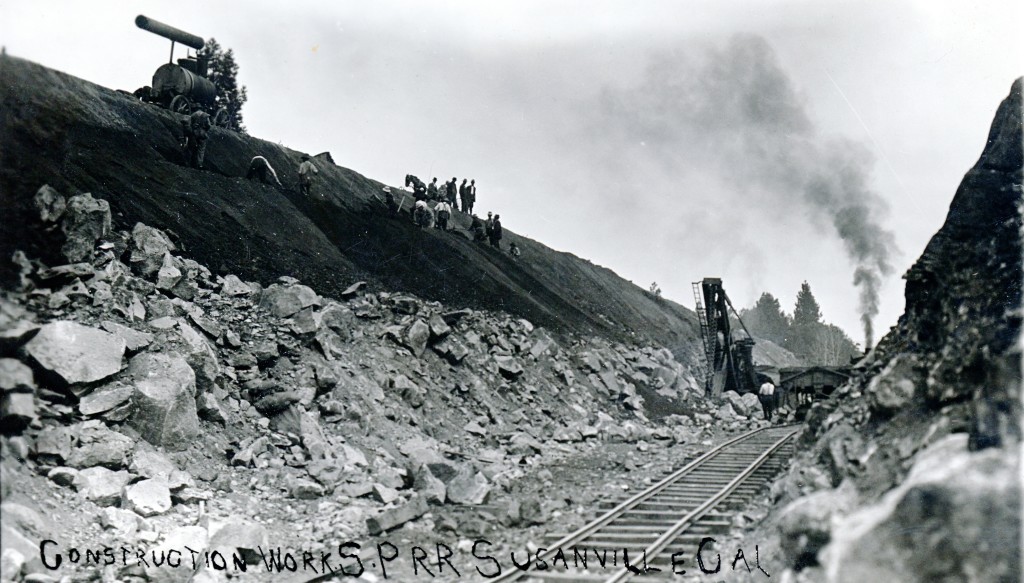
Construction of Miller’s cut near Susanville 1913. B.R. Zimmerman collection
Daily life got crazy in Susanville when the railroad arrived. Numerous discussions were held to make the town “dry.” It was the belief of some that if there was a ban on alcohol, that it would rid the town of certain elements. The City was not so keen on the other hand, as it received most of its operating revenue from liquor licenses. Continue reading Those Rowdy Camp Followers→
Early day Ravendale. Courtesy of Dorothy Capezzoli
It was the last of three towns established on the Madeline Plains. It was reported that the end of February 1910, that the new station of Ravendale was rapidly being built and rumor had it that it was to become a division point for the NCO railroad. It was also stated that J.H. Williams and G. Horton were surveying a town plat. Whatever the case may be, it was not until November 15, 1913, the official town plat of Ravendale, on lands owned by Jim Coe, was surveyed and recorded with the County. According to Madeline Plains historian, Don Garate, the name Coeville had been suggested for the new town, but Laura Coe already chosen a name—Ravendale.
By the way, in Susanville you can purchase Don Garate’s book Red Rock to Ravendale at Margie’s Book Nook.
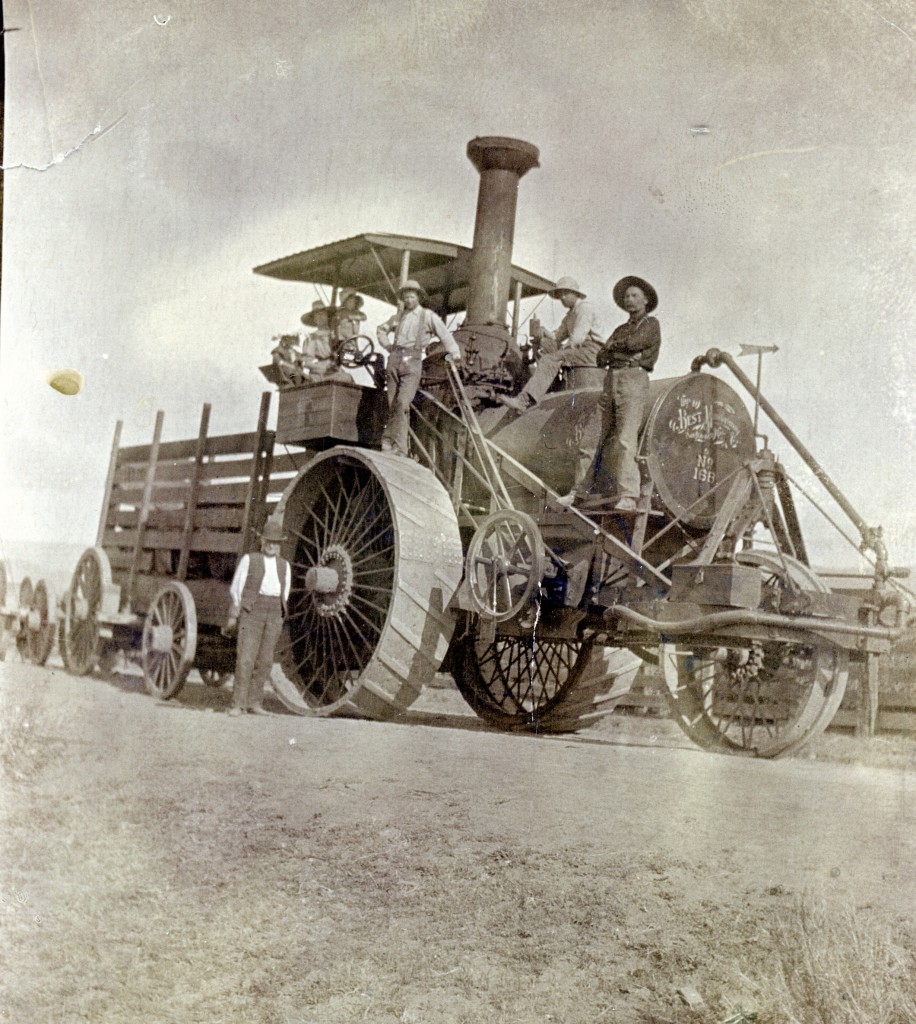
Harrison’s “mighty beast.” Courtesy of Lola L. Tanner
1907 was a a most interesting one in certain circles. There was a national financial crisis, but California and Nevada were experiencing a building boom. For the Golden State it was still in the midst of rebuilding the San Francisco Bay region from the previous year’s earthquake. For the Silver State, a mining bonanza it had not experienced since the discovery of the Comstock. These two episodes created a lumber shortage. Lassen County’s timber resources had basically remained untapped due to the lack of a railroad infrastructure to develop it. Continue reading Harrison’s Traction Engine→