Tag Archives: Logging

Sierra Shangri-La – Noted Courses

Blacks Mountain Experimental Forest, 1958

This is the final installment of Harold Gilliam’s publication Sierra Shangri-La concerning Lassen County.

“Susanville is justly proud of its Lassen Junior College. It has earned a national reputation for gunsmithing and forestry courses. The Lassen J.C. Gunsmithing course of four years is one of only three in the entire nation.

“The forestry department offers both a vocational course, preparing students for entering the lumber industry directly. Or it gives two years of accredited study, after which students may transfer to major universities to earn their bachelor degrees in two more years. The forestry course has the advantage of practical observation of the varied lumber industry of the area; the college has its own experimental forest of 160 acres and a small sawmill of its own.

“Blacks Mountain Experimental Forest in the Lassen National Forest draws students as well as industry leaders to inspect new methods being developed in both logging and forestry techniques.”

Never miss a story, click here to subscribe.

The Good Times of 1922

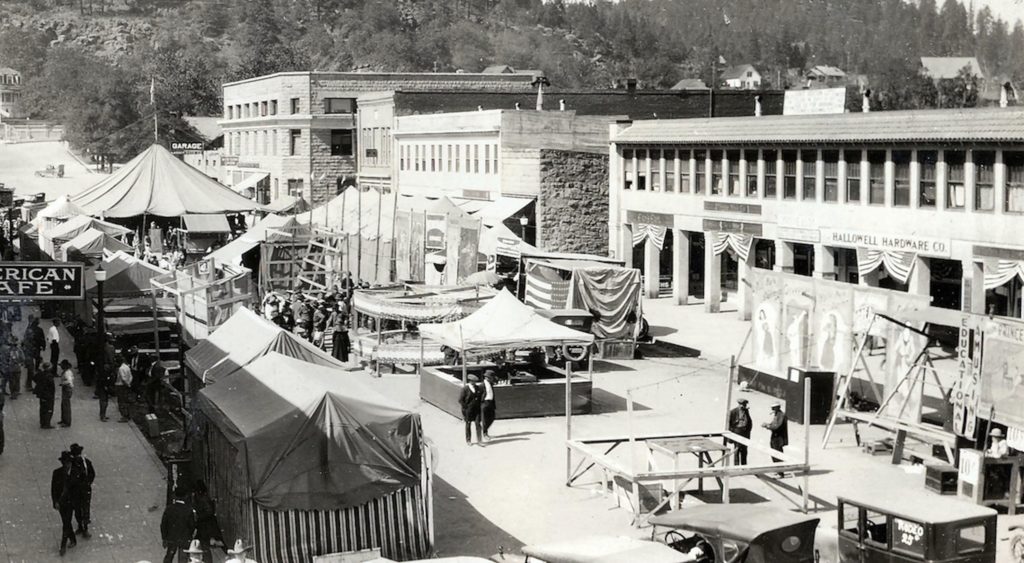
Susanville Main Street, 1924.

Lassen County was in the midst of prosperous times during the 1920s, and 1922 was a prime example. For instance, over 300,000,000 board feet of lumber was cut that year, making Lassen County the biggest producer of lumber in California. This had a ripple effect in the agricultural community. The lumber mills purchased $2,000,000 worth of local farm products to feed their employees.

The railroads flourished too. For the Southern Pacific over 1600 carloads of lumber were shipped by rail on any given month. Passenger train traffic was up going from three to six cars and even included a dining car.

Among other things to celebrate was the Lassen National Forest moved its headquarters from Red Bluff to Susanville. A county fair was held, the first time in fifteen years. The Bly Tunnel project was approaching completion that would be a major boost to the agricultural community. To assist that group the Lassen County Farm Bureau was formed.

Never miss a story, click here to subscribe.

Harvey Railroad Logging Line

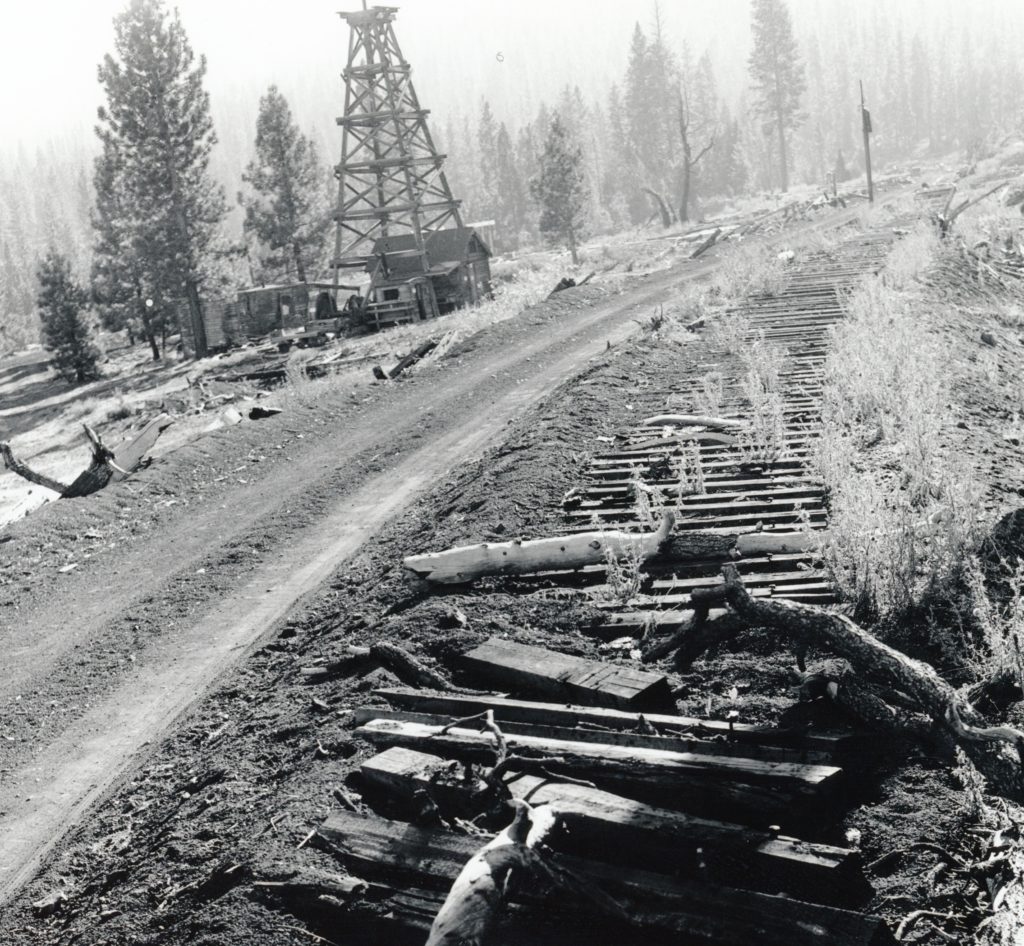
The railroad bed converted into a road at Camp Harvey. Courtesy of Hank Martinez

In 1942 this railroad logging line had its origins at Halls Flat, near Poison Lake, headed into an easterly direction towards Harvey Mountain. By 1949, its entire length was just a bit over forty miles ending near Slate Mountain. When the culinary workers at the two logging camps along the line—Harvey and Stanford—went on strike in the spring of 1949, Fruit Growers Supply Company who operated the line decided to shut it down permanently. It was not a drastic action as it appears. They were approaching the end of their timber. In addition, company officials, stated the remaining timber could be removed from and shipped from its Camp 10 line as it approached Upper Gooch Valley. After all, the Harvey line and Fruit Growers Main line that serviced Camp 10 were within two miles of each other.

Never miss a story, click here to subscribe.

Roop’s Sawmill

Roop's Mill
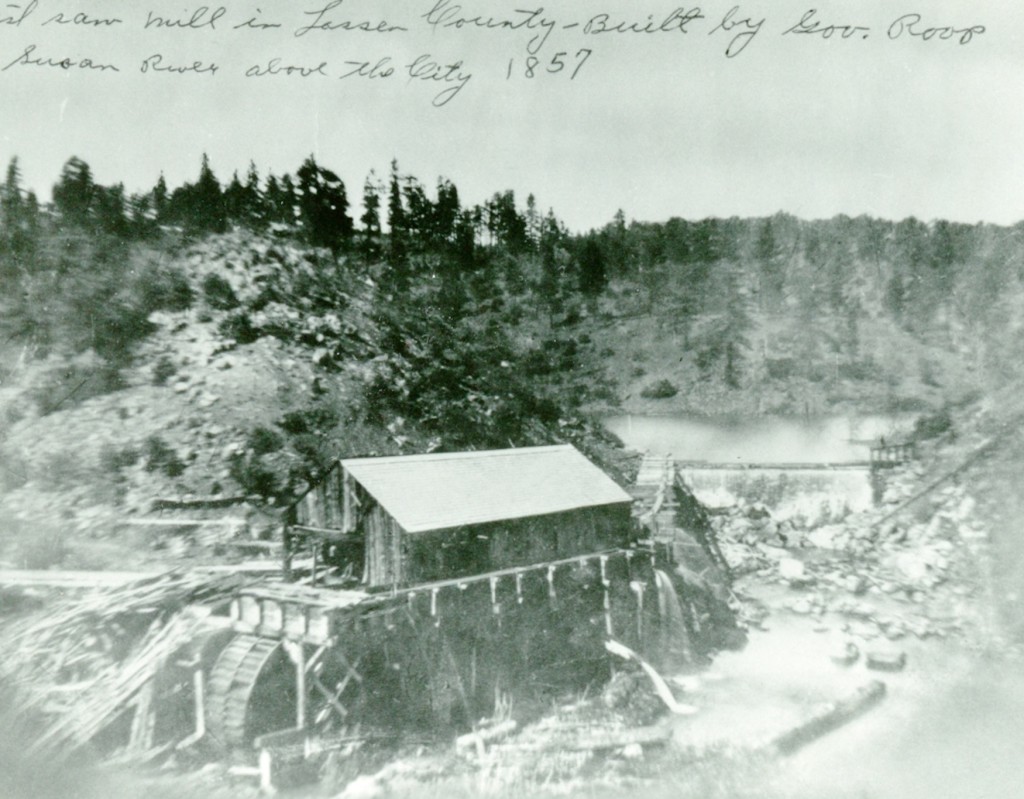
Roop’s mill taken in the early 1860s

In the spring of 1857, Ephraim Roop, Isaac Roop, and William McNaull constructed the first sawmill in Lassen County, along the Susan River at a place that would later become known as Hobo Camp. In November 1860, Perry Craig fell out of a boat at the millpond and drowned. Craig was buried on top of the hillside near the river, and from that episode the Susanville Cemetery was created. (There is no marker for his grave). On August 18, 1862, Roop & Company sold the mill to Luther Spencer for $200. Spencer operated the mill until it was destroyed by fire in the spring of 1868.

Never miss a story, click here to subscribe.

Camp Harvey – Then & Now

Camp Harvey
Camp Harvey, 1947

If you have just tuned in and are not familiar with the former railroad logging camp known as Camp Harvey, go to the front page of the website. There in the upper right hand corner is the search feature and just enter Camp Harvey and you will become well informed on the topic.

Camp Harvey site, July 11, 2019

Mother Nature has a way of reclaiming her territory and this is a perfect example, though there is still plenty of debris on the ground.

I happen to have a special fondness for Camp Harvey. My father, Leroy Purdy worked there and in essence launched his logging career. I spent many a summer working out in the woods logging which I enjoyed. However, dear old Dad made it clear that neither of his two sons would follow in his footsteps.

Subscribe

National Forest Receipts Program

Timber fallers, Lake Almanor, 1927. Courtesy of Roy Rea

Once upon a time, this program established in 1908, had a major impactof funding for local governments where national forests were located. Initially, twenty-five percent of timber sales were distributed to counties where government timber was sold. These funds were earmarked for roads and schools. For many decades in Lassen County it was a huge deal. For example in 1926 Lassen County received $33,886.28–the third highest amount in California. While that figure may seem small by today’s standards, that sum represented one-quarter of Lassen County’s budget.

Subscribe

Halls Flat CCC Camp

Halls Flat CCC Camp
Halls Flat CCC Camp, 1937 courtesy of Hank Martinez

During the Great Depression of the 1930s, Lassen County would have two Civilian Conservation Camps, better known as the CCC. One was located at Halls Flat in western Lassen County, just north of Poison Lake. The other was Secret Valley, thirty-five miles northeast of Susanville, which one can see remnants from Highway 395 when driving north.

The Halls Flat CCC camp was established in 1933 and shut down in 1942. The camp provided a lot of manpower for the Lassen National Forest. Among the work done was grazing studies, range habitat improvement and some logging of pine beetle infested trees in the nearby Blacks Mountain Experimental Forest.

Subscribe

Susanville Logging Company

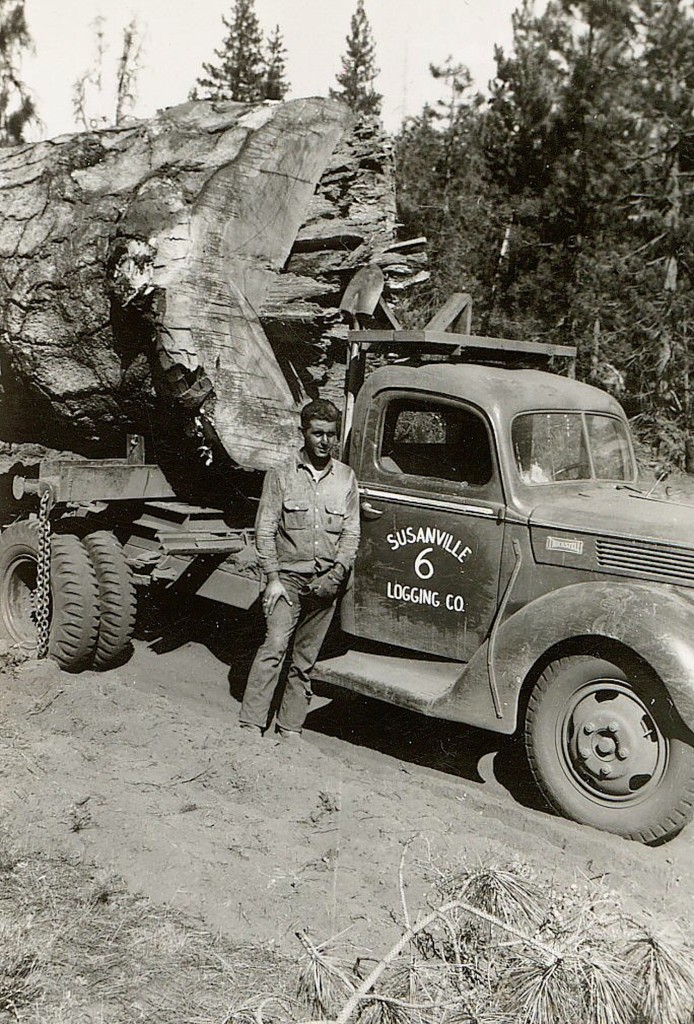
Joe “Tunney” Zunino posing with his one log load. Courtesy of Margaret Purdy

In 1941, this company was created by a partnership between J.S. “Sam” Dotson, William Barbee and Sherman Rea. They initially acted as logging contractors, their biggest client was Lassen Lumber & Box Company. While Lassen Lumber & Box was in decline, Susanville Logging saw there was still opportunities in the milling business. In January 1947, they began construction of a sawmill east of Susanville, the property known today as Lassen Ale Work’s The Boardroom on Johnstonville Road. The mill was completed in April 1947 and had a daily capacity of 40,000 board feet. In July 1947, the company proposed to build a truck bypass from Eagle Lake Road, down the stock trail to the end of Roop Street. They asked the City and County to secure the right-of-ways and they would do the rest. Nothing happened.

In 1954, Dotson died and Barbee & Rea carried on. They sold out in 1958, and the operation was renamed the Susanville Lumber Company. It would undergo numerous ownerships, the last one Jeld-Wen, who closed the mill in the spring of 1993.

Support

Railroad Logging Video

Camp B. Courtesy of Fruit Growers Supply Company

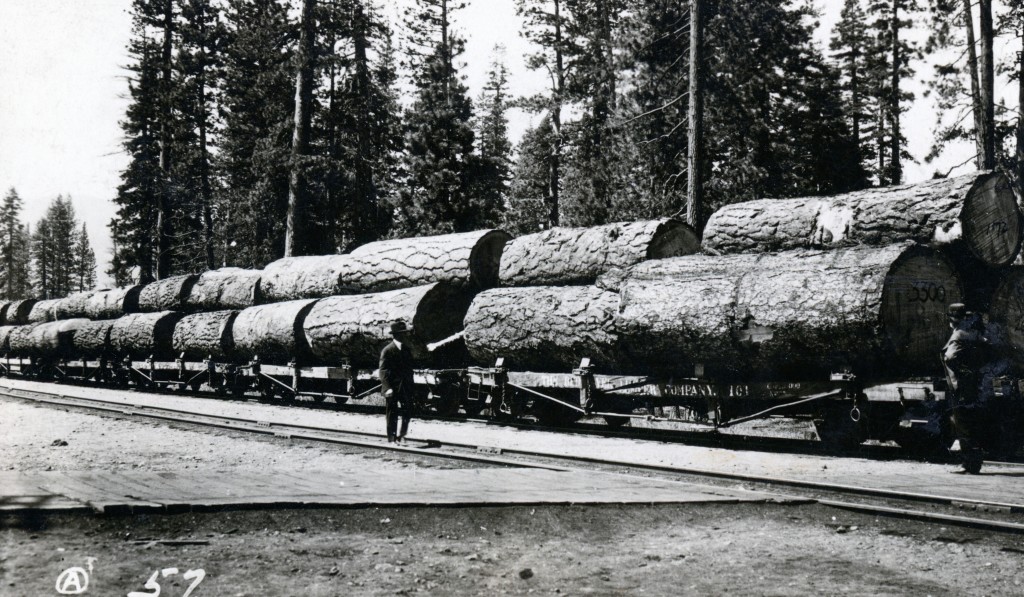
Recently, a subscriber sent me a link to a You Tube video with various historic film clips of railroad logging. For those so inclined you can watch it hereHowever, it should be duly noted for the record,  the clip of the cookhouse scene of Fruit Growers Supply Company is wrong. The film notes that it was Fruit Growers operation at Hilt, but in reality it was Fruit Growers Lassen Operation at Camp B, located north of McCoy Flat Reservoir. The cement foundation of the building was still intact the last time I was there, along with railroad service pits, etc. I do have a copy of the 1925 film of the entire operations on the Lassen that includes logging scenes, and the entire sawmill process. The opening scenes are of interest since it shows the current Susanville Ranch Park back in 1919, then goes to Eagle Lake during its high water era.

Support

Fruit Grower’s Logging, 1925

horse logging
Horse logging with big wheels, at Fruit Growers Camp B, north of McCoy Flat Reservoir.

In the spring of 1925, Fruit Growers Supply Company announced a major change in their logging operations. In April, the company sold some seventy logging horses, thus a major phase out utilizing horses and Michigan Big Wheels. The company replaced the horses with six Catepillar tractors, after having two in operation the previous year. The tractors were more efficient, as they could go in terrain the horses could not. Horse logging also required additional workers known as “swampers.” Their job was to remove any debris or vegetation that could result in an injury to the horses legs.

Support