Tag Archives: Logging

The Prison Debate Continues

CCC & High Desert State Prisons

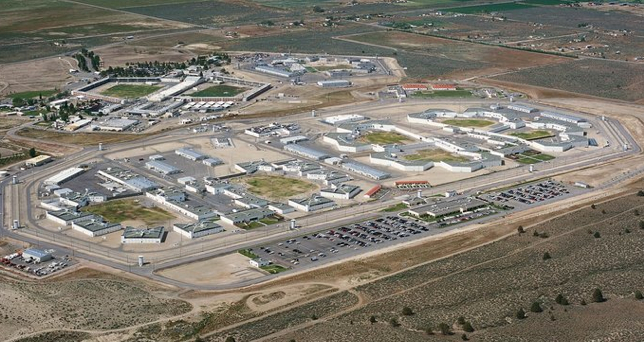
Earlier this year, the State of California announced plans to close the California Correctional Center at Susanville by June 30, 2022.

In the early 1950s discussions were being held among the progressives in the community that the lumber industry, that had such a profound economic impact, was now fading. The big question was what to replace with it. A state prison sounded like a worthy option that would also be stable. On October 13, 1953, the first public hearing was held in Susanville to discuss the merits. Earlier in the year, California Lt. Governor Goodwin Knight, toured the region and thought that Susanville was a favorable site for a future state prison. Not everyone was in agreement. There were some in the community who gave it tremendous support, while an equal number who were dead set against. As is customary, there was also a large segment in the community that had no opinion. Ten years later, a dedication ceremony was held for the nine million dollar California Correctional Center.

Subscribe

Logging Reload Stations

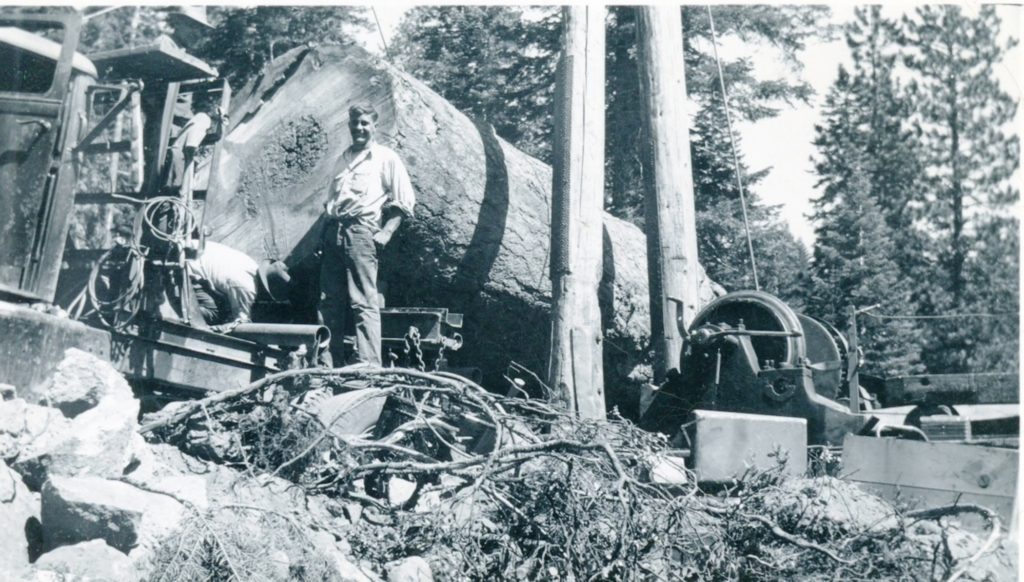
The reload station at Camp 10, 1950

Many may not be aware that truck and railroad logging worked in tandem. Just like transition from horse logging to motorized tractors would take time, it was the same with trucks to be incorporated into logging operations. One of the benefits was trucks could access terrain to difficult for railroad operations. To get the most mileage for buck was the reload station. Trucks were used to log difficult terrain and then instead of driving all the way to mill, the destination was to the railroad’s reload station. The trucks were unloaded, then the logs reloaded onto railroad flat cars, thus an economical way to move volume of logs from the woods to the mill.

Support

Susan River Log Slide

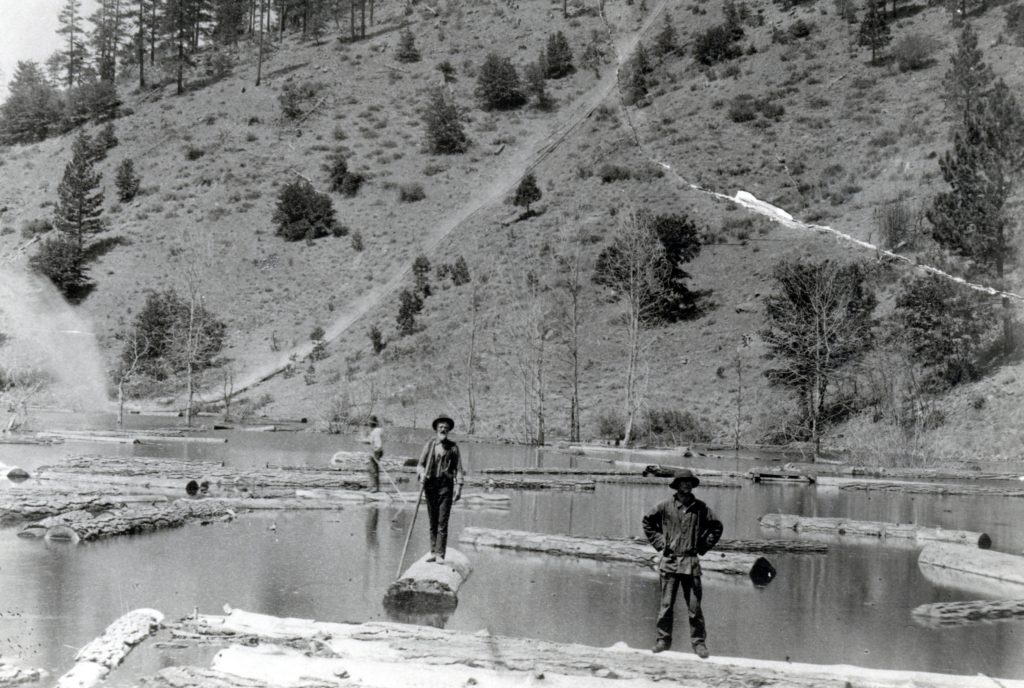
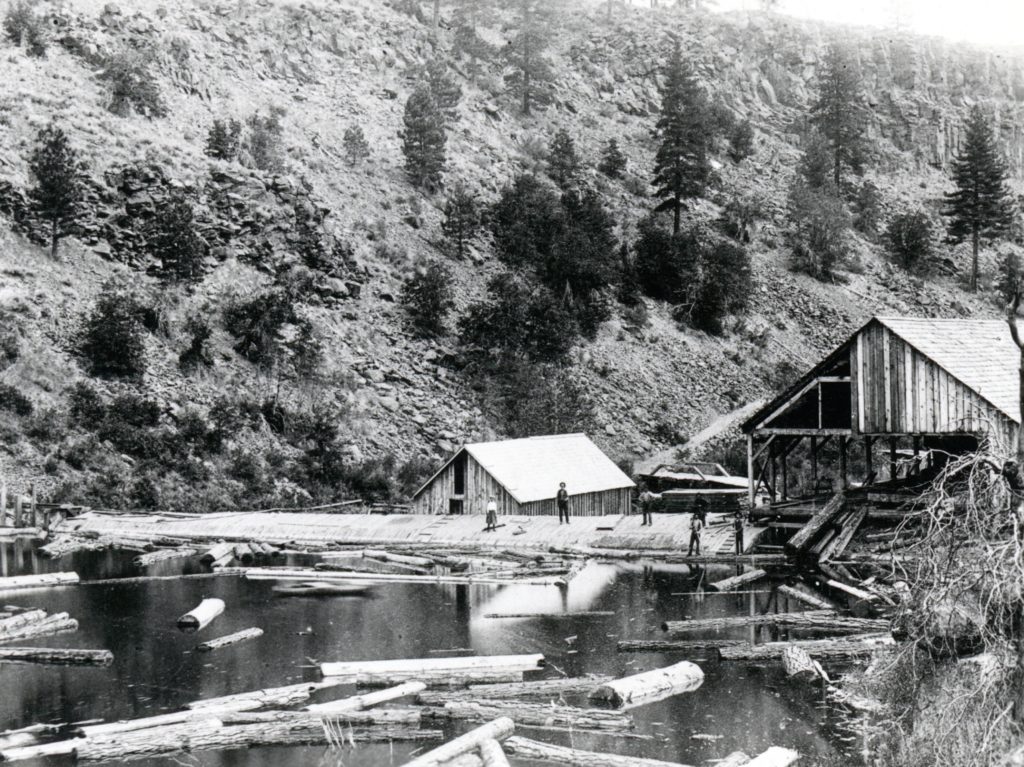
Bremner mill pond with the log slide in the background, (Susan River), 1891–Betty B. Deal

In 1888 when the Bremner dam and sawmill was constructed on the Susan River (two miles west of Susanville) it created a sizeable reservoir backing up water for over a mile. This was really beneficial in the spring months with high water flows, logs were cut and floated down the river to the mill.

On the north side rim of the canyon there was a heavy stand of pine timber. The dilemma how to log it? In the summer of 1891, some one came up with a solution. Because of the steep incline an impromptu dirt log slide was developed, and it worked!

Support

Fruit Grower’s Fire Lanes

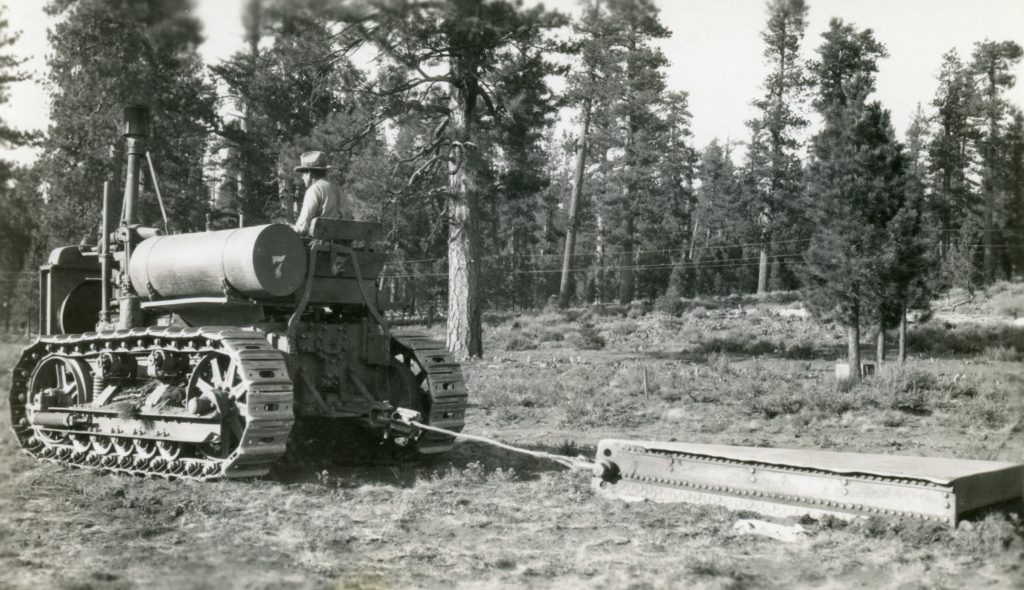
Fire trail V-drag plow, 1929. Courtesy of Fruit Growers Supply Company

No doubt this winter there are many fire officials having discussions about last year’s horrendous fires. During the winter of 1924-25 Fruit Growers Supply Company officials plotted out a new course of fire prevention after a brutal forest fire season.

In 1925 Fruit Growers adopted a new method, building a series of fire lanes. The fire lanes were 100 feet wide and completely void of vegetation, each encircling 100-acre sections of timber. They were formed by a specialV-drag hooked to a 60-Caterpillar tractor which could clear up to six miles of fire lines a day. The lanes not only served as firebreaks, but provided quick access in an emergency.

During the fire season, two crews of eight to ten men worked as fire prevention team. It was their job to build fire lines, oversee brush and slash piling, remove dead snags and maintain the company’s private telephone lines. Telephone “boxes” were attached throughout the forest, allowing for daily monitoring between the logging camps and the mill. The telephone system was also used to report fire or an accident when medical aid was needed.

By the end of 1932, the 178 miles of fire lanes constructed over 26,000 acres had proved very effective. Even though three of the. seven years it took to build them were critical fire years, only 53 acres burned. From 1925 to1940, prevention cost $40,373.54, fire fighting only $7,546.65. During World War II the construction of fire lanes was abandoned.

Support


An Early Purdy Brothers Logging Episode

Frank Phelps at Soda Springs with a one log load, 1949—Leroy Purdy

In 1948, James and Leroy Purdy formed Purdy Brothers Logging Company. During their early years of operation they did extensive logging around theTruckee region. Since today, marks my father’s birthday (Leroy) I just waned to share two pictures taken in 1949 while they were logging at Soda Springs. After all, one does not see that many photographs of one log loads!

On the way to the mill.

Tim

Bremner Dam Vandals

Bremner Dam, 1906—George McDow Jr.

Some time during the night of March 27, 1906 an unknown individual(s) attempted to blow up the old Bremner Dam on Susan River with dynamite. The dam was built in 1886 in conjunction with the Bremner sawmill, about a mile west of Susanville. The damage was slight and it was reported that whoever did the deed was not familiar with explosives. The dam had fallen disrepair over the years, since the destruction the sawmill there in 1894. Some were of the opinion, that the dam was a hazard, especially to those downstream and it should be removed.

Bremner Dam Remnants, Susan River, 1977

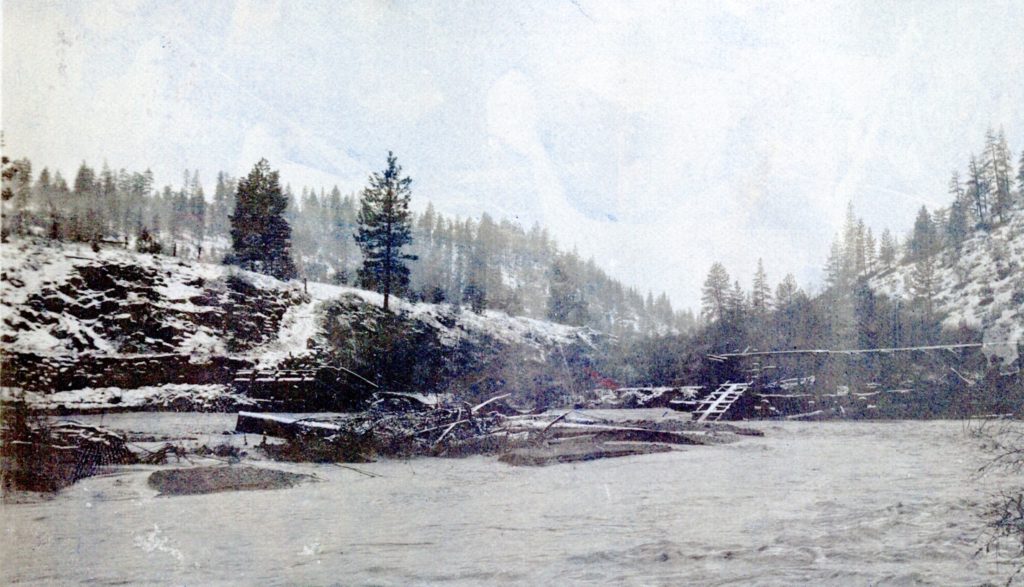
That never happened and the dam quickly deteriorated and by 1914, most of it had washed away.  However, during the drought of 1977, water level in the Susan River dropped to such an extent to expose the remnants of the dam’s foundation.

Support


The Bremner Sawmill

Bremner Dam, just west of Susanville, 1888.

One of the most impressive sawmills constructed on the Susan River was the Bremner Mill. In 1886, Lawrence, Leavitt & Company was formed to construct and operate it. The site selected on the Susan River was approximately a mile west of Susanville. The firm built an imposing dam 250 feet long and 25 feet high. The dam created a reservoir that backed up water for a mile. That was beneficial for the company, since it would float logs down the river to the mill.

In December 1887, Charles Bremner, a lumberman from Maine, purchased the mill. His two sons, James and William, arrived from Maine to assist. On December 8, 1888 Bremner sold a half interest. in the mill to Alex McCrimmon. The partnership short-lived. McCrimmon was not pleased with Bremner’s management of the company funds, and sold his interest to Leavitt & Woodsum for $1,800. Bremner was plagued with financial problems. In 1892. with Bremner unable to pay his debts, William Greehn foreclosed on the property and became the new owner. Greehn, however, retained Bremner to operate the mill.

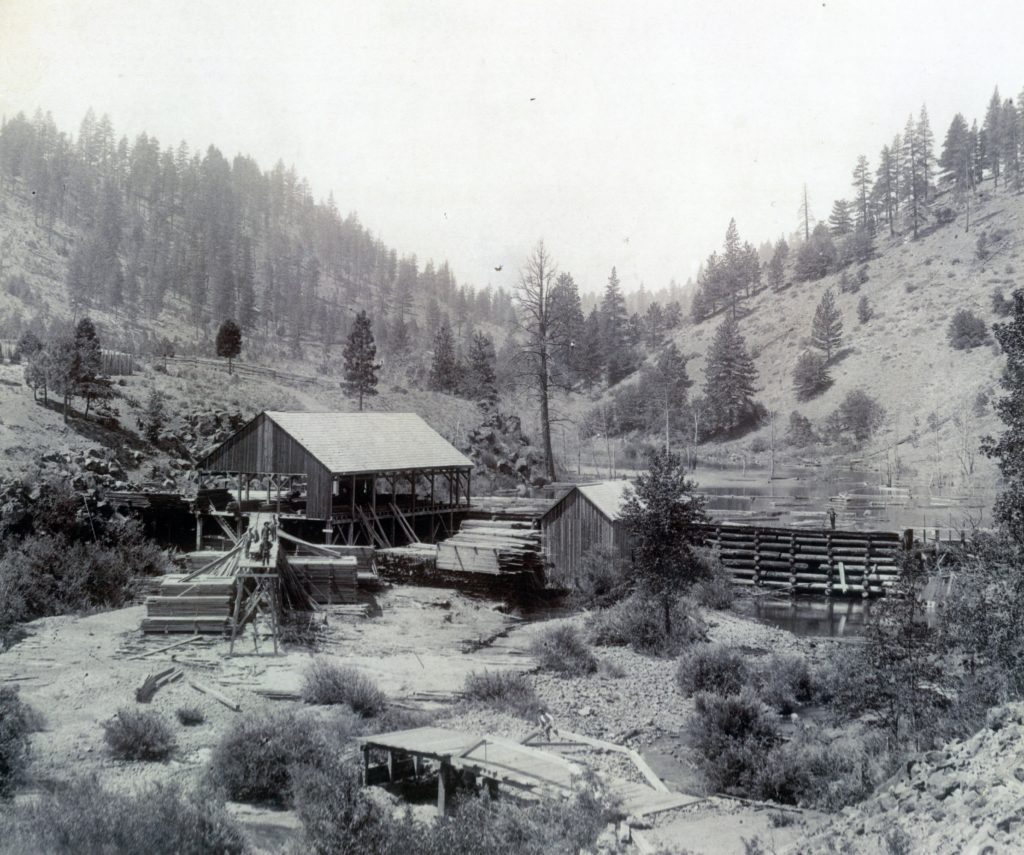
Bremner sawmill, Susan River Canyon, 1891. Courtesy of Betty Barry Deal

In 1891, to take advantage of the water power from the dam, James Anthony installed a power plant, to generate the first electric power for Susanville. The generator had a capacity of 30 horsepower, enough to provide power for40 arc lamps.

On Tuesday night, August 14, 1894, fire broke out at the mill. It went unnoticed by the several people who were at the mill. Once it was discovered the building was in flames and it was too late to suppress it. The mill machinery and Anthony’s electric plant were a total loss. The origin of the fire was never determined. The mill was not rebuilt, and Anthony built a new electric plant half a mile down from the dam.

Donate/Subscribe

Gyppo Loggers

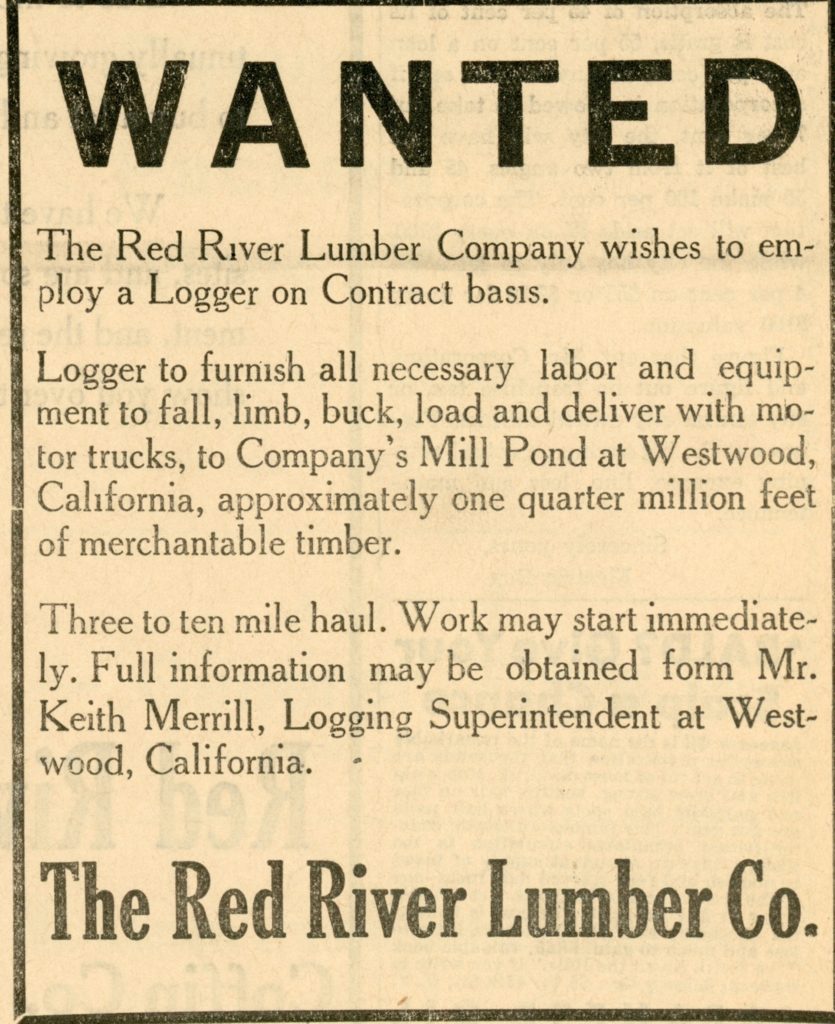
A Red River Lumber Company Ad—-Lassen Mail, October 7, 1935

This is one aspect of logging operations that I have never addressed. It is by the way, a term near and dear to me, as my father was a gyppo logger.

The term originated during World War I from the Industrial
Workers of the World (IWW) one of the earliest unions to attempt to organize loggers and sawmill workers. Just exactly how word was coined is not known. The IWW referred to the gypos as strike breakers. Basically, a gyppo logger could be an individual or small company who worked as a independent contractor to log certain tracks for large companies such as Fruit Growers Supply, Red River Lumber Company among others.

Spread the word, and encourage a friend to subscribe

Clover Valley Lumber Company

Clover Valley Lumber Company, Loyalton, 1937

Clover Valley Lumber Company was headquartered in Loyalton in nearby Sierra Valley. In its prior life, it was the Marsh Lumber Company. In 1917, Clover Valley formed and it was typical mill/box factory operation. By 1955, Clover Valley had 54 miles of railroad line. Some of these spur lines still can be seen on the west flank of Thompson Peak. Noted, railroad historian, David Myrick stated it had the largest railroad logging operation in Plumas County. I beg to differ on that, as the Red River Lumber Company had an extensive railroad logging system in northern Plumas County. In 1957, Clover Valley sold, its new buyer began dismantling the railroad logging line in 1958—the last of its kind in this part of California. The Loyalton mill would later be acquired by Sierra Pacific Industries.

Support

Some One Has A Keen Eye

log train Camp B
Train load of logs leaving Camp B, Fruit Growers Supply Company, 1922

A reader noticed recently the logs depicted above where on railroad flat cars belonging to the Red River Lumber Company. Fruit Growers found it to be more economical to lease flat cars from the Southern Pacific Railroad, who transported the same from Westwood Junction to the Fruit Grower’s mill in Susanville. Fruit Growers initial operations in the early 1920s, experienced a flat car shortage with Southern Pacific. Red River being a good neighbor obliged to provide Fruit Growers with flat cars until the matter could be resolved with Southern Pacific.

Another point I might add, the above was not a typical load of logs. These type of images, are common among lumber companies. They were used to show investors, bankers and the lot the most premium logs, to show them where the money was being spent. In Fruit Growers case, this photograph would be published in a portfolio to show the citrus growers where their money was used to provide them wooden boxes to ship citrus.

Support