Tag Archives: Logging

Purdy Brothers Logging Co.

Logging could be hazardous to one’s health.

My father, Leroy W. Purdy was born on March 7, 1927 at Susanville’s Riverside Hospital. Seasoned readers will recall that he was a colorful character back in the day.

Leroy spent most of his life in logging. His first hand introduction was logging at Red River Lumber Company’s Camp Harvey, with his best friend and future brother-in-law, Bob Rea. When his brother, James, returned to Susanville after World War II, they formed a partnership known as Purdy Brothers Logging. Times were really good for fifteen years, and then the Black Widow entered the picture. Their world came crushing down, and the partnership dissolved.

Leroy continued a solo logging career, later forming L&M Logging. Those days I remember well, spending many summers working out in the woods growing up. My father noticed my enthusiasm which eventually, I received a stern lecture from him, “No son of mine is going to be a logger.” With that career option gone, who knew later I would be writing the history of the logging industry among other topics.

Subscribe

Camp Lasco Train Wreck

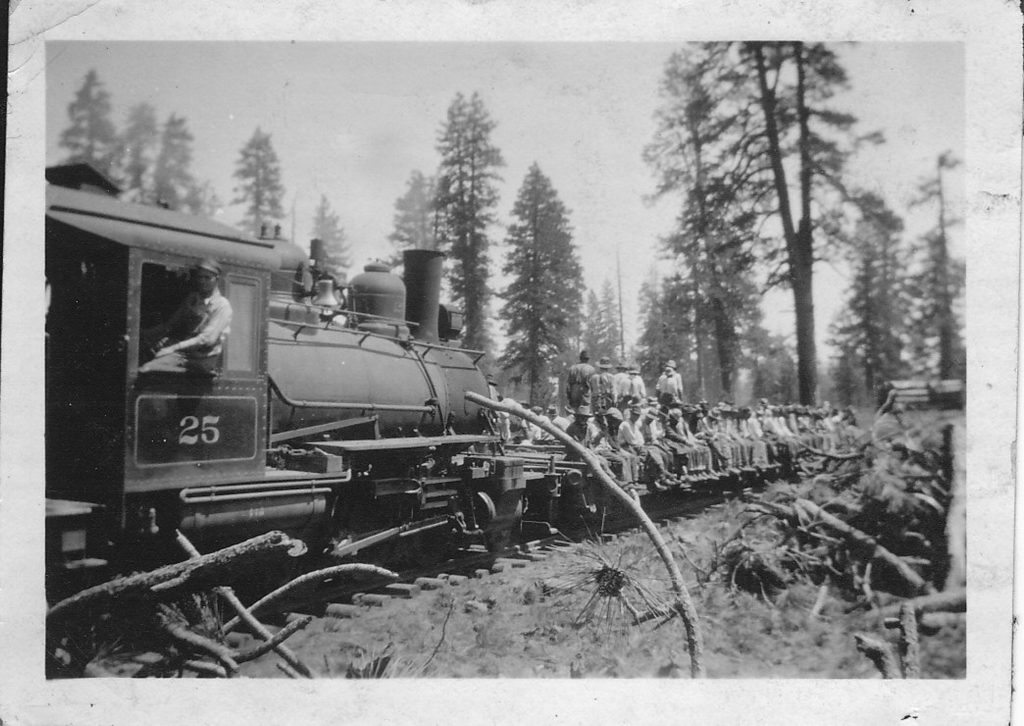
The Camp Lasco commute train. Courtesy of Ron Linebarger

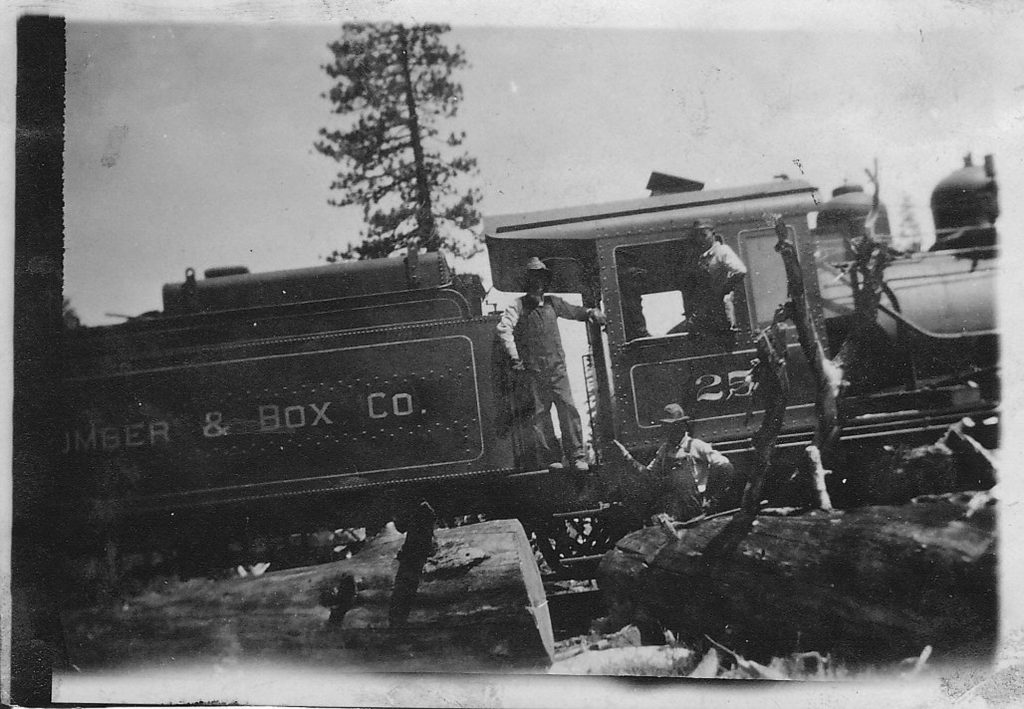
In July 1925, one of the more unusual railroad logging accidents occurred near Lassen Lumber & Box Company’s Camp Lasco (located on the north side of Peg Leg Mountain). A railroad tracklaying machine had just departed camp when it jumped the tracks, turning over and spreading rails in its path. Eight men were injured, all of whom were transported to Susanville’s Riverside Hospital for treatment.

Another shot of the No. 25. Courtesy of Ron Linebarger

Subscribe

The Maryland Hotel

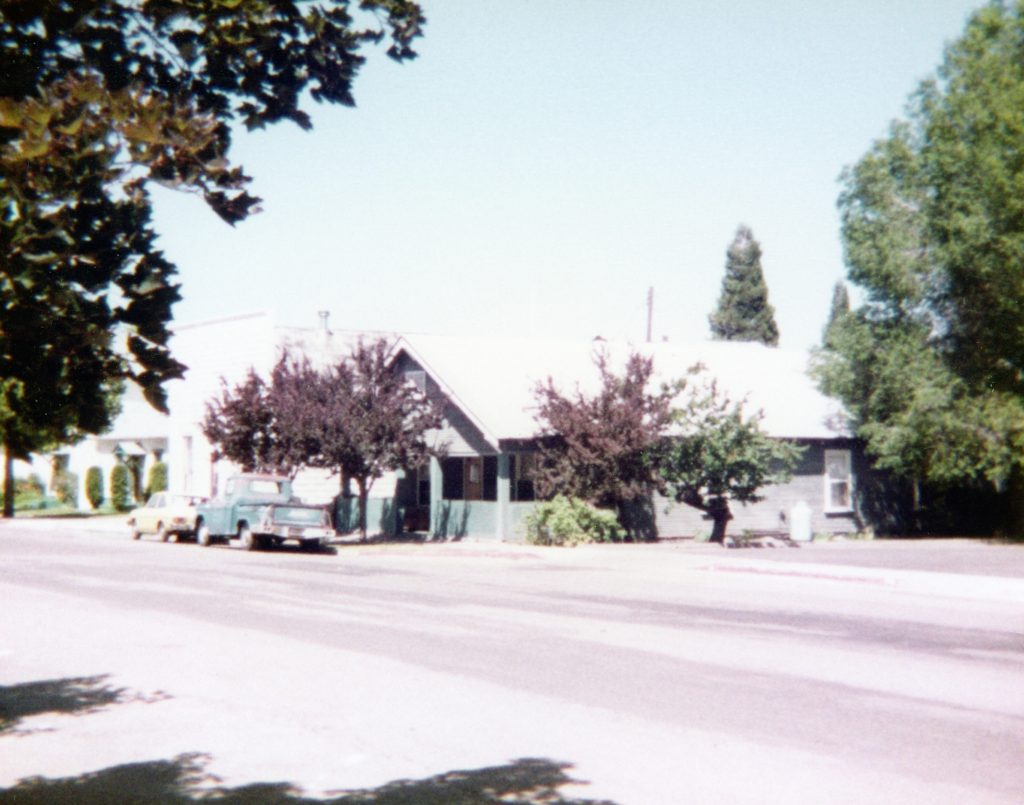
Maryland Hotel, July 10, 1983

This topic falls along the same line as that of the Gables.  Unlike the Gables, the Maryland Hotel is a thing of the past. The Maryland was located at 135 South Lassen Street. Its name rather misleading, not quite a hotel, but not quite a boarding house either. However, during its tenure it served the community well. When the lumber mills were the predominate industry in Susanville, a large number of single men, either worked in the mills or in the woods. It should be noted the lumber companies sought to hire married men with families, as it was deemed they were more stable, unlike single men who went from one operation to another seeking the proverbial greener pastures. Of note, the Maryland had a maximum double occupancy of 60. In 1983, the property was acquired by the nearby mortuary who tore down structure to make additional parking.

Subscribe

Bunnell Railroad Siding

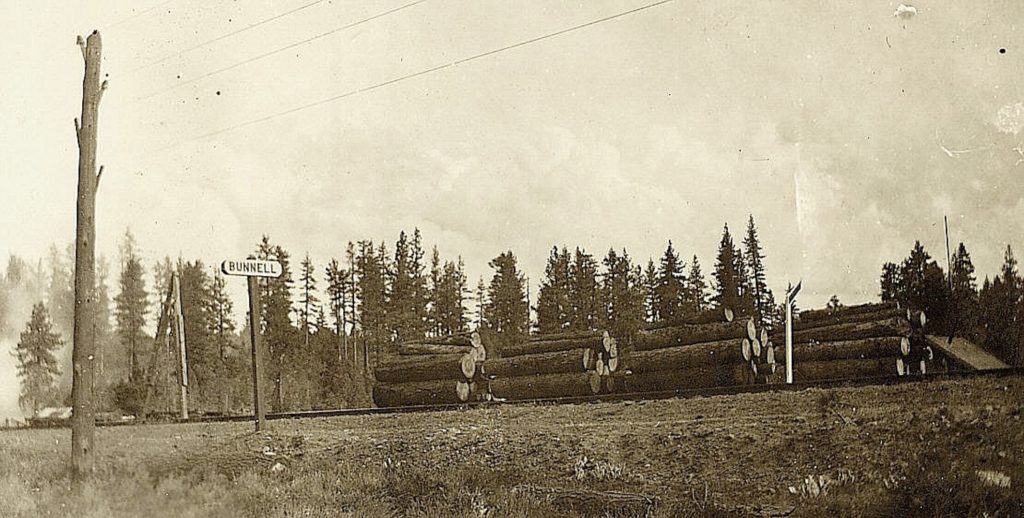
Bunnell siding, circa 1921. Courtesy of Lenala Martin

This siding on the Fernley & Lassen Railroad was located a mile west of Devils Corral. In the fall of 1919, James McNeen relocated his sawmill from Colorado to this site.  The steam-powered mill had an average daily output of 30,000 board feet of lumber.  The mill served as a major supplier for Susanville’s Lassen Lumber & Box Company.  Yet, after a year in operation, McNeen was plagued with financial problems and turned the mill over to Herman Enhorning. In 1922, Enhorning sold the mill to Perry M. Newgard.   In 1925, Joseph McAllister purchased the sawmill from Newgard. McAllister had financial problems and the mill did open for the 1927 or 1928 season. The sawmill was destroyed by fire on October 12, 1928, some thought it was rather suspicious.

Subscribe

The Big Tree – A Follow Up

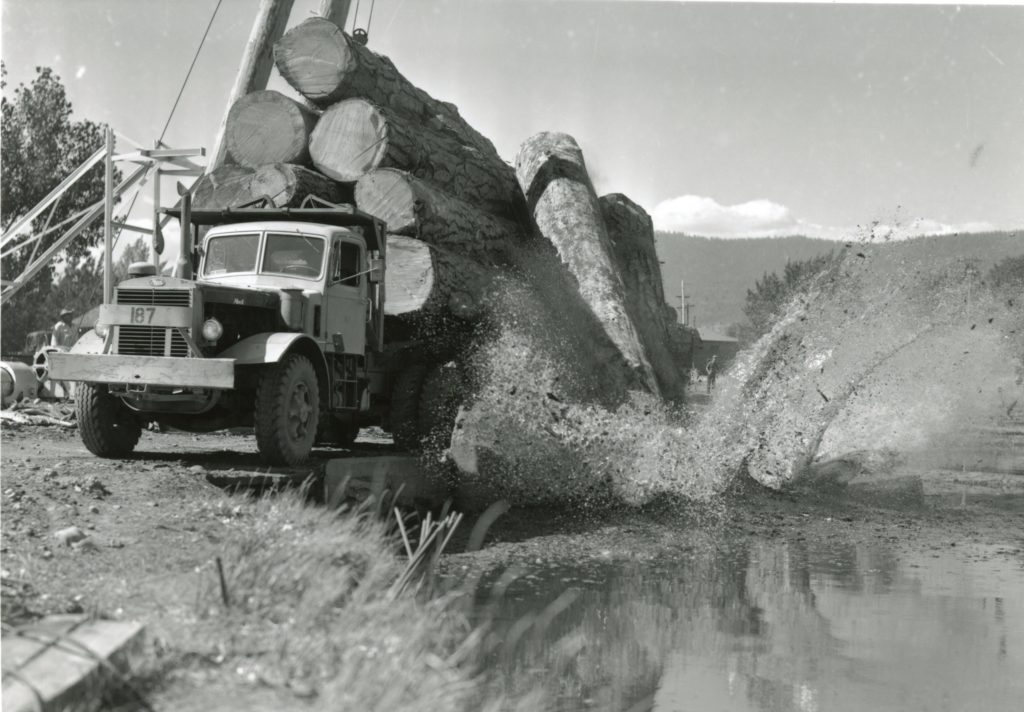
The record load of 26,860 board feet being unloaded at the Fruit Growers millpond, Susanville, August 21, 1953. Courtesy of Hank Martinez

Yesterday, it was noted that the massive sugar pine tree felled by the Red River Lumber Company contained 27,570 board feet. To gain a better understanding, the above photograph is a massive truck load of logs being unloaded at Fruit Grower’s Susanville millpond that contained 26,860 board feet!

A question was raised about timber fallers. A good timber faller can determine precisely where the tree will fall. Well, a not so good faller, is another tale. I recall in one instance working in the woods with my Dad. My father gave the faller instruction as to where a particular tree was to land. Needless to say, it did not happen and some one was not happy with the final result.

Subscribe

That is a big tree!

This mammoth tree was cut in 1922 on Fruit Growers property west of Eagle Lake.

In November 1928 the Red River Lumber Company reported that they had felled a 650 year-old sugar pine tree at Camp 74, in Plumas County, west of Chester. It required three railroad flat cars to bring the tree to the mill in Westwood. It was 101 inches in diameter at the stump and 84 inches at the second cut.* The tree contained 27,570 board feet. Red River noted that this was the largest tree ever brought into the mill.

*For those not familiar trees are bucked/cut into 32 foot lengths.

Subscribe

Collins Pine Almanor Railroad

The Almanor Railroad’s No. 106

In the early 1900s, the  founders of Collins Pine Company amassed some 60,000 acres of timberland in the greater Lake Almanor Basin.  It was not until the late 1930s, that they gave consideration to establish a mill there. In the fall of 1940, after much negotiations the Red River Lumber Company offered a mill site adjacent to Chester, along with thirteen miles of its main line railroad from Chester to Clear Creek Junction where it connected with the Western Pacific Railroad, which Red River estimated its value at $80,000.

Thus, the Almanor Railroad was born. Collins Pine changed it from a private line to a common carrier, should anyone in Chester desire to use it. Collins Pine had a lot of work to upgrade the railroad line. It also needed motive power, as it decided not to purchase any of Red River’s locomotives. At its Grande Ronde operation, it had discontinued its railroad logging in favor of truck logging. There it had at its disposal a Heisler geared steam locomotive, the 104, and it was put into operation on the Almanor. Initially it worked ideally to handle the railroad’s sharp turns and steep grades. It was later replaced with a small diesel locomotive.

Subscribe

Old Time Power Saws

An electric saw powered by a D-2 cat. Courtesy of Fruit Growers Supply Company

In the twentieth century one aspect of logging that was slow to modernize was timber falling. In the mid-1930s, Fruit Growers experimented with a Dow Low Stump Power Saw. It turned out to be too bulky and cumbersome and the fallers returned to falling timber manually. In 1943, Fruit Growers experimented with an electric saw power by a generator attached to a D-2 Caterpillar. To provide for mobility it was equipped with 400 feet of cable.  One of the drawbacks was it took three men to operate it one to operate the tractor and two to run the saw. It was not until the 1950s when a more advance line of lightweight saws were introduced that the traditional hand saws and axes were replaced by the power saw.

Subscribe

Sinker Logs

A sinker long dredged up from the Westwood millpond, circa 1930. Courtesy of Walter “Doug” Luff

Mill ponds are a relic of the past lumber industry.  If your are from that era, you recall one particular thing  that is forever etched in your memory bank. During the summer months, the stench from these mill ponds were horrendous.

One of the annual maintainence chores was the removal of sinker logs. These were logs that sunk to the bottom of the millpond before they were put through the sawmill.

Subscribe