Tag Archives: Logging

Fruit Grower’s Fire Lanes

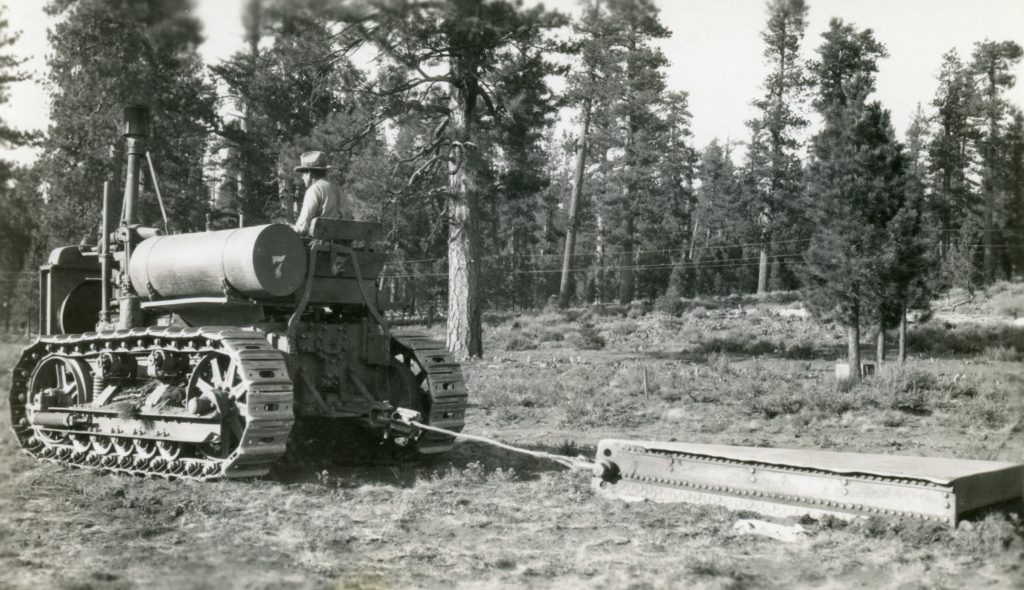
Fire trail V-drag plow, 1929. Courtesy of Fruit Growers Supply Company

No doubt this winter there are many fire officials having discussions about last year’s horrendous fires. During the winter of 1924-25 Fruit Growers Supply Company officials plotted out a new course of fire prevention after a brutal forest fire season.

In 1925 Fruit Growers adopted a new method, building a series of fire lanes. The fire lanes were 100 feet wide and completely void of vegetation, each encircling 100-acre sections of timber. They were formed by a specialV-drag hooked to a 60-Caterpillar tractor which could clear up to six miles of fire lines a day. The lanes not only served as firebreaks, but provided quick access in an emergency.

During the fire season, two crews of eight to ten men worked as fire prevention team. It was their job to build fire lines, oversee brush and slash piling, remove dead snags and maintain the company’s private telephone lines. Telephone “boxes” were attached throughout the forest, allowing for daily monitoring between the logging camps and the mill. The telephone system was also used to report fire or an accident when medical aid was needed.

By the end of 1932, the 178 miles of fire lanes constructed over 26,000 acres had proved very effective. Even though three of the. seven years it took to build them were critical fire years, only 53 acres burned. From 1925 to1940, prevention cost $40,373.54, fire fighting only $7,546.65. During World War II the construction of fire lanes was abandoned.

Support
 

An Early Purdy Brothers Logging Episode

Frank Phelps at Soda Springs with a one log load, 1949—Leroy Purdy

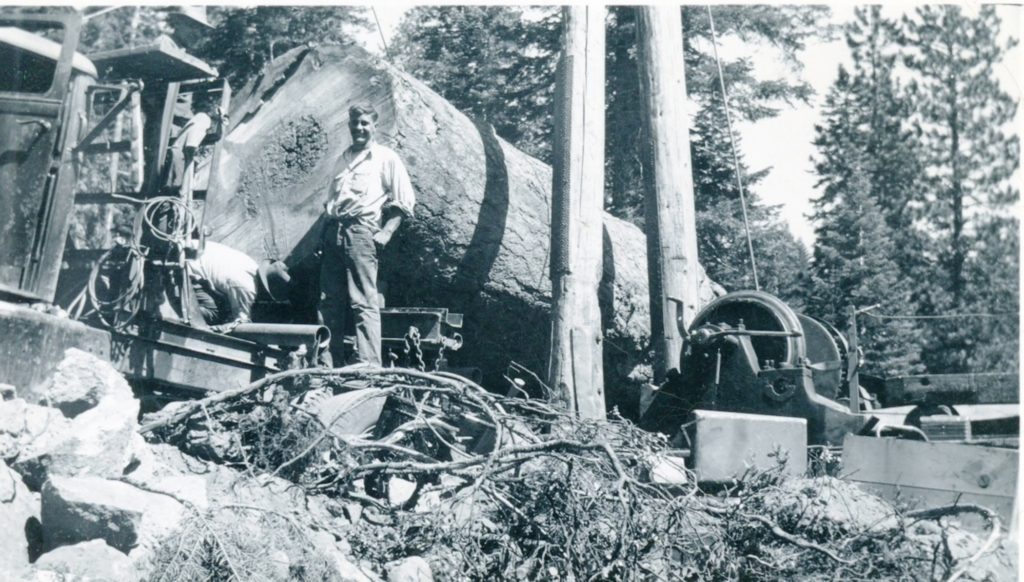
In 1948, James and Leroy Purdy formed Purdy Brothers Logging Company. During their early years of operation they did extensive logging around theTruckee region. Since today, marks my father’s birthday (Leroy) I just waned to share two pictures taken in 1949 while they were logging at Soda Springs. After all, one does not see that many photographs of one log loads!

On the way to the mill.

Tim

Bremner Dam Vandals

Bremner Dam, 1906—George McDow Jr.
Some time during the night of March 27, 1906 an unknown individual(s) attempted to blow up the old Bremner Dam on Susan River with dynamite. The dam was built in 1886 in conjunction with the Bremner sawmill, about a mile west of Susanville. The damage was slight and it was reported that whoever did the deed was not familiar with explosives. The dam had fallen disrepair over the years, since the destruction the sawmill there in 1894. Some were of the opinion, that the dam was a hazard, especially to those downstream and it should be removed.

Bremner Dam Remnants, Susan River, 1977

That never happened and the dam quickly deteriorated and by 1914, most of it had washed away.  However, during the drought of 1977, water level in the Susan River dropped to such an extent to expose the remnants of the dam’s foundation.

Support


The Bremner Sawmill

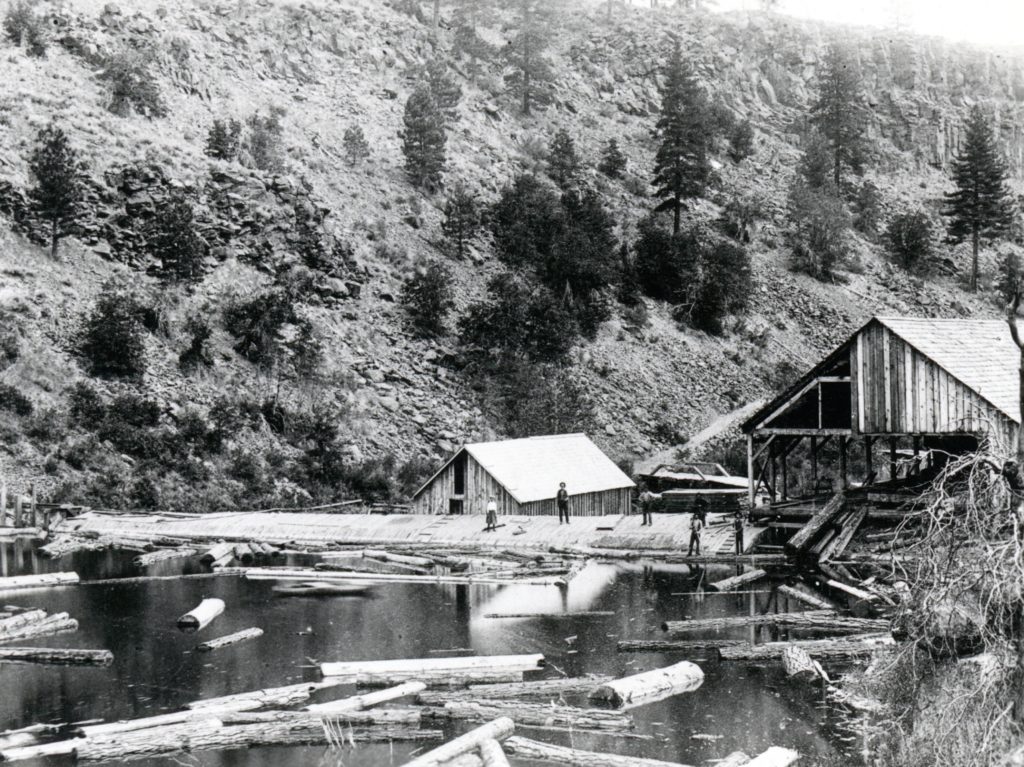
Bremner Dam, just west of Susanville, 1888.

One of the most impressive sawmills constructed on the Susan River was the Bremner Mill. In 1886, Lawrence, Leavitt & Company was formed to construct and operate it. The site selected on the Susan River was approximately a mile west of Susanville. The firm built an imposing dam 250 feet long and 25 feet high. The dam created a reservoir that backed up water for a mile. That was beneficial for the company, since it would float logs down the river to the mill.

In December 1887, Charles Bremner, a lumberman from Maine, purchased the mill. His two sons, James and William, arrived from Maine to assist. On December 8, 1888 Bremner sold a half interest. in the mill to Alex McCrimmon. The partnership short-lived. McCrimmon was not pleased with Bremner’s management of the company funds, and sold his interest to Leavitt & Woodsum for $1,800. Bremner was plagued with financial problems. In 1892. with Bremner unable to pay his debts, William Greehn foreclosed on the property and became the new owner. Greehn, however, retained Bremner to operate the mill.

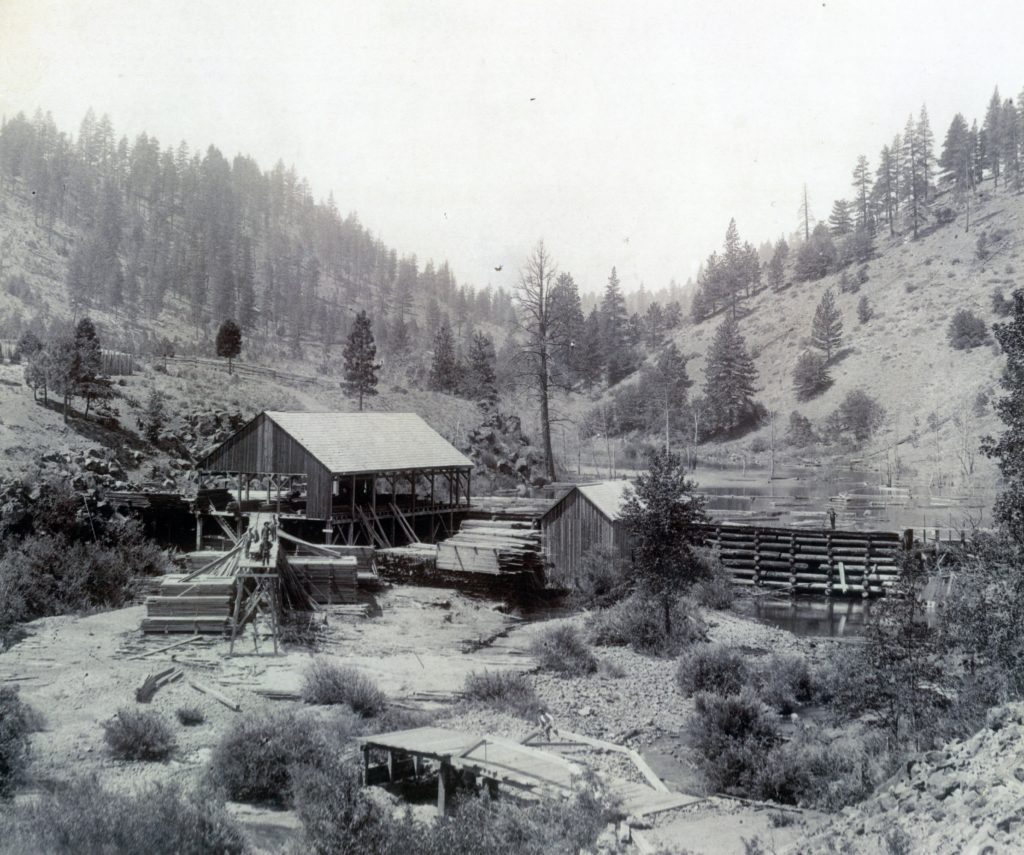
Bremner sawmill, Susan River Canyon, 1891. Courtesy of Betty Barry Deal

In 1891, to take advantage of the water power from the dam, James Anthony installed a power plant, to generate the first electric power for Susanville. The generator had a capacity of 30 horsepower, enough to provide power for40 arc lamps.

On Tuesday night, August 14, 1894, fire broke out at the mill. It went unnoticed by the several people who were at the mill. Once it was discovered the building was in flames and it was too late to suppress it. The mill machinery and Anthony’s electric plant were a total loss. The origin of the fire was never determined. The mill was not rebuilt, and Anthony built a new electric plant half a mile down from the dam.

Donate/Subscribe

Gyppo Loggers

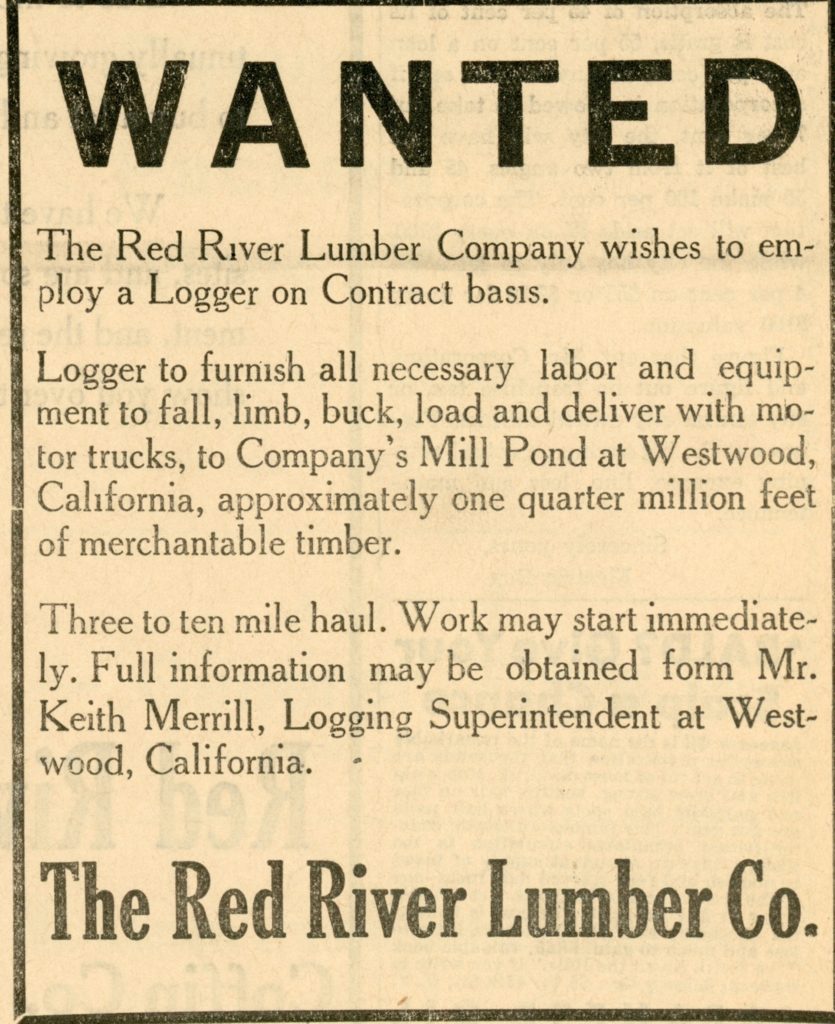
A Red River Lumber Company Ad—-Lassen Mail, October 7, 1935

This is one aspect of logging operations that I have never addressed. It is by the way, a term near and dear to me, as my father was a gyppo logger.

The term originated during World War I from the Industrial
Workers of the World (IWW) one of the earliest unions to attempt to organize loggers and sawmill workers. Just exactly how word was coined is not known. The IWW referred to the gypos as strike breakers. Basically, a gyppo logger could be an individual or small company who worked as a independent contractor to log certain tracks for large companies such as Fruit Growers Supply, Red River Lumber Company among others.

Spread the word, and encourage a friend to subscribe

Clover Valley Lumber Company

Clover Valley Lumber Company, Loyalton, 1937

Clover Valley Lumber Company was headquartered in Loyalton in nearby Sierra Valley. In its prior life, it was the Marsh Lumber Company. In 1917, Clover Valley formed and it was typical mill/box factory operation. By 1955, Clover Valley had 54 miles of railroad line. Some of these spur lines still can be seen on the west flank of Thompson Peak. Noted, railroad historian, David Myrick stated it had the largest railroad logging operation in Plumas County. I beg to differ on that, as the Red River Lumber Company had an extensive railroad logging system in northern Plumas County. In 1957, Clover Valley sold, its new buyer began dismantling the railroad logging line in 1958—the last of its kind in this part of California. The Loyalton mill would later be acquired by Sierra Pacific Industries.

Support

Some One Has A Keen Eye

log train Camp B
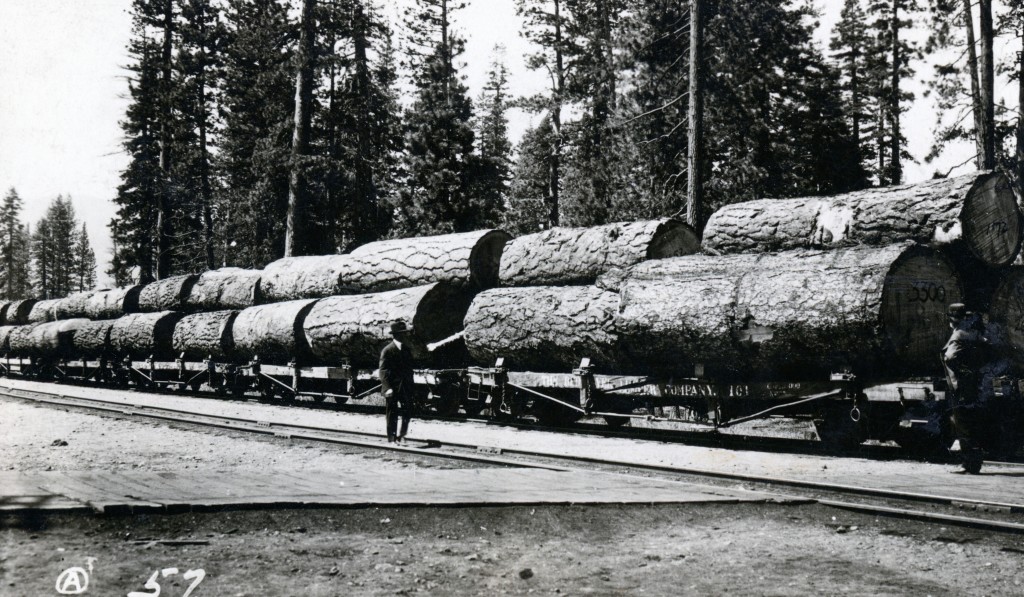
Train load of logs leaving Camp B, Fruit Growers Supply Company, 1922

A reader noticed recently the logs depicted above where on railroad flat cars belonging to the Red River Lumber Company. Fruit Growers found it to be more economical to lease flat cars from the Southern Pacific Railroad, who transported the same from Westwood Junction to the Fruit Grower’s mill in Susanville. Fruit Growers initial operations in the early 1920s, experienced a flat car shortage with Southern Pacific. Red River being a good neighbor obliged to provide Fruit Growers with flat cars until the matter could be resolved with Southern Pacific.

Another point I might add, the above was not a typical load of logs. These type of images, are common among lumber companies. They were used to show investors, bankers and the lot the most premium logs, to show them where the money was being spent. In Fruit Growers case, this photograph would be published in a portfolio to show the citrus growers where their money was used to provide them wooden boxes to ship citrus.

Support

Timber & Stone Act, 1878

A Red River Lumber Company timber cruiser—Hank Martinez

Most of the timberlands in Lassen and Modoc Counties were acquired by a federal land patent known as the Timber & Stone Act of 1878. This Congressional Act allowed individuals to purchase up to 160 acres at a minimum of $2.50 per-acre without being subjected to preemption and homestead laws.It was designed to prevent timber companies and speculators from obtaining large tracts of timberlands, it had, in reality, exactly the opposite effect.

In 1902, the United States Government Land Office created a land rush when it offered Northern California timberlands for sale on the open market. Newspapers in Northern California featured stories how “timber grabbers get all they want.” As the Portland Oregonian wrote: “It is also evident to most people that the present methods of handling our timberland will soon result in putting them all in possession of the lumbering corporations or speculators.”

In 1903, 88,000 acres—primarily timberland—had been added to the Lassen County tax roll. In the spring of that year D.G. Curtis and T.D. Collins of Pennsylvania were buying individual 160-acre timber tracts west of Eagle Lake. By the end of May they owned 41,461 acres of timberland at a cost at $189,410. The property became known as the Collins Tract which was transferred to the Pennsylvania Lumber Company, which had no immediate plans for it, other than speculation.

Support

Susanville Logging

Susanville Logging
“Tunney” Zunino, Susanville Logging, 1951

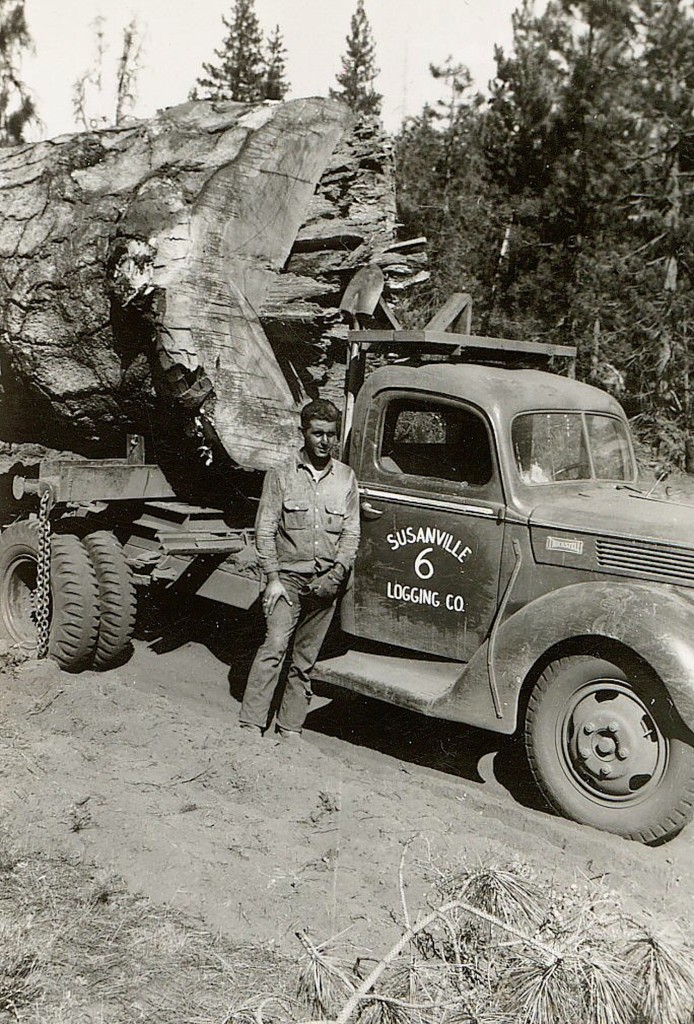
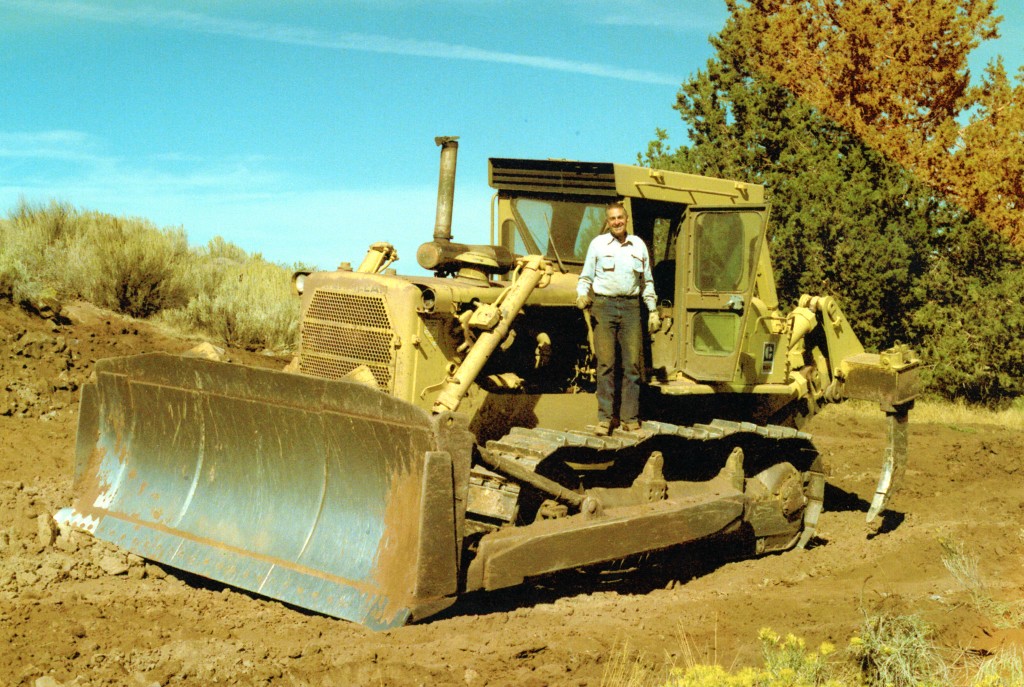
In honor of my father’s birthday, (Leroy W. Purdy), this post will be brief. He began his logging career working at Camp Harvey. His next venture was with his brother James, and they formed Purdy Brothers Logging. This grew into a larger outfit known as Susanville Logging. Circumstances beyond his control saw that company dissolved in the early 1960s. The next re-incarnation was L&M Logging. Just some random related photographs for your enjoyment.

Leroy Purdy
Leroy Purdy at work, Eagle Lake

Sierra Shangri-La – Noted Courses

Blacks Mountain Experimental Forest, 1958

This is the final installment of Harold Gilliam’s publication Sierra Shangri-La concerning Lassen County.

“Susanville is justly proud of its Lassen Junior College. It has earned a national reputation for gunsmithing and forestry courses. The Lassen J.C. Gunsmithing course of four years is one of only three in the entire nation.

“The forestry department offers both a vocational course, preparing students for entering the lumber industry directly. Or it gives two years of accredited study, after which students may transfer to major universities to earn their bachelor degrees in two more years. The forestry course has the advantage of practical observation of the varied lumber industry of the area; the college has its own experimental forest of 160 acres and a small sawmill of its own.

“Blacks Mountain Experimental Forest in the Lassen National Forest draws students as well as industry leaders to inspect new methods being developed in both logging and forestry techniques.”

Never miss a story, click here to subscribe.