Tag Archives: Lassen National Forest

A Big Timber Sale

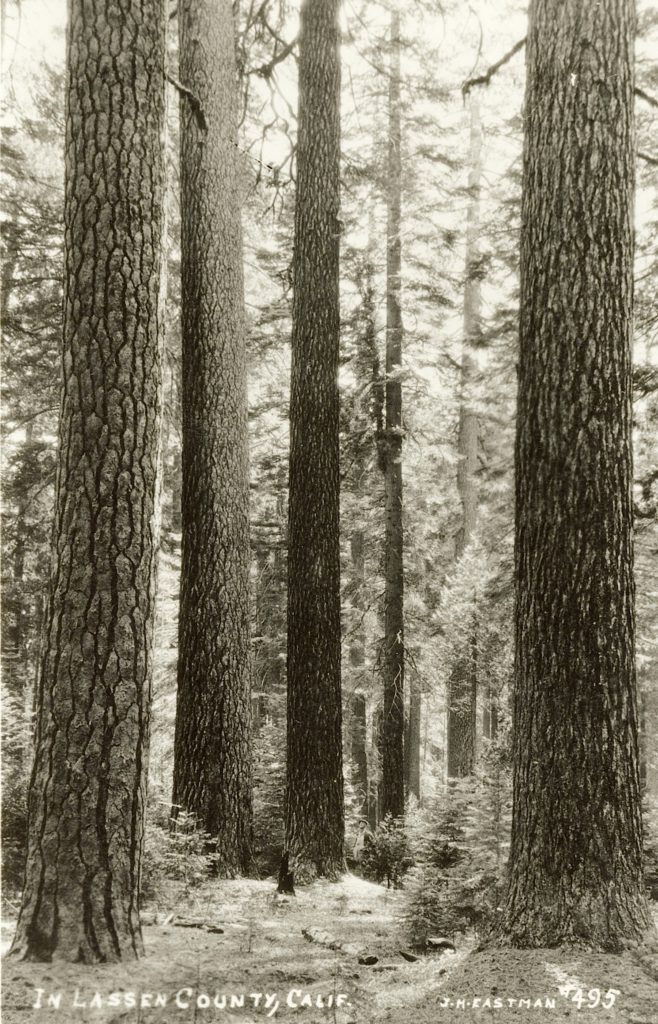
In early 1922, the Lassen National Forest Service advertised it was accepting bids for the Pine Creek Unit timber sale just west of Eagle Lake. This was no ordinary timber sale—it consisted of nearly one billion board feet of merchantable timber! Of course, there were terms and conditions that applied.

The buyer would have twenty to thirty years to harvest the timber. To protect the lands for the future, harvesting was restricted to a maximum of 37 million board feet a year, and only 70 percent of the original timber volume per acre was to be cut. On April 2, 1922, the bids were opened. The following day, Fruit Growers Supply Company bid of $3,314,000 was accepted. The money spent in increments on a pay-as-you-cut basis.

Fruit Growers did have a competitive edge. Their Collins Tract and the Pine Creek Unit were intermingled. Since it was stipulated that only a limited amount of timber could be harvested was not particularly attractive to many lumber companies. Finally, Fruit Growers had already adopted a sustained yield forest management policy, another requirement of the forest service.

As the Lassen National Forest would monitor the sale, it was determined to move its headquarters from Red Bluff to Susanville.
Support

Where are We —Silver Lake

Silver Lake

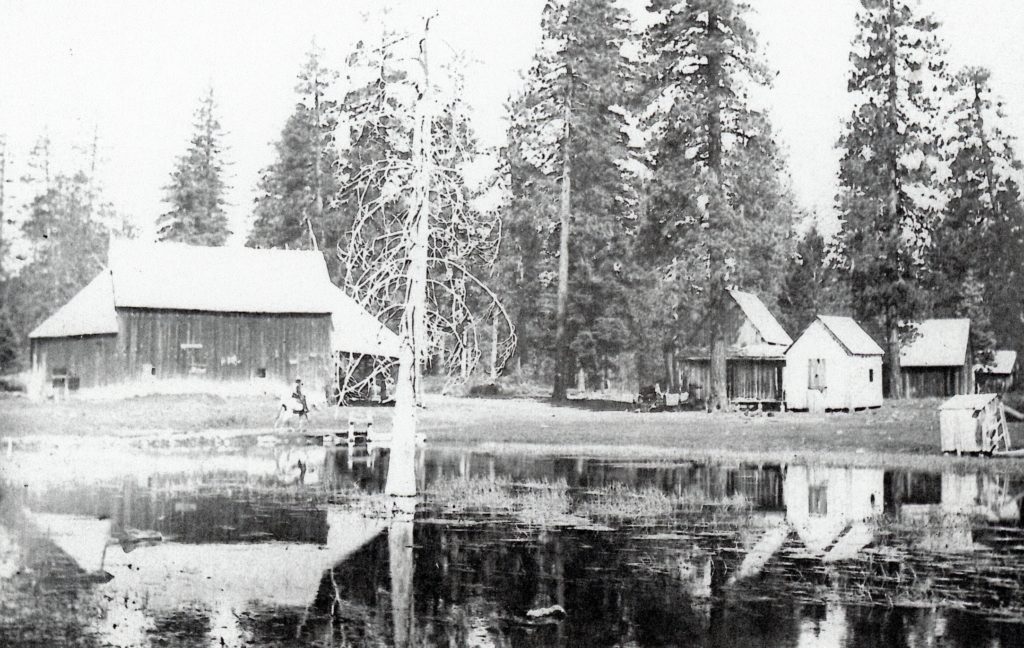
Silver Lake at an elevation of 6,472’ was named sometime in 1870s for the silver like reflections of the water surface when the wind blows. In 1924, the Lassen National Forest Service surveyed summer home lots and offered them to the public on a 99-year lease.

On May 28, 1938, Lurah May Stubblefield was granted to operate a seasonal post office there, that she christened Lake Nokopen.  Stubblefield was the only postmaster and the post office closed on June 29, 1940. The name Lake Nokopen may have been attributed to the Boy Scouts organization, that held summer camp there during the late 1920s and 1930s.

Subscribe

Wild Horses and the Estray Act

Hayden Hill, 1920.

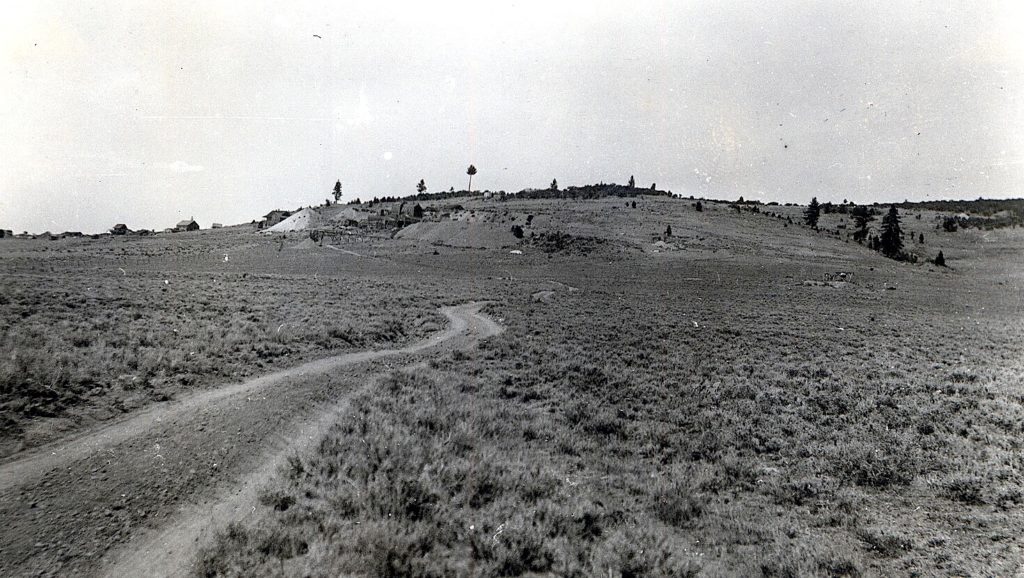
In 1922, the Modoc County Board of Supervisors did a bold act in an effort to control the wild horse population. At that time, they  passed a resolution to allow the Modoc National Forest to round up stray horses on public land using the provisions under California Legislation under the various provisions of the Estray Acts.

George Lyons the Supervisor for the Modoc National Forest contacted W.G. Durbin of the Lassen National Forest for assistance with Lassen County officials, since a portion of the Modoc Forest extends into Lassen County.

On January 31, 1924 Durbin wrote to the Lassen County Board of Supervisors to pass resolution similar to Modoc. Durbin wrote: “For a number of years the Forest Service and stockmen of Modoc County have been trying to free the Modoc Forest of this class of stock and have gotten rid of most of it, except in that portion of the Forest Service extending from Willow Creek and Hayden Hill south to the Pitt River and east of Bieber. To a very large extent this stock is made up are commonly called fuzz-tails and are wither unbranded or of so little value that the owners do not care to go the expense or even gathering them and in some instances they will not claim them after they have been gathered.

”These animals consume and destroy range that is badly needed by the ranchers in the Big Valley country for their cattle. There is only one way of getting rid of this class of stock and that is to dispose of them under the State Estray Act.”

Support

Yikes, the 1926 DeForestation of Lassen National Forest

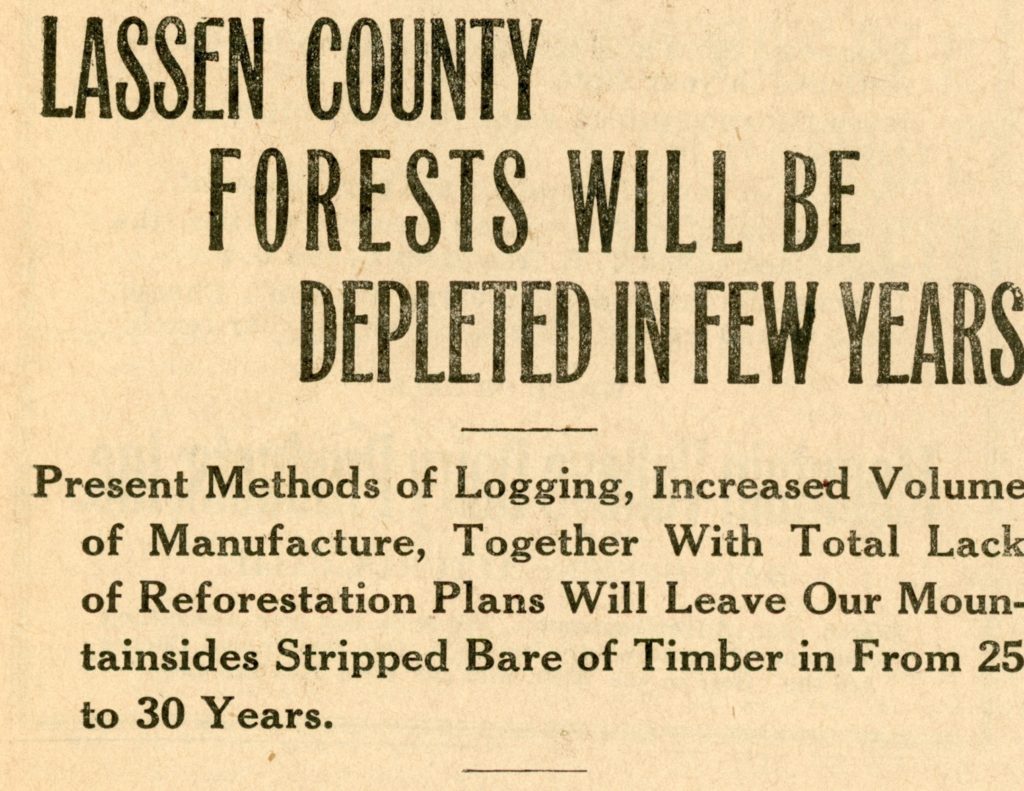
Lassen Mail, April 16, 1926

In April 1926 a conference of forest service foresters was held in Susanville. It was district forester S.B. Show whose statements caused alarm.  Show had been doing extensive studies for a number of years of the nation’s timber resources.

Show noted that the timber resources of the southern states were rapidly being depleted and that, in turn, would put more pressure on the forests on the west coast. When Show was asked how long the forests of Lassen will last, he replied that at the present rate cutting from 25 to 30 years.  Show continued that practically nothing is being done to reforest the lands that are being denuded by the timber operations and unless some constructive plan is worked out it is only a question of only a few years when the mountainsides of Lassen County will be bare and the only great natural resources within our boundaries will be depleted.

Show was not all doom and gloom. He stressed the importance of reforestation. He also noted the current tax assessments on timber provide the owners of such lands with little or no incentive to preserve timber for the future. It is interesting to note that later in the year the Lassen County Board of Supervisors reduced the timber assessment tax rate by twenty-five percent.

Support

Forest Service Aerial Mapping Program

Forest service aerial of the south shore of Eagle Lake taken on 11/9/1941 from Flight No. 44—Hank Martinez

In the fall of 1941, the Lassen National Forest implemented the use of aerial photography as a tool to manage the forest’s resources. However, while the aerial mapping was completed, the outbreak of World War II suspended the work.

In February 1946, the project was brought back to life, to utilize the aerial photography taken five years ago. The forest service was pleased with the program. One of the many benefits, was that forest service personnel could conduct other kinds of field work than surveying during the summer. In the winter months, the aerials provided work for staff to plot out and design new roads, etc.

Subscribe

A $40,000 Investment Pays Big Returns

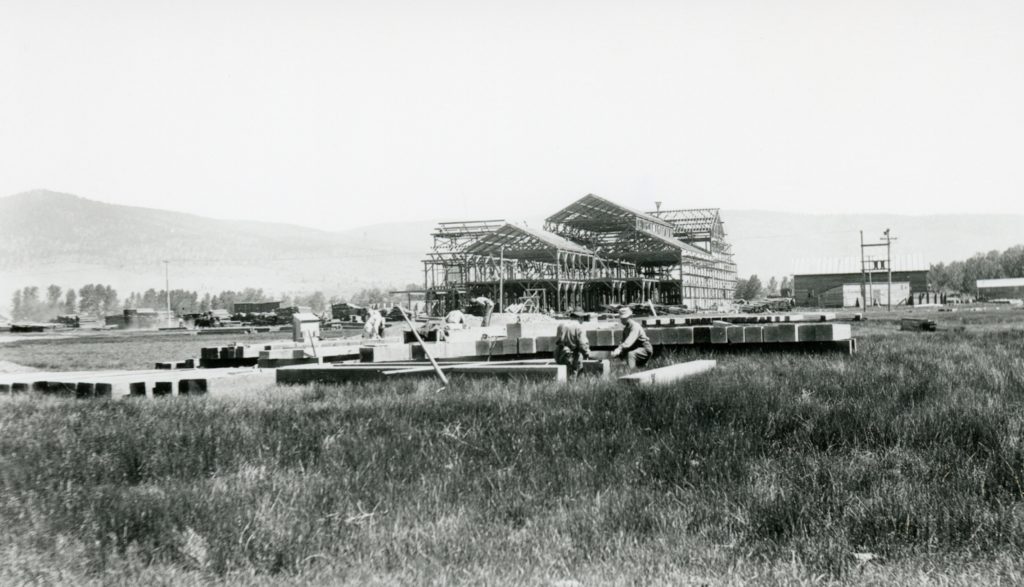
Construction of the FGSBox Factory, Susanville, 1920—Ed Standard

When Fruit Growers Supply Company decided to build a sawmill and box factory in Lassen County, they initially wanted to locate either in or adjacent to their timberlands. Fruit Growers Manager Frank Hutchens consulted with the Lassen National Forest which suggested two sites—Pine Creek, near Bogard Buttes and the Pine Creek estuary at Eagle Lake. There was a third alternative—Susanville.

Susanville’s business community  was eager to have Fruit Growers build their mill there. So much so, they offered a cash bonus. A total of $41,130 was pledged by 243 residents if the mill was located At Susanville. Hutchens was impressed. On August 13, 1919 Fruit Growers agreed to the location of the mill at Susanville.  In October, a check was for $40,070 was presented to Fruit Growers (a handful of individuals reneged on their pledges.

In 1920 construction began on the mill which with cost over runs exceeded over two million dollars. An additional $245,000 was spent to construct employee housing. When the mill opened on April 16, 1921 they initially employed 1,500 people. The initial monthly payroll exceeded $100,000. That $40,000 investment by the community far exceeded expectations!

Support

A Controversial Light (Control) Burn

Clear Creek, circa 1906. Courtesy of Mark Reed

In the past we have explored the topic of control burns by the Red River Lumber Company. With the fire situation at hand, this is going to be discussed widely across the West.

First a bit of background. Clinton Walker, a member of the family owned Minnesota based Red River Lumber Company came to California in 1899 to examine timberland as part of a westward expansion. By 1908, the Company had acquired nearly 800,000 acres of timberland primarily in Lassen, Plumas, Shasta and Siskiyou Counties. Long before the Company cut down a single tree, it had been conducting light/control burns throughout its holdings.

In the spring of 1912, Clinton Walker had planned to do a control burn at Clear Creek, Lassen County. He invited both state and federal foresters to observe. Coert DuBois of the U.S. Forest Service led the call to inform Walker to cease and desist and not do it. Walker ignored their pleas and it went ahead as schedule. He did invite those foresters to attend and they reluctantly showed up. They documented the event by taking notes and photographs (would that be a treasure to locate). Dubois who had been critical of the Walkers and their methods, routinely wrote opinion pieces in the west coast newspapers. He did a 360 degree, and complimented Walker on his systematic light burning approach.

Things changed quickly. The following year, Clinton Walker left Red River over a dispute with the family about its operations. Thus, the light and control burns were suspended. Twenty years later, Clinton would return. At that he time lamented about the neglect of their forests and wrote: “I have never been able to understand why, when we had successfully proven the feasibility of the work of control burns and its advantages, that we discontinued it. In this regard I think we committed a grevious error that has already caused us staggering losses and now have our forest in a very precarious condition.”

Support

A Brand New Lookout, 1978

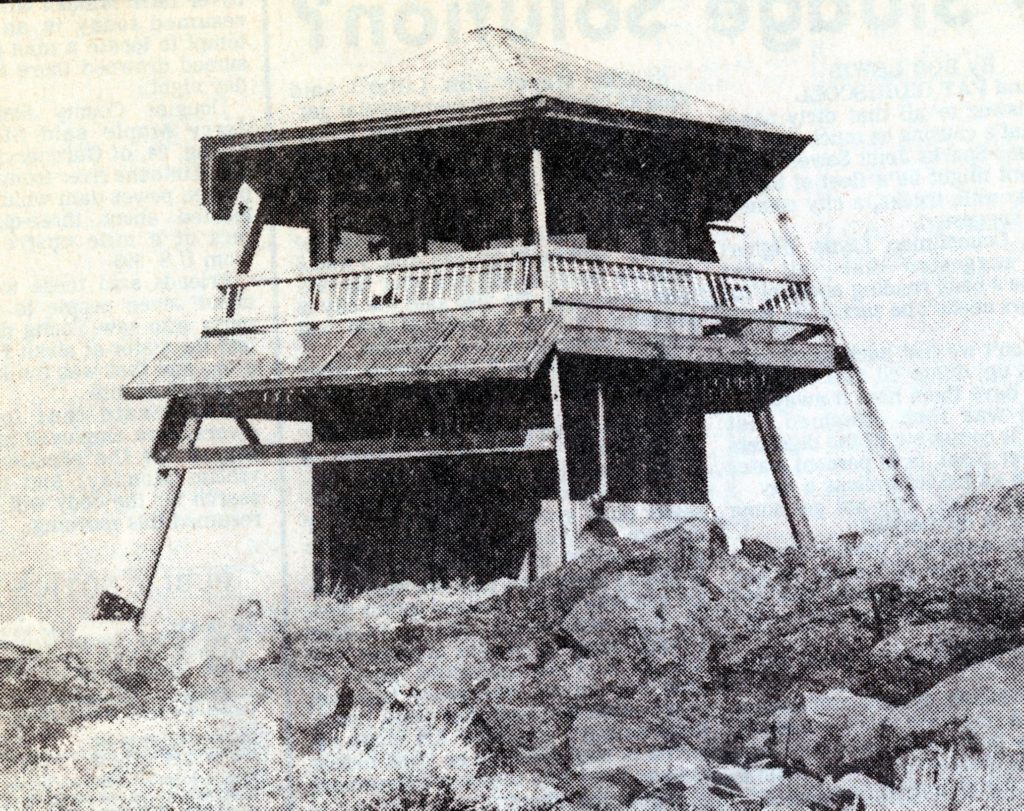
Antelope Lookout—Nevada State Journal, July 25, 1978

In a 1925 agreement between Fruit Growers Supply Company and the Lassen National Forest which came from a fire started by the company, in1924, on the west flank of Antelope Mountain, a lookout was built on that mountain was part of the settlement.

In 1978, it was a replaced by a two-story six-sided structure, which was dubbed the “world’s first solar-powered forest fire lookout.” Officials believed that the solar power could deliver power more cheaply in the long run, than utilizing gas or diesel generators. The lookout was funded by the U.S. Department of Energy and the development work was done by the National Aeronautics and Space Administration’s Lewis Research Center. A similar lookout was schedule to be built at Pilot Peak in Plumas County.

Support

Red River Control Burns

Camp 38
Camp 38, Red River Lumber Company, 1922. It was located on the east shore of Lake Almanor. Courtesy of R.S. Pershing

While I have touched upon this topic before, I came across an interesting letter and how Red River was managing its forest. There are a number of institutions that search this site for all kinds of information, natural history being one. As public service, I bring this bit of information to the surface for future researchers.

On August 10, 1935, Clinton Walker wrote to his brother Archie, who resided in Minneapolis. Archie was stable figure in the Red River Lumber Company’s management, since the company had vast holdings there as well.

Clinton was involved in the initial timber acquisitions in California. In 1913, he resigned over a family dispute on the future operations. He came back into the fold during Red River’s financial crisis of the 1930s. Enough background and onwards to Clinton’s commentary.

”It is regrettable that the house of Walker has no forest man. Kenneth [Walker] covers the nearest, but he seems to be absorbed in the performance of log contracts; our annual fire and insect losses are staggering. A systematic annual light burning at the right season of the year would reduce an ultimately eliminate these sources of loss and the cost would be insignificant as compared to the loss and yearly fire hazard conditions in the forests. Burning by means of power burners on or dragged behind tractors could be done very cheaply and the prospective danger of injuring hollow hulled trees could be eliminated by following the burning with a few shovelers. For the entire period of the Walker family timber operation we have centered our attention exclusively to lumber operation. We are doing nothing but slash down that wonderful forest and letting the fire and beetles burn and eat us down year by year without raising a hand to afford protection from these annual staggering losses.”

Support

Some Camp Fire Permit History

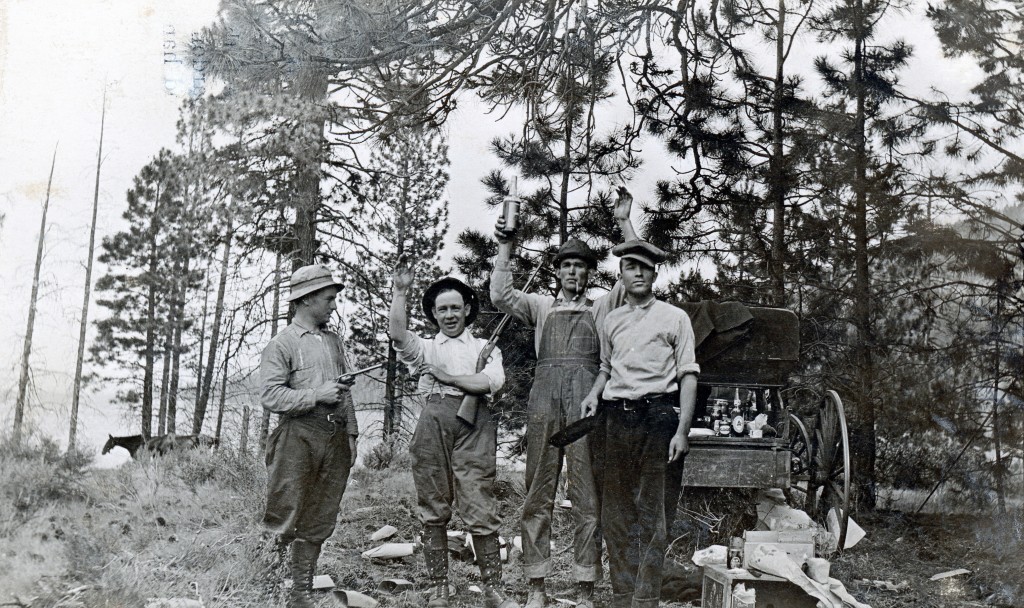
Happy campers at Eagle Lake, 1914.

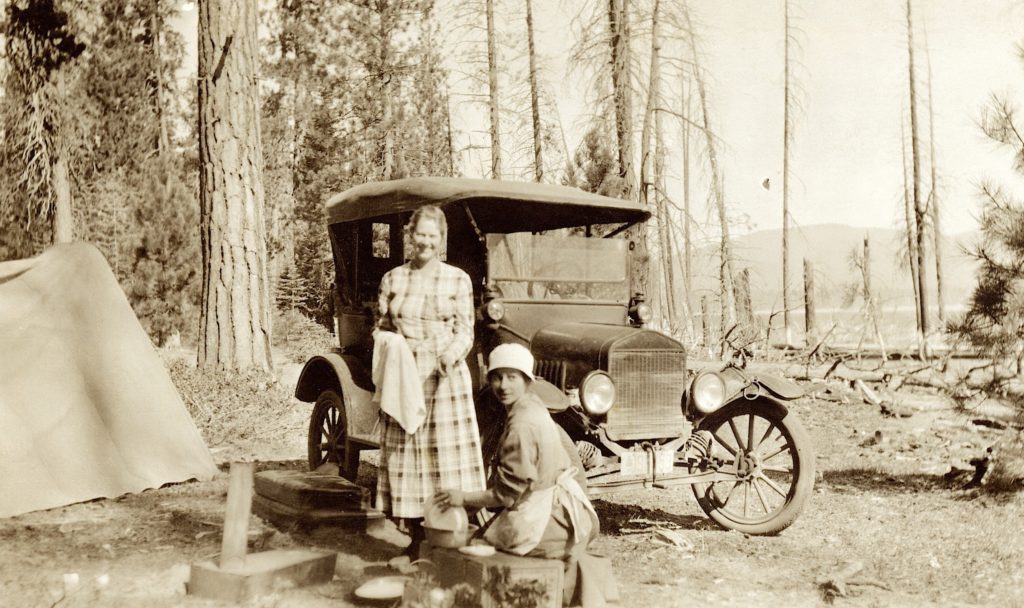
In the early 1900s, saw the creation of the national forest reserves, that became the national forest. Each national forest had wide authority on regulating forest use. A classic example occurred in 1920 between the Lassen and Plumas National Forests. In the spring of 1920, the Plumas National Forest made camp fire permits mandatory, while the Lassen did not. The Plumas National Forest issued the following statement:

”The camp fire permit requirement is one move in an intensive campaign conducted by the forest service for the prevention, detection and suppression of fires during the coming summer. Following a succession of years in which the precipitation has been deficient, this season finds the forest service on highly flammable condition and the greatest possible care is imperative in the use of fire in the woods.”

Eagle Lake campers, 1920—D.M. Durst

Support