Category Archives: History

The Slow Demise of Prattville

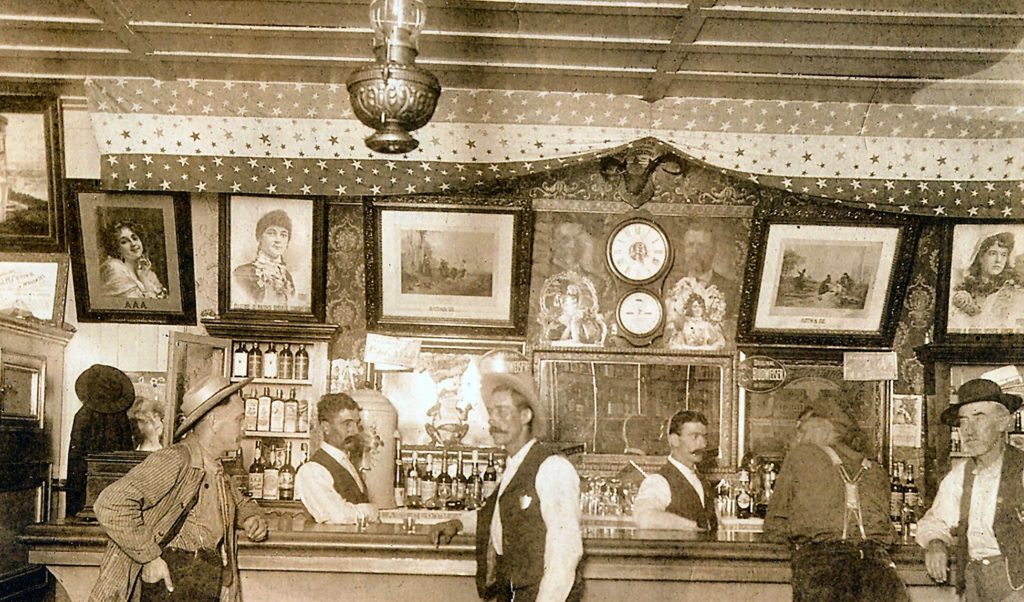
Sorsoli Saloon, Prattville,1905–Jo-Al  Smith

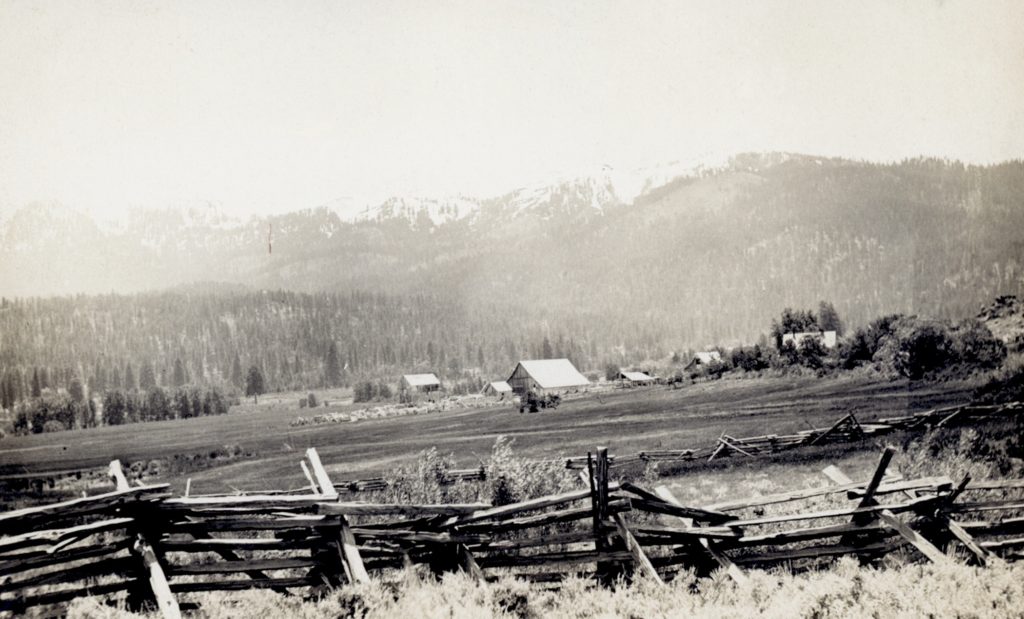
Long before Chester came into existence, and Lake Almanor, too, there was the community of Prattville. In the early 1900s changes were on the horizon when the Great Western Power Company, known today as Pacific Gas & Electric Company, began buying property in the region then known as Big Meadows, for a reservoir site. One of the problematic properties for Great Western Power was the town of Prattville.

In 1909, there was a suspicious fire that wiped out the majority of the town of Prattville, though it still hung on barely, much to the dismay of Great Western Power. Frank Sorsoli lost his brand new two-story hotel, along with a saloon. Despite his severe loss, Sorsoli decided to rebuild his saloon. The only other business in town was Timothy Lucy’s general merchandise store, which also housed the Prattville Post Office. On December 23, 1911 Sorsoli sold his saloon and five town lots to Great Western Power and moved to Susanville and spent the remainder of his life there. Lucy carried on, but with the flooding of Big Meadows to create Lake Almanor in early 1914, he saw the proverbial writing on the wall and closed his store on March 31, 1914, and at that time the Prattville Post Office was discontinued.
Subscribe

Fruit Growers’ Bond Measure

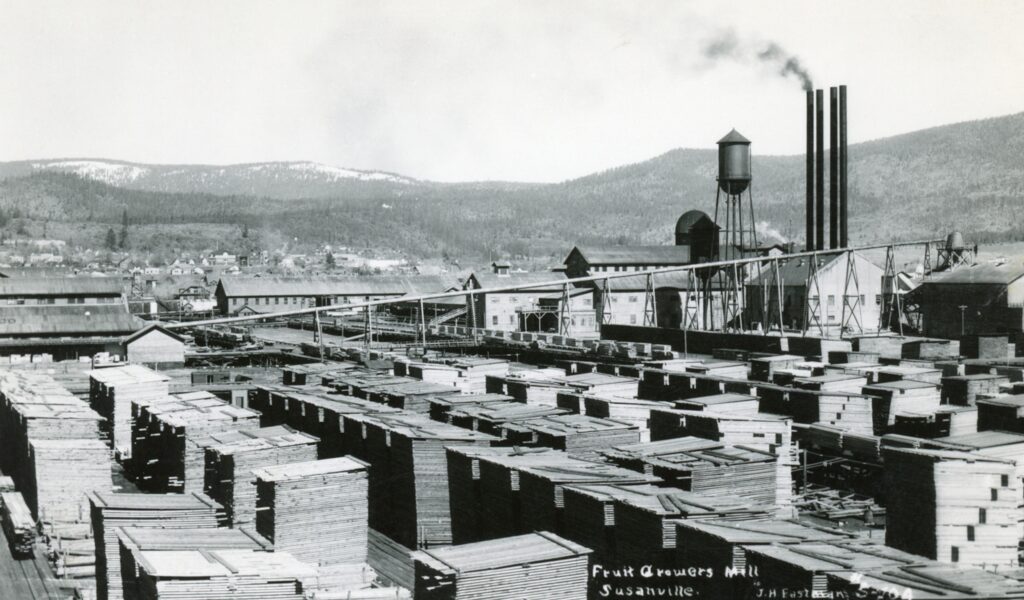
Fruit Growers Supply Company, Susanville, circa 1935

After a few years after Fruit Growers Supply Company took over a lumber mill at Hilt, it had turned into a wise investment for the citrus  growers to meet the demands for wooden boxes to ship citrus.  In 1919, after extensive research Fruit Growers decided to embark on a second mill at Susanville.

To finance the purchase of timberland as well as the cost associated to build a sawmill was not a cheap proposition. To purchase the Collins Tract of timber would cost $1,102,493 and to build a mill and related facilities was priced at $2,331.249. To raise the capitol its was deemed to sell $4 million in bonds.

One half the bonds were sold privately and the other half publicly. The private issue was immediately oversubscribed. Sold in denominations of $500 or $1,000, the bonds yielded 6 1/12 per cent interest payable semi-annually.

To pay for the bonds the growers agreed to assess themselves two cents per box. In addition to the assessment, for every 1,000 board feet of lumber sold, four dollars was budgeted to pay off the bonds generating $300,000 annually. In 1934, Fruit Growers paid off the bonds in record time and the Susanville operation was debt free.

Support by subscribing.

An Exciting Photograph Collection

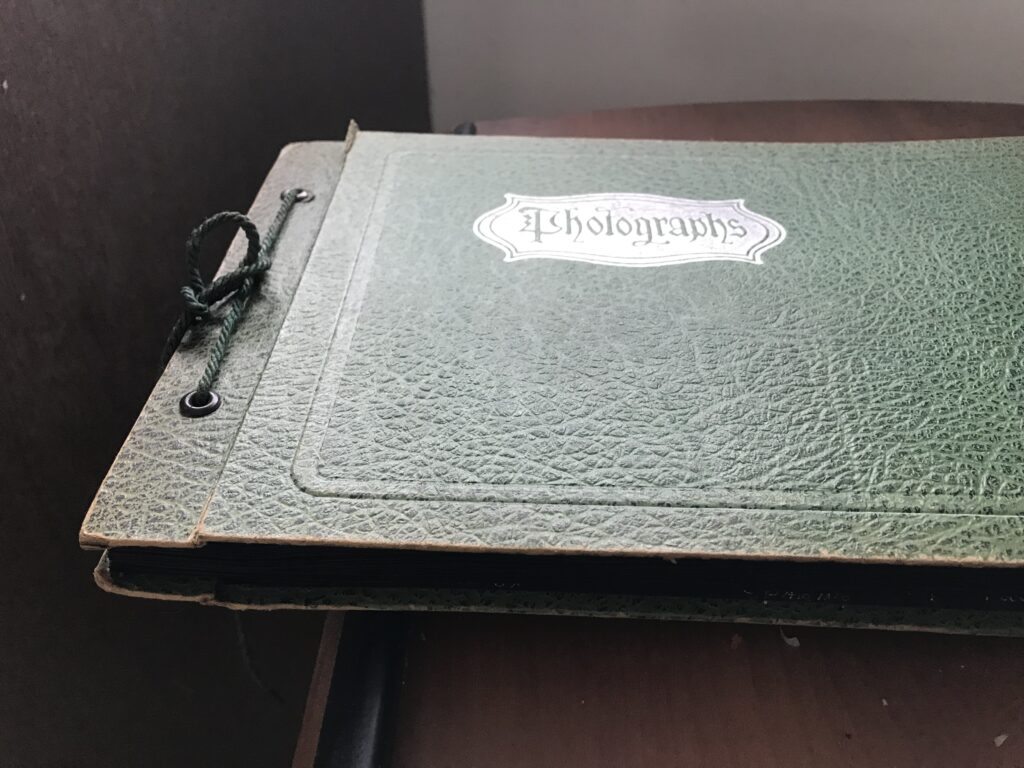
One of three photograph albums of Charles Bennett

On March 22, 2023, I received an email from Kathy Seitrich of Missouri concerning her father’s, Charles H. Bennett’s photographs. Bennett as she relayed to me was stationed at the Secret Valley CCC camp from January 1936 to January 1938. Of course, I was very interested, especially since one does not come across old photographs of  Secret Valley. Some ten days later I received a package containing three photograph albums.

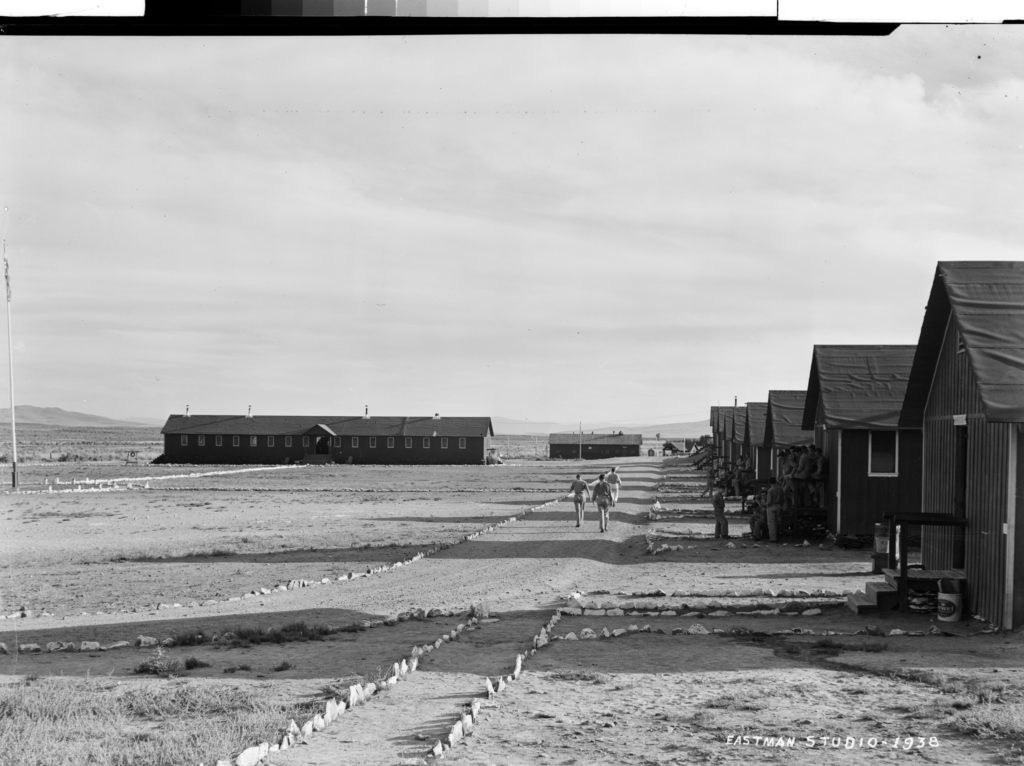
Secret Valley CCC Camp, 1938—Courtesy Special Collections, UC Davis

The photographs are a treasure trove, not only of the scenes of the CCC camp, but Bennett’s various outings around the area. One such outing was to Litchfield, Wendel and Amedee. There are photographs of the repair work of the Eagle Lake siphon, as well as some scenes of Eagle Lake, which it should be noted the Lassen County Board of Supervisors lobbied for a CCC camp there, but was denied. Also what makes this collection special, is Bennett did a great job of labeling and dating the photographs. Now, I just need to overcome the technical difficulties with the computer/scanner issue,  but progress is in the making.  Stay tuned.

Tim

P..S. There are some photographs of the Oakland Bay Bridge under construction, which I could include in a Tuesday Tidbit, if any one is interested.

Bartlett Said’s Varied Journies

Said Valley Reservoir, 1921. Courtesy of Lola L. Tanner

Approximately some 40 miles north of Susanville, along Highway 139, there lies a small, non-descript place known as Said Valley, or when there is water Said Valley Reservoir, the latter is actually good fishing when it retains water.

It was named for Bartlett Said, somewhat of a free spirit in his day. Born 1813 in Kentucky, Said with his family migrated to Placerville, California in 1850. From there they moved to Rich Bar, Plumas County. His wife, Mary, not fond of her husband, disposed of him. Bartlett, then took solace with his daughter’s family Nancy Jones, who operated Summit House in eastern Plumas County.

One of the reasons for Said’s wonderlust was mining. When news circulated about the discovery of gold in northern Lassen County, Said went to check it out. He located in the northern extreme of Grasshopper Valley, that in time became known as Said Valley.  After several years, he ventured over to Horse Lake.  From there his prospecting adventures took him to Long Valley, in Lassen County, where various relations resided.

Said, like so many others, struggled to make a living at mining. In 1896, the family had placed the elderly patriarch in the Lassen County Hospital, which also served as a poor/old folks home. He died there in 1904, and lies buried in the Susanville Cemetery in an unmarked grave.

Subscribe

I Did Not Know

Perkins Ranch, Gold Run, 1906—George McDow, Jr.

I am always learning something new, which I suppose is a good thing. I never knew the word “run” can be construed as a small creek or stream, as in the case locally Gold Run. It happens to be more common term in the Eastern United States. If you were like me, and been in the dark all this time, you have been enlightened, too.

Tim

Who was Patrick Flanigan?

Patrick Flanigan — Wren’s History

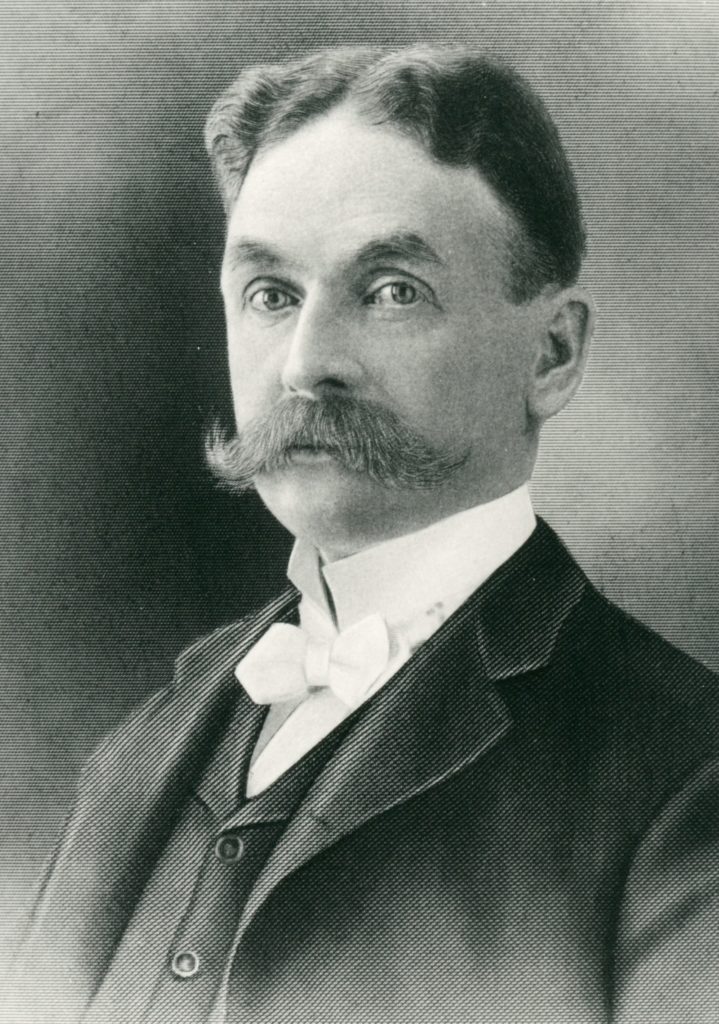
Patrick L. Flanigan was one of those rags to riches to rags stories. He was a member of the Nevada State Assembly and also Senate during the 1890s. Of course, many in this region were aware there was an a railroad town in eastern Honey Lake Valley named for him.

His story began In 1877, when at the age of 17, Flanigan came west to Reno where he found employment milking cows. Five years later he obtained a loan from the Washoe County Bank to purchase 1500 sheep. Thus, like many before and after him became an itinerant aka ‘tramp” sheep man and moved his sheep from place to place where ever he could find feed and water. (When the Taylor Grazing Act came into effect in 1934, put an end to this practice.) Flanigan, like so many others, lost over 50% of sheep during the harsh winter of 1889-90. Continue reading Who was Patrick Flanigan?

Bly Tunnel & The RFC

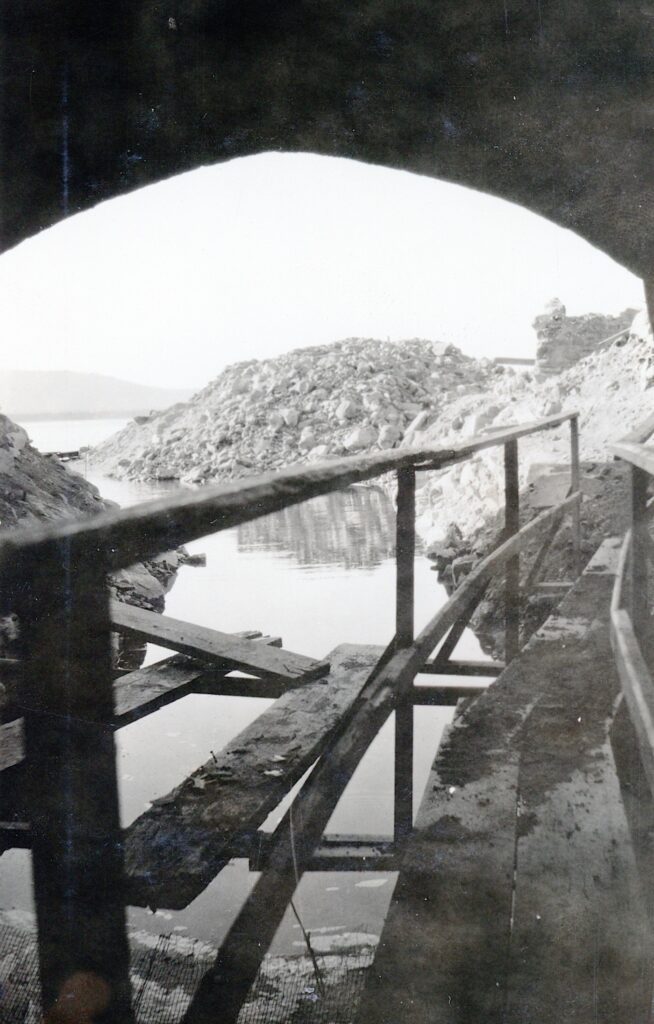
Bly Tunnel Inlet, 1925—Lola L. Tanner

1935 was a pivotal year for the Tule & Baxter Creek Irrigation Districts concerning the Bly Tunnel. Not only had they exhausted what limited funds on the annual extension of the inlet, but the level of the lake continued to go lower. The district’s engineer, Harry S. Riddell came up with last minute plan.

In 1932, President Herbert Hoover’s administration established the Reconstruction Finance Corporation (RFC). This agency was designed to facilitate economic recovery during the Great Depression.  In 1935, Riddell, submitted an application on behalf of the districts for $1,465,000.

Riddell’s plan was two-fold. The bulk of the loan would be used to reach a settlement with the bondholders for fifty cents on the dollar.  The second portion was to get the irrigation system in operation.  Instead of proceeding with the costly work of continual digging to extend the intake channel, he proposed a pumping plant. Riddell estimated the cost of a plant at $45,000.

The application to the RFC was denied. With no solution at hand, Riddell resigned and moved to Sacramento. In the 1940s, W. Coburn Cook resurrected the project, but that is another story.

Support by subscribing.

Susanville Library Association

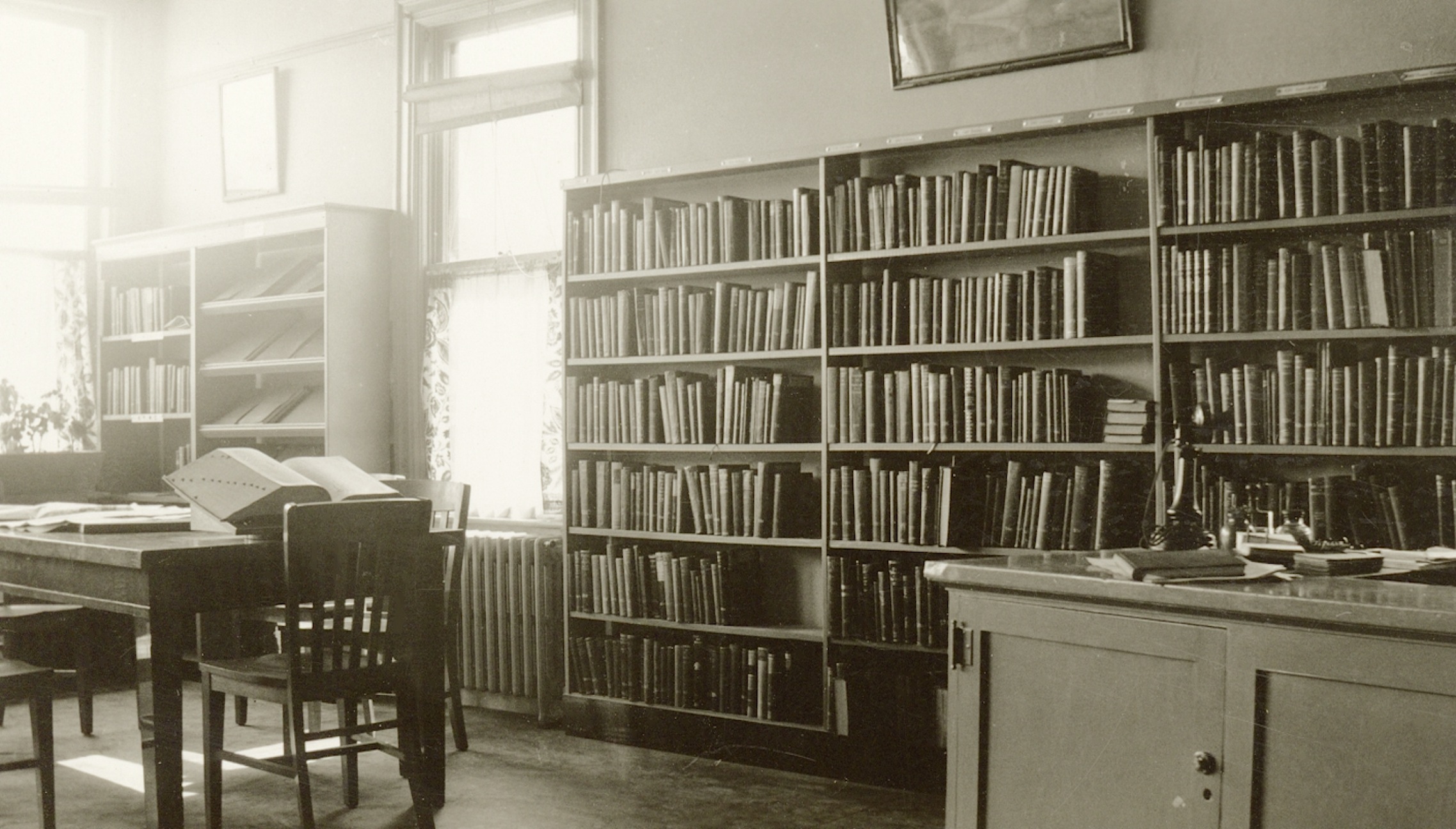
Susanville Branch, Lassen County Free Library,1920

The establishment of a library was a slow, tedious process. In 1906, one of the earliest attempts to form a library came about when some civic minded people formed the Susanville Library Association. Their initial goal was to establish a Reading Room.  Through the generosity of Charles Emerson he donated a room in his hotel for this worthy enterprise. However, the organization struggled and by 1908 it had been disbanded.

There was hope on the horizon when in 1912 a group of civic minded women formed the Monticola Club. In the fall of 1914, Lottie Cahlan of the Monticola Club reported that preparations were being made for. Reading Room in the newly constructed Del Mar building on the corner of Main & Roop Streets. They would have the expense of rent at $40 per month, in addition to lighting costs. The city agreed to assist with some of the expenditures. Members donated furniture and books. Each member donated one day a month to volunteer in the Reading Room to assist patrons, who could examine a newspaper, magazines or books. The Monticola was not finished. With their momentum by the fall of 1915 they had convinced the Lassen County Board of Supervisors to form the Lassen County Free Library.

Support by subscribing.

Eagle’s Peak Ski Area Revisited

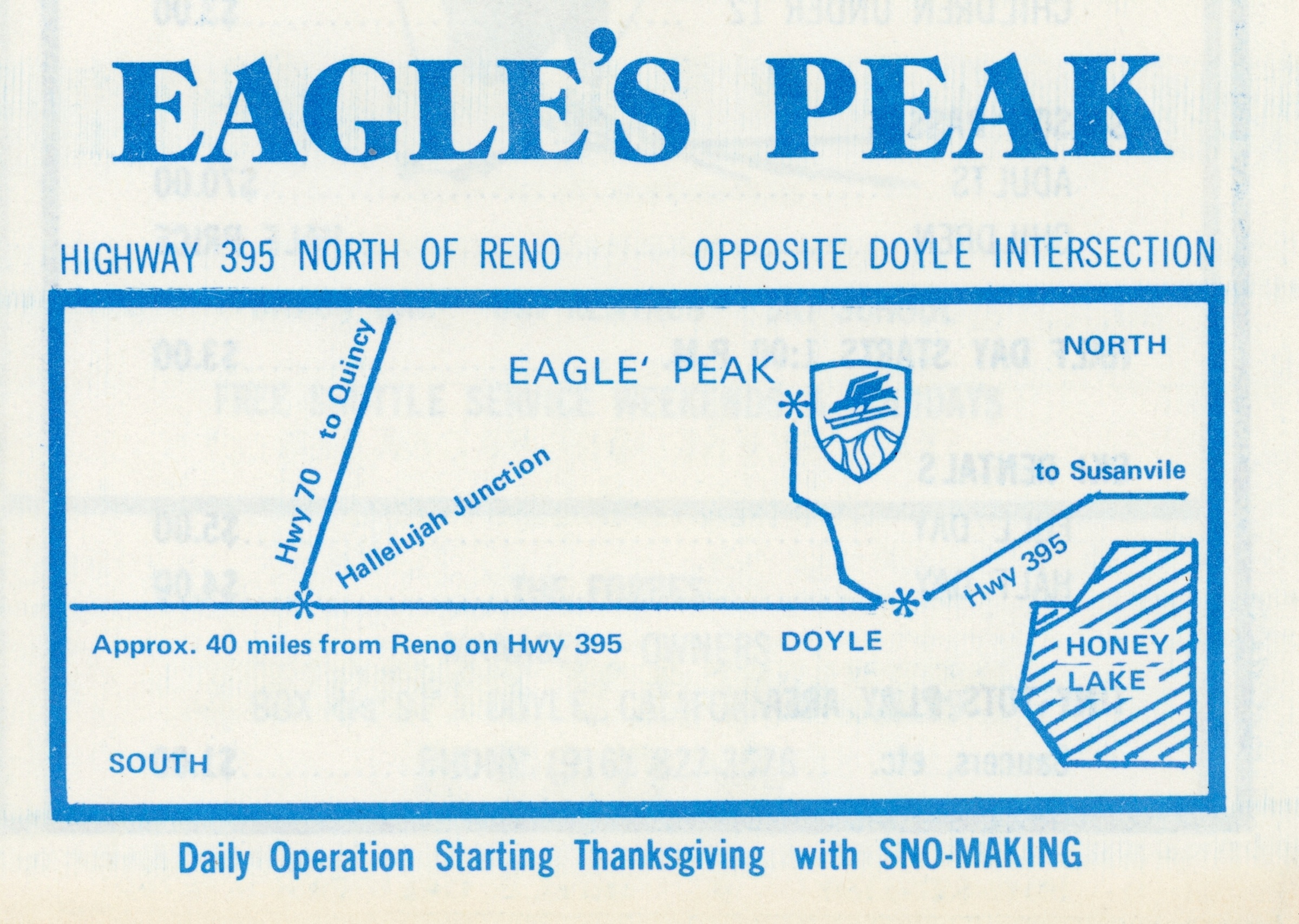
A portion of the resort’s brochure.

Note: This originally appeared on June 28, 2019. There are several new subscribers who would be quite interested on this topic. Also, unfortunately I have not located any additional information.

This short-lived ski resort was the brain child of Ernest “Ernie” Forbes, an Austrian skier. Forbes established Eagle’s Peak in 1971, in one of the more peculiar places, near Doyle. As the late Paul Herman informed me that Forbes always wanted his own ski hill. In a 1972 interview Forbes stated “Started a dream that is becoming more and more a reality everday.” He designed the entire operation with the first slope for beginner and intermediate skiers that according to Forbes to accommodate 150-200 skiers at a time. Of course, Forbes offered skiing lessons, since he had been a ski instructor at various resorts in the west. Other amenities included a snack bar, ski rentals and even a free shuttle service on weekends and holidays. Of course, Forbes had grandiose plans of a modern lodge, advanced ski runs and so forth, none ever materialized. Records are rather sketchy but it remained in operation until the early 1980s.

Support by subscribing.

Some Geographic Trivia

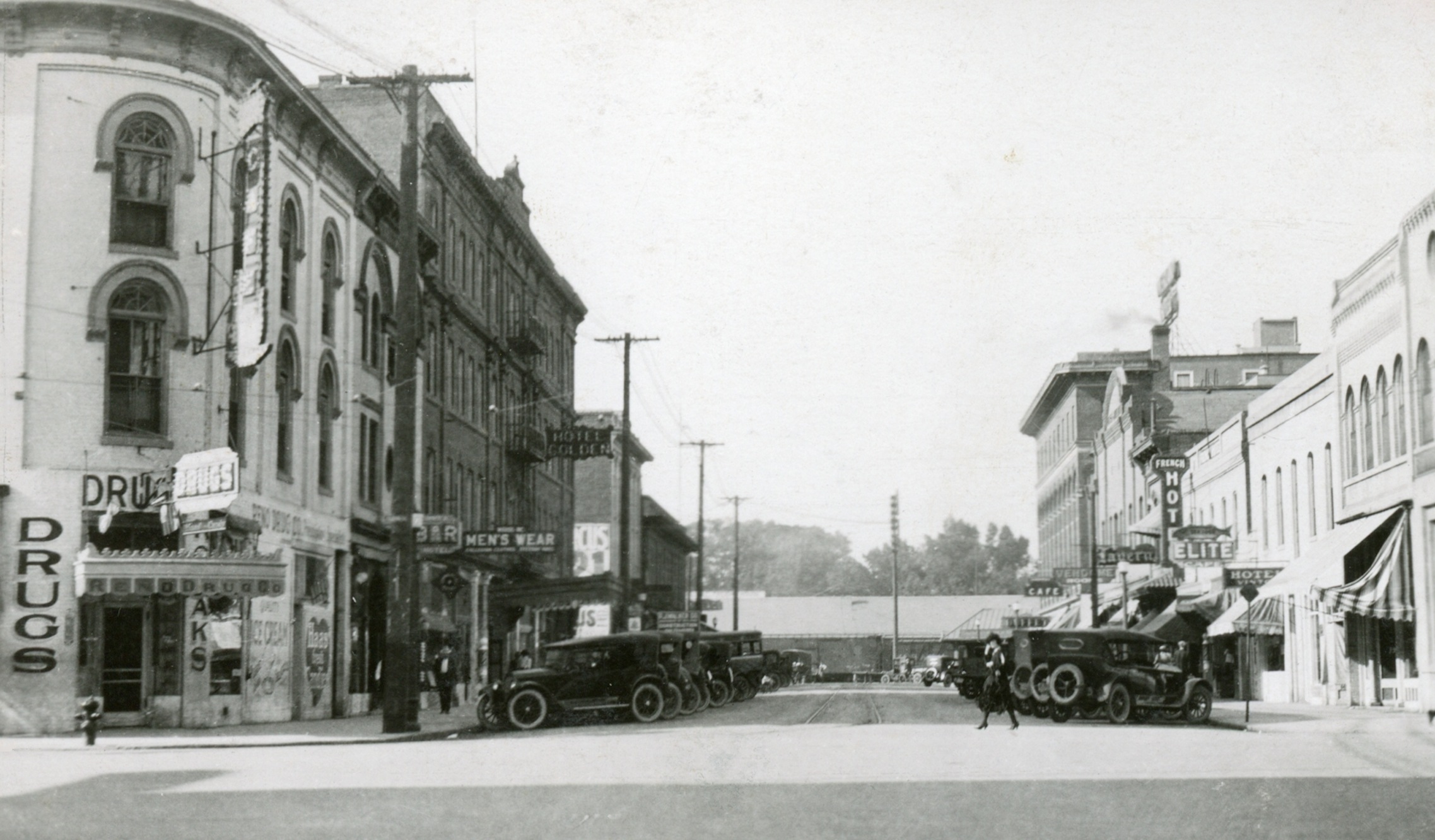
Center Street, Reno, 1925—Lola L. Tanner

Since it is April Fool’s Day, I thought I would pass on an interesting piece of geographic trivia—one I had won many bets. Years ago, there a a syndicated newspaper columnist, L.M. Boyd, whose columns were filled with all kinds of interesting trivia. One of these caught my attention, since it was somewhat local in nature. Boyd dutifully noted that Reno, Nevada was west of Los Angeles, California. It does sound strange, but when one examines the curvature of the California coastline it becomes apparent. Or more scientifically, Reno’s Longitude is 119.29725 West and Los Angeles is 118.29122 West.

Tim