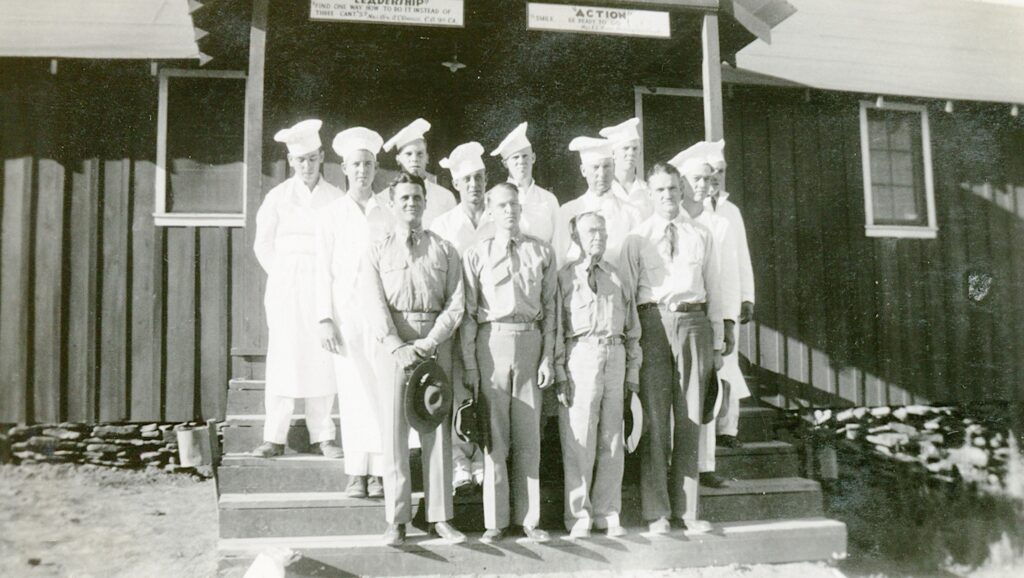
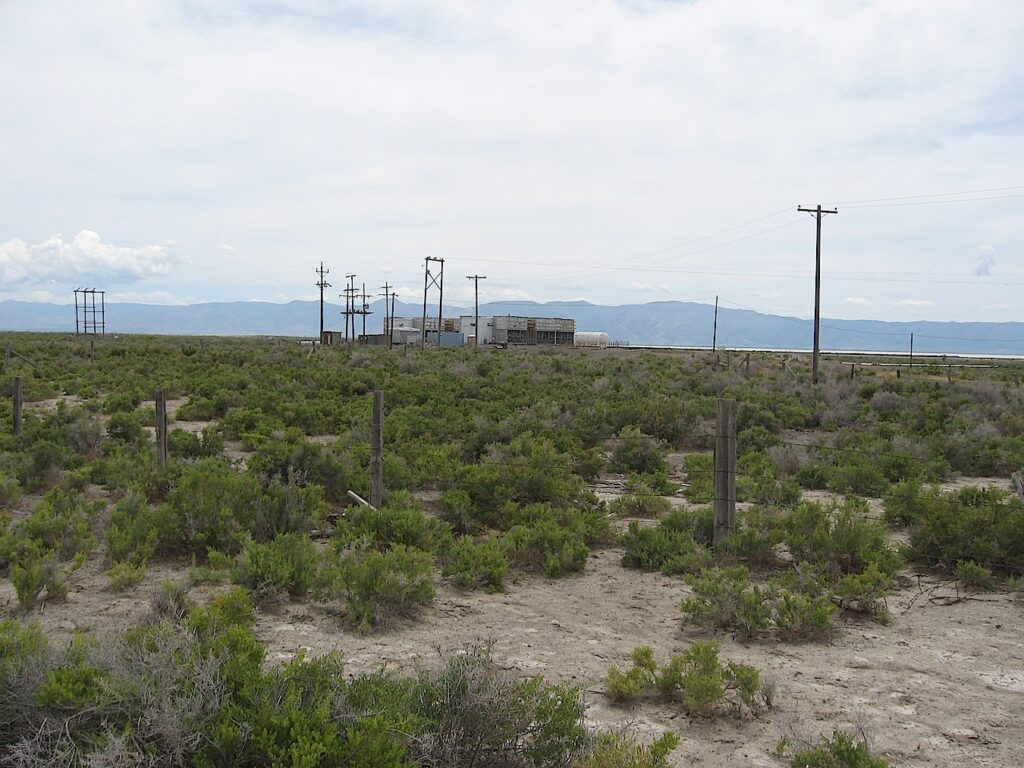
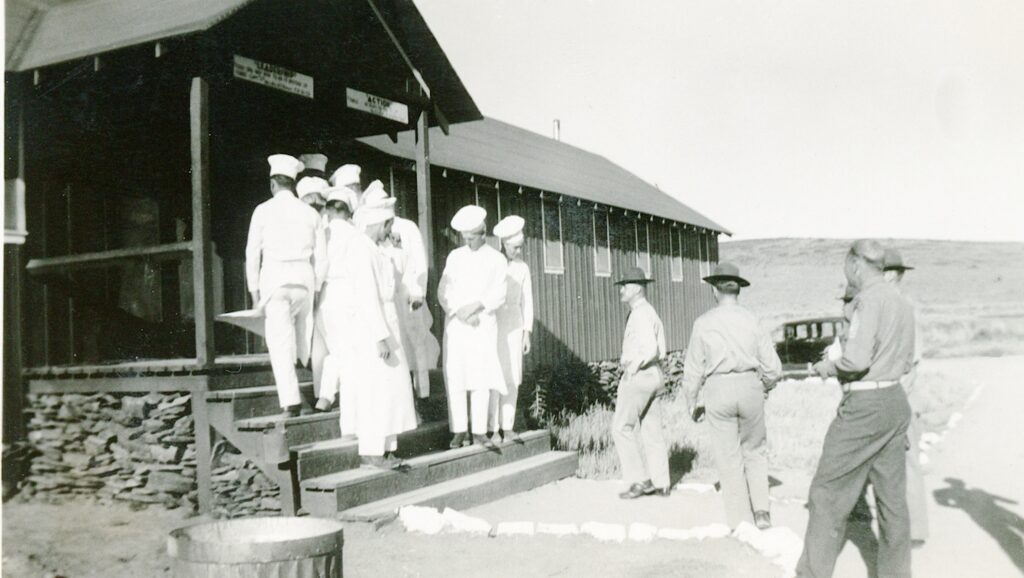
A speciality school to train chefs and bakers in Lassen County, years ago? It did exist briefly, but neither a public or private institution. Enrollees had to be a part of the Civilian Conservation Corp. The Secret Valley Camp held one special training. It was a four week course in food sanitation and preparation.
Generally, most people associate the CCC’s with manual labor associated with public works projects. There was another element to the CCC program. Many of the enrollees had sparse educations. In the evenings, the camps held a wide variety of educational courses. Interestingly, at Secret Valley, one of the popular courses dealt with first aid.
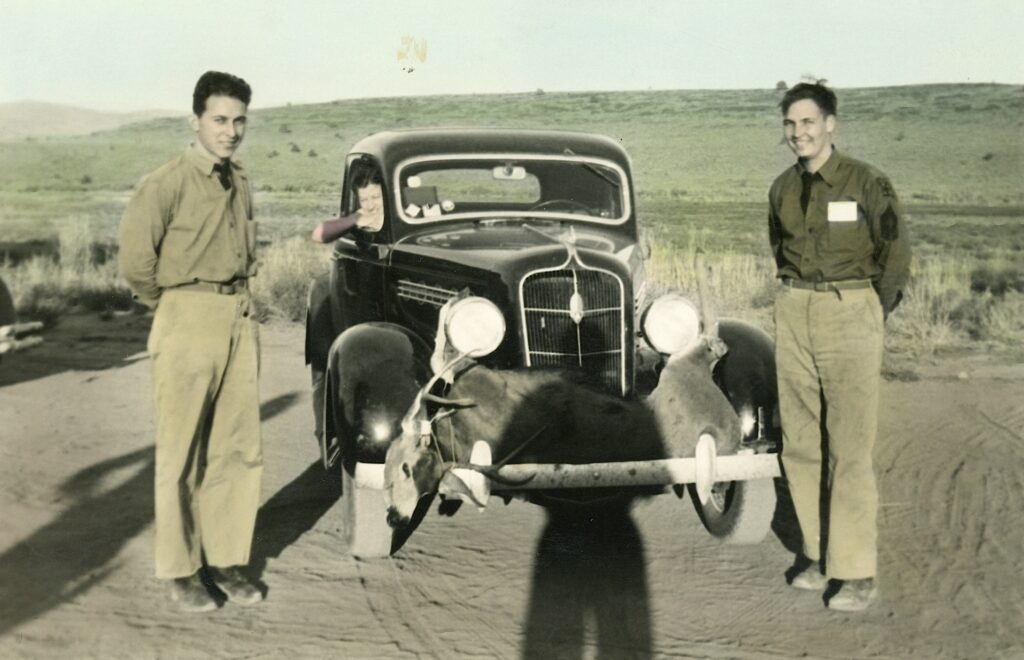
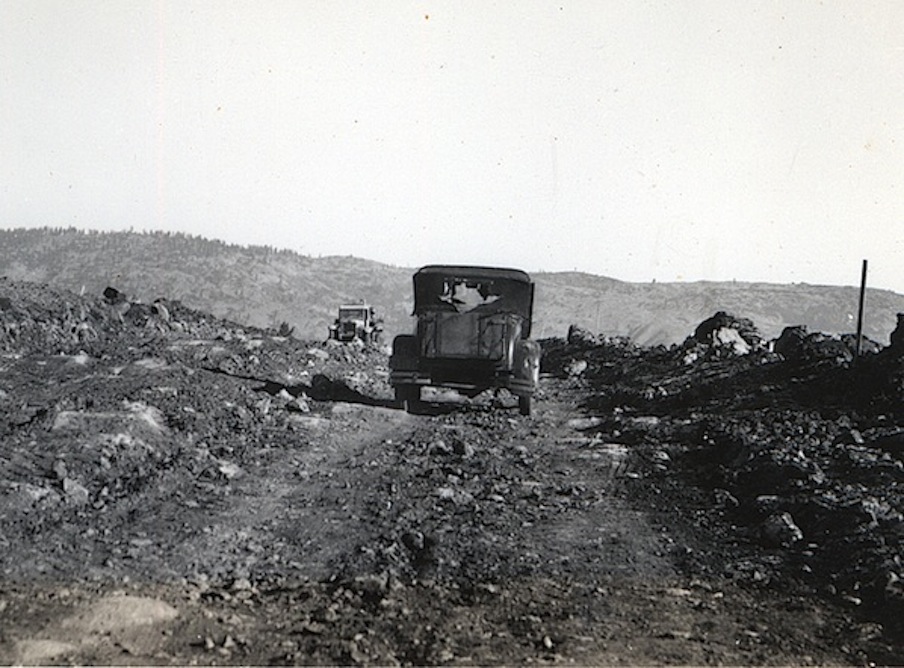
Showing off the trophy deer, Secret Valley CCC camp—-C.H. Bennett Collection
Since it happens to be deer season in Northeastern California. This photograph was taken at the Secret Valley CCC Camp. Let’s just say this is not an ideal way to haul a deer carcass, unless you have no intention to consume the venison.
Some times a picture is worth a thousand words, and some times a picture need a thousand words of explanation. What is interesting in this scenario, the apparent hunters are is dress uniform. Of course, usually the commander is the only person with an automobile. Finally, who is the passenger in the car?
Highway construction just north of Susanville, 1947
It was a monumental task to build California’s State Highway system. Funding, by the way, was not a major issue. Voters in the 1910s and 1920s routinely passed bond measures. This was especially true by 1920, when the automobile had become the preferred method of travel. It was faster than a horse buggy and there were no time constraints compared to train travel.
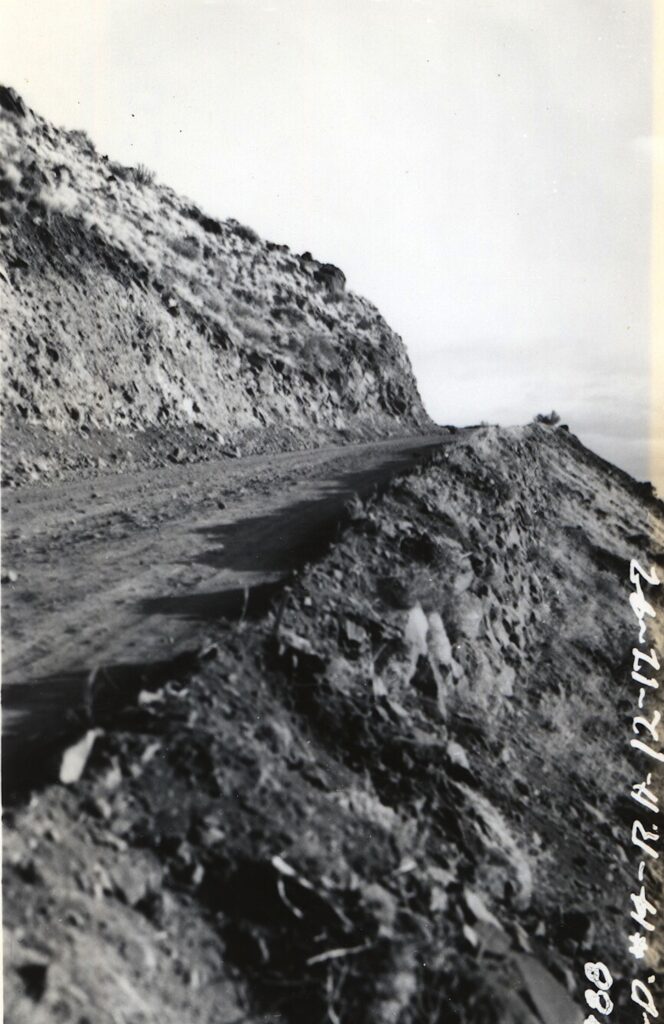
Antelope Grade construction 1947
What we know today as State Highway 139, took thirty years to construct from Susanville to the Oregon border, near Malin. Like many highways, it was built in segments. It was rather odd, the construction from Susanville over Antelope Grade to Willow Creek Valley did not occur until the fall of 1947. At that time, Teichert & Company of Sacramento was awarded the contract to make 16.7 miles of road improvements from Susanville to the far side of Willow Creek Valley. The $238,423 contract stipulated for it to be completed within 180 working days. The big question was whether the weather would cooperate. Fortunately, it did. In January there were twenty-three days when no rain or snow occurred. By March the construction was completed and an oil surface was applied to the road that summer.
In 1911, the California Legislature implemented a voluntary Workmen’s Compensation Act. It failed way short of its goals. In 1913, the introduced a new version, but this time it was mandatory. It initially affected large manufacturers. In yesterday’s column, T.B. Walker was not pleased with this legislation and with the construction of Westwood underway, there was no way to avoid it.
Companies had two options: 1) They could make payments to the State which set up a special account or 2) They could self insure.
Red River Lumber Company went the self-insured route. Each month one-dollar was deducted from employee’s salaries. This money would fund the Westwood Hospital. For employees it was a good deal. In turn, they received full medical coverage, and even for not work related injuries. As far as I am aware Red River continued with the self-insured route until they sold Westwood in 1944.
When Fruit Growers Supply arrived on the scene they, too, opted for self-insured, just as they did at Hilt. In 1942, Fruit Growers opted out of self-insured and money collected from employees were sent to the State. This was not so good for employees, because their insurance covered only accidents on the job. One of the side effects was hospital at Hilt was closed, but converted into a first aid clinic.
When T.B. Walker was scouting his westward expansion of the Red River Lumber Company he examined all angles. Two important topics were politics and taxes. He was not fond of California politics, but then again he did not like Minnesota taxes.
In Walker’s opinion he though California had an anti-business stance, and he was concerned about future legislation impacting on Red River’s profit. In a 1913, letter to his son, Willis Walker, T.B. made reference to the passage of legislation concerning
workmen’s compensation and providing medical benefits. T.B. wrote:” There is a very unsatisfactory labor liability law that seems to be more drastic than has been passed in any legislature. I am aware that the prejudice against business in California has got so far along that it is but little use of make any defense or efforts at protection of our legal rights and proper treatment.”
In summation, T.B. declared: “The California Legislature is a sly,
reckless gang of socialists, and have succeeded in completely
deceiving the people through which they can make successful war
against capital and enterprise”
Tomorrow: The California Workmen’s Compensation Act of 1913
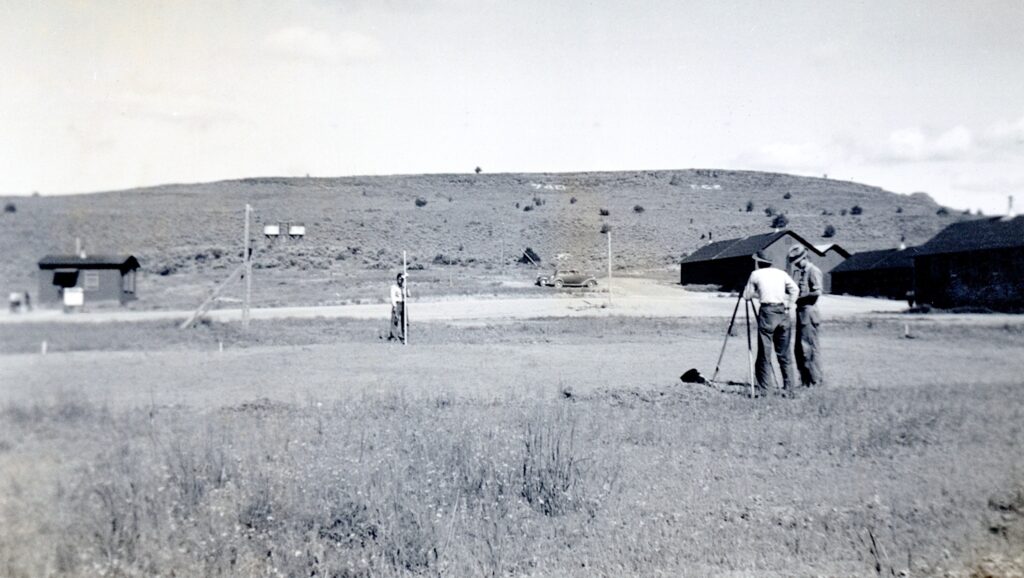
Surveying the tennis court at Secret Valley. Notice high on the hillside the men had whitewashed rocks with”CO 740” and “CCC”—-C.H.Bennett Collection
One of the challenges with CCC camps of 1930s, and especially remote ones like Secret Valley was the simple fact that the men needed diversion outlets. Customary, many camps, the enrollees were busy with their assigned duties five days a week. Saturday mornings was for cleaning. Saturday afternoon and all day Sunday were time off for the enrollees. From time to time, the enrollees were transported to Susanville to attend high school basketball games, dances and even the county fair. On some occasions a group from Susanville would make the trip to Secret Valley to hold a dance, etc.
Some of the men were creative on how to pass the time. It was interesting to come across this gem of a photograph where the men built a tennis court! Some of the men on Sunday’s went hiking and explore the surrounding territory. This, of course, led to the discovery of petroglyphs. There was also a large recreational hall at the camp, and more about that in the “Ode to Secret Valley.”
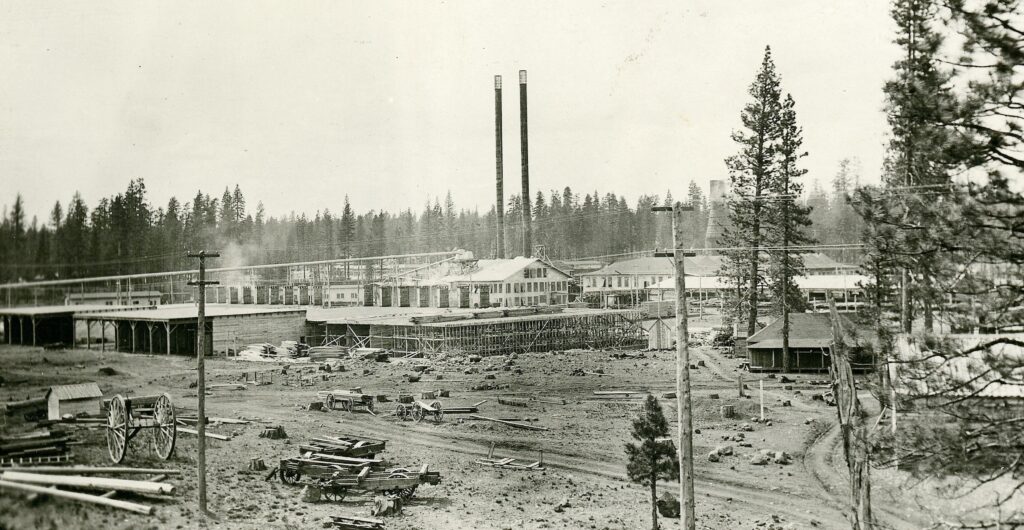
Truth be known in the beginning Red River Lumber Company had three sawmills at Westwood. The first was a portable circular sawmill powered by an old hay threshing machine engine. This mill was assembled in September 1912 and sawed its first piece of lumber on October 1. This mill would provide lumber for construction of Mill B. Mill B would in turn supply lumber for Mill A, the permanent one.
Mill B had a 40,000 board feet daily capacity. The mill was pushed to its limits and it became around the clock operation. Of that output, common grade lumber was utilized to build the town and highest-grade lumber was stored awaiting shipment for when the railroad arrived.
There are discrepancies as to when Mill A was placed into operation. Some accounts have that the first board produced occurred as early as May 1, 1914 and others as August 1. Interestingly, both Mill B (temporary) and Mill A (permanent) were running at the same time. The record is not clear what Red River’s plans were for Mill B. Unfortunately, the issue was resolved when on September 8, 1914, it was destroyed by fire. The fire had originated when sparks ignited the nearby sawdust pile. The fire was fanned by strong winds, which quickly spread to the temporary mill and destroyed it. All efforts were made to contain the fire to the mill, which they succeeded thereby saving the nearby planing mill and lumberyard. While the mill was equipped with automatic sprinklers they malfunctioned during the fire. After the fire, it was discovered there was a piece of wood inside the pipe blocking the flow of water.
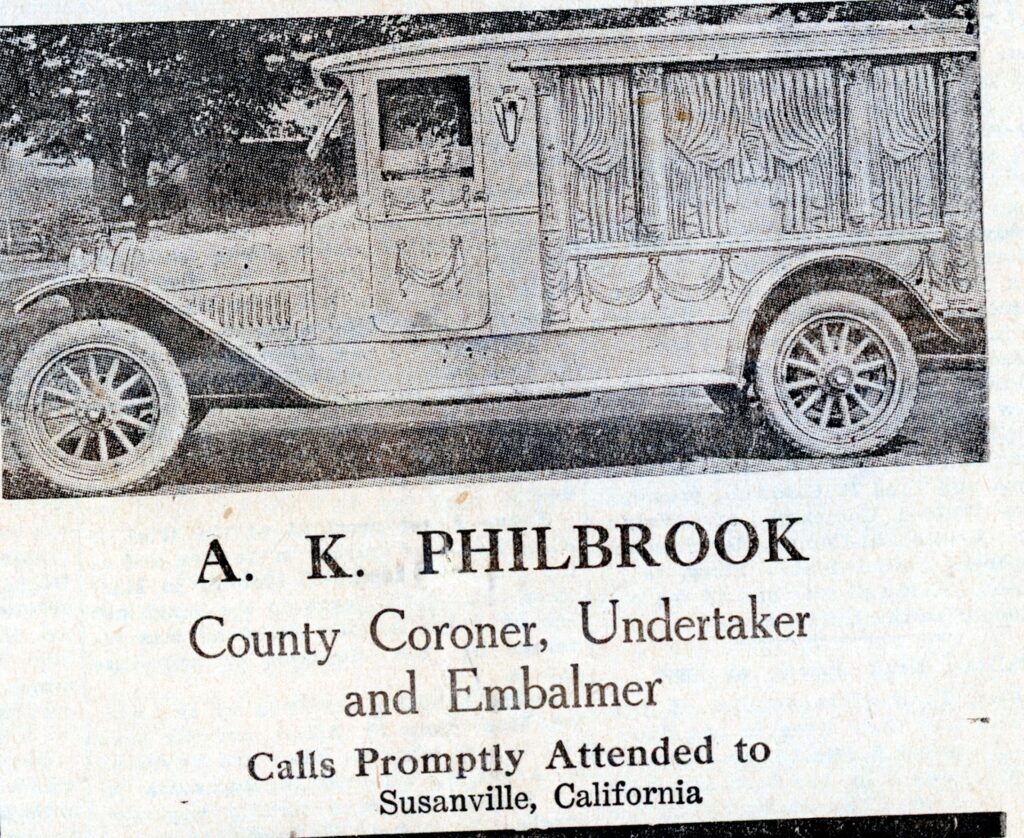
For awhile on Tuesdays, I will providing some old time advertisements. A.K. Philbrook came to Susanville in 1900 and became a partner with T.A. Oakes in the furniture making business. As was customary in the day, furniture makers also made coffins and had the sideline job of undertaker. In time, Philbrook became a full time mortuary director. He remained in that capacity until his death in 1936.