The big news locally is the Rainbow Family Gathering the 4th of July week just north of Antelope Lake. As they usually do, they select rural locations where by their shear numbers overwhelm local law enforcement etc. The easiest way to access the encampment is via Janesville Grade. What happens remain to be seen.
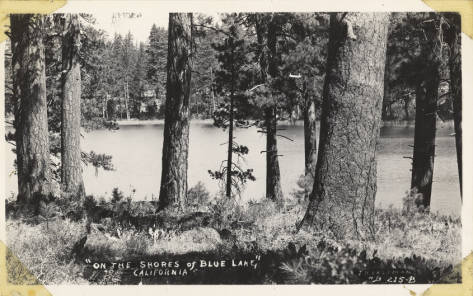
In 1984, the Rainbow Gathering occurred at Camp One Spring on the Modoc National Forest and near the Lassen-Modoc county border, not far from Blue Lake. This was their 16th annual gathering. It was estimated that between 22,000 to 28,000 Rainbows were in attendance–more than the population of Lassen County at that time. That gathering was marred by a horrible event in which Anne Figueroa of Oakland, “freaked out” and threw her baby into a campfire.
Currently, the Rainbow Gatherings are not as large as in the 1980s, and estimates range between 7,000 to 10,000 this coming week.
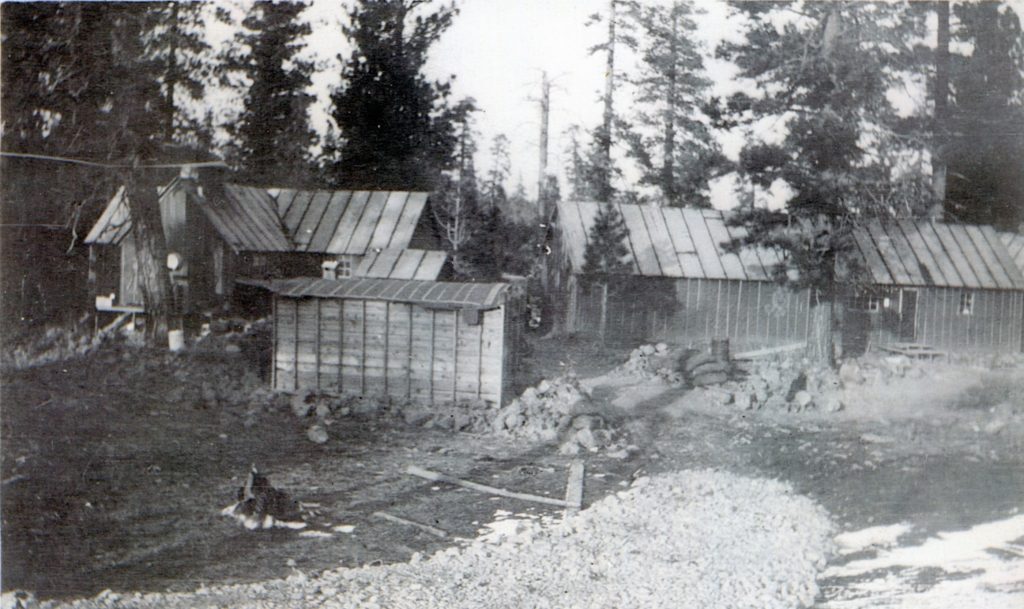
The outlet construction camp of the Bly Tunnel, 1922. Courtesy of Lola L. Tanner
Desperate actions, some times involves desperate measures. The Baxter Creek and Tule Irrigation Districts final plea to salvage the fundamental problems that plagued it from the onset of their Bly
tunnel at Eagle Lake. They were at a such low point, nothing ventured, nothing gained looked promising.
The district’s failed with their applications under President Roosevelt’s New Deal Programs. Exhausted of all avenues. their last plea was for a Civilian Conservation Corp Camp (CCC). In their petition, it was their belief, that such a camp would prove very beneficial, not just the salvation of the endangered farmers on the verge of bankruptcy, but the county at large. Such a camp, they proposed, would employ some 700 men, not including administrative staff, etc.
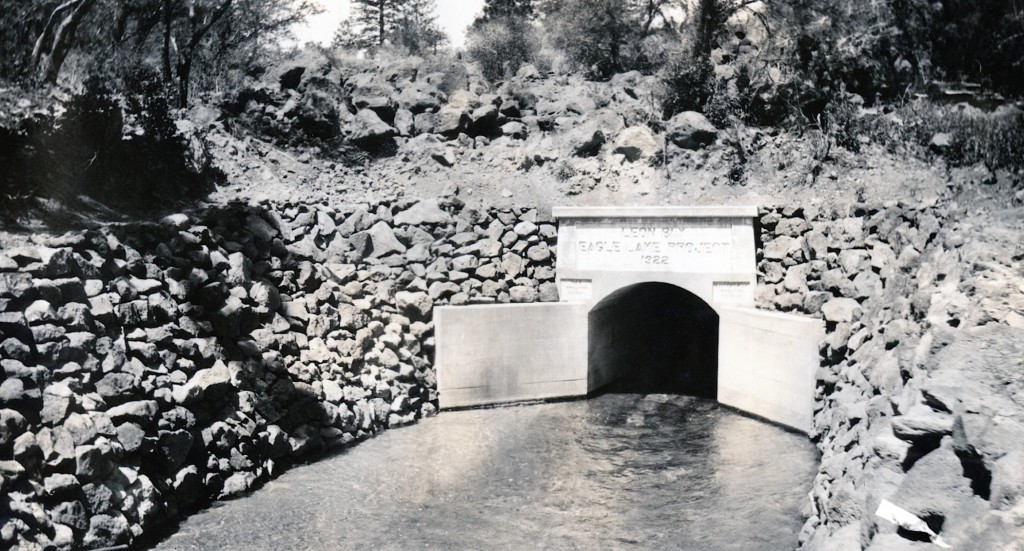
The outlet in 1924. Courtesy of Lola L. Tanner
In a special meeting held on November 1935, the Susanville Chamber of Commerce, endorsed the district’s application. It was not enough, and the application for a CCC speciality camp was denied.
It should be noted, that in the late 1940s and into the 1950s attempts were made to revive the Bly Tunnel project. However, that is another story, for another time.
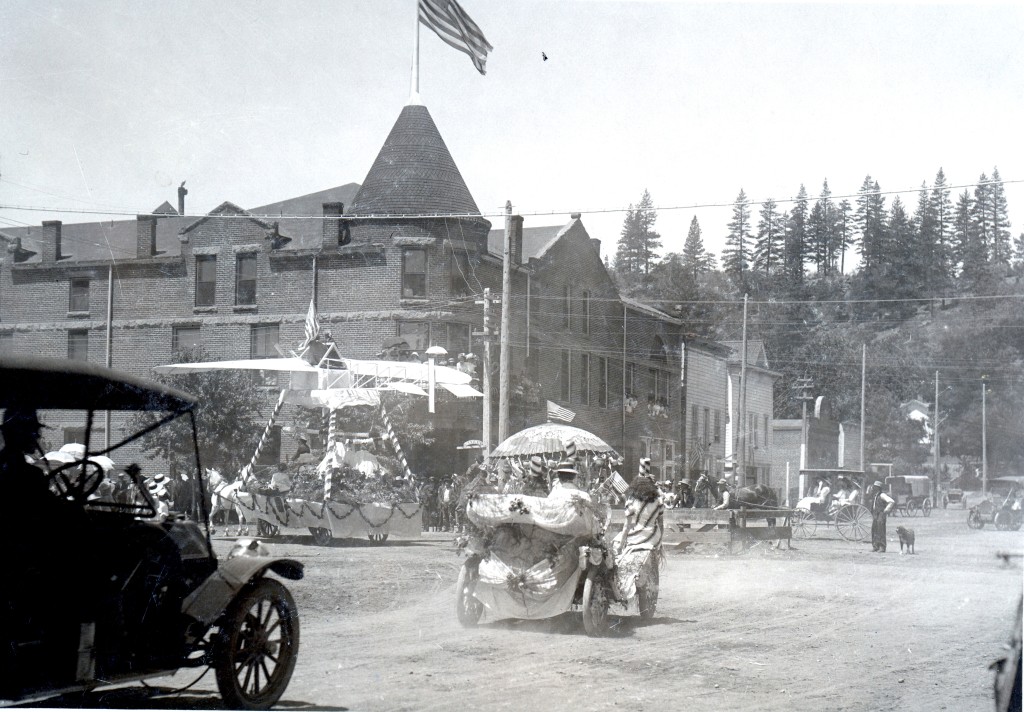
4th of July 1912, Susanville. Courtesy of Lola L. Tanner
Note: This is a perennial post, because it has merit and in my opinion they should be banned permanently.
he following appeared in the New York Times, July 3, 2024 “Fireworks sparked 916 wildfires in the state in 2021, the most recent year for which full data is available, and those fires caused more than $3.2 million in property damage, according to CalFire. The year before that, in the state’s worst fire season on record, fireworks caused more than 2,000 fires and $8 million in property damage, along with injuries to 11 people and one death.
“It is not just a California phenomenon. A study published last year in the journal PLoS One found that more than 11,000 wildfires nationwide were caused by fireworks between 1980 and 2016 — and that two-thirds of those blazes occurred in the two-week period around July 4.
“In fact, more fires began on July 4 than on any other day of the year, it found.”
In Susanville’s early years as an incorporated city, it was remarkable what the council did. One of their actions, I still support today, and that is the prohibition of fireworks. The first time they banned fireworks was in 1906, following the aftermath of the San Francisco earthquake and fire. It was also a nod to the insurance companies who suffered tremendous loss from that event. It was their belief, as well as many other communities, that this preventive measure would reduce the risk of fires.
In 1912, the City once again banned fireworks. The Lassen Advocate applauded the city and wrote: 21 June 1912 – “No Fireworks on the Fourth. We desire to congratulate our Board of Town Trustees on their action in placing the ban on all kinds of fireworks on July 2, 3, and 4. This action has been taken by large and progressive cities for years past, and we are greatly pleased to note that the smaller places are falling into line. Fireworks do no good and may do a world of harm. Fires may be started that will blot out blocks of cities or towns; little boys and girls all over the United States have lost fingers, hands eyes and in many instances, their lives from the dangerous pinwheel and firecrackers. Let them yell all they will, let them spend their money for ice cream, candy—anything on earth but the fireworks.”
In 1916, the Monticola Club appeared before the Susanville City Council asking for a ban of fireworks for the 4th of July. Their answer was no. The council assured that the utmost care would be done, but they were not going to deprive children of the festivities. In 1926, due to the tinder dry conditions, the City banned fireworks for fire, health and safety reasons.
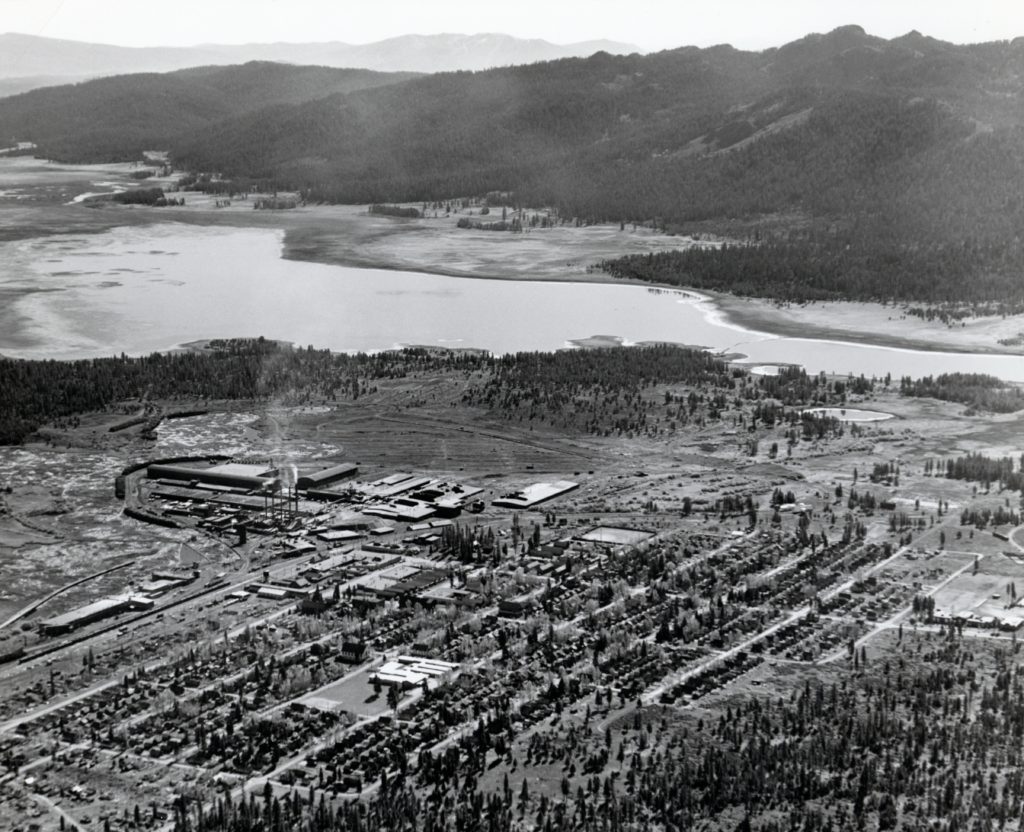
A view of Westwood with Keddie Ridge in the background, 1955.
Truth be known when Red River put its mill plant and town on the market in the early 1940s, no one wanted it. Some of the factors were an aging mill facility and majority of the tributary timber depleted. There was also the major headache of operating a town. It was not until Red River sweetened the proposition with the Burney Tract that contained an estimated one billion board feet of timber that made it more attractive. Reluctantly, Fruit Growers Supply Company succumbed and made the purchase.
Major changes were on the horizon and the universal adoption of the cardboard box changed the way Fruit Growers business operations in the future. On August 25, 1955 Fruit Growers announced it would shut down the Westwood plant. Since it appeared there was not market for the mill, Fruit Growers sold everything the following year to a liquidator Wershow and Weiz of Los Angeles. For Fruit Growers one of its greatest relief it no longer had the complicated burden of maintaining a town.
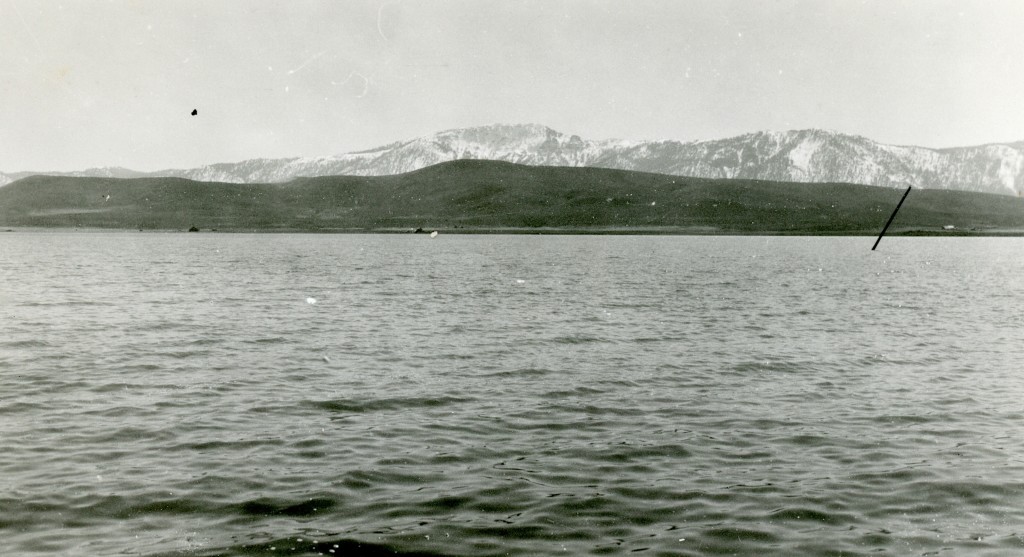
Many may not know Leavitt Lake was natural water basin. In 1863, when Government Land Office surveyors came across it, they dubbed it Alkali Lake. The following year, Ben Leavitt located to the west of it. Many consider Leavitt the father of the Susan River Irrigation System. A portion of it still survives as the Lassen Irrigation District.
In 1875, Benjamin H. Leavitt transformed Alkali Lake into a small reservoir by diverting water from the Susan River to that place. In 1889, the reservoir was enlarged. When construction was underway, Victor E. Perry, Leavitt’s son-in-law, worked on the dam. Perry planted a gold nugget there and when it was discovered it caused great excitement with the other workers. Leavitt informed the construction workers that they could keep whatever gold they might find, as long as it did not interfer with the construction. With that incentive, the men worked twice as fast to build the reservoir, in hopes of locating more gold, that unbeknownst to them would never be found. It should be noted that also in 1889, Leavitt was instrumental in the construction of Hogs Flat and McCoy reservoirs.
An interesting footnote, in times of extremely wet winters. it has been documented that the Leavitt Lake receives enough run off from Bald Mountain to fill it.
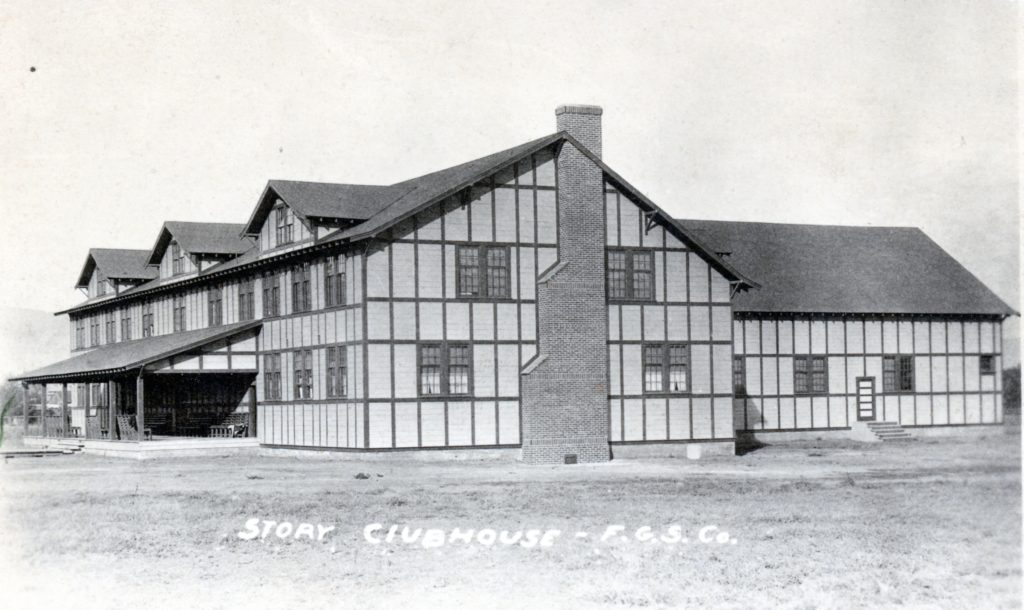
When Fruit Growers Supply Company accidentally became owner of a sawmill and town at Hilt, Sisikiyou, County, it was a major learning curve. One lesson they learned early on, you treat your employees well and they in turn do the same for company. Recreation amenities for Fruit Growers employees was deemed essential. By offering such, the company recouped its investment by reduced employee turnover.
In 1922, Fruit Growers constructed a three-story recreational facility known as the Story Club. In July 1924, on the on the north side of the Story Club and adjacent to Riverside Drive they built a public park complete with a children’s playground, the first in Susanville. When the Story Club was destroyed by fire in 1944, the company decided not to rebuild since there were a variety of recreational outlets in Susanville. However, not to let the vacant space go to waste, they expanded the park.
In 1963, Fruit Growers sold its mill properties, which included the park, to Eagle Lake Lumber Company. Prior to the sale, the City of Susanville, agreed to take care of the park’s maintenance, since the public had use when it was created. In 1976, A.A. “Red” Emmerson, president of Sierra Pacific Industries, of which the Eagle Lumber Company was a division, offered the park to the City for $23,000. It had recently been appraised at $45,000. The City accepted the offer and by end of the year the deal consummated.
Westwood Hospital, February 14, 1938–H. Frodsham photograph
The Westwood Hospital remained opened even after Fruit Growers closed the mill. The new owners Wershow & Weisz did not want to operate the aging facility. They offered to give it to Lassen County along with $5,300, the cost they estimated to make the improvements to the building required to meet fire regulations. Lassen County was not interested. The county stated if the Westwood residents could form a special tax district for the hospital. On June 24, 1958 the few remaining patients were transferred to Chester and Susanville.
Missing in action during the final days of the hospital’s fate was long-time physician Dr. Herman Levin, who was away on vacation in Chicago. Levin,it should be noted, maintained an office in the hospital. M.H. Poster, resident representative of Wershow & Weisz, stated that if Dr. Levin wishes to continue with his office there, it is available to him. If not, Poster stated: “Otherwise the doors will be locked and it will be boarded up.” When Levin returned, he kept is office and it was business as usual in the hospital, except it could only handle emergency care patients until the person could be transferred by ambulance to a neighboring hospital. On April 9, 1972, the community held a retirement party for Dr. Levin.
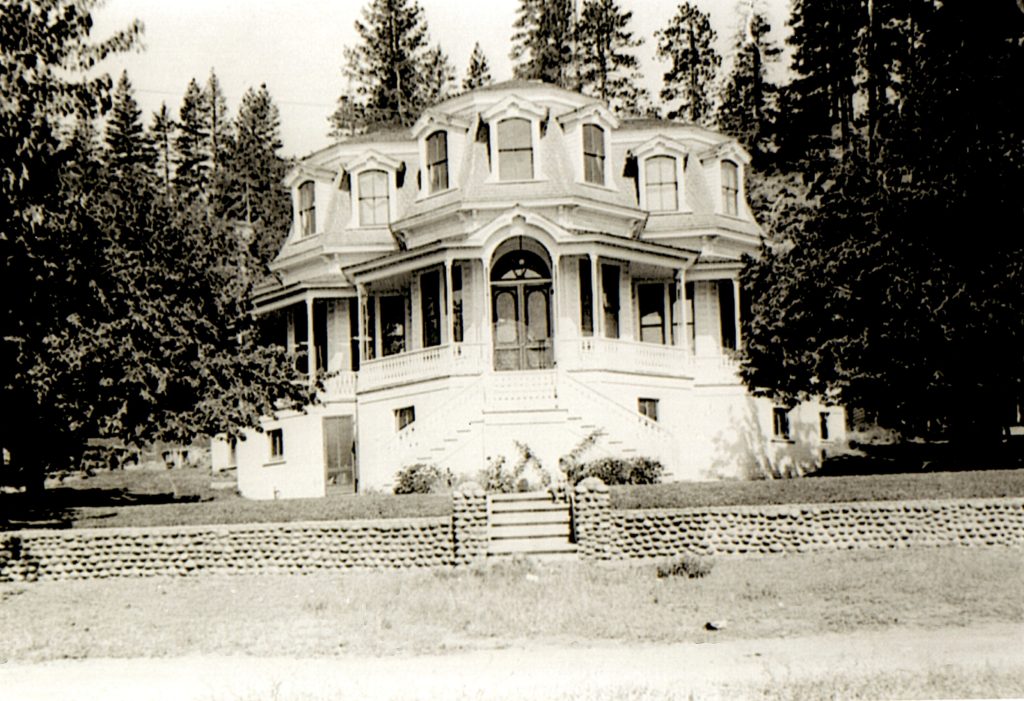
The Swain residence, before it became the Elks Lodge, 1913–Frances Swain
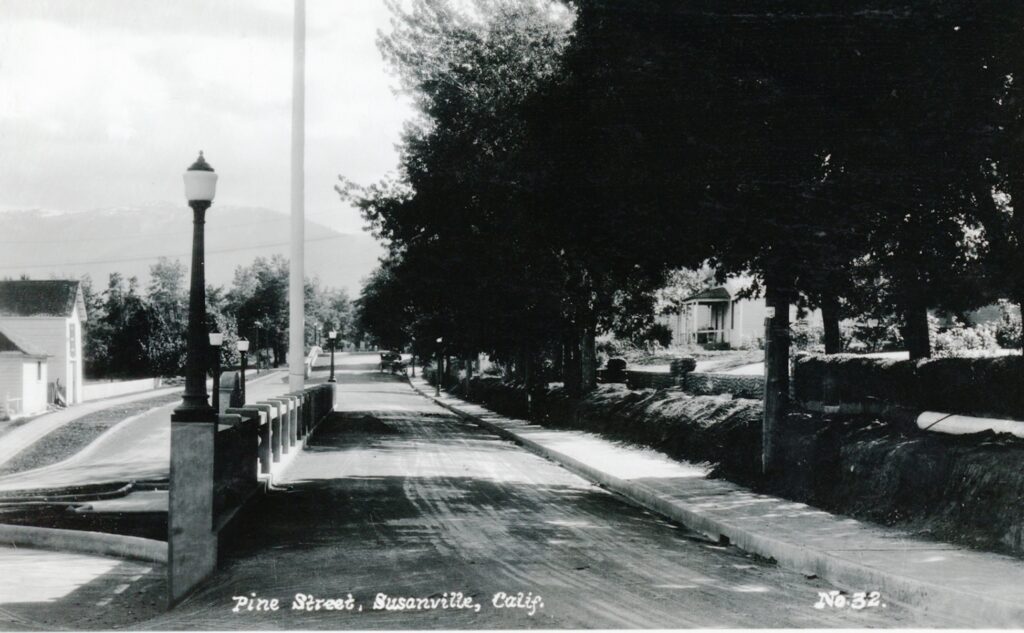
For nearly the first eighty years of the building’s existence it was street level. So what happened? A major change came in 1922 when Highway 36 was constructed it would enter Susanville on South Pine Street. Prior to this highway one left town via North Pine Street.
Pine Street, 1921
In 1965/66 the California Division of Highways did a 8.3 mile highway realignment from Susanville to Willard Creek. The curve near the Elks Lodge saw a drastic change. The retaining wall was removed thus lowering that segment of Pine Street below the Elks Lodge. to what is today. One of the other dramatic change was a new bridge span over the Susan River at Devil’s Corral.
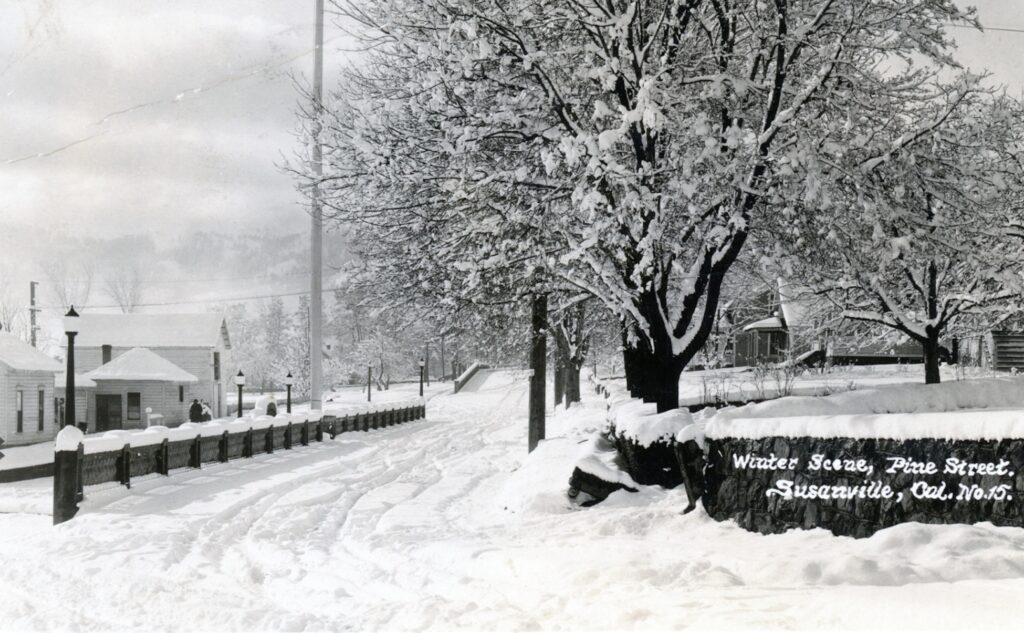
Pine Street, 1922–Hazel Moller
On a trivial note, when Lake Lahontan covered the Honey Lake Valley, the property of the Elks Lodge would have been lake front.
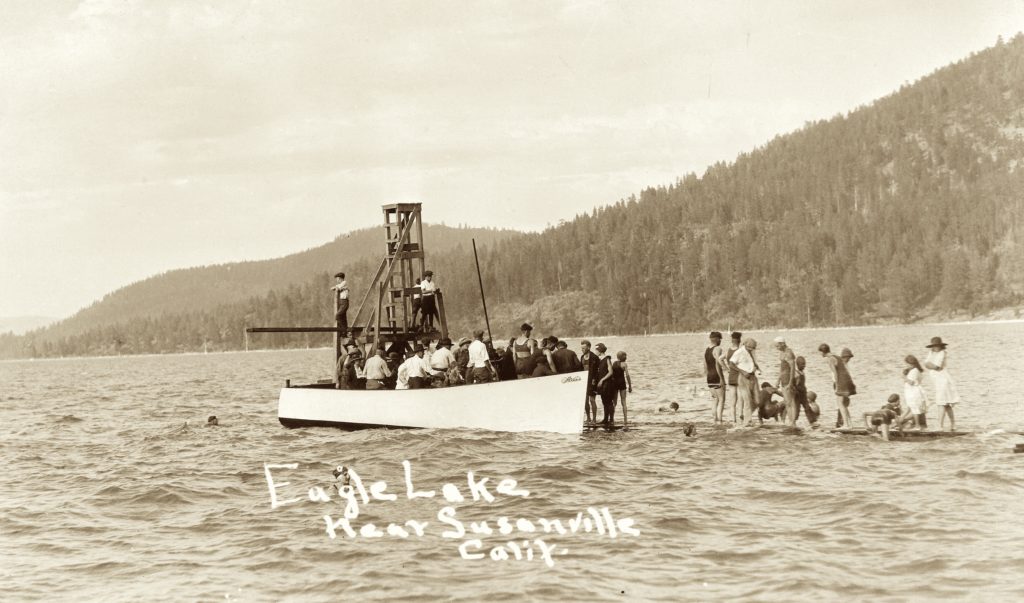
The Pelican shuttling passengers at the south shore, 1914.
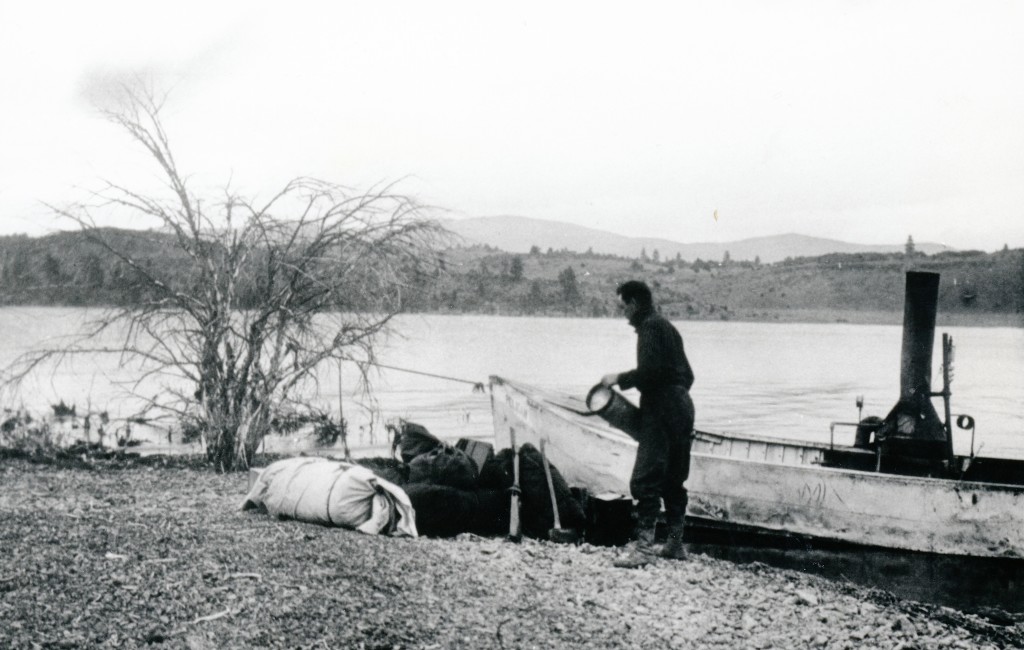
Oscar Rankin arrived at Eagle Lake in 1907, and became the first resort owner, laying foundations for the Eagle Lake Resort on the southwest shore. He constructed several boats for patrons to use on the lake. In 1914, he built The Pelican, a twenty-seven foot galvanized metal hull that was powered with a While boiler and Stanley Steamer engine. Leon Bly used the boat to do a sounding of the depths of Eagle Lake.
Leon Bly sounding Eagle Lake. Courtesy of Wyn Wachhors
Eventually the Pelican ended up at Spalding Tract. Sometime around 1953 Glen Seeber found the old hull near Spalding’s and rescued it before deer hunters or someone else might use it for target practice. It was his intent to restore it. In the February 1996 issue of the Thru-Bolt the newsletter of the Eagle Lake Sailing Association, stated that The Pelican would be on display at the Bengard residence in Janesville at their next meeting. The Sailing Association launched an effort to help Glen and recruited the historical society and Lassen College to assist. How much restoration work was ever completed or the boat’s whereabouts remain a mystery to me.
Main Street, Susanville, October 1924—Boyd Benham/Connie Boomer
Of course, editorials have a hint of bias. This particular one that was published in the Lassen Advocate in 1924 caught my attention. While truthful, its also misleading. Newspapers then were great civic boosters and promoted their locale. Susanville was still in its boomtown heyday, but to some outside the region was still known of its Wild West atmosphere of saloons and bawdy antics. While the Advocate’s editorial provided the appearance, that it getting things under control, and it looked good on paper, the reality was a different story.
There was Susanville proper as in the city limits, which was relatively small. The southern boundary was Susan River, eastern Weatherlow Street, northern Piute Creek and western Inspiration Point. The greater Susanville region as a much larger territory. While the editorial proclaims how Susanville is cleaning up after bootleggers proper those bootleg operations outside the city limits continued as usual. The three main areas was Rooster Hill (Indian Heights), Milwood and the area around the Susanville depot. This territory was under the jurisdiction of the county to enforce. Some times they did and some times not. Some county officials thought that prohibition since it was a federal offense, and it was up to federal officials to enforce it. Anyhow, here is the editorial.
Lassen Advocate, 20 February 1924 – Enforcement in Susanville. Not only the bootleggers of Susanville, but the consuming public at large is beginning to feel the pinch of an honest endeavor to stop illicit in traffic in Susanville.
Taylor Clement who has been on night duty relieving the regular nightwatchman has been giving the bootleggers a run for the money at night and they have been complaining. He makes his regular rounds every 15 to 20 minutes and has kept bartenders and proprietors busy by dumping their liquor. And he does not make his calls at any stated times. They never know when he is coming. A few nights ago, he through h is actions forced the proprietor of a Gay Street establishment to close. Later in the evening espying three men under the grammar school hill he threw his light on the same three men that had left the Gay Street resort. They broke a bottle that they had with them.
Between Marshall Lannie Long in the day time and Taylor Clement at night the bootleggers are between the devil and the deep. Even some of the heavy consumers are complaining that they can not buy a drink as often as they used to.