Category Archives: History

Brockman Ranch

Brockman Ranch
The barn is far to the left, as the Brockman Ranch appeared in 1903.

I realize that the Edsel Dealership was to be today’s topic, but a recent event prompted the change. On Wednesday afternoon, April 29, the old Brockman barn on Johnstonville Road went up on flames. In 1864, William Brockman and Jurgen Jensen were partners in a blacksmith shop in Susanville. A few years later they dissolved it. The two men located on nearby ranches on Johnstonville Road. After a 1947 suicide of a Brockman family member that occurred in the barn, the ranch after three generations of ownership was sold.

Don’t forget to look at the Subscribe feature.


Atlas Fredonyer

Fredonyer Summit
Ira and James Purdy posing at Fredonyer Summit, Christmas Eve, 1930

A lot has been written about Atlas Fredonyer early activities in the region. Among other things he filed a land claim in what would later become Susanville, since that town’s founder neglected to do so.

In 1862, Fredonyer was found guilty and sent to prison of a sexual assault charge involving his fifteen year old step-daughter, Sally. Many were of the opinion that Fredonyer did not commit a crime. A petition was circulated and California Governor Stanford pardoned Fredonyer the following year.

After his pardon, Fredonyer seemed to have disappeared, as he never returned back to this region. A few years ago, I finally found out what became of him. He surfaced in a most unusual way in 1880 in San Francisco. Fredonyer it should be noted used the title of “Doctor” to what extent of medical training he had, is not clear.  At this time he was suffering from bowel blockage. He attempted perform his own colonoscopy, which a bottle, which got lodged in the colon.  The heavy set Fredonyer was finally taken to St. Mary’s hospital. A colostomy was performed to remove the bottle.  He did not recover from the procedure and died in San Francisco on August 10, 1880.

Don’t forget to look at the Subscribe feature.


The Drought

Fire Antelope
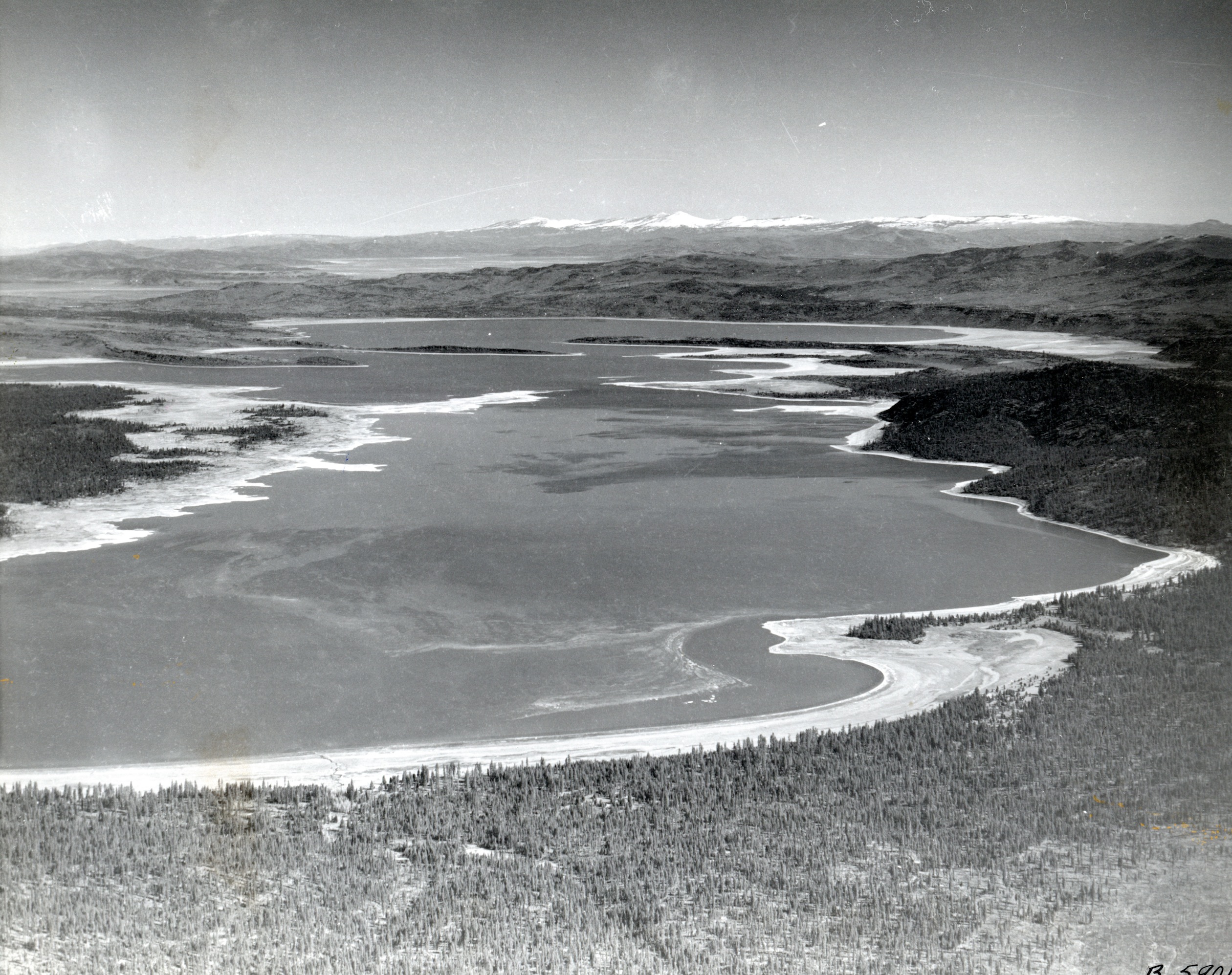
Antelope Mountain Fire, 1926

As we enter our fourth year of drought, let us hope it does not last as long the 1917-1937 drought. The most severe was the winter of 1923-24. Susanville received less than five inches of precipitation this year. It was so dry that winter that in the middle of March, a one-inch snow fall at Susanville caused great excitement. There was even a greater commotion when eighteen inches of snow fell. It disappeared in a matter of hours. That was the extent of precipitation for the winter. Continue reading The Drought

Brand Project Update

Hulsman
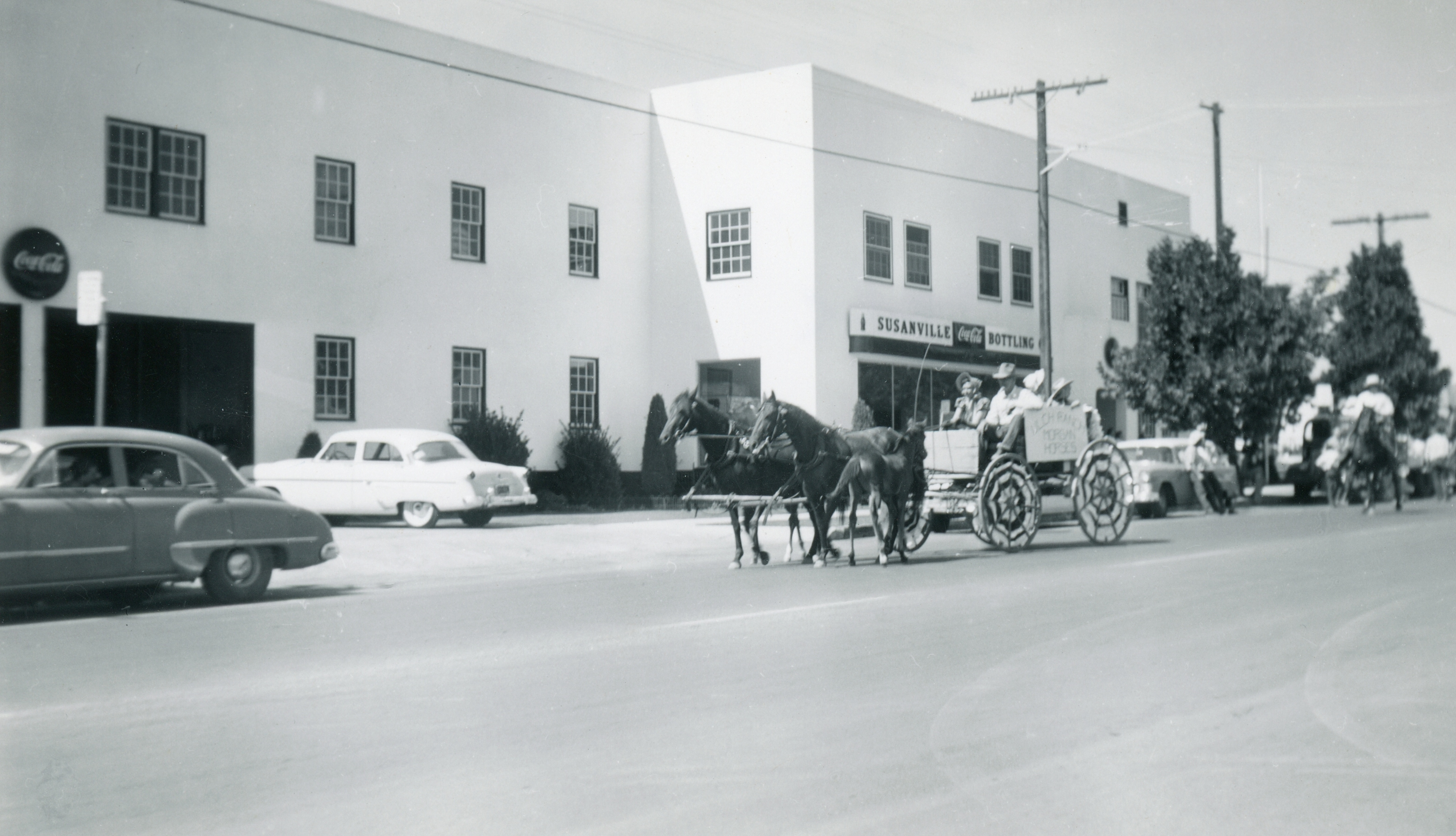
Hulsman Ranch advertisement

Progress got stymied a bit, due to my knee injury. While my archives contain a wealth material, there is always research to do.

It was interesting to review Book A of Brands, Lassen County. The first brand recorded was for Thomas Watson on October 20, 1864.  The John Theodore brand JT was recorded on May 23, 1889 and never changed for over three generations and appears on the wall at the Pioneer. The same can be said for Hulsman Ranch brand though it was not recorded until 1917, when the State of California began enforcing the recording of brands.

Additional brands have also been included in the original list: George and Mayda Elledge, Hostetter & Johnson, Abner McKenzie and Coit Stone.


Camp Smoke Creek

Camp Smoke Creek
The camp was located near the cottonwood trees seen in the distance. It is located on private property and is now fenced off.

During the 1860s, the United States Military had a major presence in the region.

On November 9, 1862, Nevada Territorial Governor James W. Nye wrote to Brigadier General George Wright, Commander of the Department of the Pacific, and requested a Company of troops to protects the emigrants from the Indians along the Honey Lake-Humboldt Road. On November 14, 1862, the troops were dispatched. On December 15, 1862, Second Lt. Henry W. Williams arrived at Smoke Creek with twenty-five men and forty days of rations. On March 28, 1864, First Lt. Oscar Jewett, then in command, received orders from Fort Churchill to abandon the camp and to remove all valuable property from the camp as was possible. Continue reading Camp Smoke Creek

Said Valley Reservoir

Said Valley Dam
Collapse of the Said Valley Dam, May 8, 1938. Courtesy of Betty Barry Deal

In September 1885, James W. Shanklin constructed the first reservoir for irrigation and stock purposes at his ranch in Grasshopper Valley. That dam was 25 feet high and 300 feet across. Over the years it had numerous owners. In 1934, it was purchased by George Heath, who became the owner of this reservoir as well as one on nearby Slate Creek. As early as 1929, the State Department of Water Resources stated neither dam was in compliance and requested that spillways be constructed for each reservoir. The winter of 1937-38 was one of the wettest on record for the 20th century and, in Susanville, 33.68 inches of precipitation was measured. On May 8, 1938, the dam at Said Valley breached and caused considerable flood damage. On August 24, 1939, Heath sued Percy L. Castro for $50,000 in damages that were caused by dam failures. It was Heath’s contention that, since Castro leased the reservoirs and his Grasshopper Ranch, it was his duty to install the spillways that the Department of Resources requested. However, during the Department of Water Resources investigation, it was noted that even if the proper spillway had been installed at Said Valley, it would still have failed because of defects in the dam’s original foundation. The court ruled in favor of Castro and stated it was Heath’s responsibility and ordered Heath to pay Castro’s court costs. The dam was rebuilt, albeit on a smaller scale.

Future Posts

Huffords
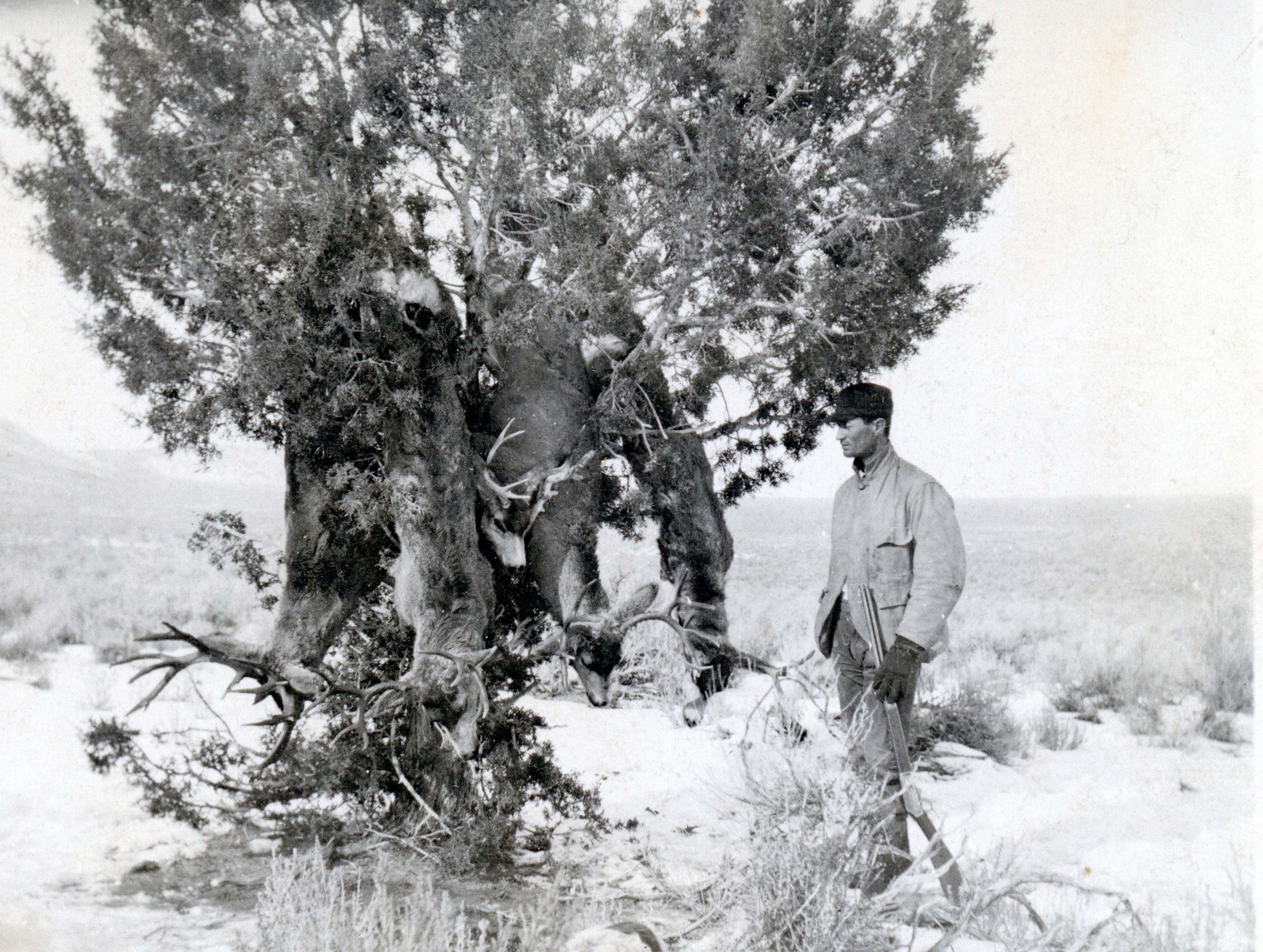
Hufford’s Sheep Camp, Eagle Lake, 1921.

Here is a preview of upcoming items for the first half of May. In addition, take a moment to review the Subscribe feature on the upper left corner.

Weather 1924 5/1/15
Atlas Fredonyer 5/2/15
Edsel Dealership 5/3/15
Lassen College 5/4/15
Local Militia 5/5/15
Moon Valley 5/6/15
Toll Roads 5/7/15
Susanville School Names 5/8/15
Asa Fairfield 5/9/15
Hotel Saville 5/10/15
Technology 5/11/15
Neversweats 5/12/15
Lassen Lawnmowers 5/13/15
Lincoln School 5/14/15
Stacy 5/15/15

Robert Stinson

Robert Stinson
Robert Stinson’s grave at the Westwood Cemetery.

In August 2013, I led a Westwood Cemetery tour as part of that community’s centennial celebration. The graves that were highlighted, provided a different aspect to Westwood and the Red River Lumber Company.

Robert Stinson was born in Quincy in 1882, and followed in his father’s footsteps as a commercial photographer. It was a tough trade to operate a business in a rural region. So like many others it became necessary to be itinerate traveling from community to community for business. In 1913, Red River hired Stinson as their company photographer, who at the time was located in Red Bluff. Stinson’s main job was to make a complete photographic inventory of all the buildings being constructed in the town, as well as the sawmill plant. A portion of this collection exists in the T.B. Walker papers housed with the Minnesota Historical Society. Stinson just happened to be at the right place at the right time, when Lassen Peak set off a series of volcanic eruptions beginning in 1914. Unfortunately, for Stinson and other photographers such as P.J. Thompson, are overshadowed by that B.F. Loomis, but that is another story, for another time. Stinson stay at Westwood was brief and left Red River in 1915 to be replaced Otto Kratzer. On a final note, Red River always had an in-house photographer, though they also hired others for commercial work.

Karlo

Karlo
Karlo, 1920

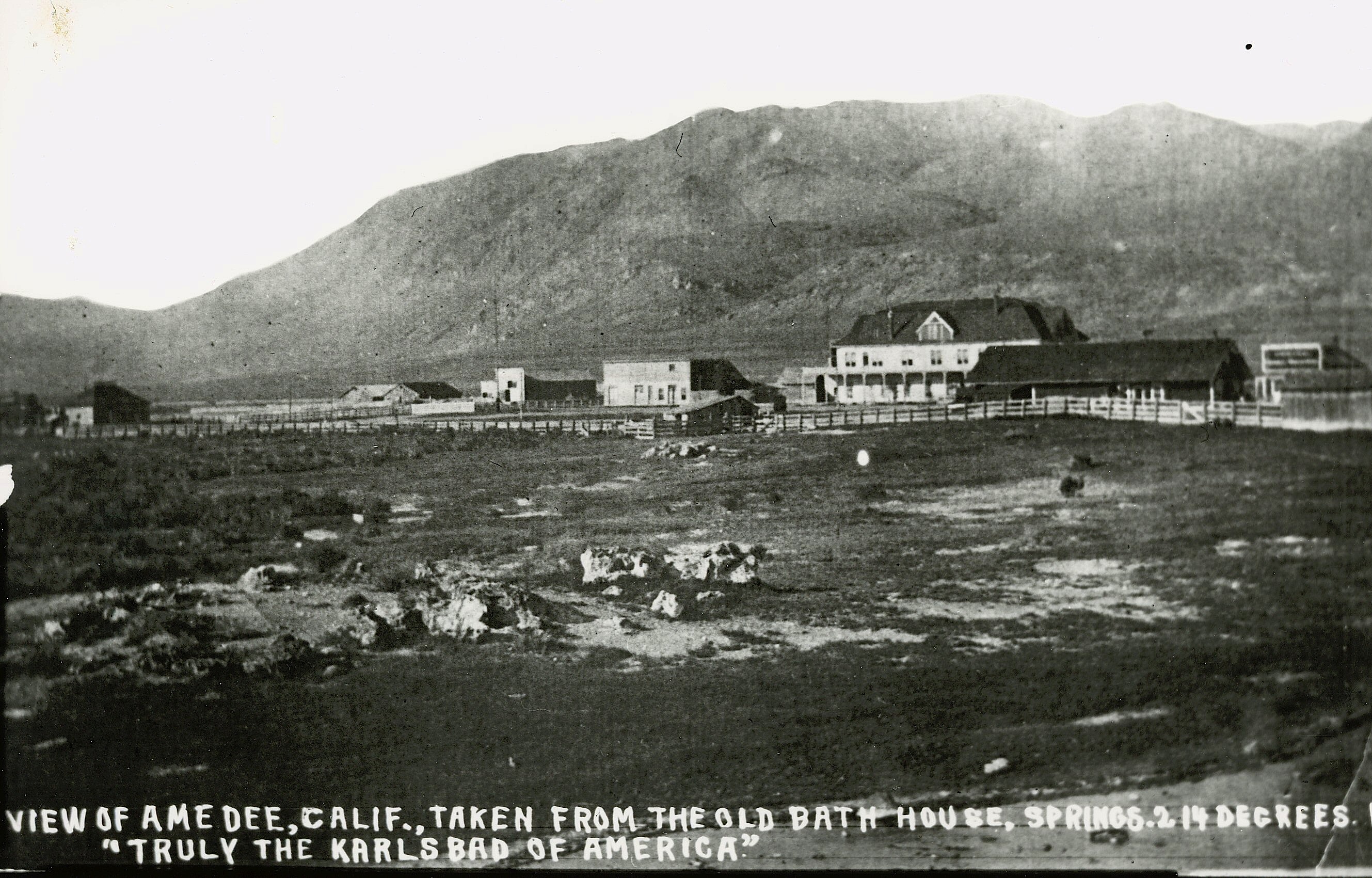
The Nevada-California-Oregon Railroad (NCO) did a great deal for the development of eastern Lassen County. As a result, a number of communities sprang up, some a mere outpost and others a bit more substantial. However, like the railroad, many in time would fade into oblivion.

In 1899, the (NCO) established a station in Secret Valley. Those residents thought it would become a major shipping point on the NCO, like its recent predecessor, Amedee, but that did not occur. This did not prevent James Sellick from constructing a two-story hotel at the Karlo Station that summer. The station was named for the DeCarlow Brothers—Alonzo Metardus (1868-1949), Charles William, and Walter Henry (1859-1949). Charles W. DeCarlow was the first member of the trio to arrive in Secret Valley when, in 1889, he and H.F. Buhrmeister purchased 200 acres from D.C. Hyer for $2,400. When the station was established in August 1899, there was confusion as to how to spell it. The locals spelled it Carlo, but the railroad clearly indicated it was K-A-R-L-O. The Lassen Advocate noted: “The management of that road seems to have a liking for short names and odd spellings following in the wake of the Postal Department in this respect.”  It is interesting to note the next station the railroad  established was named Termo.

Buggytown Ditch

Buggytown Ditch
Survey crew to enlarge the Buggytown ditch near Johnstonville, 1889. Courtesy of Betty Barry Deal

Originally known as Batcheldor & Adams ditch which portions were constructed in 1858. It later became known as Buggytown ditch, for the area just west of Leavitt Lake in the 1870s. It was so named as one of the first settlers possessed a buggy when such luxuries were rare on the frontier. The ditch/canal is what feeds into Leavitt Lake.