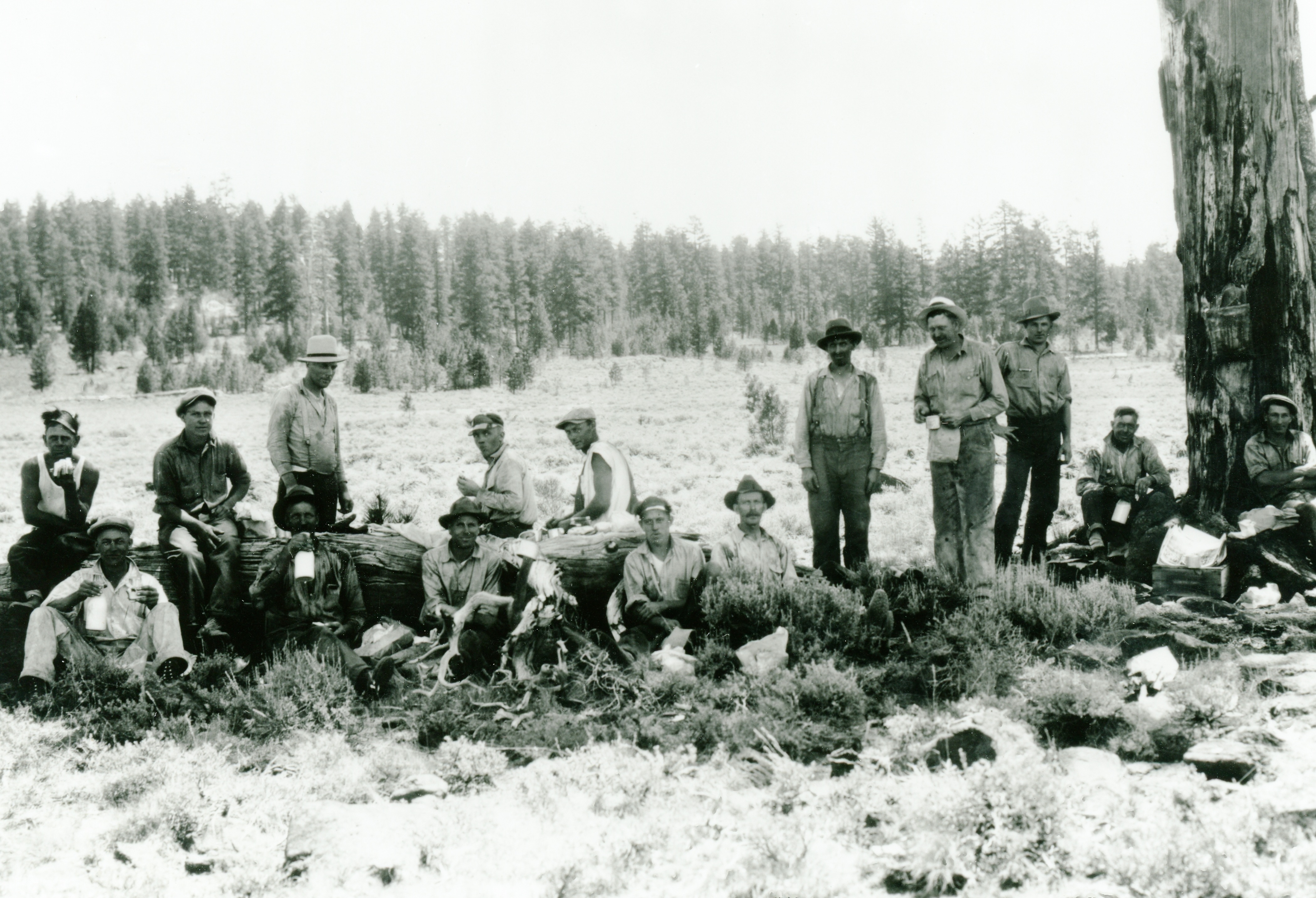
Loggers having lunch. Courtesy of the Fruit Growers Supply Company
I know hardly anything about this photograph, however, for reasons unknown I just like it. It is a woods crew of Fruit Growers Supply Company working from Camp Ten in 1932. Notice the two men on the far left with quart bottles of milk. Does anyone know how the milk was kept somewhat cool?
Subscribe and support this site for as little as $5.00 a month
The private cemetery at 1-0-1 Ranch as it appeared in the 1930s. Courtesy of the National Park Service.
While I continue on my road to recovery. I will provide some news updates, even though the “locals” may be aware of it. However, this web site has a wide following, even internationally. Consider this someone from Tokyo researched Spoonville, another from Brazil searched the Bank of Lassen County. In October, an article will appear about readership topics.
Now to the topic at hand. The historic 1-0-1 Ranch at Mountain Meadows has been sold. According to news sources on July 31, 2015 Dye Creek Land & Cattle Company sold the 2,318 acre ranch to Sierra Pacific Industries, the latter, of course, always seeking to enlarge its timber holdings.
Included in the sale is the Coppervale Ski Area which Lassen Community College operates under a long term lease. Hopefully, Coppervale will be busy with skiers this winter.
Help me with my recovery, and subscribe for as a little as $5.00 a month.
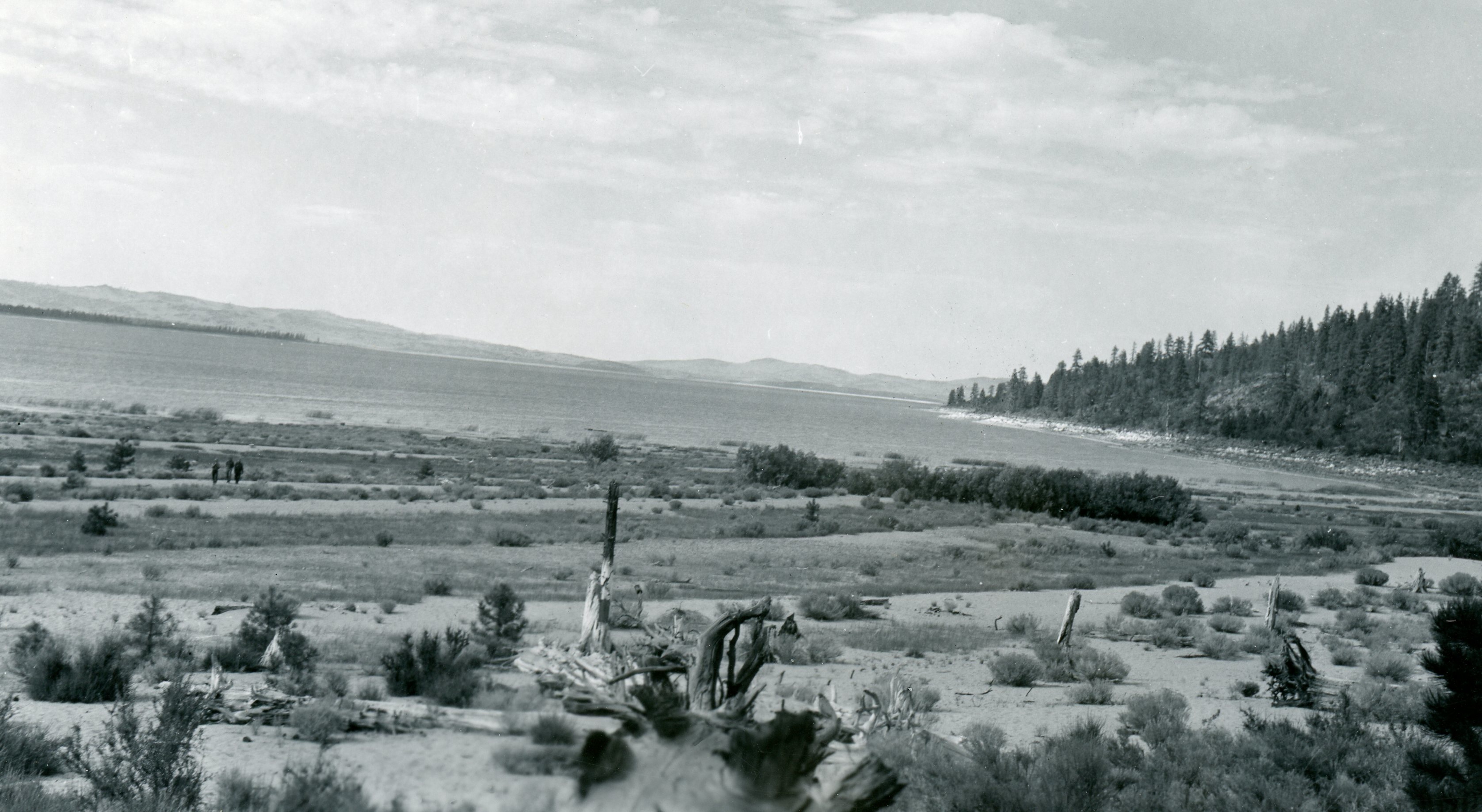
Gallatin Beach, Eagle Lake, 1940. Courtesy of Lola L. Tanner
At the June meeting of the Eagle Lake Interagency Board meeting it was thought that Eagle Lake would reach a new historic low water level. On August, 31, 2015, Matthew May, Associate Lassen County Planner recorded the level at 5091.16, just shy of the record low of 5091. May noted that the level had dropped 2.4 inches in the last month. Stay tuned for further developments.
Once I have an opportunity I will post some photographs of the lake’s east shore taken in the 1930s by my grandmother Lola Murrer Tanner, who was born this day in 1899 at the family ranch in Willow Creek Valley. Also the 2016 Lassen High Alumni Calendar includes a new before published record high water scene taken in 1916, which will be released in October.
Help me with my recovery, and subscribe for as a little as $5.00 a month.
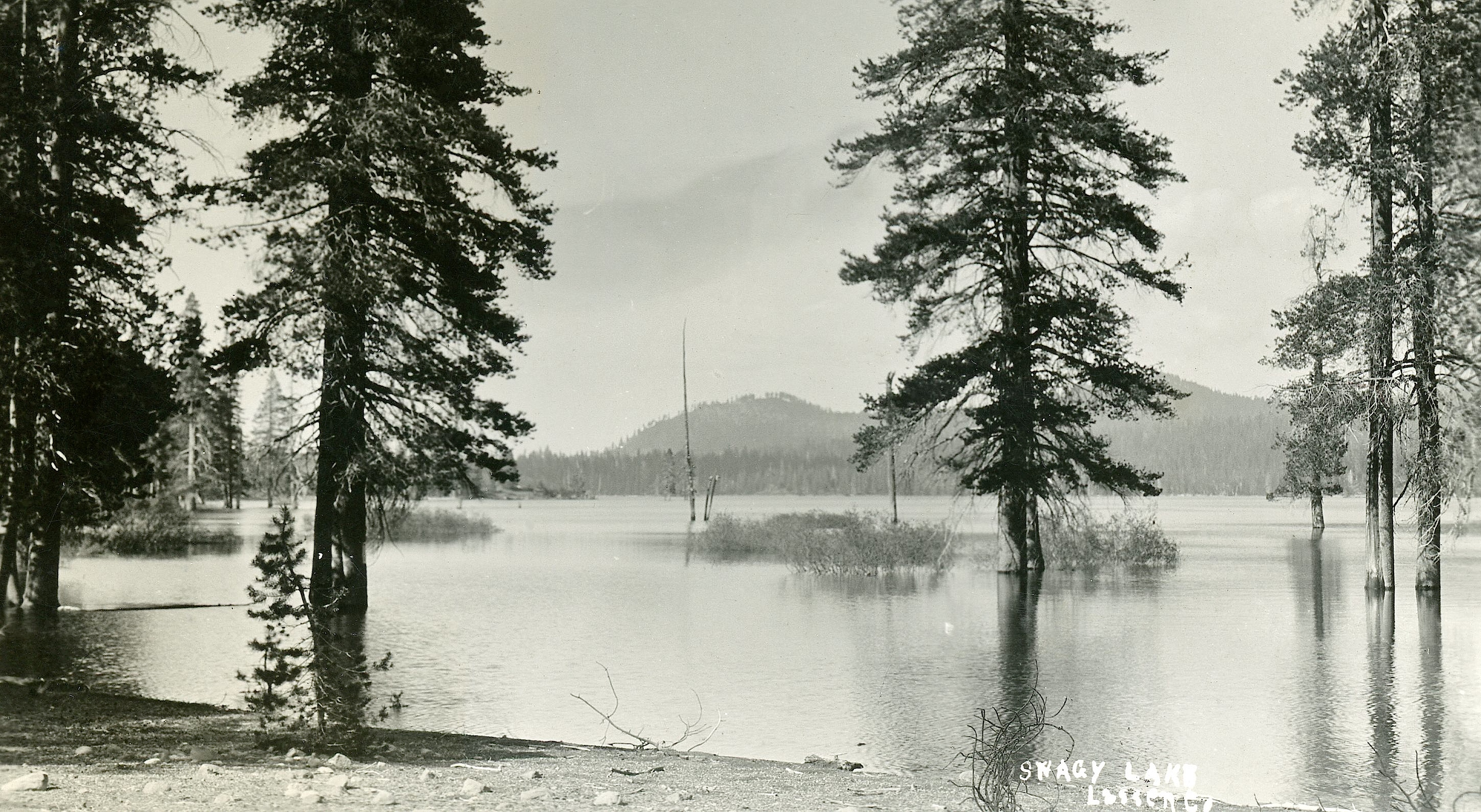
Snag Lake located in the eastern portion of Lassen Volcanic National Park, was originally called Snaggy Lake, and over the years its named shortened to Snag. The lake was formed 200 years ago from the lava flows that created the Fantastic Lava Beds. Trapped in the lake, after it was created, were a number of pine trees that died and are commonly referred to as “snags.”
The lake is only accessed by hiking or horseback. However, those who make the trek agree its worth it. I made the trek in the early 1980s, traversing most of the eastern half of the park.
Help me with my recovery, and subscribe for as a little as $5.00 a month.
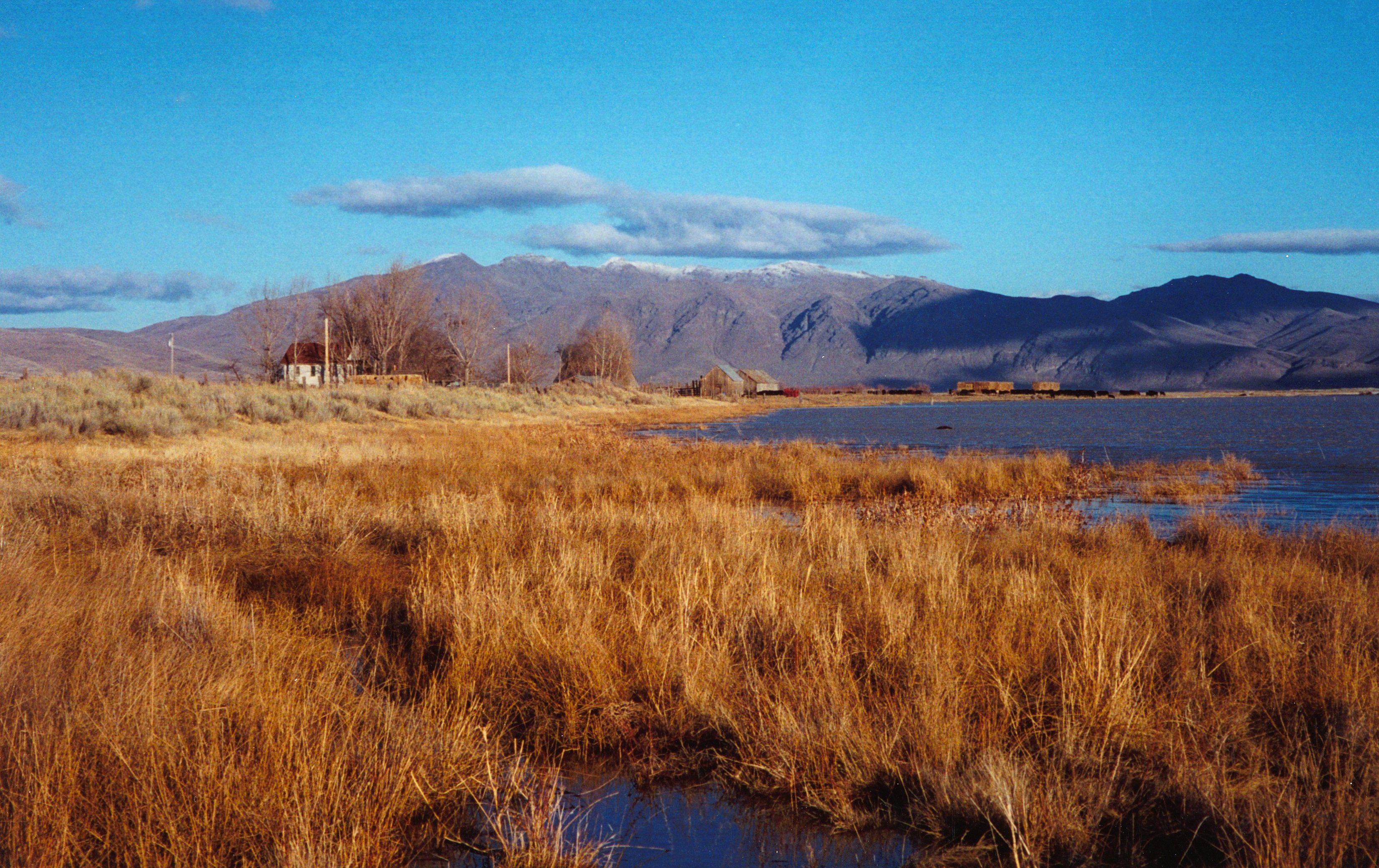
Tanner Ranch, with Skedaddle Mountain in the background
The far west was certainly not immune to the various political/social impacts of the nation’s Civil War.
In future posts we will be exploring numerous events and conflicts that transpired locally influenced by the Civil War.
Take for instance, there was once a district in the region known as the Honey Lake Valley known as the Tule Confederacy, as large contigent of settlers were southern sympathizers. Yet, by 1900, the term had been shortened to the Tules. In the last few generations this term, too, has faded away. Some may also heard the region known as Seven Bridges.
Lastly, as a final remnant is Skedaddle Mountain. It was so named by a term the southerners of the Civil War used to “flee.”
Help me with my recovery, and subscribe for as a little as $5.00 a month.
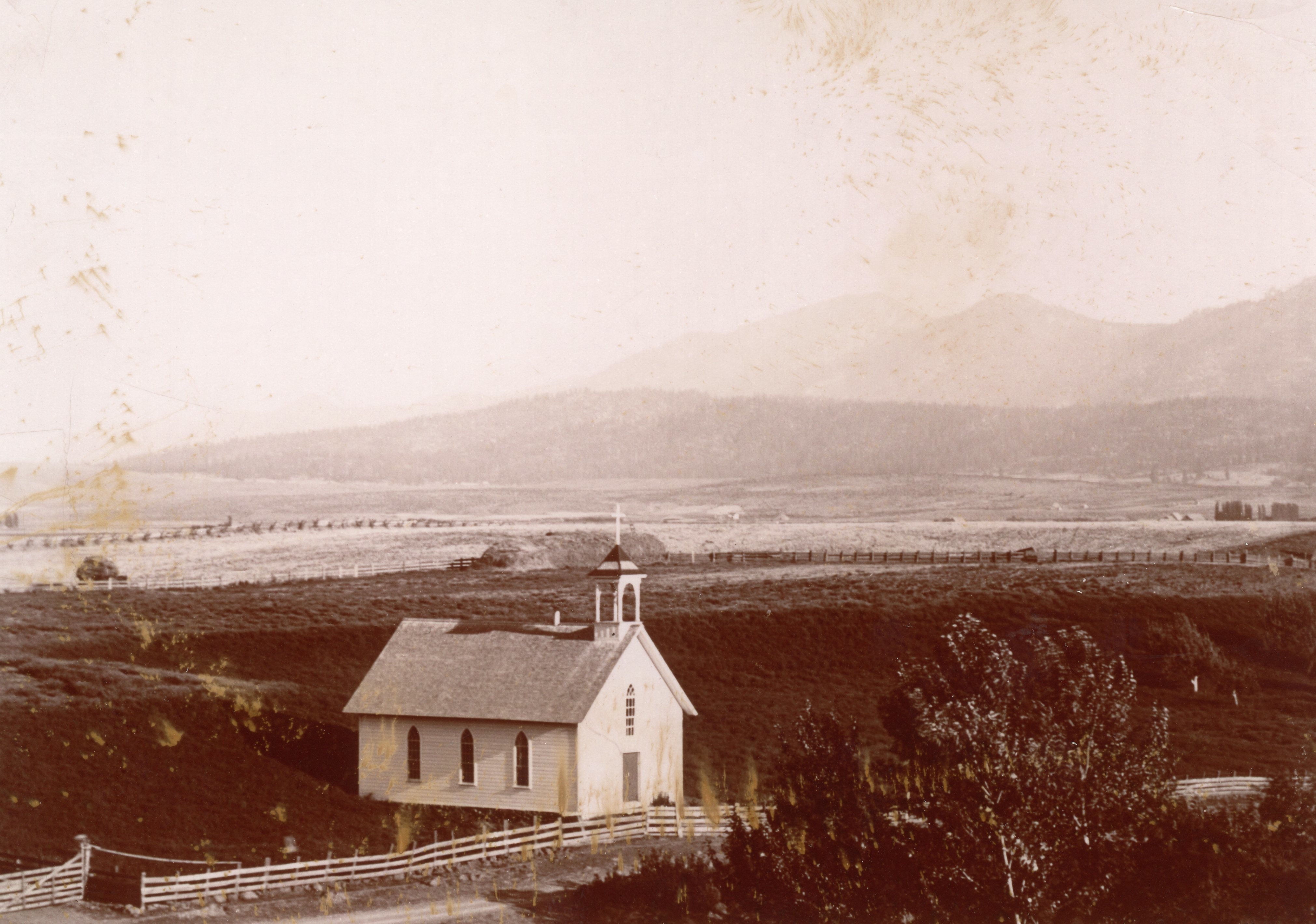
Sacred Heart Church, 1905. Courtesy of Sacred Heart Church
On August 1, 1869 the first Mass to be held in Lassen County was at the home of Ned Mulroney near Susanville, with the 27-year-old Father Charles Lynch officiating. Since a circuit priest had to cover a large territory in Northeastern California and Nevada, Mass in many instances was only held once a year when the priest made his rounds.
In the 1880s with a larger Catholic population, and the Diocese territory smaller, Mass was be held in the Lassen County area twice year. There was also a movement to have their own house of worship instead of the courtroom in the Lassen County Courthouse or the hall in the Steward House Hotel.
This changed in the spring of 1892, when William Cain, a non-Catholic, donated a parcel land across the Susan River on Richmond Road, the current site of Poulsen’s Welding. In May construction began, the labor from church volunteers. As Father Thomas Horgan later recalled the driving force for the church came from three families—Bantley, Neuhaus, and Mulroney.
The new church had a seating capacity of 120, quite ample for their being about 100 parishioners. On June 26, 1898 Bishop Thomas Grace dedicated the Susanville church as the Church of the Sacred Heart.
Westwood’s aviation history is an obscure topic. A crude landing field was established in the late 1910s on Mountain Meadows, about a mile south of the Goodrich Ranch. Initially, its use was nominal, due to its poor condition. In one instance, Joe Hunter received a call from a pilot in Red Bluff about the current condition who replied that it is a mud bog and unfit for landing.
In the 1920s, Fletcher Walker’s two sons—Fletcher Jr., better known as “Cub” and Kenneth—developed a strong interest in airplanes and became pilots. This interest in flying gained momentum in the area, so that in June 1928 the Westwood Auto Club spent $100 to clear the landing field of brush and fill in holes to make two 2,200 foot runways, thus the formal Westwood Airport was created—a first in Lassen County.
This caught the attention of Ted Campbell of San Francisco manager of Beacon Airway to examine the aviation field. He made an inspection to examine the possibility of establishing regular air service to Reno and other points on the Transcontinental Airway route. Yet, the prospect that Westwood residents would have nearby access to regular air service never materialized.
Yet, the Walker boys, as they were commonly referred to, were an adventurous lot. In 1928, They accompanied Dr. Thomas A Arbuthnot of the Pittsburg Medical College on a 10,000 mile African expedition from Cairo to Tanganyika, which they filmed their experiences. It was made into a film, The Wild Heart of Africa which made its debut in May 1929 in New York City. After that expedition they returned to their other passion, flying. In December 1928 they purchased a Travelair Bi-Plane, equipped with a 225 horsepower Wright Whirlwind motor. Cub spent a lot of time and energy in helping many Northern California communities in establishing airports.
The wrecked Walker plane.
On August 23, 1929, the worst aviation disaster occurred at the Westwood Airport’s brief history. Cub and Kenneth routinely flew over Red River lands to photograph them. In this particular instance they were returning from such an expedition. At approximately 6:00 p.m. they were approaching the landing field when suddenly the plane malfunction and plunged crashing on impact. Frank Stevenson and Mike Pappas witnessed the crash from afar as they were placing duck blinds on the far shore of Walker Lake. The two men rushed to Westwood to inform the family and gather a party to go out to crash site. Cub was instantly killed from a broken neck and the rescue party on their arrival found Kenneth regaining conscious and attempting to get out of the cockpit and later fully recovered.
The airport continued to see use in the early 1930s, but by the end of that decade, it had become a footnote in Westwood’s history.
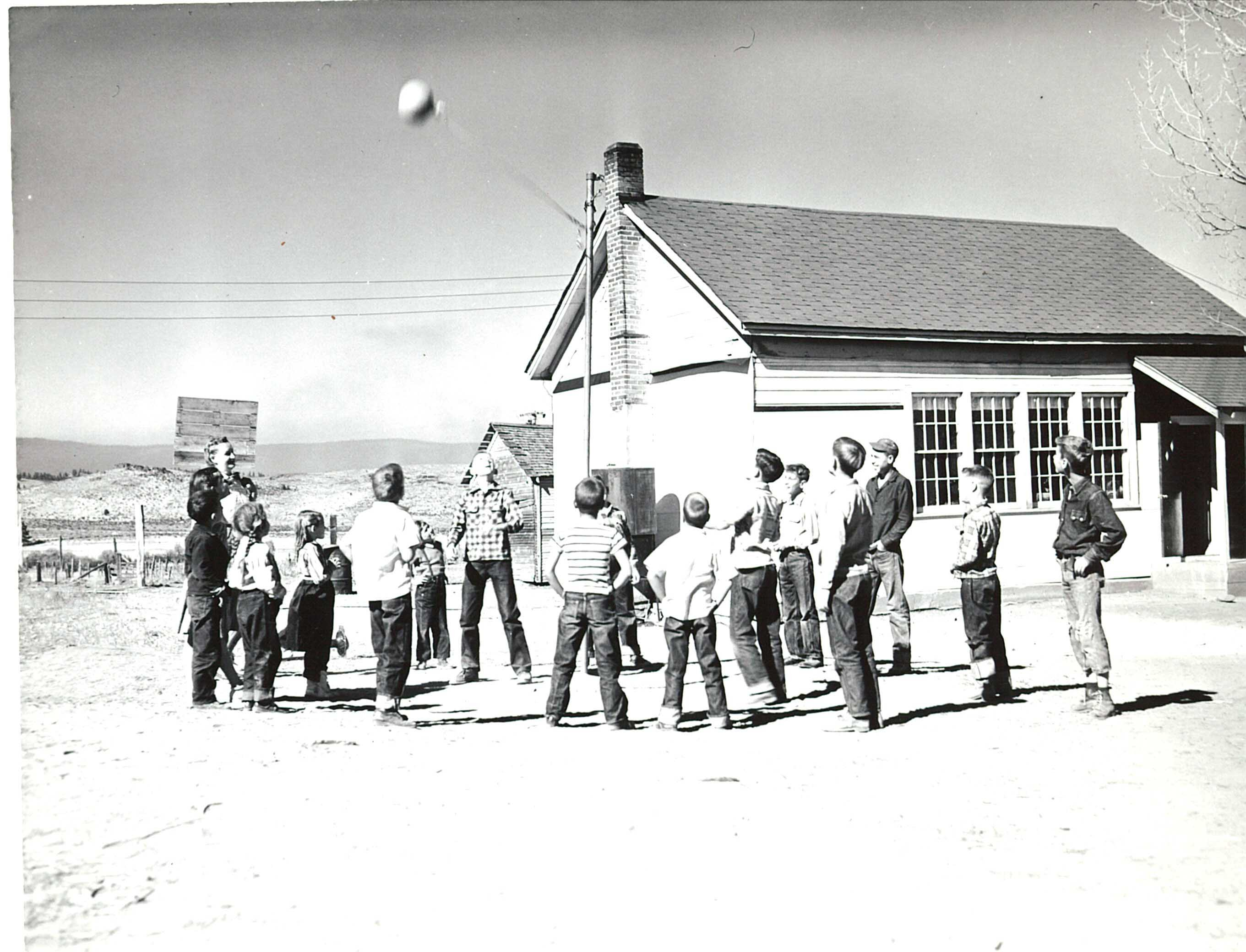
Richmond School, 1965. Courtesy of the Lassen County Office of Education
One of the original six school districts established in 1864. The first classes were held in Shaffer’s warehouse. In 1865, the first schoolhouse was built through the efforts of Margaret Streshly and Mary J. Drake, who solicited donations of both building materials and money for furnishings. Continue reading Richmond School→
View of Richmond Road January 1916 from Winchester Hill. Susanville received four feet of snow in January, followed by below zero temperatures. After that it was the beginning of a twenty-year drought, with Honey Lake going dry in 1919, and not filling up until the spring of 1938.
Weather prognosticators are an interesting bunch. Last year was a record crop of acorns, I don’t recall ever seeing so many. Some people took that as a sign that we were in for a heavy-duty winter. We had the opposite, it being fourth driest on record. Continue reading Historic Weather Predictions→
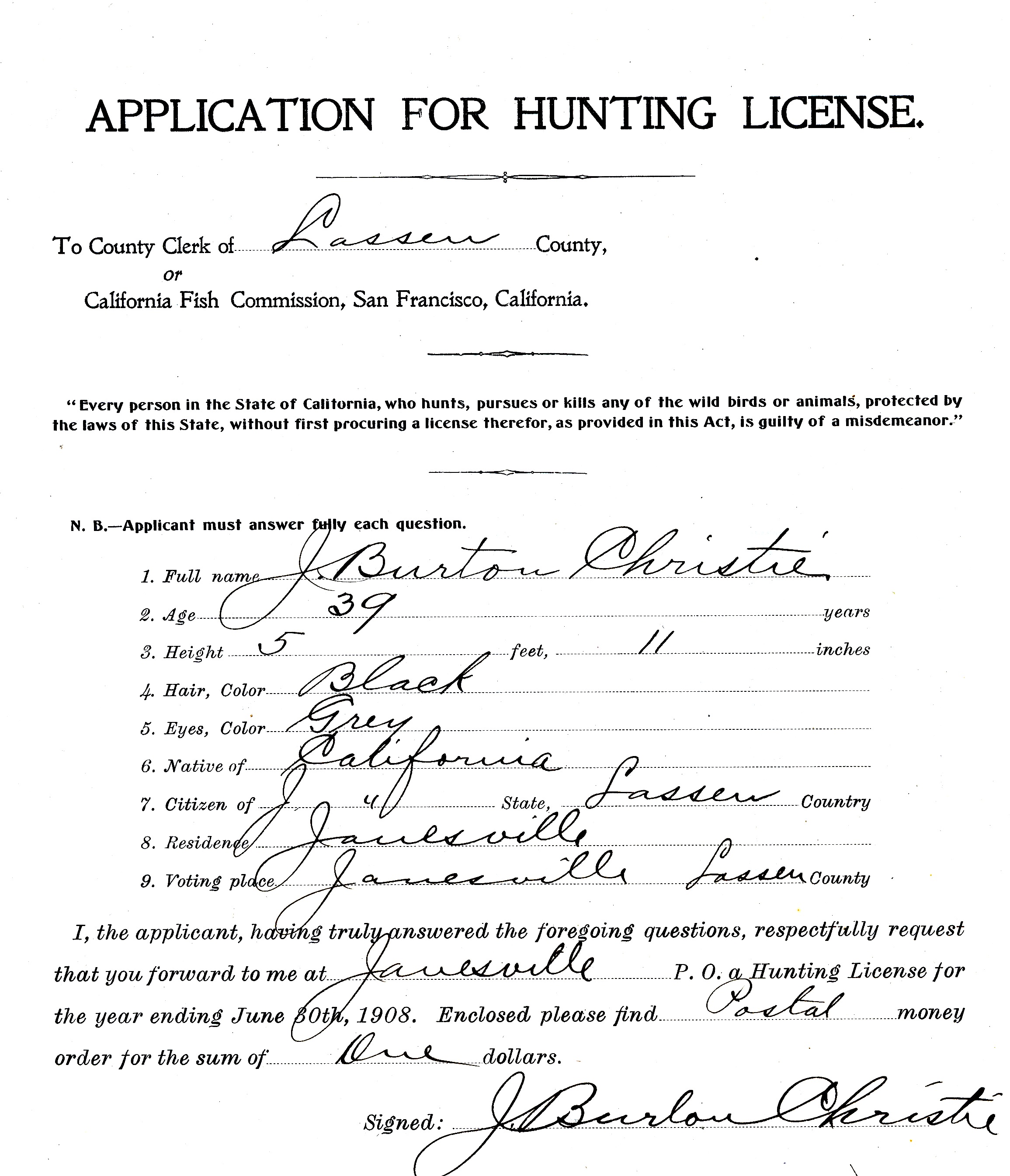
Did you feel that little nip in the air the other morning? Hunters in the Honey Lake Valley area know what it means—dove season. Doves are not fond of cold weather, and start their southward migration. If I could fly south for the winter with them I would.* Continue reading Hunting Licenses→