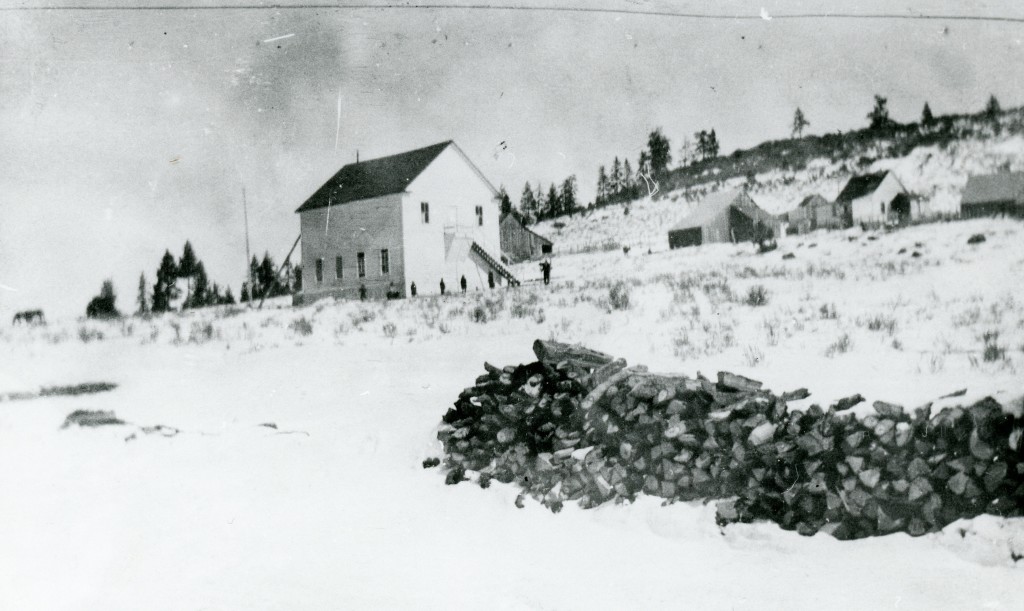
The remnants of this dam straddle the California-Nevada border, and it is an impressive historical site. On May 25, 1889, William A. Clark filed a claim to all the water of Skedaddle Creek to irrigate the sagebrush lands of eastern Honey Lake Valley. To accomplish this, Clark proposed to dam the creek at the “narrows.” The dam would span the canyon some two hundred feet and be 126 feet in height. To fund the project, Clark formed the Honey Lake Water Company, and it was incorporated on June 17, 1889. It was estimated that the dam would cost $30,000. Construction of the dam began in October 1889, and it was anticipated that the dam would be complete by the following spring. In November, Company Engineer, Alexander Center, reported that construction had progressed better than expected and that the dam’s height would be raised an additional fourteen feet. It was during that month of November that one of the severest winters on record began. The November and December snows made work difficult and by January work came to a complete halt. Blizzards blanketed the countryside and then followed bitter cold temperatures that sent the thermometer to –30 degrees. Snowstorms continued and by the end of January it was estimated that on the higher slopes of Skedaddle, the snow depths surpassed ten feet! (Normal annual precipitation at the dam site is 7 inches a year, in 1889-90 it received 22 inches). Continue reading Skedaddle Dam→
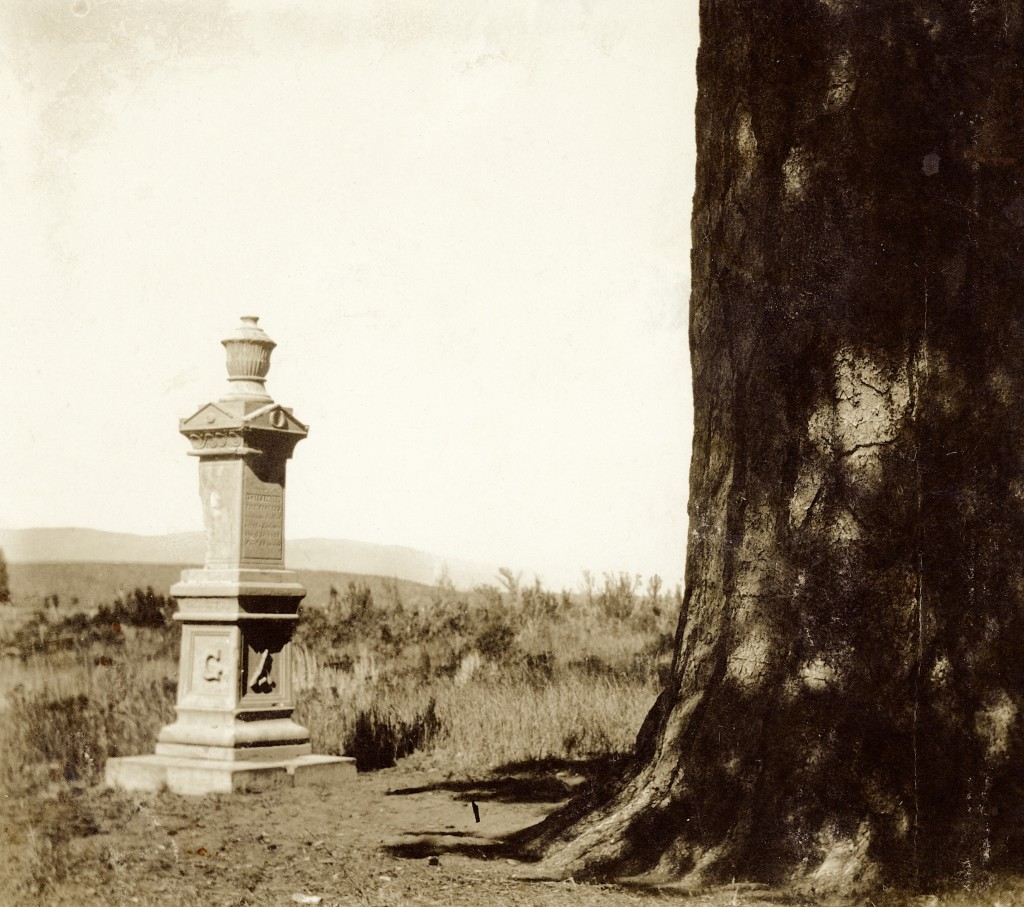
Lassen’s Monument, 1905. Courtesy of Philip S. Hall
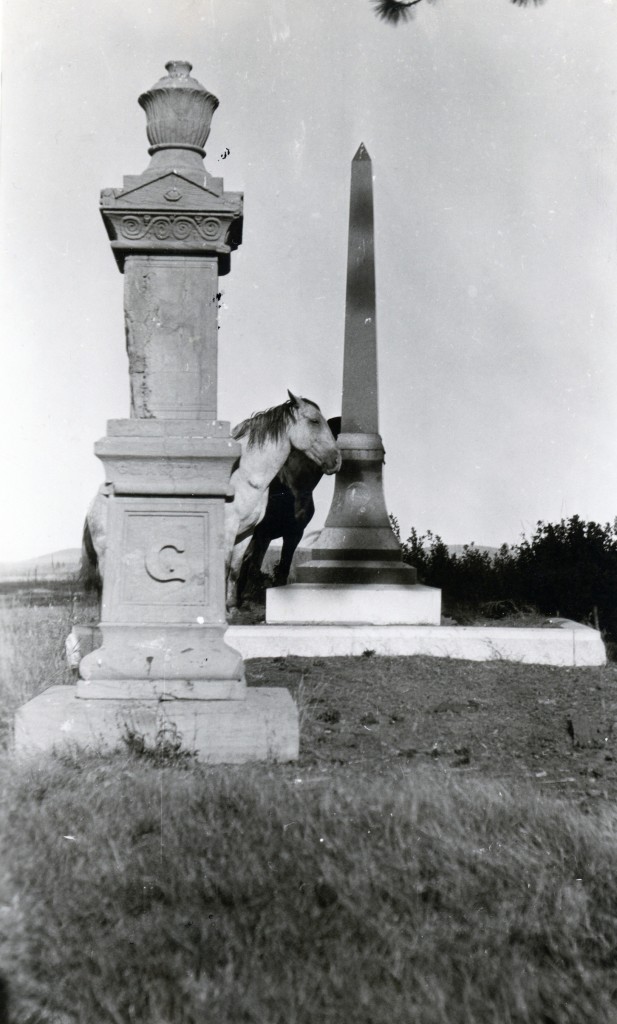
The other day, I wrote about Peter Lassen’s demise. Even though he died in April, his remains were not brought back and buried on the ranch he owned in the Honey Lake Valley until November. In my most recent book, with other contributing authors, Untold Stories, is an account about his burial place. Continue reading Lassen Monument Movement→
Since we live in age of conspiracy theories, one reader was curious about the circumstances of Peter Lassen’s death. Continue reading Peter Lassen’s Demise→
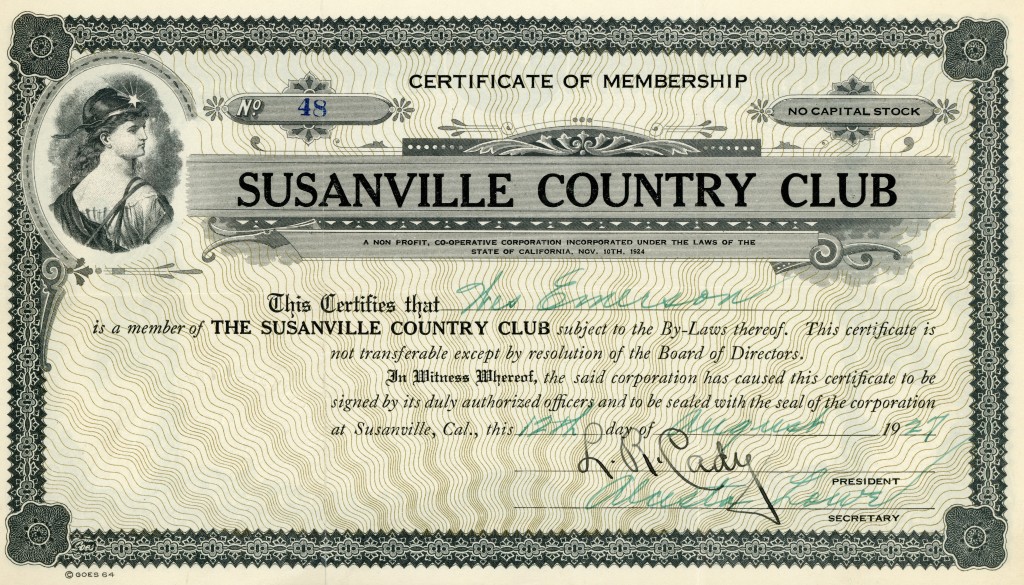
Thought I would pass along the above stock certificate. During the early 1900s numerous local businesses and organizations incorporated. By doing so it allowed them to sale stock, as an avenue to raise funds.
Hopefully, in about a month’s time I will have the history of the Susanville Country Club ready to be put on line.
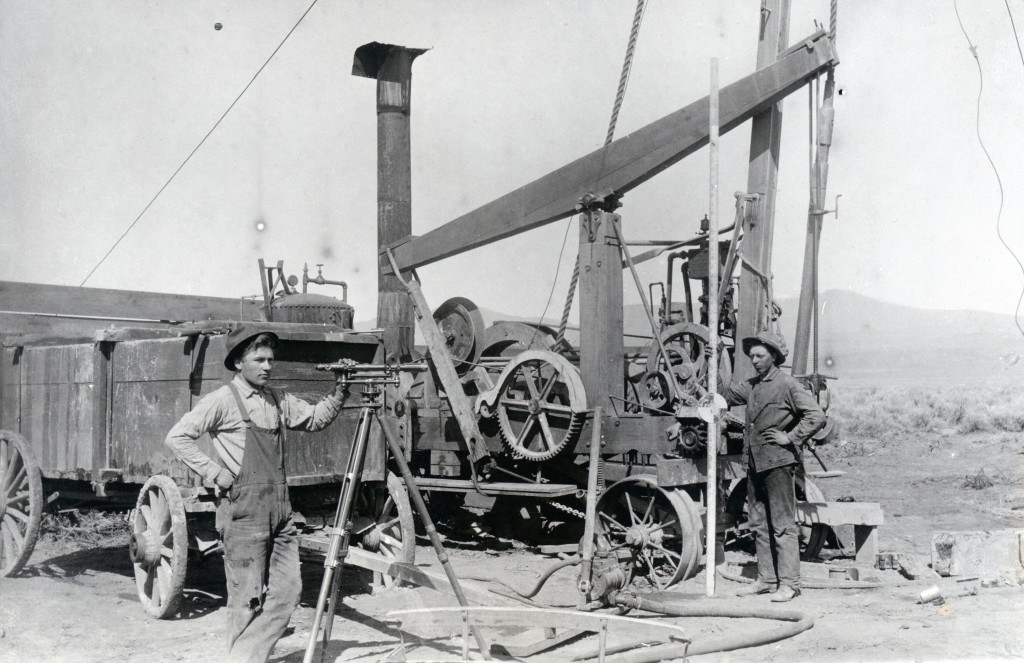
Caudle Brothers well drilling outfit, eastern Honey Lake Valley, 1910.
By the early 1880s, the hot topic that would remain for several decades was reclamation, that was eventually replaced by the lumber industry. When the NCO Railroad inched its way into the Honey Lake Valley only added momentum for the formation of a myriad of schemes. We will explore a number of these, some were successful and some were not.
On a smaller scale, improvements with well-drilling was starting revolutionize irrigation in the Honey Lake Valley. In 1888, Lassen County allocated a $1,000 for the promotion and advertisement of the benefits of well drilling to entice people to settle there. Thus, the Lassen County Chamber of Commerce was formed.
Looking north along Willow Creek towards the site of Dragoon Bridge, April 19, 2016.
In the fall of 1856, Levi Breed set up a trading post on the Nobles Emigrant Trail where it crosses Willow Creek, just north where the current Lassen County road A-27 crosses Willow Creek. It was second one for the Honey Lake Valley. The following year he located to Janesville and became that community’s largest merchant for a number of years.
It was the military that came along next to locate on Breed’s abandoned post. In 1859, a military station, under the leadership of First Lt Milton T. Carr, A 1 Dragoons, was established at the Willow Creek crossing. Its main purpose was to protect the travelers on the Nobles Emigrant Road. “Dragoon” is the name for a mounted soldier or cavalryman.The following year, it was replaced by Soldier’s Bridge which was located further to the east and along the Susan River.
Never miss a story, click here to subscribe and support.
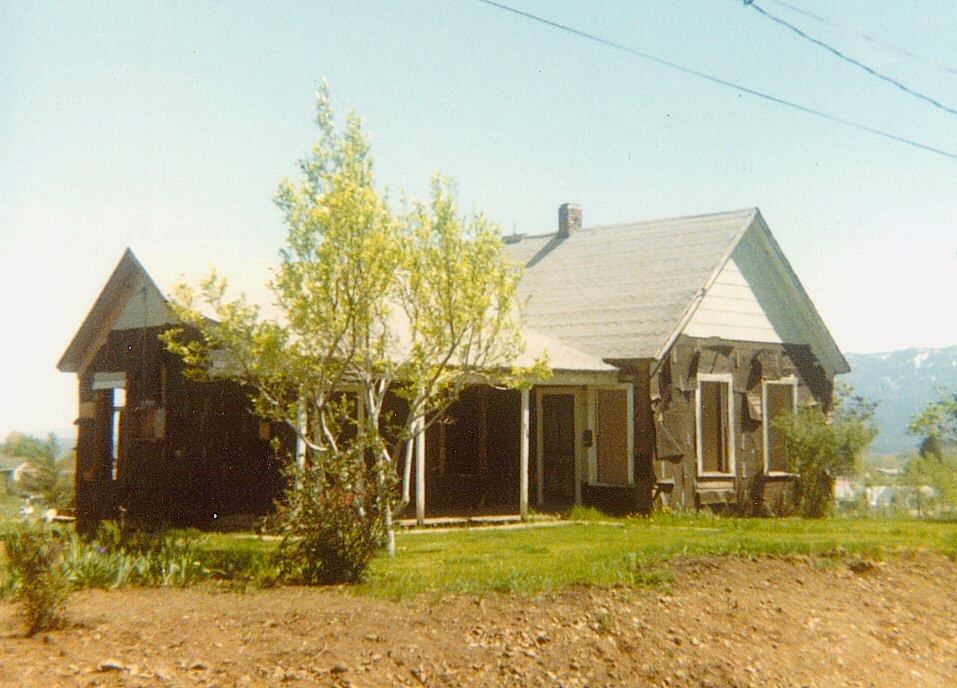
The Brashear Residence on the corner of South Lassen & Brashear Streets. Taken on June 11, 1979 when the house was being torn down.
In 1906, Brashear Street became the first new street inside the original town plat. There would be only three other streets inside the original city limits to be created. There is something the reader can contemplate which were the others.
William Brashear owned all of Block 32 and segments of Blocks 24 and 31. These had never subdivided into lots. With the pending arrival of the railroad, that all changed. It was prime residential property, as it provided some of the best views of the area. In 1911, J.W. Scott, a realtor subdivided the lots on the east side of Gay Street around to Brashear. It became one of the town’s first upscale developments. The initial deed restriction required all houses built cost at least $1,000.
In 1870, Frank Eben Horne became one of the first settlers of the Madeline Plains. Horne retired from his ranch in 1905 and turned it over to his sons. On March 28, 1917, Frank L. Horne, William R. Horne, and Arthur T. Horne, along with Raglan Tuttle and Grant M. Lorraine, formed the Horne Development Company. On April 27, 1927, the Farmers & Merchants National Bank of Reno, Nevada, foreclosed on the Horne Development Company for $38,791.11 and became the owners of the Horne Ranch. It should be duly the Glade Post Office was located there from 1908 to 1918.
In the 1990s, the ranch had a new lease on life when it was incorporated in R.C. Robert’s Spanish Springs development. This and other properties were made available to guests, whether their interest was equestrian pursuits, hunting, etc.
In 1916, William L. Wales, engineer for the Honey Lake Valley Irrigation District, looked at non-traditional water supply sources to reclaim the desert lands of eastern Honey Lake Valley. After all, other sources of water had been claimed.
Wales examined Horse Lake and wrote: “Horse Lake and it’s watershed of 115.2 square miles, laying just east of Eagle Lake, offer very good opportunities for a portion of the water supply. This lake has an area of 3520 acres at an average depth of six feet. According to a statement of a man living near the lake, it has not been dry but twice in sixty years. A shallow cut has been dug through the east rim connecting with a creek leading into Pete’s Valley. No doubt more than enough water has flowed out through this cut to offset the deficiency of the dry years.”