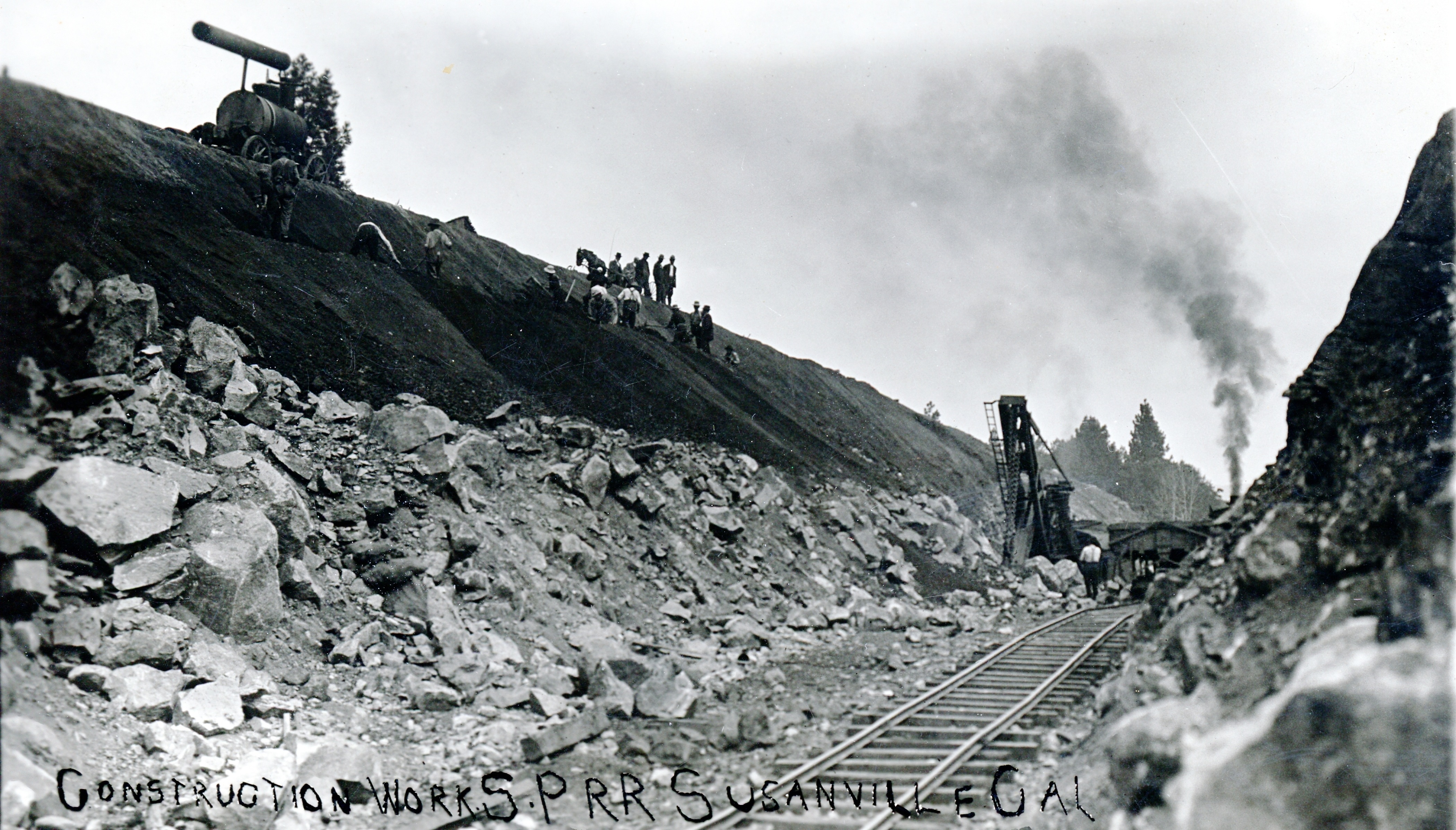
This cut is just west of Susanville at Miller Road.
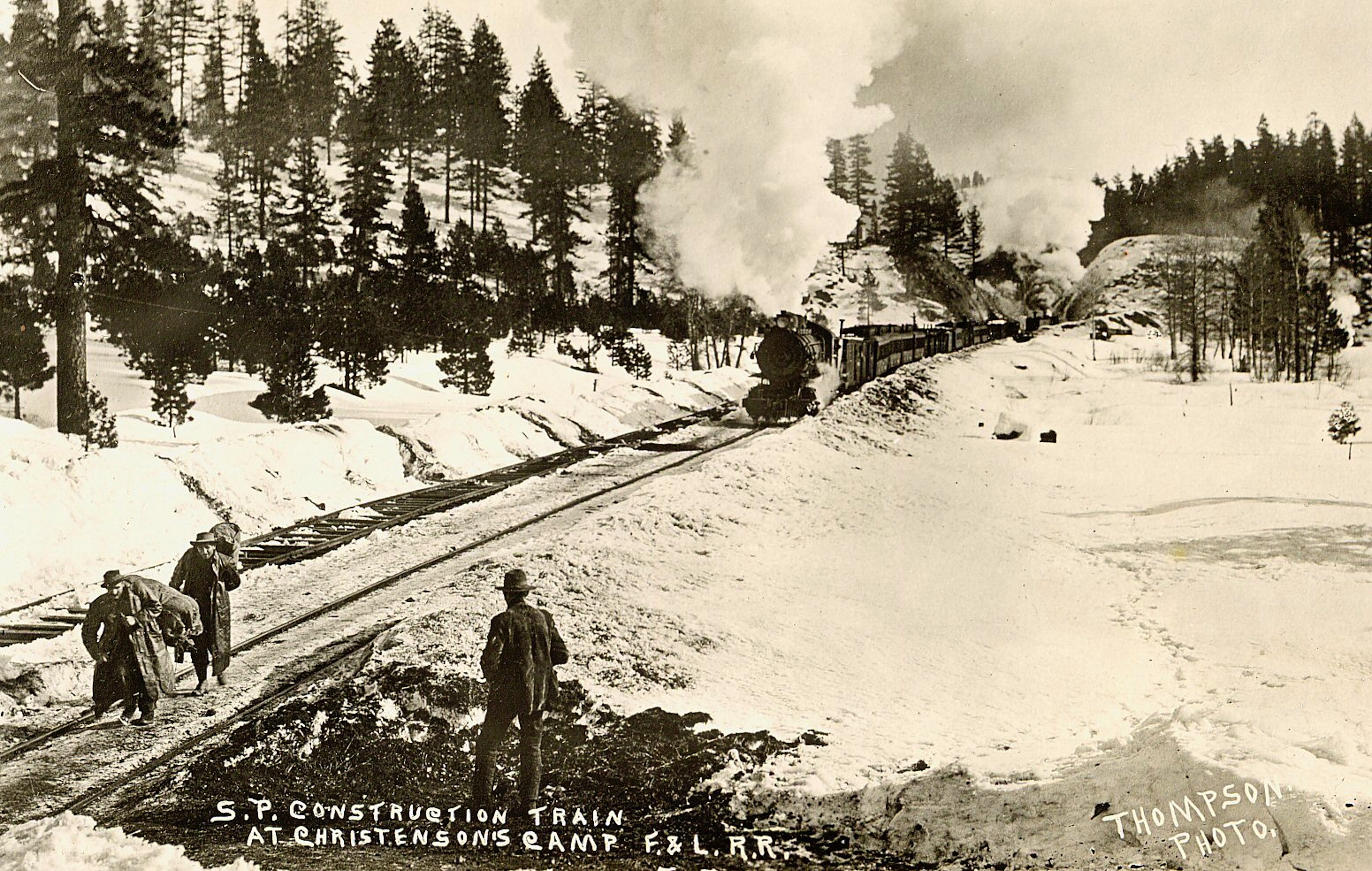
Since today is Lassen Land & Trails Trust annual Rails to Trails festival, it is only fitting to share a few scenes of the construction. In September 1913 work began on the construction of the line from Susanville to Devil’s Corral. This segment provided railroad officials with numerous challenges, since there were hardly any physical barriers to contend with the segment from Fernley, Nevada to Susanville. Time was also of the essence, since the railroad had a contractual obligation to complete the line to Westwood by February. With that in mind, over 1,000 men were hired for this construction phase. On December 12, 1913, the construction train crossed the Devil’s Corral, and all appeared well, until Mother Nature unleashed a fury of storms, which is a topic for another time.
Construction train in the Susan River Canyon.
It is never too late, subscribe today and enjoy tomorrow with daily notifications. You can also surprise someone with a gift subscription.
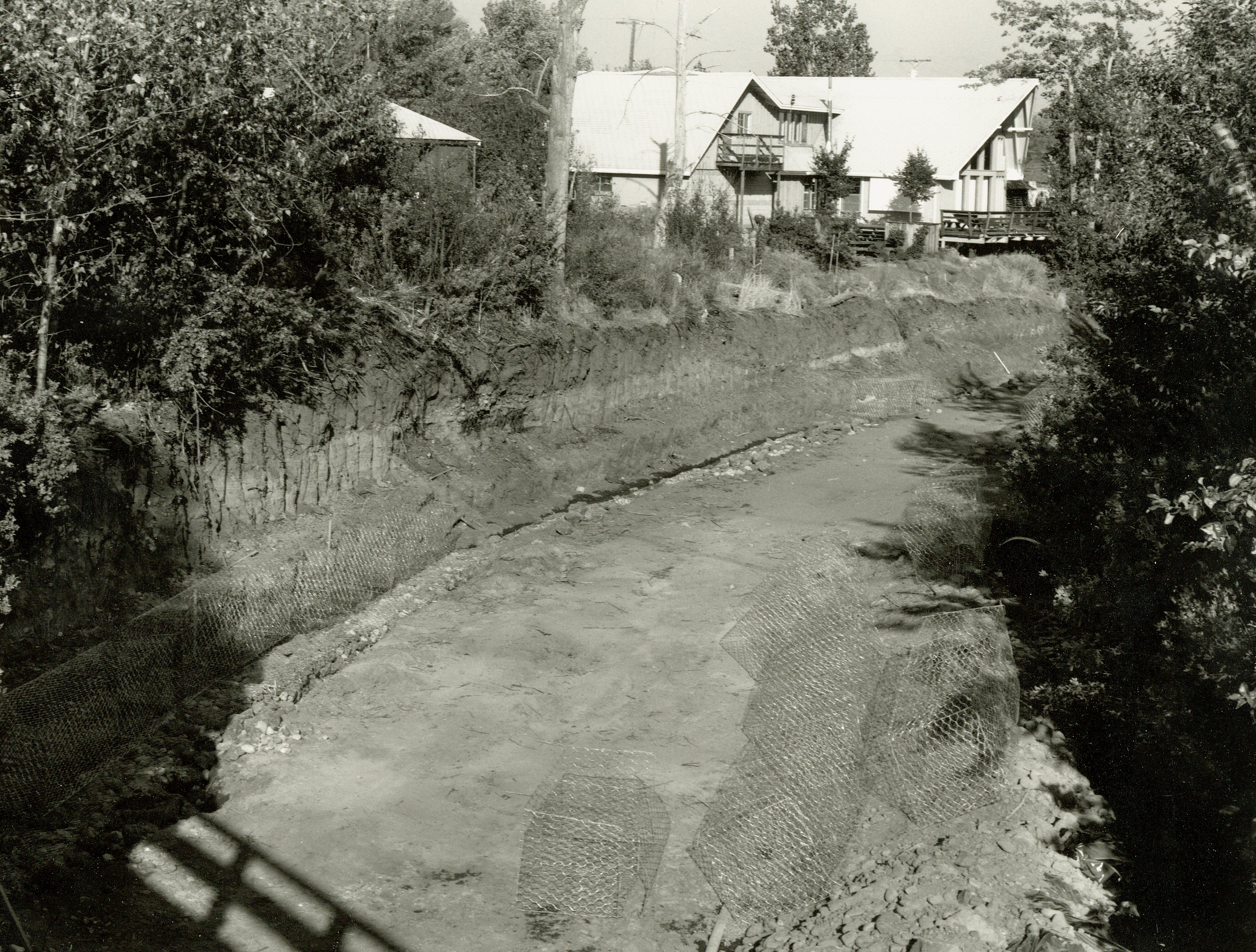
Susan River from the Carroll Street Bridge, 1981. Courtesy of Jim Cooper
While going through a photograph transfer file, in search of a particular photograph that I thought had been scanned, I came across this one of interest. By the way, for those inquiring minds, I never did find what I was looking for.
When I returned home a couple of weeks ago, I noticed the Susan River still had a pretty good flow, considering the circumstances of the drought. In the summer of 1981, gabions were installed along the south bank of Susan River just below the Carroll Street bridge to prevent further erosion of the bank. As one can easily see, there was not much water in the river to divert during the project.
It is never too late, subscribe today and enjoy tomorrow with daily notifications. You can also surprise someone with a gift subscription.
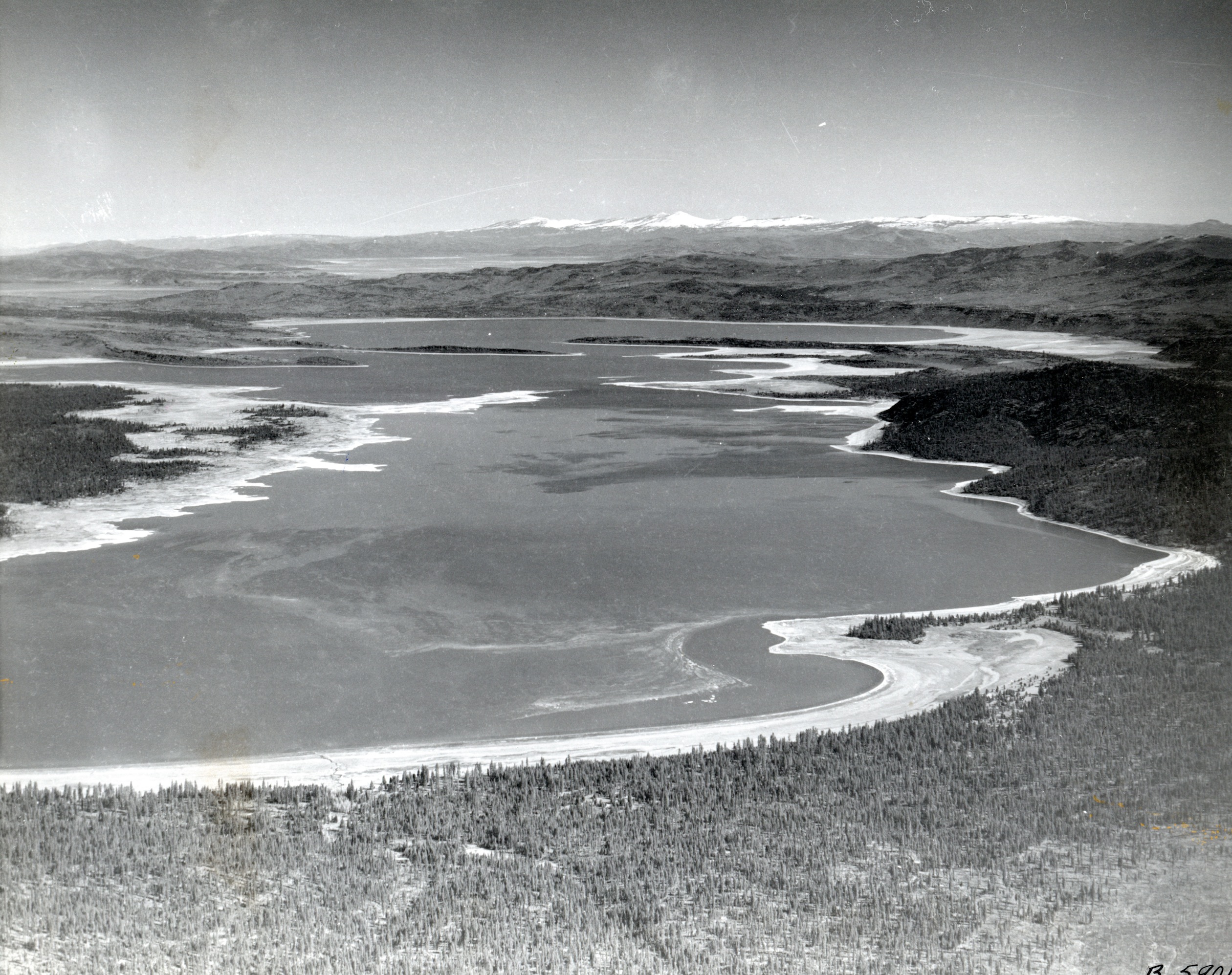
Notice how high the water is in the trees at the current marina site.
Note: While I am getting around better, I still have a long way to go. Some might have noticed that the published October Preview has deviated from what was intended. My apologies, but scanning images to accompany topics, has presented a challenge, due to my ongoing recovery from a broken hip. Please have patience sooner or later the intended topic will appear.
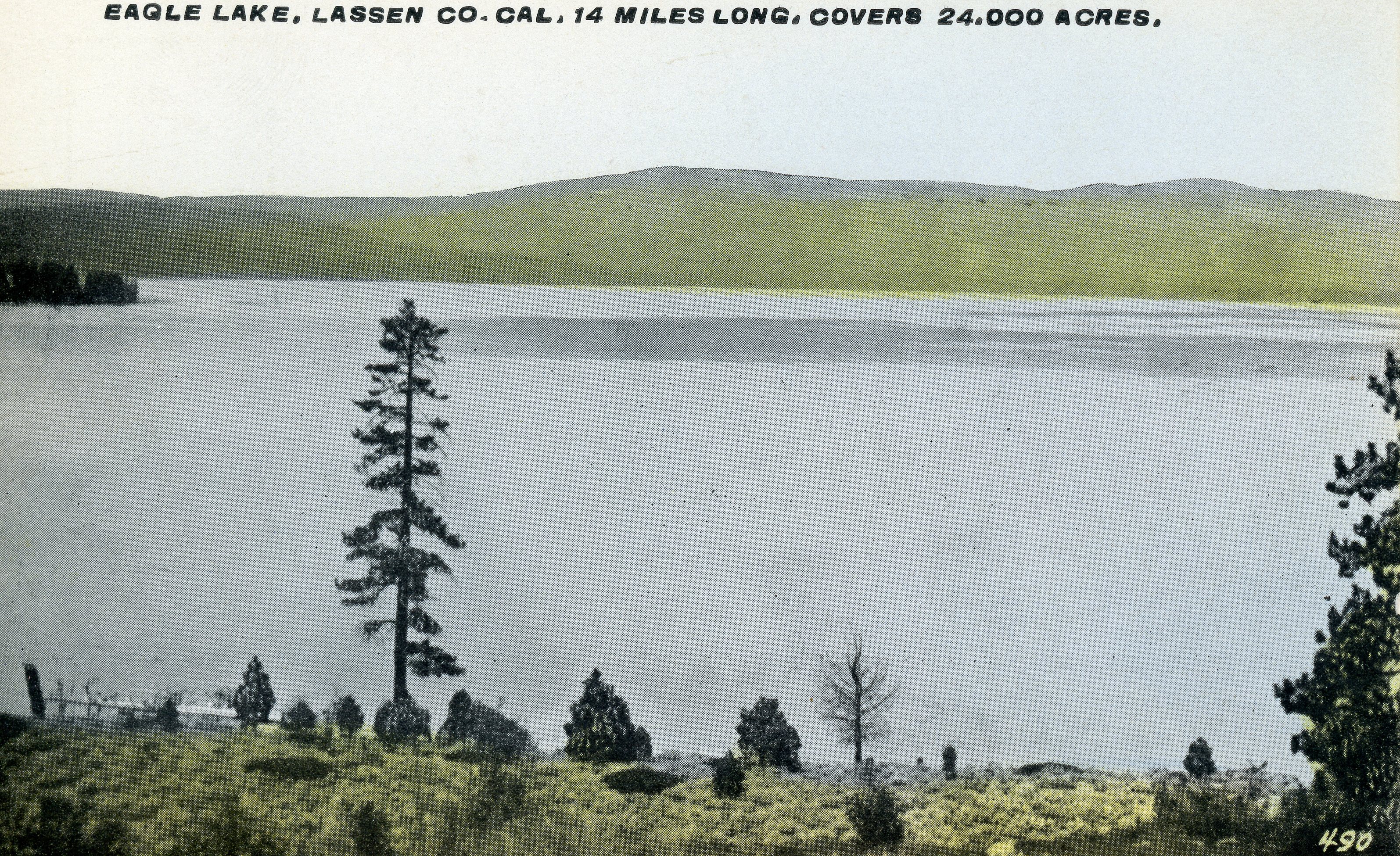
It is only fitting that a week ago, I attended the Eagle Lake Interagency Board meeting and yesterday’s Lassen County Planning Commission meeting. Since so much focus has been with drought levels of Eagle Lake, and groundwater basins, I thought let’s take a look at the other extreme. Continue reading Eagle Lake’s Historic High Level→
Rodman’s grave was part of my Westwood Cemetery Tour
Rodman was part of the large influx in Westwood’s population during World War I. He came there from Akeley where he worked in bank, but there being no financial institution he went to work in the mill. That would change when Red River decided to go into the banking business in 1920 when it formed the Westwood National Bank. The bank was a very contentious issue among the Walker family, but it was one of many of the heated exchanges the family engaged in. Anyhow, the bank was conveniently located in the office building across the street from the Big Store and the mill entrance. In 1921, Rodman accepted the position of head cashier at the bank, a position he held until 1936, when Red River got out of the banking business when it sold it to the Bank of America. He died in 1943 and is buried in the Westwood Cemetery. On a final note, a remnant of the bank still remains, the concrete vault across the visitor’s center.
Subscribe and support this site for as little as $5.00 a month, or a mere 16 cents day.
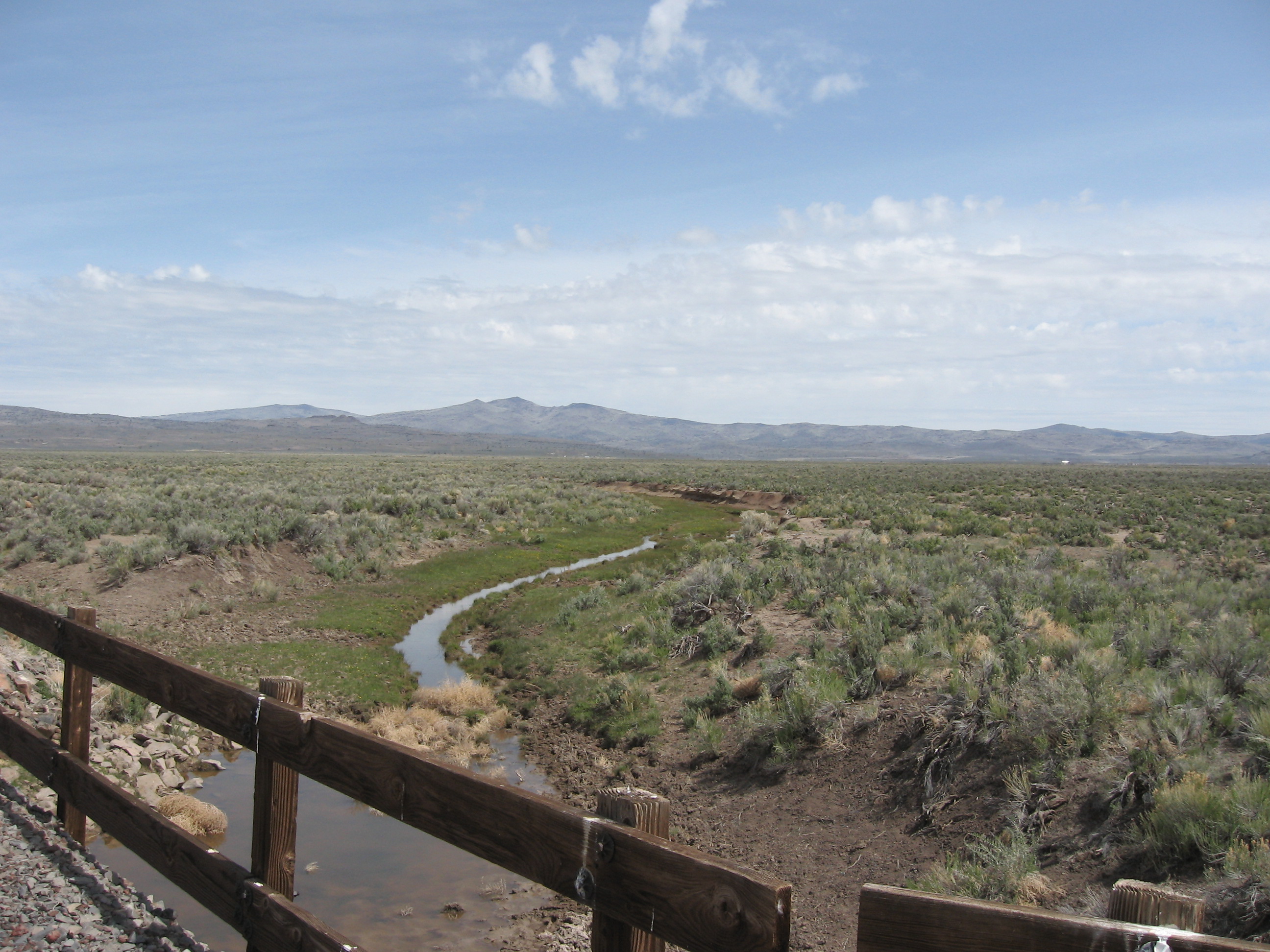
Secret Valley, as seen from the lower end of Secret Valley.
The Paiutes of Honey Lake/Secret Valleys were known as the Wadatkut.
The Secret Valley band consisted of 20-30 people. Ike Northrup who passed away in 1953, is one of the best known members of this tribe.
In the summer they made their home at the north end of Secret Valley, near the old McKissick Ranch, near Karlo. In the winter, they would relocate in the Honey Lake Valley, east of Litchfield. By the late 1890s, some members of tribe would find seasonal employment there on the nearby Gibson Ranch.
For more information see Francis Riddell’s Honey Lake Valley, Paiute Ethnology, Nevada State Museum, Occasional Papers No. 3, 1978 . Riddell grew up in the Honey Lake Valley during the 1930s, as his father was hired to work on plans for the troubled Bly Tunnel at Eagle Lake. While attending school at Missouri Bend, Francis found arrowheads in the school yard and that was the beginning of his career in archaeology.
Please subscribe and support this site in providing quality historical information of Northeastern California. A five dollar contribution goes a long way towards a worthy cause.
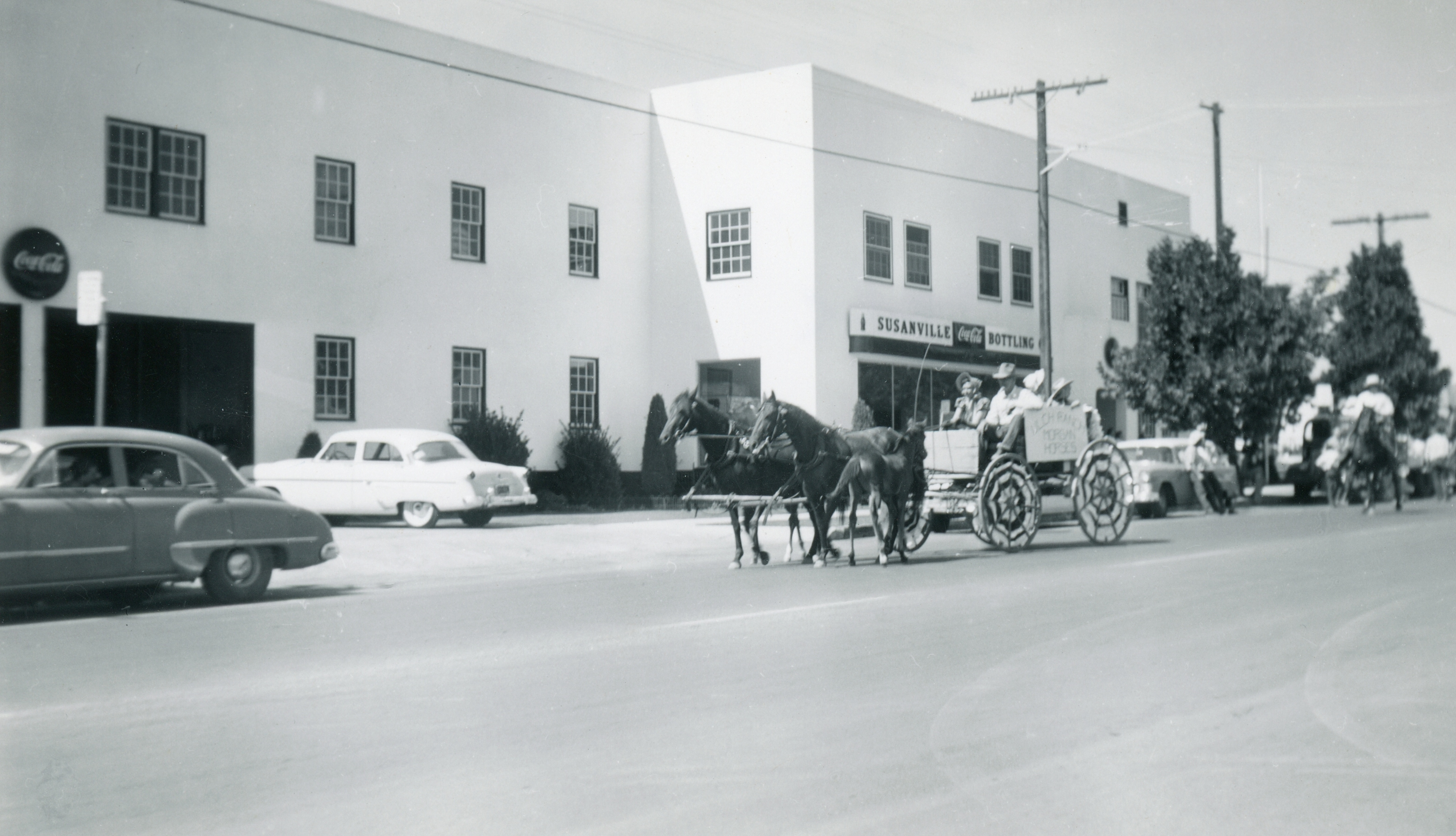
The Susanville Coca Cola Plant as it appeared in the 1950s, during the Lassen County Fair Parade. Courtesy of Margaret A. Purdy
One subscriber wanted to know the history behind this plant, which is also known as the Susanville Bottling Works. I must confess a lot of ignorance, as to specific dates, etc, so this will be updated when new material surfaces.
The original bottling works was established around 1914 by H.W. “Pop” Wharton. It was located at 906 South Alley between South Weatherlow and Union Streets. The building, painted a chocolate brown, is still there and converted into apartments.
In 1923, Howard L. McMurphy took over the complete operation. It was an interesting and lucrative time to be in soda business with Prohibition. It saw not only the local production of Coca Cola, but a local line of the Mt. Lassen brand of sodas.
Sometime in the late 1920s or early ’30s a new plant was constructed at Main and S. Sacramento Streets. For many the star attraction was the large picture window on Main Street, where people on the street could watch the assembly line of the sodas being bottled.
In 1967, Phyllis McMurphy Beard dissolved the Susanville Coca Cola Plant and the local production of sodas ceased.
For five dollars a month by subscribing, you can receive a daily email on that day’s topic, and in doing so, help preserve a bit of history.
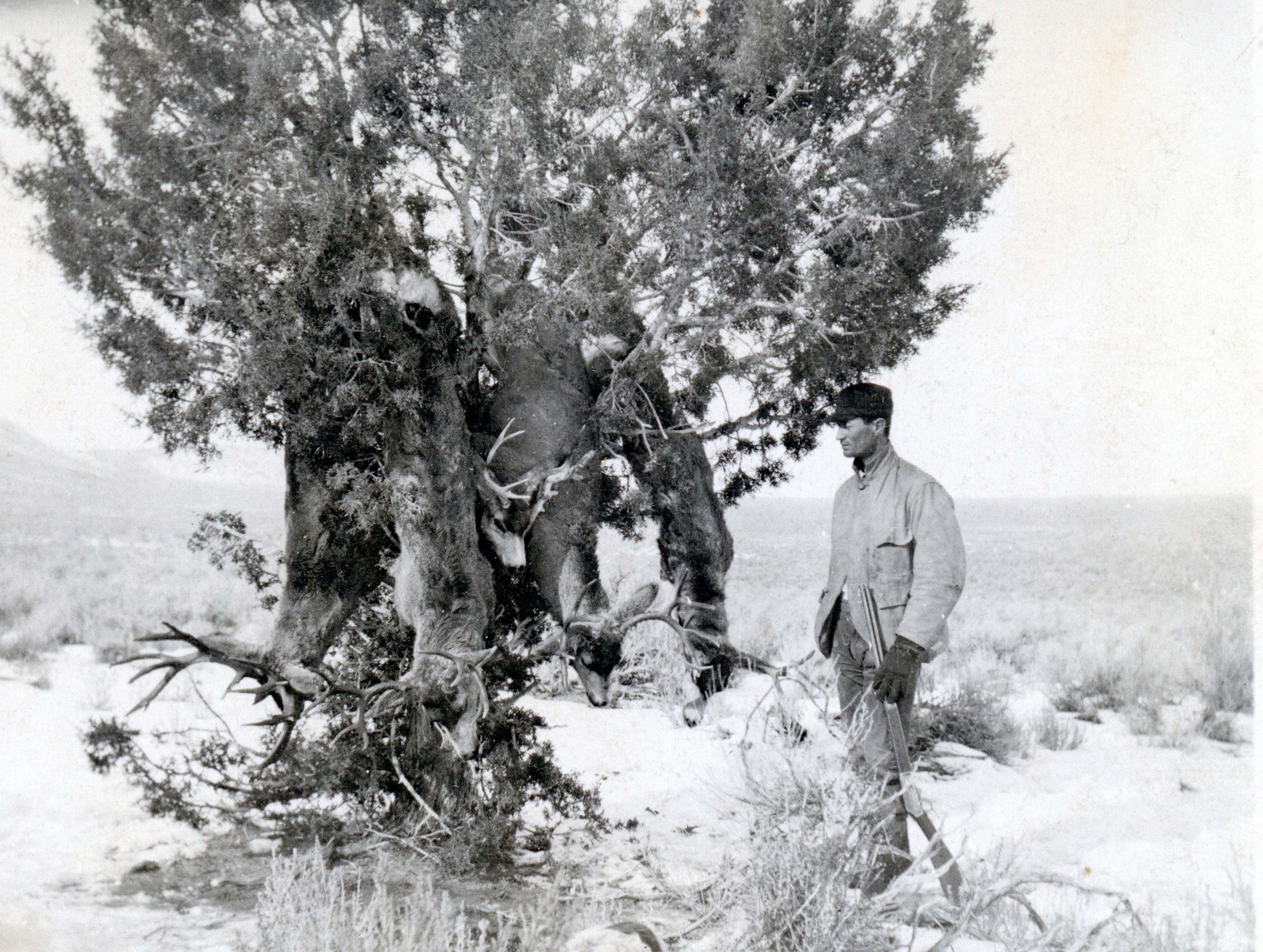
A successful hunt near Skedaddle, 1906. Courtesy of Marge C. Foster
Once upon a time, a person was not confined to deer hunting in a particular zone. By the 1940s with significant improvements to highways and automobiles opened a lot of territory to hunters, once the domain of locals.
The Fruit Growers Supply Company operated lumber mills in Hilt, Susanville and Westwood. While researching its history, I always came across some interesting material. Fruit Growers’ Annual Reports are a wealth of information. Before you think I am losing my sanity writing first about deer hunting and then lumber mills, there is a common thread.
The following is a most interesting excerpt from Fruit Growers’ 1946 Annual Report:
“Much of the country in which Company timber is located is considered to have good deer hunting, and the deer season opens at a time when the woods are in the driest conditions and when the fire hazard is the greatest. The handling of the large influx of people into the general Northern California area during the deer hunting season constitutes a very serious problems to all owners and agencies interested in timberlands. In 1946, hunters and their parties were registered as they entered Lassen County area, and during one week’s time, close to 5,000 automobiles and 13,000 individuals registered as potential deer hunters. Thus more hunters were checked into Lassen County than its normal population. Despite this, the Company was fortunate in its 1946 experience with forest fires.”
Subscribe and support this site for little as $4.17 a month.
Yesterday, I attended the Eagle Lake Interagency Board meeting at Spaulding Tract. (It was my first public appearance since being home recovering from my broken hip, though I had to explain why I was using a walker.) Of course, one of the topics on agenda was the lake level, which is now at its all time record low of 5090.6 feet, just barely breaking its 1935 record. Whether or not the lake will recede even lower in the month of October is anyone’s best guess. While cooler temperatures will assist in the reduction of evaporation, the big factor will be whether any substantial precipitation will occur this month.
There were, of course, some lively discussions throughout the meeting. The eradication of brook trout from upper Pine Creek was news to me. I was later informed it has been issue for several years in certain circles. There was an item that was overlooked on the agenda, and I would have brought it up to the chairman, but I just did not have in me, due to the discomfort I experienced sitting, and needed to make a departure. The agenda item 2c – Update on new Stones lake level benchmark. However, I have a Lassen County Planning Commission on Wednesday, October 7, so I will ask then.
Hope with bringing you this information, it might just give you a tiny incentive to part with five dollars a month, to keep things afloat.
Byers’ old Baxter Creek general store that was later moved his Tule ranch and operated by his nephew, Jim McClelland,. Photograph taken May 1975, on one of my many visits to see Esther McClelland.
Since there were some requests for information about the McClelland Ranch, I will provide some of its earliest history. It should be noted that the McClelland Ranch is one of many that will featured in my forthcoming book about stories behind the brands on the wall at the Pioneer.
In the summer of 1857, two brothers, Abijah and Charles Adams settled on what would become the McClelland Ranch. In answer to one question posed in June of 1859, George Lathrop and Thomas Harvey located on land that would later become the Mapes Ranch. In that same year, another Adams brother, Horace arrived on the scene to take up residence there.
The story of Horace Adams is tragic one, for on June 18, when Horace Adams was stepping out of the cabin he was killed by Big Jim, a Paiute. To have better understanding about the tense situation then, read my Willow Creek Valley book, though out of print, it is available at many libraries.
In 1868, the Adams Brothers sold their ranch to James R. Withington for $2,000. In 1872, Withington sold the ranch, which then consisted of 955 acres to James D. Byers for $2.700. In addition, Byers purchased three adjoining homesteads. Byers, a bachelor, made his home with his nephew’s family, William McClelland. Upon his death in 1902, he left the ranch to the McClellands.
For five dollars a month by subscribing you can receive a daily email on that day’s topic, and in doing so, help preserve a bit of history.