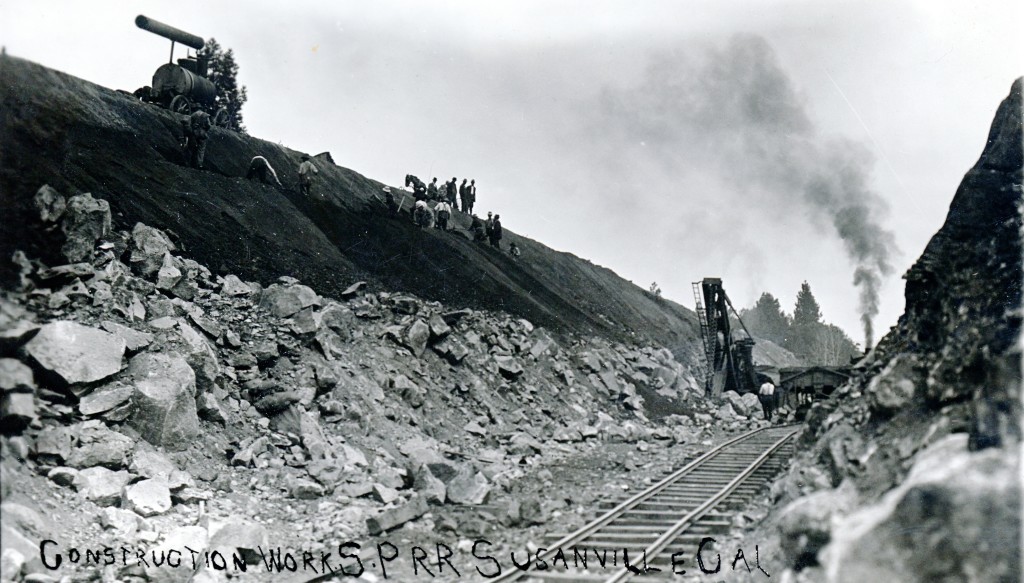
Construction of Miller’s cut near Susanville 1913. B.R. Zimmerman collection
Daily life got crazy in Susanville when the railroad arrived. Numerous discussions were held to make the town “dry.” It was the belief of some that if there was a ban on alcohol, that it would rid the town of certain elements. The City was not so keen on the other hand, as it received most of its operating revenue from liquor licenses. Continue reading Those Rowdy Camp Followers→
Well, can you believe it, it has been one year to the date that the old barn at the east entrance to Susanville was destroyed by a fire. It was built in 1920/21 for the Fruit Growers Supply Company, who were in the midst of constructing their new sawmill/box factory nearby. Continue reading That old barn→
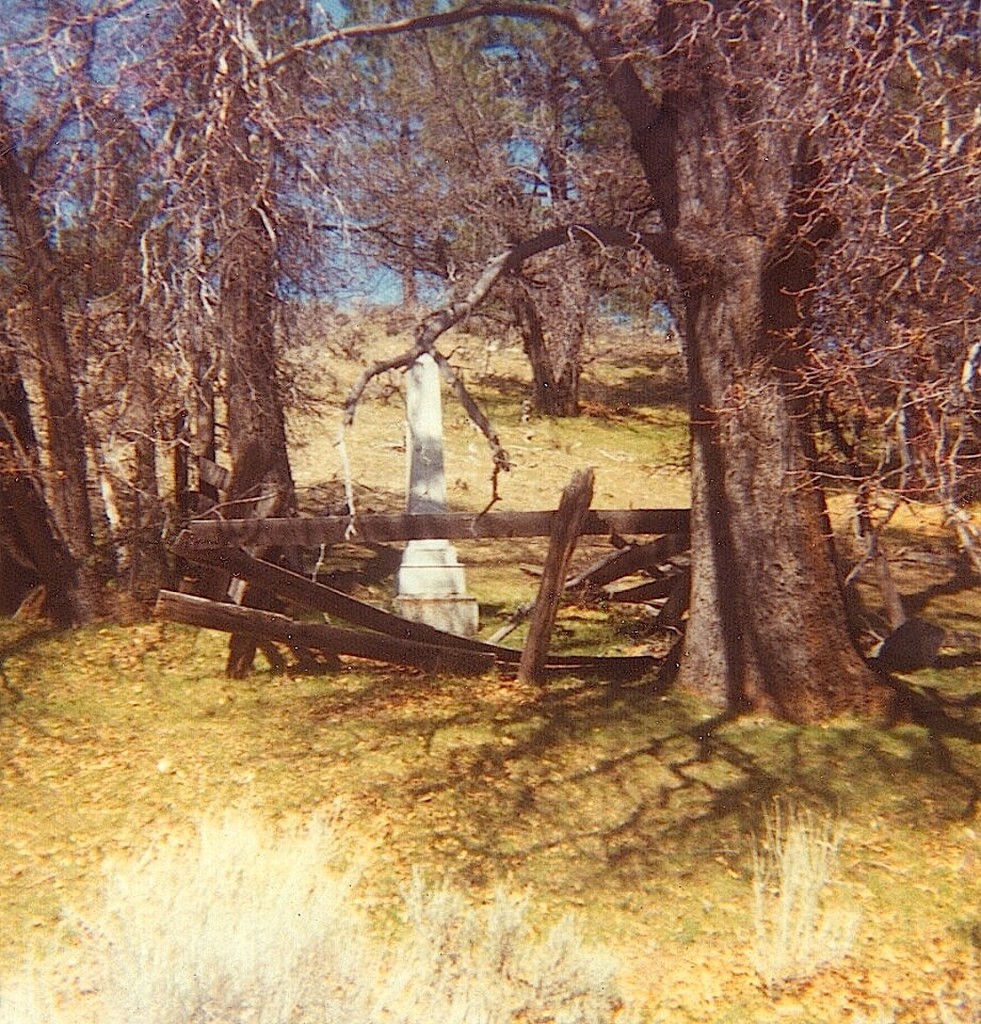
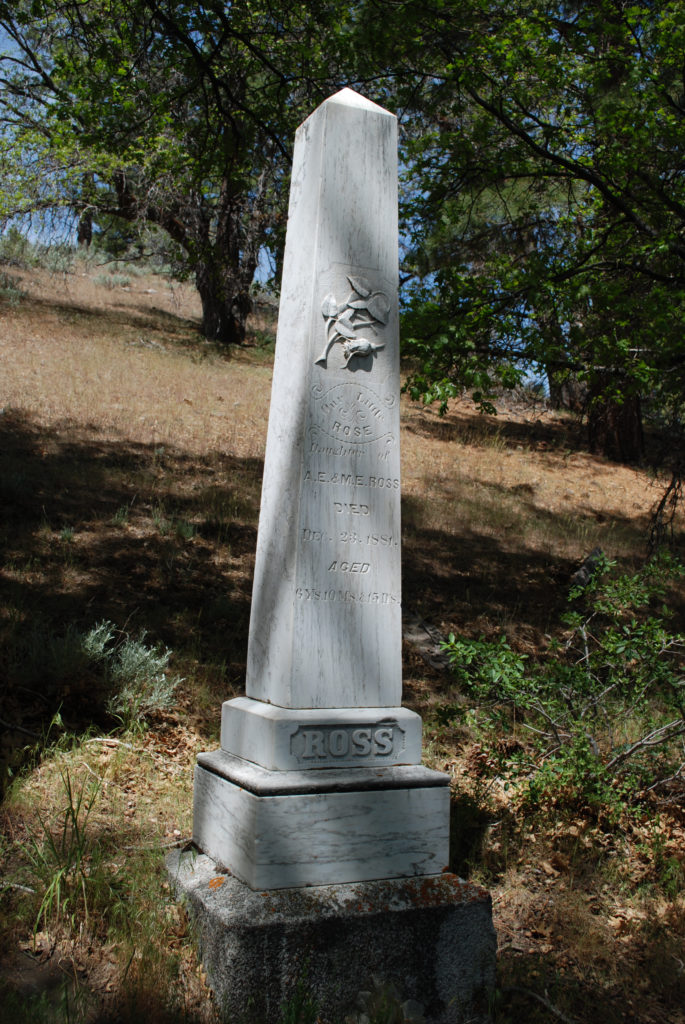
Rosie Arrowsmith Ross was born February 8, 1875 at Long Valley, Lassen County, the third child of Albert and Mary Ross. She died at the age of six on December 23, 1881. Her parent’s ranch would later become known as Constantia. Her death announcement included the following statement: “Rosie the bright flower of the flock is gone. She died of the dread disease typhoid pneumonia. She was buried near her home on Christmas day, in a shady nook of oak trees overlooking the valley, where a mother’s hand will care for it. Many kind friends assisted and attended the funeral.”
Another view, years later in 2008. Courtesy of Lawrence Meeker
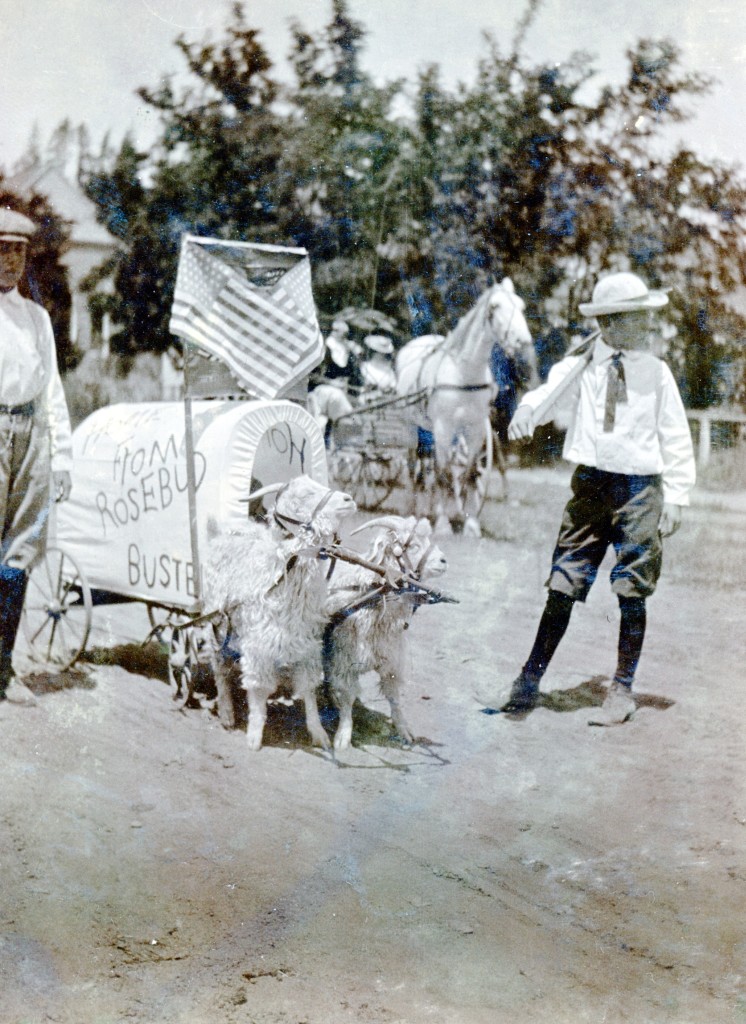
A 4th of July 1908 entry in the parade held in Susanville. Note the writing on wagon “Home from Rosebud Busted” Courtesy of Lola L. Tanner
In 1906, for the first time since the 1860s, Honey Lakers were excited about mining in Nevada. Of course, one Honey Laker, E.C. Brown had done very well in Goldfield. It was not the new mining discoveries of Goldfield and Tonopah, but one due east of the Honey Lake Valley on the eastern edge of the Black Rock Desert–Rosebud, in Pershing County.
It all began in August 1906 when three prospectors from Goldfield, Nevada discovered a gold vein in the Kamma Mountains that purportedly assays ranged from $1,500 to $30, 000 per ton. A mineral report issued from Humboldt County would later state: “This was followed by a senseless boom, in which, as usual, folly played eagerly into the hands of fraud.” Continue reading Rosebud, Nevada→
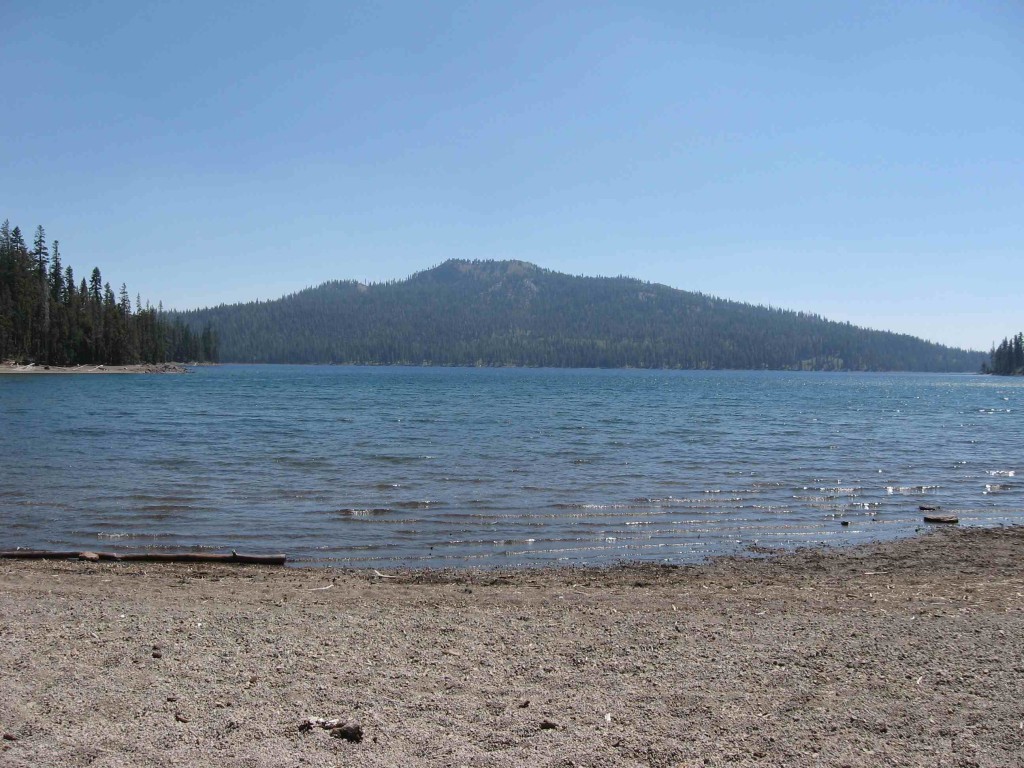
Juniper Lake, at an elevation of 6,753 feet, covers an area of some 592 acres, making it the largest lake in Lassen Volcanic National Park. Interestingly the lake has a maximum depth of 234 feet. In the 1870s, the California State Geological Survey named it Lake Louise, but others had applied Juniper to it, and the latter won out.
Early day visitors to the lake were few. Its remoteness, along with its heavy winter snowfalls, usually did not make it accessible until June. By October, as a general rule, the snow returned, again making the place inhospitable. Continue reading Juniper Lake→
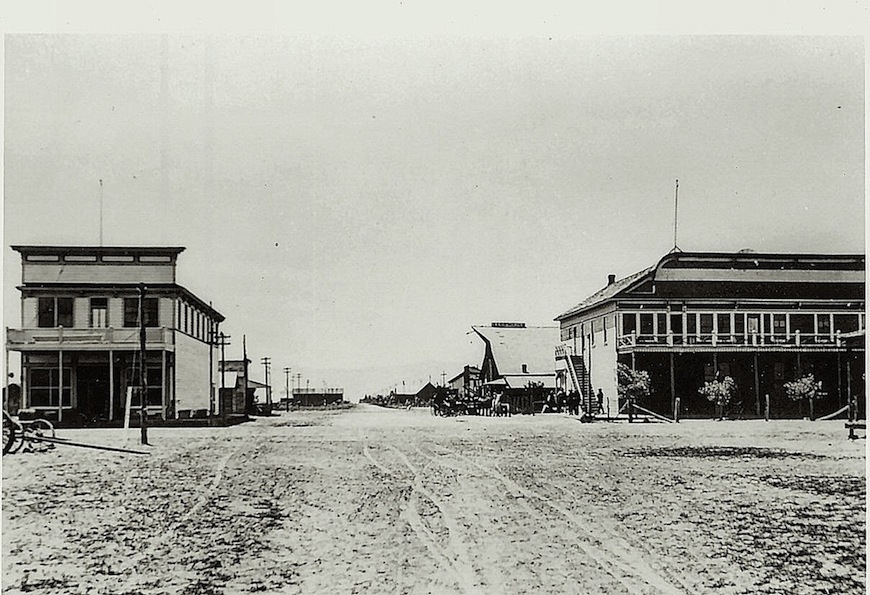
Milford Street, Standish, 1908. Courtesy of Prentice Holmes
In the 1890s, the Associated Colonies of New York was established to create utopian communities in the West, Standish would be there second development. It was their belief that people living in the East wanted to escape from large industrialized cities where corporations were in control. Those same people, they concurred, sought independence, would work for themselves and own their own homes. Each “colony” was designed using the philosophical beliefs of Myles Standish and the economic structure promoted by LDS leader, Brigham Young. In 1897, the Standish townsite was laid out, and its founders stated growth would be slow, not a boom and bust cycle. Things did not work out well, and it went bankrupt in 1901. After that the town really started to grow.
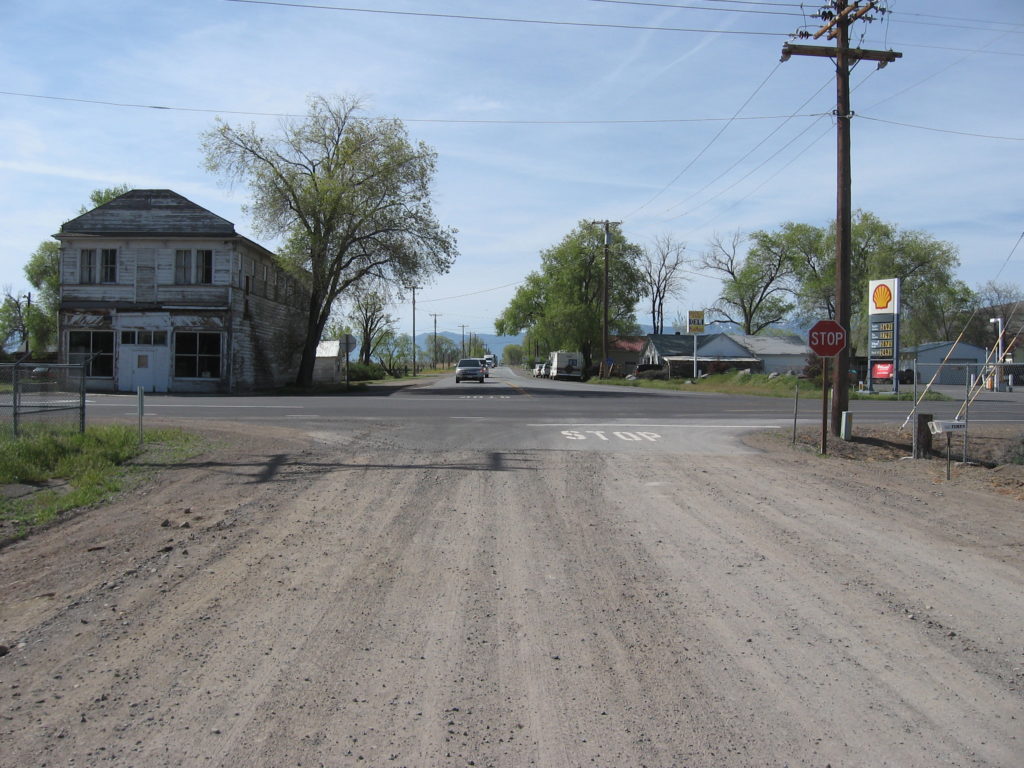
Milford Street, Standish, April 19, 2016
Never miss a story, click to here to support and subscribe.
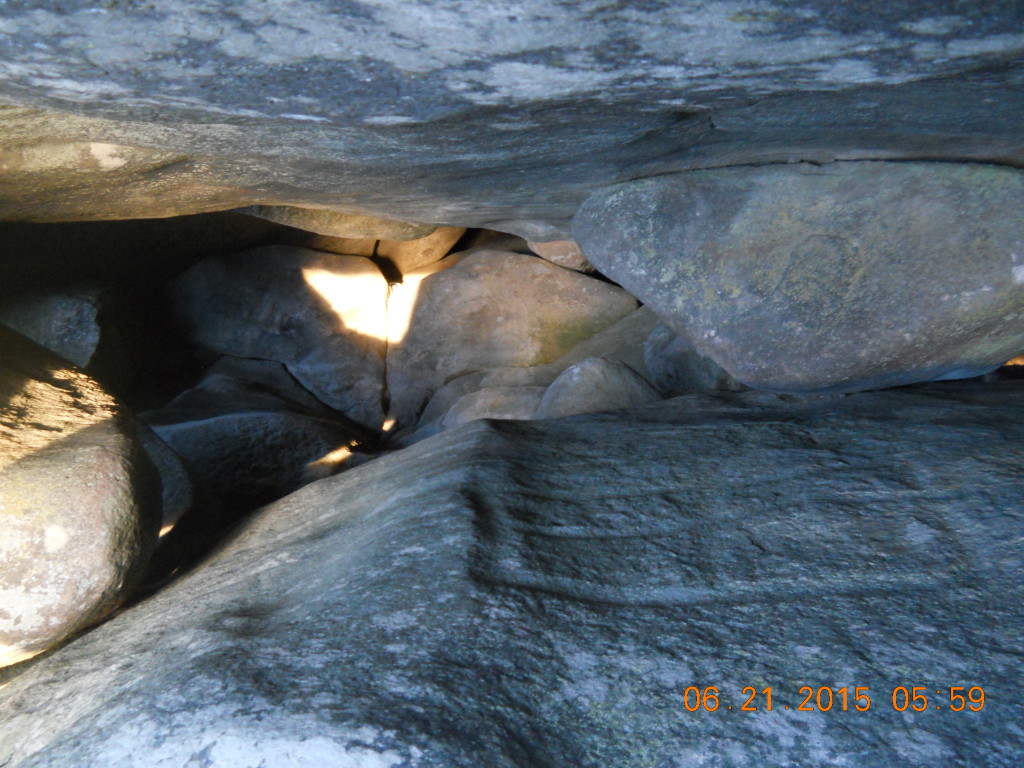
Were you aware that the Belfast petroglyph site also serves as ancient observatory? This event only occurs on the morning of the summer solstice when the sun enters a chamber highlighting a variety of glyphs, among other things. It is quite the sight to see.
The sunrise chamber.
Last year we had a small delegation that made the trek. This is an early morning excursion and I mean early as we gather at 5 a.m. to make the trek. In preparation attendees receive in advance John Rudolph’s paper, “An Ancient Solar Observatory.” If there is enough interest we can make the trip again this year. Please let me know. One final note the solstice occurs on Monday, June 20.
Note: There is a $5.00 fee for non-subscribers.
Never miss a story, click here to subscribe and support.
Milford School, 1957. Courtesy of Milford Community Association
On February 28, 1865, fourteen Milford residents petitioned for a school district for their town that would divide Lake and Long Valley school districts. In March 1865, the Board of Supervisors granted their request. In July 1865, Ezra P. Soule and Henry C. Stockton built the first schoolhouse for $500. In 1883, the voters narrowly passed a special tax for $160 to construct an addition to the building. Milford’s population continued to grow and a larger school was needed. On May 12, 1888, the voters approved a $1,400 bond measure and a new schoolhouse was constructed adjacent to the old one. By the 1960s, rural schools were on the brink of extinction, and Milford was no exception. In 1965, the upper grade students were transferred to Herlong Elementary. In 1966, the school only taught grades one through three. The Milford school closed in 1967. Of note, both schoolhouses still remain, each one converted into a private residence.
It is never too late, subscribe today and enjoy tomorrow with daily notifications. You can also surprise someone with a gift subscription
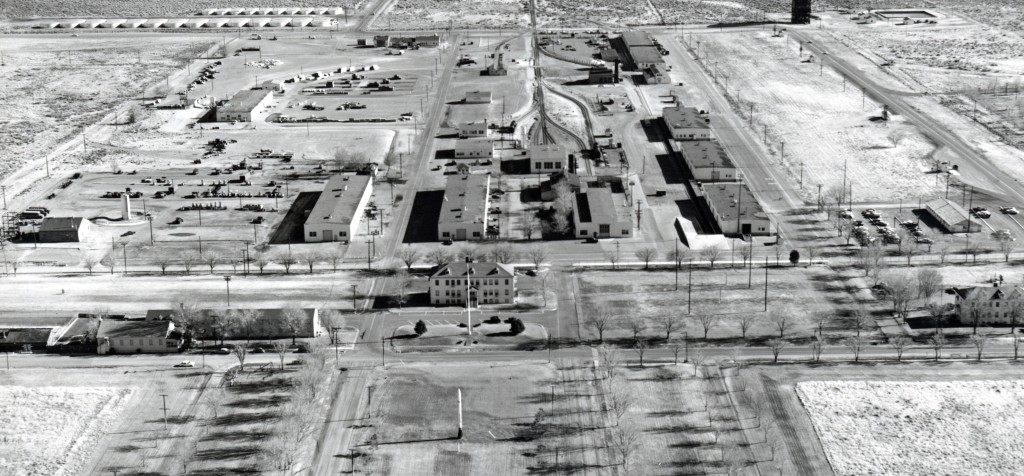
The Lassen County business community courted the military over the years. During World War I attempts were made to establish a military training camp at Hackstaff, while that failed that location was not forgotten. In 1926, the Lake Denmark Naval Ammunition Depot in New Jersey was destroyed, the cause of a lightning strike. Twenty-one people were killed, and the damage in today’s dollars about a billion.
This changed everything when the government sought a location for a munitions depot in the west. The two important criteria was it to be an isolated location, but have railroad access. The top three sites examined were Secret Valley, Flanigan and Hawthorne. In 1928, Hawthorne, Nevada was the victor. When World War II came along, saw the need for another Army Depot, and the army selected Hackstaff in the Honey Lake Valley and it was subsequently renamed Herlong, after the first Ordnance officer killed in World War I.
Never miss a story, click here to subscribe and support.
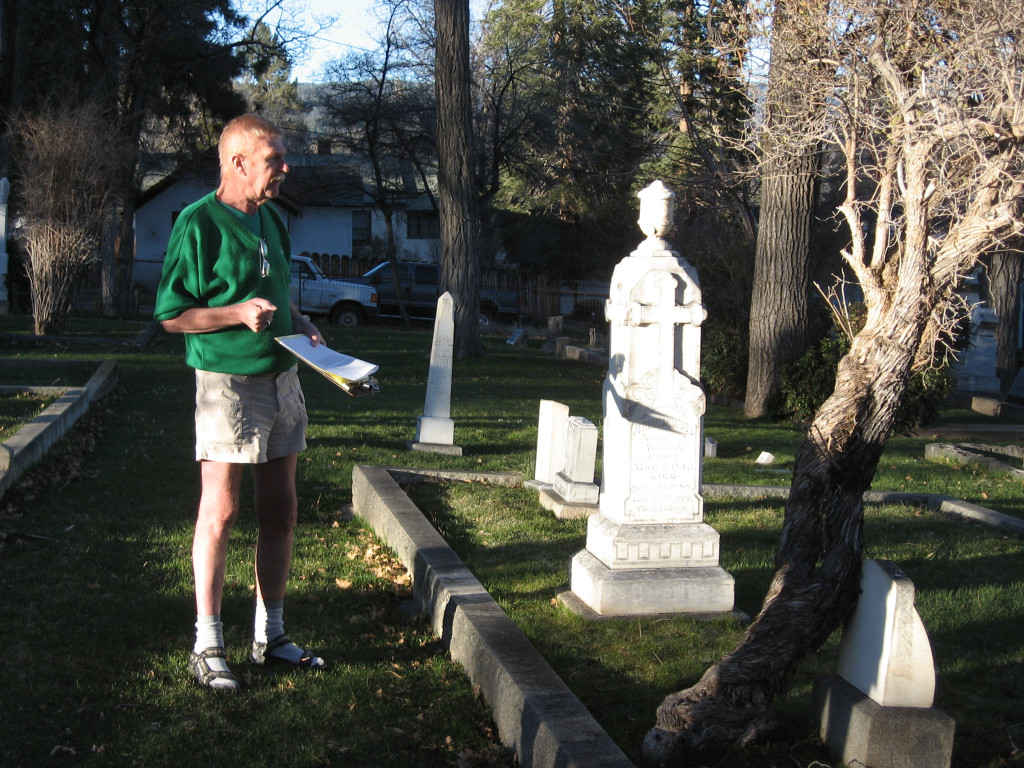
The grave of Jeremiah Wood at the Susanville Cemetery. March 17, 2016
Jeremiah Wood (1819-1889) was a true ‘49er arriving in California in that infamous year and spent most of his life mining in Nevada County. In the meantime, two of his sons, John and Denis came to Susanville in 1872 and opened up a meat market/butcher business. In 1887, Jeremiah came to Susanville to spend his final years with his son Denis, who by the way expanded operations into ranching, and six generations later the family carries on the tradition. This is truly remarkable, after all the old saying goes the first generation makes it, the second uses it and the third loses it. Only 13 percent of family owned businesses make it to the third generation. On a final note, the Wood Ranch still uses the brand that Denis created back in 1875, the DX.