The completion of the Western Pacific’s highline in 1931 was not the only railroad development to make news. In the 1930s, Red River’s most unusual railroad logging line, the Piute, came to fruition—so named as it followed Piute Creek in its approach to Susanville.
Red River owned a large swath of timber west and north of Susanville. While they had already logged over its easily accessible timber in Mountain Meadows and Lake Almanor, the Piute line was not intended to service Westwood. The Piute was built to generate much needed revenue to sell timber to other parties, such as Fruit Growers and Lassen Lumber & Box. However, they had a back-up plan; should Red River’s timber sales fall flat, they could mill the timber at Westwood. Continue reading Piute Logging Railroad→
Estate Sale: I need to make room for items from my mother’s estate. This a great bargain at $10.95, you save$8 off the regular price. What a deal!
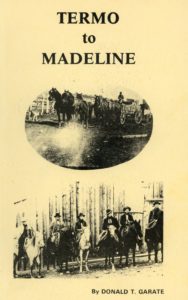
This is Don Garate’s epic account about the history of the west side of the Madeline Plains, that covers the period from 1868 to 1935. This 436 page book covers a lot of territory from the earliest settlers, the arrival of the NCO Railroad, and the Basques, too. Interspersed are amusing anecdotal stories like the “Characters of the Madeline Plains.” Garate starts that introduction with: “Generally speaking to be a certified and accredited Madeline Plains Character, a person had to meet three qualifications, all of which were easy to pass if one worked at it just a little. First off, a bachelor status was required. This was not too difficult because the fairer sex (or should be said “wiser’) was still not plentiful enough to go around. Secondly, he who aspired to be one of the infamous characters of the Plains had to be a stranger to water. Again, this was easy during the drouth, water was seldom seen on the Madeline Plains. But a true character had never heard the word “bathtub.” At least, if he had he could not know what it meant. And lastly a real character had to get involved in alcohol–whether in the drinking or the manufacturing. Generally, a top notch character did a little–a lot–or both.”
While the City of Susanville and the County of Lassen debate marijuana issues, lets take a look of some historic accounts from the 1920s. It was not until the late 1920s that marijuana appeared on the scene locally. In November 1928, Sheriff Jim Leavitt conducted a raid on the Brunswick Pool Hall near the Susanville Depot. Leavitt confiscated ten kegs of whiskey and ten pounds of marijuana and arrested Emma and Pete Ovalle on a narcotics charge for the possession of marijuana.
Marijuana was something new to the local residents. The local press described it as a Mexican tobacco that is smoked like a cigarette, and said it has an exhilarating and soothing effect for the smoker and can also make one feel “goofy.” Continue reading A Marijuana Tale→
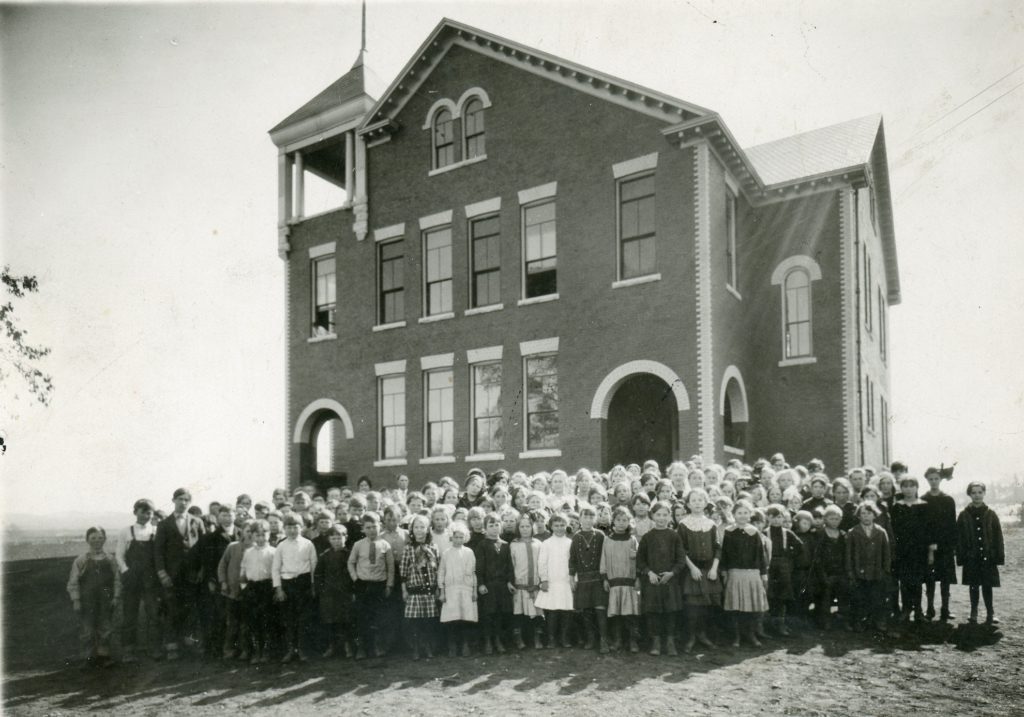
On March 18, 1948, the Trustees of the Susanville School District condemned the Washington School as it would no longer pass certain safety codes. Built in 1900, the two-story brick building was showing its age prematurely. At that time the McKinley School was located on the same campus, and officials considered it just a matter of time that it too, would have the same fate. The state considered it a “distressed district” and provided some funding to rebuild the schools. However, the school district had to pass a $174,000 bond measure, to qualify, and the voters approved it. Washington School remained at its Cottage Street location, while McKinley was relocated to Fourth Street. In 1980, Washington School closed. It later re-opened as Credence High School.
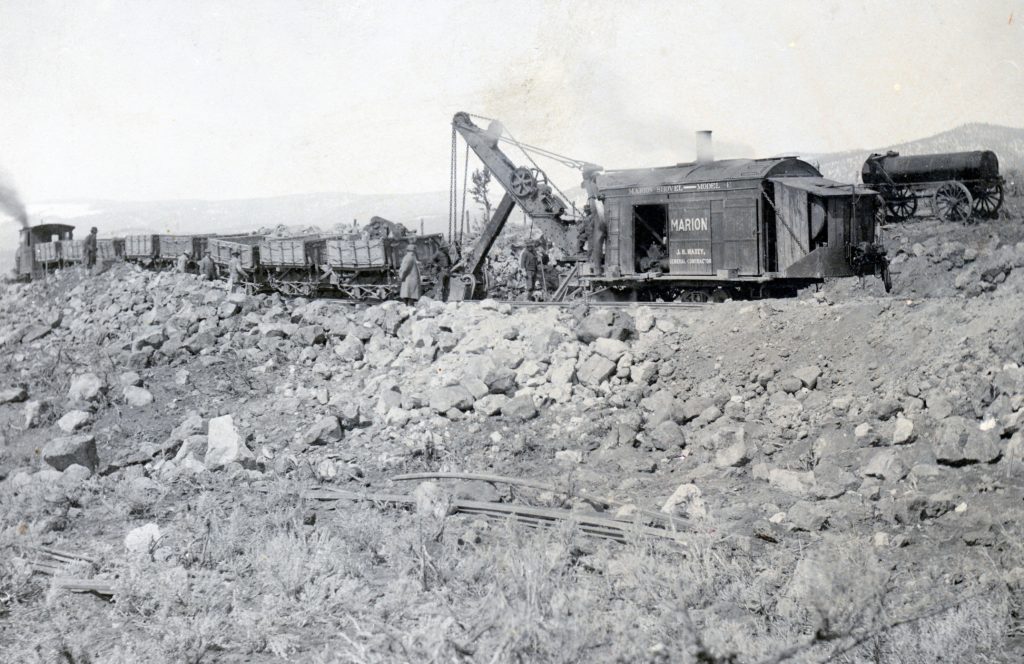
Davis Cut under construction. Courtesy of David Ross
In April 1912, the Southern Pacific Railroad announced construction of the Fernley & Lassen Railroad, and awarded the contract to the Utah Construction Company. That company hired a numbered of sub-contractors, the most prominent of which was J.H. Maxey Construction Company. No time was wasted on construction as there was a deadline to reach Westwood by March 1, 1914. In the fall of 1912, a construction train reached Davis Cut, near Johnstonville. There were several fatalities associated with the construction of the railroad, and one of them occurred at Davis Cut. On April 13, 1913, James Cook, a powderman for the J.H. Maxey Construction Company, was killed there in an explosion to blast the rock.
For those not familiar with the location, it is just past Brockman Slough, near Johnstonville on your way to the prisons. It was named after the John C. Davis family who owned the property there.
First of all, I want to thank those who stopped by and checked out Saturday’s Estate Sale. It should be duly noted that there will be a Phase Two Sale, since there is still more to assort through.
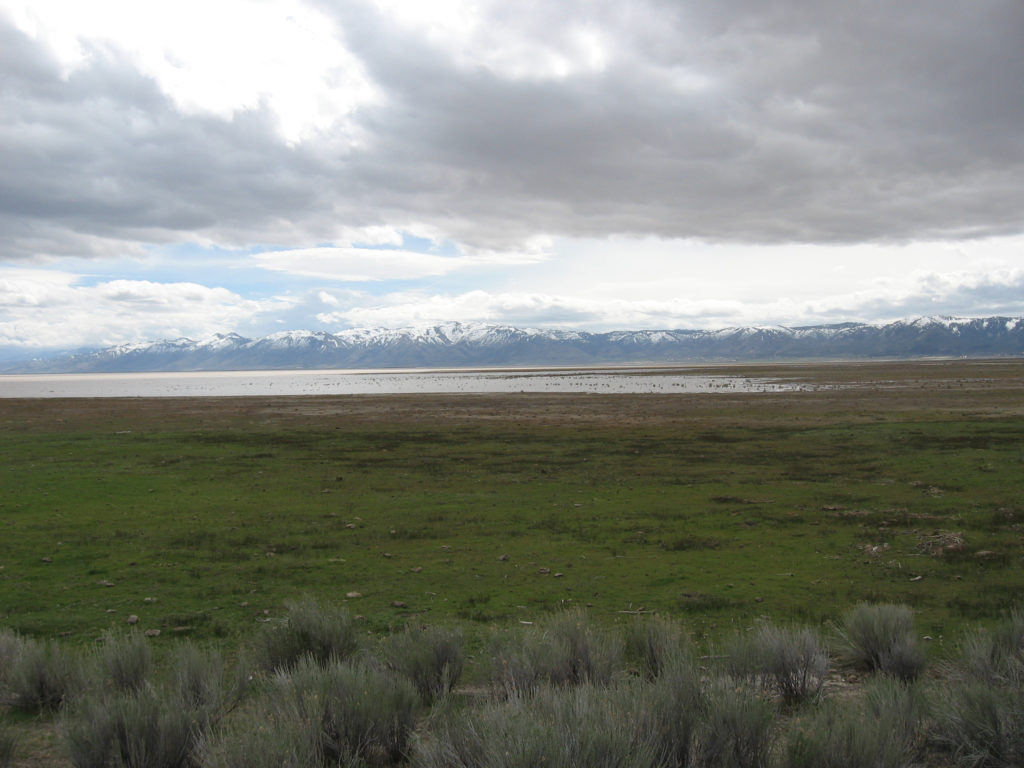
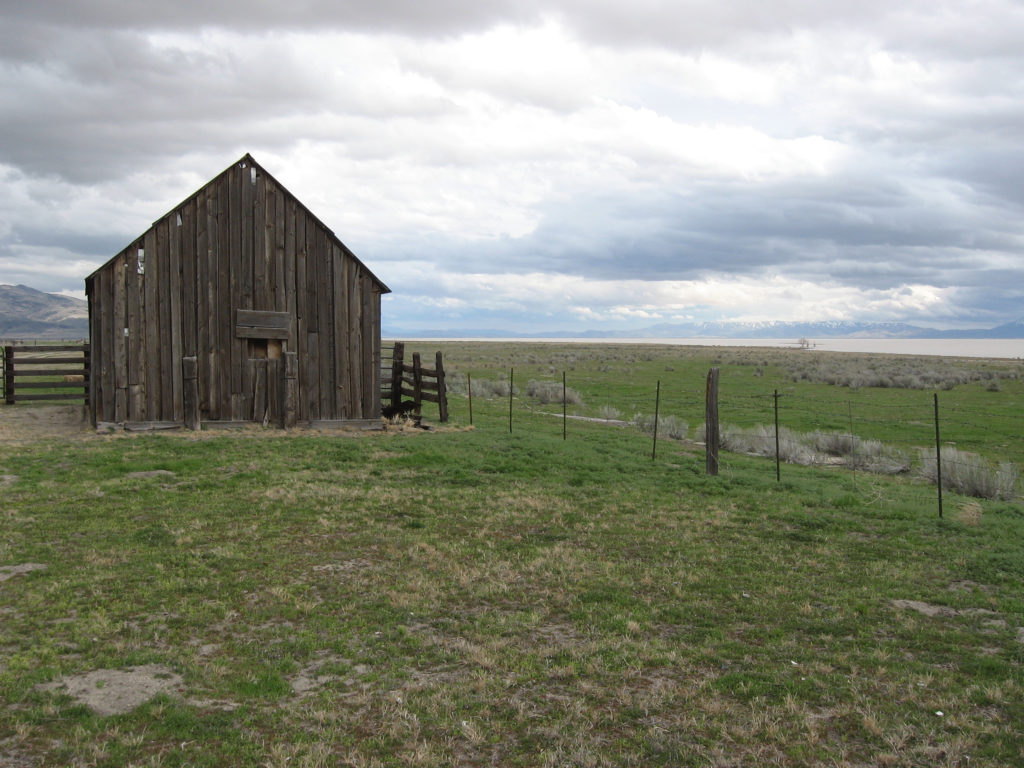
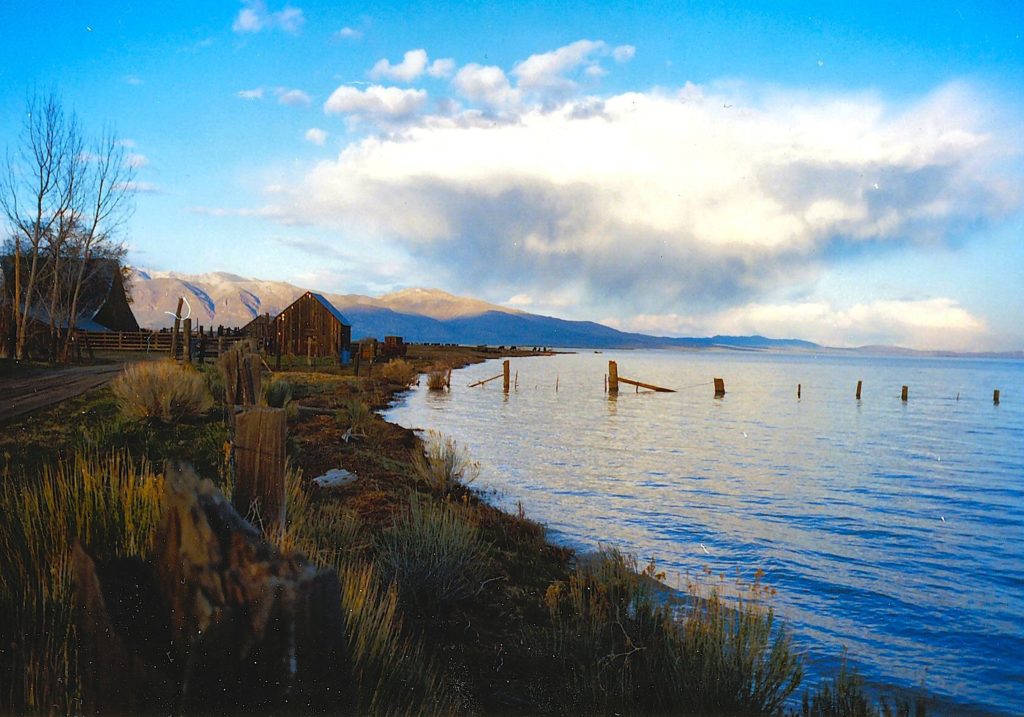
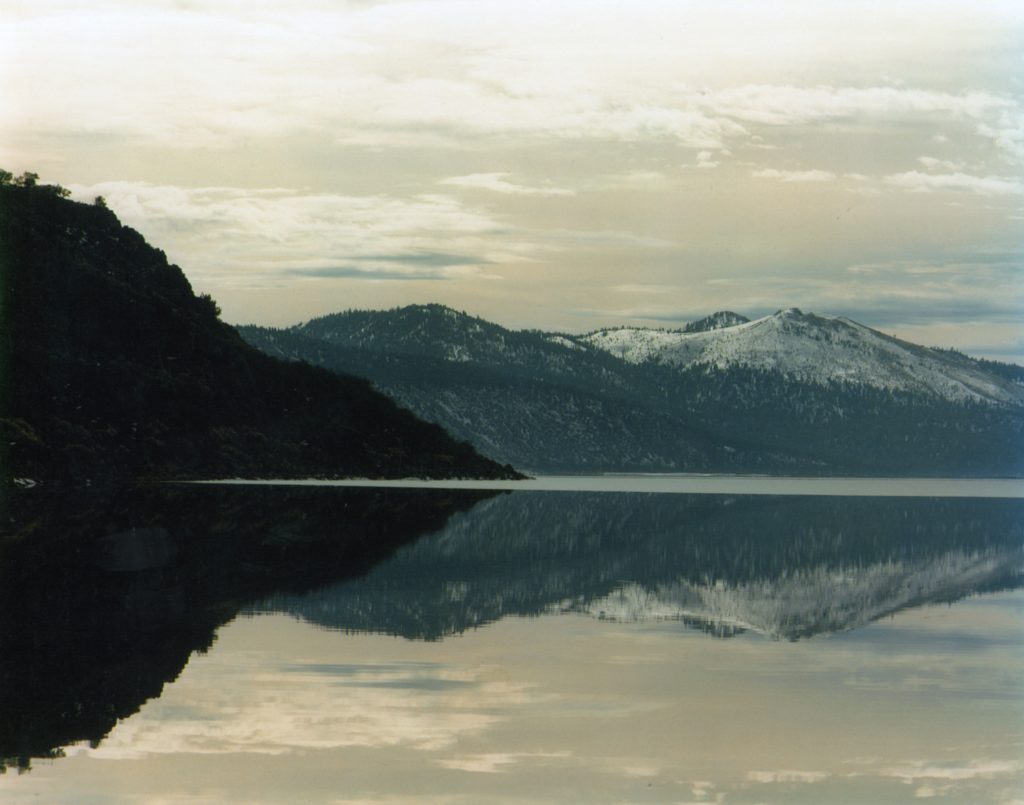
Instead of being at the sale for numerous reasons, I journeyed out to the family (Tanner) ranch to have a glimpse of Honey Lake. There are various features there, that provides a good indicator of the level of the lake.
The blacksmith shop, near the lake, March 18, 2017.
While there is considerable water in the lake, it still has a way to go before it reaches historic levels. This evident of the above and below photographs, both showing the blacksmith shop.
Honey Lake, from Tanner Ranch, January 1997.
However, for some people, seeing water in Honey Lake is something they have never seen. I am currently working on a future post about the tugboat that was originally used in the San Francisco Bay, that plied the waters of Honey Lake from 1907-1915. In addition, if you want to learn more about the history of the lake, you can purchase a copy of my book Sagebrush Reflections: The History of Amedee and Honey Lake.
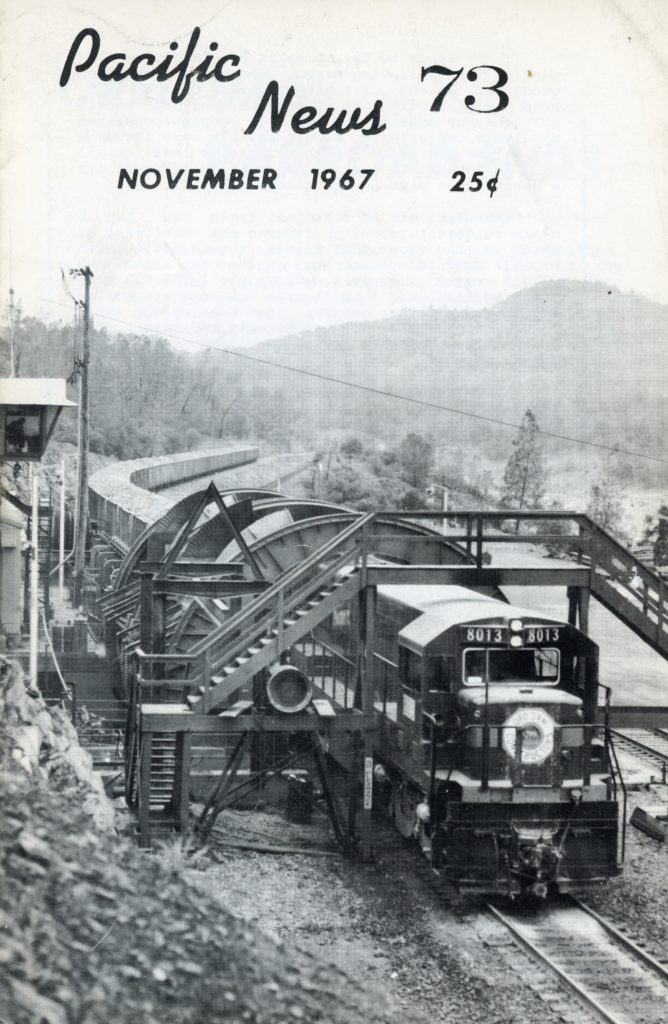
With the Oroville Dam in the headlines these days, I thought I share some history about it. Recently, I received a copy of Pacific News, November 1967 issue which Kent Stephens wrote about the history of the Oro-Dam Railroad. It is an interesting article, and I will share the first two paragraphs. If anyone is interested I can scan the entire article of several pages to pass along. Continue reading Oro-Dam Railroad→
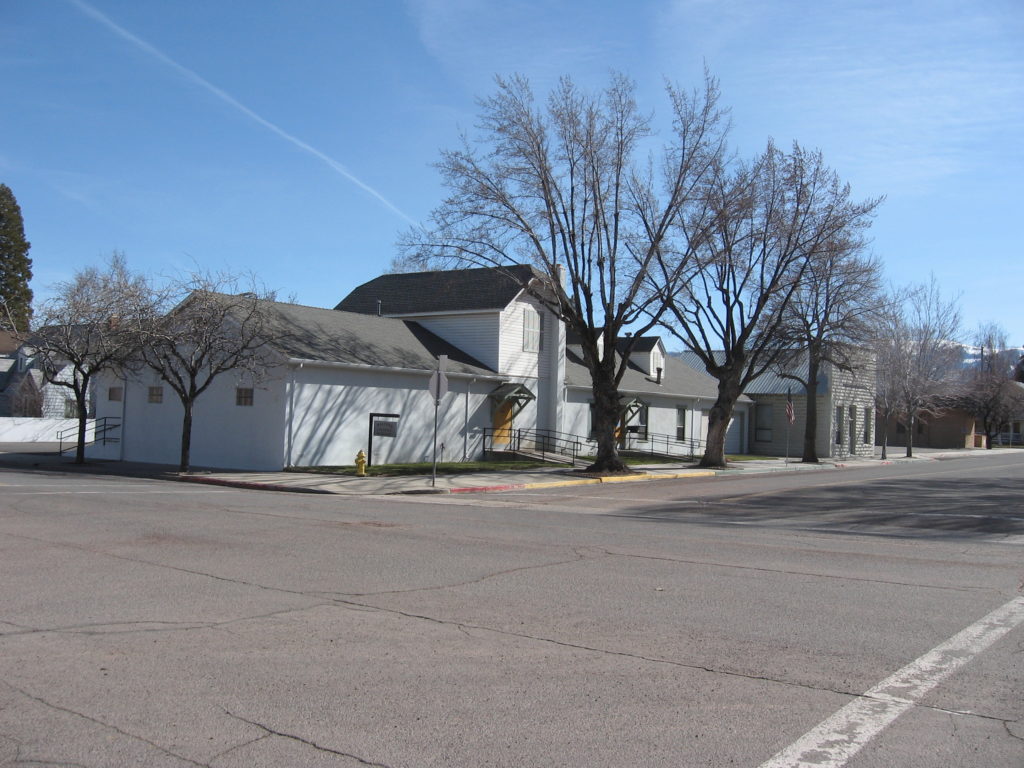
Walton’s Colonial Mortuary located at 115 South Lassen Street, Susanville was the former home of George and Daisy McDow for many years. In 1939, the house was remodeled and converted into a mortuary. It should be noted that the mortuary has changed ownership over the years. Only one person, Kirsten Newton, correctly identified the building.
Water rights can be a contentious issue and those rights involving Eagle Lake has a long sordid history. In 1939, the State of California revoked the water rights of the failed Baxter Creek and Tule Irrigation Districts. A legal battle ensued and the districts won. In the meantime, between all the barbs and volleys being lobbed during the litigation process, the level of lake started rising wherein the water began to flow through the Bly Tunnel. In 1955, work was being carried to clear out debris and resurrect the irrigation system. Not everyone was pleased and an unknown vigilante party went to the Bly Tunnel inlet and dynamited it to prevent water flowing. The opposition stated that the lake was more valuable for recreation than for irrigation.
In 1959, the State once again revoked the Tule Irrigation District’s rights to the lake. The Baxter Creek District went bankrupt in 1952 and was no longer in the picture. The issue did not go away, as the District and a handful of ranchers filed for water rights and opposition was immediate. After heated three-day public hearing in Susanville the Water Board took the matter under consideration and on March 15, 1962 registered its opinion to deny future water rights to the lake.
This sign was located for many years in Lassen Volcanic National Park.
In the late summer of 1850, William H. Nobles (1816-1876) arrived in California to locate a direct route to that state’s Northern sector. Once travelers left south of the City of Rocks, Idaho and arrived at Lassen’s Meadows (now Rye Patch Reservoir, Nevada) the choice of routes to Central and Northern California were limited. They had the option of crossing the 40 Mile Desert, then being confronted with Carson or Donner Passes. The other option was to take the Applegate and Lassen Trail. The Lassen Trail had its drawbacks too, one being that it was 250 miles longer than the 40 Mile Desert route. In the spring of 1851, Peter Lassen guided Nobles to the Honey Lake Valley via Indian Valley. At that point, Nobles and Lassen parted company and Nobles made a thorough evaluation of the country. Nobles found a direct route from Lassen’s Meadows, that went in a westerly direction across the Black Rock and Smoke Creek Deserts, to the Honey Lake Valley. From there, the course went in a northwestern direction to Pine Creek Valley and turned due west along the northern base of Mount Lassen and into the Sacramento Valley, near Redding. In February 1852, Nobles led a party that included Peter Lassen over the route that he had explored the previous year. Nobles had hoped they would join him in forming some type of partnership to develop the new route, but they were not interested. In April 1852, Nobles addressed the citizens of Shasta, informing them that he had indeed discovered a direct route across the mountains. This trail would be a great benefit to Shasta and the northern mining communities. Nobles requested a $2,000 guide fee. If the Shasta business community found the route unacceptable, Nobles would decline his fee. On May 3, 1852, Nobles, and a group of nine men, left Shasta to travel over the route. When they reached the Humboldt River at Lassen’s Meadows, the Shasta delegation declared the new route had more than met their expectations. Nobles was paid his commission and, at the Humboldt, he parted their company to join another outfit that was returning to the Eastern U.S.