Category Archives: History

Bly Tunnel – The Answer

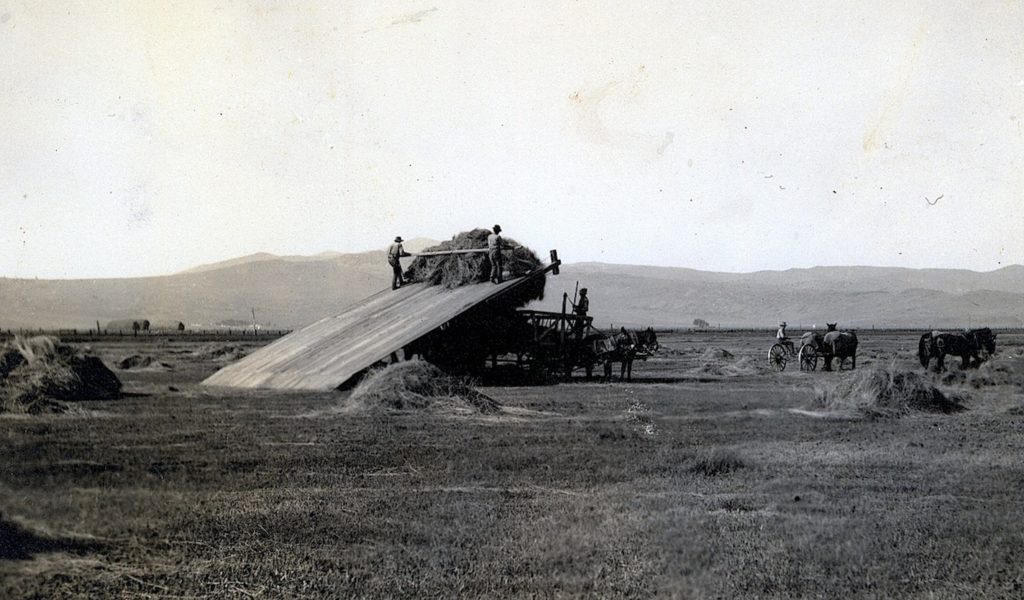
Blasting at the inlet of the Bly Tunnel, 1921. Courtesy of Lola L. Tanner

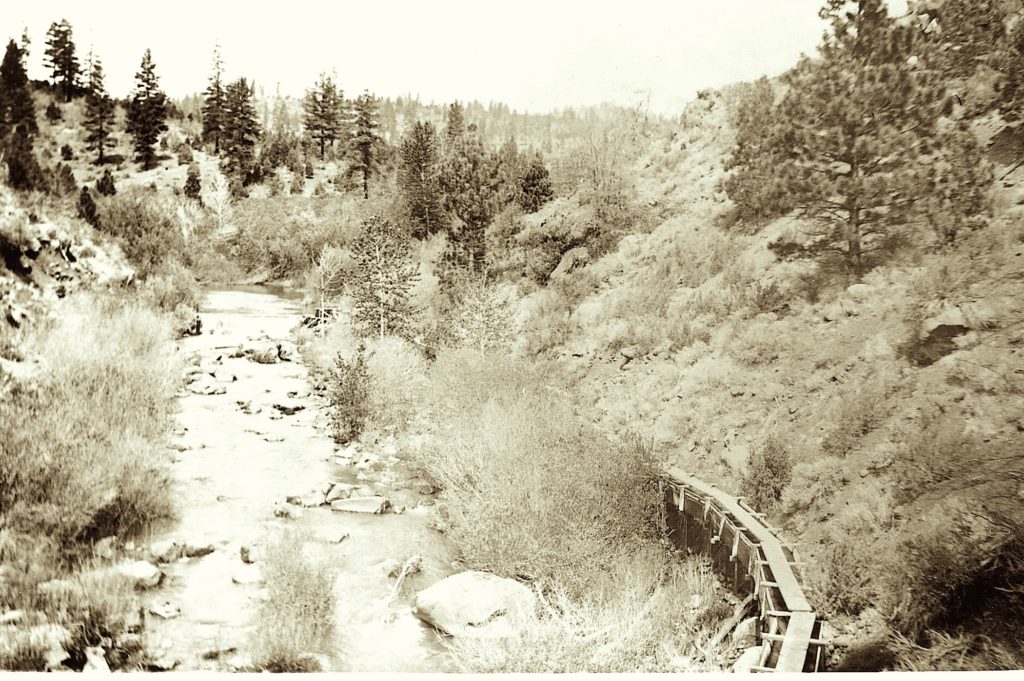
Readers may recall back in January that I posed a question about Bly Tunnel and the geology. On the inlet side of the lake the tailing piles is a granitic type of sand, which is typical of Sierra Nevada. In April, I asked Michael Clynne of U.S.G.S. to explain some of the geology of the Eagle Lake basin. As it turns a portion of the basin is a spillover of Sierra Nevada. The Brockman Flat Lava flow occurred some 125,000 years ago, prior to the formation of the lake. It extended to what is the area of Bly Tunnel.  In essence the lava flow capped over the Sierra Nevada, thus answering my question.

More sand. Courtesy of the D.M. Durst Collection

Support!

A Standish Enterprise

Standish Livery Stable and Meat Market, 1909. Left to Right: Todd Hemler, Bill Kennedy and Fred Hansen. Courtesy of Vivian Hansen.

This post is rather brief today, since I do not have that much information about this early business at Standish. To me this is one of those pictures that one could use your wildest imaginations. After all, who would ever thought of combining the Standish Livery Stable and the Standish Meat Market in the same building. Seems rather suspicious to me.

Support!

Our Lady of the Lake

James Stokes holding Our Lady of the Lake

On May 2, 1961, California Department of Fish and Game personnel located an unusual female Eagle Lake trout, that they dubbed Our Lady of the Lake. One reason that it was unique was its age–eleven years! The fish had been trapped twice and taken to Crystal Lake Hatchery to be spawned. Another interesting antidote was Fish and Game reported that this fish had been reared and fed in captivity for seven years, and then it was able to adapt itself to the natural environment of the lake. When it was first caught the fish weighed one and one-half pounds and was 18 inches in length and when they released finally released the fish back into the lake, the fish measured 26 inches and weighed eight pounds.

Subscribe!

Veteran’s Grave Markers

The grave of D.R. Stark one of the many veterans interred in the Susanville Cemetery, May 2, 2017.

On the evening of September 21, 1922, the Ladies Auxillary of the Thomas Tucker Post, American Legion met to go over a most interesting agenda.

First and foremost was some unfinished business. A vote was taken and approved to purchase thirteen headstones  to be placed in the Susanville Cemetery to mark the graves of former veterans, mainly those of the Civil and Spanish American wars. The Susanville Marble and Granite Works agreed to furnish the markers at four dollars each.  Mrs. A.G. Breitwieser and Mrs. Homer Vincent were appointed to handle the proper placement of the markers. Mrs. Robert Knipper was assigned the task to provide the information of the names and dates of the former soldiers.

Never miss a story, click here to subscribe.

Goodrich Reservoir

The reservoir as it appeared in 1914. Minnesota Historical Society

While most reservoirs in the region were constructed for irrigation there is always an exception to the rule. The Goodrich Reservoir on Goodrich Creek near Westwood was constructed in 1912. Its main purpose was for a domestic water supply for the residents of Westwood and also as a water supply for the Red River Lumber Company’s millpond. During the winter months, it found another use as it was a popular ice-skating spot. In 1931, the State of California inspected the dam, deemed it a hazard and was removed.

Support!

Pheobe Masten Slater

Pheobe Masten Hamilton Slater, circa 1877. Courtesy of Philip S. Hall

Various members of the Masten family first arrived in Lassen County and have been involved in many activities over the years, and many descendants still reside in the region. Pheobe was born in 1834, the third child of Peter and Nancy Masten in Ohio. In 1851, she married William S. Hamilton and the following year with her two brothers John and Benjamin Masten crossed the plains and settled in Amador County, California. Several years later, the Masten clan moved to Knights Landing, Yolo County, where he only child, died.

In 1864, at the urging of her brother-in-law Heiro K. Cornell the Hamiltons moved to Susanville. The Hamilton’s stay in Susanville was brief and they relocated to the Tule District and located on what is the present day Fleming Unit of Fish & Game. In 1868, an event had a major impact on Pheobe. Her, and her neighbor, Lurana Sharp dressed prepared the two female bodies of the Pearson Massacre.* In 1880, her husband died unexpectedly, and she carried on with the ranch. In 1882, she not only sold the ranch, but remarried to J.H. Slater, a civil engineer. Slater had visions of a Susan River irrigation system, but could not find any supports. The couple then moved to the San Francisco Bay area, where he died in 1913. In 1918 Pheobe returned to Susanville to make her home with her nephew John Cornell, and died there on 21 January 1919.

*The Pearson Massacre site is one of the few sites I have never attempted to locate.

Subscribe!


Smoke Trees

A Smoke Tree on Roop Street, Susanville.

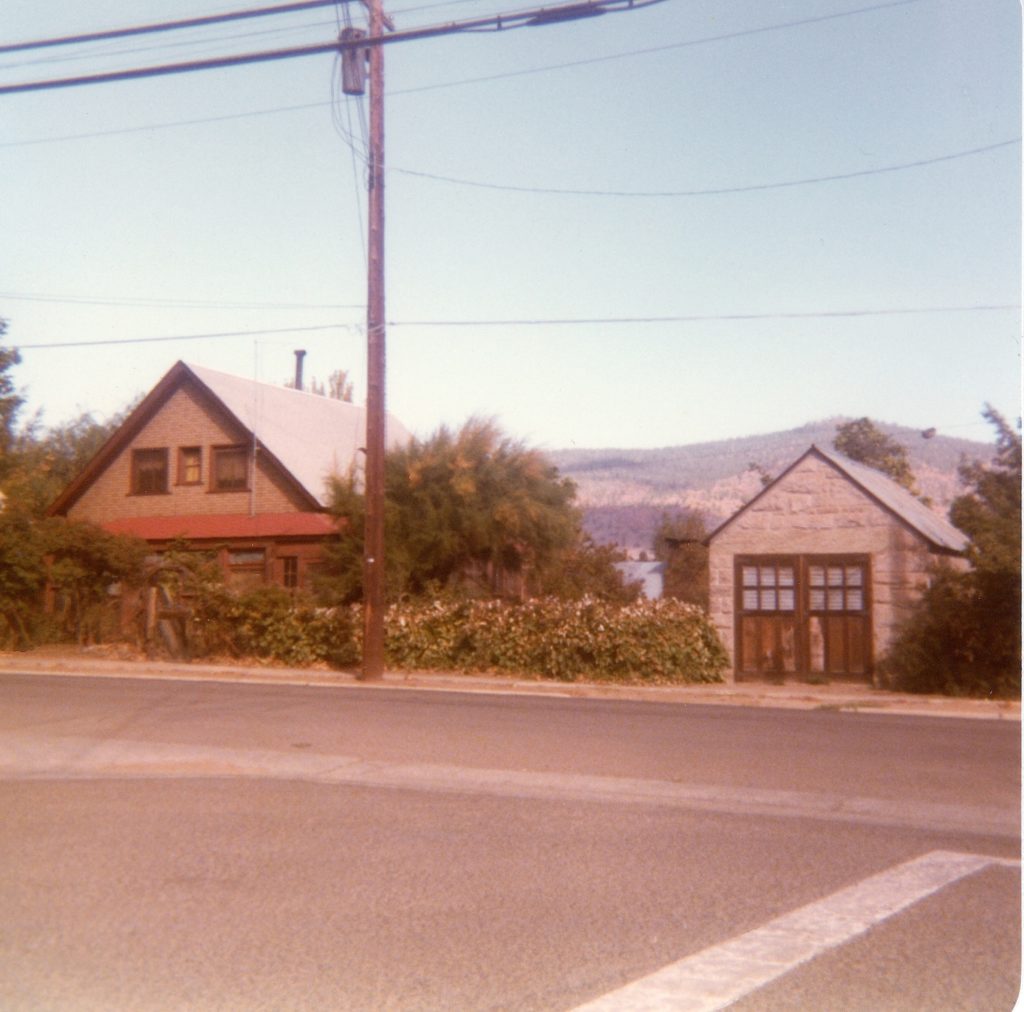
There are a number of varieties of smoke trees which are known for their colorful foilage in the spring and fall. In addition, they are quite hardy, and once established need little care. The reason why bring up this topic, is that they were favorite with desert homesteaders. So when you are out and about in the desert country and you see a smoke tree indicates that at one time there was a homestead there, though the tree outlasted that person’s dream.

Subscribe!

Troxel Ranch – Eagle Lake

Troxel Ranch, circa 1918. Courtesy of Wyn Wachhorst

The Stone Ranch at Eagle Lake is one of the best known ranches in the basin. However, in a different era, it was better known as the Troxel Ranch. In the mid-1880s on the northeast side of  the lake, featured a lot of new residents and area was dubbed the Butte Colony, as these folks came from Butte County, California. The Troxel family was a part of this enclave. On December 12, 1888, William H. Troxel purchased William S. Davis’ 430-acre ranch on the northeast shore of Eagle Lake for $3,000. In 1918, William and Rosanna Troxel, who where in their mid-sixties, opted for retirement and moved to San Diego. They subsequently leased the ranch and on February 15, 1926, they sold the ranch to Coit and Laura Stone.

Support!

Westwood’s Veneer Plant

Westwood’s Veneer Plant

Some people assume that Red River Lumber Company’s operation at Westwood was that of a sawmill. It was more than that, and was a multi-facited lumber plant.  On May 2, 1924 work began on a half-million dollar veneer plant just to the north of the sawmill. As what had become customary, it too would be built on a grand scale and when completed would be the second largest veneer plant on the West Coast. The two story structure measured by 100 feet wide and a 1000 feet long, with ample room to make additions should demand warrant. Three hundred men were hired in the spring of 1925 to operate the facility. Continue reading Westwood’s Veneer Plant

Paul Bunyan Road

View of the north side of Susanville, 1947. Courtesy of Fred Lendman

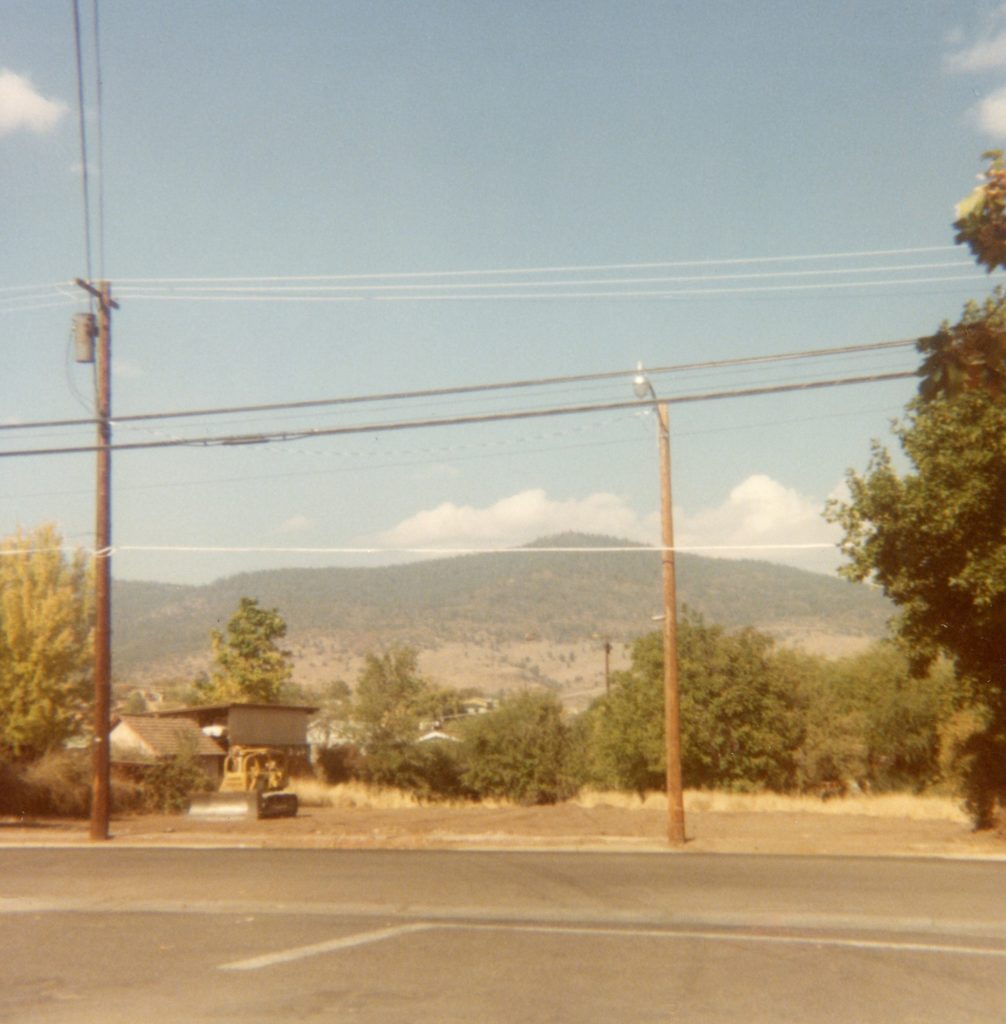
The Paul Bunyan Road as a city street was a long undertaking. The road of course first started out as a railroad to deliver logs to the Springfield Cedar Mill, that evolved into the Paul Bunyan Lumber Company. When the mill closed in 1967, traffic on the road greatly diminished, though with agreement Sierra Pacific Industries utilized it on occasions. However it was a private road. When the Cherry Terrace subdivisions came into existence in the early 1960s, both the city of Susanville and county of Lassen set their sights on the Paul Bunyan Road as a means for better traffic. At the November 6, 1978 meeting of the Susanville City Council it was revealed that some of the first easements for right-of-way for this road was approved. However, it would be still decades away before it became a reality.

Subscribe!