Category Archives: History

The Inferno Ski Race

1937 Ski Jump across the park highway. Courtesy of the National Park Service

In 1936, the Mt. Lassen Ski Club created a mid-summer ski tournament. It was held at Lake Helen during the Fourth of July weekend, although depending on conditions, it was sometimes held a bit earlier or later than the patriotic date. The club introduced a new event, known as the Inferno Race. This was no ordinary race, and definitely not one for novice skiers. The course was interesting and required a great deal of stamina just to reach the starting point, the summit of Lassen Peak, a climb of 2,200 feet. Usually only a dozen or more skiers participated in this slalom race, which had four gates, and two turns and one jump across the park highway. The event continued through 1941, but conditions created by World War II brought an abrupt halt, and this particular event was never resurrected.

Subscribe or Donate

1876 – Extreme Weather

Round Valley Reservoir, 1958.

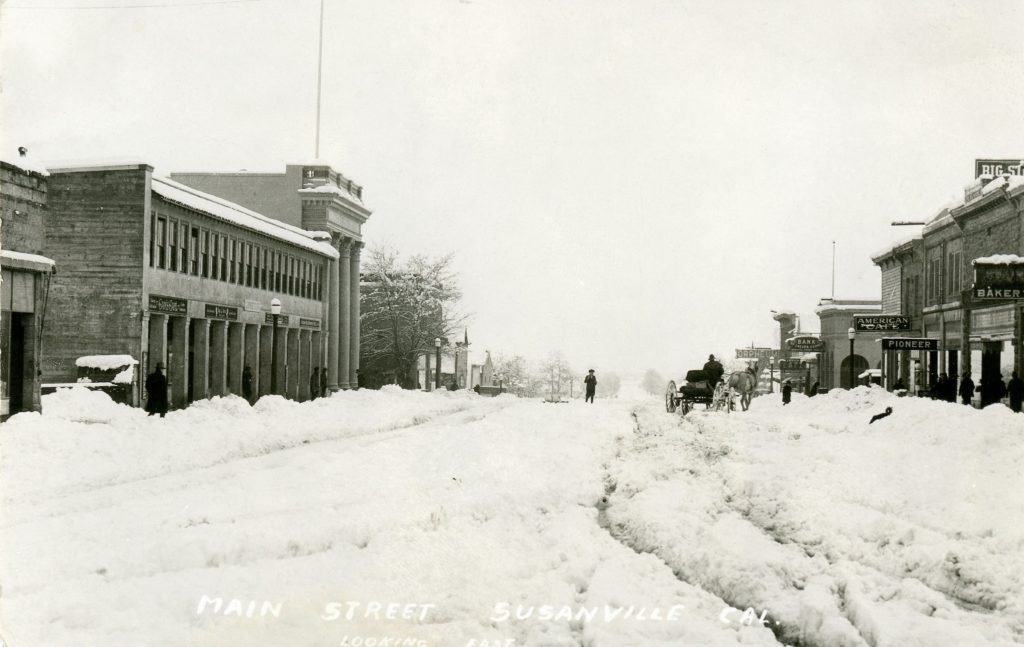
Anyone who has spent any time in Northeastern California, knows that its weather can be finicky.  An interesting example of weather extremes was the year 1876. On March 25, 1876 there was eight feet of snow at Round Valley, just a short distance north of Susanville, yet that town was clear of snow. When July arrived, it turned hot, the highest temperature that month was 108 in Susanville.

Subscribe

Zarbock Homestead: Then & Now

The Zarbock homestead. Carl R. Caudle Collection

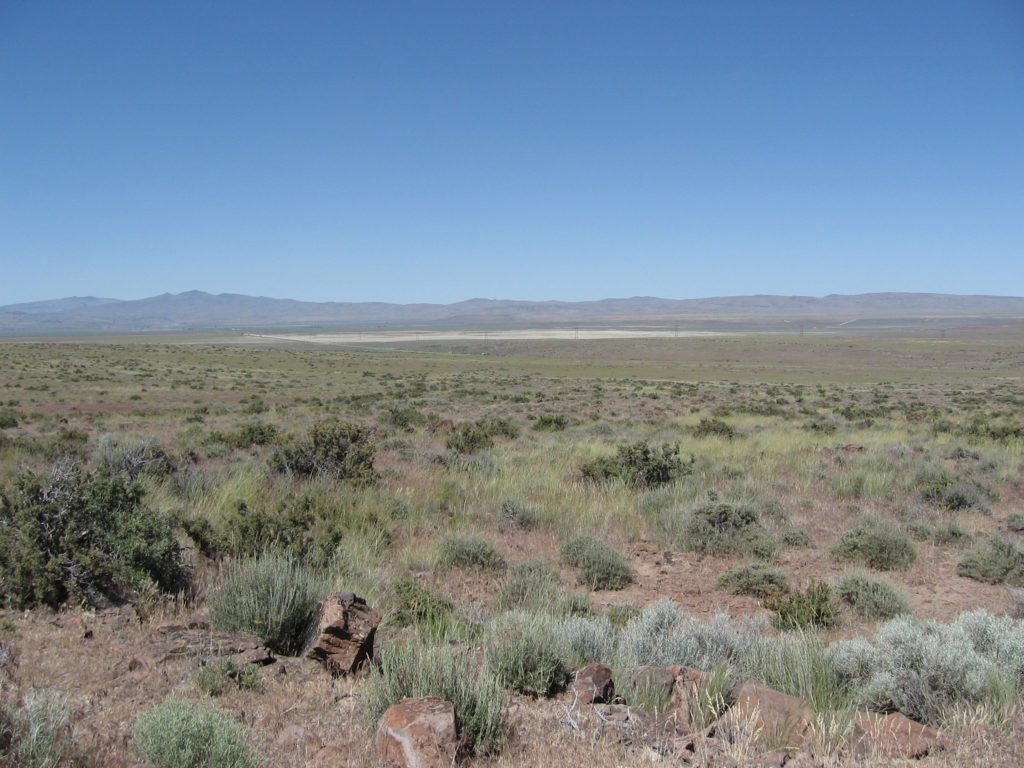
It has been awhile since I have done one of these topics. In 1915 Frederick Zarbock filed on a 160 acres of desert land in the eastern Honey Lake Valley, near Stacy. Zarbock, like so many others were lured, that between the dry farming experience, along with assured water supply from the Standish Water Company, the sagebrush plain would be transformed into productive agricultural land. Zarbock would never see the final result as he was drafted to serve in World War I and when he was discharged returned to Minnesota.  Somewhat surprising, while his old cabin is no longer there, the sagebrush did not reclaim his old homestead.

A 2018 sideview.

A million board feet

North Lumber Yard, Red River Lumber Company, 1923. Courtesy of R.S. Pershing

As we explore Lassen’s lumber industry’s past, there are references to the volume of a million board feet (mbf).  During the 1920s, the lumber mills of Lassen County had an average annual output of 250 million board feet of lumber.

George Cone, who worked in the Lumber Division of Fruit Growers provided this definition using that mill’s output for the 1922 season at 62 million board feet. If it was placed on a single freight train, that train would extend eighteen miles. And since it took 6,000 board feet of lumber to build an ordinary house in those days, Cone figured that the 1922 output could build 60,000 houses. According to Cone, with an average household consisting of five persons, this production could provide the housing needs of 300,000 people!

Subscribe

Clear Creek, Lassen County

Clear Creek, circa 1906. Courtesy of Mark Reed

Clear Creek is one of the area’s idyllic settings. In the early 1900s, when Clinton Walker was cruising the timber in the region for the Red River Lumber Company, he spent many a summer camped at Clear Creek, as a “home base.”  Clinton’s daughter, Harriet, recalled many pleasant memories as a child camping there. Harriet stated at times they all got tired of eating fish caught from the springs. Then one day, her father surprised everyone when he returned to camp with a “mountain calf.” I had never heard of such a creature and asked what was a mountain calf. Harriet whispered “Bambi.”

Subscribe

Sacred Heart’s Big Day

First Confirmation, 1898. Courtesy of Milton Mallery

One hundred twenty years ago today was a red letter day in the annals of the history of Susanville’s Sacred Heart Church. The occassion was the arrival of Bishop Thomas Grace. The first order of business was the concencration of the church as the Church of the Sacred Heart. It should be noted that the construction of the church began in 1892, and was not completed until 1894. At the same time Bishop Grace administered First Communion and Confirmation.

Donate

Drakesbad

The original dining hall at Drakesbad. Courtesy of the Sifford Collection

In keeping with the Go Exploring theme, a trip to the Drakesbad Guest Ranch in Lassen Volcanic National Park, should be on your list. People have been going to this place since the 1870s, and there is plenty of hydra-thermal sites nearby such as Boiling Springs Lake and Devils Kitchen. If you want to dine there, you will need to call ahead, and they even make sack lunches for your hiking pleasure.

Subscribe

Jacks Valley

Jacks Valley, not to scale.

Someone inquired recently about the various sites at Jacks ValleyAfter all over a sixty year span a lot of diverse activities took place: a saloon an agricultural inspection station, dancehall, sawmill and a truck logging camp of the Red River Lumber Company. Of course, lest I forget the cement water trough along Highway 139. In the back of my mind, I recalled doing a sketch map, and lo and behold it was in my file where it should be.

Subscribe

Finn Barry’s Colony Ranch

Hardin “Finn” Barry

Hardin “Finn” Barry was born March 26, 1891 in Susanville. In 1912, after he graduated from Santa Clara College, and he went to play Major League Baseball with the Philadelphia Athletics for one season. In the spring of 1913, he and his college friend Robert Murphy purchased a ranch in the Tule District of the Honey Lake Valley It was a disaster. In 1920 Finn abandoned the ranch and moved to Reno to study law. In 1921, he was admitted to the Nevada Bar and in December opened a law office in the Knoch Building in Susanville which he maintained the rest of his life. Continue reading Finn Barry’s Colony Ranch

Lake Earl versus Lake Almanor

Lake Almanor

The 1902 plans for a reservoir to flood Big Meadows, now Lake Almanor gave it a designation as Lake Earl, after one of the investors of the Great Western Power Company. Over the years, the name was abandoned. When newly created reservoir began to fill up it was christened Lake Almanor, after Guy Earl’s three daughters. One of the daughters, Alice Wilder recalled the origin of the name: “Mr. Julius Howells [the engineer] was a welcome guest in our home who said children call me Uncle Julius. He asked my father to name the new lake. My father and mother spent many hours finding a name they liked. It had to have a name pleasing to the ear, it had to be readily pronounced, spelled and easily read. They did not want a foreign name and were not fond of surnames. They wanted to name it after their four children. Alice, Martha, Elsinore and Guy. Many combinations to these names were attempted. It was hard to get Guy in. Finally my father settled for a name that was simple and musical and of which three of the four children would be part-and also in the right order-eldest, next eldest and youngest. The lake was named Almanor.  The AL for Alice, MA forth Martha and The NOR for Elsinore.”

Subscribe