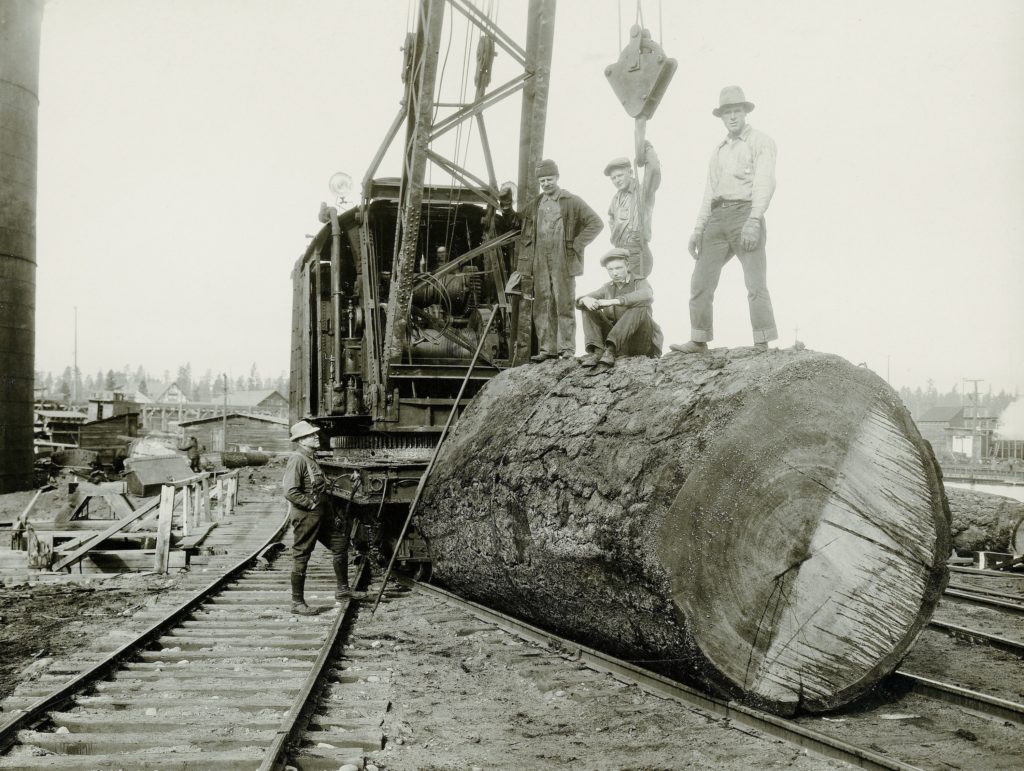
A sinker long dredged up from the Westwood millpond, circa 1930. Courtesy of Walter “Doug” Luff
Mill ponds are a relic of the past lumber industry. If your are from that era, you recall one particular thing that is forever etched in your memory bank. During the summer months, the stench from these mill ponds were horrendous.
One of the annual maintainence chores was the removal of sinker logs. These were logs that sunk to the bottom of the millpond before they were put through the sawmill.
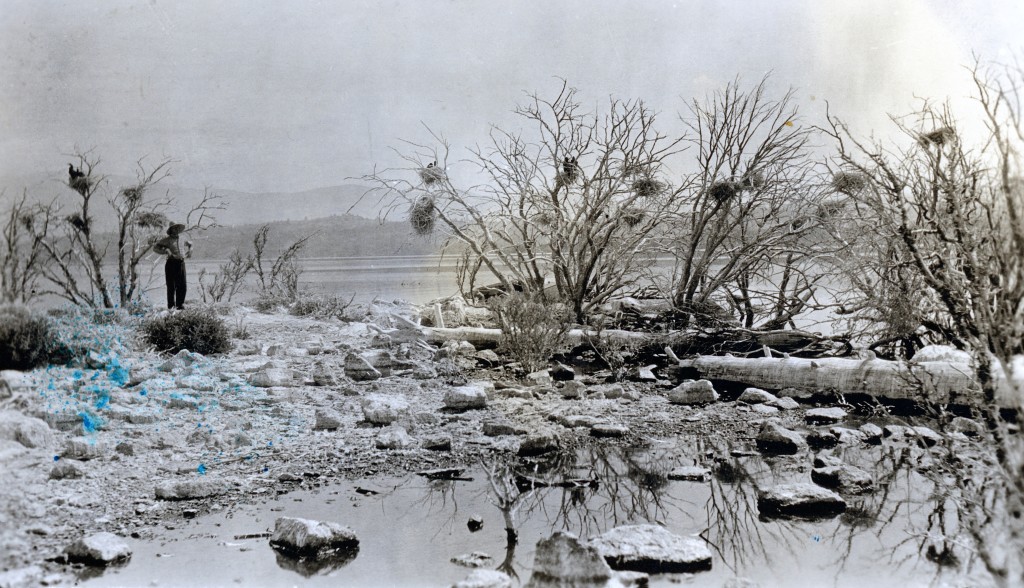
This is a follow up of last week’s post of Ada Gerking York’s memoirs. She also observed: “Eagle Lake contains two islands, Shag and Pelican, both of which are gradually being submerged by the rising of the water. These islands are the meeting places of various water birds; in early summer, one can imagine one’s dreams of gathering eggs, as there are so many lying there on the ground. The lake is very deep near Shag Island, the bottom has not been fathomed yet. The northern wing is not so deep and according to the account of a very old Indian, this part of the lake was dry many years ago, and he with a party of Indians crossed it while hunting deer, the ground being level as a floor.”
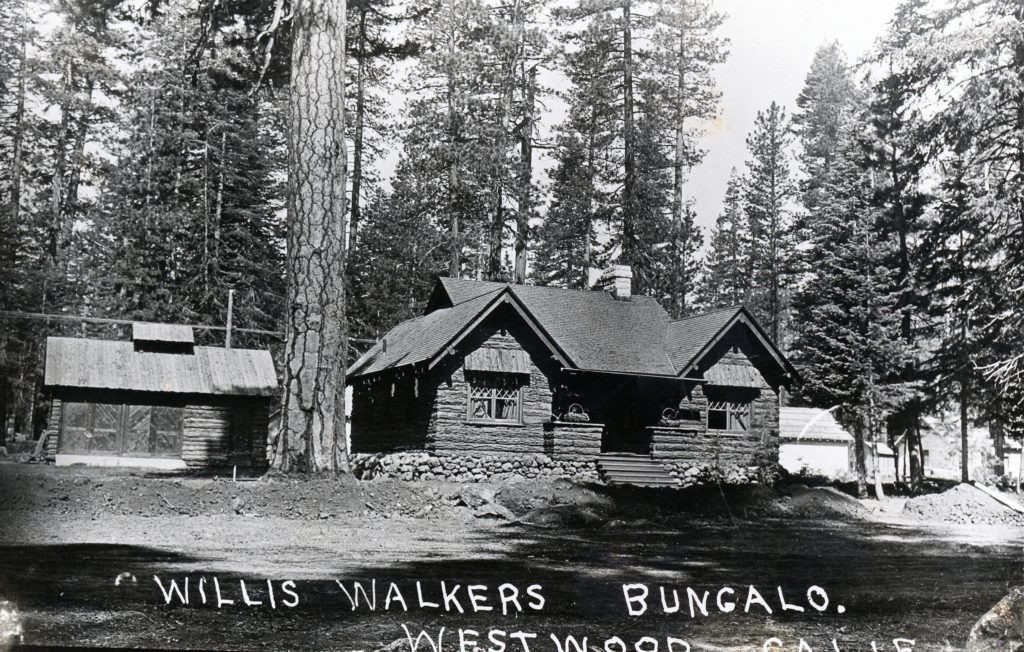
The Willis Walker residence, circa 1915. It should be duly noted that Willis also resided in San Francisco.
When Red River Lumber Company established its company town in Lassen County many were thankful for the prosperity it brought with it, especially the Fernley & Lassen Railroad. However, the honeymoon would not last long. Red River would exert its influence over so many aspects of life. Certain member’s of Susanville’s business community had a code name for the company: the Red Octopus. After all, in 1920, Red River purchased the town’s local power company, Lassen Electric. They advertised their Big Store specials in the Susanville newspapers, hoping to lure away customers. In 1922, when Red River purchased the Milwood Tract east of the city limits, they were able to block any annexation effort by the city until 1947, which by then Red River was going through a dissolution process.
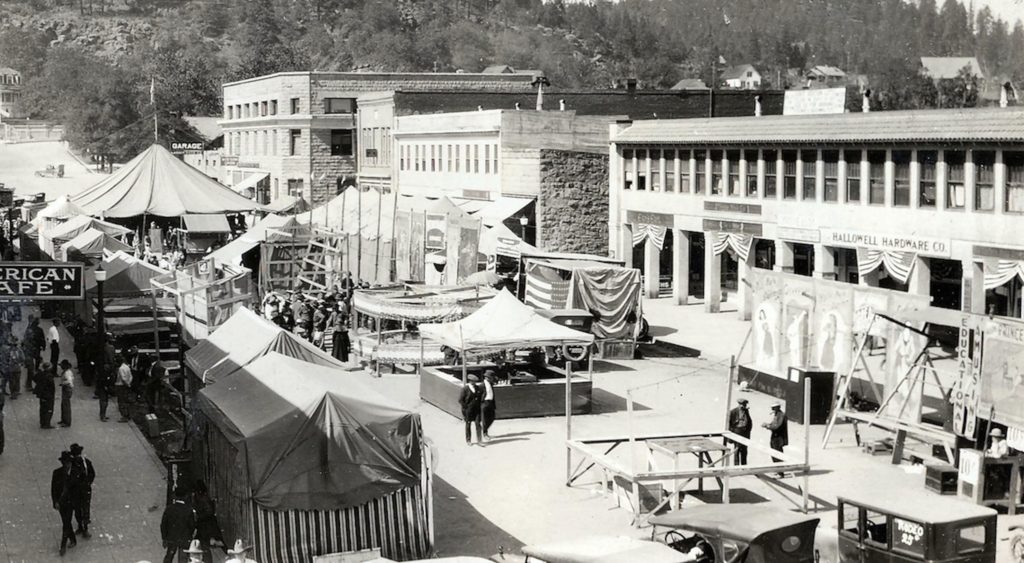
In 1922, after a long hiatus the Lassen County Fair was revived. A new fairgrounds was constructed, and that site is still used today. A grandstand was constructed for viewing various livestock activities. However, exhibits, etc. were held in the uptown part of Susanville, there being no other facilities. Of course, Main Street was converted into a carnival scene for a couple days. After all, this was before CalTrans came along.
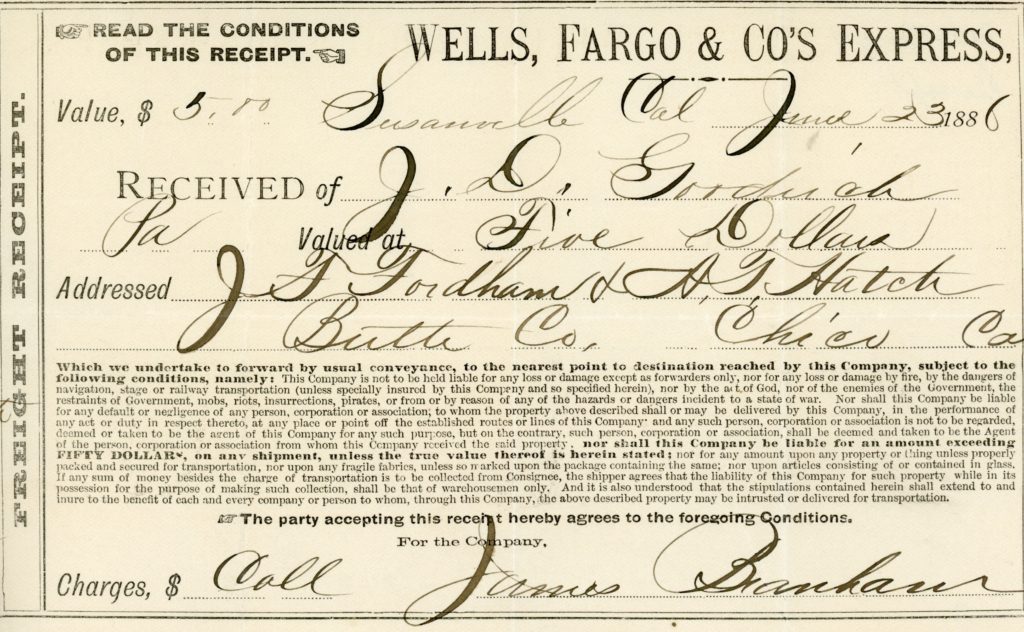
For years Wells Fargo was an inconic banking institution of the “old west.” During the late 1800s, they had an office in Susanville. Wells Fargo’s local office did not provide any financial services. As its original name implies “express” was the service they provided. They were the UPS of the time.
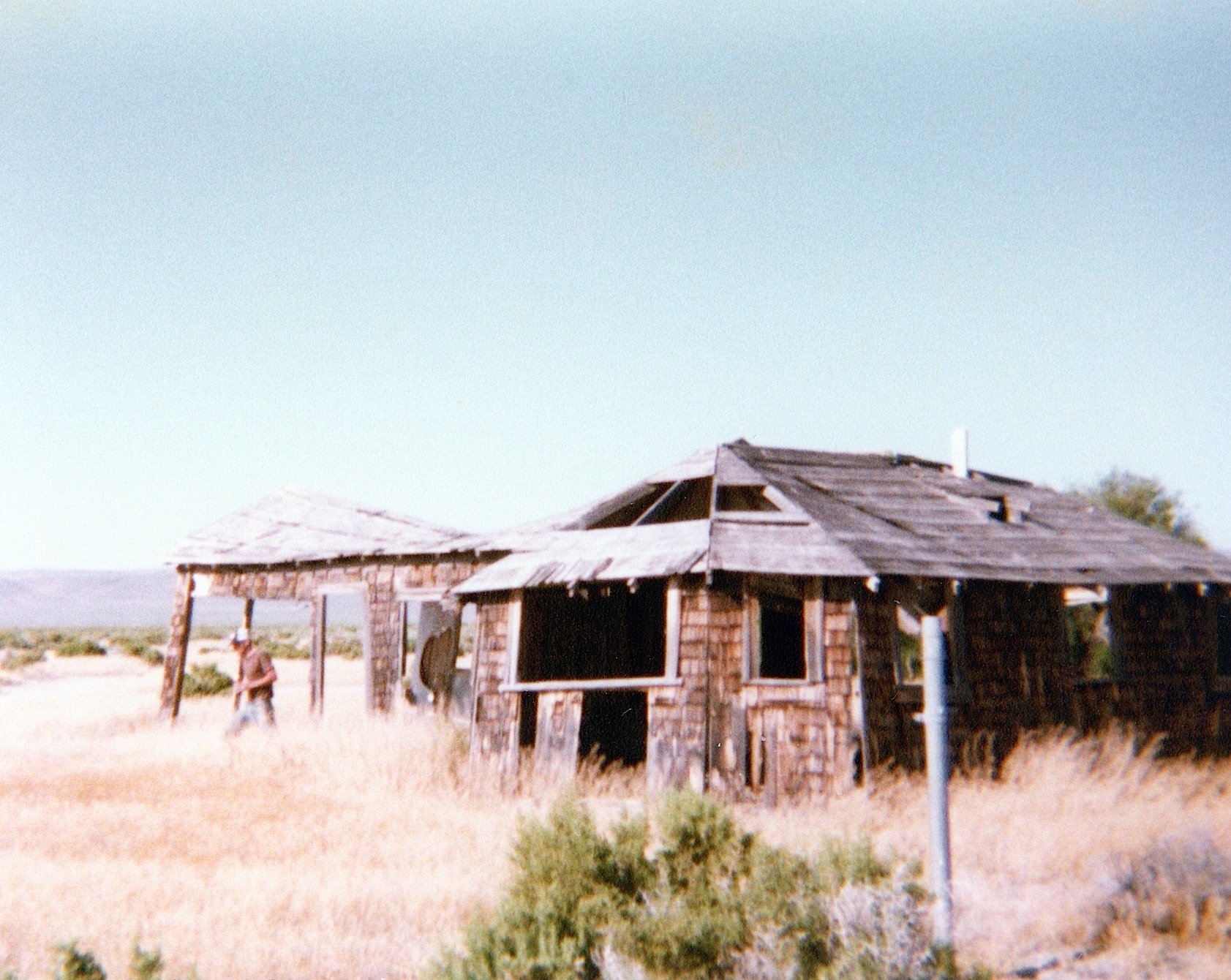
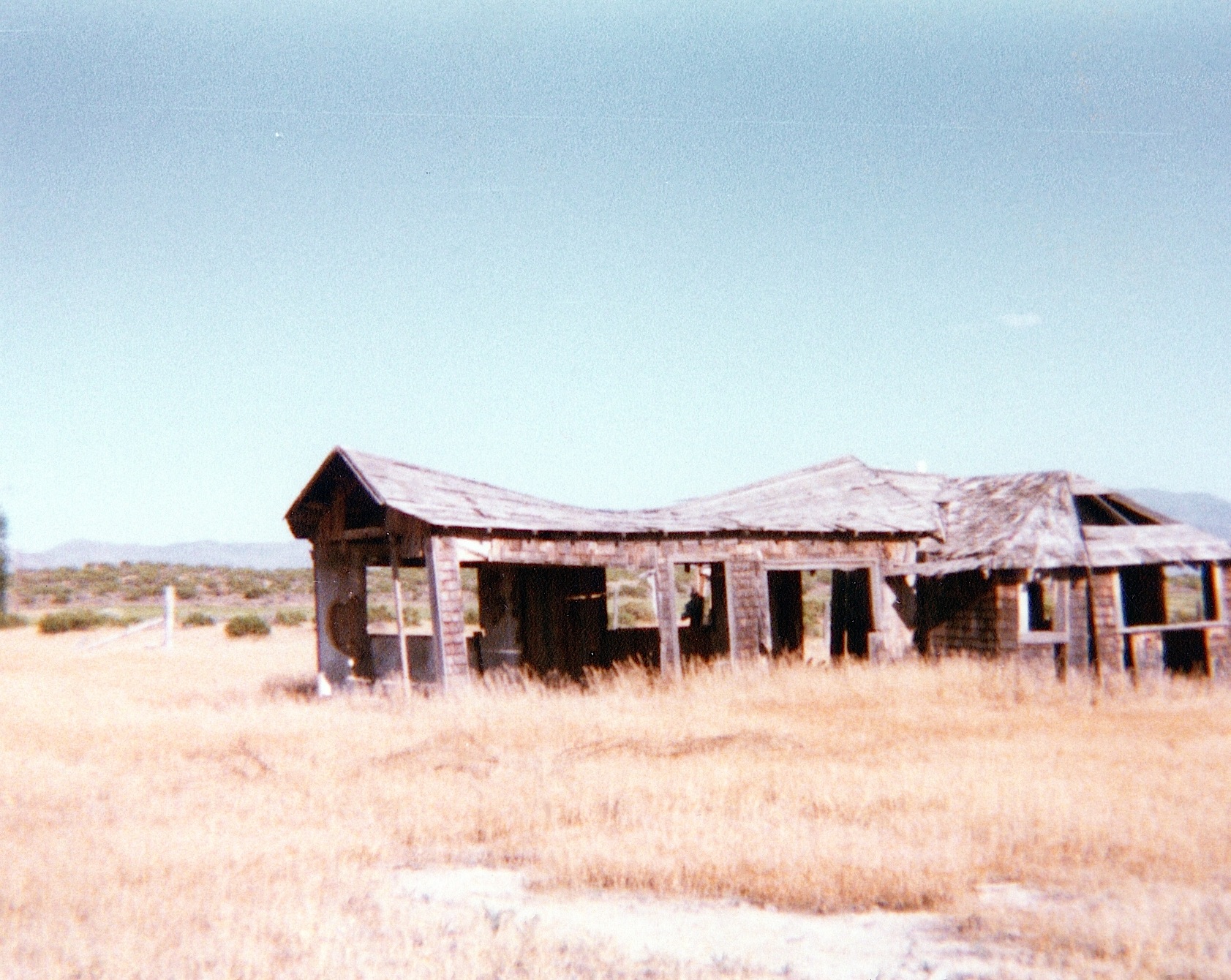
Alfred Montgomery (1857-1922) gave this name to his isolated home in eastern Honey Lake Valley. Montgomery was not your typical homesteader. He was a painter, and referred to as the “farmer artist.” It has been stated that his paintings of corn were so realistic that birds would swoop down and peck at his canvas. It was Montgomery’s intention to raise a variety of vegetables at this place, using them as subjects for future paintings. Montgomery was known for his itinerant ways, drifting across the United States, and sporadically residing at his Nowhere homestead from 1911, through 1919. Locally, Montgomery’s legacy to the region came in 1911 when he gave a lecture and art exhibition in Susanville—the proceeds established the art department at Lassen High School.
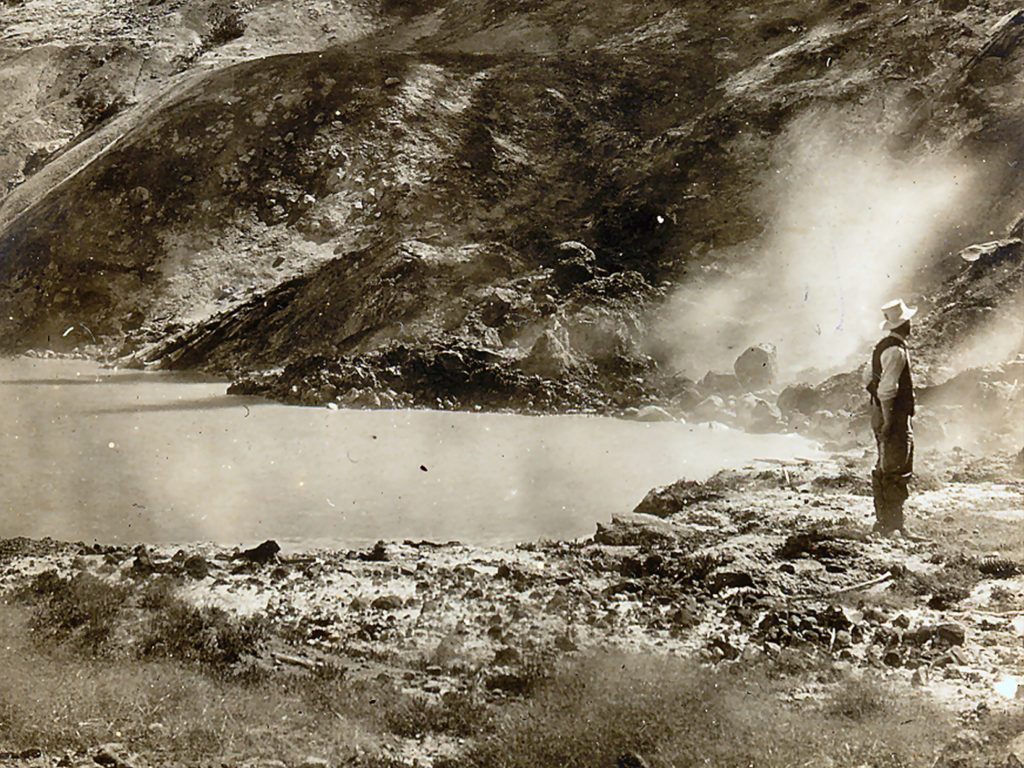
Boiling Springs Lake, 1908. Courtesy of the Sifford Collection
Well, here we are in the middle of July. Hopefully, many of you have gone exploring as there is just so much to see and do. Just in case, someone needs and idea to do some thing different, I recommend Boiling Springs Lake in Lassen Volcanic National Park. It is one of the largest hot lakes in North America. To make a day, contact Drakesbad Guest Ranch in advance to place a lunch reservation. From the lodge it is little over a mile hike to the lake, and you also have options. One can continue on and hike to Terminal Geyser or return back to the lodge and visit Devil’s Kitchen.
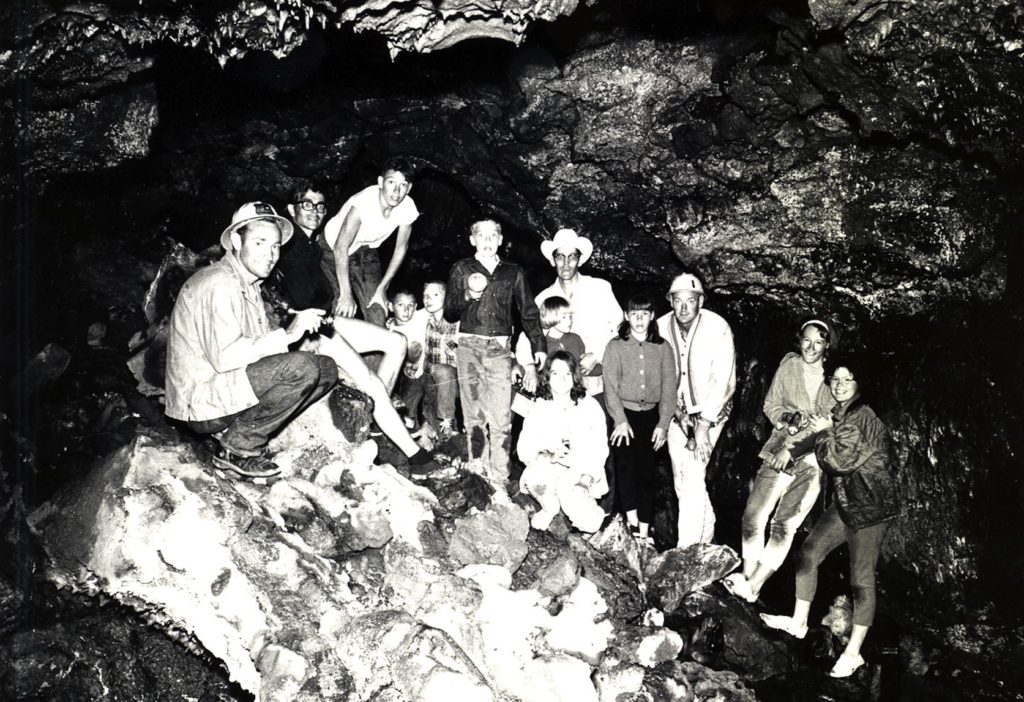
It is a rarity to come across early day descriptions of the various ice caves on the west side of Eagle Lake. The following account was a part of Ada Gerking York’s memoirs (1877-1936). She was raised in Willow Creek Valley and spent most of her married life in Grasshopper Valley.
”Eagle Lake is surrounded by many wonders, especially on the west side, great lava beds of which little is known. A great volcanic crack extends for ten miles; some places 10 to 15 feet deep, others bridged and so on. The place where I visited had a bridge upon which I went; I found a small hole in the ground and dropped a rock down. It struck far below then rolled, clattering among other rocks, fell again, and was some moments before all was quiet again. One of the party went into the crack and found an entrance to the cave under the bridge, but cannot be explored on account of its depth. Another time I visited the caves, how many I forgotten, and I think there are many yet unexplored; some of them had monstrous holes as openings, and in entering I found large rooms, some of which were exquisitely shaped. One known as “The Grottos” had many stalactites and stalagmites; some have more than one opening and some several apartments. One contains ice and is known as the Ice Cave and ice may be had any time of the year.”
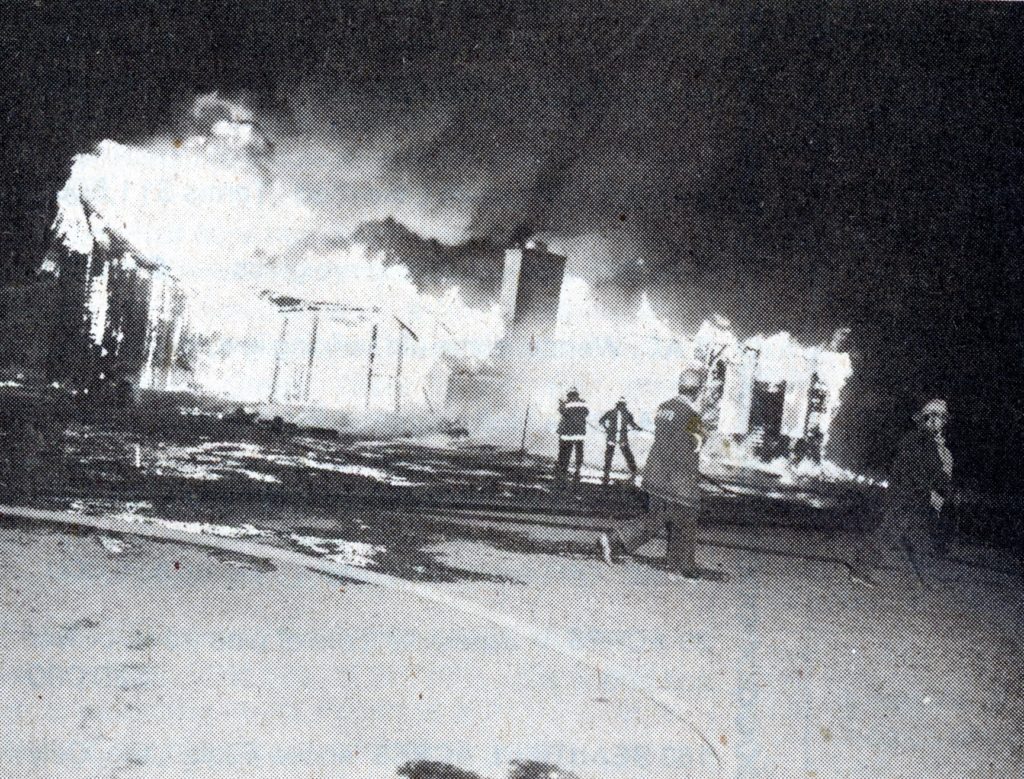
Lassen Advocate file photo of May 14, 1976 The Susanville Fire Department held a training excerise at the gutted building.
In 1954, after the death of Jean “Shirley” Tilton, Gene Garayoa purchased her establishment, Shirley’s located at 635 Hall Street. Garayoa did a complete renovation of the place and renamed it the Juniper Inn, and soon became a popular social hub. Garayoa, it should be noted was also in the bowling alley business and in 1960 was operating the Sierra Lanes.
Fast forward to February 1976. At that time Howard and Judy Duvall had leased the Juniper Inn. There were two fires of mysterious origins on February 22 and 29, leaving the building gutted. Garayoa replaced the Juniper Inn with the Juniper Arms Apartments.
One of the mines not located on top of Hayden Hill, 1910
One misconception of Hayden Hill was that all the mining took place at Hayden Hill proper where the town and some of major gold mines were located. However, there were small satellite mining communities surrounding Hayden Hill, such as Franktown and Lewiston. Take for instance the California State Mineralogist 1892 report concerning the Juniper Mine. It stated the three miles from the mine, on Willow Creek, the company own a water power and four arrastras eight feet in diameter.