Category Archives: History

Lassen Airplanes?

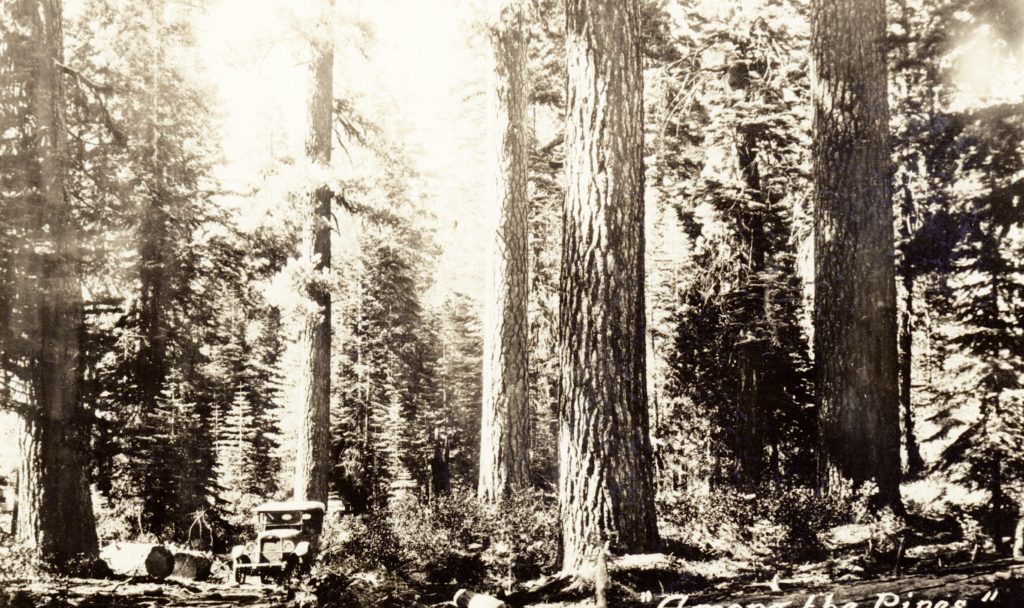
During World War I witnessed an increased demand for airplanes for the war effort—a first. The preferred wood was the Sitka spruce found along the coastal regions of Oregon and Washington. There were numerous problems associated with not a only a limited supply, but problems with labor unions in that region.

In January 1918, a representative from the war department arrived  in Westwood for purpose of selecting sugar and/or yellow pine timber for building a fleet of government airplanes. Early tests indicated that California pine was superior to Oregon fir for the purpose intended. The government official was to select 300,000 board feet of Lassen County timber to be processed by the Red River Lumber Company.  Whether this transpired, the record is not clear, due in part of the censorship of certain types of news during the War.
Donate

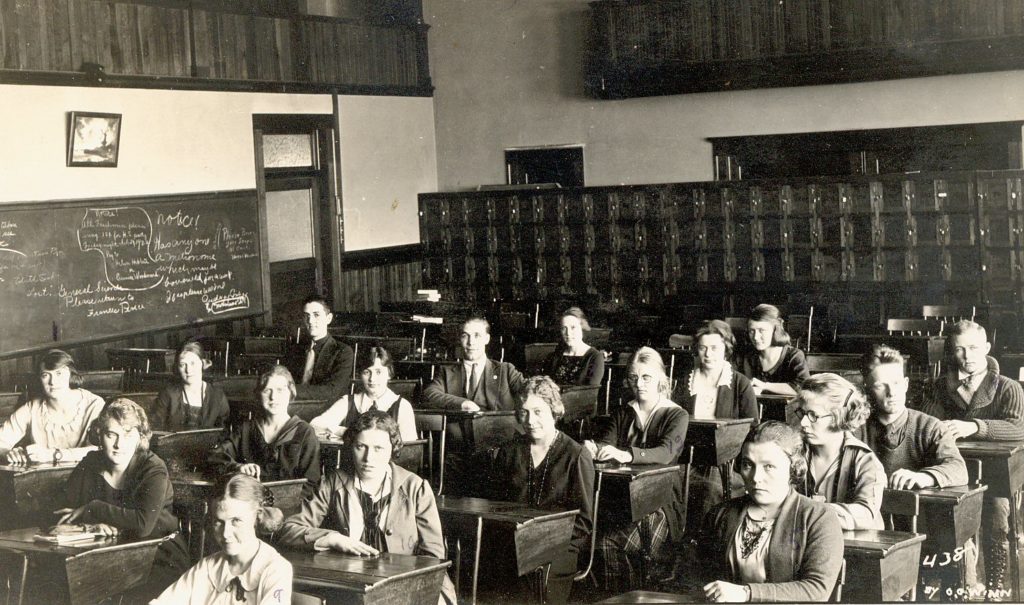
Lassen High School, 1928

Lassen Union High School, 1922.

Lassen County voter’s can be a stingy lot when it comes to passing local bond measures. During the 1920s, Lassen High School was overwhelmed by the increase of the student population, due to the tremendous growth from the lumber mills being established. By 1926, Susanville Elementary School District had built three schools in six years. The Lassen High School Trustees was in dire need to expand its facility, but were keenly aware the voters had no appetite to finance another bond measure. What to do? The most pressing need was to find a solution to the overcrowding. After all, classes began at 8:00 a.m. and lasted until 5:00 p.m. as a heavy rotation schedule was in place to meet all the needs of the students.  The remedy was to build an east wing addition to the current structure. At the November 5, 1928 meeting, the trustees at the high school approved to construct the $33,000 east wing addition. They had a budget reserve of $6,300 that would be the initial down payment. At this time, they were only spending 69 cents of assessment funds, though the maximum was at 75 cents. The following year, they would raise the cap to 75, that provided an additional $12,000 for the building fund and it would remain until the project was paid in full.  Work would not begin until May 1, so not be disruptive during school operations and was completed in time for fall classes.

Subscribe

T.B. Walker’s Philosophy

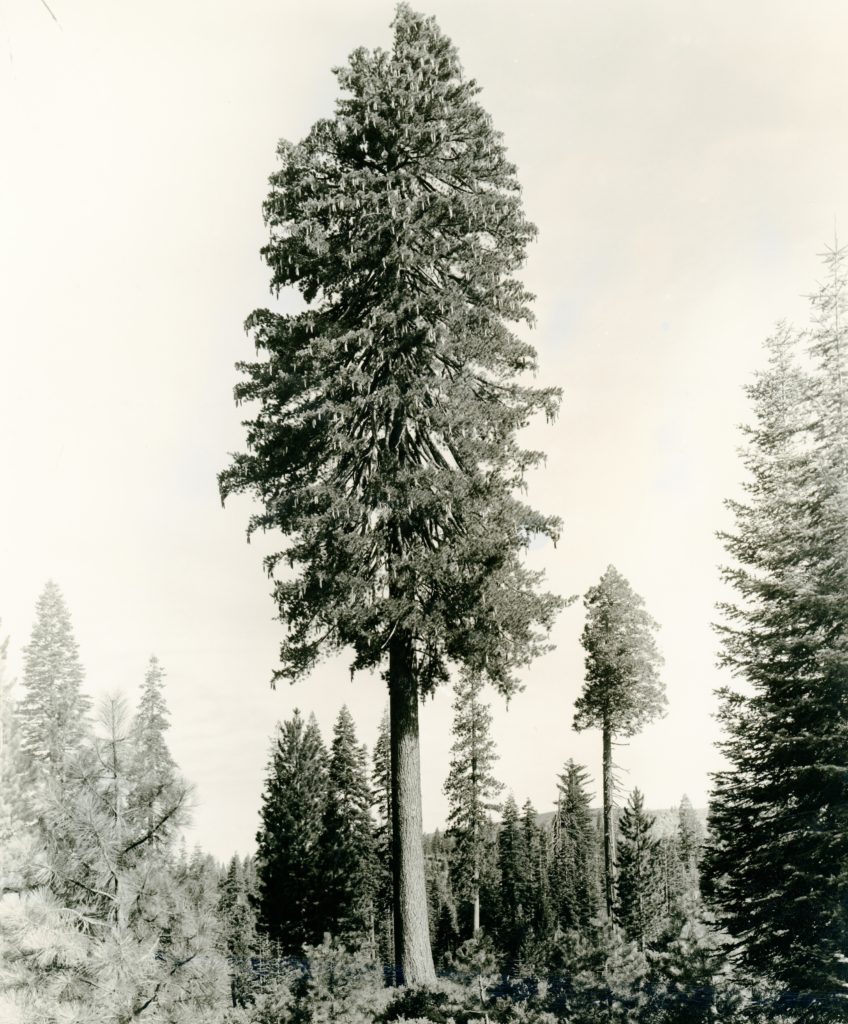
In the early 1900s, whenever Red River Lumber Company’s founder, T.B. Walker, made an appearance in California it drew widespread attention. This was especially the case as he acquired more and more timber land and speculation was rampant. In 1909, on a visit to Redding , Walker visited with the local press. He stressed one of biggest obstacles he faced was the lack of railroad access to his vast holdings. However, he provided the following insight of his future intent:

“I will make my timber a perpetual resource of Shasta County, and I want to have the people with me. When I begin to manufacture lumber, my saws will cut timber only as fast as nature reproduces it.” This, of course, raised the question, why he did not take the same kind of action in Minnesota. Walker explained, “Conditions are far different in Minnesota. There the excessive taxation forced me to cut the timber as fast as possible. Minnesota land is worth considerable for agricultural purposes after the timber has been cut off, though it is not so valuable as was first estimated. In Shasta County the timber land is not worth 50 cents an acre after the timber is cut off. It is really more valuable for grazing purposes with timber than it would be without timber.” In conclusion, Walker noted that he can conserve the timber supply better than the government.

Donate

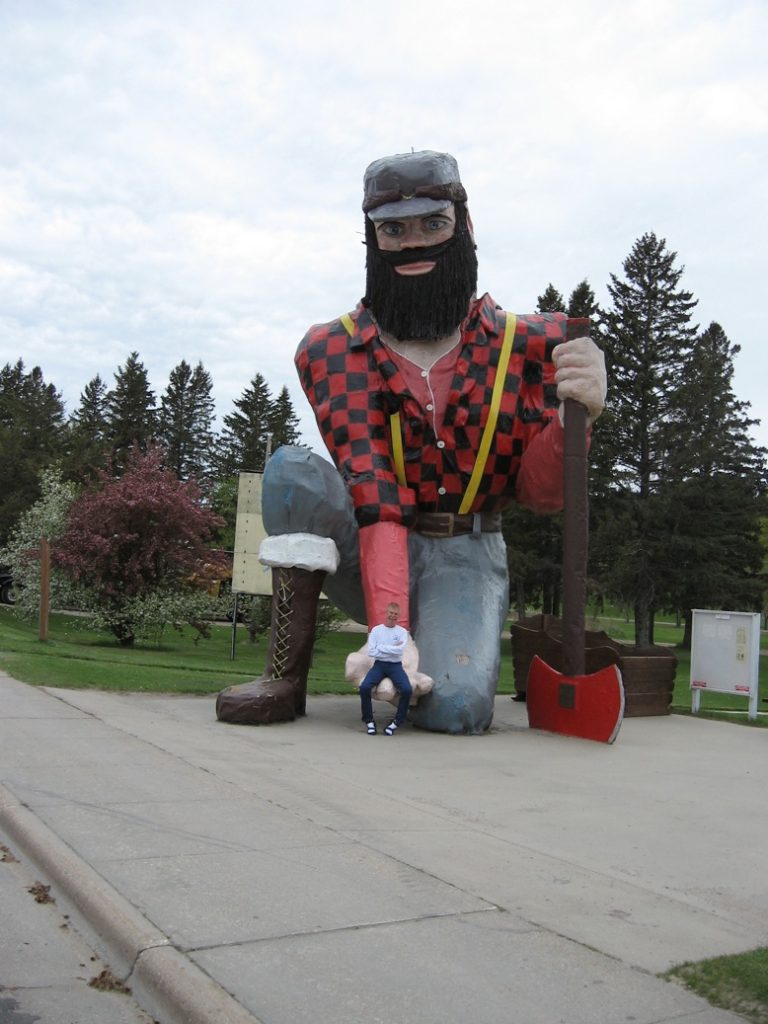
Paul Bunyan Statues

Akeley, Minnesota, 2007

Now, a part of American folklore is that of Paul Bunyan and Babe his Blue Ox. The story behind him, could possibly been lost to time from its origins in the logging camps in the Great Lakes region. It was William B. Laughead who brought Paul to life as part of Red River Lumber Company’s advertising campaign for its California expansion.

A variety of communities over time adopted the mythical lumberjack, and statues were erected in his honor. The first one constructed was at Bemidji, Minnesota in 1937. When I visited there, it was undergoing restoration.  My next stop after that on this research expedition was Akeley, Minnesota, the location of Red River’s last Minnesota mill. This quiet community is dominated by a Paul Bunyan statue. Of course, locally, Westwood would erect one, long after Red River was gone.

Subscribe

When an opportunity arises

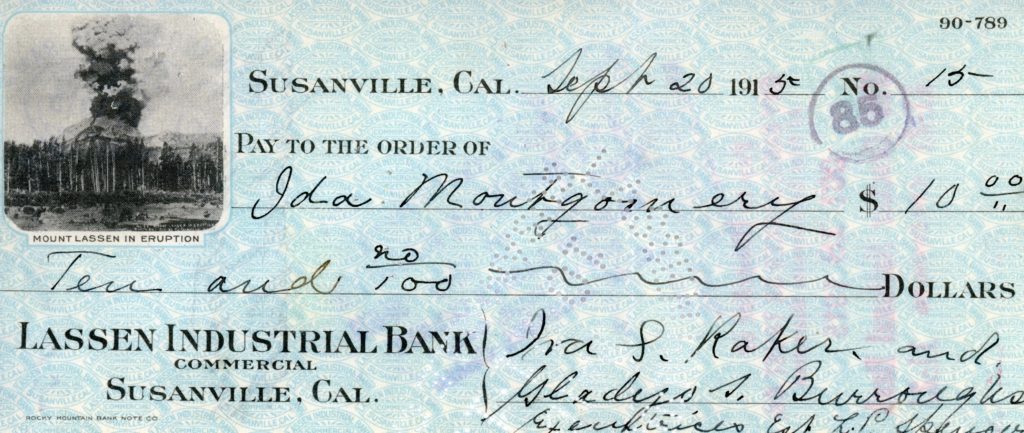
The advertising symbol of the eruption was found eveywhere.

In 1914 when Lassen Peak blew its top, so to speak, it became a media spectacle, not just locally, but a national and international sensation. Of course, the surrounding communities/counties of Lassen Peak took full advantage of the free publicity made available.  Of course, Susanville/Lassen County was of no exception, especially since the county and the peak shared the same name.  Examples where when the Lassen Industrial Bank used a photograph of eruption on their checks, while the Susanville newspaper the Lassen Advocate incorporated it into its masthead.

A little bit of irony back in the 1950s when the Lassen County logo made its debut, shows Lassen Peak in the background.  It should be duly noted that Lassen Peak is located in Shasta County.

Subscribe

Answers to some questions

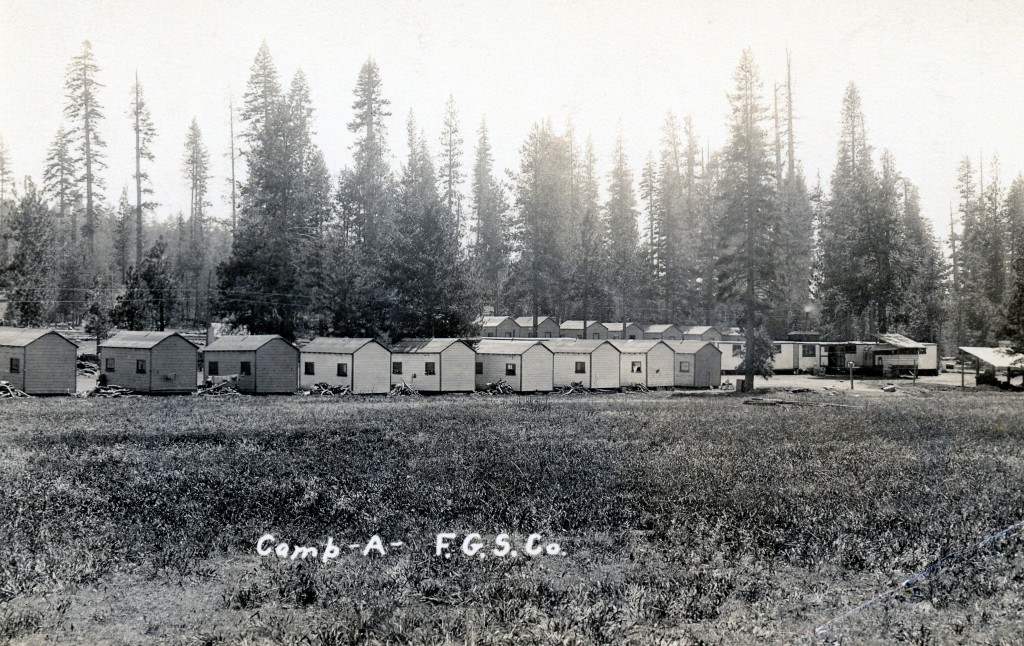
Camp A
Camp A, Fruit Growers Supply Company, located just north of McCoy Flat Reservoir, 1921

There have been some interesting comments posted of late, so I take this opportunity to answer a few.

Seasoned residents may remember a row cabins near Cherry Terrace along Piute Creek, where Al & Joy Robbins is located. There was one large cabin, which was occupied by Dan Marmo. The smaller cabins, came from Fruit Growers Supply Company logging Camp 10, after it closed in 1952. Marmo rented out the cabins, some of those folks less fortunate than others. On occasion even a Lassen College student could be found there. There are still some of these old logging cabins located throughout Susanville.

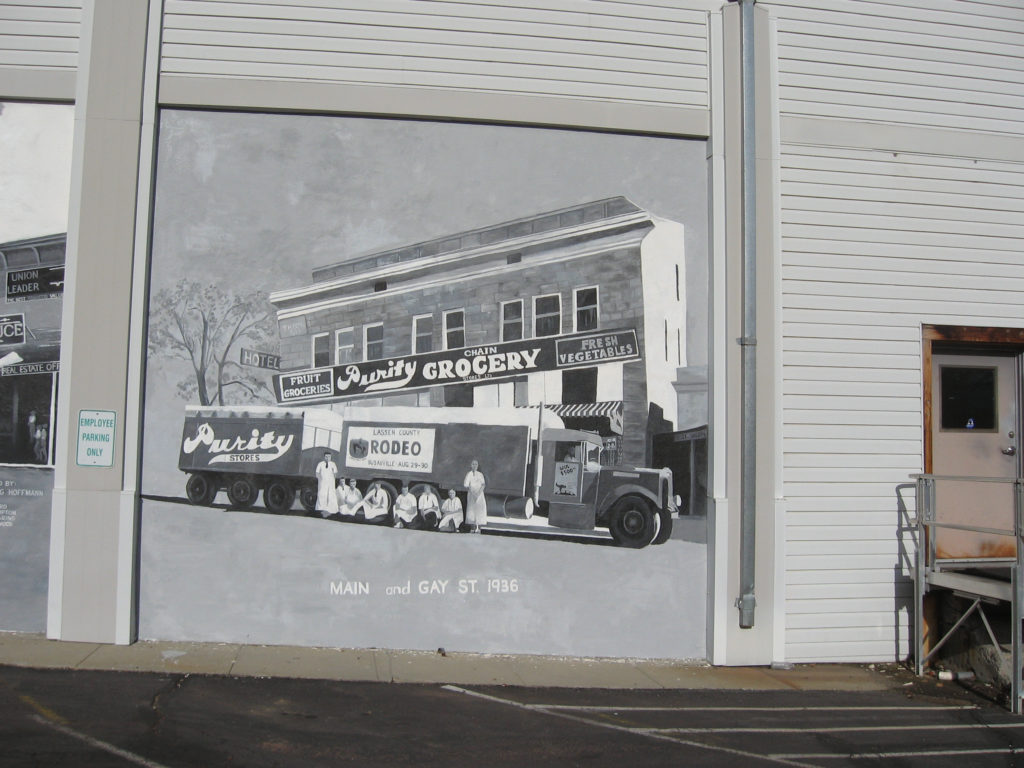
One of the panels on the LMUD building, part of a forthcoming mural tour. The building depicted iwas the home of the Telephone Company . December 26, 2016

The Telephone Company building, is a reference I had not heard in years.  However, it just so happens I am writing about it. The is the two-story stone building located on the northeast corner of Main and Gay Streets. It was built in 1914 and originally known as the Star Hotel. For a number of decades it housed Susanville’s first telephone company. When Safeway came to Susanville in 1928, it was housed there.

Subscribe

Watch Our Smoke!

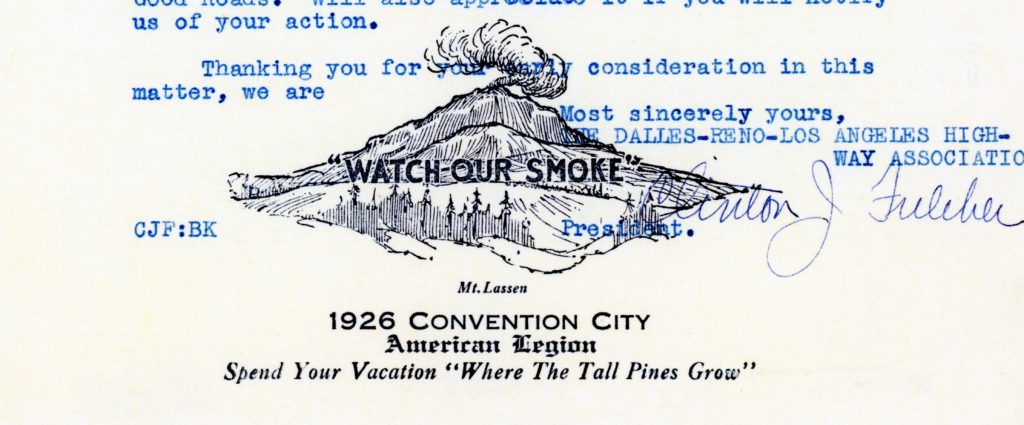
The slogan was incorporated in the Lassen County Chamber of Commerce stationery.

Harry Coleman possessed that wonderful “can do spirit” trait. He came to Susanville to manage Fruit Growers Story Club. In 1925, he became the post commander of the Thomas Tucker Post of the American Legion. Yet, it was previous year, that Coleman and four other post members made their ambitions known. In 1924, they attended the annual State Convention of the American Legion in Santa Cruz. They were not only there to promote Lassen County, but to put their bid in to become the host city for the 1926 convention. Initially, locally Coleman and company had a lot of critics who were skeptical about Susanville being a convention city. After all, it involved being host to some 2,500 people—more than double the town’s population.

The local Legionnaires began their campaign and traveled to various post throughout the state to obtain their support. In the beginning of 1925, four cities were in contention, including Susanville—the others being San Francisco, Santa Rosa and Stockton. By spring, San Francisco withdrew its bid and supported Susanville.

Their advertising campaign was called  “Watch Our Smoke” a reference to Mount Lassen’s famed eruptions. One of their many selling points was how the community was joined together to build a new three-story hotel for the convention—and that is how the Mt. Lassen Hotel came to be.

Next month, more on their campaign.

Subscribe

Cove Point, Eagle Lake

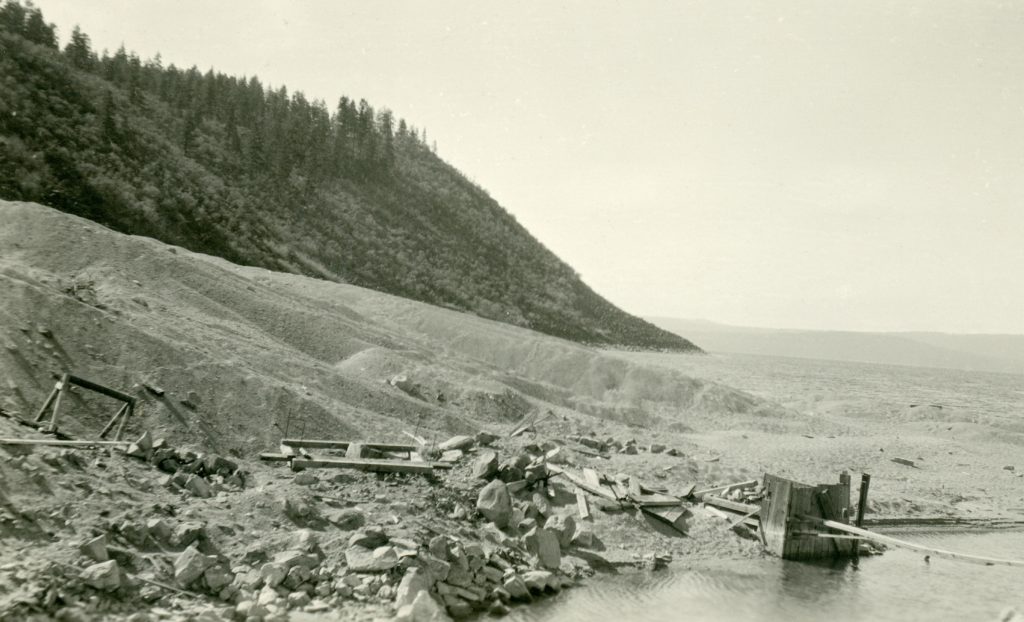
Cove Point, 1921

My grandmother, Lola Murrer Tanner, 1899-1973, referred to this east side landmark as Cove Point, which is just south of Bly Tunnel. While, it has no official designation as such, it is not unusual for some one to give a prominent spot a name for reference. This is more a photographic essay of the fluctuation of the water level at this particular spot over a span of nearly a century. The above photograph not only shows the point submerged but the tailing pile of the Bly Tunnel.

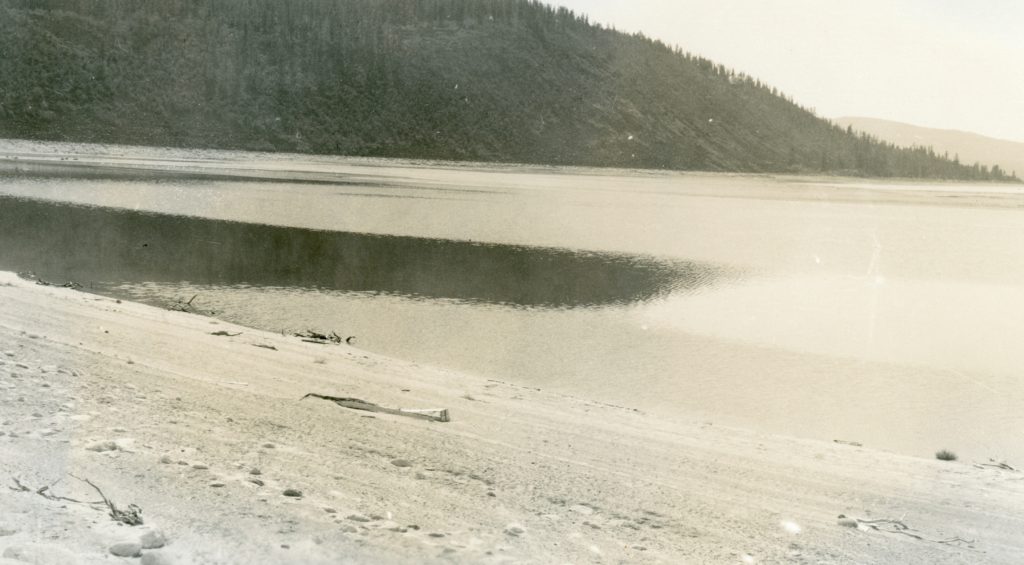
Cove Point, 1925

While not taken at the same angle, what a difference four years make with the drop of the lake level.

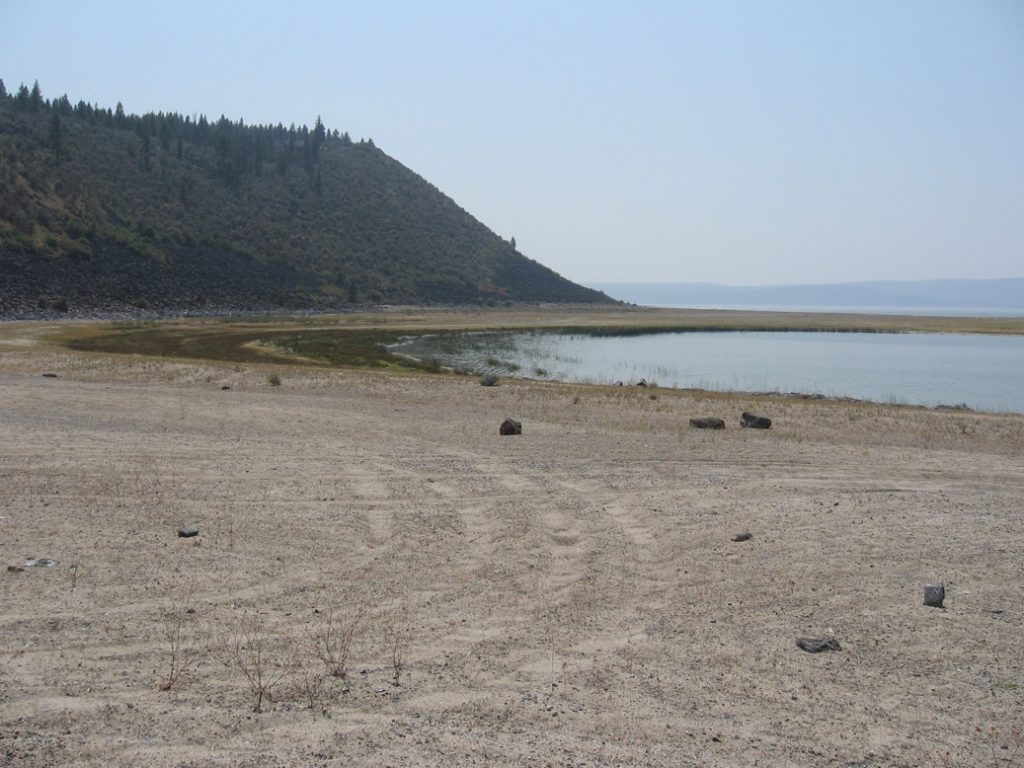
Cove Point, August 9, 2018

Finally, this is how it looked last summer.

Subscribe

Old Cameras

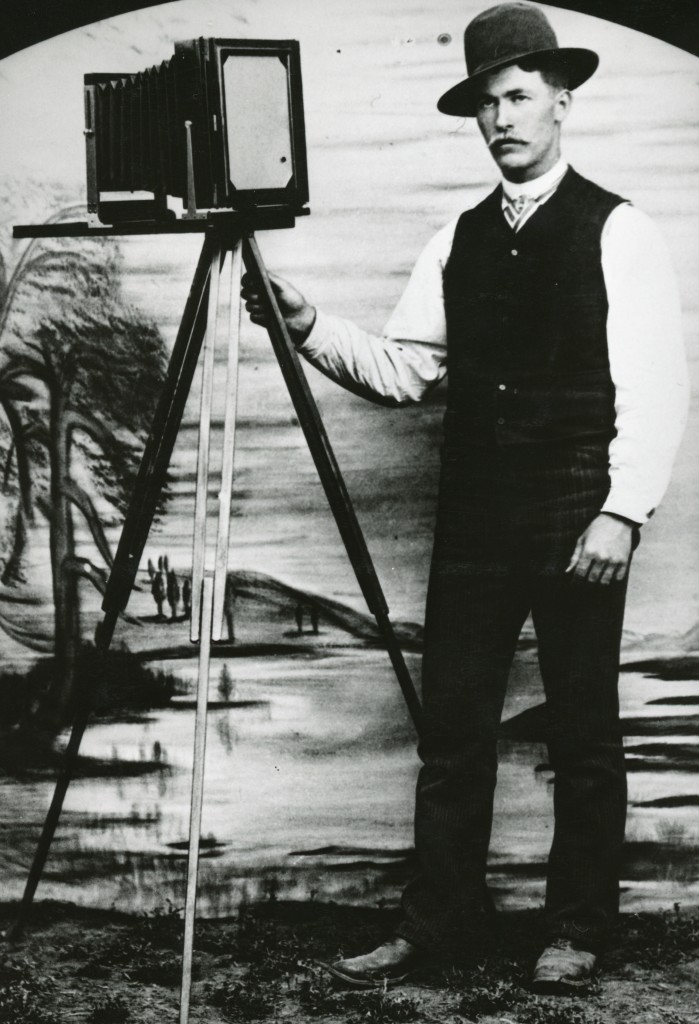
Alexander Howell
Alexander Howell, a professional photographer who operated a studio in Susanville during the early 1890s.courtesy of Donna Howell

There have been so many changes that have occurred in this digital age. This, of course, brings us today’s topic. Awhile back a friend and I were discussing cameras—the ancient kind that use film. We both have 35mm cameras. The question the both of us have, what do you do with these old cameras? As the readers of this site are a knowledgable lot, we look forward to anyone’s feed back.

Subscribe

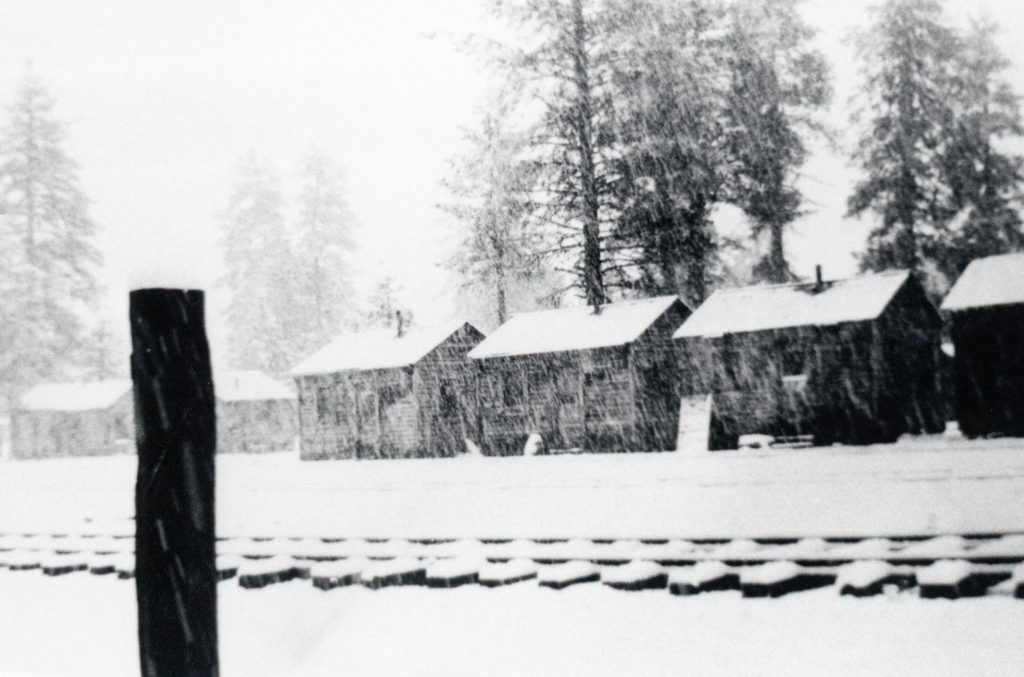
Red River’s Camp 57

Camp 57, courtesy of Roy Rea

In certain ways, Red River Lumber Company’s logging Camp 57, was in one sense one of the best known, and least known. Why the paradox? It was located adjacent to Chester, though many in the region were not familiar with its initial designation.  It was established in 1922 and was one of the longest operating logging camps of Red River. Many logging camps of the era had a life span of one or two years. In addition, Camp 57 remained opened in the winter, even though logging had been suspended. During the 1920s, Westwood had a constant housing shortage, so the camp provided for additional housing in the winter months.

Subscribe