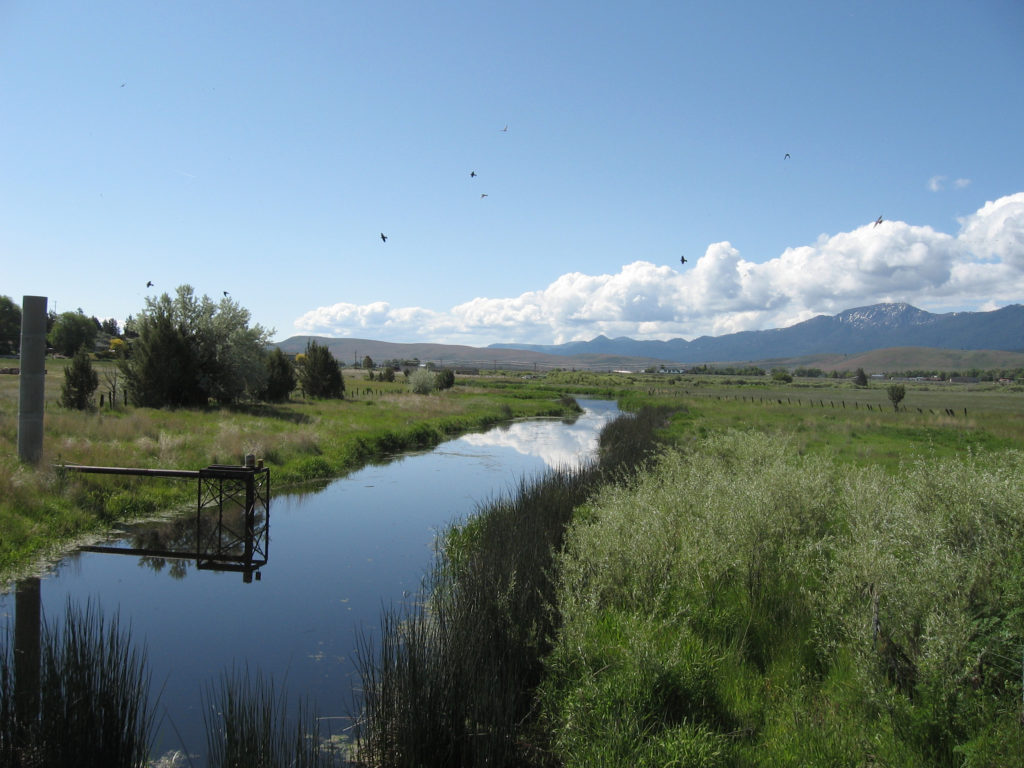
Brockman and Jensen Sloughs are man made irrigation ditches originating from Susan River, at the east end of Susanville, with the diversion point of Woodstock Dam. The dam was constructed in 1861 by Loyal Woodstock and Luther Spencer, and constructed a small irrigation ditch on their adjacent land. It was in that same year, that Woodstock planted the first crop of alfalfa in the Honey Lake Valley.
Woodstock’s downstream neighbors liked his irrigation system. On May 4, 1875, W.W. Scholl, John Cahlan, William Brockman, Jurgen Jensen and Fred Hines extended Woodstock’s irrigation ditch and about a mile from the original diversion, the original ditch was split into two, the northern one became known as Jensen Slough and the southern Brockman Slough.
Never miss a story, click here to support and subscribe.
Chester, California, 1914. Courtesy of Dolores Gasperoni
On April 26, 1894, the Chester Post Office was established at Burwell Johnson’s establishment, which included a saloon plus rooms for travelers. Johnson’s was located at the base known today as Johnson Grade on Highway 36, approximately where the causeway begins. The post office was named after Chester, Vermont, former home of the Jonathan Martin family, Johnson’s neighbors, who were instrumental in the development of Chester.
In the early 1900s, the Great Western Power Company began acquisitions of properties of Big Meadows, which it was their intent to construct a reservoir for hydro power development. This they did, and known today as Lake Almanor. The Martin and Olsen families sold their properties to Great Western Power, retaining everything about 4500 elevation contour. In 1911, Edith Martin hired Everett M. Cameron to survey and subdivide her property and thus, the town of Chester was born.
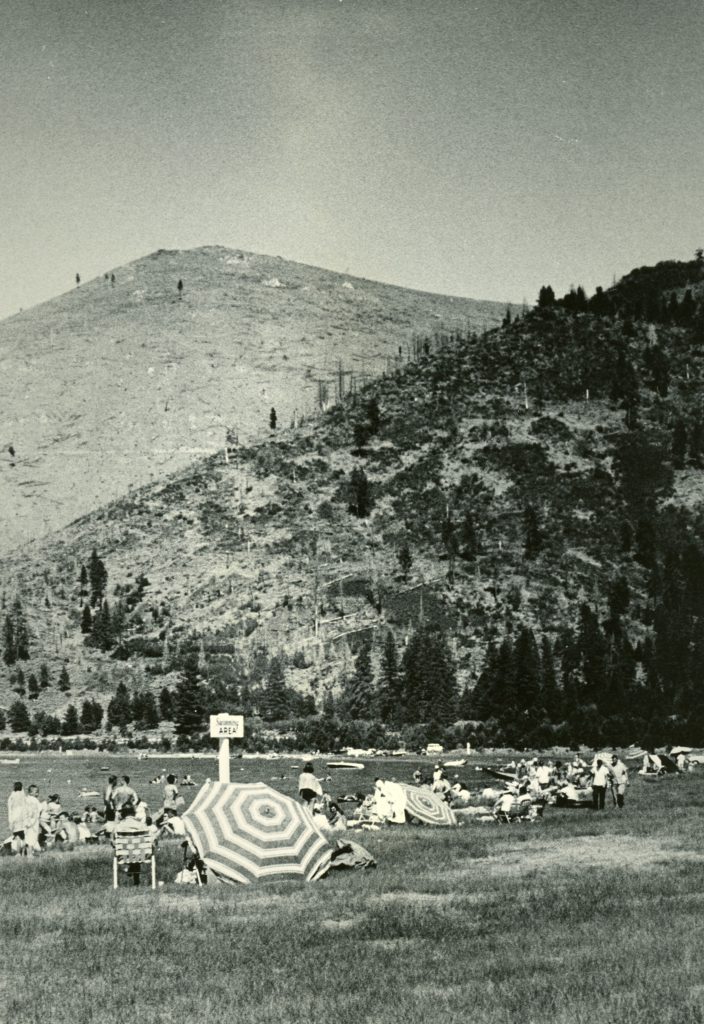
Gallatin Beach and Peak, 1916. Courtesy of Wyn Wachhorst
On Tuesday afternoon, July 17, 1951 residents of Susanville were alarmed with smoke billowing over the town. It was soon reported the smoke’s origin was from a forest fire on Gallatin Peak at Eagle Lake.
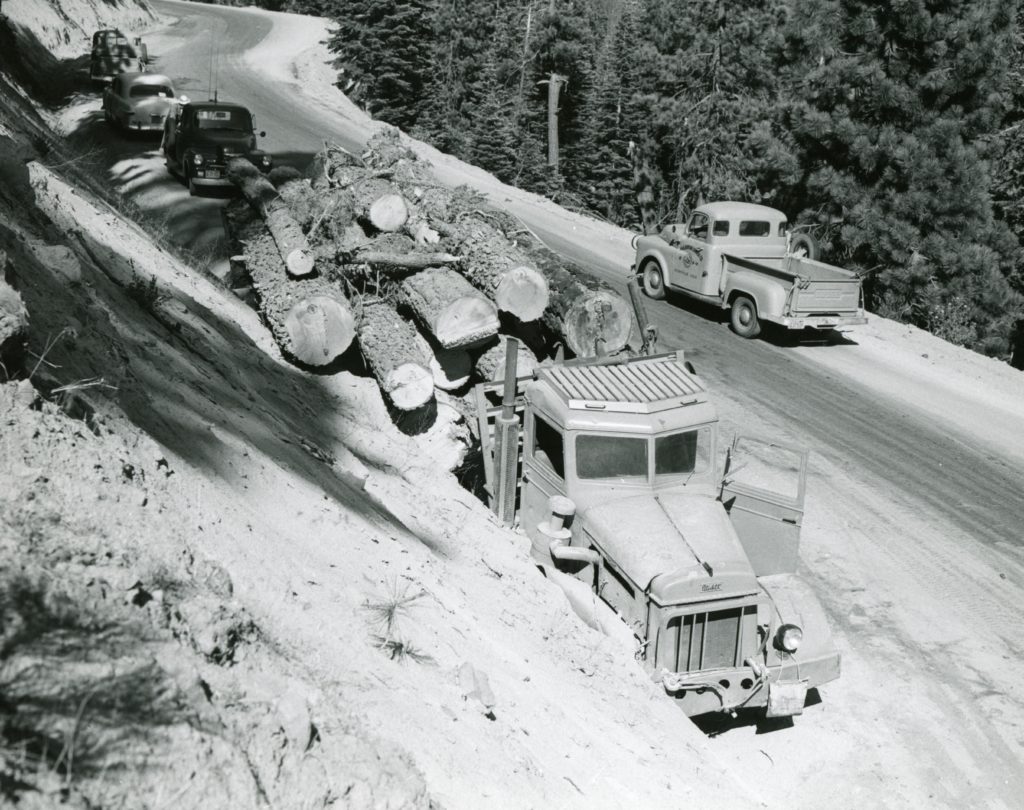
The fire started along the lake shore just past the Gallatin House. Over 400 men fought the fire, many from the logging crews of Fruit Growers and Paul Bunyan Lumber Company. It was believed the fire’s origin was that of a careless cigarette smoker. The fire was contained the next day and was stopped just 300 feet before it would have spread into virgin timber. Of the 760 acres burnt, most of it was owned by the former Red River Lumber Company, which the Shasta Forest managed those lands. The peak had been logged over two years earlier by the Paul Bunyan Lumber Company.
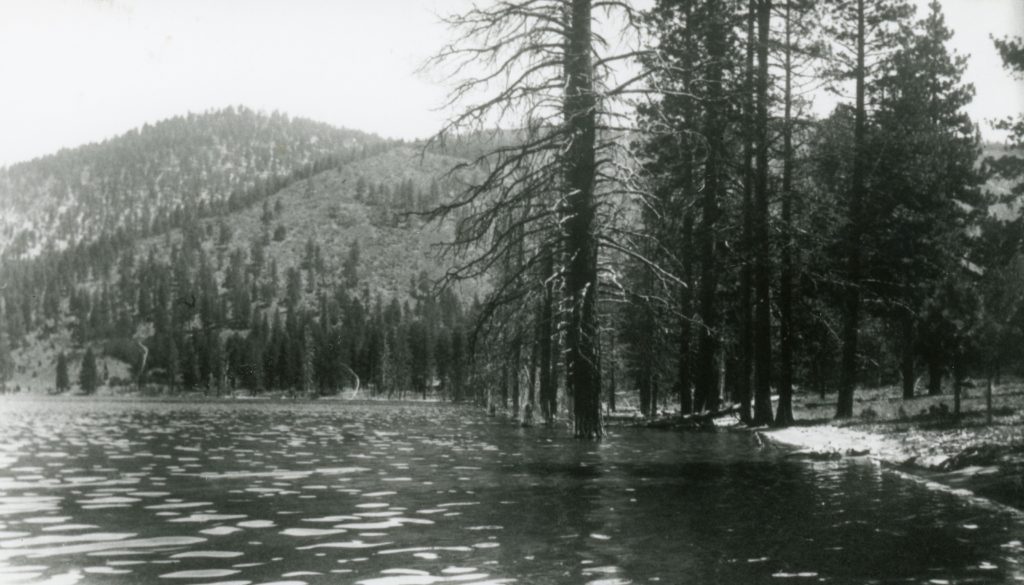
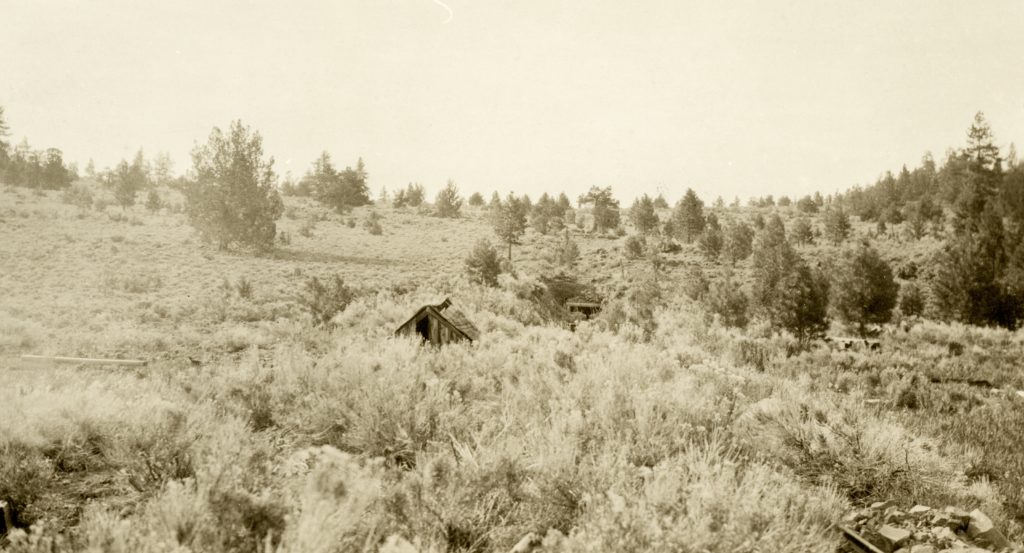
Merrill Tunnel, 1916. Courtesy of Betty Barry Deal
By 1875, Capt. C.A. Merrill began work in earnest to tap Eagle Lake for irrigation in the Honey Lake Valley. He first formed the Lassen County Land & Flume Company, but within four years that endeavor failed. Continue reading Where are we – Merrill Tunnel→
On a quarterly basis, I ask you, the reader, if there is something you would like to learn more about or maybe its something you heard but question its validity. So here is an opportunity to participate. I will do my best to answer any questions. It should be noted, it may take awhile for the answer to appear as a post. The primary reason, many of the daily posts are done nearly a month in advance. So by the time you read this, I am already working on posts in the middle of September. Whatever the case may be, I look forward to hearing from you. Of course, it should be noted that paid subscribers requests receive priority. In addition, you can always send an request at any time.
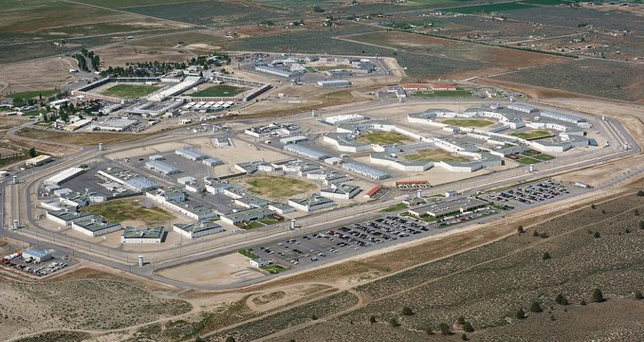
So it is a different from the French version. On this day in 1993 groundbreaking ceremonies were held for High Desert State Prison. Long before construction of its neighboring prison the California Conservation Center as it was originally called, was highly debated. So much in fact, the issue whether to build a second prison was put before the voters of Lassen County in June 1992, that won by a 58 percent voter approval. High Desert State Prison was designed to house 4,500 inmates and opened in September 1995.
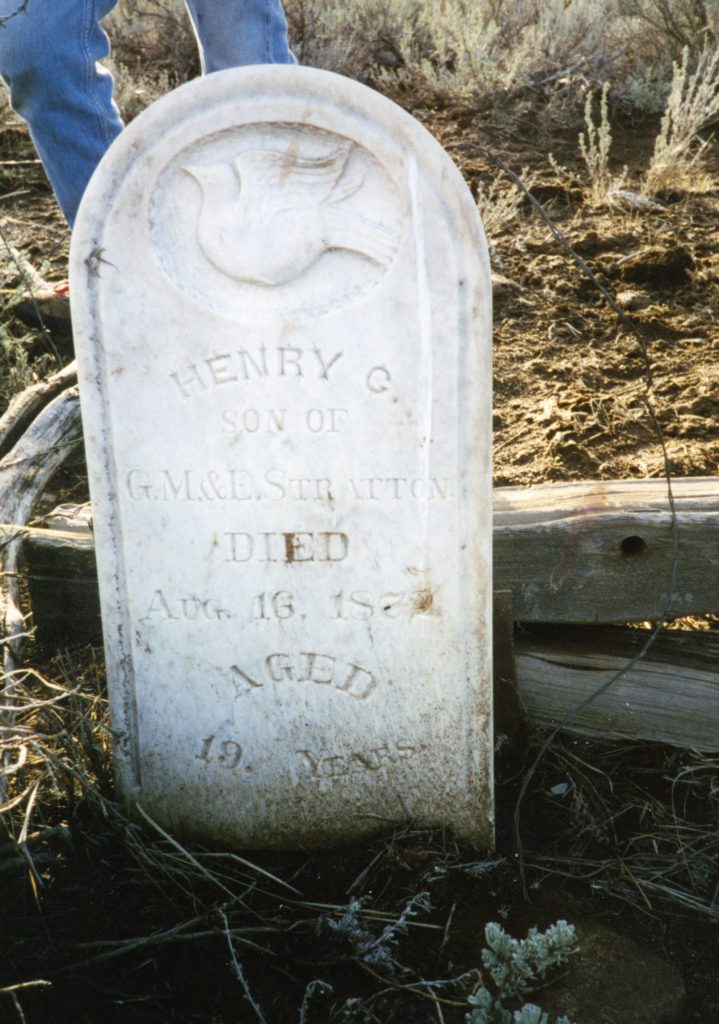
The grave of Henry Stratton. Courtesy of Martin Balding
In 1871, Gabriel McLean Stratton moved his family from Butte County to Grasshopper Valley, Lassen County. On August 16, 1872, his nineteen year old son, Henry Stratton died there and was buried nearby. According to Pete Gerig there were two Stratton graves. In an old letter he mentioned coming across “ancient graves” scattered throughout the region. Unfortunately, I never asked for clarification if they were Anglo or Native American On October 23, 1884, Stratton sold his ranch and stage stop to his son-in-law, Charles Franklin Loveland, for $2,500. Stratton moved to Adin.
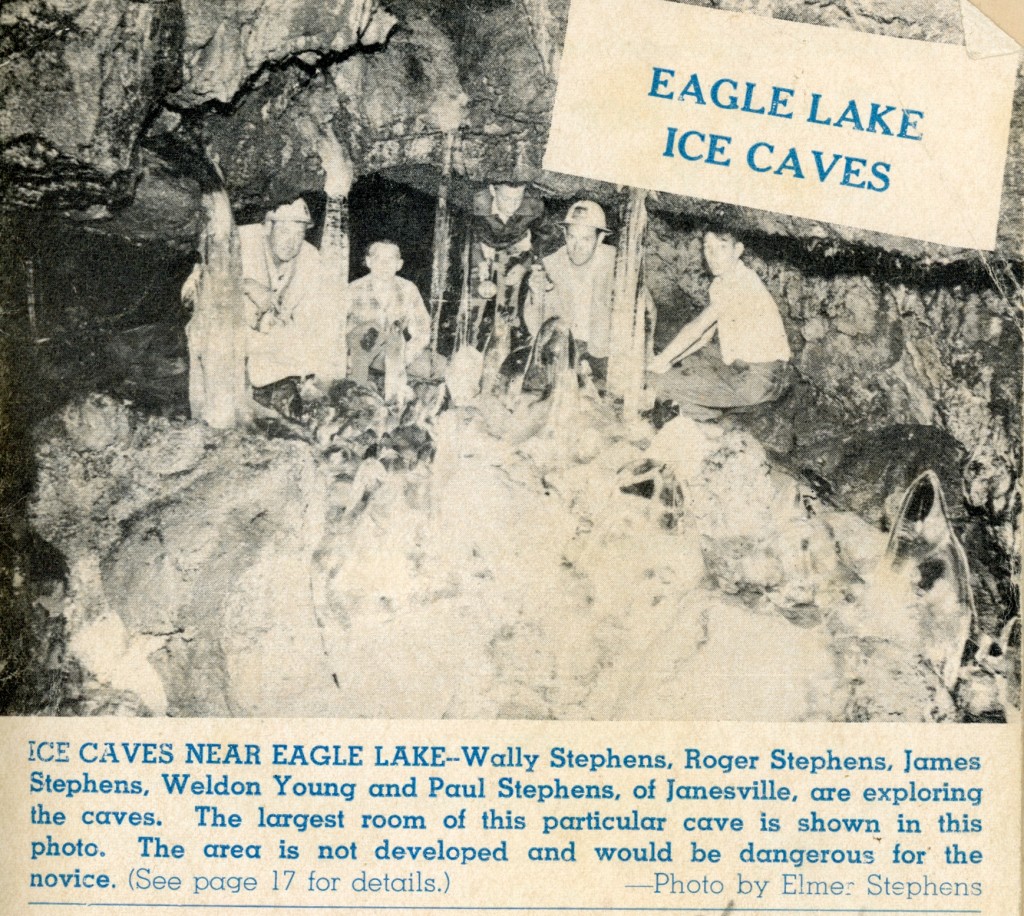
The ice caves was featured on the cover of Susanville’s weekly TV guide, August, 1965
Note: This brought back by popular demand. Remember at the upper right hand corner there is a search feature, where one can insert a topic.
Exploring lava beds, which there is plenty around Northeastern California, there is no telling what a person might find. The Brockman Flat Lava Beds on the west side of Eagle Lake is no exception. Continue reading Eagle Lake Ice Caves→
At the St. Patrick’s Cemetery Tour,the first grave visited was that of Matilda Todd Montgomery. In 1865, Matilda’s two sisters, Margaret Streshly and Mary Drake, were instrumental in soliciting both building materials and money to build the first Richmond School.
May 26,2016.
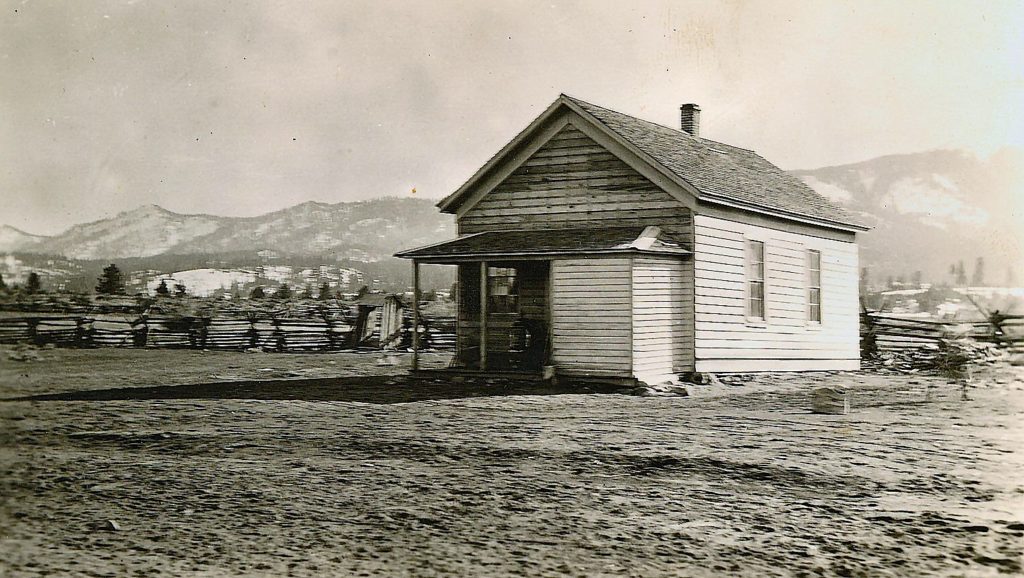
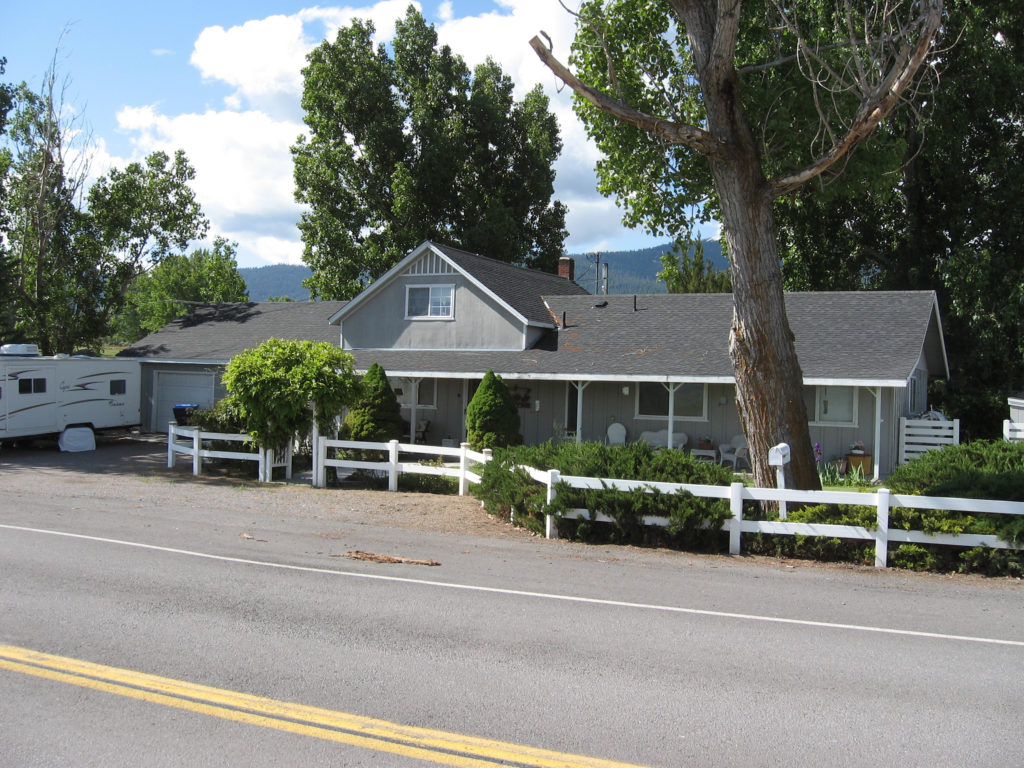
On April 1, 1966, Richmond School was held for the last time in that building. The original one-room school was replaced with a $175,000 structure that consisted of three classrooms, offices, a kitchen and a multipurpose room and located a short distance to the east. The original school building still remains, though it has been remodeled, and converted into a private residence.
Never miss a story, click here to support and subscribe.
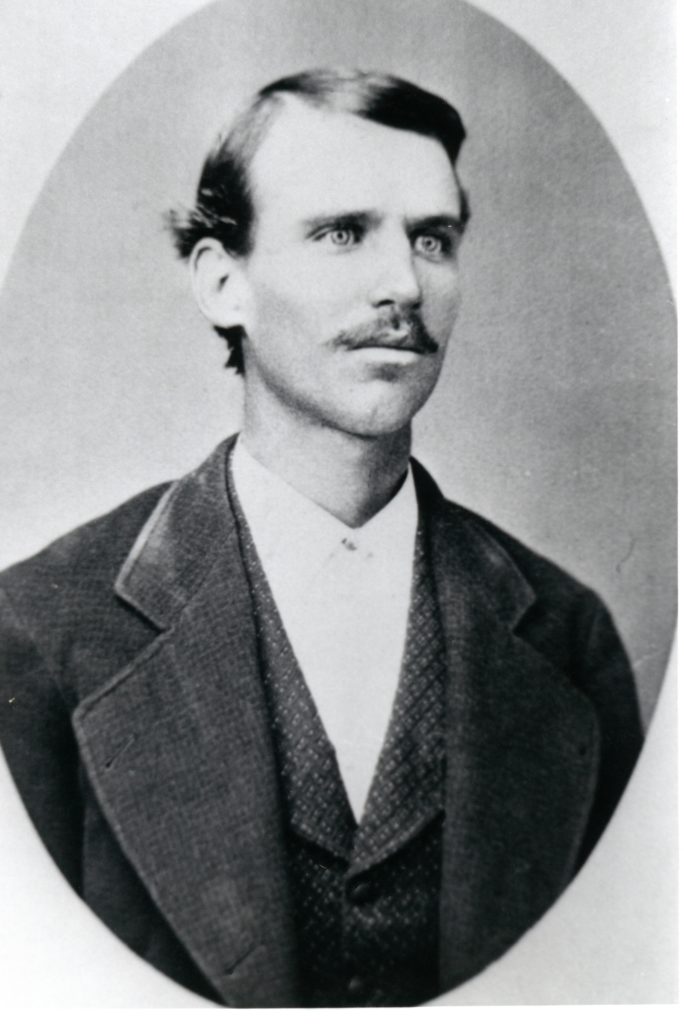
In 1877, Thomas Abner “Ab” Ramsey arrived in Janesville from his native Iowa. In Janesville, he had numerous relatives, as his mother was a McMurphy. In February 1882, he went into partnership with John T. Masten to purchase the Benjamin Wood ranch in the Tule District of the Honey Lake Valley, each paying $2,000 for the 400-acre ranch. It should be noted that Masten had been a resident of this district since 1872, who had purchased the adjoining John M. Kelley ranch (now Tanner 2016). Within two years, it was no longer just a business proposition, but a family affair when Ab Ramsey married Masten’s daughter, Minnie, on Christmas Eve, 1884.
More changes were on the horizon when in 1886, they sold the ranch to the Dotta Brothers. (Seasoned residents will know this property as the old Bailey Ranch, now owned by Jay Dow). In the meantime, Masten purchased a 640-acre just south of Susanville on Richmond Road from David Knoch for $12,000. The two families relocated to their new home.
In 1892, Ab Ramsey purchased the Marc Bantley place on Johnstonville, about halfway between Susanville and Johnstonville. It should be noted that at all three ranches they had dairy cows.
In 1907, John Masten and his wife Amelia decided it was time to retire, after all he was now 74 years old. Ab Ramsey purchased Masten’s ranch and the Masten’s opted to retire at Pacific Grove, commonly referred to as Honey Lake Heaven. A little over ten years later, Ab and Minnie Ramsey would follow suit. In 1919, his sons, Frank and Roy took over the Richmond Road property, and another son, Masten the Johnstonville Road property.
In 1940, Masten sold the Johstonville Road property to Millard Ulch and moved to Likely. The Richmond Road property was a different story. Frank Ramsey died suddenly in 1921, and his wife Grace continued with the ranch later marrying John Millsap. Over the years, they eventually purchased Roy Ramsey’s interest. In 1960, Grace Millsap sold the ranch to Les and Lyn Allen.