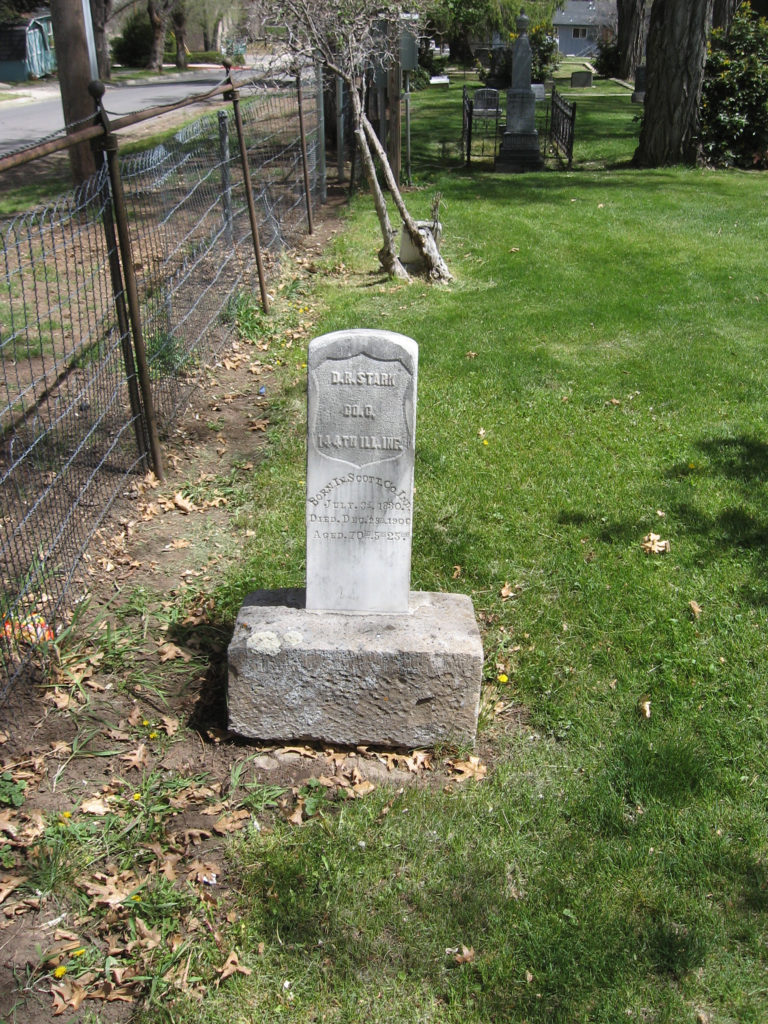
The grave of D.R. Stark one of the many veterans interred in the Susanville Cemetery, May 2, 2017.
On the evening of September 21, 1922, the Ladies Auxillary of the Thomas Tucker Post, American Legion met to go over a most interesting agenda.
First and foremost was some unfinished business. A vote was taken and approved to purchase thirteen headstones to be placed in the Susanville Cemetery to mark the graves of former veterans, mainly those of the Civil and Spanish American wars. The Susanville Marble and Granite Works agreed to furnish the markers at four dollars each. Mrs. A.G. Breitwieser and Mrs. Homer Vincent were appointed to handle the proper placement of the markers. Mrs. Robert Knipper was assigned the task to provide the information of the names and dates of the former soldiers.
The reservoir as it appeared in 1914. Minnesota Historical Society
While most reservoirs in the region were constructed for irrigation there is always an exception to the rule. The Goodrich Reservoir on Goodrich Creek near Westwood was constructed in 1912. Its main purpose was for a domestic water supply for the residents of Westwood and also as a water supply for the Red River Lumber Company’s millpond. During the winter months, it found another use as it was a popular ice-skating spot. In 1931, the State of California inspected the dam, deemed it a hazard and was removed.
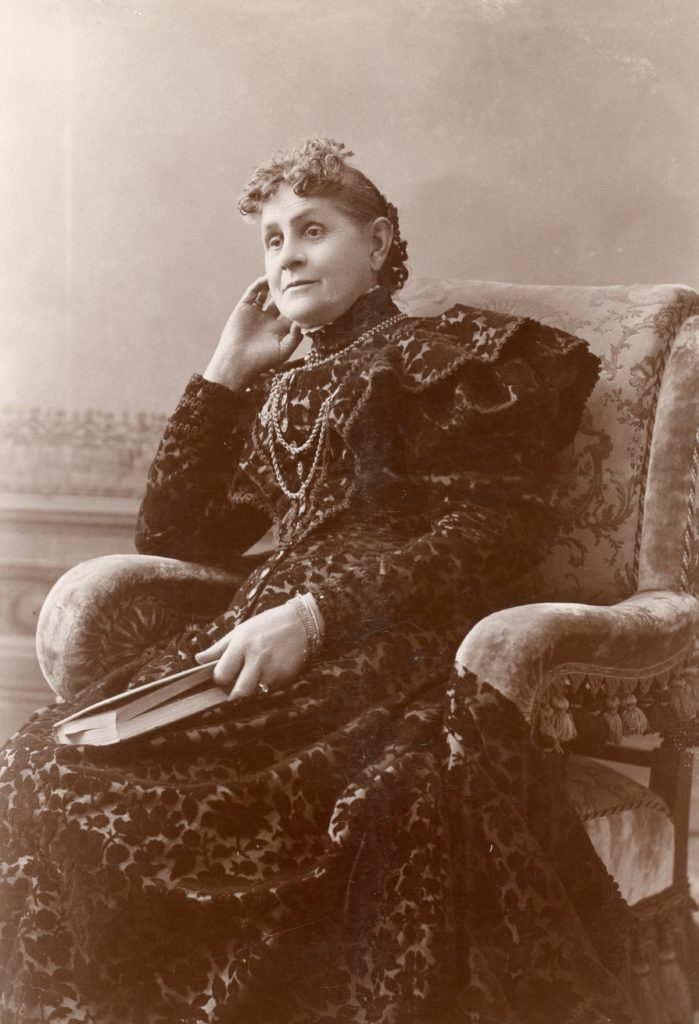
Pheobe Masten Hamilton Slater, circa 1877. Courtesy of Philip S. Hall
Various members of the Masten family first arrived in Lassen County and have been involved in many activities over the years, and many descendants still reside in the region. Pheobe was born in 1834, the third child of Peter and Nancy Masten in Ohio. In 1851, she married William S. Hamilton and the following year with her two brothers John and Benjamin Masten crossed the plains and settled in Amador County, California. Several years later, the Masten clan moved to Knights Landing, Yolo County, where he only child, died.
In 1864, at the urging of her brother-in-law Heiro K. Cornell the Hamiltons moved to Susanville. The Hamilton’s stay in Susanville was brief and they relocated to the Tule District and located on what is the present day Fleming Unit of Fish & Game. In 1868, an event had a major impact on Pheobe. Her, and her neighbor, Lurana Sharp dressed prepared the two female bodies of the Pearson Massacre.* In 1880, her husband died unexpectedly, and she carried on with the ranch. In 1882, she not only sold the ranch, but remarried to J.H. Slater, a civil engineer. Slater had visions of a Susan River irrigation system, but could not find any supports. The couple then moved to the San Francisco Bay area, where he died in 1913. In 1918 Pheobe returned to Susanville to make her home with her nephew John Cornell, and died there on 21 January 1919.
*The Pearson Massacre site is one of the few sites I have never attempted to locate.
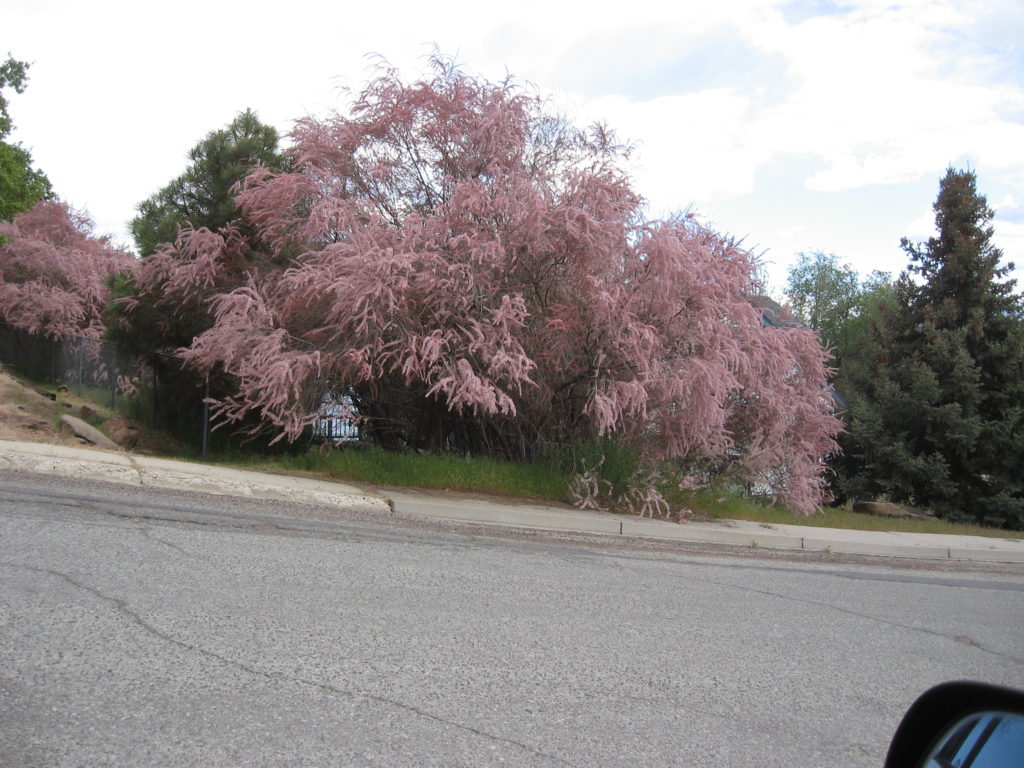
There are a number of varieties of smoke trees which are known for their colorful foilage in the spring and fall. In addition, they are quite hardy, and once established need little care. The reason why bring up this topic, is that they were favorite with desert homesteaders. So when you are out and about in the desert country and you see a smoke tree indicates that at one time there was a homestead there, though the tree outlasted that person’s dream.
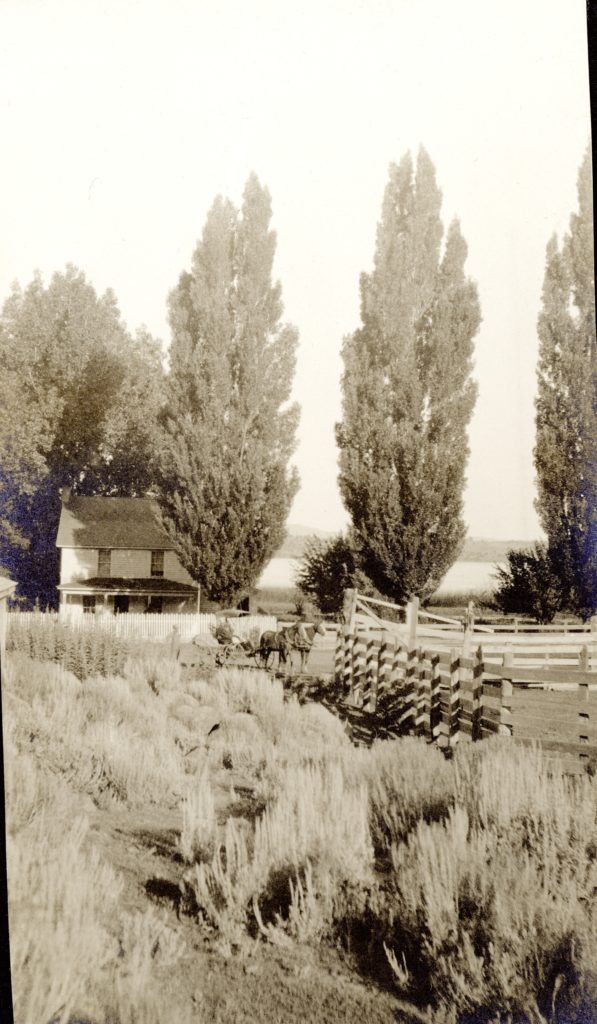
Troxel Ranch, circa 1918. Courtesy of Wyn Wachhorst
The Stone Ranch at Eagle Lake is one of the best known ranches in the basin. However, in a different era, it was better known as the Troxel Ranch. In the mid-1880s on the northeast side of the lake, featured a lot of new residents and area was dubbed the Butte Colony, as these folks came from Butte County, California. The Troxel family was a part of this enclave. On December 12, 1888, William H. Troxel purchased William S. Davis’ 430-acre ranch on the northeast shore of Eagle Lake for $3,000. In 1918, William and Rosanna Troxel, who where in their mid-sixties, opted for retirement and moved to San Diego. They subsequently leased the ranch and on February 15, 1926, they sold the ranch to Coit and Laura Stone.
Some people assume that Red River Lumber Company’s operation at Westwood was that of a sawmill. It was more than that, and was a multi-facited lumber plant. On May 2, 1924 work began on a half-million dollar veneer plant just to the north of the sawmill. As what had become customary, it too would be built on a grand scale and when completed would be the second largest veneer plant on the West Coast. The two story structure measured by 100 feet wide and a 1000 feet long, with ample room to make additions should demand warrant. Three hundred men were hired in the spring of 1925 to operate the facility. Continue reading Westwood’s Veneer Plant→
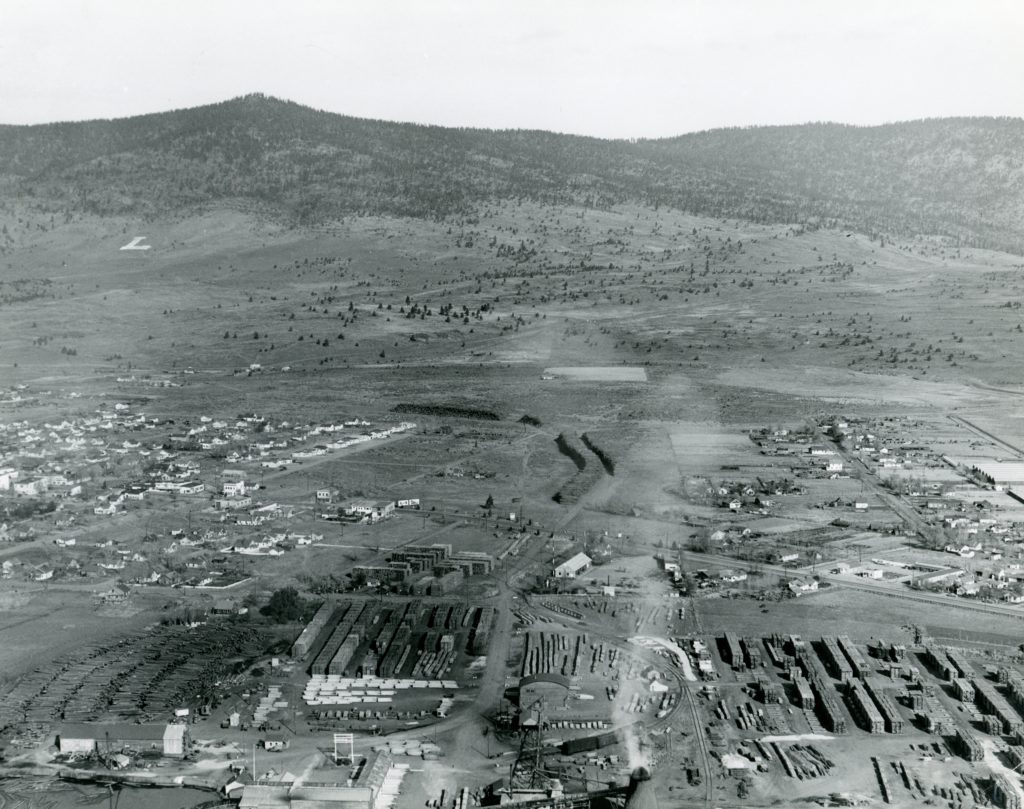
View of the north side of Susanville, 1947. Courtesy of Fred Lendman
The Paul Bunyan Road as a city street was a long undertaking. The road of course first started out as a railroad to deliver logs to the Springfield Cedar Mill, that evolved into the Paul Bunyan Lumber Company. When the mill closed in 1967, traffic on the road greatly diminished, though with agreement Sierra Pacific Industries utilized it on occasions. However it was a private road. When the Cherry Terrace subdivisions came into existence in the early 1960s, both the city of Susanville and county of Lassen set their sights on the Paul Bunyan Road as a means for better traffic. At the November 6, 1978 meeting of the Susanville City Council it was revealed that some of the first easements for right-of-way for this road was approved. However, it would be still decades away before it became a reality.
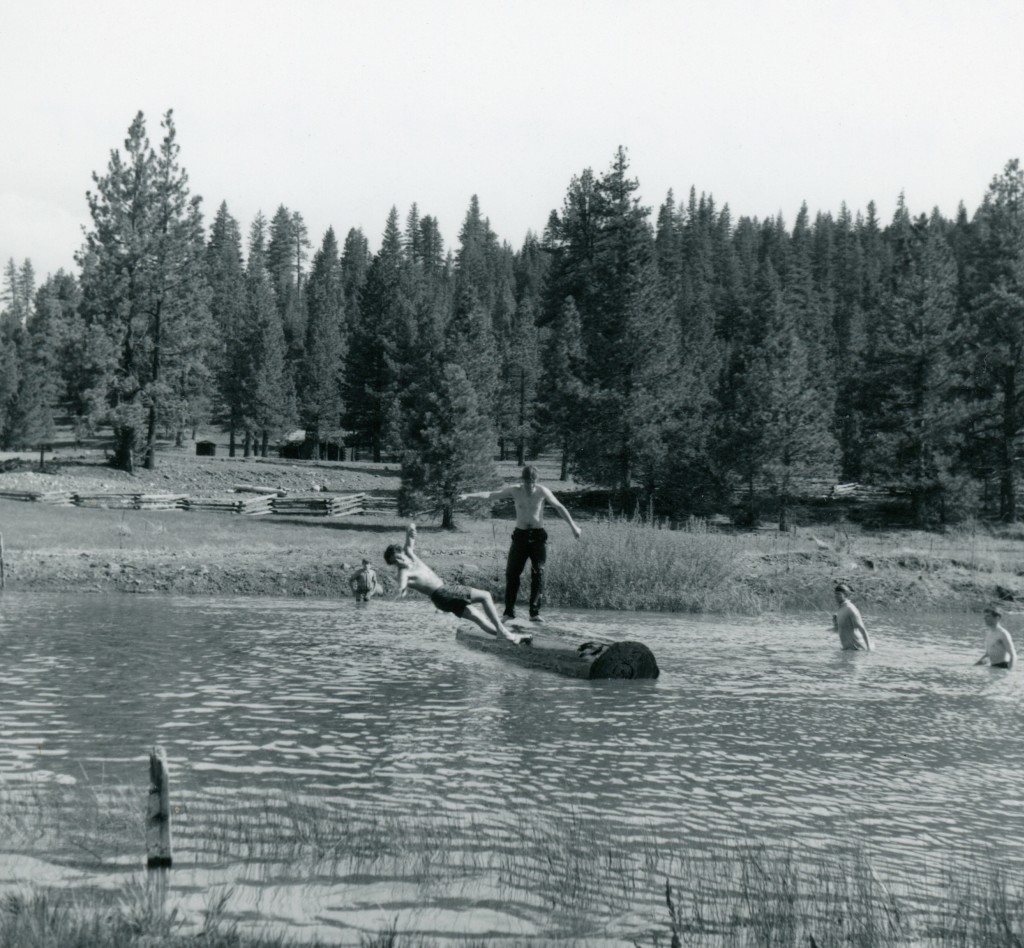
Paul Bunyan Days at Willard Creek, April 1970. Featured is the log rolling contest-student still standing is Howard Hanns and the student falling is Marshall Benedict. Photograph courtesy of D.B. Martin
Lassen College’s forestry department began in 1938, though now its major emphasis is on fire science, than forestry. It was in this era of the late 1930s and early 1940s that the forestry students developed a small winter recreational area known as Willard Hill. For several decades it was a very popular spot for sledding, etc.
Paul Bunyan Days was a logging competition held not only at Lassen College, but other community colleges that had forestry programs. Tom Gilfoy who graduated from Lassen in 1951, said it was Ralph Throop who was instrumental in starting Paul Bunyan Days. At that time it was held behind the high school, since the college was located on the same property. Tom stated they made an impromptu dam on the Susan River for log pond events. Years later Paul Bunyan Days was moved to Willard Creek. Mike Moyers who later taught at Lassen stated that around 1981 or 1982 was when the last Paul Bunyan Days was held. In 1984, the forestry program at the college was terminated due to lack of students.
If anyone has more information, I would like to hear from you.
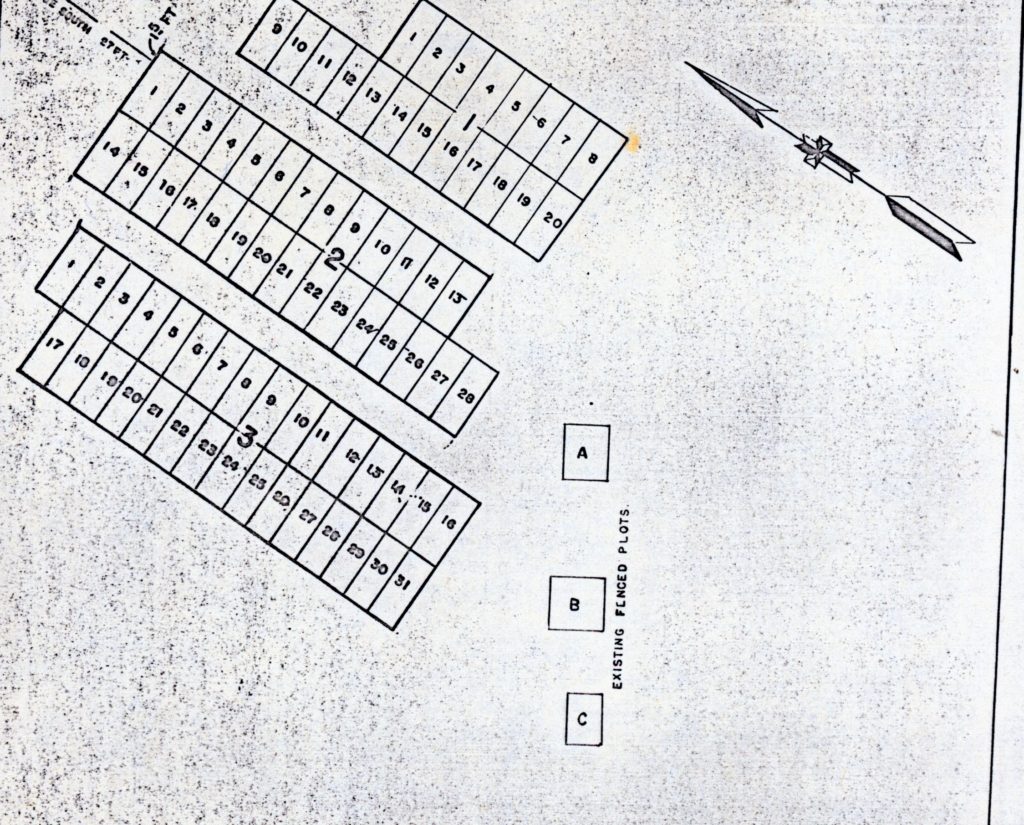
It seems as though my sorting/file pile seems to get larger than smaller. In the filing bin was a map of the Amedee Cemetery. What is peculiar is that the cemetery is on private property, but Lassen County Surveyor Thomas W. Ogilvie prepared it and the Lassen County Board of Supervisors accepted on June 6, 1955. In addition, Amedee’s heyday had long been over, and only nine burials occurred there. Yet, the 1955 map includes 79 new plots, while Amedee’s population consisted of one person.
Finally, if you notice a trend of cemetery topics in the next few weeks, it is because of Memorial Day weekend, and I am focused on cemetery work in preparation thereof.
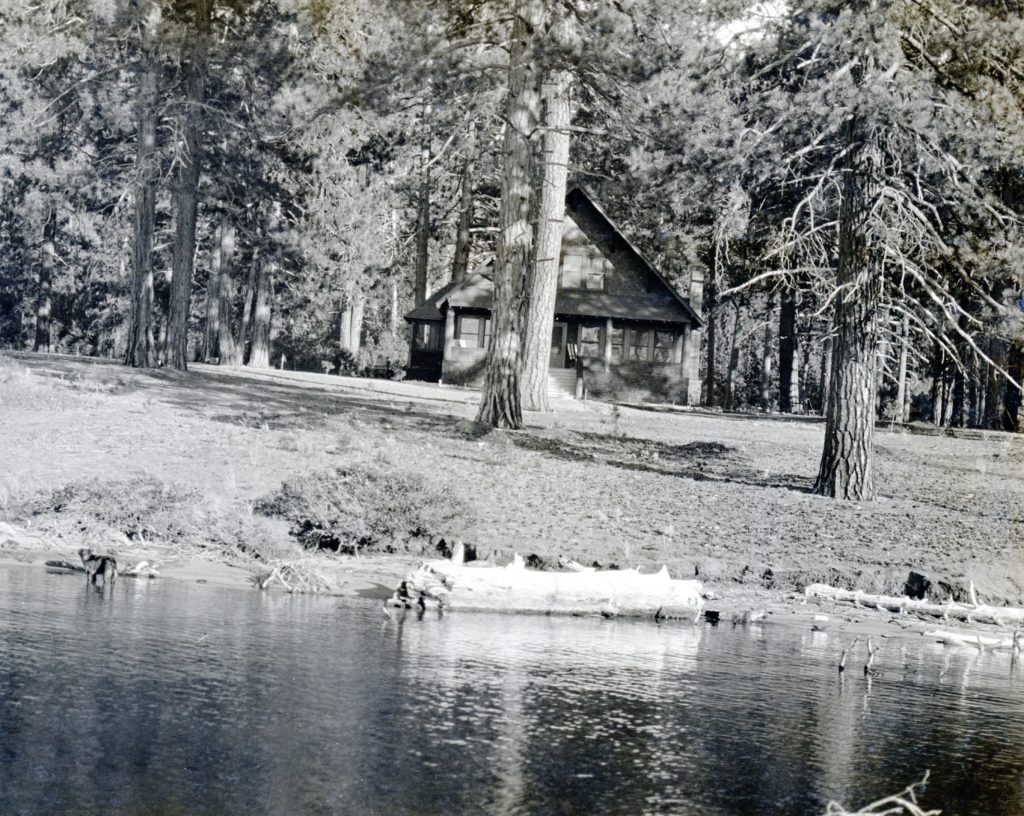
Last week I wrote about Coulthurst Hill. This is a just a little anecdote, since Isaac Coulthurst did not spend all his time in that unusual “man cave.” In the late 1880s he filed for a 123-acre homestead on the southeastern corner of Eagle Lake. On October 4, 1892 he sold the property to Albert Gallatin who was busy acquiring property around Eagle Lake. While Gallatin primary use of the property was for the grazing of livestock, his wife had other plans for this particular piece of property. In 1913, she built a 4,000 square foot summer home there, the first one to be constructed at Eagle Lake.