Ravendale Chamber of Commerce

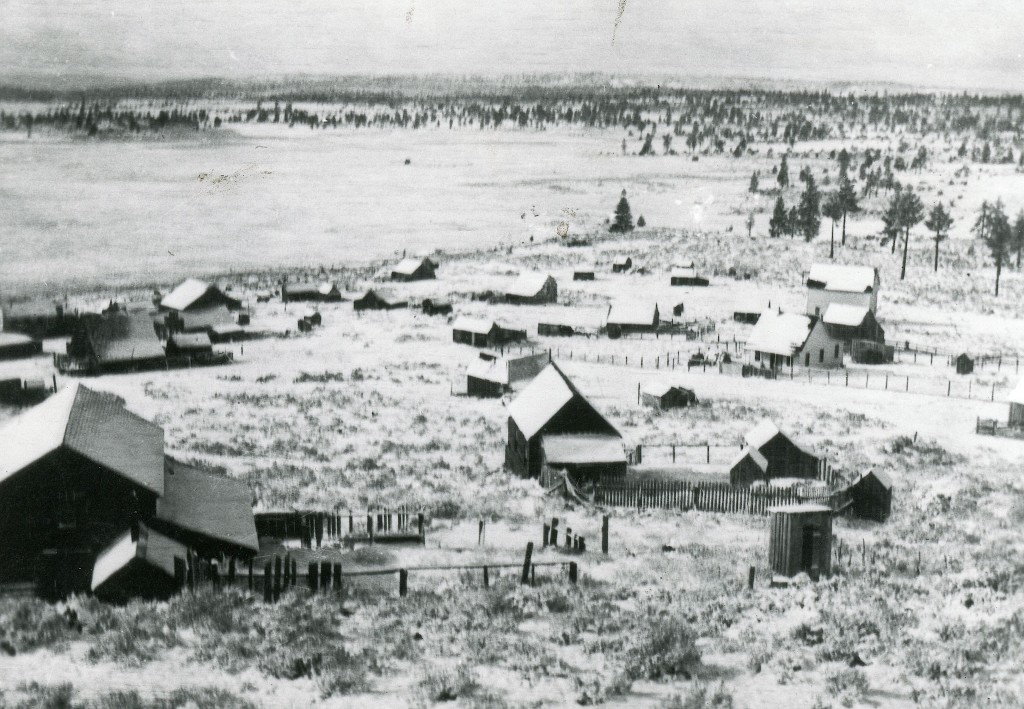
Ravendale, in better times.

While Ravendale appears these days as a wide spot one passes through the Madeline Plains, that was not case over one hundred years ago.  An interesting note is that it was a decade after the NCO Railroad built its line through there that a town came into existence. In the early 1910s, the town flourished. In 1914, it formed its own Chamber of Commerce. This was used as a vehicle to promote the town next year at the Panama Pacific Exposition in San Francisco. It met with little success, end of story.
Subscribe

Hayden Hill’s Other Mineral Deposit

Hayden Hill, 1909. Courtesy of Dallas & Joyce Snider

In the 1892 California Mineralogist report on Hayden Hill, it was duly noted that over $2,000,000 in gold had been extracted. It was noted there was a good quality kaolin deposit there as well. However, since it was so far removed from any rail transportation service, that the deposit was deemed worthless. Kaolin historically was used in porcelain, but the majority of it is used in paper manufacturing that gives the glossy paper its sheen.

 Subscribe

That’s a lot of lumber

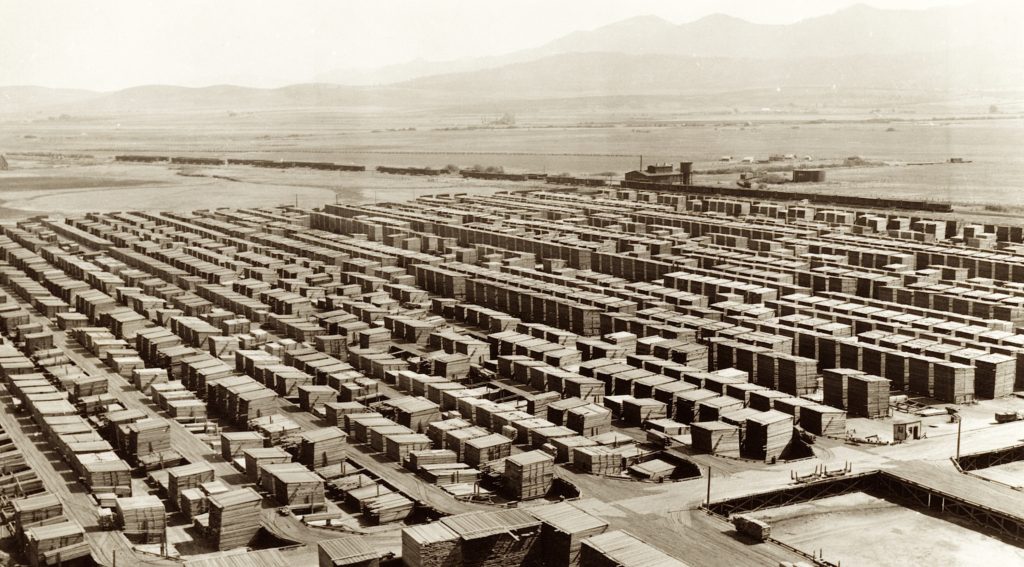
Fruit Growers Supply Company lumberyard, 1935.

The compilation of the logging history of the Fruit Growers Supply Company was a very enjoyable project.  In their meticulous annual reports there was always some interesting fact. Take for instance of the above photograph that shows 54 million board feet of lumber. The reason why Fruit Growers was in the lumber business was for a supply of box shook, the components used to make a wooden box to ship citrus, since this was before cardboard. Anyhow, if the lumber depicted above was used for box shook, it would only meet one-third of the boxes needed by Sunkist for that year.

Subscribe or Donate

Buffalo Meadows Salt Works

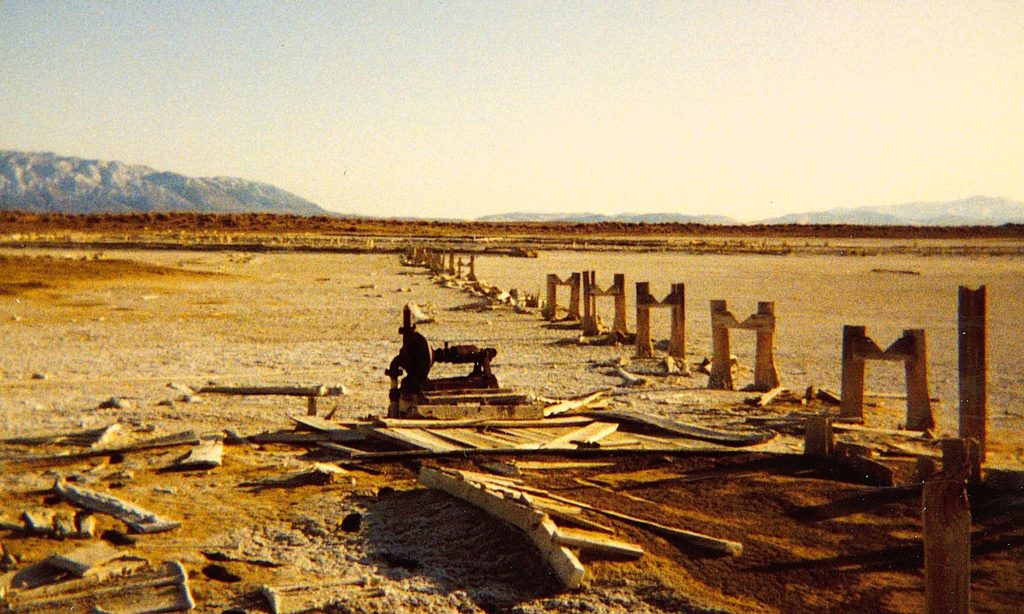
The salt works, January 1980.

One of the most interesting enterprises around the region was the Buffalo Salt Works in the Smoke Creek Desert. It is so easy today to take many things for granted, but back in the early days of settlement of the mid-1850s, those hardy souls did not have that luxury.

First of all, it boggles my mind, how B.F. “Frank” Murphy and Marion “Comanche George” Lawrence discovered and claimed the salt marsh in the summer of 1864. For most of its existence Murphy was the main operator of the Buffalo Salt Works. Two types of salt was produced. The first being table salt that 99.8% pure. A lesser grade was sold to mining operators with a smelting plant that utilized the salt.  The salt was obtained from wells, the brine pumped into vats, and left to dry.  In 1888, it was reported that 200 tons of salt was produced annually. Continue reading Buffalo Meadows Salt Works

Sinker Logs

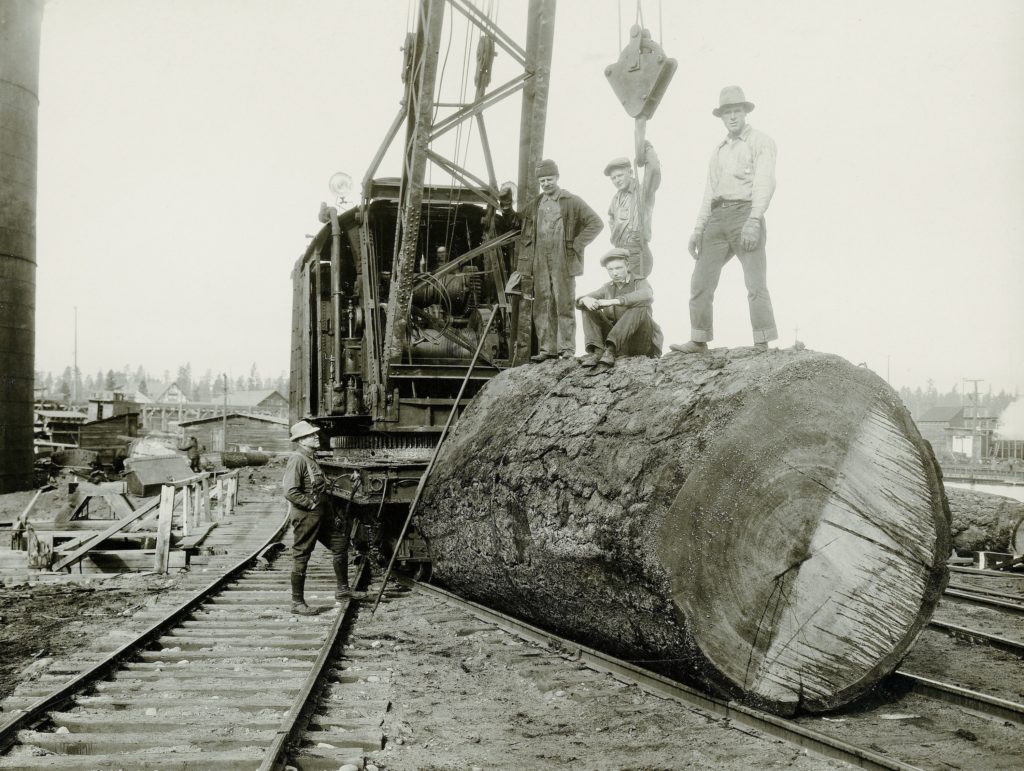
A sinker long dredged up from the Westwood millpond, circa 1930. Courtesy of Walter “Doug” Luff

Mill ponds are a relic of the past lumber industry.  If your are from that era, you recall one particular thing  that is forever etched in your memory bank. During the summer months, the stench from these mill ponds were horrendous.

One of the annual maintainence chores was the removal of sinker logs. These were logs that sunk to the bottom of the millpond before they were put through the sawmill.

Subscribe

Eagle Lake, Pelican Island

L
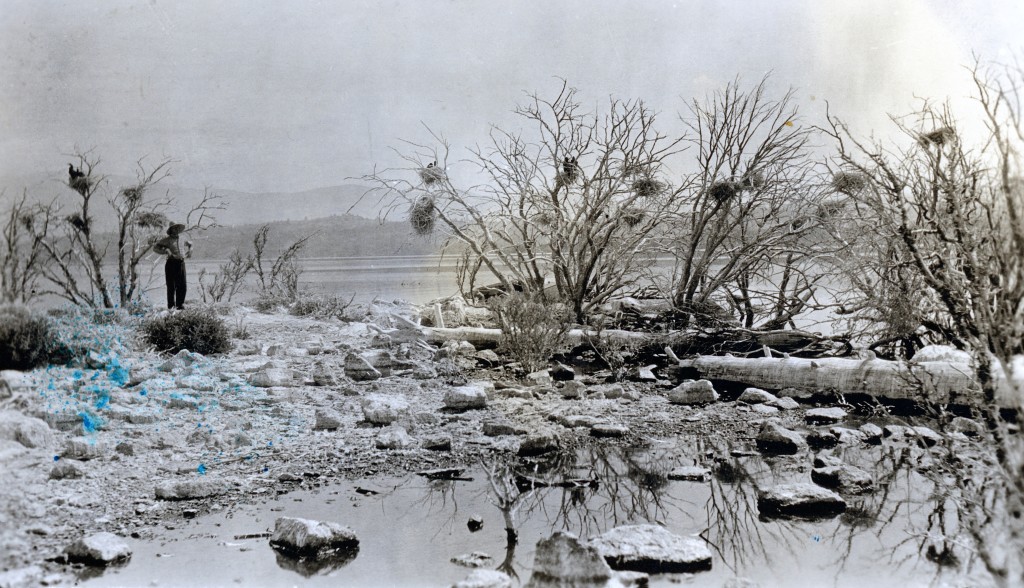
Pelican Island, 1916, D.M. Durst

This is a follow up of last week’s post of Ada Gerking York’s memoirs.  She also observed: “Eagle Lake contains two islands, Shag and Pelican, both of which are gradually being submerged by the rising of the water. These islands are the meeting places of various water birds; in early summer, one can imagine one’s dreams of gathering eggs, as there are so many lying there on the ground. The lake is very deep near Shag Island, the bottom has not been fathomed yet. The northern wing is not so deep and according to the account of a very old Indian, this part of the lake was dry many years ago, and he with a party of Indians crossed it while hunting deer, the ground being level as a floor.”

Subscribe.

The Red Octopus

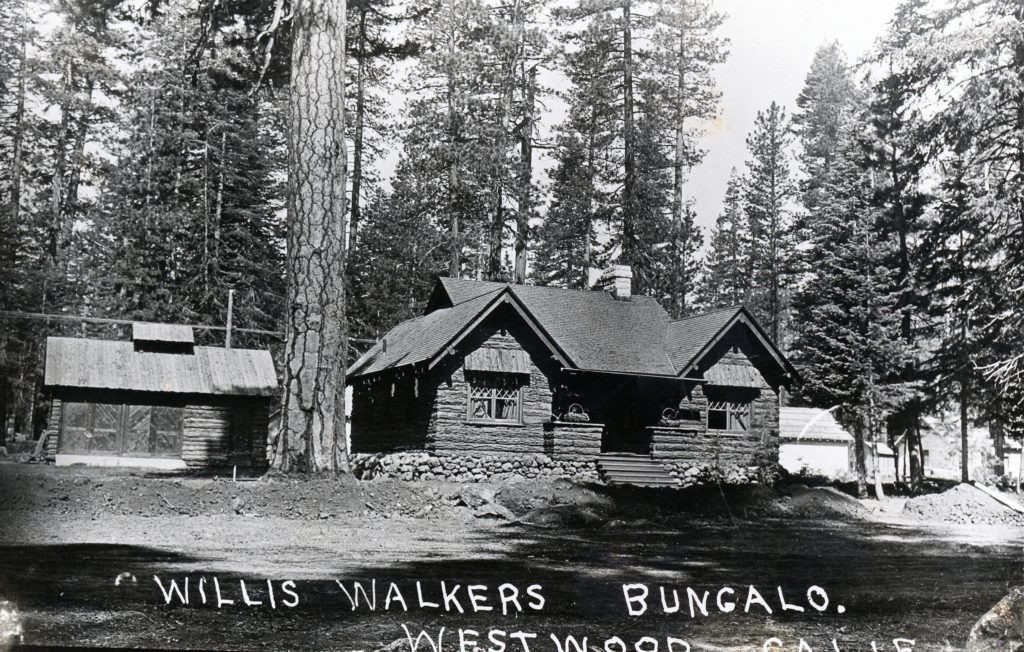
The Willis Walker residence, circa 1915. It should be duly noted that Willis also resided in San Francisco.

When Red River Lumber Company established its company town in  Lassen County many were thankful for the prosperity it brought with it, especially the Fernley &  Lassen Railroad. However, the honeymoon would not last long. Red River would exert its influence over so many aspects of life. Certain member’s of Susanville’s business community had a code name for the company:  the Red Octopus. After all, in 1920, Red River purchased the town’s local power company, Lassen Electric. They advertised their Big Store specials in the Susanville newspapers, hoping to lure away customers. In 1922, when Red River purchased the Milwood Tract east of the city limits, they were able to block any annexation effort by the city until 1947, which by then Red River was going through a dissolution process.

Subscribe!

Lassen County Fair

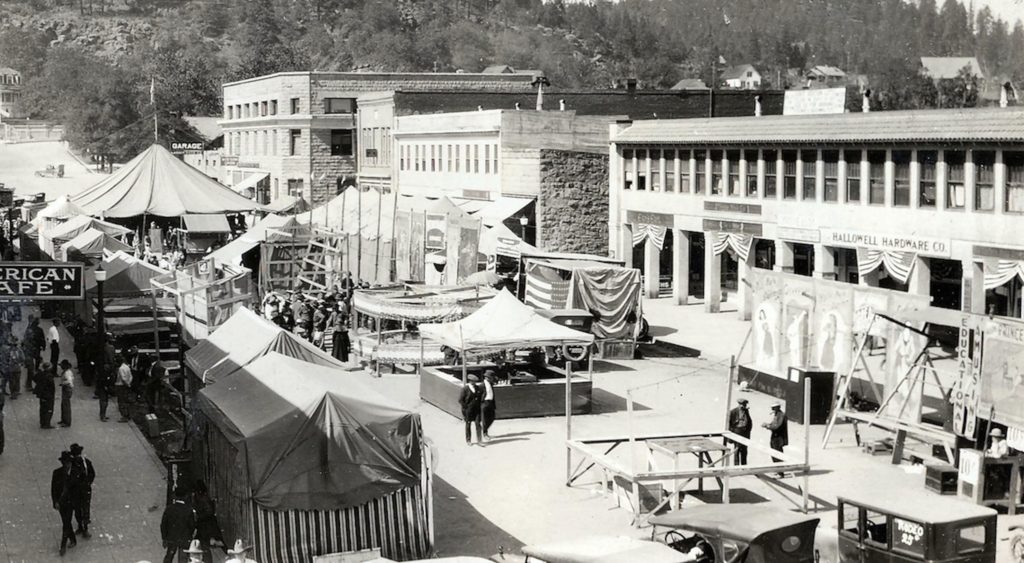
The Main Street Pavillion

In 1922, after a long hiatus the Lassen County Fair was revived.  A new fairgrounds was constructed, and that site is still used today. A grandstand was constructed for viewing various livestock activities. However, exhibits, etc. were held in the uptown part of Susanville, there being no other facilities. Of course, Main Street was converted into a carnival scene for a couple days. After all, this was before CalTrans came along.

Subscribe

Wells Fargo & Express Co.

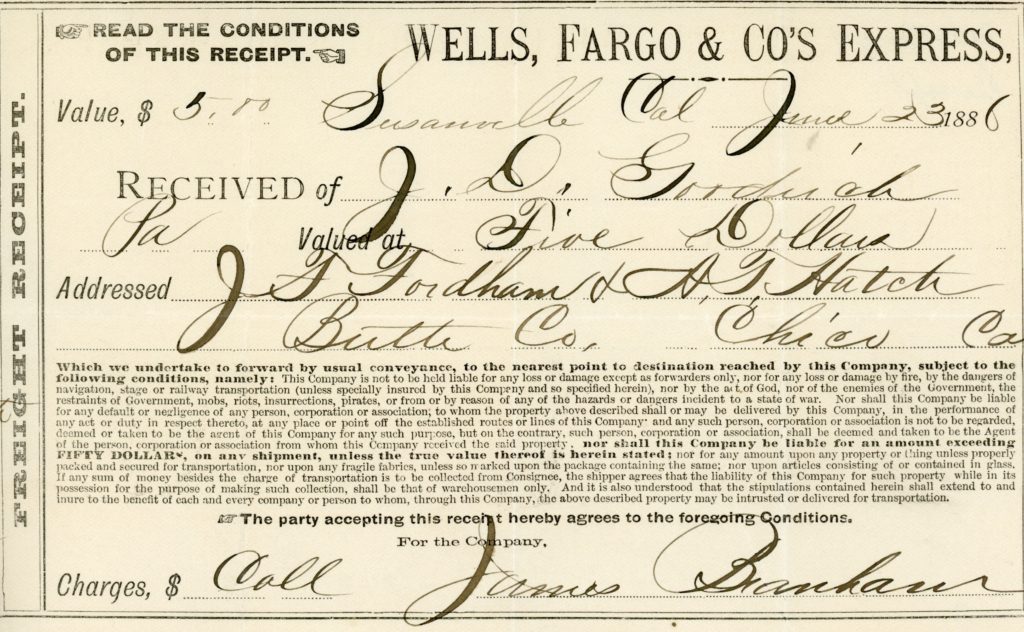
The receipt has some interesting fine print.

For years Wells Fargo was an inconic banking institution of the “old west.”  During the late 1800s, they had an office in Susanville. Wells Fargo’s local office did not provide any financial services. As its original name implies “express” was the service they provided. They were the UPS of the time.

Donate

Nowhere – Lassen County

Nowhere
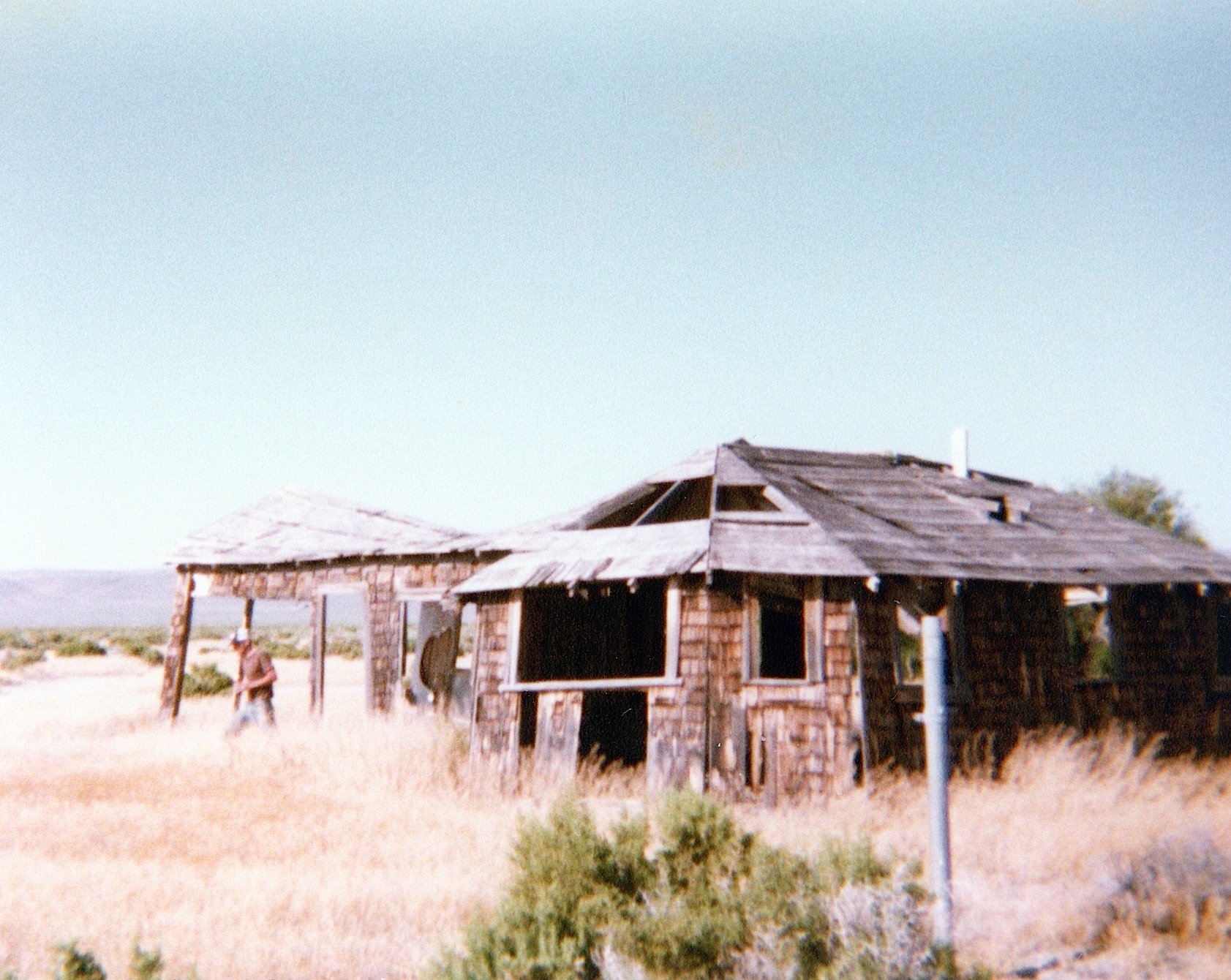
1983 Remnants of Montgomery’s home.

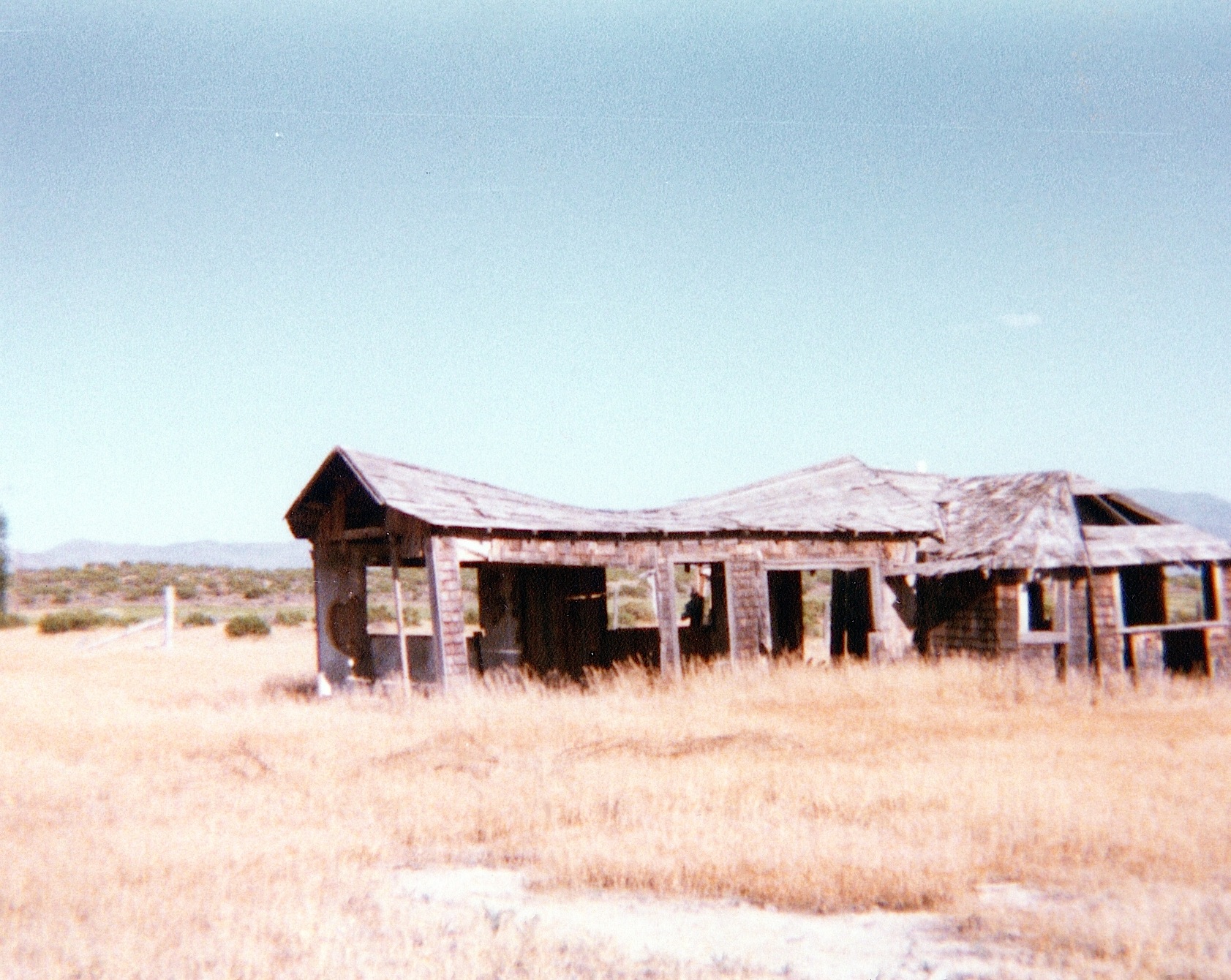
Alfred Montgomery (1857-1922) gave this name to his isolated home in eastern Honey Lake Valley. Montgomery was not your typical homesteader. He was a painter, and referred to as the “farmer artist.” It has been stated that his paintings of corn were so realistic that birds would swoop down and peck at his canvas. It was Montgomery’s intention to raise a variety of vegetables at this place, using them as subjects for future paintings. Montgomery was known for his itinerant ways, drifting across the United States, and sporadically residing at his Nowhere homestead from 1911, through 1919. Locally, Montgomery’s legacy to the region came in 1911 when he gave a lecture and art exhibition in Susanville—the proceeds established the art department at Lassen High School.

Another view.
Another view.

Support this site, Subscribe today.

Exploring Lassen County's Past