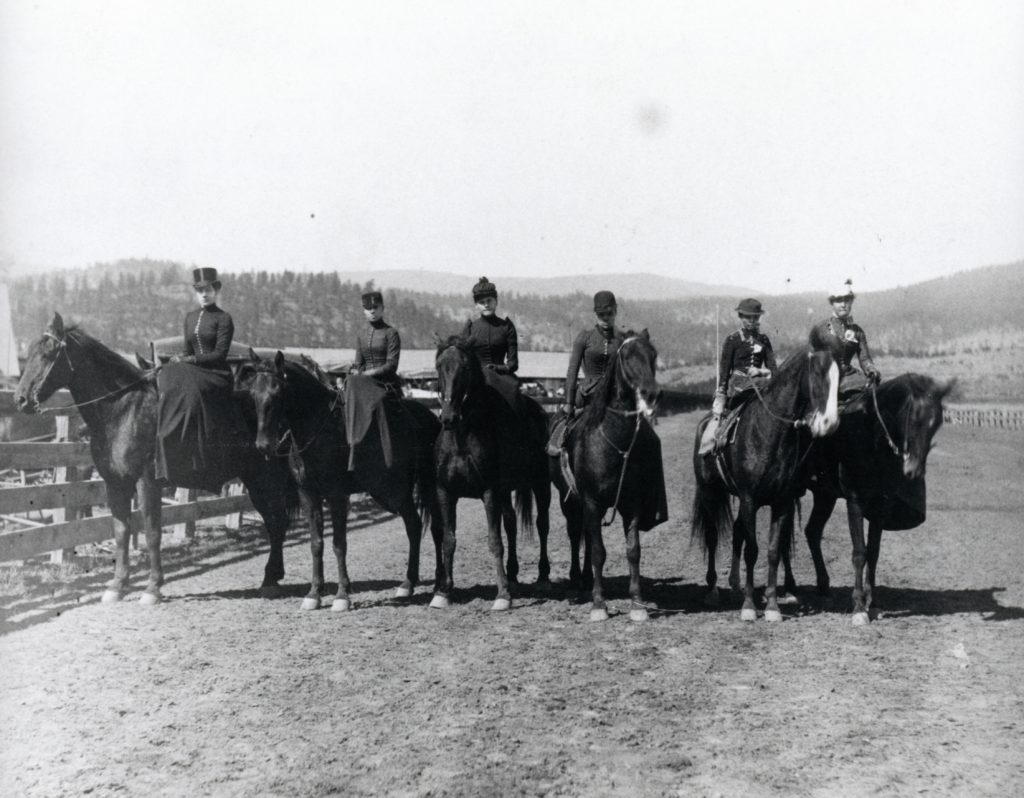
Believe it or not the first Lassen County Fair was held in the third week of October in 1878. It was sponsored by the Lassen County Agricultural Society as a venue to promote a fair to showcase livestock and farm commodities. It was an impressive five-day exposition. It was considered a success, with $2,750 in premiums paid out and receipts that totaled $3,728. The first fairgrounds was located in the vicinity of Grand Avenue and First Streets.
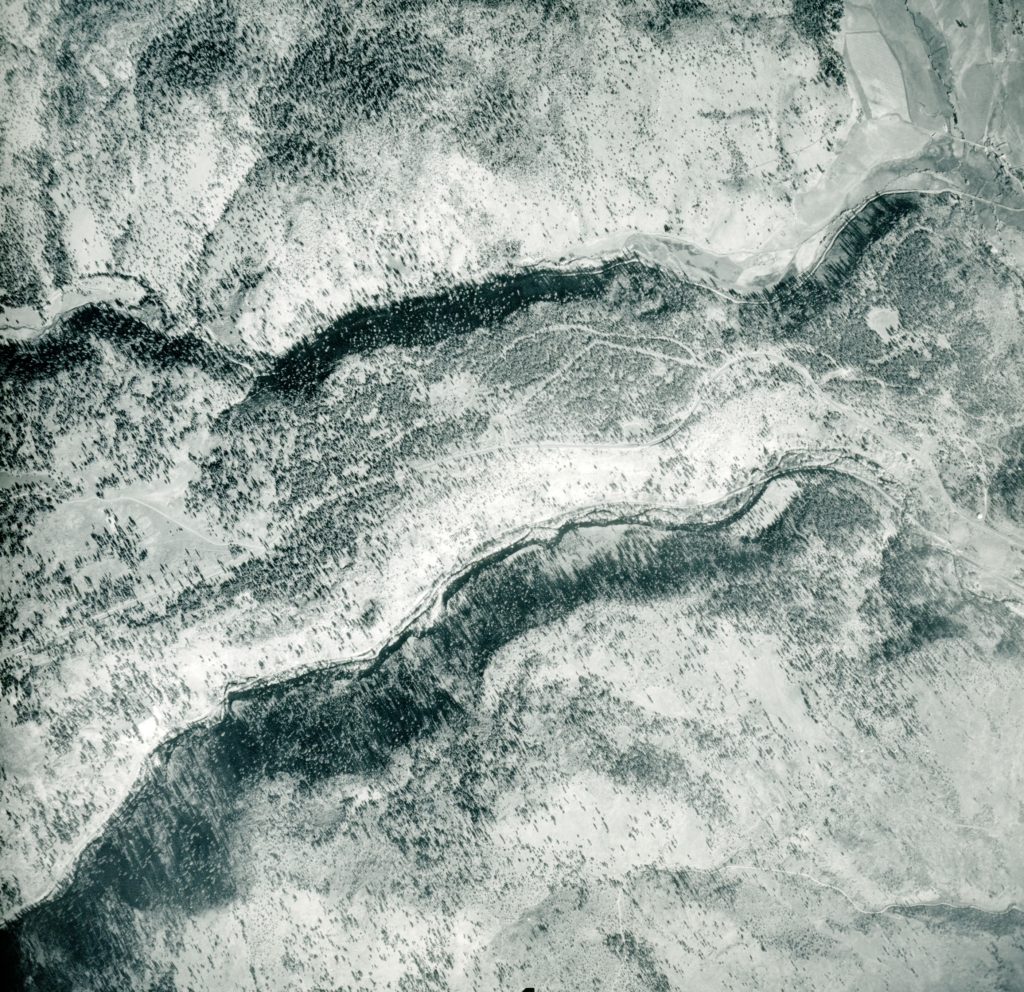
Piute Creek, upper, and Susan River, lower, just prior where the streams enter Susanville. Both canyon corridors had a railroad line at one time, though the Piute line was very brief. Personally, to me, it would have made better sense for the Southern Pacific Railroad to have selected to build its line to Westwood via Piute Creek. After all this would have eliminated the numerous trestles across the Susan River, plus two tunnels and would not had added any significant mileage increase.
Whatever the case may be, the two corridors today are popular with those who enjoy the scenery—whether by walking, running, biking, and horseback, or whatever means to explore nature.
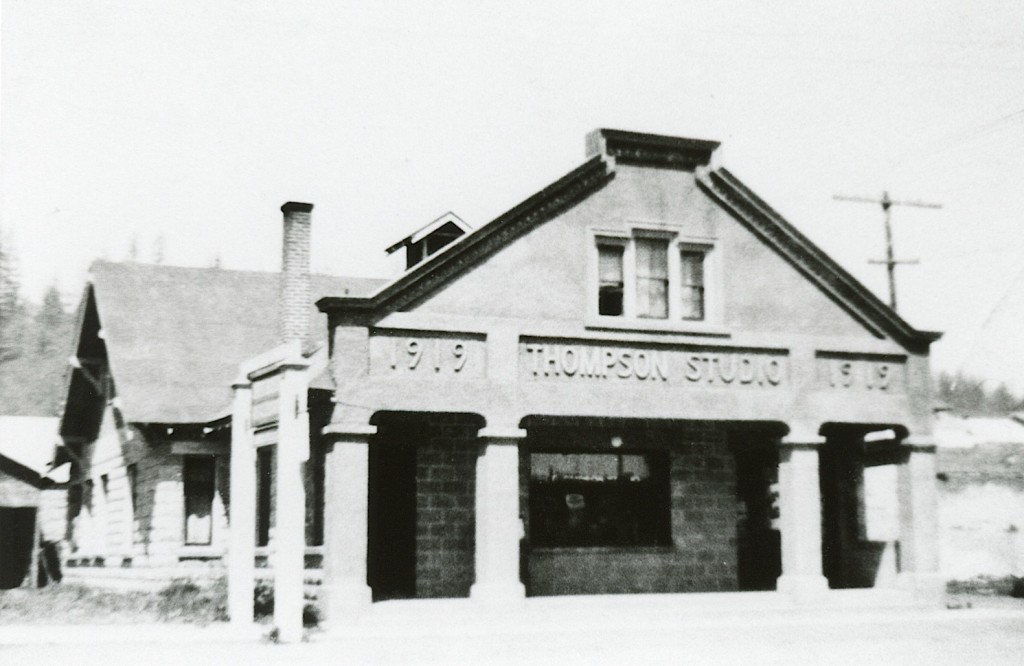
On this date, 100 years ago, a discreet cornerstone ceremony was held to commemorate the Thompson Studio building, located at 60 South Lassen Street, Susanville. P.J. Thompson, a photographer was a creative person and his dream come true building was not to be ignored. To mark the special occasion, a time capsule was placed in the cornerstone. It had been twenty plus years since the last time a time capsule was placed with the OddFellows Building, known today as the offices of Susanville Real Estate at the corner of Main and North Lassen Streets. One of the more unusual ones, was the installation of a time capsule in 1939, in the Cone residence in the Fruit Growers District. The last time capsule that I am aware of, was installed in 1973 as part of the cornerstone laying ceremony at Lassen College. To date, as far as I am aware, none have ever been opened.
View of Richmond Road January 1916 from Winchester Hill. Susanville looking towards McClellands.
Many may not realize that at one time there was a large commercial apple crop being produced in the Honey Lake Valley. Locally, the apple growers benefited when the Nevada-California-Oregon Railroad extended its line into the Honey Lake Valley, thus providing a better access to markets. One of those growers was W.M. McClelland. He estimated that during the 1891 season that 20,000 boxes of Honey Lake apples had been shipped to markets in Los Angeles, Sacramento and San Francisco. McClelland noted that the price received was one dollar for a fifty-pound box. In his opinion, the grower received one-half of that amount. That made for a nice tidy sum back then.
On a final note, in 1882 McClelland purchased sixty-five acres on the south side of the Susan River that was dissected by Richmond Road, the majority of which he planted an apple orchard.
Something from a different perspective. It is one of those items that you either recognize instantly or do not. These features do enhance the quality of life in the region.
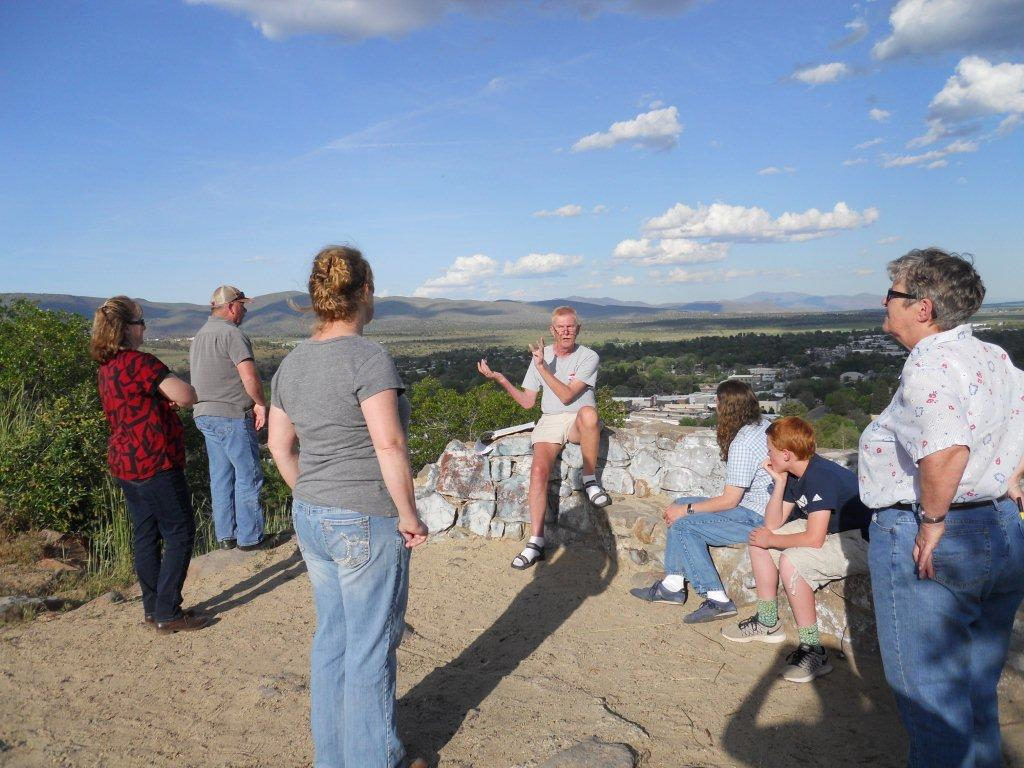
Susanville’s Inspiration Point is one of my favorite local spots. It also a place I like to take first time visitors to, so to get a better idea of the layout of the region, as there is so much to see. It has been awhile since I did an Inspiration Point tour, so may be this fall.
The following description is from the Lassen Advocate of March 31, 1892, that I thought some might enjoy:
“A Beautiful View. Any clear, bright day, when the atmospheric conditions are favorable, a lovely view may be obtained of the upper end of the Honey Lake Valley, from the bluff at the back of Susanville. With the unaided eye one my see steam arising from the Hot Springs on the shores of Honey Lake, fifteen or twenty miles distant and plainly distinguish familiar objects and residences more than half that distance. Amedee might be seen but for an intervening spur of the mountains to the east. The view from the bluff is well worth seeing. In no other way may one obtain such a comprehensive idea of the extent of the western or upper end of Honey Lake Valley while the beauty of the scene will more than repay climbing of the hill.”
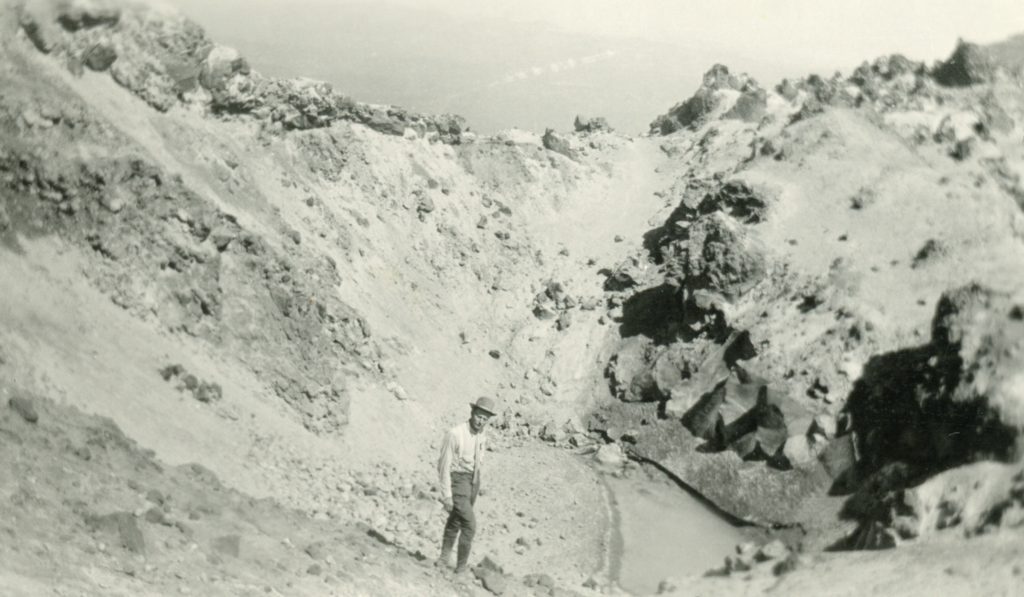
A. A. Warden standing on the edge of the Lassen Peak Crater, August 1923–C.R. Caudle Collection
On a quarterly basis, I ask you the reader, if there is something you would like to learn more about or maybe its something you heard, but question its validity. So here is an opportunity to participate. I will do my best to answer any questions. It should be noted, it may take awhile for the answer to appear as a post. The primary reason, many of the daily posts are done nearly a month in advance. So by the time you read this I am already working on posts for the middle of November, or at least I should be. Whatever the case may be, I look forward to hearing from you. Of course, it should be noted that paid subscribers requests receive priority. In addition, you can always send a request at any time.
More changes were on the horizon. Amedee was receiving a great deal of press in the numerous west coast newspapers. Besides the railroad, Amedee became the focal point of numerous reclamation projects to reclaim the vast sagebrush plain of the eastern Honey Lake Valley into a major agricultural hub. The railroad, of course, saw the potential. In January 1892, the railroad’s general manager, Erasmus Gest made a deal with developer Silas N. Griffith. In the contract it was stipulated, that not only a town plot be subdivided, but a grand hotel be built within six months. Gest had only purchased the proposed townsite from Brubeck, a few days before meeting Griffith for a bargain price of $150. On June 3, 1892 a grand opening celebration of three-story Hotel Amedee was held. Once Griffith was relieved from his contract, he began his search for potential buyers of the hotel. He did have to look far, and in September 1892, Brubeck purchased the hotel that had many amenities including twenty-seven guest rooms. While the 1893 national financial crisis did put a damper on things at Amedee, it was the most important rail shipping point for Northeastern California.
The good times would not last forever. In 1898, the railroad made it known that it would extend its line north to the Madeline Plains. When that occurred Amedee would lose its prominence as the terminus and there would be an exodus. In June 1900 the extension was completed. During the town’s hey day in the early 1890s it boasted a population of between 300 to 400 inhabitants. The population of the town at the dawn of the new century had dwindled to 49. To back up a little. In 1898, Brubeck placed the hotel for sale, with an asking price of $2,000 cash. For the longest time there were no takers. In the fall of November 1900 Brubeck purchased a 1,700 acre ranch in Contra Costa County and moved his family there. It was not until April 1901 that Brubeck finally found a buyer, namely Arthur P. Holland of Oakland, California. The transaction included the entire Brubeck holdings of the Hotel Amedee, bath house, rights to the hot springs, and approximately 100 acres. Holland planned to make the place into health resort and for Brubeck, a chapter closed and a new one had begun.
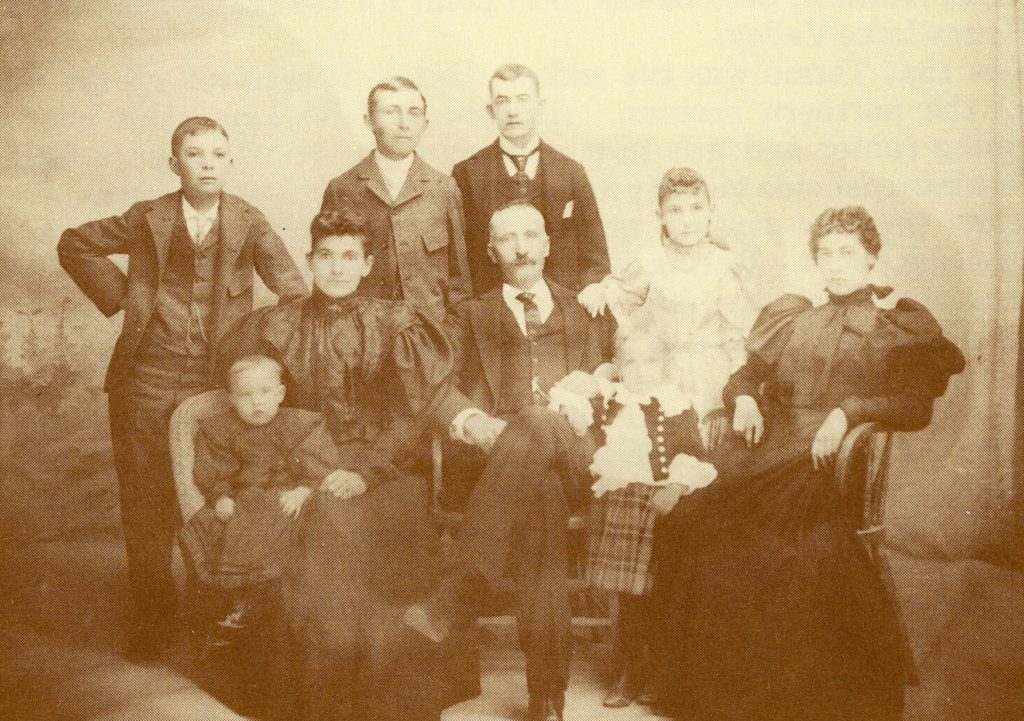
Lewis W. Brubeck Family. Standing (left to right) Pete, Phil and Will. Front Row (left to right) Edwin, Louisa, Lewis, Mabel and Edna. Courtesy of Leslie R. Brubeck
In 1873, at the age of twenty-one Philip Brubeck gave his son, Lewis a horse. Shortly afterwards, Lewis left his native Indiana and headed to California. His first stop was the Honey Lake Valley. He decided to stay for awhile and took up a homestead near the Mapes Ranch east of present day Litchfield. He became acquainted with his neighbors, especially the Grass household. On February 4, 1877 at Janesville Lewis married Louisa Grass, who was also a native of Indiana.
Like so many, Lewis was thinking the grass must be greener on the other side of the fence. In 1881, he purchased 151 acres from E.C. McKenney of Reno for $350. The property was located on the east shore of Honey Lake, and consisted what was designated at the time as Lower Hot Springs. No one had resided there since the Pearson Massacre of 1868. The first order of business was lumber for a house and fence posts for property improvements. This presented a challenge as the nearest sawmills were located a considerable distance away on the west side of the Honey Lake Valley. At Milford he had a raft constructed to float the lumber across Honey Lake to his new home.
Life was fairly uneventful there during the 1880s, though by the end of the decade Lewis and Louisa now had five children—William Andrew, Edna, Philip, Peter Howard and Mabel. In August 1890 the Brubeck family experienced a dramatic change in their lives. Located ten miles to the south was Leigan the terminus of the Nevada and California Railroad. Within a matter of months, the railroad extended its line north to Brubeck’s to become the new terminus named Amedee.
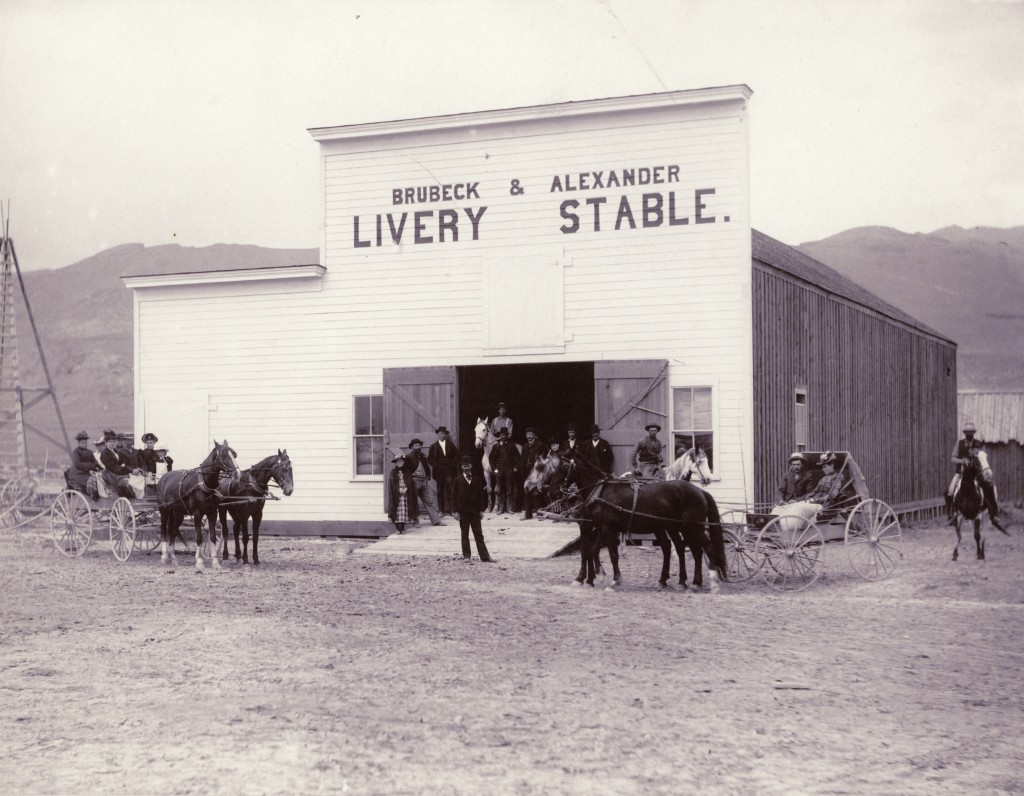
The first item of business for Brubeck was to move his house next to the railroad. Thus, he began the transition from rancher to an innkeeper. He was overwhelmed with business. In December 1890, Brubeck’s new Pioneer Hotel opened for business. The second floor contained eight guest rooms. On the first floor, there was a ladies parlor, two dining rooms, bar and the kitchen to feed the guests. He took advantage of the hot springs, and built a small bath house. Business was brisk. Brubeck expanded his horizons by opening a livery stable. Amedee was on the verge of becoming a “boom town.” Brubeck’s dining rooms were serving over 200 people day. He ended up using his livery stable as an overflow to his hotel.
This Amedee business partnership lasted less than a month. Courtesy of Tom Armstrong
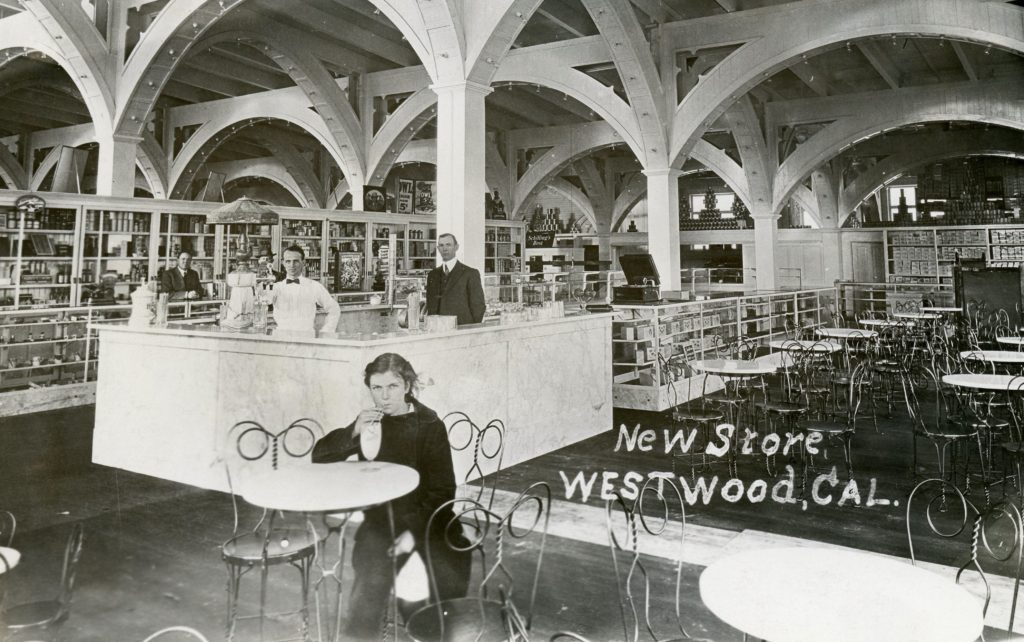
In 1935 Pland-Evans extended the operating hours of the soda fountain in the Big Store to 11:00 p.m.
Pland-Evans was certainly not a household name to many, unless you happen to reside in Westwood during the 1930s and early 1940s. This San Francisco company were “operators of industrial subsistence facilities.” When the Red River Lumber Company during the 1930s went through its re-organization phase they leased their commercial facilities such as the Big Store and the Westwood Club to Pland-Evans. Pland-Evans operated these facilities in Westwood, as well as the Walker Mine in Plumas County until 1942. At that time they were succeeded by H.S. Anderson Company.