Ever since the 1850s when Anglo settlement began in the Lassen region there would be reports from time to time of unusual noises being emitted, yet everyone pondered what it was and where it was coming from. Over time, many deduced it had come from the Lassen Peak region. An interesting account of such was reported on December 8, 1883 by the Susanville correspondent to the Reno Evening Gazette newspaper. The following is the published account of the same:
“For nearly a week a number of woodcutters some three miles west of town, have heard loud, heavy rumblings like distant thunder, or more properly like the firing of very heavy ordinance at a long distance away. The sound comes from a westerly direction, and as there is no mining or even an inhabitant for nearly a hundred miles in the direction from which the sounds proceeds, there seems to be no small amount of mystery connected with them. The sounds are heard at all times of the day and night and when not a cloud can be seen. Your correspondent has heard them in company of several others, every day for the past week and the only aparently possible solution of the mystery is, that the vast forces that formed Lassen Peak’s cinder cone and the other volcanoes to the west of here, and which have lain dormant for centuries, are once more coming to life and activity again.”
Spread the word, and encourage a friend to subscribe.
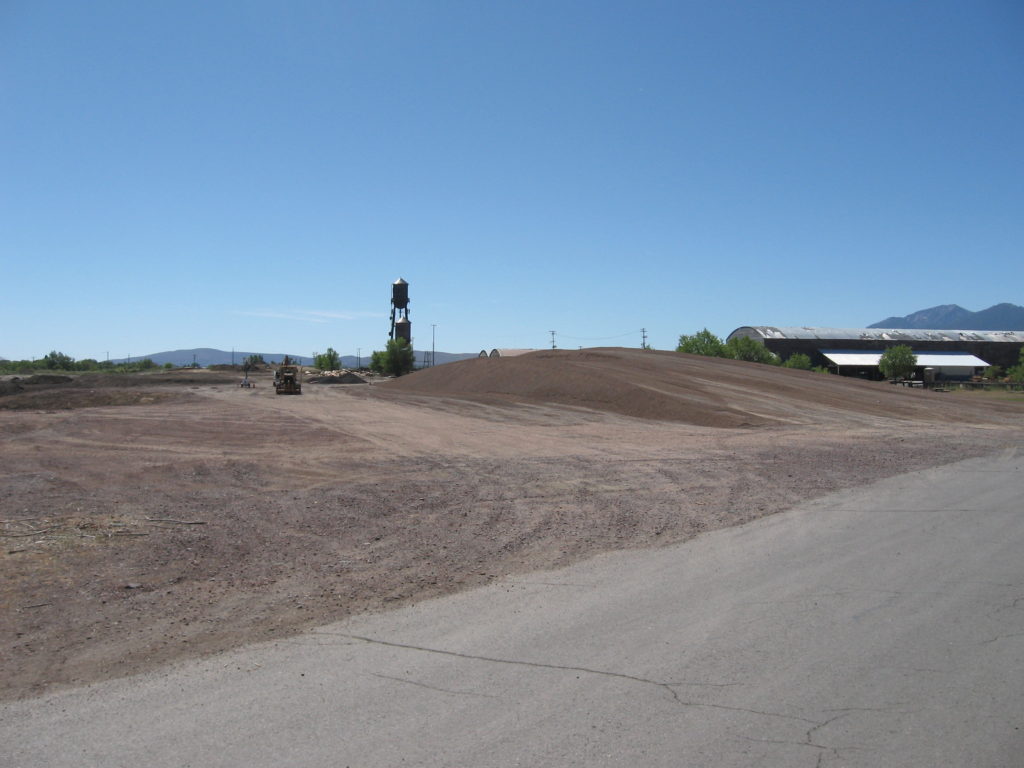
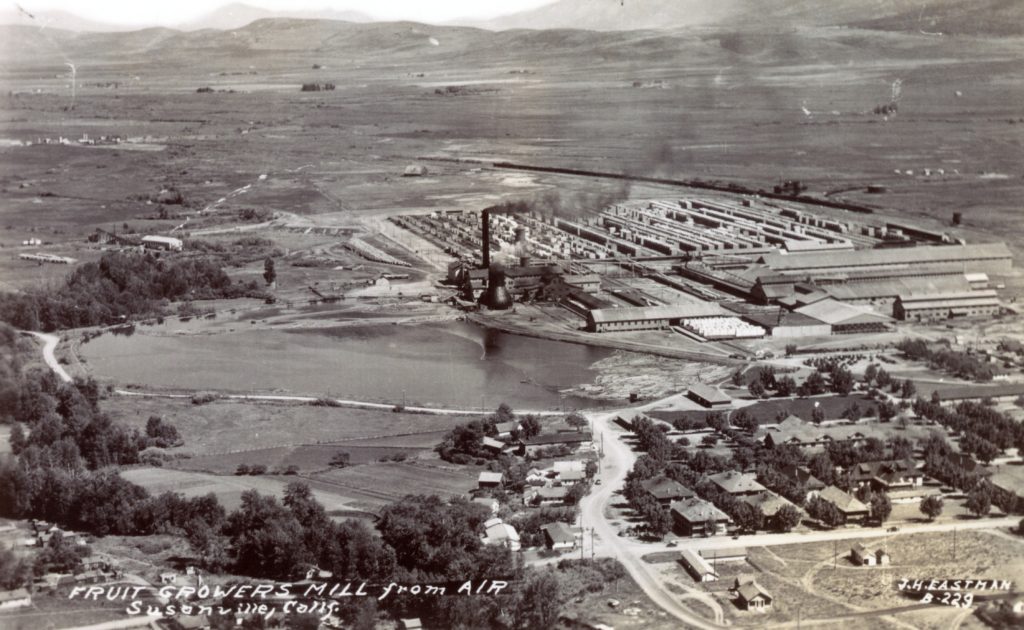
Locally, the $64,000 question has been what is going on with the excavation of the old Fruit Growers/Sierra Pacific millpond site adjacent to Riverside Drive. Some readers may recall that in the Spring of 2018 I wrote about the property being placed on the market by Smith Properties. The property falls under county jurisdiction. As it has been relayed the property is being prepared as a parcel split—a joint venture of Hat Creek Construction and Nobles Construction. However, certain procedures have not been followed. I will bring this matter up at Tuesday’s June 2, Lassen County Planning Commission meeting, since certain officials have not responded to my request.
Fruit Growers Supply Company, 1936
Spread the word, and encourage a friend to subscribe
Red River operated numerous logging camps from 1913 through 1944 when it sold to Fruit Growers. The camps were assigned numbers, though in no particular order. The majority of the camps were short lived and only had a span of one to maybe three years. One of the more interesting camps was Camp 33, but referred to as Town Camp, as it was located less than a mile west of Westwood. What made it unique was that Red River’s company town of Westwood would experience from time to time a housing shortage for its employees. On occasion, this camp was used to house mill workers instead of loggers.
Spread the word, and encourage a friend to subscribe.
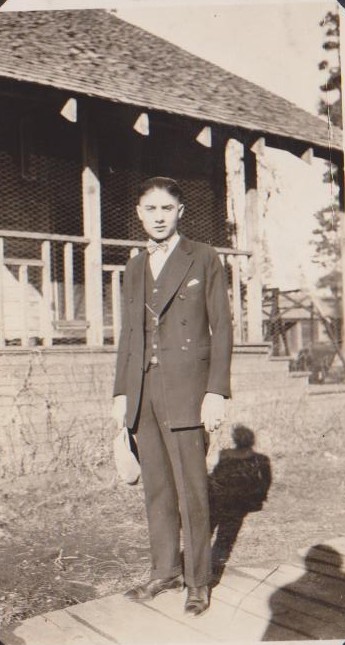
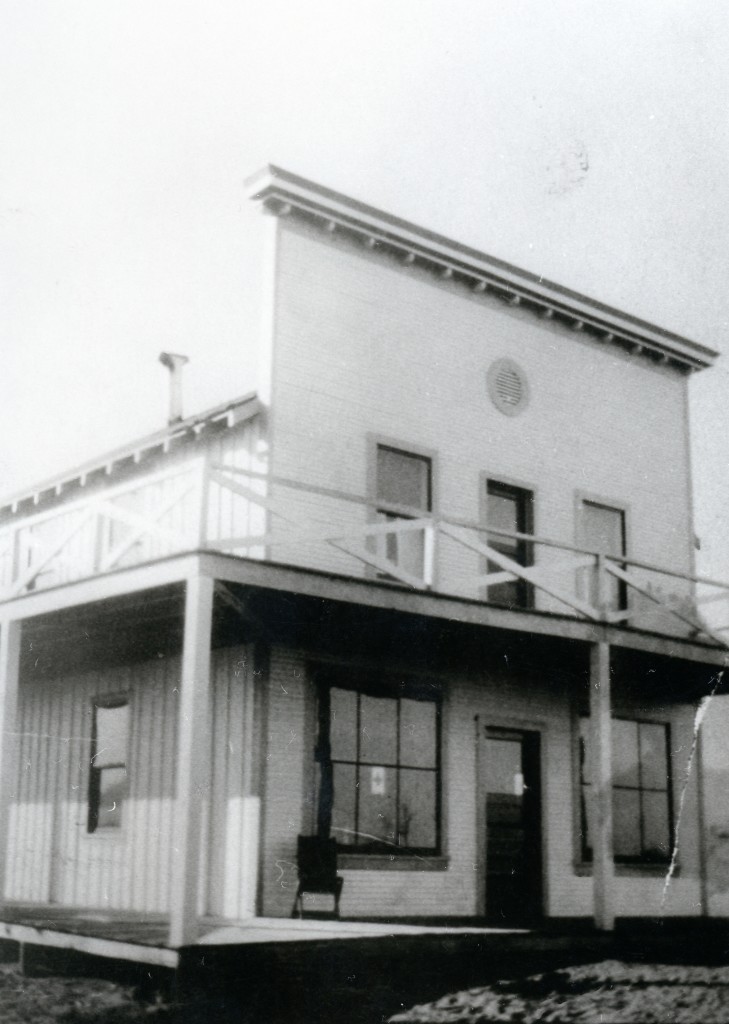
Unknown gentleman in front of the Old Town General Store, circa 1930s. Courtesy of David Zoller.
In 1922, the Red River Lumber Company announced that Westwood was to become a permanent town. Additional investments in community buildings commenced, such as a American Legion Hall and Masonic Hall. Across the log pond was Old Town home to large immigrant population. The residents of Old Town felt left out with no hall of their own. They, too, had their own fraternal organization the Centro Hispano Americano Society and desired to have a place to hold their functions.
In 1926, the residents of Greenville built a modest community hall for $2,100. This inspired the Old Town to do the same. They contacted Fletcher Walker, Red River’s resident manager, with a proposal to build a hall similar to Greenville’s and offered to pay half the costs. Fletcher took the matter of under consideration and on August 20 wrote to His brother, Willis Walker, part of the local management, about the topic: “The Mexicans and wops want a recreation hall similar to the one recently built in Greenville. The Old Town bunch are willing to dig up $1,300 which will cover the labor cost, and they have $1,000 of it in the Bank, if you are willing to build a building on this basis. “The way it stands they cannot take part in the recreations on this side of the Pond as the majority of them do not speak English. A Hall of this sort would make a place for their parties, dances, a Movie occasionally, and a general social center and they have a Fraternal Society organized so they feel competent to police, janitor and generally conduct the building so it will make a better place for them all to live, and as this common labor is quite essential to the Plant as they do work that the short staked Americans will not stay long enough as to become sufficient in it has a commercial value to us that it is hard to measure dollars and cents, but I believe is a good proposition to go ahead with.”
Willis was agreeable and wrote back, “If for amusement only and thus we could do this much to retain men and helps on labor turnover.” Archie Walker who constantly watched Red River’s bottom line wanted to know if they would receive any rent for the building, or were they just donating the use of it? What is rather remarkable while the Walkers quibbled about spending so little money to build this hall, they did not blink an eye when in the previous year they had spent over $100,000 to build and furnish the halls for the American Legion and Masons, as well as the Westwood Theater.
For the residents of Old Town, they were just pleased to learn that their request for a hall was approved. When completed they referred to their hall as the El Centro.
This is a topic that I plead total ignorance. By the early 1900s, Lassen County had small jails in outlying communities. Whether they were just temporary holding facilities, I do not know. The jails at Hayden Hill and Standish were nearly identical. They were not your typical structure. Instead of having vertical boards, they were placed horizontal, making for a very stout structure. The jail at Hayden Hill remained intact until 1991 when Lassen Gold Mining began mining operations there and what few remnants were demolished. The Standish Jail was converted into a storage shed for the Lassen County Road Department.
Enough said, since I got sidetracked from my original topic. In a letter dated from March 1, 1909, Standish resident, J.B. Leavitt, (I am not sure of his official capacity), wrote to the Lassen County Clerk, George Bassett: “Dear Sir: I am in need of some old quilts for the jail at Standish.” What is noteworthy, its the only documented reference I have for the Standish Jail.
Spread the word, and encourage a friend to subscribe.
Rayl was one of the many railroad communities wherein the the founder had grandiose plans. Rayl was located at the crossing of two railroads—the NCO and Western Pacific. It is now known today as Herlong. Initially, Stanley Rayl who took over the 40-acre parcel of the former town of Cromwell, had no plans, other than the initial construction of a combination store and hotel.
World War I changed Rayl’s perspective and he prepared an extensive study and lobbied that this location for a proposed military training camp. While not successful, his work was not forgotten and it laid the foundation of the Sierra Ordnance Depot. While the title of property indicated it was sold in 1942, to the Standard Electrical Signal Company for $1,000 the deal fell apart and reverted back to Rayl who died in 1945. In the meantime, the federal government condemned the property for use by the army for the Sierra Ordnance Depot. Rayl’s widow opposed the government’s offer of 10 cents an acre. What was interesting former Lassen County Assessor, Frank Wemple and Lassen County Surveyor T.W. Ogilvie testified on behalf of Mrs. Rayl. Wemple stated the county had it assessed for $2.50 an acre. Both Wemple and Ogilvie went one step further and stated it was actually worth $4.50 an acre almost double of the assessed valuation. It is not clear what the final outcome of what the widowed Rayl was finally compensated.
Spread the word, and encourage a friend to subscribe.
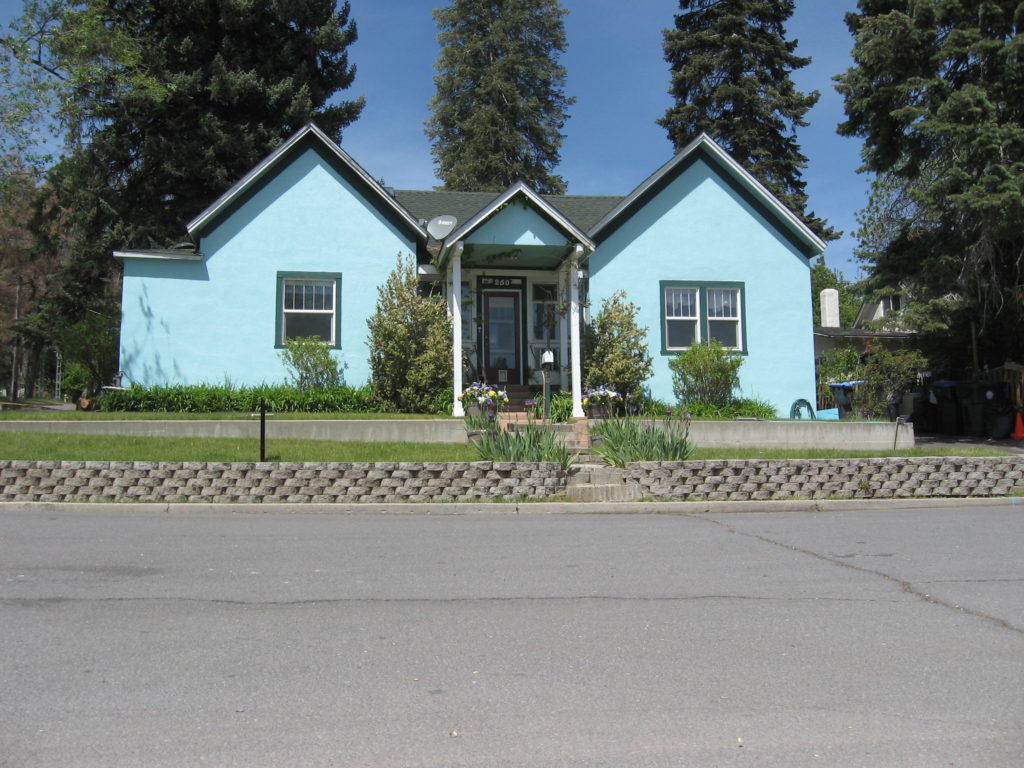
This is the first featured “mobile home” located at 250 South Roop Street, Susanville. It was originally located at 30 South Roop Street and was built in the mid-1870s. In July 1921, Dr. C.F. Compton acquired the residence and divided it into two sections—one side being living quarters, the other half his chiropractic office. In 1936, Compton sold the building.
In 1940, Cliff Gledhill purchased the property and he sold the house to E.W. Smith. Smith hired Baker McQueen to move the house to its current location. Gledhill had a cement building constructed on the old site and on May 22, 1940 it opened as a Western Auto Supply Store.
Spread the word, and encourage a friend to subscribe.
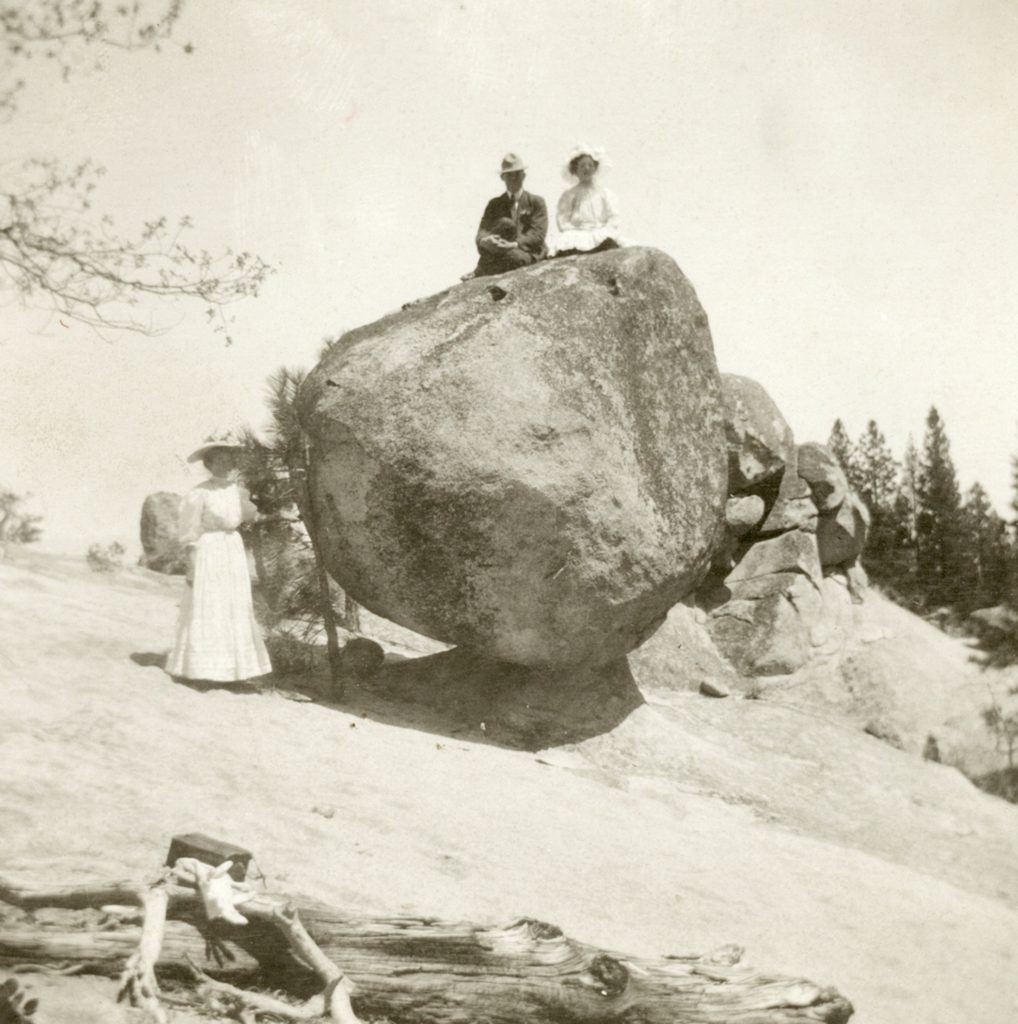
Balancing Rock, circa 1905. Courtesy of Marge C. Foster
There are many interesting natural formations that can be found throughout the region. After all one only needs to take into consideration that near Susanville four major geographical land masses merge—Sierra Nevada Mountains, Cascade Range, Great Basin and the Modoc Plateau.
Some features are well known, while many are not. Balancing Rock located near the summit of Janesville Grade was a popular spot in the early 1900s to have one’s photograph taken. During the summer months then, Janesville Grade saw a lot of traffic with residents of the Honey Lake Valley headed towards the higher elevations to relax and get away the summer’s heat.
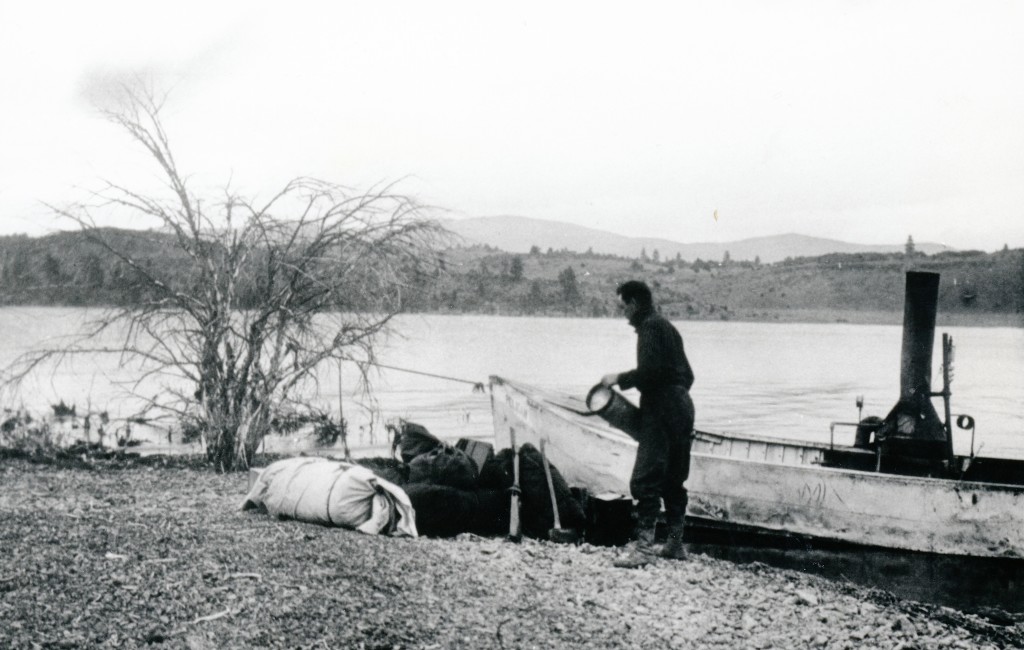
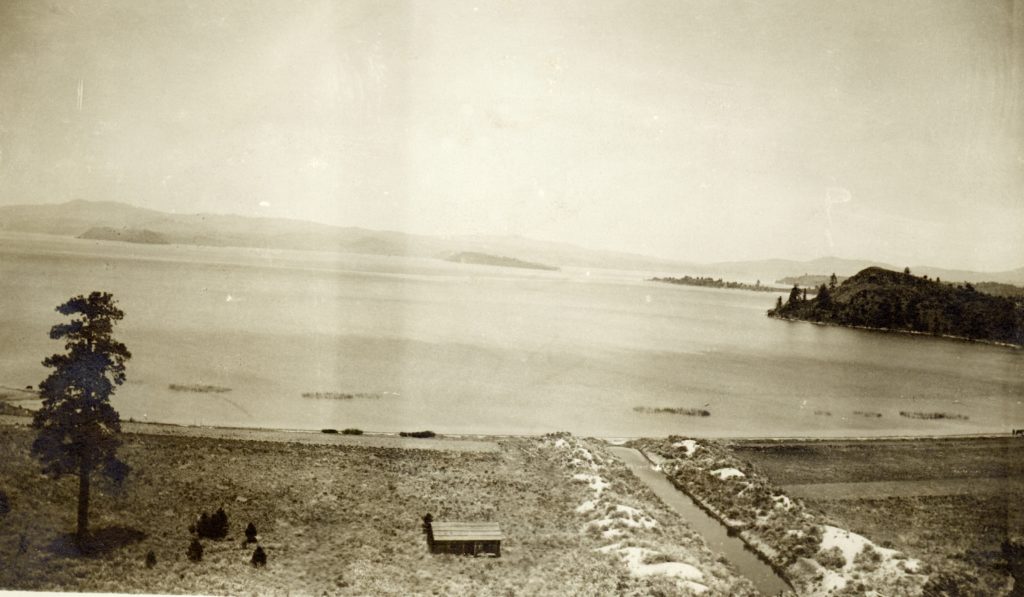
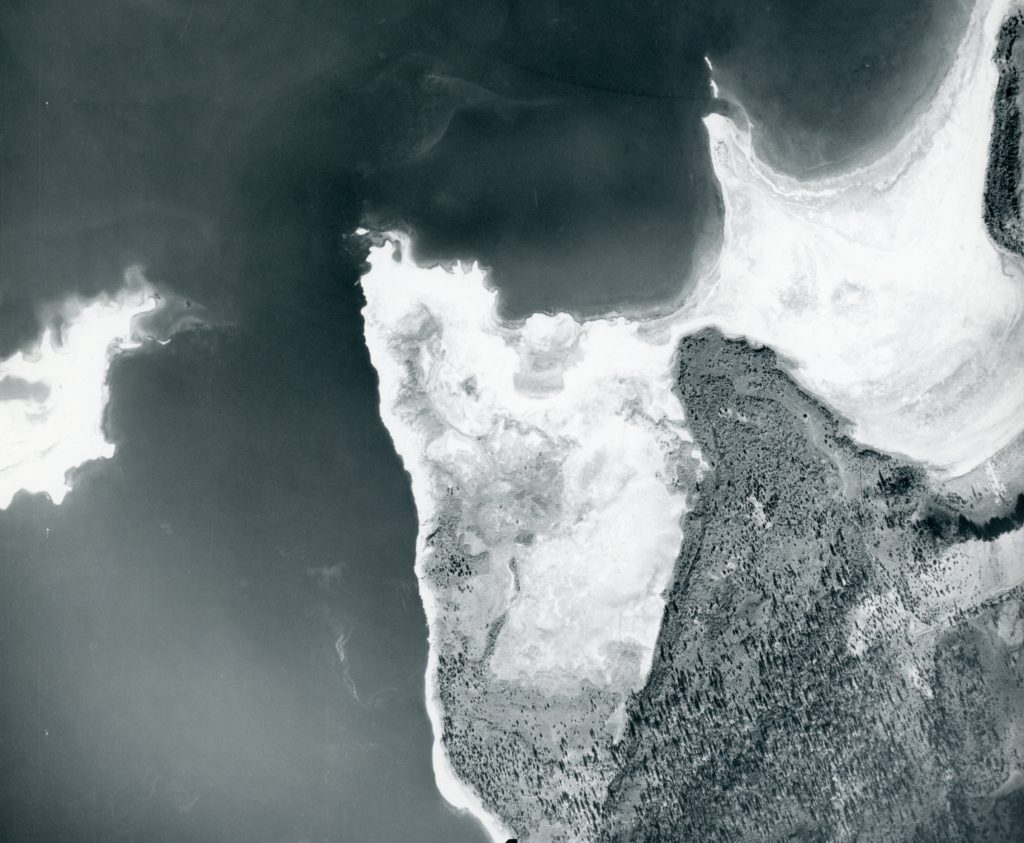
Dodge’s Bay or Tunnel Bay was located on the east side of Eagle Lake about a mile north of Bly Tunnel. This was to be the initial inlet to Capt. Merrill’s 1875 tunnel and work on it was focused on the Willow Creek side. In 1892, the Eagle Lake Land & Irrigation Company embarked on ambition plan to tap Eagle Lake. The began working on Merrill’s tunnel from both sides, as one can see the inlet in the above photograph. E.R. Dodge was one of the principal figures behind the company hence the name Dodge’s Bay.
No water in the bay when this was taken on November 8, 1941. One can barely see the intake canal. Photograph courtesy of Hank Martinez