Times change, and what was once useful has served its purpose—old agricultural barns being one. Gone are days when hay bales were stacked in barns by hand—one summer of that was enough for me and went back out in the woods logging. Anyhow, with new equipment for haying and baling, also witnessed new metal barns eliminating the need of manual labor.
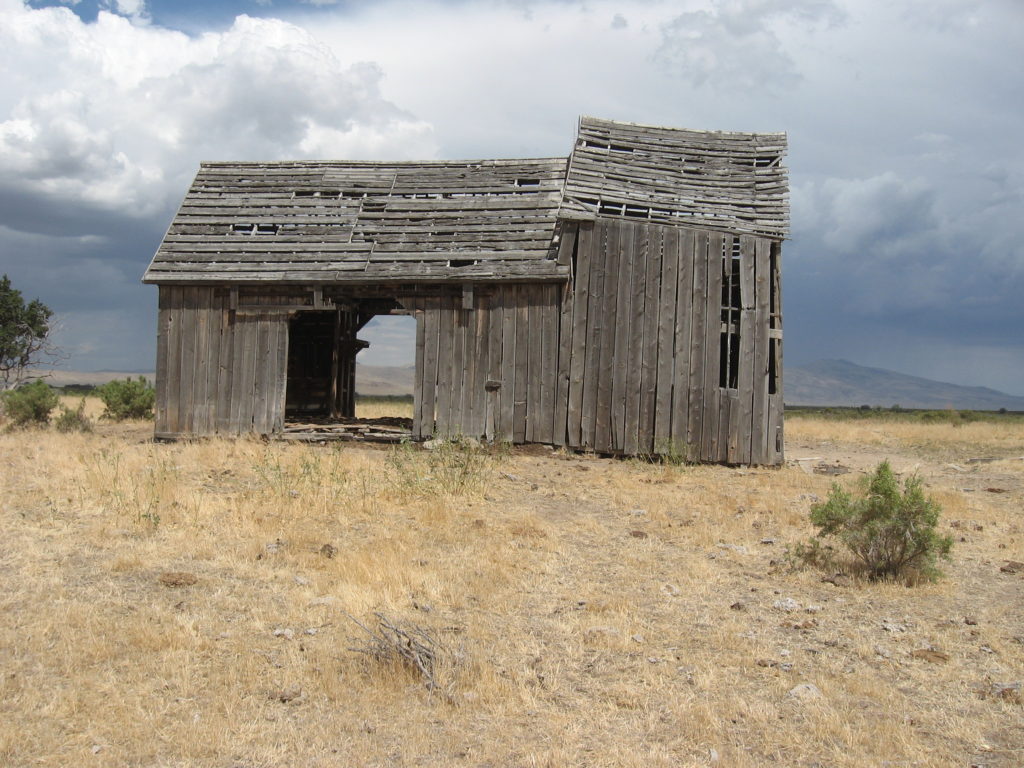
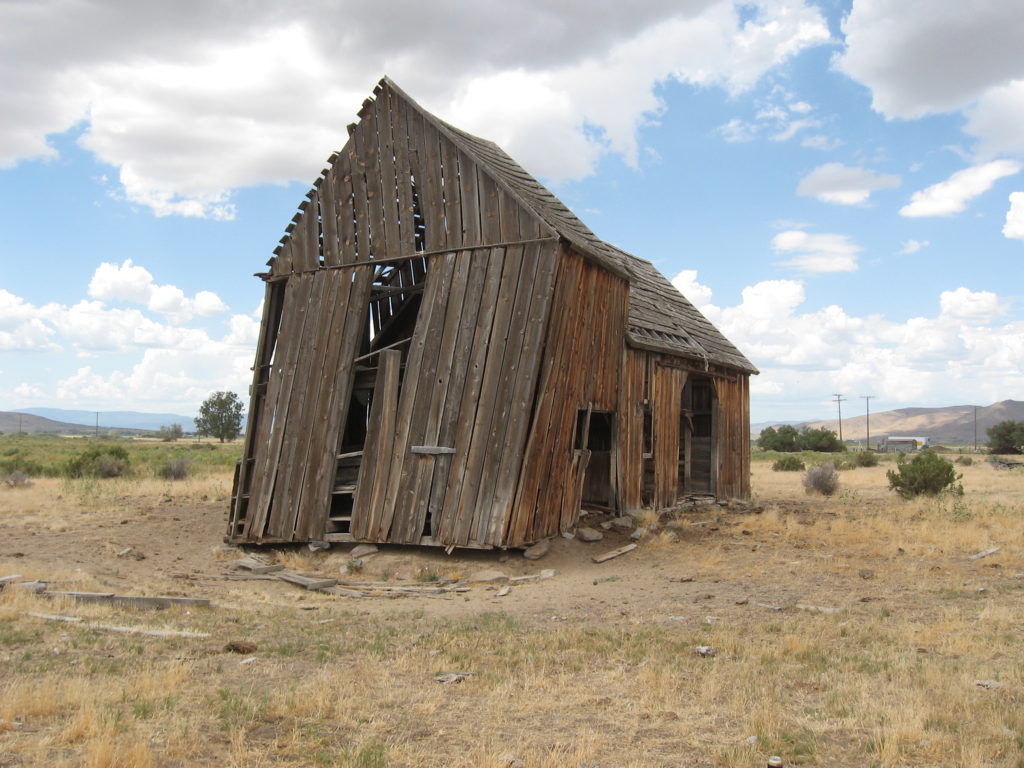
The Hartson barn depicted is adjacent to the Dakin Unit of the Honey Lake Wildlife Refuge. Built in the mid-1880s it is distinct from other barns with its breeze way. The southern end, whether it was an add on, is not known. What is interesting the lumber is twenty feet in length, no doubt came from the Cornelision sawmill at Janesville.
Hartson Barn, July 26, 2019
As one can see from this view, the foundation on the south side of the barn has eroded. It is just a matter of time when this relic of the past is no longer.
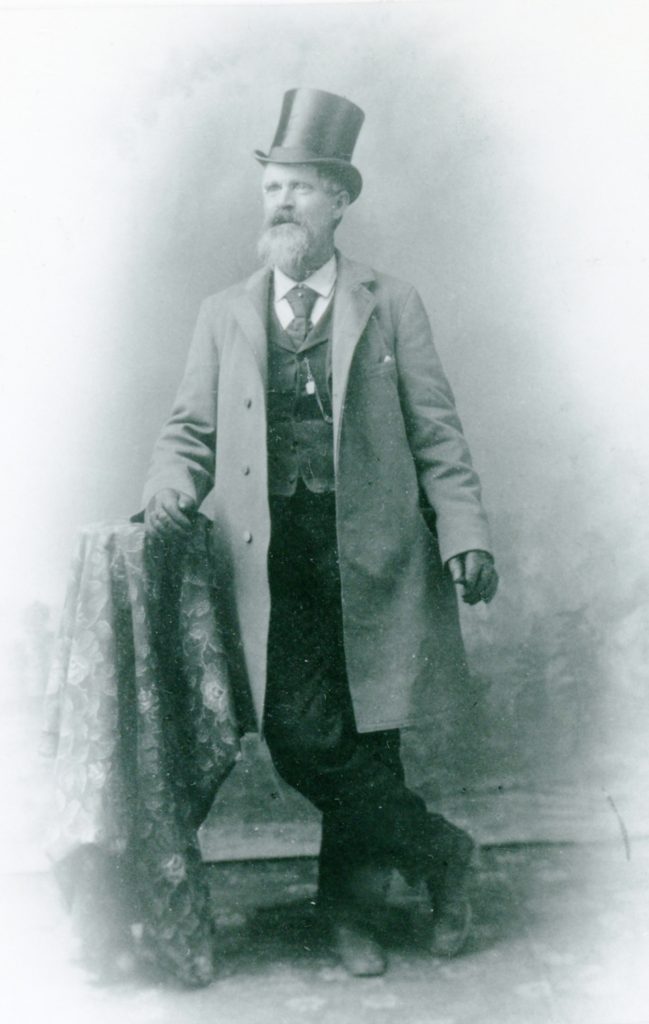
Benjamin Hanson Leavitt – Courtesy of Betty Barry Deal
In what seems like another life time, when I began my research, I interviewed many people on a regular basis. When I look back, there were quite a few individuals who were born in the 1880s. One of those was Alphozene Perry Terril, a granddaughter of Ben Leavitt (1835-1915). Leavitt is considered the father of the Susan River Irrigation System, best known today as Lassen Irrigation District. It began, in 1875, when Leavitt constructed a small reservoir, east of Johnstonville, known today as Leavitt Lake. One of the interesting anecdotes Alphozene relayed to me about her grandfather, was on occasion she made him breakfast—it consisted of two raw eggs put in a glass of rock & rye whiskey.
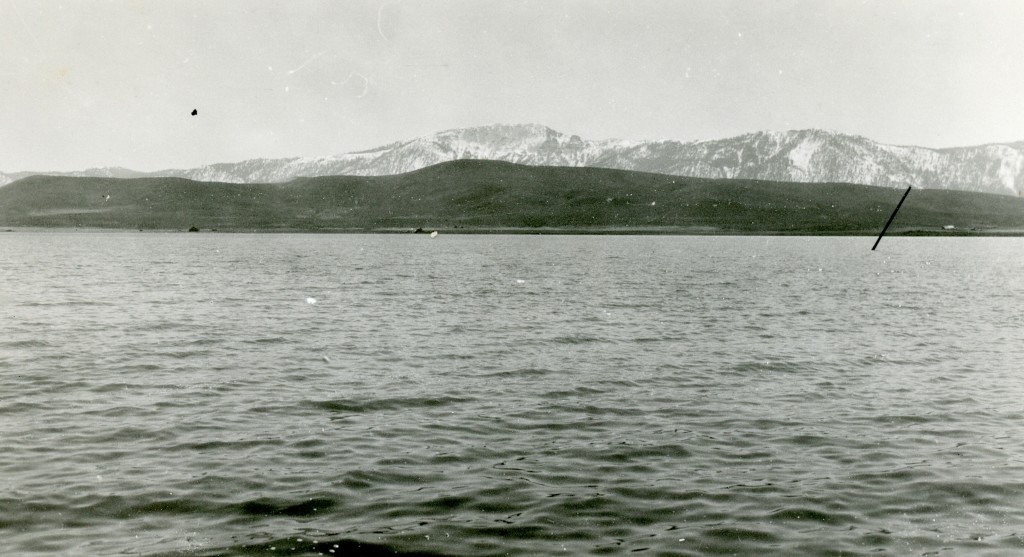
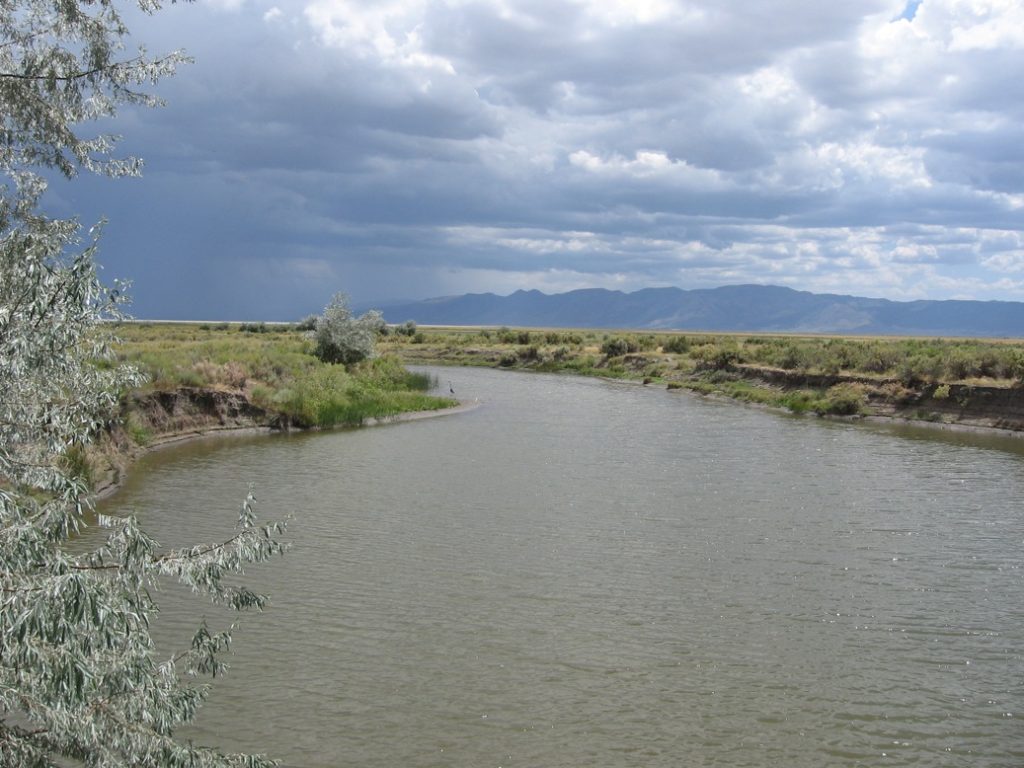
Whitehead Slough, with Honey Lake in the background, July 26, 2019
After the Susan River passes near Standish it breaks up into sloughs, some are natural and others man-made like Hartson Slough. The Whitehead Slough was named for John Wesley Whitehead (1845-1939) who relocated from Pyramid Lake in 1886, and settled along the banks of this slough, which is located between the Dakin and Fleming Wildlife Units. In 1920, he retired to Pacific Grove, California, which was also known as Honey Lake Heaven, since so many people from the Honey Lake Valley retired there in the early 1900s.
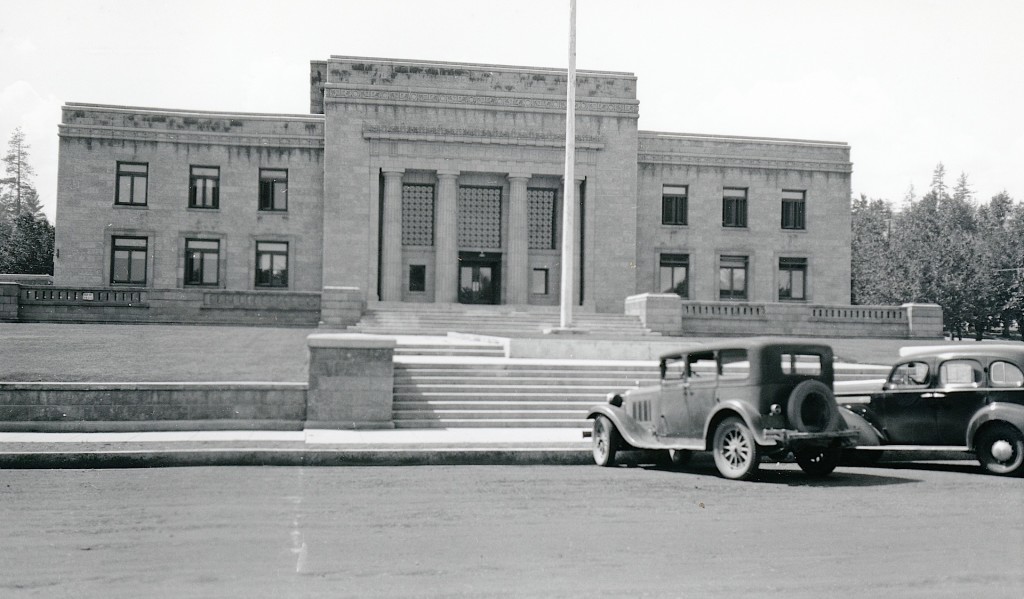
Lassen County Courthouse, 1938. Courtesy of Jere Baker
This being the day after Christmas, I am checking to see if I have anyone’s attention. One of the questions I am asked from time to time, is where I received my education after graduating high school. After all, that is a turning point in a young persons life, with a variety of options—community college, university, trade school or the school of hard knocks. I accidentally stumbled on an entirely unique venue for a very different kind of education and enrolled at the exclusive Menopause Manor housed in the second floor of the Lassen County Courthouse. In my initial quest to research the local history all paths led to the courthouse to examine the original documents. One of the main repositories is that of the County Clerk’s Office. Little did they know that on fateful first visit, that I would return daily like the proverbial bad penny. After awhile they finally took me under their wings, while for several years they put up with my relentless questions. What I learned from these wonderful women, how the court system functioned, county government and a myriad of things in between one cannot obtain through the traditional educational system. My thanks to Jackie Fuller, June Nelson, Betty Hibbs, Sue Farstad, June Moller, and, of course, the Manor, had to have male token, my old side-kick Bruce Dyer.
Alas, I do not have a Christmas story today. It should be noted for the record that prior to 1900 a community Christmas tree was placed inside Susanville’s Methodist Church.
Susanville’s Methodist Church, circa 1896. Courtesy of Philip S. Hall
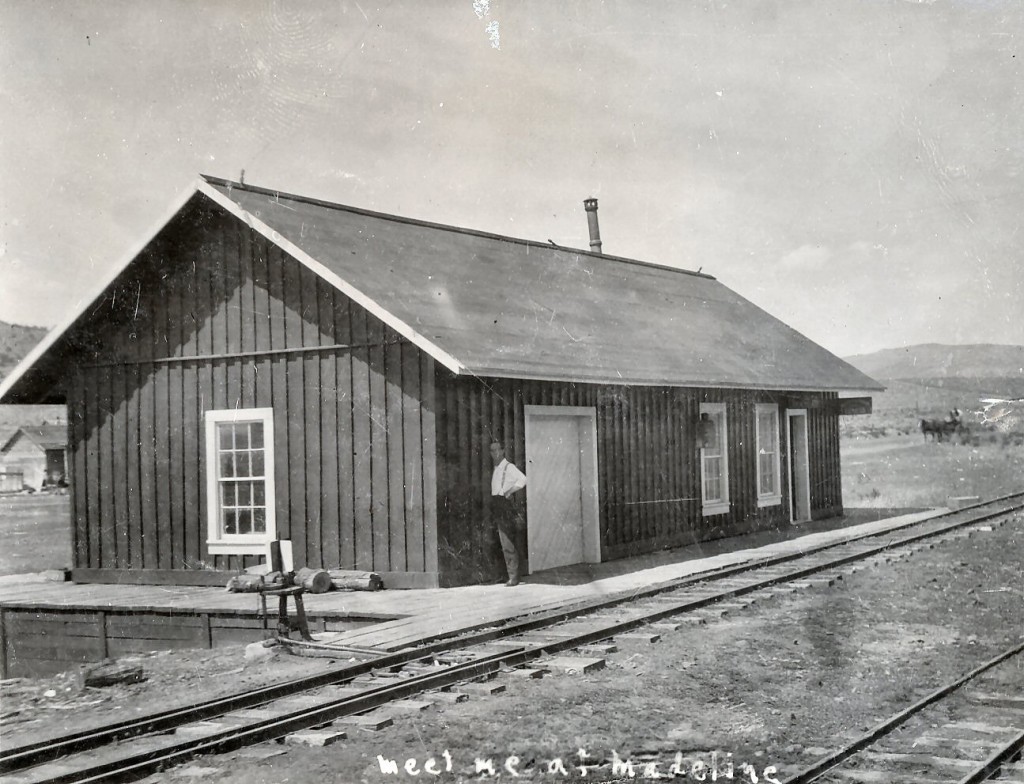
In the early 1900s the Madeline Plains was home to numerous desert homesteaders. It turned out for many to be a hardscrabble existence, not what they were promised by the developers.
Life on the plains can be challenging. A menace there were jackrabbits. In 1920, the residents wrote their Congressman John E. Raker for assistance and explained the situation. They reported: “As soon as the crops are up and making good progress the rabbits begin work on them. The heaviest damage is done during August. One rancher reported losing 100 acres of wheat last summer. They take this crop in preference to oats and rye. It was reported that 70 tons of rabbit meat [to make tamales] had been shipped last season to the San Francisco market. It appears that the animals cannot be killed fast enough in this region to furnish relief to the ranches.” That is not a typo, 70 tons—the rabbit population had to be epic.
Now to the tamale part. It is not clear who came up with idea of jackrabbit tamales. Don Garate in his history of the Madeline Plains wrote: “Oh they did not make any great deal of money by hunting jackrabbits, but it made a little cash for spending. What they did was to kill the creatures and ship them to the Crown Commission Company in San Francisco, where they were made tamales out of them. The Crown Commission Company paid as high as four dollars a dozen for them. After shipping and handling charges had been taken out by the railroad that left the hunter about two dollars a dozen.
“Two dollars a dozen does not sound like much, but money was real scarce in those days and it did not take long to knock over a dozen of jackrabbits. They would shoot the animals, gut them and put them in gunny sacks. The rabbits would freeze solid in the sacks. Then when they had enough, or after awhile when someone was going to town, they would haul them to the railroad depot.
“The sacks full of rabbits would pile up on the dock at the depot until there was enough to make a shipment on the train. After a couple of weeks, a check would come back in the mail from the Crown Commission Company for each person who sent in a shipment of jackrabbits.”
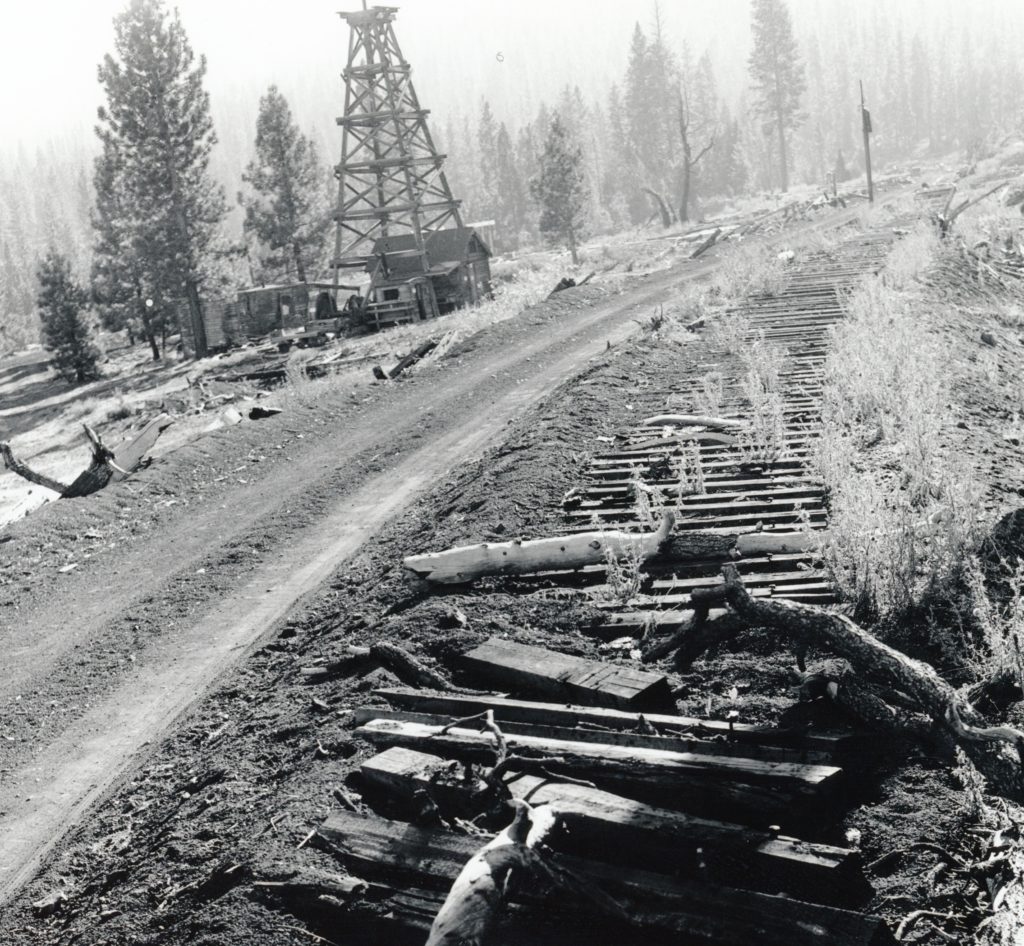
The railroad bed converted into a road at Camp Harvey. Courtesy of Hank Martinez
In 1942 this railroad logging line had its origins at Halls Flat, near Poison Lake, headed into an easterly direction towards Harvey Mountain. By 1949, its entire length was just a bit over forty miles ending near Slate Mountain. When the culinary workers at the two logging camps along the line—Harvey and Stanford—went on strike in the spring of 1949, Fruit Growers Supply Company who operated the line decided to shut it down permanently. It was not a drastic action as it appears. They were approaching the end of their timber. In addition, company officials, stated the remaining timber could be removed from and shipped from its Camp 10 line as it approached Upper Gooch Valley. After all, the Harvey line and Fruit Growers Main line that serviced Camp 10 were within two miles of each other.
North Roop Street, circa 1914. Courtesy of Phil Long
This is just one of those random thoughts to invade my mind during my recovery. It has to do with when a town plat for Susanville that was made in 1863. Roop and Weatherlow Streets need to be reversed. This has to do with logic. Captain William Weatherlow lived at what became the end of North Roop Street. On the other hand, Isaac Roop who laid out the town originally resided on what became North Weatherlow Street.
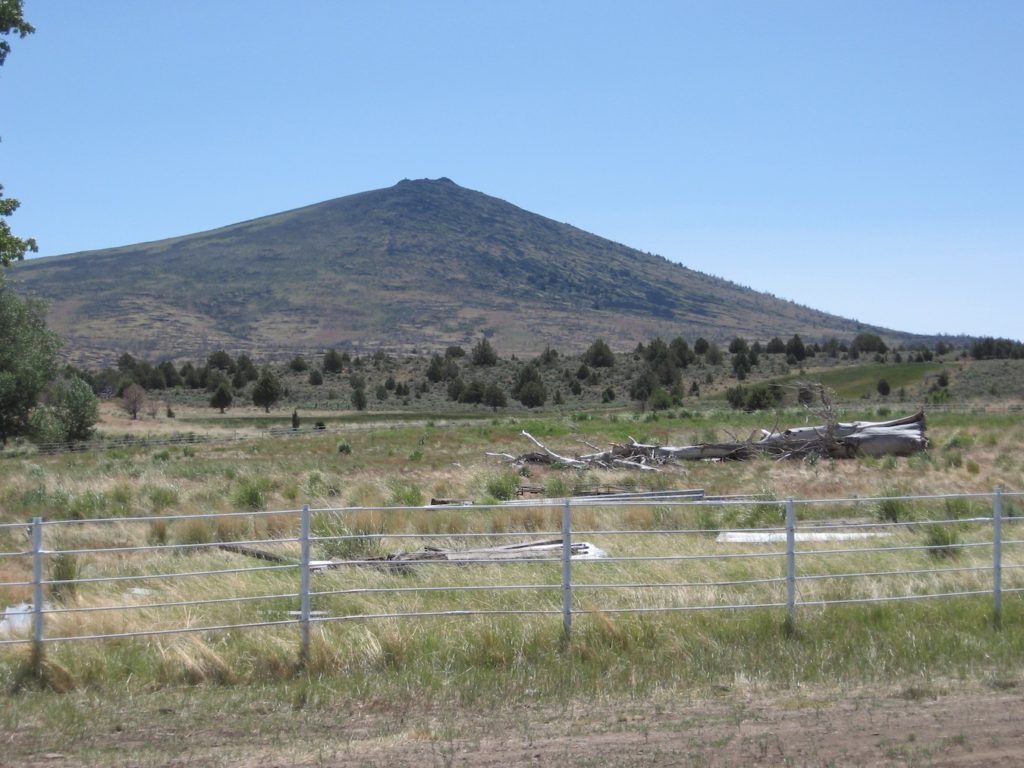
Located on the south side of the Madeline Plains, the Paiute Indians referred to it as Toka kudzi ni roughly translates into Black Peak.
Observation Peak, elevation 7964’, was so named for the views afforded from there. On September 29, 1850 J. Goldsborough Bruff and Isadore Meyerwitz climbed to the top. Atlas Fredonyer had visited there in the summer of 1850 and noted the peak by its name. On June 22, 1854, members of Lt. E.G. Beckwith’s party in search of a transcontinental railroad route climbed the peak. The mountain is sometimes referred to as No. 7. On the southwest flank there is a volcanic rock formation in the shape of the number seven that can be seen clearly as far away as Leavitt Lake.
The Lassen Flouring Mill, 1901. Courtesy of the A.J. Mathews family.
In September 1918, M.A. Taylor of Oakland purchased the old flour mill known to many as Hall & Synder. It was built in 1864 and was the center piece of Johnstonville. Taylor had no interest to operate it. Due to World War I machinery was scarce and that what was his intention for the acquisition. For the old timers seeing the landmark dismantled was one of the many changes the region experienced during its transition into a major lumber manufacturing center.