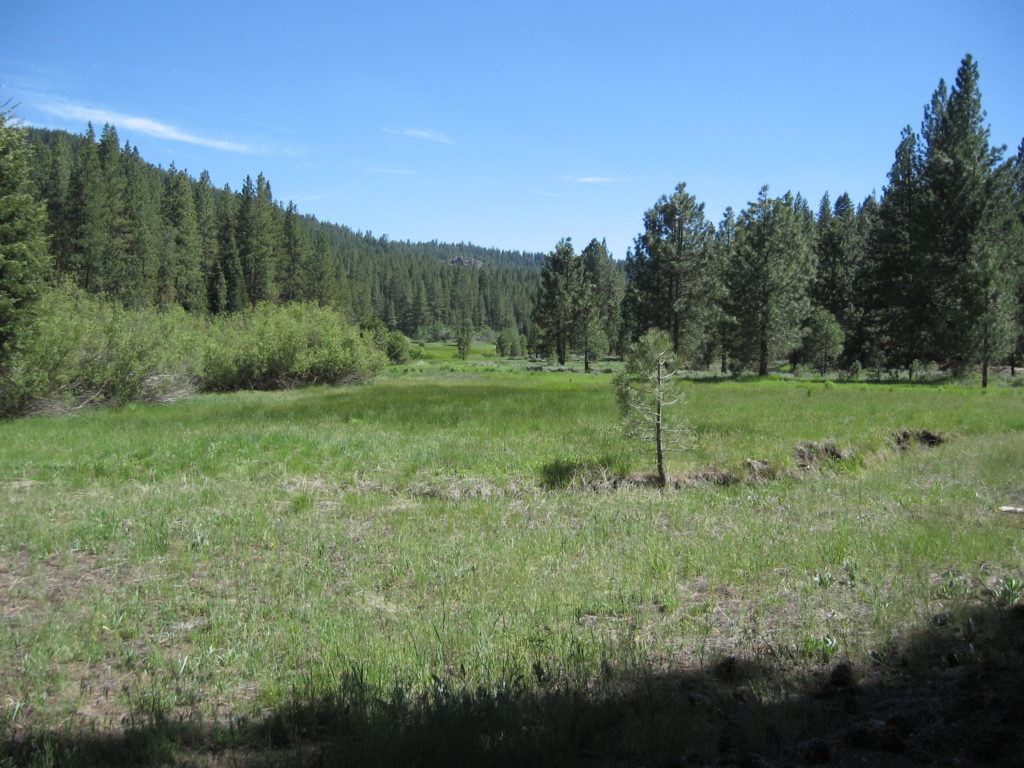
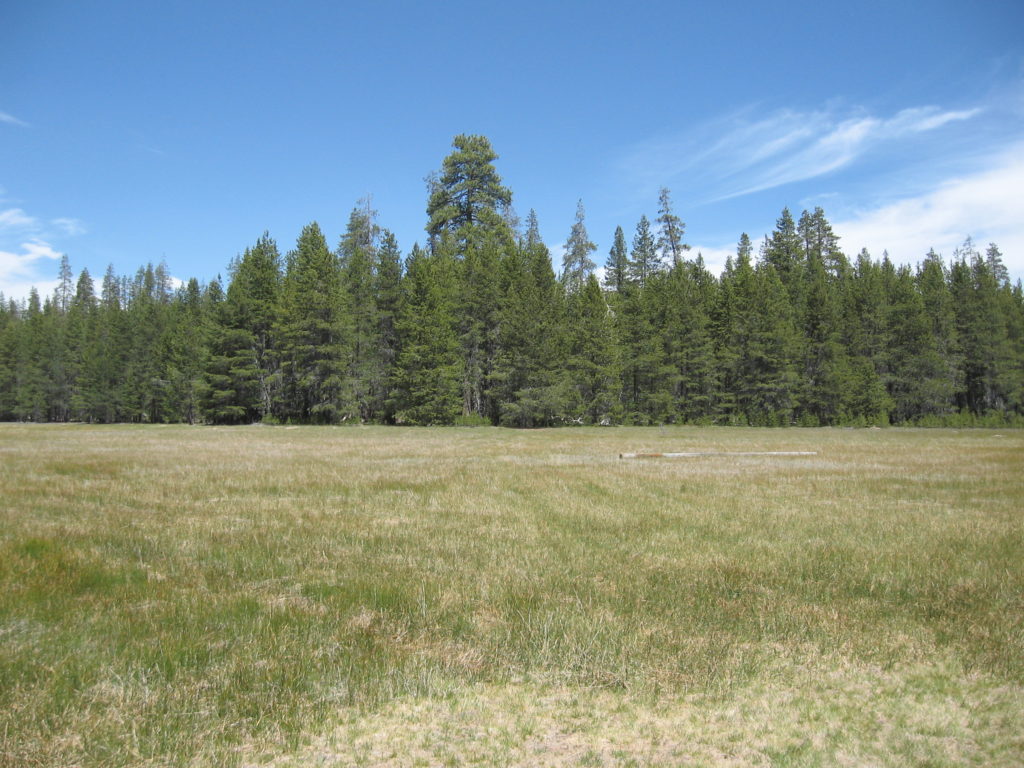
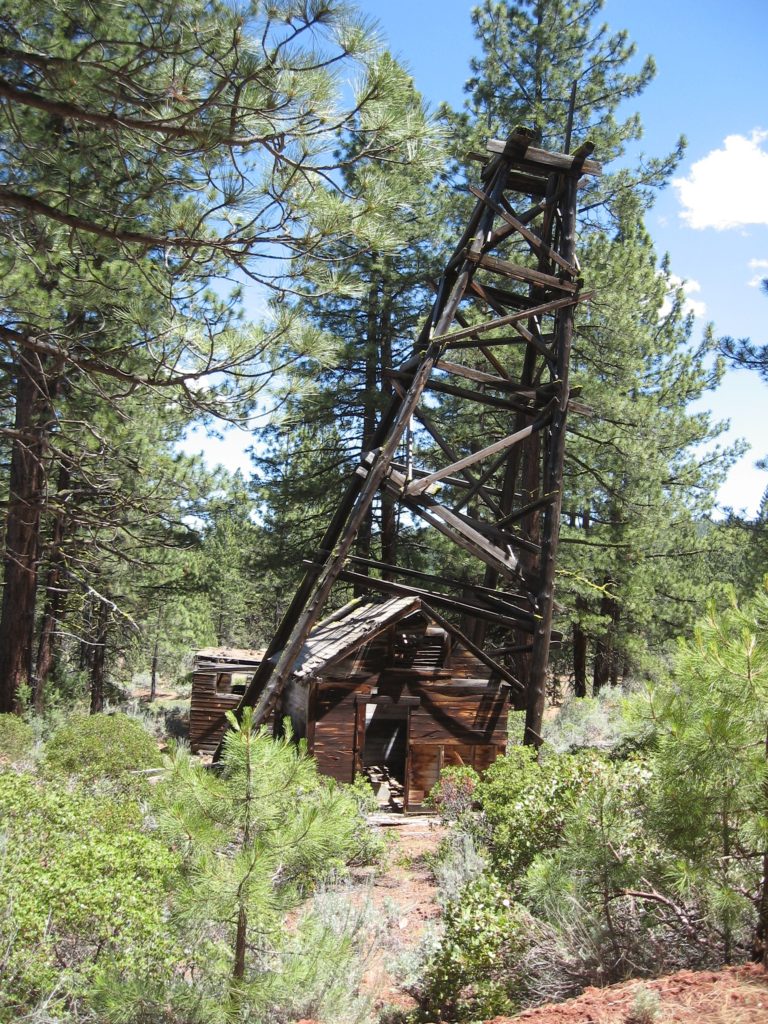
There are so many picturesque nooks and crannies in this region, that are really not very far off the beaten track. Yet, at the same time rarely visited. Of the various times I have been to this place, I have never encountered another person. One would think otherwise, the location being between Susanville and Westwood.
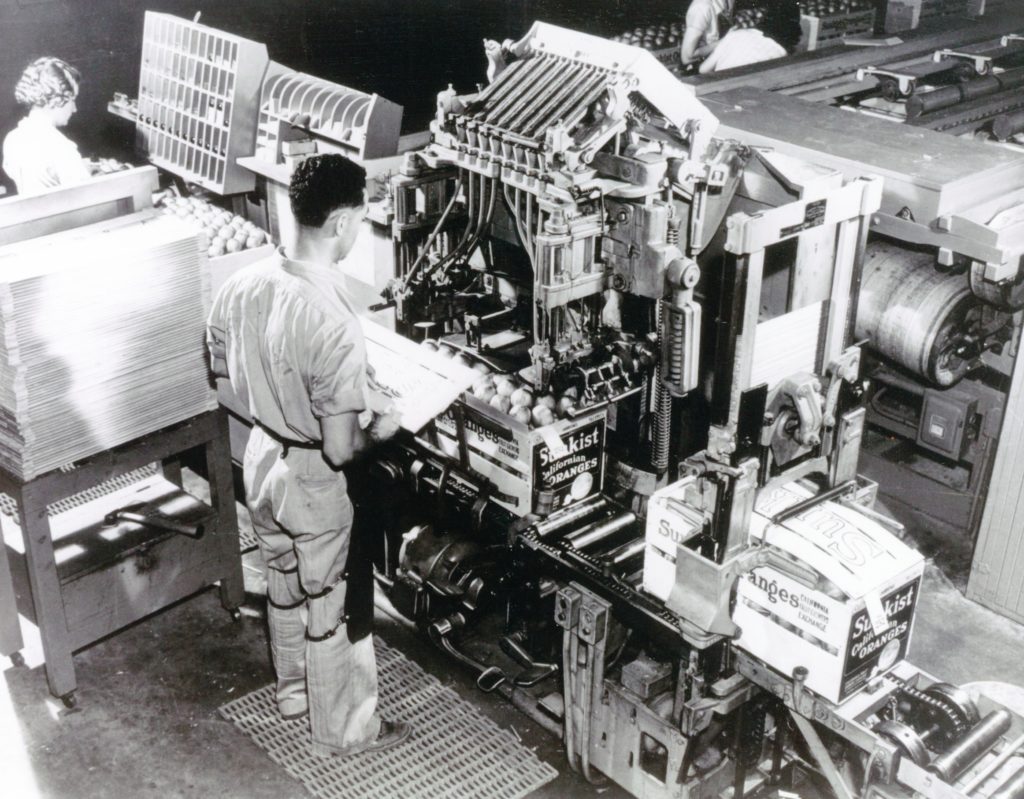
Attaching covers at a packinghouse—-Sunkist Growers, Inc.
While I do write a lot about the Fruit Growers Supply Company, many may not be aware of its association with the citrus industry. Fruit Growers, established in 1907, is a purchasing co-operative initially for the members of the California Fruit Growers Exchange. The Exchange was a marketing co-operative of citrus growers in Southern California.
Also, in 1907, the Exchange hired the advertising agency of Lord & Thomas to develop a trademark or brand name to distinguish its fruit from that of its competitors. The agency came up with “Sunkissed.” However, an Exchange agent in Chicago, taking a bit of poetic license changed the name to Sunkist. In April 1908, the Exchange adopted Sunkist as its trademark, mandating that only the highest-grade oranges would bear the Sunkist name.
The Exchange embarked on a very successful and very expensive advertising campaign. From 1908 to 1951 the California Fruit Growers Exchange spent $61 million to advertise the Sunkist brand. So successful were the campaigns that the name Sunkist became synonymous with citrus. On February 8, 1951 the California Fruit Growers Exchange officially changed its name to Sunkist Growers, to reflect the famous trademark.
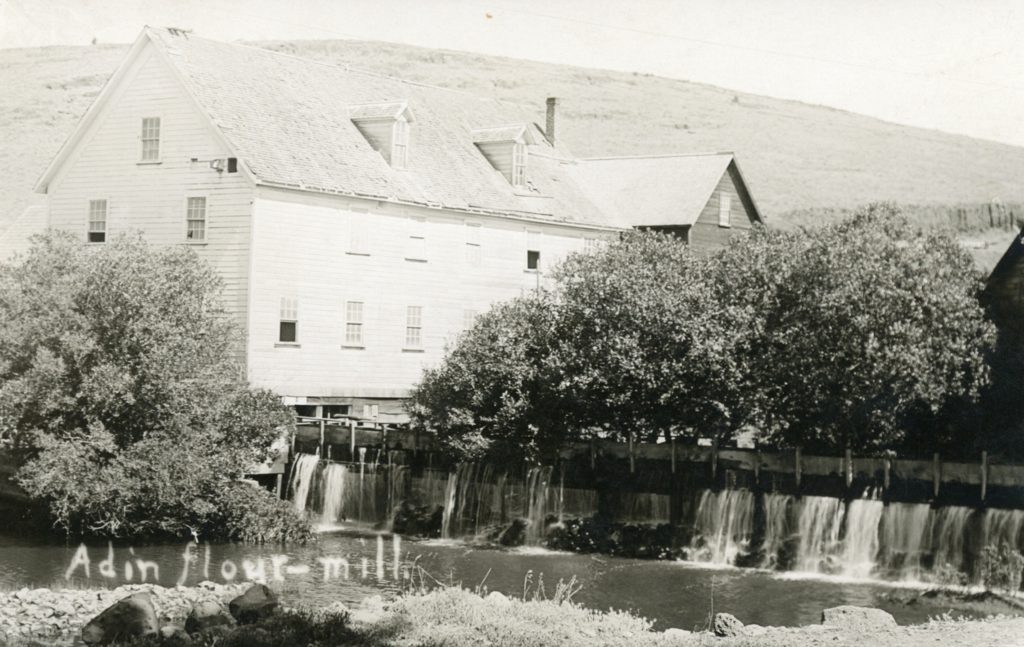
First of all, it is interesting to note that the founder of Adin, Adin G, McDowell, was a member of the prospecting party that discovered gold in what would become known as Hayden Hill.
In the summer of 1870, once the word spread of the gold discovery at Hayden Hill, it was reported over 500 prospectors rushed there. Adin, located twelve miles north of Hayden Hill was the nearest community and this influx accelerated Adin’s development. Of course, Hayden Hill, went through many boom and bust cycles, and that too had an effect. on Adin. One of those glory times occurred in 1878 with a bustling Hayden Hill. This allowed Adin to flourish and for a period it was Modoc County’s largest community.
Another way Adin benefited from Hayden Hill was during the winter months. Winters can be harsh on Hayden Hill and many sought comfort at Adin, which was not only substantially lower in elevation, but was more protected from the wind, than the exposed Hill..
By the late 1930s, the Red River Lumber Company had exhausted most of its timber tributary to Westwood. Red River officials consulted with the Lassen National Forest about a possible exchange of cut-over lands for timber rights on Forest Service lands, which could be done under the accordance of of the Land Exchange Act of 1922. The Forest Service considered the exchange program beneficial in the long range for future recreational aspects for the public and also for the re-growth of the forests. A deal was struck and on January 21, 1941, Red River deeded over some 50,000 acres adjacent to Lake Almanor and Butt Valley to the Forest Service in exchange for 50 million board feet of timber in the Moonlight district, east of Westwood.
Camp 38, Red River Lumber Company, 1922. It was located on the east shore of Lake Almanor. Courtesy of R.S. Pershing
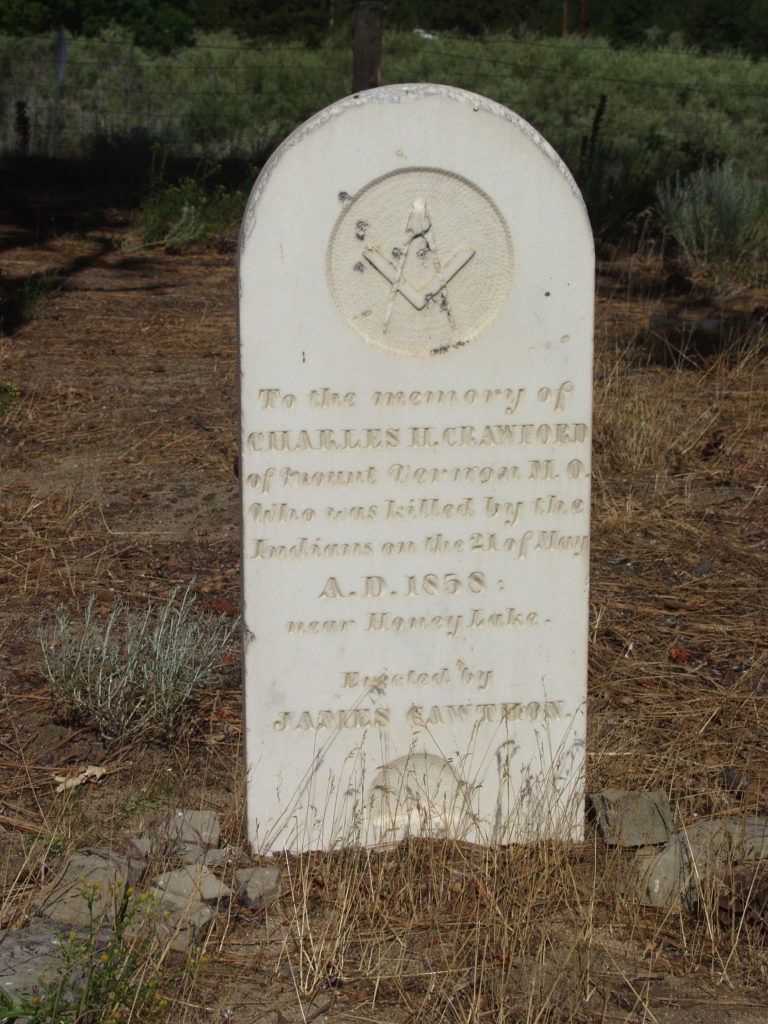
The grave of Charles Crawford, July 1, 2020—Larry Plaster
During the spring of 1858 relations between the Maidu and Washo tribes and the Anglo settlers were tense due to the Indians driving away the Anglo’s livestock. In May 1858, the Indians drove a yoke of oxen from Manly Thompson, near Janesville and for whom Thompson Peak is named for. The oxen were driven over the mountain. A posse of nine men formed to search for the animals. Eight traveled on foot, while Charles Crawford, a very heavy set man, rode a mule. Once over the mountain near Last Chance, they encountered an Indian camp, but there were no signs they had anything to do with oxen. Later they encountered another group of Indians, who fled, and a pursuit ensued. Crawford had a encounter with one, who shot him with a arrow, that deeply penetrated his chest to the extent, it nearly went through his body. In the end, the other men made a make shift of stretcher to carry Crawford back over the mountain to Janesville. It was an ordeal for them due to his weight. There was little that could be done to aid in his recovery and he died three days later on May 21, 1858, and his grave became the nucleus of the Lake Cemetery.
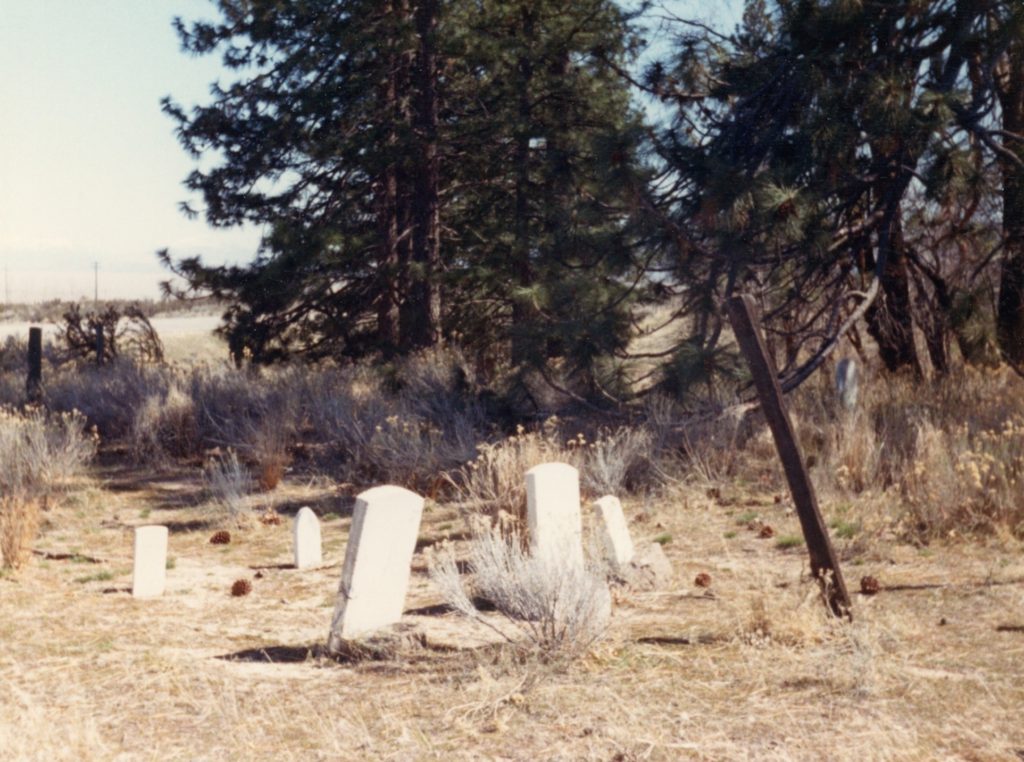
The Lake Cemetery is located four miles southeast of Janesville and is the oldest graveyard in Lassen County. The first burial was that of Charles Crawford who died on May 21, 1858 from wounds inflicted during an Indian skirmish. The second internment was that of the Frenchmen Harry Gordier who was murdered in late April 1858, but his body was not recovered until early June.
In February 1864, Thomas H. Epley and his family settled on 160 acres of land which the cemetery is located. Thomas and Mary Epley buried three of their children there: Guy who died May 3, 1870, Alvan, died January 28, 1872 and Pearl died June 30, 1872. Internments were infrequent and appeared to have discontinued by the 1880s.
In March 1916, Lassen County historian, Asa M. Fairfield appeared before the Lassen County Board of Supervisors who requested the cemetery be fenced. The county obliged. It should be noted the cemetery is on private property.
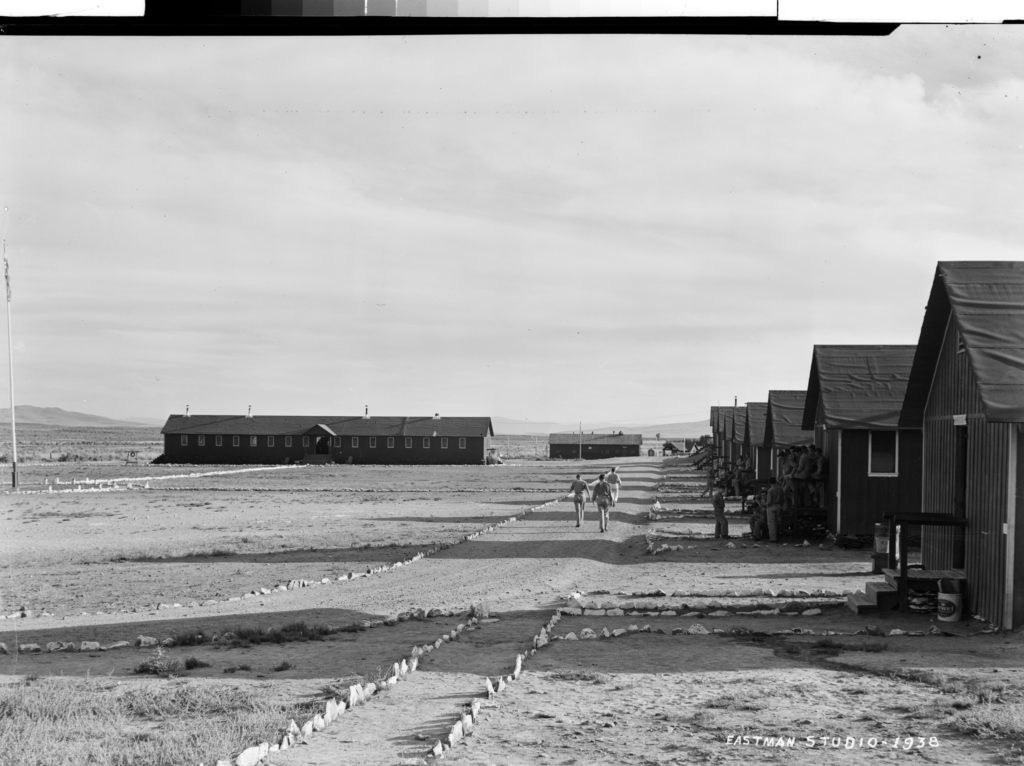
Secret Valley CCC Camp, 1938—Courtesy Special Collections, UC Davis
It was on this day in 1935 that the Secret Valley Civilian Conservation Corp Camp opened some thirty-five miles northeast of Susanville. One hundred and sixty-one young men arrived on a special 14-car train. The men came from New York and New Jersey. It as reported that it was quite a shock for them seeing this new environment of sagebrush and sand. On the other hand, they quickly adjusted to their new home. The majority of their work consisted of range development.
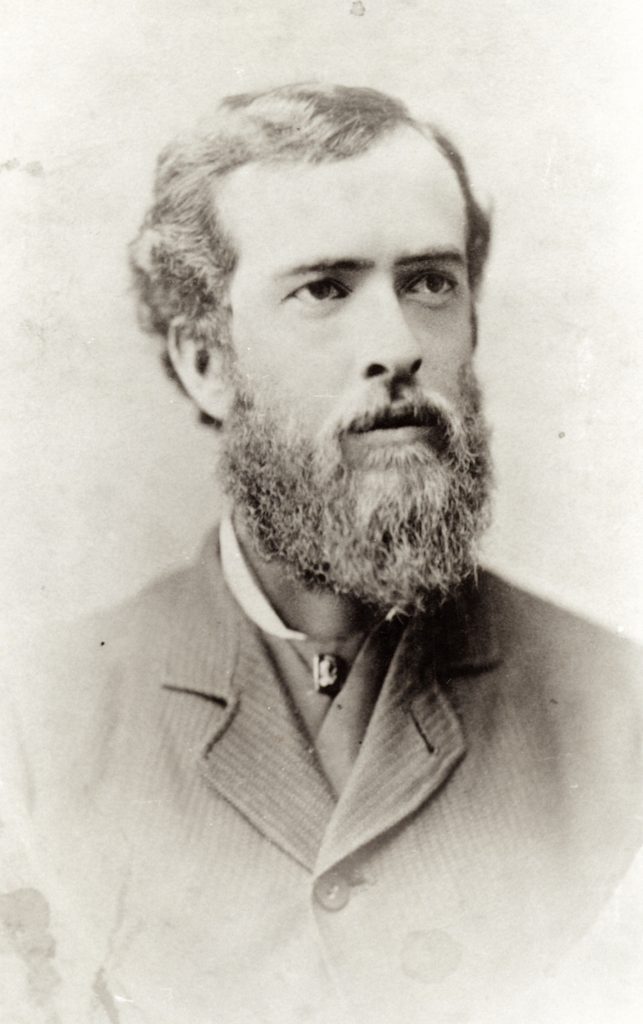
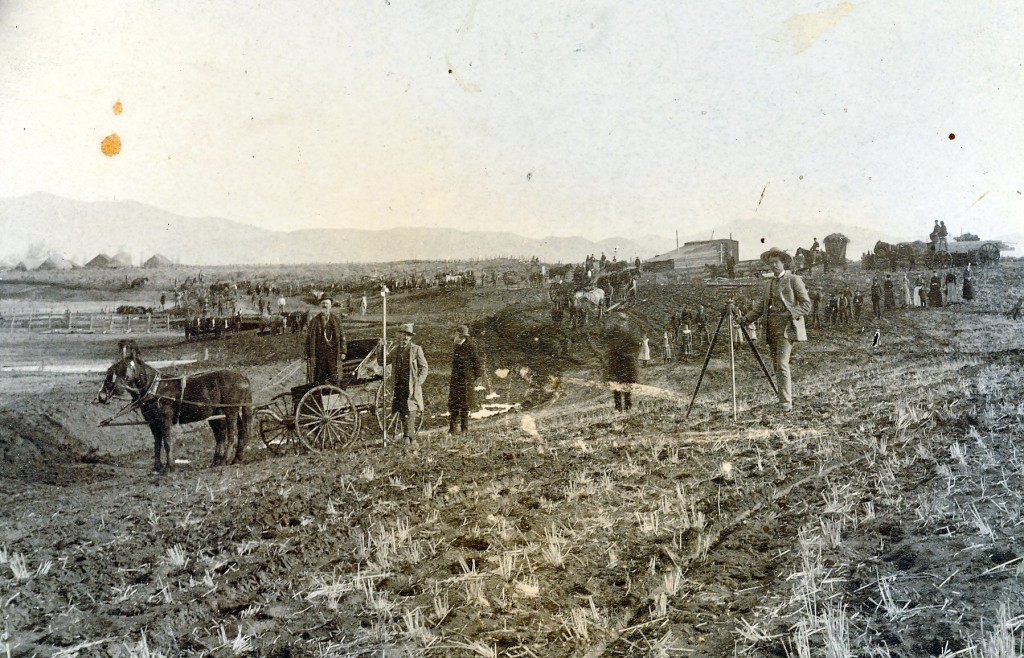
Minckler came to the Honey Lake Valley from his native Wisconsin and settled near present day Standish in 1872, with his grandmother, Hannah Lax, and his mother, Mary Kelley. It should be noted that he never met his half-brother Elbern Kelley who drowned in Honey Lake in 1863 at the age of 9. Minckler was a civil engineer for nearly thirty-five years. The position of county surveyor in Minckler’s lifetime was an elected one. He was elected twice, first in 1882, and again in 1890. Among the projects Minckler did in the private sector was that of Ward Lake, Hall’s Addition and Lassen Townsite, which is a huge subdivision from Richmond Road extending all the way past present day Plumas Bank to San Francisco Street—that location better known for a farmer’s market during the summer months.
In the Lassen Townsite subdivision a street was named after him, as were many of the investors, such as Alexander, Knoch, and Pardee. Its probably a good thing for Minckler, since there is no marker for his grave in the Susanville Cemetery. Those very seasoned residents of Susanville might remember when the Susanville Branch of the Lassen County Free Library was in a small building next to Susanville’s City Hall on North Lassen Street. That structure was originally Minckler’s office building.
Minckler’s survey crew to enlarge the Buggytown ditch near Johnstonville, 1889. It is better known today as in intake channel for Leavitt Lake. Courtesy of Betty Barry Deal
Last summer, in one of those “Where are We” segments was Camp Harvey. While I provided details about the old railroad. logging camp, I neglected to state why the old water is even in existence. When the Fruit Growers Supply Company abruptly shutdown the camp in the spring of 1949, they were in hurry to move the portable buildings to a new location. The days of railroad logging and their counterpart camps were quickly fading on the horizon. Fruit Growers had reached an agreement with Shasta Forest, who managed the property for the heirs of the Red River Lumber Company, that they could take their time in removing the structures. Most all of the logging cabins and related structures were removed in 1952. It was mutually agreed to keep the water tank tower with its 10,000 gallon redwood water tank, along with the pumping house and pipes in place for fire protection.
Spread the word, and encourage a friend to subscribe
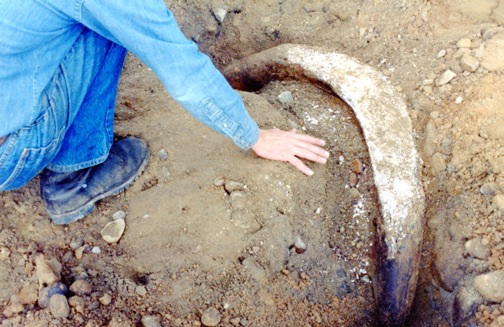
A Mastadoln find at the Lassen County Road Department’s Standish Pit—R.F. Davis
The area from Standish-Litchfield fanning out towards Honey Lake and Wendel from time to time has unearthed a number of prehistoric dinosaur bones. In 1923, Fred Williams was examining the newly constructed Eagle Lake ditch for the Bly project spotted a large twenty-two pound bone. It was later determined that it was a prehistoric mastodon bone.
The Lassen County’s Road Department Standish Pit has witnessed over the years a number of of prehistoric bones. The specimens in turn were donated to the Museum of Paleontology at the University of California, Berkeley. J.H. Hutchison of the museum informed the county that finds of mastodons are fairly rare.
Spread the word, and encourage a friend to subscribe