Eagle Lake, 1878

In  1888, Davis sold to W.H. Troxel and in 1926 Troxel sold it to Coit and Laura Stone.

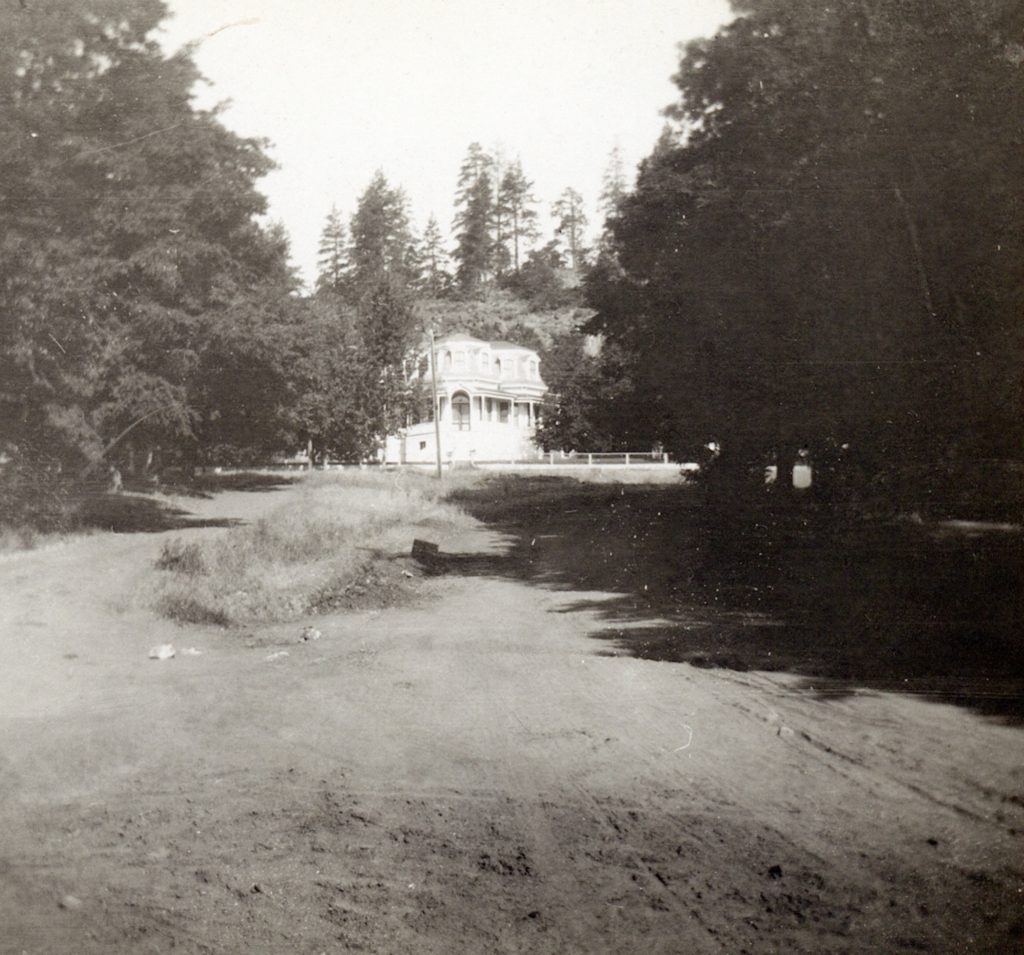
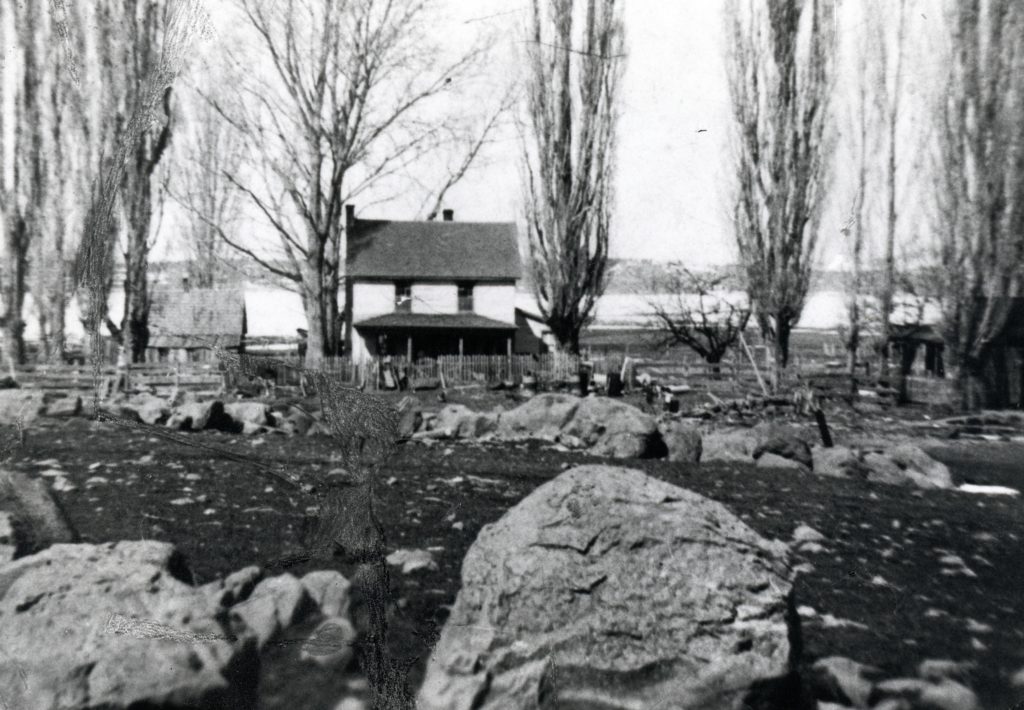
In 1876, William S. Davis purchased the Hazzard Webster place at the north end of Eagle Lake—known to many as the old Stone Ranch. Davis made numerous improvements to the property, including the construction of a two-story house, as the place served as stage stop for travelers along this route.

In 1878, his thirteen-year-old nephew, Frank Davis spent the summer at Eagle Lake. In his memoirs he wrote:  “I like to remember my first look at Eagle Lake when I went by stage to visit Uncle Will. As we came up out of the valley, the stage coach crossed a little ridge and started downgrade to the lake. There is suddenly was, all spread out before us! The lake was covered with whitecaps because it was in the afternoon, and there was a great white cloud covering the hillside from the top and drifting down to the edge of the lake. ‘See the goats are coming in for the night,’ said Uncle Will with a sweeping gesture.

“I looked again and discovered the great white cloud that blended the scene from the clouds in the sky above to the margin of the lake and seemed to blend with the white-capped surface of the water was actually about 2700 head of white Angora goats. Uncle was raising them for their silky hair, which was in much demand for the fine fur felt used in quality hats, and woven fabrics.”
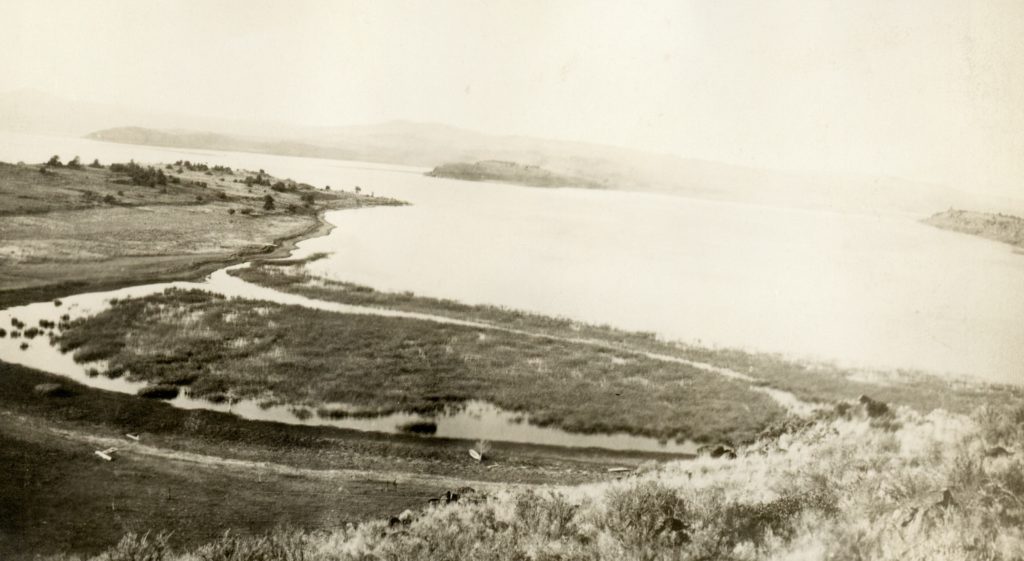
The north shore of Eagle Lake, 1920, where  Davis was located.  Courtesy of Lola L. Tanner

”The ranch house had originally been a log cabin when Uncle Will first bought it. He made it a complete two-story building, adding more rooms, plastering the interior rooms and covering the outside with bevelled siding. Made quite a pretty place by the time he finished it.”

After Davis sold he moved to Susanville. A for a time he was in charge of the bar and office of the Steward House. He remained in Susanville and died in 1908.

Donate


Ask Tim

Bassett Hot Springs, near Bieber, circa 1908.

On a quarterly basis, I ask you the reader, if there is something you would like to learn more about or maybe its something you heard, but question its validity. So here is an opportunity to participate. I will do my best to answer any questions. It should be noted, it may take awhile for the answer to appear as a post. The primary reason, many of the daily posts are done nearly a month in advance. So by the time you read this I am already working on posts for the middle of May, or at least I should be. Whatever the case may be, I look forward to hearing from you. Of course, it should be noted that paid subscribers requests receive priority. In addition, you can always send a request at any time.

Spread the word, encourage a friend to subscribe.

P.S. – I am working on the Jeremiah Wood family request, some how unfortunately, it got misplaced in the shuffle, so to speak.

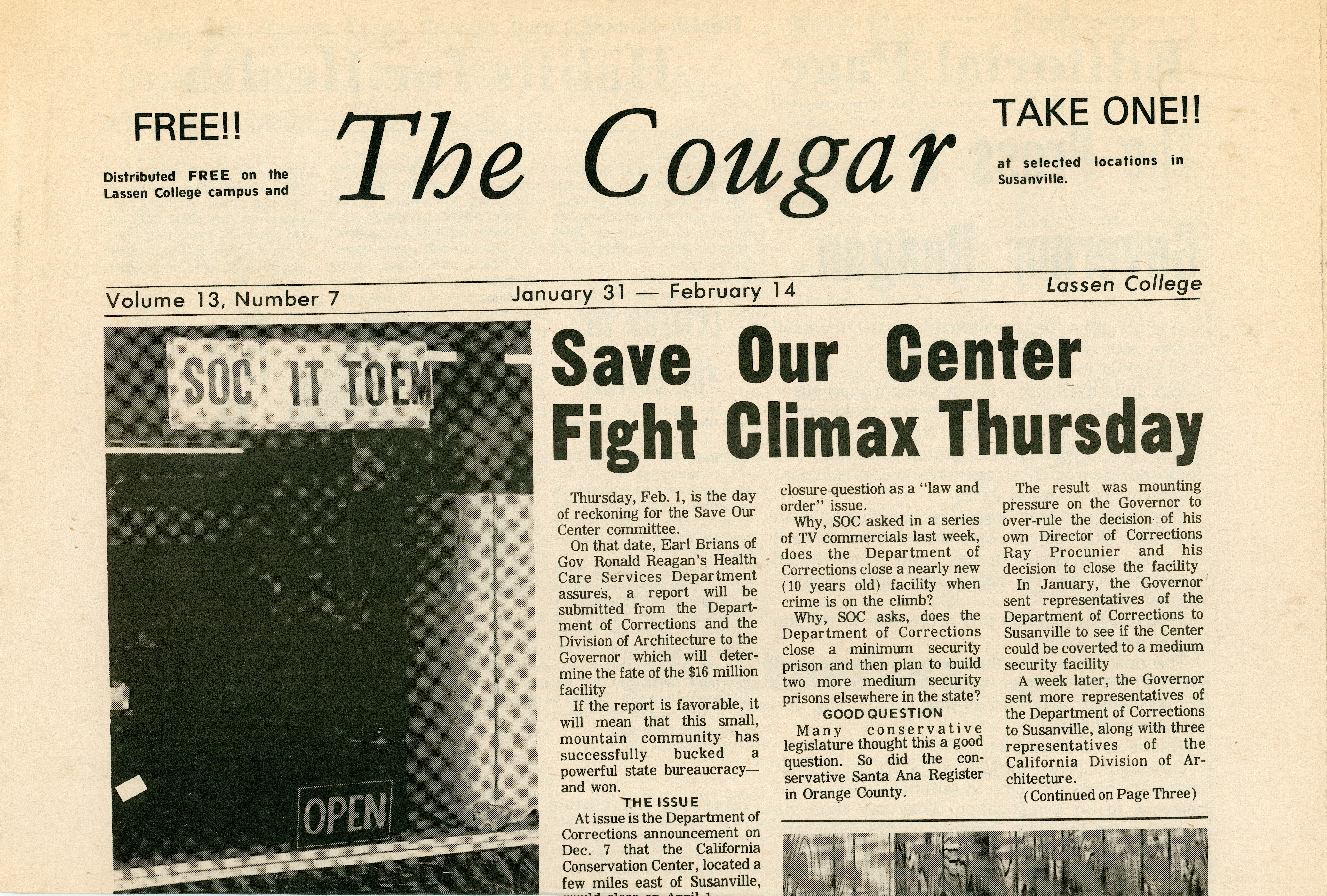
Save Our Center, Again?

soc campaing
It was headline news everywhere.

On April 13, 2021,  it was announced that the State of California intends to shut down the California Correctional Center at Susanville by June 30, 2022. Will the community fight again, like when the State announced the closure of the prison, only nine years after it opened?

Shortly after the state made the announcement to close the CCC in 1972, the community fought back. On December 13, 1972 the Save Our Center campaign was launched.  State Director of Corrections Ray Procunier stated that the California Conservation Center (name later changed to Correctional) near Susanville was to be closed effective April 1, 1973. Procunier cited a decline of the inmate population by 4,000. In doing so it would eliminate 270 jobs. Procunier stated, “The cutting off of that payroll is to have an impact of the economy of that community, but Susanville is not the best location in the world for a correctional institution because of its remoteness.”

The campaign was successful. Will another movement form again? Time will tell what will happen next.

Subscribe and support this site for as little as $5.00 a month.

A Bump in the Road

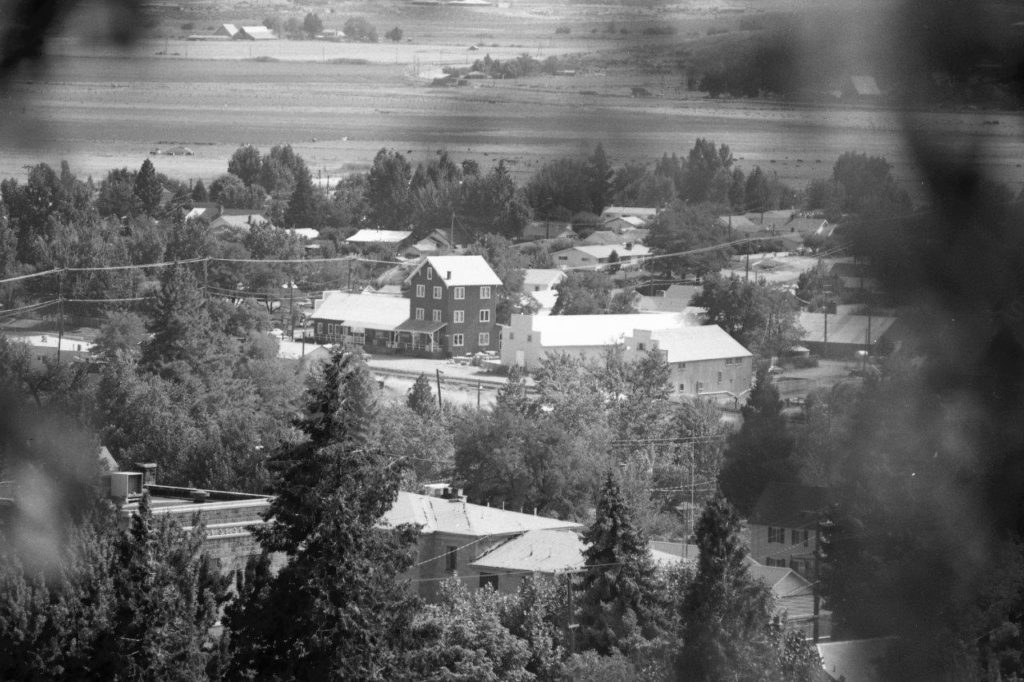
500 Block, Main Street, Susanville, 1911—C.R. Caudle Collection

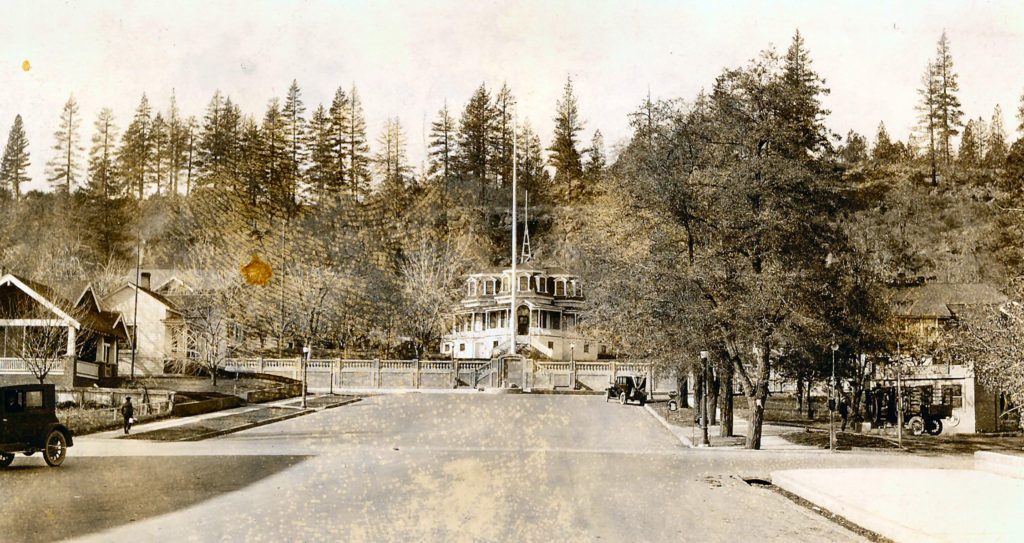
Prior to the construction of Highway 36 which changed the west entrance into Susanville, civic leaders complained about the street appearance first entering the town and/or leaving.  The problem spot was the 500 block between Pine and Roop Streets. There was an unsightly berm in the middle of the street. In 1922, the west entrance was changed to South Pine Street, and with the paving of Main Street, the problem fixed.

The west end of Susanville’s Main Street

Subscribe

Lumber Figures

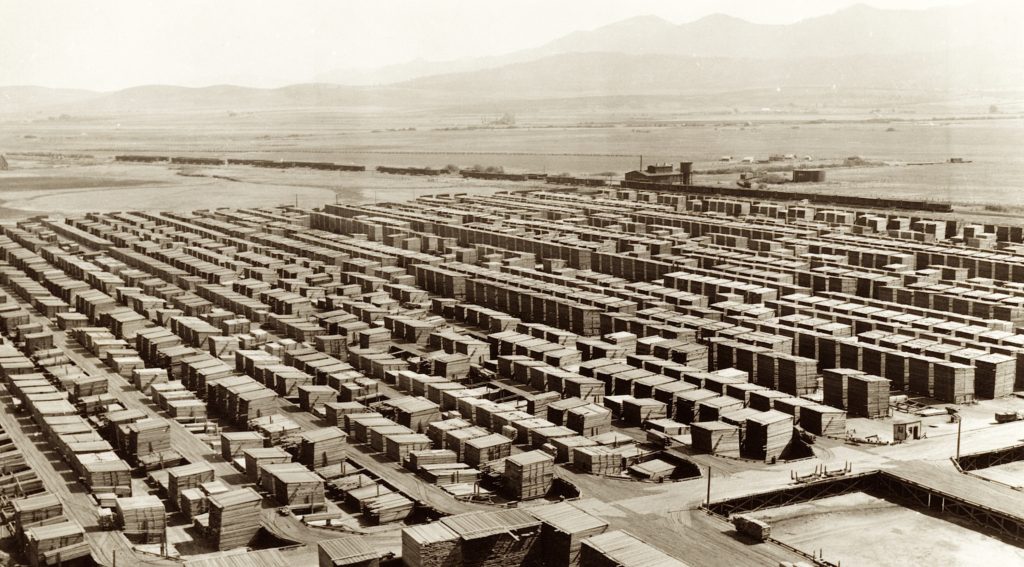
Fruit Growers Supply Company lumberyard, 1935. This contained 54 million board feet of lumber. An interesting tidbit. If all this lumber was used for boxes, it would only meet one-third of the boxes needed for Sunkist for that year..

This is a topic while I have addressed it in the past, its appropriate to bring it back to life for new readers and refresher for those seasoned ones.  As we explore Lassen’s lumber industry’s past, there are references to the volume of a million board feet (mbf).   During the 1920s, the lumber mills of Lassen County had an average annual output of 250 million board feet of lumber. That is a lot of lumber.

Sunkist Street,Susanville, 1921. Courtesy of Ed Standard

George Cone, who worked in the Lumber Division of Fruit Growers provided this definition using that mill’s output for the 1922 season at 62 million board feet. If it was placed on a single freight train, that train would extend eighteen miles. And since it took 6,000 board feet of lumber to build an ordinary house in those days, Cone figured that the 1922 output could build 60,000 houses. According to Cone, with an average household consisting of five persons, this production could provide the housing needs of 300,000 people!

Subscribe

GeoProduct’s Honey Lake Hydroponic Farms

A Lassen College brochure offering a degree in hydroponics.

With all the publicity generated by Hobo Wells Hydroponics it caught the attention of Alexander Black, of GeoProducts based in Oakland. With what seemed a blink of an eye, GeoProducts secured a lease to 3,000 acres directly across from Hobo Wells. GeoProducts named this venture Honey Lake Hydroponic Farms. Their technique would be somewhat similar to Hobo Wells, though they would use cold water containing 16 nutrients to feed the plants.

In 1977, GeoProducts constructed 30 greenhouses similar to Hobo Wells, which by way was dormant. On other hand, Black, like so many promoters of developments on the east side of the Honey Lake Valley, suffered from illusions of grandeur. According to Black the company would build a total of 150 greenhouses,. Next on the list a power plant, which would enable to build 700 greenhouses. Also in works, their own alfalfa ranch, and a alfalfa dehydration plant. Such a large scale operation would need housing for its employees, since Wendel with a mere population of 30 could not accommodate. With that in mind in 1979, plans were in the works for 200 home community, exclusively powered by geothermal energy.

Any visitor today to Wendel, knows that these proposals never materialized. Just by the early 1980s, like Hobo Wells, GeoProducts abandoned their operation. There seems to be one general consensus, one problem it was too costly to transport the tomatoes to a large outside market.

Support


Hobo Wells Hydroponics

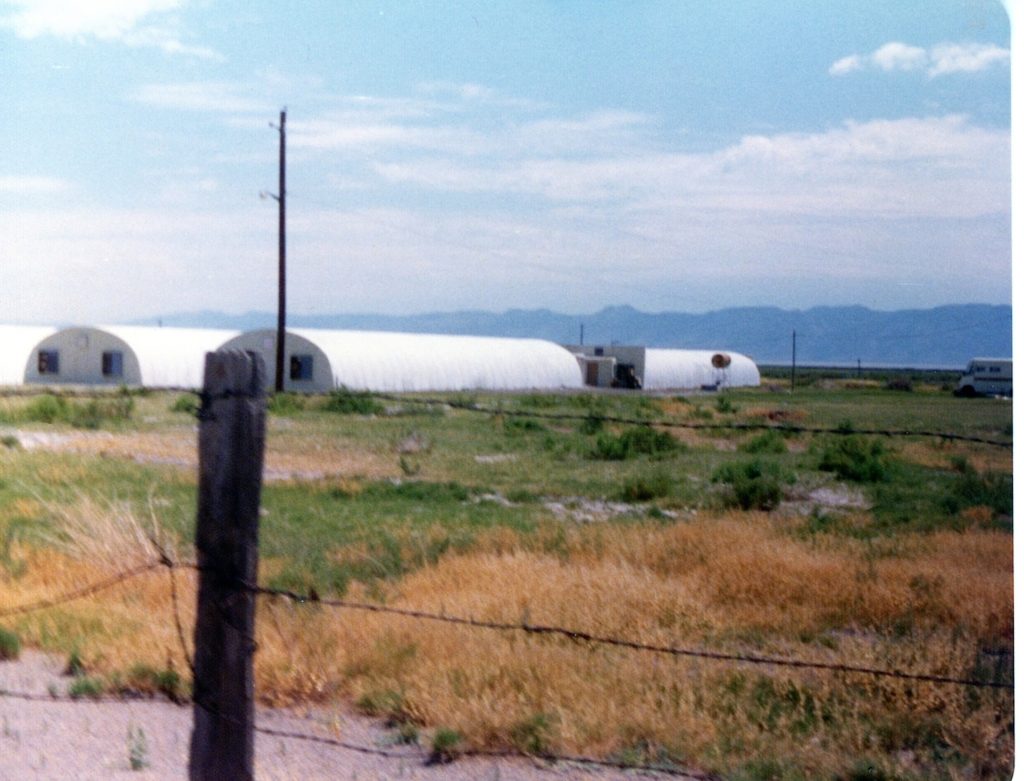
Hobo Wells greenhouses,May 1975

In 1971, an itinerant hunter from San Diego ventured into the wilds of Lassen County. One of the things he encountered was Wendel Hot Springs. Whatever the case may be this wandering hunter, Phil Gutman, had an epiphany.

The following year, Gutman did something extraordinary, that no one had done before. Gutman came up with the concept of Hydroponic farming utilizing the hot springs for there geothermal potential. On August 28, 1972 Hobo Wells Hydroponics, Inc. was finalized along with two other partners—Mark Souza and Gutman’s son, Andy. Hobo Wells entered into a long term lease with Mapes Ranch for the property. In August 1972, the first greenhouse was built, measuring 28 feet wide, 140 feet long shaped like a quonset hut covered with a translucent plastic. It was planted with 1200 tomato seedlings. The seeds are initially started peat moss, and set in pea gravel in nine-inch-deep beds.  Then several times a day the plants are watered with the necessary nutrients. They also experimented with other vegetables and florals as well, but the high quality tomatoes were in demand, thus the most profitable. Hobo Wells operation was not limited to a single growing season, as the geothermal heating allowed the operation to grow year round.

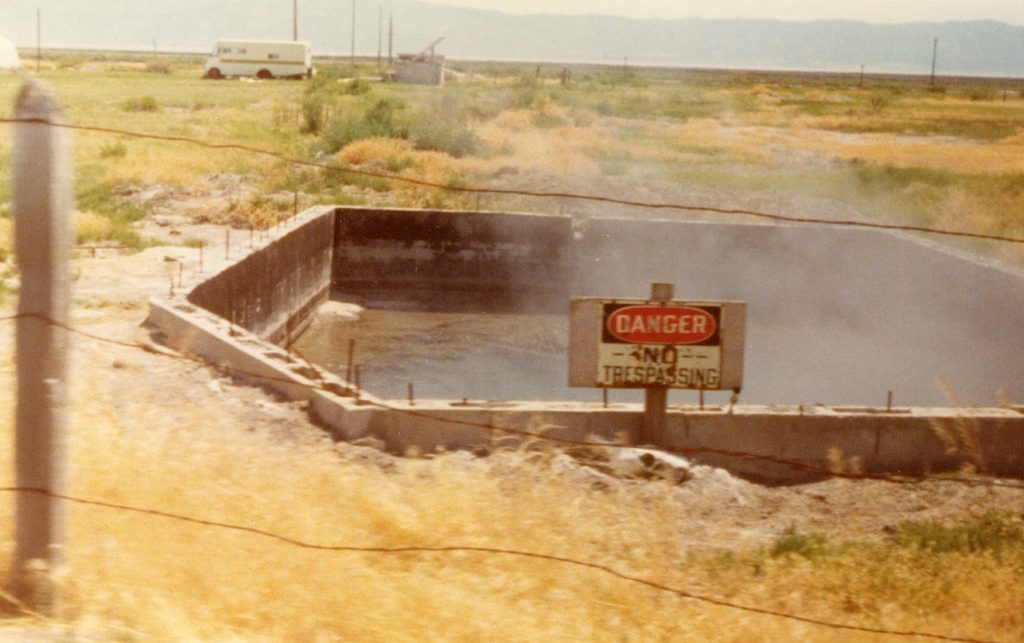
They constructed a concrete block around the spring to conserve heat. May 1975

Another aspect of this enterprise that is unique, was that Gutman had no background in agriculture or geothermal energy. As a matter of fact, he had only retired from the Army after twenty years of service.

In time, the operation expanded to six greenhouses. The goal was to raise 40,000 pounds of vine ripened tomatoes per greenhouse, per year.

Hobo Wells received extensive press coverage, locally, state and nationwide. In addition, he designed an taught a two-year course in Aquiculture at Lassen Community College, where the students received first hand training at Wendel. All that attention, brought in a competitor across the road by the name of GeoProducts.

Something happened that changed the operations. First there was the sale of the Mapes Ranch in 1976. Then for reasons unknown, Gutmans and Souza were no longer on the scene in 1977 and the greenhouses were idled.  In 1979, John DeLapp of Standish had taken over Hobo Wells. By the early 1980s the operation was abandoned.

Tomorrow: GeoProduct’s Honey Lake Hydroponic Farms

Support


Liegan, Lassen County

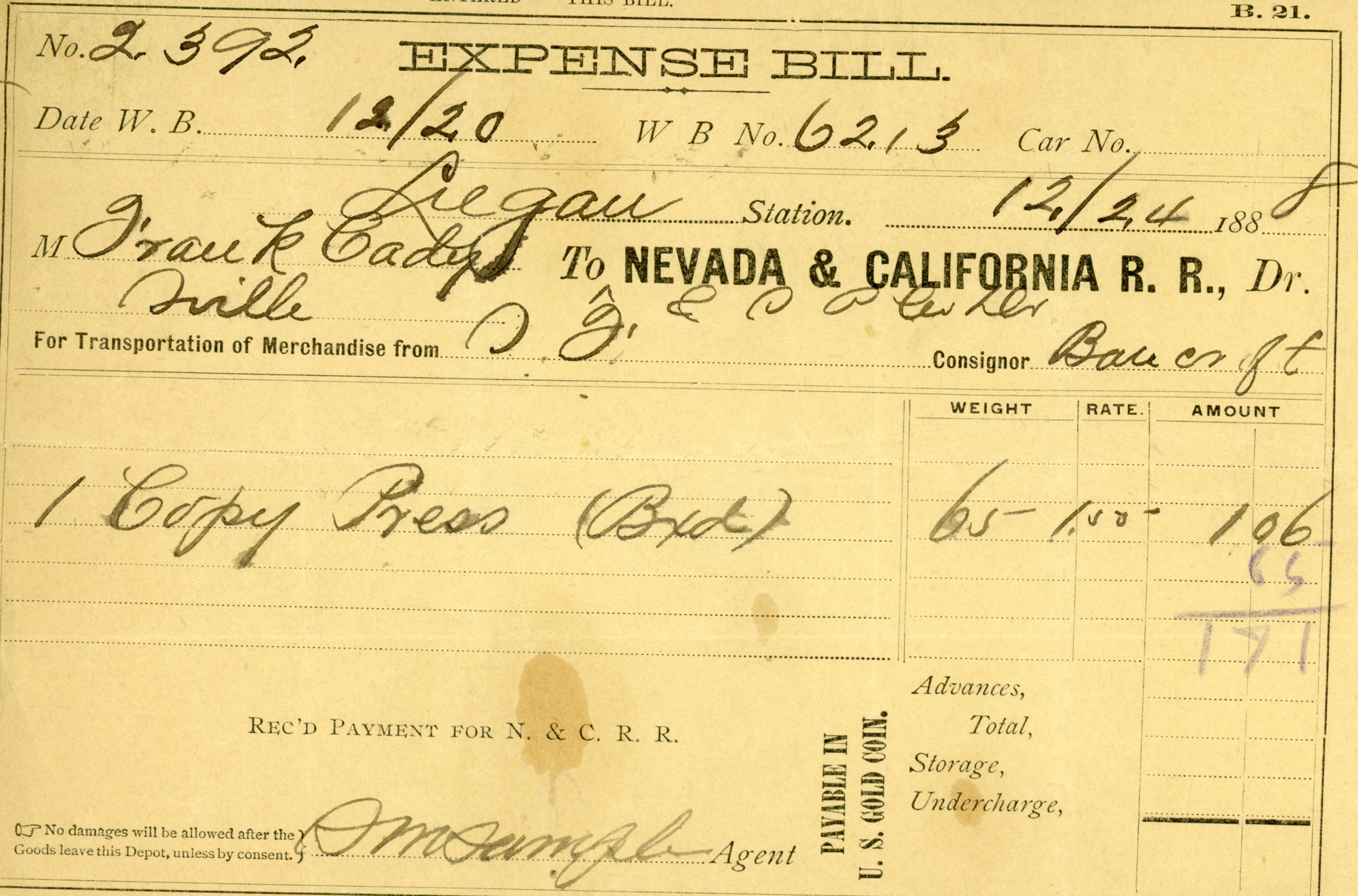
Liegan bill368

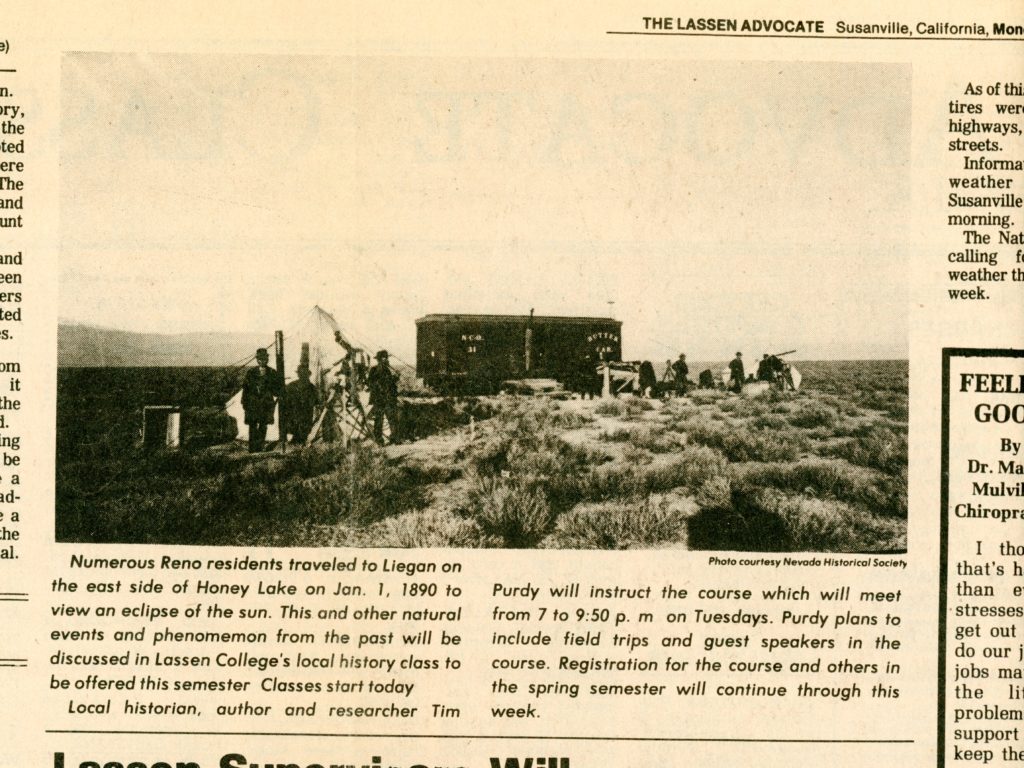
Liegan was a  Nevada-California-Oregon Railway (NCO) station that was located a bit north and east of present day Herlong.  On September 10, 1888 it became the new terminus for the railroad. It was a desolate outpost to say the least, surrounded by miles and miles of sagebrush, but not a single living soul in the immediate region. Of course, the decision of the NCO to bypass the west side of Honey Lake for the east drew lots of criticism, a topic for another time. Its location was too remote for the railroad to generate any freight traffic. One of its biggest claim to fame occurred on January 1, 1890 when numerous sight seers from Reno ventured there to view the eclipse of the sun. By that summer, the railroad extended its line farther north to Amedee, which quickly overshadowed Liegan. In the fall of 1890, Elmer Koken who traveled to Amedee on the NCO remarked that the Liegan station consisted of a box car. On April 9, 1891, the Liegan Post Office closed after an existence of eight months.

A printed copy of my news release when I taught a history class at Lassen College. However, the photograph was not returned.

There was a glimmer of hope and Liegan would be  revived in 1909-10 by the railroad. The Standish Water Company had just built a pumping plant on Honey Lake, near there with the intention to reclaim the sagebrush plain into a major sugar beet production region. That failed, and Liegan’s hopes too. It is interesting that a 1915 soil survey designates the site as Italy.

Subscribe today and tomorrow enjoy with daily notifications.


A Once Upon a Time Ritual

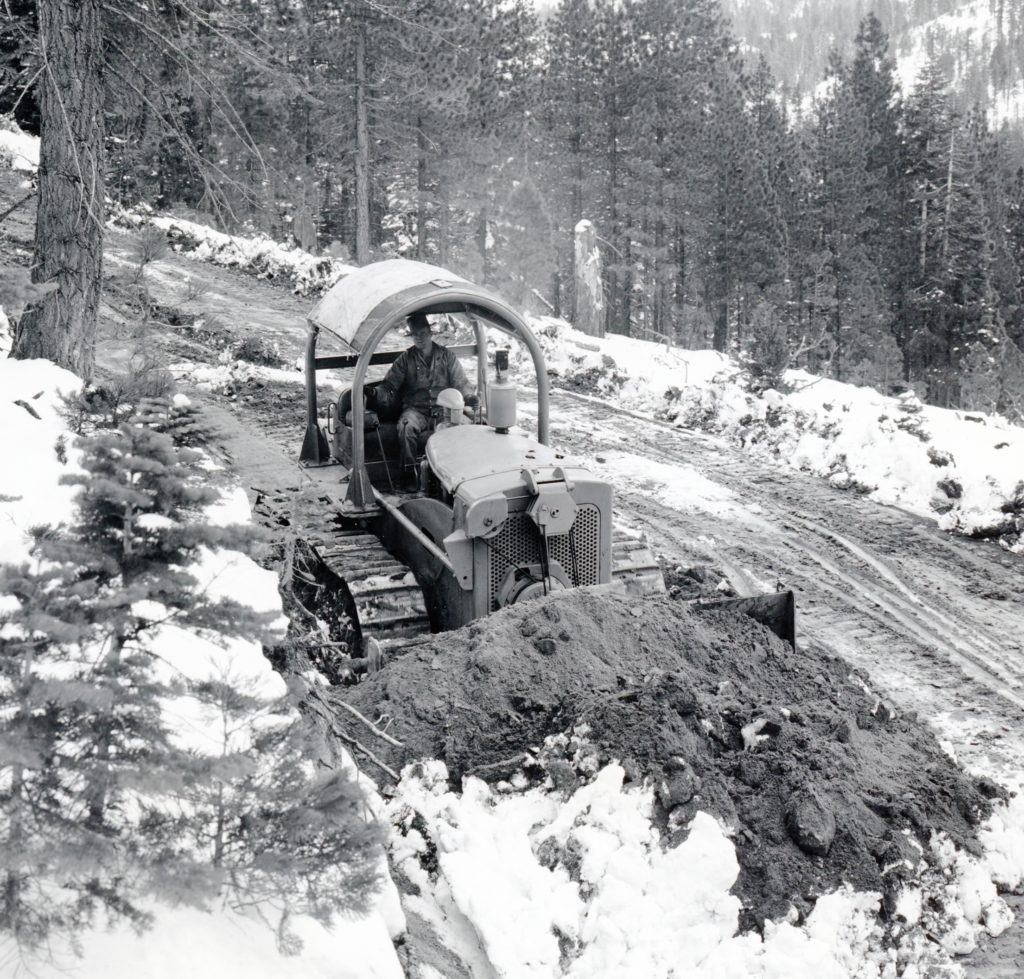
Plowing the Paul Bunyan Road, April 7, 1948—Fred Lendman

In the last century when lumber was king in the Lassen region there was the annual ritual each spring to open logging railroads and/or logging roads each spring in preparation for that season’s logging operations.

Catepillar Tractor representatives were ever present since the logging industry was one of its biggest clients. They also captured many activities on film of their equipment, such as above.  The company provided the following description: “One of two Caterpillar Diesel D7 Tractors with No 7S Bulldozer opening the main logging road near Susanville, California. 1 to 2 1/2 of snow—15 miles of road to clear. Will take the two Tractors three days to do the job. Will produce 25 million bd. ft. of lumber—90% ponderosa pine.”

Spread the word, encourage a friend to subscribe.


Exploring Lassen County's Past